Archive | cooking RSS feed for this section

C is for Chow

4 Mar

I don’t know about you, but I’m tired of seeing all those glowing blue “A’s” in restaurant windows.

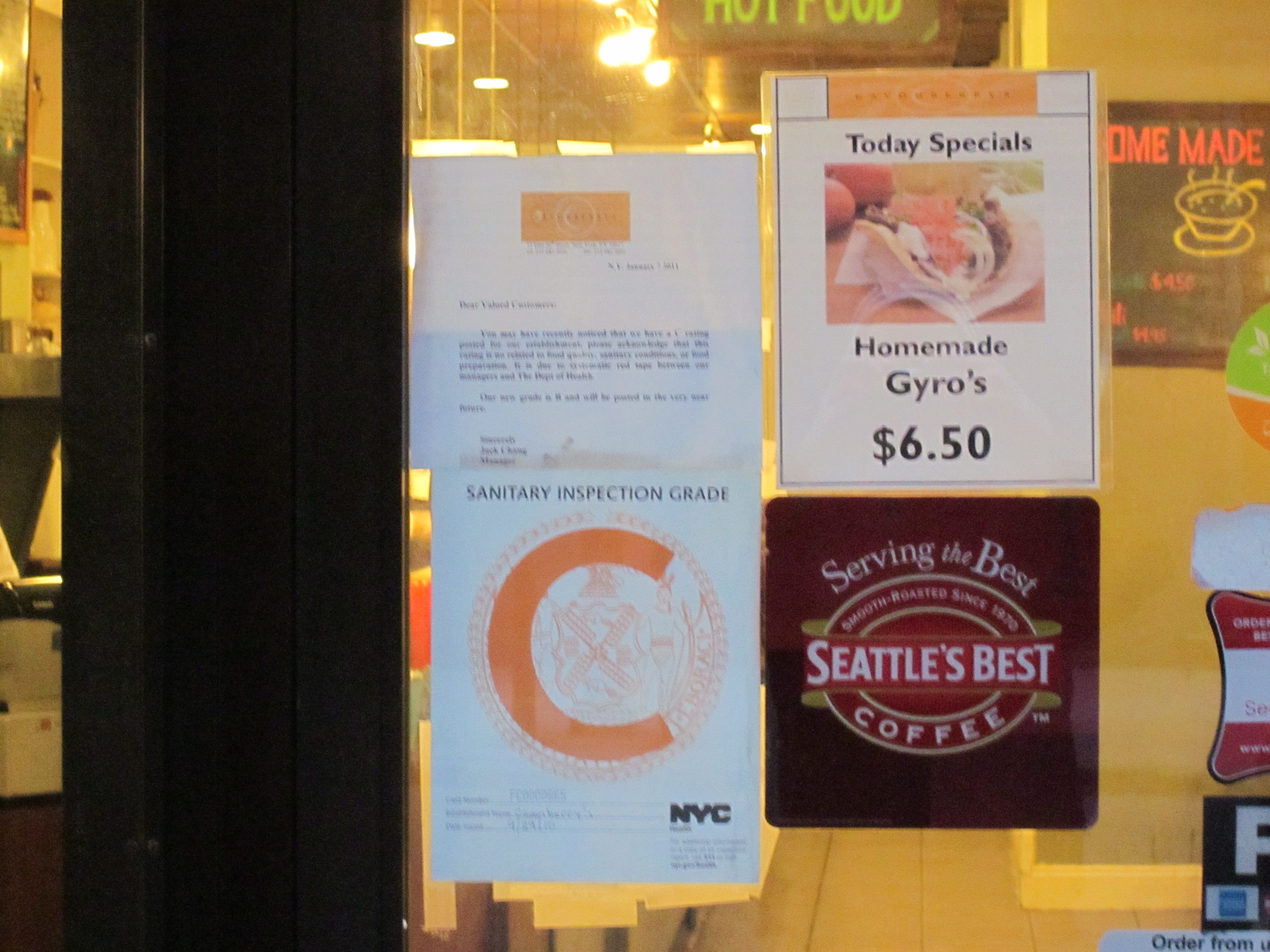
They are everywhere; on Dunkin Donuts windows, Subway sandwich shops, and, like above, in the window of an Ethiopian restaurant. Their smug perfection is right up there in your face; a constant reminder of the absence of them on so many of my own report cards. Sure, we all strive for perfection, but really, what kind of world would it be if everyone was an “A?” So when, finally, I came across a big orange  C, I felt much better.

Now that’s a grade I can relate to.  I was so excited I almost ordered the homemade gyro. Almost.

Have a great weekend. Look for a new Adventure in Chow City on Tuesday.

And the Answer is…

28 Feb

On Friday I gave you a simple red curtain. Here it is again.

Now,  a few hours after taking the above picture. They wait in line…

…to get here.

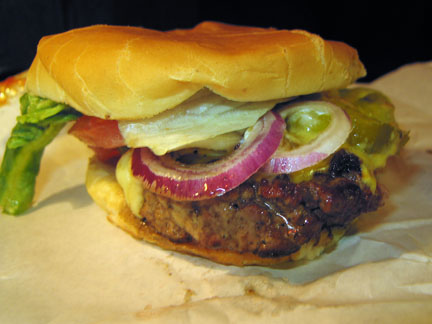
So they can eat this.


Burger Joint Burger


Yes, it’s the Burger Joint off the lobby of Le Parker Meridien Hotel.  The burgers here are rated by many as the best in New York City. And I just might have to agree. This one had you stumped.  No one knew what was behind that red curtain.  Last month’s was too easy; this one too difficult. Where is that middle ground? Maybe we’ll all find it the next time we play Name That Place.

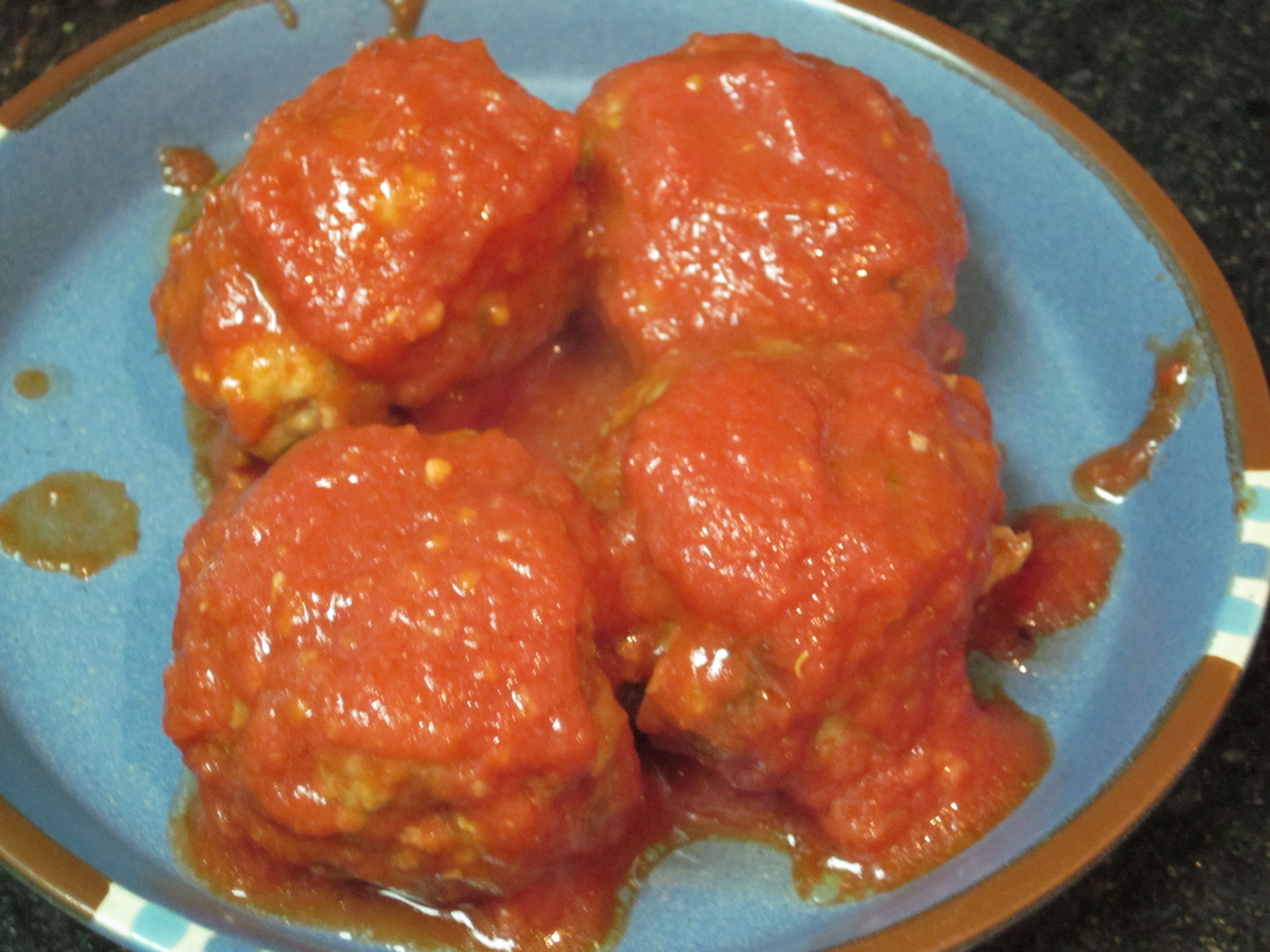
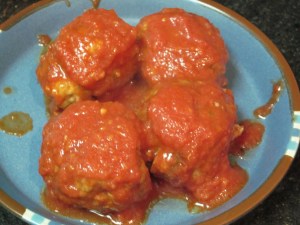
Goomba Joe’s Polpette

18 Feb

What’s with the meatball? It’s become the hot, trendy food item lately. You see them everywhere, made from all kinds of things. Lamb, beans, raisins, pine nuts, chicken, turkey, and salmon are just some of the ingredients you might find in what is loosely called a “meatball.” Then they serve it with brown gravy, chili sauce, salsa verde, or whatever else they might think goes well with their particular “meatball.” There’s even a place here in New York called The Meatball Shop where that’s all they serve—five different kinds of meatballs daily including a “special.” I haven’t been there yet, but when I do go, I want my meatball straight up.

When I was young, my family didn’t even call them meatballs. They were, I always thought, “porpetta;” the Calabrese dialect my grandparents used instead of the classic Italian “polpette.” Or maybe my grandparents pronounced it correctly and it was I who skewed it to “porpetta,” but I don’t think so. Anyway, my grandmother’s “porpetta” were as close to perfection as anything she made, and that’s saying a lot. And I’m grateful that the smell of the meatballs frying on a Sunday morning is permanently ingrained in my memory. When I got older and was on my own, I would watch her make them, but never really took notes and she refused to give out her recipes. I’ve tried to replicate my grandmother’s porpetta,  but have always fallen short in some way; too tough, too spicy, whatever.

About a decade ago, after moving into a new apartment building, I befriended an Italian-American neighbor who I bonded with through our mutual love of food, and Italian food in particular. He was a skilled, home-style cook and the smells emanating from his apartment were similar to what I remember coming from my grandmother’s kitchen. He often invited my family to dinners at his apartment where he would mix cuisines in the menu of the evening usually combining Italian with Puerto Rican food in respect for his long time partner who hailed from that Caribbean island. It might be, for example, spaghetti with homemade pesto (using basil grown on his terrace) along with pernil (roast pork) and rice and gandules. But no matter what was on the menu, you could always count on some sort of pasta dish. One of our first dinners together, my friend, Giuseppe, who I kiddingly called “Mamma G” because of his prowess in the kitchen, served my family meatballs. After a taste of one, I was astounded. Did he know Anna Magaro, my grandmother? These were very close to hers. I needed the recipe.

A few days later he emailed me his detailed meatball recipe, he titled “Goomba Joe’s Polpette.” I’ve copied below exactly what he sent me many years ago with a few of my own notes added, and it’s as reliable as you will find if you have any interest in making the traditional Neapolitan Italian meatball.
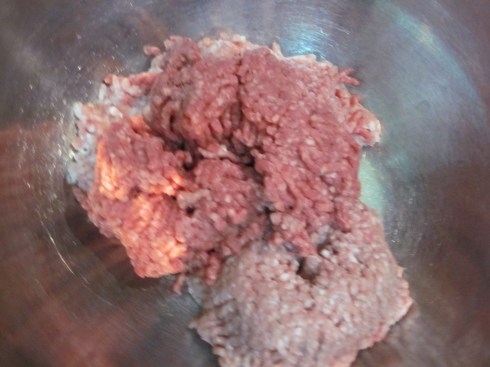
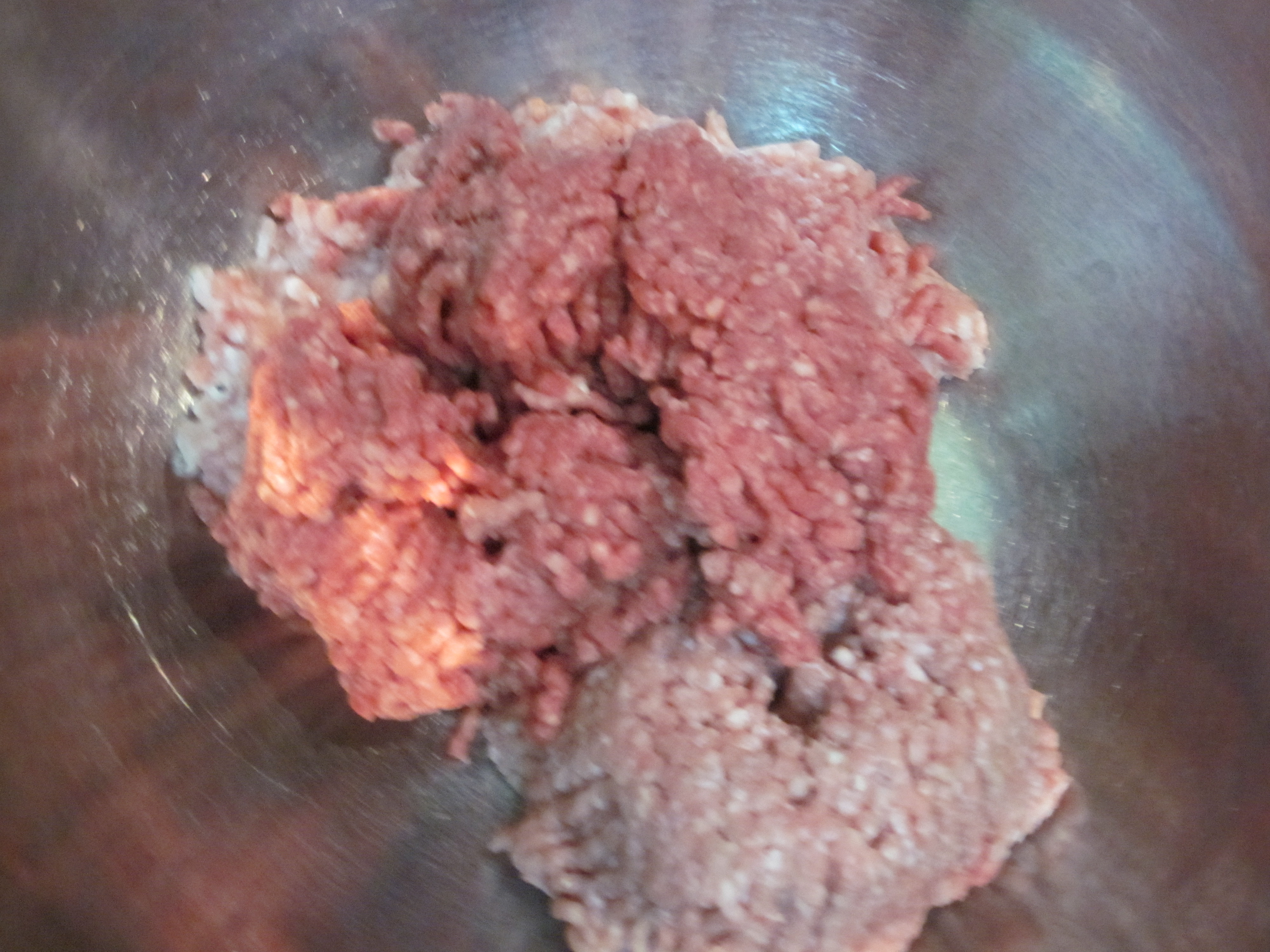
The meat.

Ingredients

1lb of ground chuck

½ lb of ground pork

(both in a large bowl)

Hard Italian bread (no shortening) about 1/3 of the meat volume. Soak in H20, squeeze well and crumble (irregular sizes ok) over the meat. (Never use bread crumbs, you get cement balls).
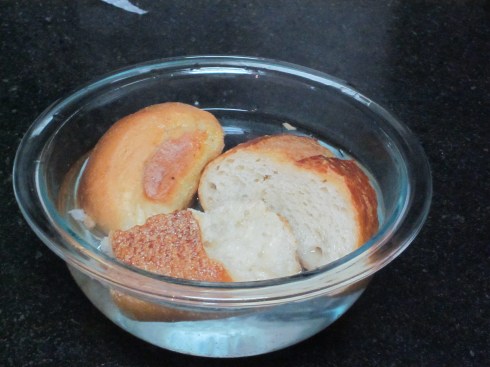
Never use bread crumbs!

Salt (careful, if cheese is salty)

Black pepper (I like corns, medium grind). I’m not stingy

2-3 eggs (size counts)

Romano or Parma grated cheese (more; less?; ample)

Fistful of Italian flat parsley, chopped coarsely (not minced)

2-3 cloves of garlic* minced coarsely (I have occasionally used minced onion, but that’s not Napolitano traditional).
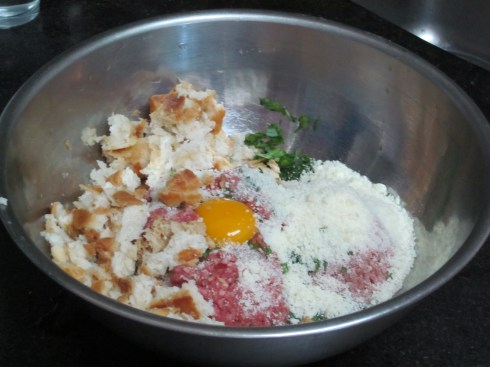
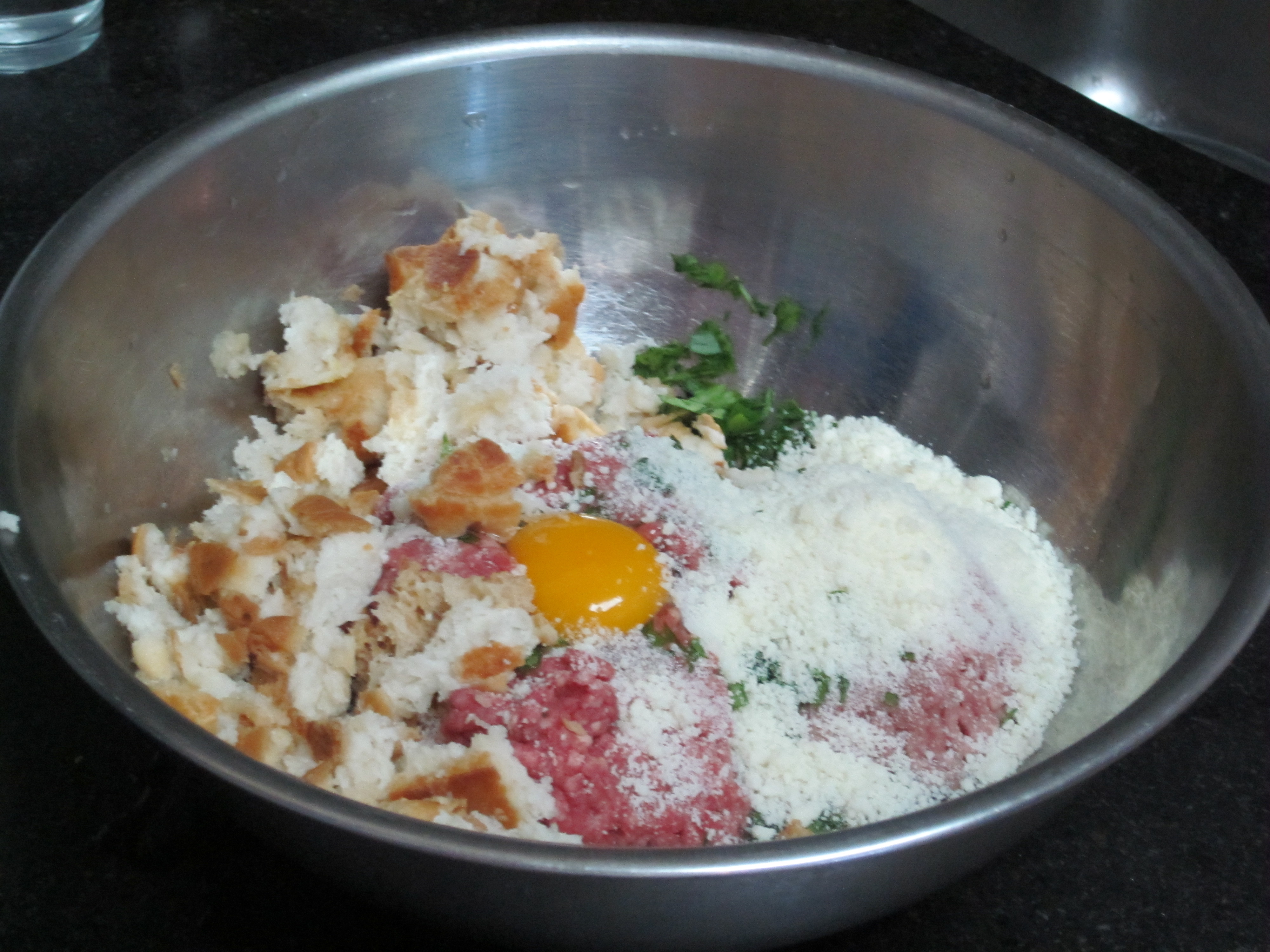
The mess before mixing.

Mix the whole mess with hands so that all the stuff is more or less evenly distributed.

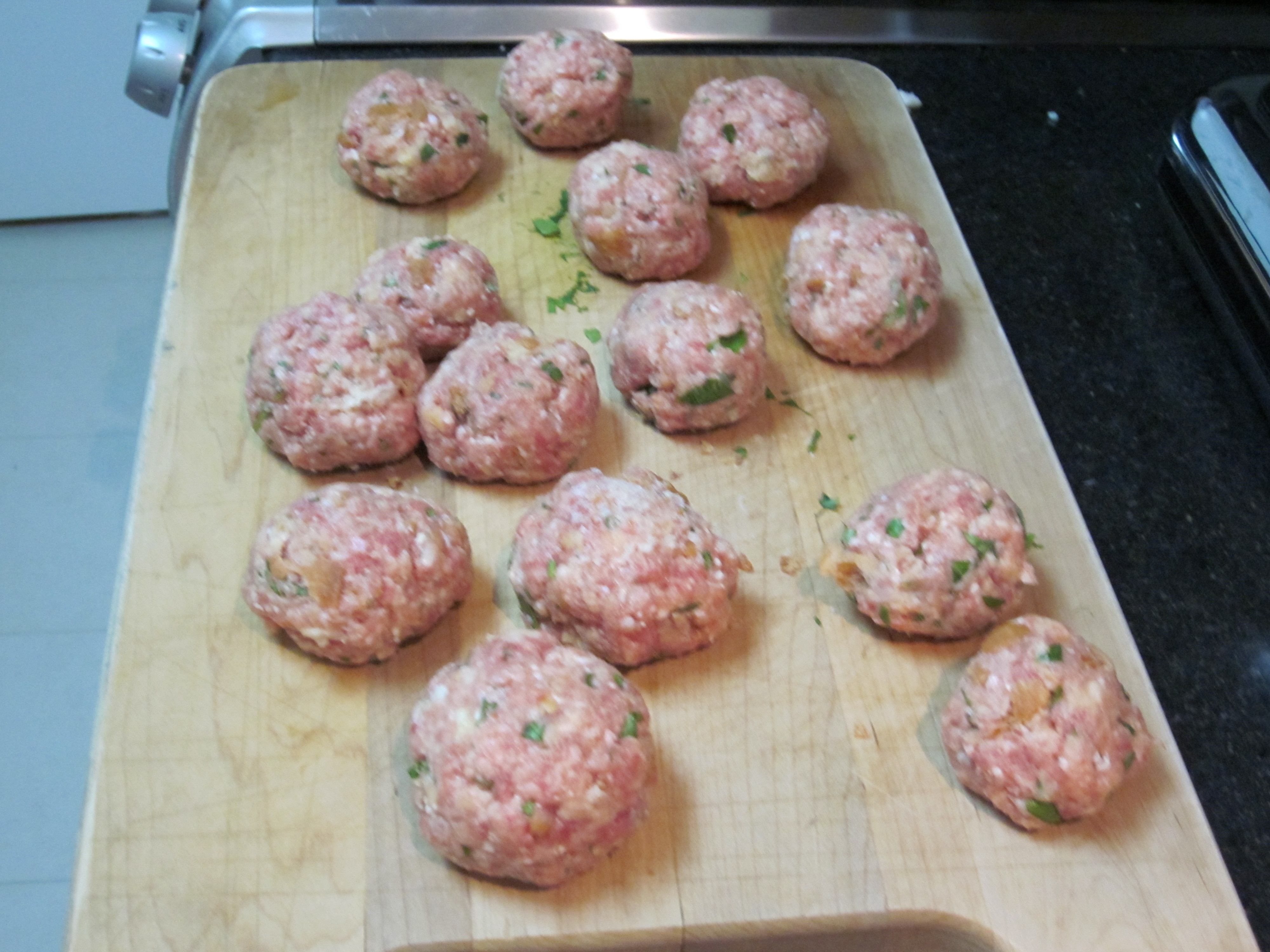
Roll into balls, size matters—whatever you want. (My Ma used to dip her hands in a bit of cold water as she rolled; I don’t seem to find that necessary).
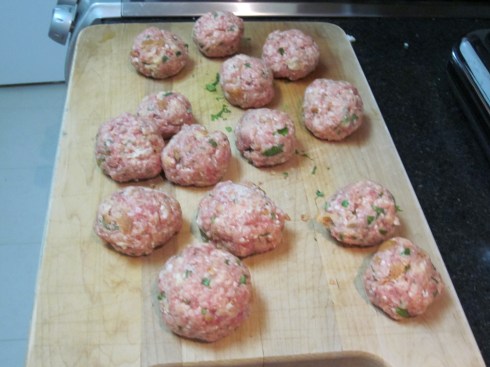
Size matters.

Estimate ½ the altitude of the balls and pour olive oil (could be veggie), but don’t waste XV** for this. Bring to solid frying heat and FRY your balls. Don’t crowd. If oil is deep enough, you may get away with turning them over ONCE. They should end up golden brown. They may not be totally cooked inside, but since they will go into gravy***, not to worry. Drain on a brown paper bag (Ha Ha!). Cover lightly at back of stove till ready to “sauce.”
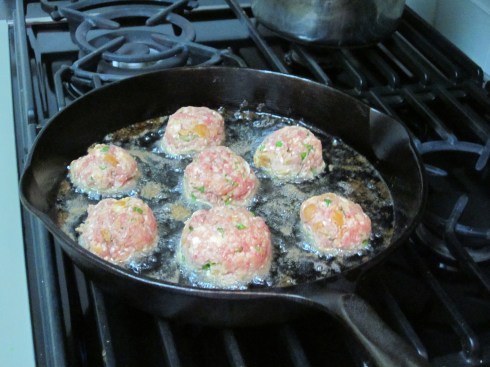
Don’t crowd them.

Eliz**** adds the polpette to the gravy only for the last ½ hour or so before serving. She says they rob the gravy of the liquid; also, they may break up. A longer time at low or warm would not be a tragedy.

Note: MB’s are not meant to flavor the gravy, so your marinaras should work well.

Another note: After frying, strain the fry oil for future use. Put some sauce in the pan and deglaze all those goodies. Put the stuff in the sauce (or gravy) pot for even added flavor.

My notes:

*I don’t believe my grandmother used garlic in the meatballs and I’ve since eliminated it. Garlic is my very good friend, but I put plenty in my sauce so a double whammy, I find, isn’t necessary and the meatball has a milder flavor and closer to what I remember from my grandmother’s.

**Giuseppe’s “XV’ was his abbreviation for Extra Virgin.

***He called it gravy. I called it sauce. The right terminology for what we were making was a constant battle between us but more on that for another day.

****Eliz was Giuseppe’s mother, now deceased.
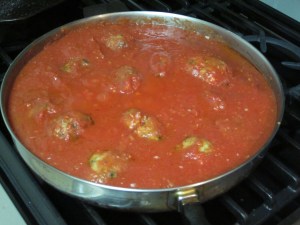
Goomba Joe’s Polpette

In memory of Joseph “Goomba Joe/Mamma G” Peluso, July 17, 1929-February 7, 2011.

Busted A** Chicken

28 Jan

I’m cold. I don’t know about you, but I’m damn cold. This winter has been—well, let’s tell it like it is: it’s been hell and that ridiculous groundhog hasn’t even shown up yet. I’m desperate for some heat and you know what they say about desperate times. So in my desperation I’m resorting to warming up my mind, if nothing else, with a hot recipe. Something to get me thinking about sweat, sun, and cold beer. Anyway, where I’m going with this is lighting a cyberfire on a Weber, and cooking up a busted a** chicken. There are other, maybe more politically correct names for it such as “beer can chicken” or “beer up the butt chicken,” but I think my terminology best encompasses the overall experience, both in preparing and eating the bird.

This is my own, award-winning, recipe of busted a** chicken. Yes, I did win an award: third place in the chicken category of the 2002 Jamaican Jerk-Style/Southern Barbecue Cook-Off in Montego Bay, Jamaica. I’m surprised you never read about it. The prize was cash money and, for any doubters, a hand-carved wooden map of the island of Jamaica (see photo below). At the festival, the judge was a Southerner named Rocky and one of my fellow winners was the legendary (in the barbecue world) Big Bob Gibson himself. But enough self promotion and name dropping. Here is the recipe:

My 3rd place trophy

Ingredients:

1 good-sized chicken (around 4 pounds)

1- 12 ounce can of beer (cheap beer preferred: Schaefer, Miller High Life, or Pabst)

For the rub:

2 tablespoons salt

2 tablespoons sugar

2 tablespoons brown sugar

2 tablespoons ground cumin

2 tablespoons chili powder

2 tablespoons freshly cracked black pepper

1 tablespoon cayenne pepper

4 tablespoons paprika

Mix up the dry rub ingredients. Clean out the chicken, removing any spare giblets or body parts that might be in the cavity. Wash and pat dry with paper towels. Massage the rub into the bird’s flesh and inside the cavity, under the wings and legs making sure it’s properly coated. Let the chicken sit for a half hour or so while you prepare the grill.

Fill up a starter chimney with hardwood charcoal and light it up. If your charcoal is fresh and dry it should take no more than twenty minutes to be glowing hot. While the charcoal is firing up, go get the beer. Make that two beers: one for the chicken the other for you. For the beer you’re going to use for the chicken, open it up and take a few sips until you’ve drunk about an inch of it. If you’ve got an old school can opener make a few extra incisions into the top of the can. If you don’t, you can poke a few holes in the top with a screwdriver or a nail. Whatever it takes to create more openings.

The beer of choice.

When the charcoal is ready, pull off the grate to the grill and pour in the hot coals. Using a garden trowel or barbecue tongs, stack the coals to one side of the grill. Put the grate back on.

Now it’s time to do the deed. Holding the chicken upright, cavity facing down, slowly impale the chicken on the beer can about two-thirds down onto the can. Place the now busted a** chicken on the grill on the side opposite the hot coals; what they call the “indirect” method. Put the top on the grill keeping the air vents open slightly.

While the chicken cooks, open up the other beer, find a very comfortable seat, and put on some music. Right now, I’m thinking maybe Jack McDuff’s The Honeydripper or Soul Summit with McDuff and the two Boss tenors, Sonny Stitt and Gene Ammons. You’d think country would work too, but I’m a city boy. No country for me with the possible exception of the late Charlie Rich and a few others, also now deceased. After about an hour or maybe a beer or two, check on the chicken. Really there’s not much to do there unless the coals are dying down. If they are, you’ll need to add about ten or twelve hot coals to the grill. The whole process shouldn’t take more than two or two and a half hours.

Music to cook busted a** chicken by.

The bird should have a nice dark brown tan by now. Using sturdy tongs, carefully remove it from the grill. Much of the beer in the can should have evaporated; the vapors from those hops and barley seeping into the flesh of the chicken keeping it moist and adding a hint of malt flavor. Still there might be some hot beer left in the can and you don’t want to drop it and have that spill onto you. That would definitely dampen a very relaxing few hours. Let the chicken stand about 15 minutes before carving. If you’re industrious you might want to make up some cole slaw or a pot of greens to go with the chicken. Enjoy.

Red Stripe: Yes. Lite: Never. And you’re asking a lot of the chicken with a tall boy. Needless to say, this one was not a winner.

Alright now. I feel better already just getting that out. They’re saying we might get an inch or two of snow tomorrow. Enjoy the weekend and I’ll return on Tuesday with another Adventures in Chow City.

Good luck

31 Dec

Getting your peas and rice ready for the New Year? Here’s a recipe from Sweet Sweetback. It’s a baaadassss one for sure. And don’t forget a dash or three of hot sauce. Just click on the button below and listen up.

Enjoy that Hoppin John and Happy New Year.

Christmas Cheer

23 Dec

Sorrel

I first sampled a drink made from sorrel in the early 1990’s on the island of Barbados where I was on assignment for a travel magazine. There I met a woman named Carmeta Fraser; more specifically, Senator Carmeta Fraser. She was a dignitary in that country’s government at the time. Her title: Food Promotion Director for the Barbados Marketing Corporation which is now known as the Barbados Agricultural and Marketing Development Corporation. She also had a radio program that was apparently very popular mainly extolling the virtues of local produce. Her motto was: “Let’s eat what we grow, grow what we eat.” I met with her at her modest home where she showed me her extensive garden and treated me to a number of fruit juices made from her garden’s bounty.

Barbados cherry

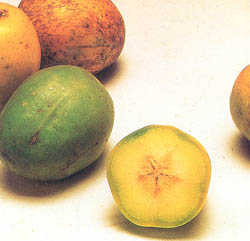
Golden apple

I sampled “cherry cool-ma,” made from the Barbados cherry also known as acerola, a slightly tarter version of cherries we are familiar with here and, as she told me, “packed with vitamin C.” Senator Fraser also had me try her homemade golden apple beer, a non-alcoholic drink made from golden apples from her garden. They call it golden apple in Barbados but elsewhere it is known as June plum, and it tastes nothing like our own golden apples. The juice of the fruit, blended with ginger and sweetened with sugar was distinctive and its taste something I just can’t equate. Finally, Senator Fraser brought out a drink made from sorrel telling me that you can drink it all year round, but it’s really best at Christmas time. A member of the hibiscus family, the plant, according to lore, yields its bright red flowers at Christmas. So in Barbados, and elsewhere in the English-speaking islands of the West Indies, they say  it’s just not Christmas without sorrel drink.

Fresh sorrel

I left Senator Fraser’s home with a number of her booklets promoting the benefits of eating local fruits, vegetables and meats. In one of the booklets was a recipe for sorrel drink and the following Christmas in New York, I made my own version and have been making it around Christmas ever since; adopting a tradition that has nothing to do with my own background. I’m not sure why I’ve adopted it; maybe it’s a reminder of sunshine and warmth during a cold, dark time of year. But whatever the reason, as they say, it’s just not Christmas without sorrel drink.

Senator Fraser passed away a few years after my visit. She is still remembered in Barbados as a pioneer in championing local and even organic produce and this past March a store at Grantley Adams International Airport in Barbados selling locally-made products opened and, to honor her work,  was named, “Carmeta’s.”

Here is my recipe for sorrel drink adapted from Senator Carmeta Fraser’s.

2 cups of dried sorrel*

3 whole cloves

1 ½ tablespoons of grated orange zest

1 ½ grated fresh ginger

2 quarts of boiling water

1 cup of sugar ( ½ cup more if you’ve got a serious sweet tooth)

Place the sorrel and the other ingredients except for the sugar in a large crock or ceramic jug. Pour the boiling water over all and let it steep in a warm, dry place for 48 hours. I keep it in my oven, just remember to take it out if you are using the oven during the process. Strain and add the sugar. Refrigerate for another 48 hours. Serve over ice, a wedge of lime, and, though Senator Fraser was a church-going woman and never mentioned it, an ounce (or two) of rum definitely enhances the drink’s Christmas cheer. If you do add rum, I recommend Barbados’s own Mount Gay or Appleton Estate from Jamaica.