Archive | humor RSS feed for this section

The Yummy Contagion

18 May

The yumminess is spreading and I’m not sure if that’s a good thing.

The Yummy Contagion has  left its terrible mark on the wonderful cuisine of Thailand. It’s gotten so bad that not only is Thai food referred to as yummy, but some also say it’s become “yum yum.”

I very much like sushi. I just don’t like it when it’s “yummy.”

You could describe dim sum is yummy, but no one is forcing you.

I’m not sure I really want to know what one might encounter within the Yummy House.

By the way, the noodles at Yummy Noodles are…

Neckbones Presents: The Bizarre Eats of Chow City

16 May

We each have our own definition of what might be bizarre when it comes to what we eat. To some, llama hoof in black bean sauce might seem bizarre, but to others, that is sustenance

Here in the city where I dwell, there is ample evidence of peculiar, even exotic, eats. In this new segment of Fried Neck Bones…and Some Home Fries, I intend to wander the city streets, mostly aimlessly, searching for the unusual, the weird and wacky.

Weird—wacky—odd; these are all subjective terms when referring to food. What I think is bizarre, or downright disgusting, others might thoroughly enjoy, and even indulge in regularly. So I promise not to judge. I pledge to do my best to respect my fellow man’s questionable taste in food stuffs. If I slip and begin to preach or moralize on the food choices of others, please don’t hesitate to call me on it. Sometimes I just need to be reminded.

The Hawaiian

In my decades of devouring pizza, I have heard tell of an unusual slice called “The Hawaiian.” I have even seen it on display at various pizzerias; the pineapple being the prominent ingredient sitting, unappealingly, on top of the crust surrounding by cheese and ham, the combination repellent to my pizza snob sensibilities.

I knew that in pursuing the bizarre foods of New York there would be challenges. I now needed to search out a slice of Hawaiian and summon the courage to actually sample it.

My first stop was 2 Bros’ Pizza, a chain of 99 cent-slice pizzerias, They advertised the “Hawaiian,” on a display menu. I perused the pre-made cold pies on display but saw none with the customary pineapple.

“Do you have the Hawaiian?” I asked the African man behind the counter.

“The what?”

“The Hawaiian,” I said again, this time pointing to the reference on the list of pies.

He went to the same display of pies I had inspected and returned shaking his head. “No, we don’t have the Hawaiian today.”

“Will you be making any?”

“Not today,” he said.

“Ever?” I inquired hopefully.

“Yes, maybe tomorrow we make it.”

I thanked him for his help and exited.

My next stop was a Chilean-run pizzeria I knew of on the Upper West Side called Freddie & Peppers. I have had their pizza in the past and knew they usually offered very unusual combinations of slices. They just might have the Hawaiian.

I checked out the pre-made pies behind their counter but again, didn’t see any with pineapple. On their menu, there was a mention of a “Hawaiian.”

I asked the South American man behind the counter if he had the Hawaiian.

He looked perplexed. “No, we don’t have that,” he said.

I could tell from his look and the way he responded, that the Hawaiian was not something they made very often or at all anymore. I didn’t press it further or suggest that maybe it would be a good idea to remove it from their menu so as not to disappoint a driven man on a ridiculous quest.

Finally, I stopped at Maria’s Pizzeria further uptown. I double-parked and peered in. On the window was a menu. I saw it there listed as The Hawaiiana.

I ran inside. There it was: a slice adorned with pieces of ham, mozzarella, and, of course, pineapple.

I quickly ordered it and took it home for a family sampling.

The Hawaiian

After reheating it, I cut the slice into pieces, one each for the 8 and 12-year old, another for my discerning wife, and a piece for myself.

The 8-year old looked at it, made a face and shook his head.

“Try it,” I said.

“I don’t want to,” he said. This is from a boy who will eat eel and now calls Part One of the Fazool Trilogy Pasta e Ceci one of his favorite pasta dishes.

“It’s just pineapple.”

He shook his head and left the kitchen.

The 12-year old didn’t hesitate, but he rarely hesitates on anything pizza-related. He ate it heartily. “What do you think?” I asked.

His mouth full, he gave me the thumb’s up.

“Would you order it?”

“No, never,” he said after swallowing.

I nodded.

He eyed his brother’s uneaten piece. “Can I have his?”

I said he could and he stuffed it down.

Now the more mature palates sampled.

“It tastes like it came from a can,” my wife said.

She was right. The pineapple had a metallic flavor to it and its sweetness overpowered the ham and cheese. Though I could find no visual evidence of tomato sauce, there was a hint of it in the slice. How it got there, I don’t know.

The Hawaiian was edible…at least to all of us but the 8-yar old. No one gagged. And we all swallowed what we chewed. Still, I wondered, what would motivate a chef to think to put slices of canned pineapple on a pizza? Did he/she think the sweet would meld with the salty? Maybe some people just need a little sugar on their pizza? And if they do, who am I to deny them that gratification.

Tony and Tina’s Post-Honeymoon Burek

11 May

Tony & Tina’s Pizzeria
2483 Arthur Avenue
Bronx

I planned to meet Zio at 593 Crescent Avenue in the Belmont section of the Bronx. This was just off Arthur Avenue, also known as the Little Italy of the Bronx. But I wasn’t making the trek for Italian food; the area is also an enclave for Albanians, Bosnians and Kosovans. I wanted the Albanian equivalent of pizza, known as a burek and Djerdan Burek was, according to Google maps, just a half block from Roberto Paciullo’s place, Roberto’s, and the planned destination for our consumption of  bureks.

“I’m bringing the Colonel,” Zio said over the phone on the morning before we were to meet.

It was no problem with me if he brought the Colonel, his long time companion, and the mother of his children, though for some reason he wasn’t very enthusiastic about it.

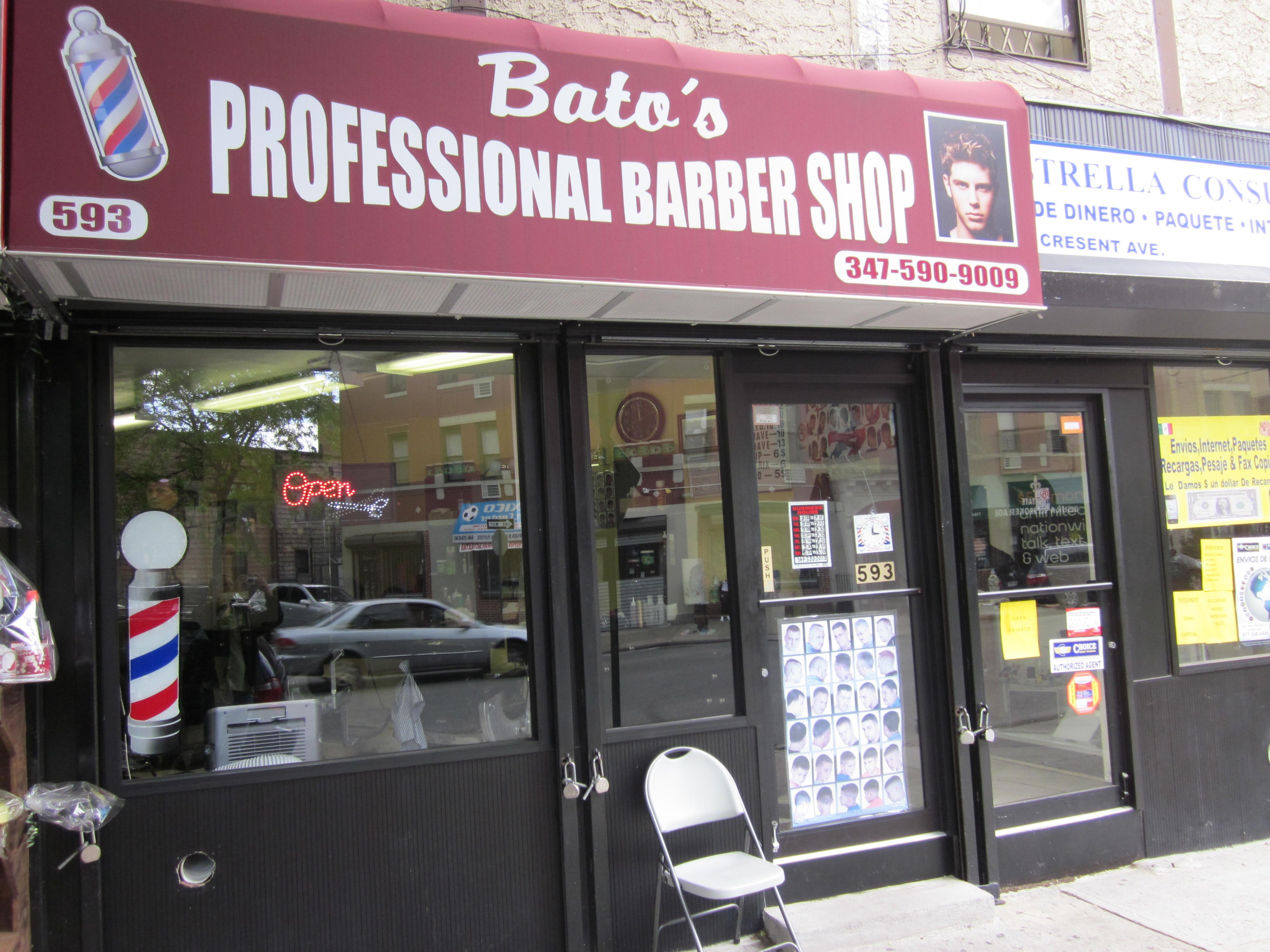
When I arrived at 593 Crescent Avenue, my enthusiasm waned as well, but not because we would be dining with the Colonel. Instead of being greeted with the smell of freshly baked bureks, I was confronted with the odor of hair tonic from Bato’s Professional Barber Shop. I peered inside hopefully thinking that maybe the bureks were sold in the back of the barber shop, but from what I could see through the window, there was no food at Bato’s.

593 Crescent, where you can get a trim and a shave, but no burek.

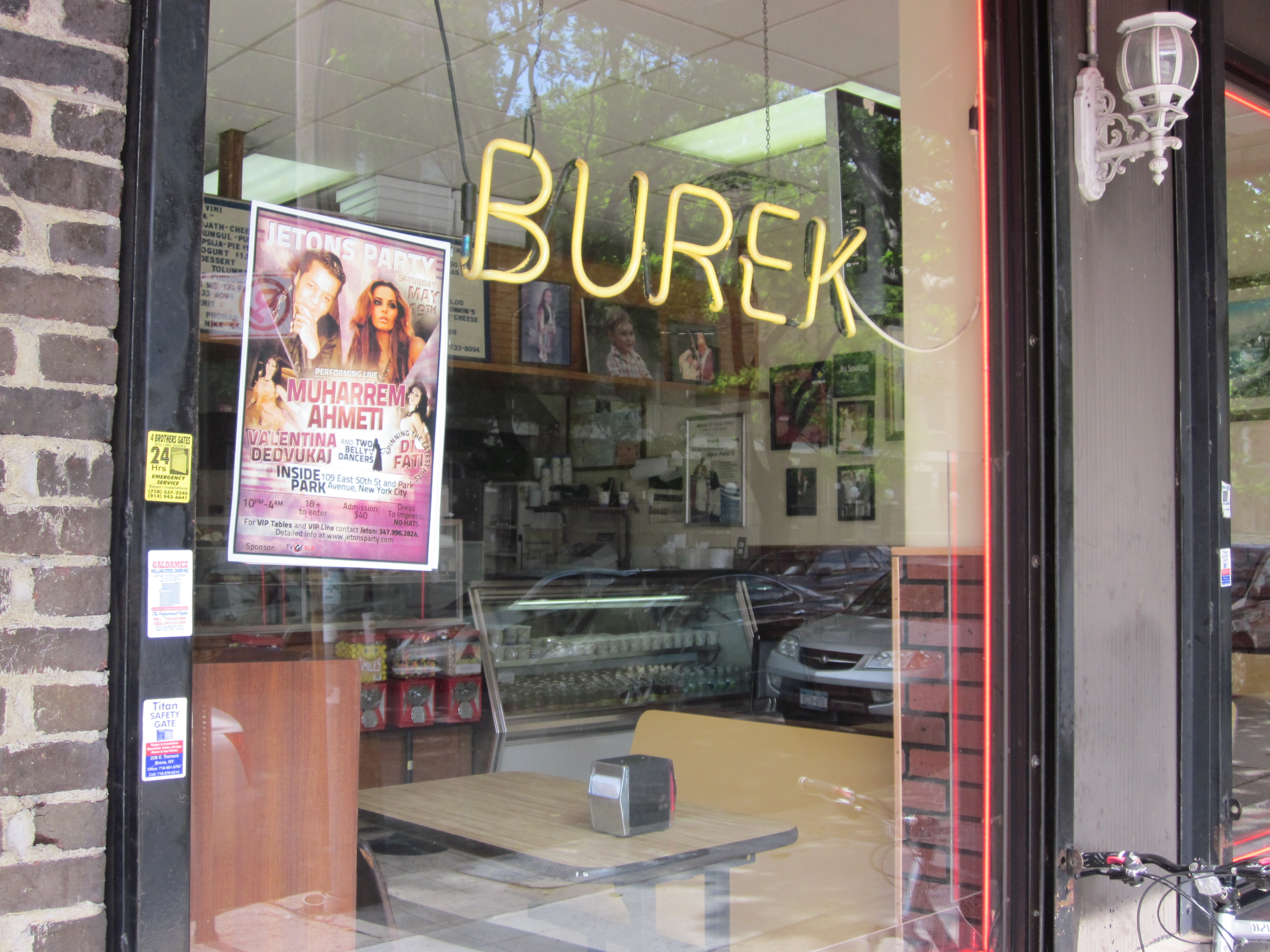
I knew there were bureks not too far from Crescent Avenue. I even noticed a “burek” sign in a window a block from Fordham Road when I was driving into the neighborhood. So Zio, the Colonel and I decided to head in that direction.

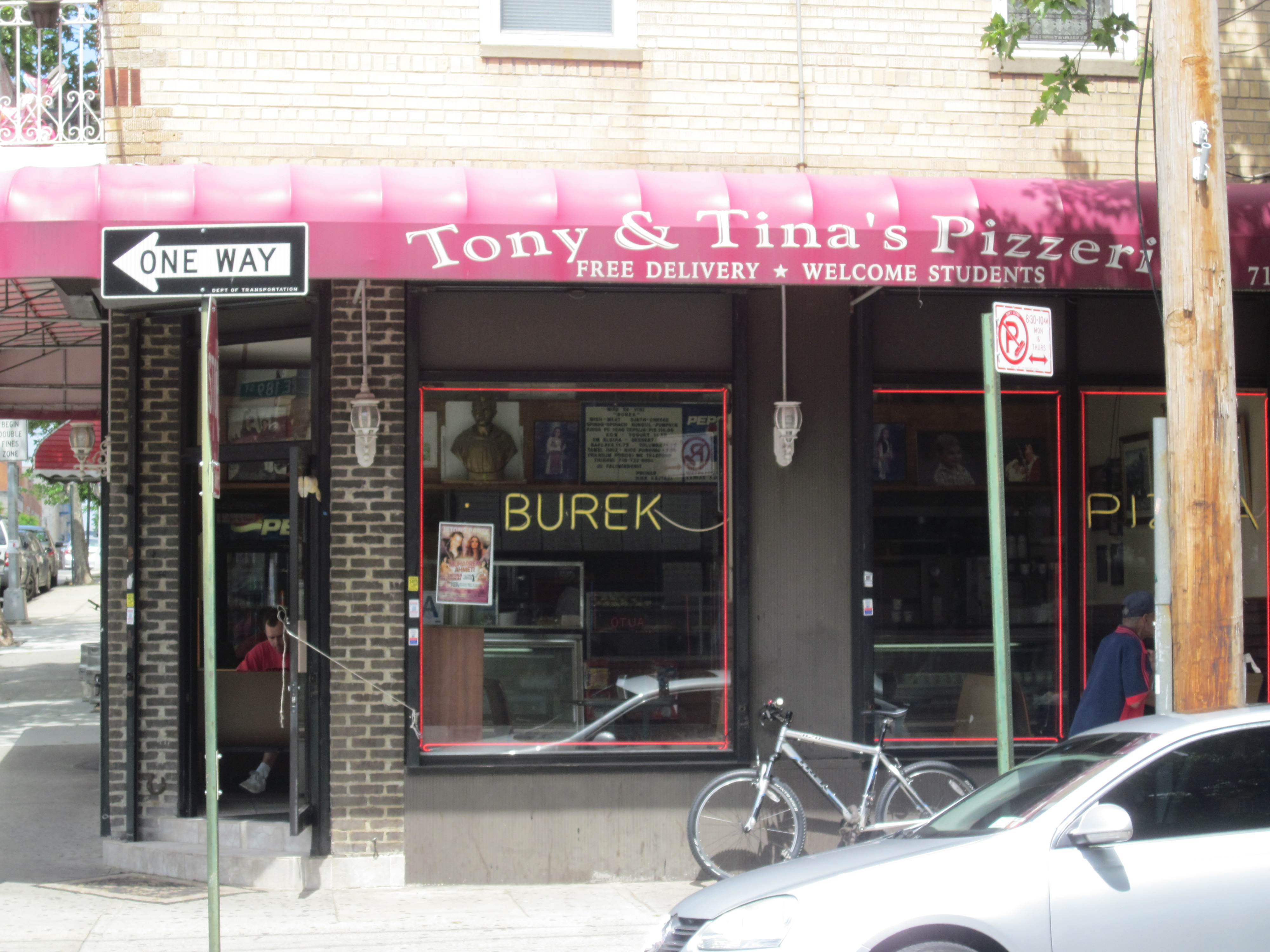
We strolled past Randazzo’s Seafood, Dominick’s Restaurant, Roberto Paciullo’s other place, Trattoria Zero Otto NoveAnn & Tony’s Restaurant (“Five Generations”), and the Arthur Avenue Baking Company, before arriving at Tony & Tina’s Pizzeria.

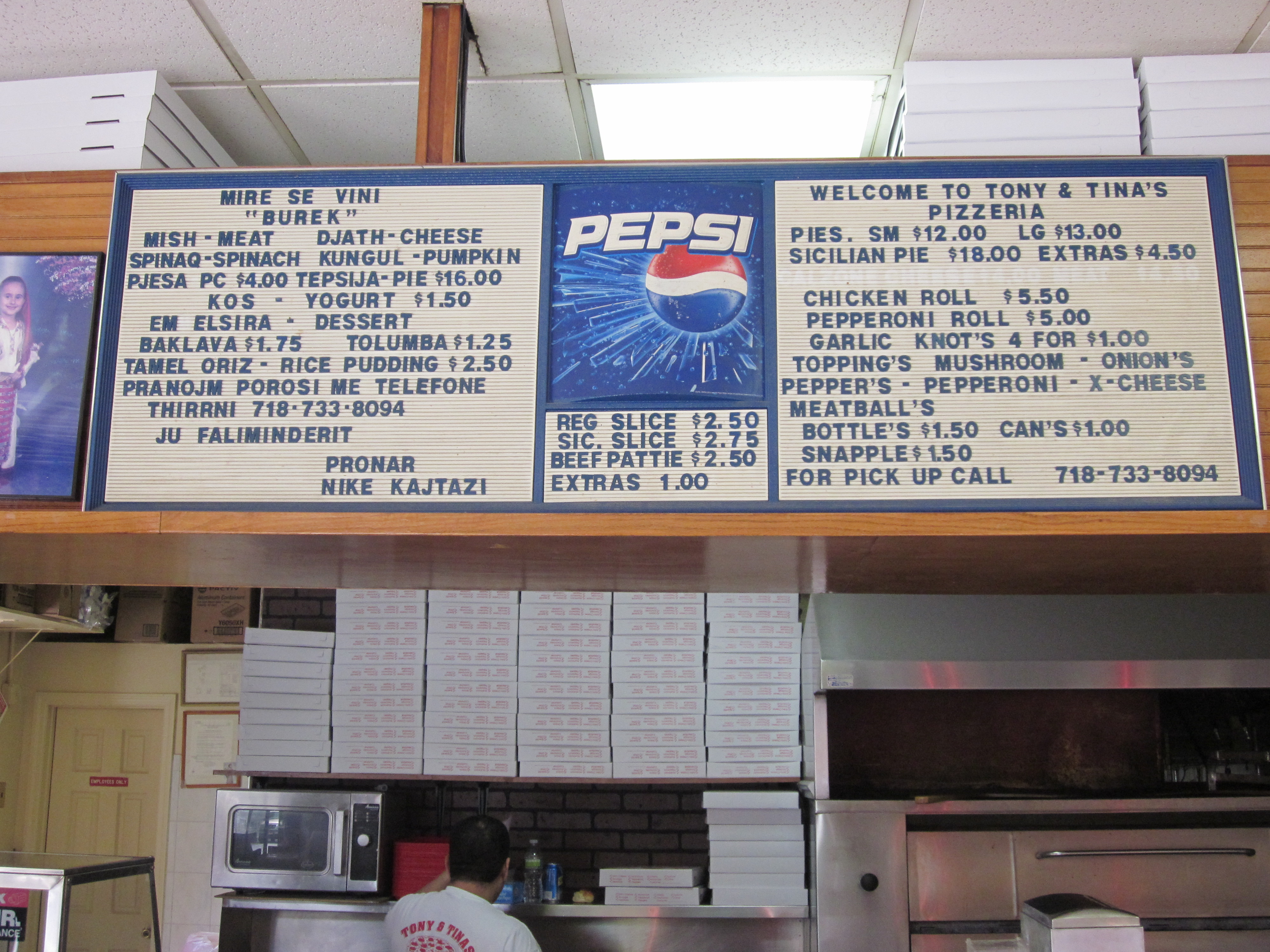
Inside the small pizzeria, we glanced at the assemblage of phyllo dough stuffed pies behind the counter known as bureks. And then we turned our attention to the pizza, garlic knots and calzones on the other side of the counter. Zio’s jaw drooped slightly as he stared at the wan, cold, cheese-congealed pizza. “Is that what an Albanian pizza looks like?” he asked incredulously.

“I don’t know,” I said. “I’ve never been to Albania.”

Stick to the items in Albanian.

We went for the combination platter of bureks; cheese, meat, spinach and a spiral shaped one stuffed with sweet pumpkin. As we were about the dig in, the Colonel got a phone call.

“Sorry, I have to take this,” she said, walking out of the pizzeria, cell phone in hand.

“Should we wait?” I asked

“Are you kidding?” Zio scoffed, and quickly began to devour one of the meat bureks.

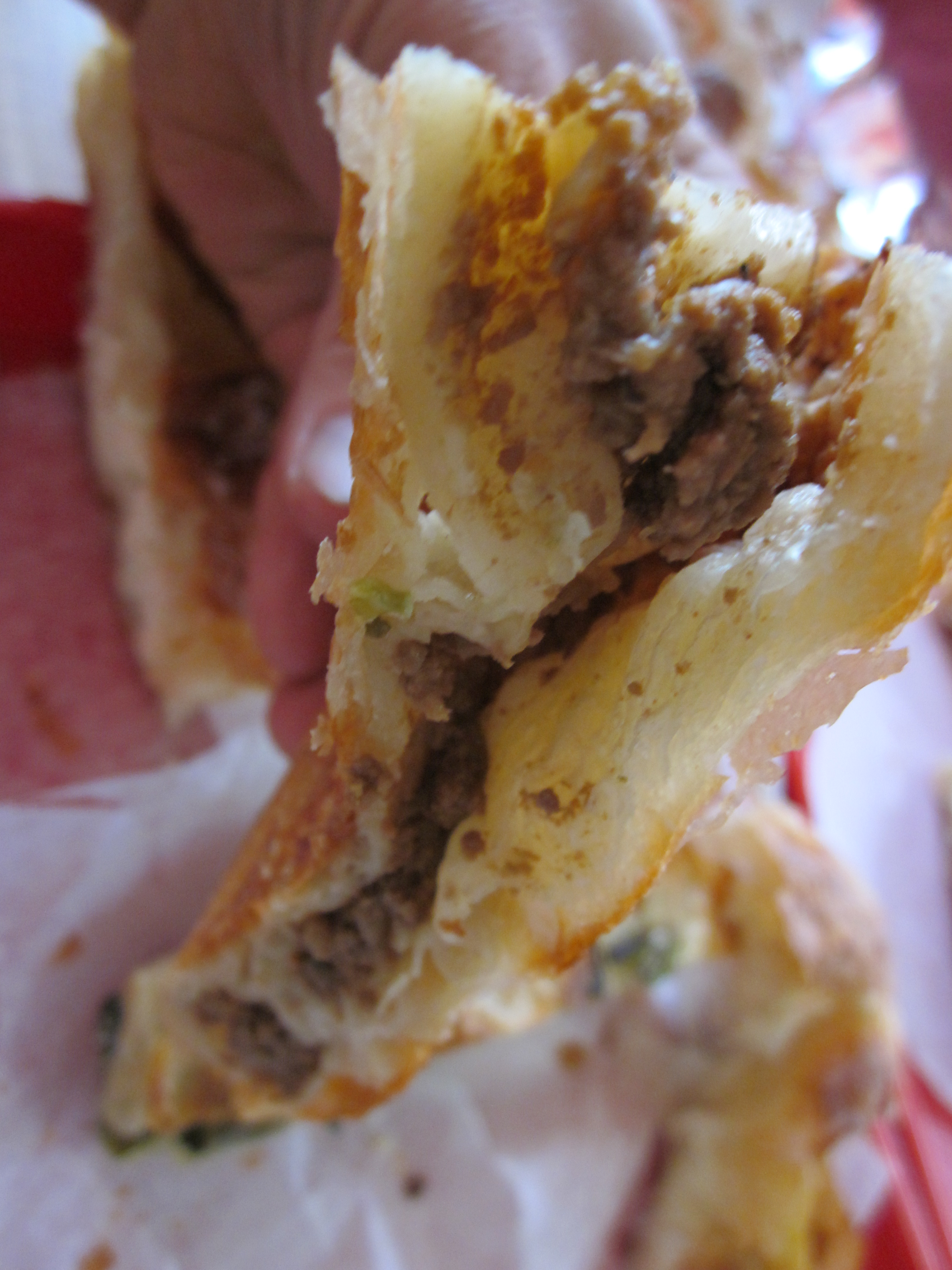
Meat burek

I was a little hesitant.

“She’ll end up just taking a few bites, anyway,” he garbled with his mouth full of phyllo dough.

The Colonel was outside, leaning against a parked car, cell phone attached to her ear. I decided to take Zio’s advice and began eating.

Cheese burek

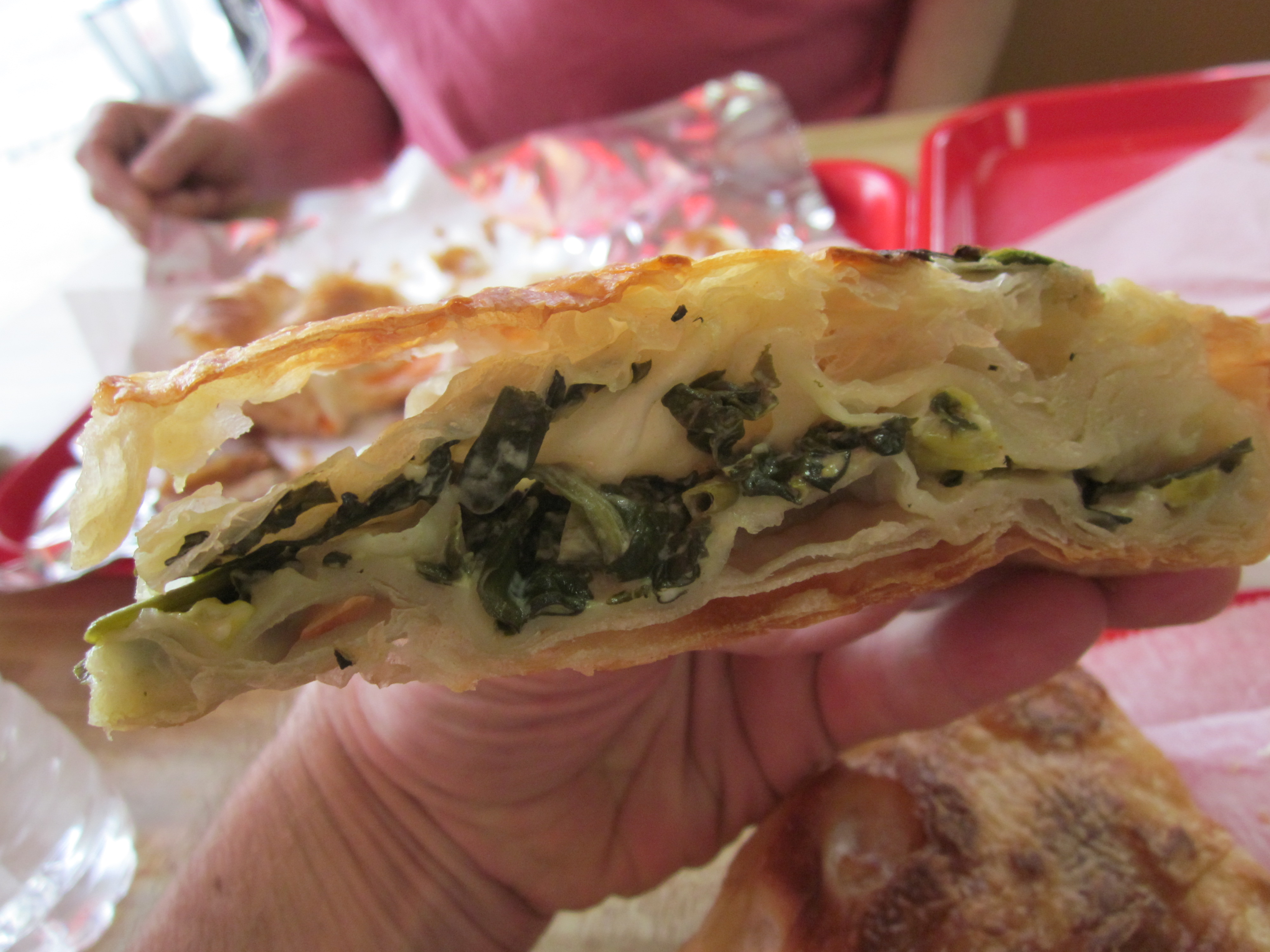
All the bureks were flaky and fresh; the cheese mild but not too dense, while the spinach was fragrant with onion. The ground meat in the meat burek had just enough grease to slightly absorb into the pie dough.

Spinach burek

The Colonel returned. “That was my friend M,” she said. “She’s almost 10 centimeters dilated.”

“Uh huh,” Zio muttered disinterestedly, his mouth now stuffed with a cheese burek.

The Colonel took a tiny bite of each and then bagged the rest.

“What did I tell ya,” Zio said.

I tried to answer, but I felt a tickle in my throat. I drank some water. The tickle was still there. I coughed and then took another sip of water. I coughed again. A miniscule flake of phyllo dough was caught in my windpipe. I coughed once more. The flake finally dislodged.

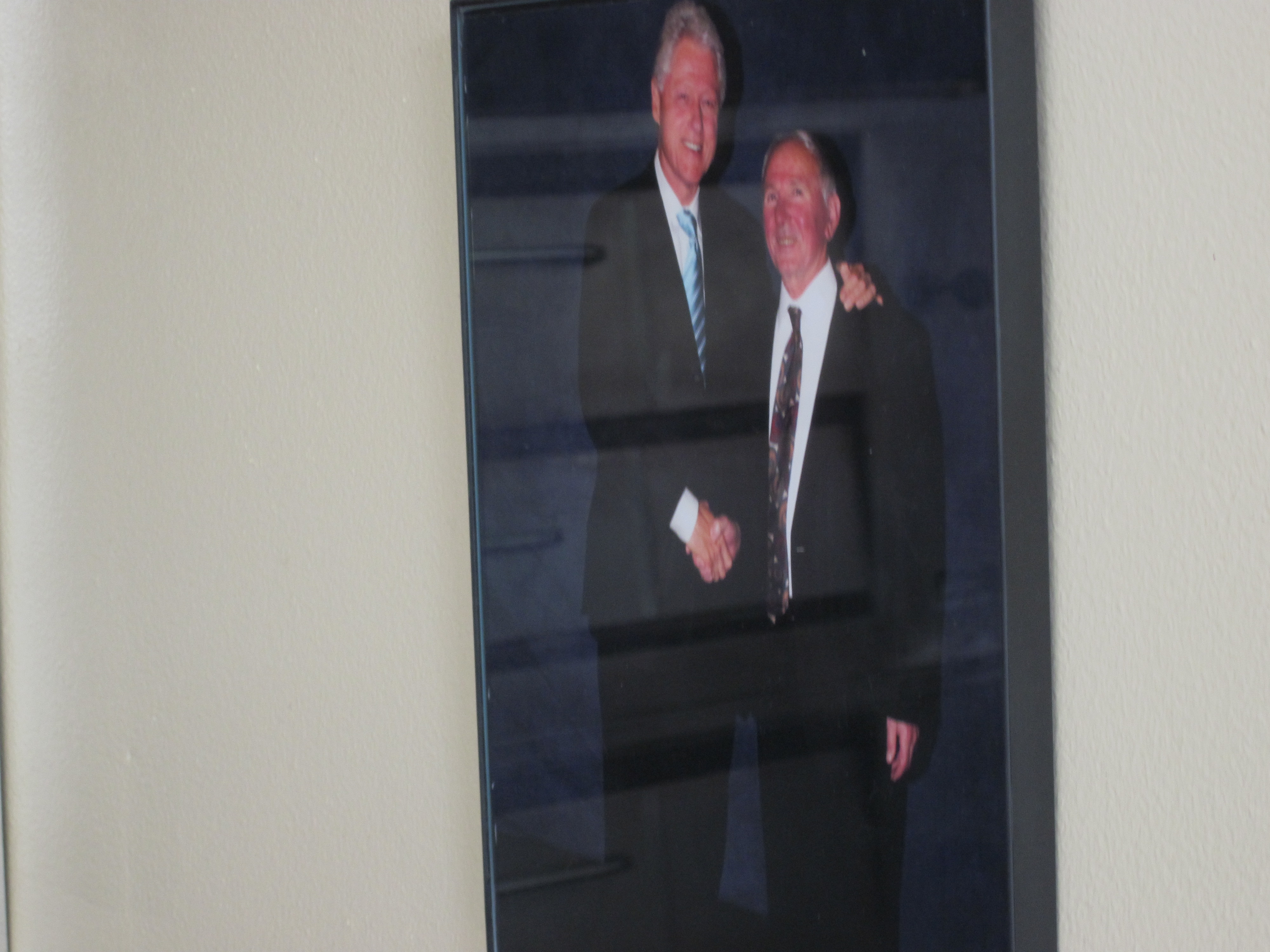
Bill Clinton: A friend and ally of the burek.

The Colonel took her bag of  nibbled bureks, and the three of us walked back down Arthur Avenue, Zio stopping briefly at Umberto’s Clam House, where  a sign said:“Bus tours are welcome.”

“Didn’t they used to sell live chickens here?” Zio asked.

“They did,” I said. “I once wanted to buy one, but they told me you needed to order it at least a day in advance so they could kill the bird and then clean it up.”

Zio stared at the colorful sign proclaiming Umberto’s many happy hour specials. He shook his head. “Isn’t Umberto’s where Joey Gallo was whacked?” he asked.

“Yeah, but that was at the original on Mulberry Street,” I replied.

He continued to stare and then shook his head. “I liked it better when it was a chicken place,” he said. And then we continued our walk through the Little Italy of the Bronx.

The Fazool Trilogy: Part Three

9 May

Of the Italian-American all star bean trio I have written about in the Fazool Trilogy, it is this dish that most refer to when they speak in that slang my high school Italian teacher reviled, “fazool.”

And in honor of my high school Italian teacher’s pet name for me, “pigrone” or lazybones, I’ve titled my version of pasta e fagioli accordingly.

It’s not just because I was a lazy student  in my high school Italian class that I’ve named the dish this way but because, by using canned beans instead of dried, which require soaking and then cooking on their own, I’ve cut a huge corner in preparation. I’m all for cutting corners in cooking if the results are pretty much negligible either way. And in my experience, I find little difference between taking the time to soak the dried beans instead of using canned. Certainly not enough to warrant the extra time and effort.

Unlike pasta e ceci, and pasta lenticchie, my grandmother did not make pasta e fagioli much for me. I remember her serving heaping bowls of it to my grandfather at lunch when he would come in from gardening, construction, house painting; whatever  handy work he was doing at the time. I don’t recall my brothers and I being forced fed what my grandfather ate heartily. Maybe she assumed that we would totally reject the concept of the pale cannellini bean and rather have a tuna fish or peanut butter and jelly sandwich. And looking back now, that’s a shame. As a result, I came to my appreciation of pasta e fagioli later in life.

When they say “fazool” this is what they mean.

My grandmother, I do know, made pasta e fagioli with the legume of choice for the dish, the cannellini bean. I have known Italians, however, who swear by the kidney bean when making their “fazool.” To me that changes the dish completely, but who am I to judge anyone on their fagioli preference?

All of the bean dishes in the Fazool Trilogy are unique and not just because of the type of bean. The first in the Trilogy, Pasta e Ceci, is more like a pasta dish; the pasta being the dominant part of the dish with the chick peas folded into the pasta.

In the Fazool Trilogy: Part Two, Pasta e Lenticchie, the lentils are the main attraction while the strands of broken spaghetti fill out and balance the dish by adding much needed starch to the heftiness of the lentils.

Pasta e fagioli, at least the way I like to make it, is more like a soup, or stew, than the other two. And because it has a more liquid consistency, unlike the others, I add a little meat flavoring, chopped smoked ham or pancetta. If you want to keep it meatless, you won’t lose much; the same can be said with adding meat to the other two in the Trilogy.

What follows below is my pretty standard, and hopefully not too difficult, recipe.

Lazybones Pasta e Fagioli

Ingredients

1 tbs of olive oil

2 cans of cannellini beans, (15-16 ounces) drained and rinsed.

1 medium onion, chopped fine

1 celery rib, chopped fine

1 medium carrot chopped fine

3 garlic cloves, minced

1 tsp dried oregano

¼ tsp red pepper flakes

3 to 4 cups of chicken broth (beef broth works too)

2 cups water

1 tsp salt

1 28 ounce can of diced or chopped tomatoes with juices (I like pieces of tomato in my broth, so I usually go with diced or chopped; sometimes crushed is just puree)

3 ounces smoked ham, pancetta, or bacon (I prefer the first two to bacon just because bacon’s strong flavor influences the dish more than I like, but it still works. For this batch I’ve used smoked ham).

1 secret ingredient (that’s not so secret anymore, to find out what it is, refer to The Fazool Trilogy: Part Two.)

Secret ingredient

8 ounces of a small pasta shape (I like ditalini, but small shells, elbows, and tubetini also work).

¼ cup chopped fresh Italian parsley

Grated Parmesan cheese

The pasta of Pasta Fagioli

Heat the oil in a heavy Dutch oven or wide bottomed pot over medium-high heat.
Add the ham, pancetta or bacon and cook until it browns lightly, around 5 minutes.

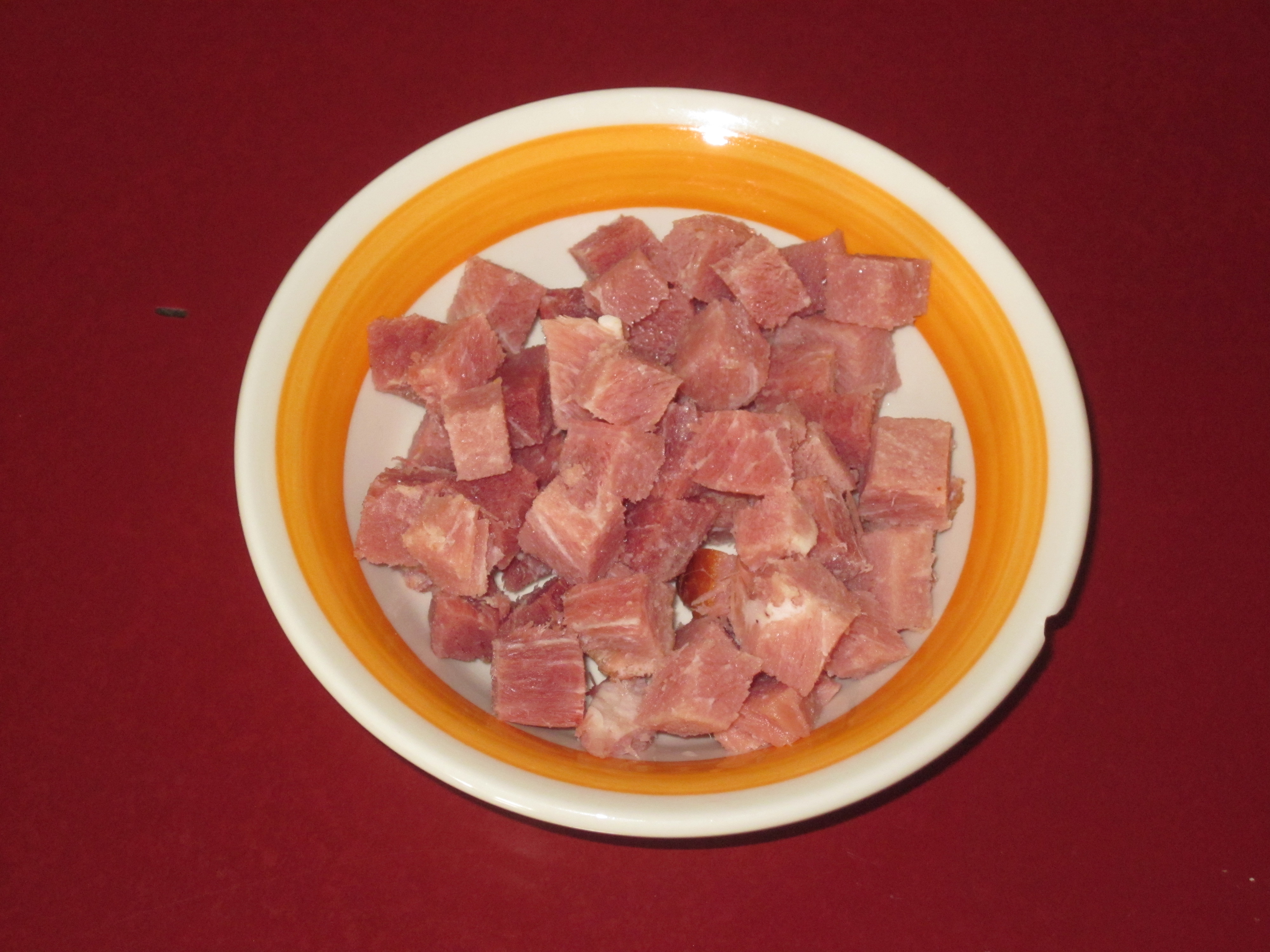
Chopped smoked ham

Stir in the onions, celery, and carrots, until they are softened. Around 7 minutes.

Add garlic, red pepper flakes, and oregano, stir for about 1 minute.

Pour in tomatoes and the secret ingredient that’s not so secret anymore and bring to a boil.

Pasta e Fagioli minus the pasta and the fagioli.

Add the broth, water, 1 teaspoon salt, beans, and bring to a boil and then simmer for about ten minutes.

Drop the pasta into the pot and cook until it is a minute from being al dente. Timing depends on the pasta shape and brand; check the package. (Beware of overcooking the pasta; you don’t want mush).

Turn off the heat, stir in the parsley, ladle into bowls, and add the desired amount of freshly grated parmesan cheese.

Pasta e Fagioli

Like the others in the Trilogy, Pasta e Fagioli is best served with a crusty bread and a green salad.

Thus concludes the Fazool Trilogy, however, I am always open to suggestions and ideas on how this series can be continued and transformed into epic status. So please don’t hesitate to comment with your fazool insight.

Name That Place

4 May

Why do I think the two “classics” above are a dead giveaway to naming this month’s place? Because I have much faith in my New York-based foodie followers to have experienced those particular classics.

But have I overestimated? Here are two more  photo hints.

Retro anyone?

High tech nostalgia.

These photos should be more than enough to create an avalanche of comments below with your answers. If not, well..

As usual, I will Name That Place right here at Fried Neck Bones…and Some Home Fries on Monday.

Cinco de Mayo Tacos on Veinticinco de Abril

1 May

Los Portales Taqueria
25-08 Broadway
Astoria

Cinco de Mayo was more than ten days away, yet Rick used the Mexican heritage celebration as his reasoning for choosing the Astoria-located, Los Portales Taqueria as our next eating destination.

A few hours before our assigned dining date, however, I received a text from Rick saying his boss was “urging” him to have dinner with him in New Jersey. So instead of celebrating an early Cinco de Mayo at a taqueria in Queens, Rick was in Newark eating red meat at a Brazilian steakhouse.

And it some ways, it was a good thing. As it was, we had to squeeze an extra chair around the biggest table at Los Portales to fit the five of us. If Rick were present, one of us would have had to eat at a separate table, which, depending on who was the odd man out, was not necessarily a bad thing.

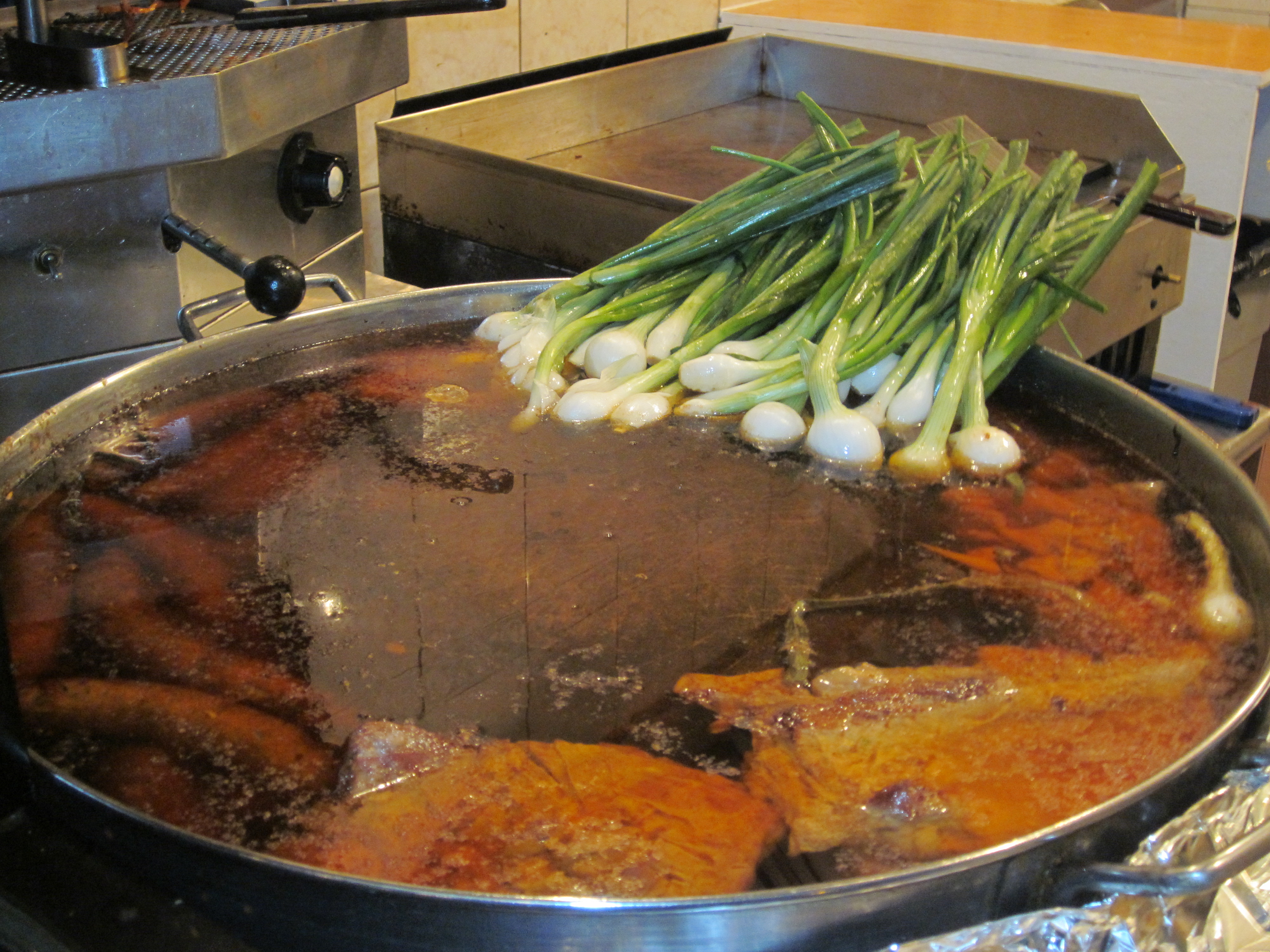
Just beyond the portales of the taqueria was a cauldron of meats along with a burnt red glazed slab of pork (al pastor) on a spit. All of it looked authentically promising though that was expected when in Rick’s initial email declaring our destination he wrote “don’t try to call them—English is limited.”

A cauldron of meats.

The menu covered all the basics: tacos, cemitas, tortas, burritos, tostadas, quesadillas, and assorted familiar platters like pechuga de pollo, bistec en salsa rojo, and fajitas. There were also bonus items that we had no interest in like wraps, “hamburgesas,” vegetarian specials, and hard shell tacos.

Despite the limited English, hand gestures and finger pointing made ordering very easy. We started with two orders of guacamole. They came on plates with chips sticking out of the bright green mounds of guacamole like Mayan temples. With the guacamole we also tried the grilled green scallions, some so big they were more like spring onions; the char bringing out their sweetness.

Grilled scallions

Zio quickly gravitated to the oreja taco, known in English as pig’s ear while I started with a saudero (veal flank). Sprinkling some of the restaurant’s red salsa on it, I devoured the taco quickly. Zio was a little more hesitant with his pig ear taco, however. The tiny pieces of chopped ear were so smooth it was as if the pig had them waxed. Gerry noticed that Zio had left an assortment of the ear pieces on his plate. “You’re not eating those,” he inquired.

“What? You want some?” Zio wondered. “You can have them if you want.”

Gerry shook his head. “No, they’re all yours.”

“Thanks,” Zio muttered.

Pig’s ears tacos

Who am I to judge on what another man orders at an authentic taqueria? So I tried to keep my mouth shut when both Eugene and Zio chose the pedestrian chicken fajita. Gerry went a bit more adventurous with the chilaquiles with huevos; a variation of huevos rancheros; the eggs served over cut corn tortillas and doused in a green tomatillo sauce.

My choice; the al pastor cemita, a fresh sesame seeded roll stuffed with chunks of the burnt-red roasted pork, avocado, cheese, and salsa rojo was so good I plan on scouring the nearby taquerias of East Harlem to see if  the sandwich can be replicated thus saving me a subway ride to Astoria.

Al pastor cemita

While the rest of us had long finished, Mike from Yonkers was deliberately nibbling at whatever it was he ordered that included shrimp, and from what I could make out, also peppers and onions, and lots of them. The eating of the meal was a studied process. He would break off a small piece of the tortillas that came with his meal, scoop some shrimp onto it, add a little rice, then some beans, a drizzle of one of the salsas; sometimes green, other times red, and then slowly chew, swallow and then repeat the process.

When he finally finished, he abruptly headed to the rest room. His absence was not immediately noted; the hysterical clamoring from a Spanish-language comedy Zio dubbed the “Mexican Honeymooners” that played on the television in the restaurant distracting us from Mike from Yonker’s wherabouts.

When we were no longer amused by the bizarre comedy on the television, Zio proudly whipped out a card. “Do you know what this is?” He asked waving it in front of us.

None of us had a clue.

“With this I can get into the subway at half price,” he said. “One of the many advantages of becoming a senior citizen.”

Like Zio, Mayor Bloomberg is also very proud of his senior citizen metrocard.

Zio’s senior citizen metrocard held our interest for a few minutes more and when the thrill receded, I realized the seat next to me remained empty. Mike from Yonkers had been gone for a long time. “I hope he’s alright,” I said and as if on cue, he emerged from the rest room.

“Everything okay?” I asked

He sighed; his face a bit sallow. “Um…I forgot to tell you. I had Mexican food for lunch. Enchiladas.”

Mike from Yonkers’ downfall

With that admission, we all looked at each other. There wasn’t much to say. If a man wants to celebrate Cinco de Mayo ten days before the actual holiday with a double dose of Mexican food that is his right. But, still, we didn’t have to stick around to witness the potentially nasty consequences of such a decision. And with that we parted company.

Today’s Special

27 Apr

Nice to have so many options, even if some of them are shitty.

Friends With Frog Benefits

24 Apr

Hunan Manor
339 Lexington Avenue
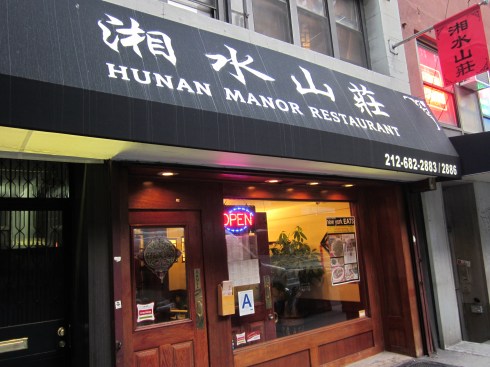
That a man was outside trying to get passers by to take the menus he was handing out was not a good sign. Still, it was what was on those menus that enticed me to try Hunan Manor. And when I relayed to Gerry some of those menu items: “steamed pork elbow,” “frog in spicy soup,” “cumin flavored beef on toothpics,” fragrant pig ears,” and “numbing—and—hot chicken,” it was very easy to entice him to join me as well.

Without taking a menu from the man outside the restaurant, we went into the generic, harshly lit, restaurant where there were plenty of tables available. In the back a large party shared a big round table. There were bottles on the table; wine, alcohol, soft drinks and they were loudly toasting each other.

Along with the big table in the back, all the patrons were Asian, Chinese I assumed, maybe even Hunanese, but assuming is something I try not to do.
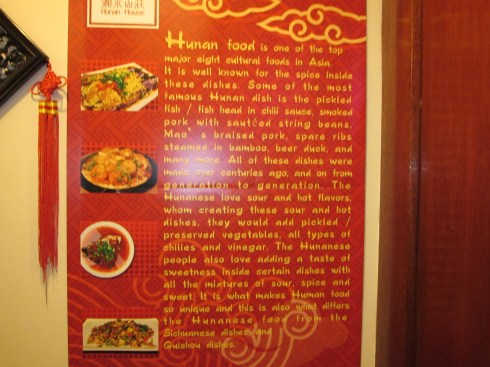
Hunan cuisine explained.

Gerry and I wanted to sample authentic Hunan, as opposed to authentic Szechuan, and after looking at the long menu, the restaurant would have been a natural for our Chow City group. The only problem were the prices; not outrageous by any means, but a bit too high for our miserly standards.

Gerry is a prodigious eater and I certainly can hold my own, but even by extending our gluttony to unheard of limits, the two of us alone couldn’t do the menu justice.

Before we ordered, our waiter asked the obligatory “You like spicy?” question. Once we got that out of the way and affirmed our penchant for unadulterated Hunan, we proceeded to order.

Our first course was a soup to share; the Chinese yam with pork ribs. While we waited, a tiny, Asian woman took the table next to us. She was familiar with the management and spoke fluently to them, not even bothering to look at the menu.

Our soup arrived. We used the provided spoons to sip the clear, yet fragrant broth delicately and then fished out the chunks of pork ribs and tore meat from bone with our teeth.
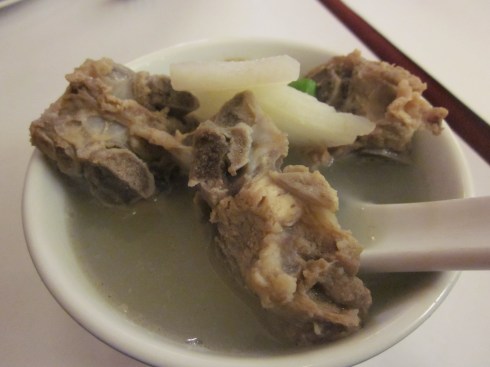
Pork and yam soup

While we made quick work of the soup, two enormous platters arrived in front of the woman sitting next to us practically obscuring her. One was some sort of meat sautéed with peppers and chilies while the other was pale; tofu, maybe…or something else we knew not what.

We looked at each other and then back at the platters on the table next to ours. Gerry raised his eyebrows at me slyly and then nudged his empty plate a little closer to the platters in front of the woman.

I admit to being a Hunan novice; I had no clue what it was that she was about to dig into. And I also admit to abhorring those who stare longingly at others’ dinners and then obtrude by pointing at it and asking, like I found myself doing: “May I inquire what that is?”

The woman next to us did not share my aversions.   “Frog,” she replied pleasantly, not put off at all by my sorry table manners.

We looked at the other platter in front of her.

“Potatoes,” she said, indicating the pale mound of starch topped with strips of peppers.

Potatoes at a Chinese restaurant? We were now very intrigued and kept staring—longingly at the platters. Gerry pushed his empty plate a little closer to her, hoping that she would pick up on his no longer subtle movements.

Trying to help Gerry out, I forced an idiotic smile and said,. “They certainly give you a lot of food.”

She finally understood and smiled in return. “Yes, I can’t eat it all,” she said. “I’ll bring the rest home to share with my friends.”

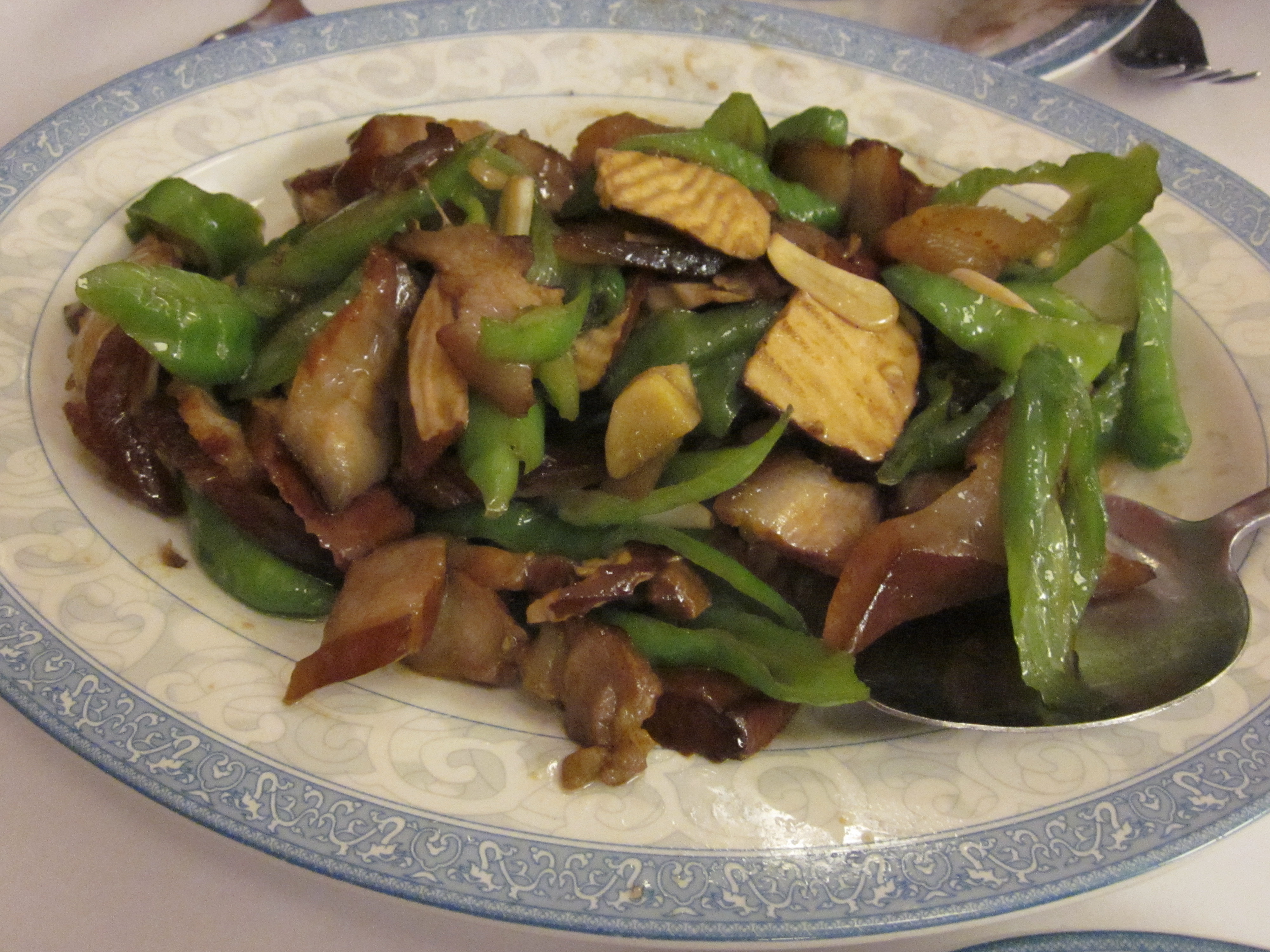
His hopes dashed, Gerry inched his plate back in front of him and, thankfully, the smoked preserved pork shoulder with dried tofu we ordered arrived along with a plate of sautéed water spinach and sliced fish, Hunan-style.
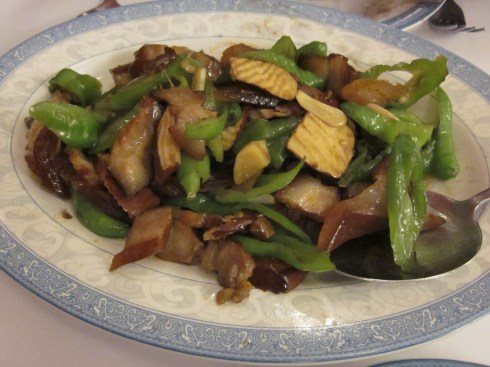
Smoked pork with dried tofu

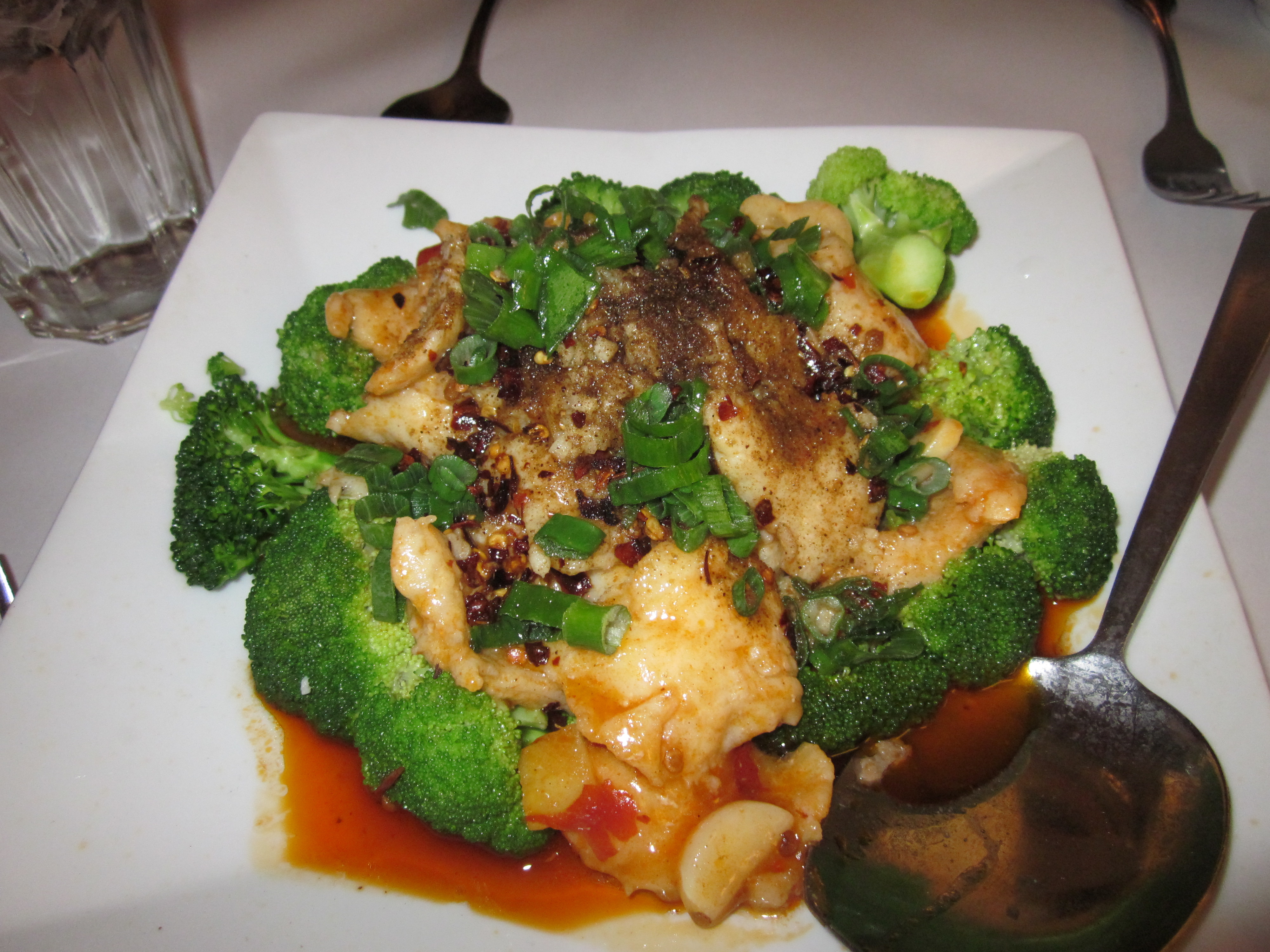
The pork, a combination bacon/belly-like texture with a distinctive smoky flavor meshed well with the tofu while the fish, tender and moist, dusted with dry chilies, had a low key, yet distinctive kick to it, though not as fiery as the type I’ve experienced at various Szechuan restaurants.
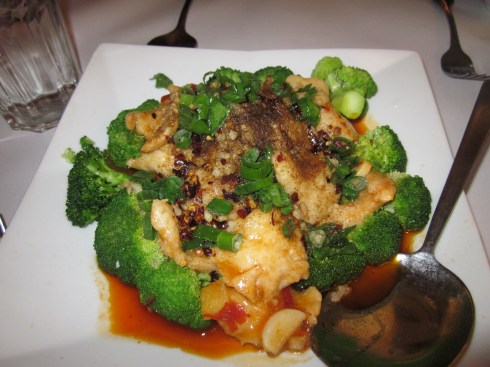
Slice fish, Hunan style: note the dried chili pepper sprinkled on top. The dry heat a characteristic of Hunan cooking.

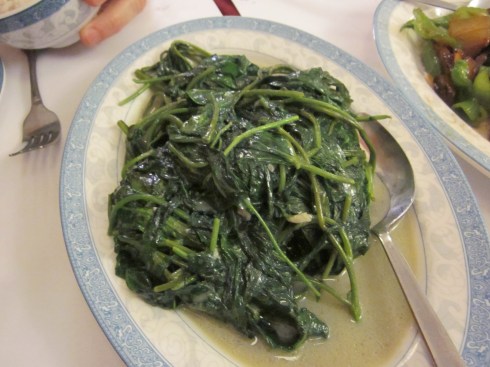
Finally the dark green water spinach; the roots crunchy and bitter and sautéed with garlic rounded out the perfect blend of flavors our three dishes had.
Our waiter brought our check and asked again if we liked hot, Hunan food.

We told him we liked it very much.

He shook his head. “Some don’t like spicy,” he said. “Some run away.”

“They don’t know what they’re missing,” Gerry said, blowing his nose loudly into a napkin as the heat from the food had worked its magic on his sinuses.

As we left the restaurant, I glanced back through the window. I could see the woman who was sitting next to us. She was texting someone on her phone; the mound of food in front of her had barely been touched.

“I wish my friends would share their frogs with me,” I muttered.

“You just don’t have the right friends,” Gerry said. And then we both took menus from the man outside the restaurant and shoved them into our pockets before heading off.
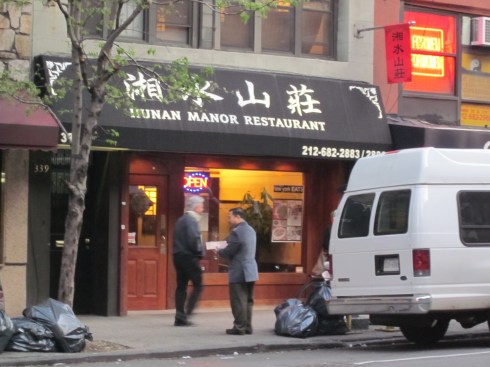
I’ll take one of those.

Gourmet Comes to Harlem: An Essay in Photos (and a few words)

20 Apr

What I mean when I say “Gourmet Comes to Harlem” is not this:

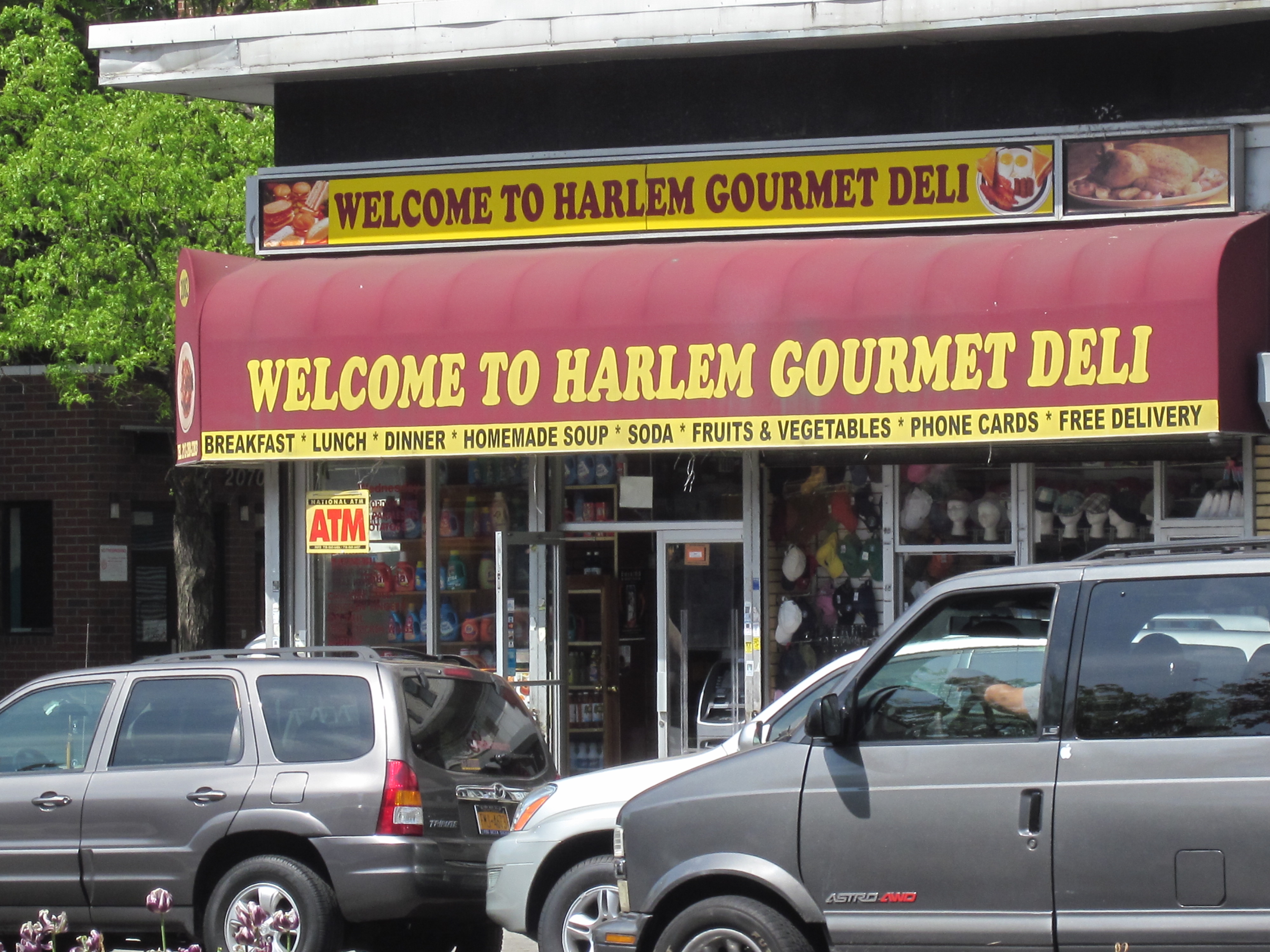
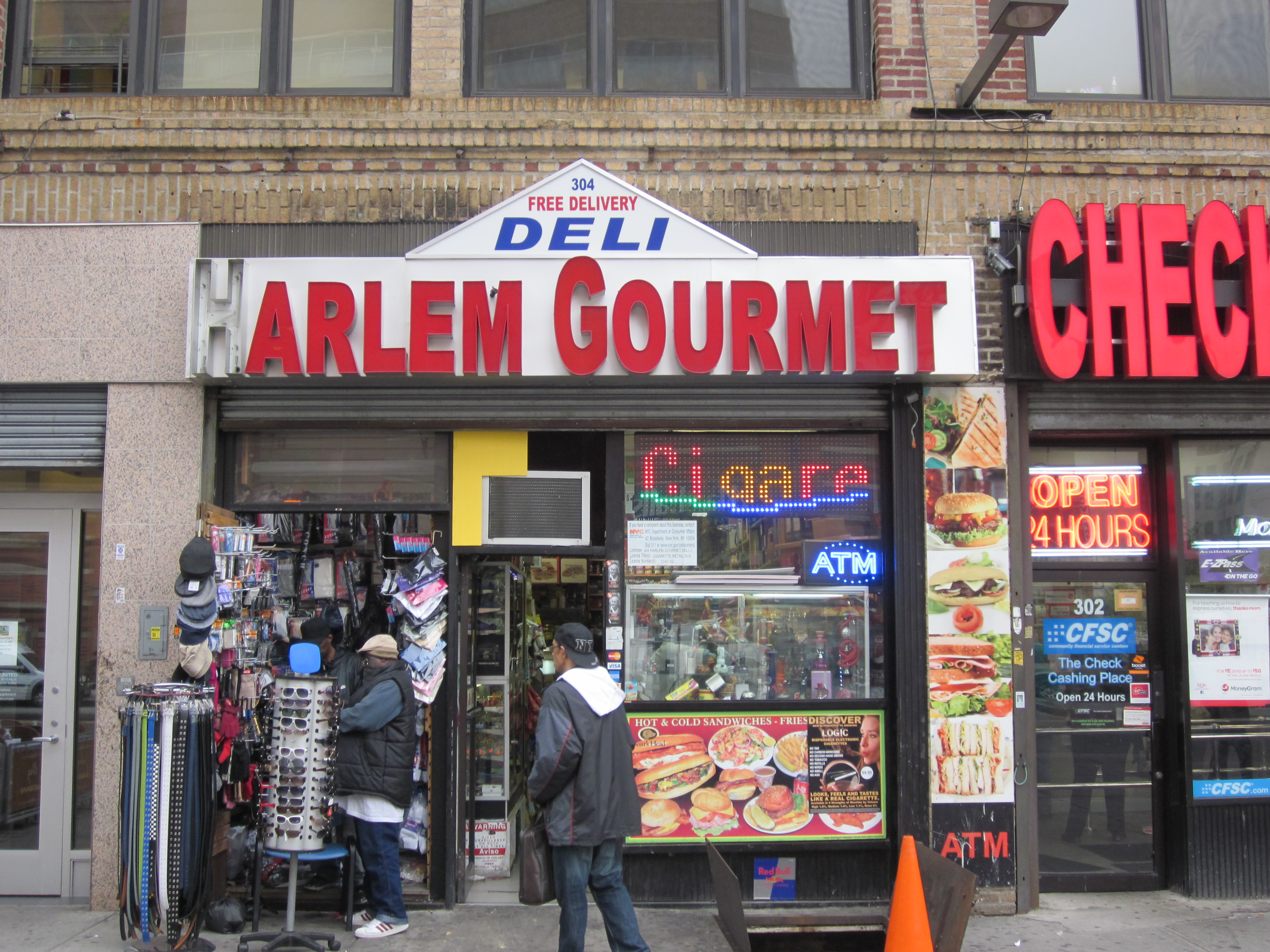
It’s this:

This new, welcome, trend in Harlem has, despite gentrification, transformed the word “gourmet” to a populist term.

At the gourmet deli,  alongside fruits, vegetables, and homemade soups, you can also purchase a phone card.

Some delis have flashing and streaming neon lights, offer free delivery, and even sell fashionable hats and sunglasses.

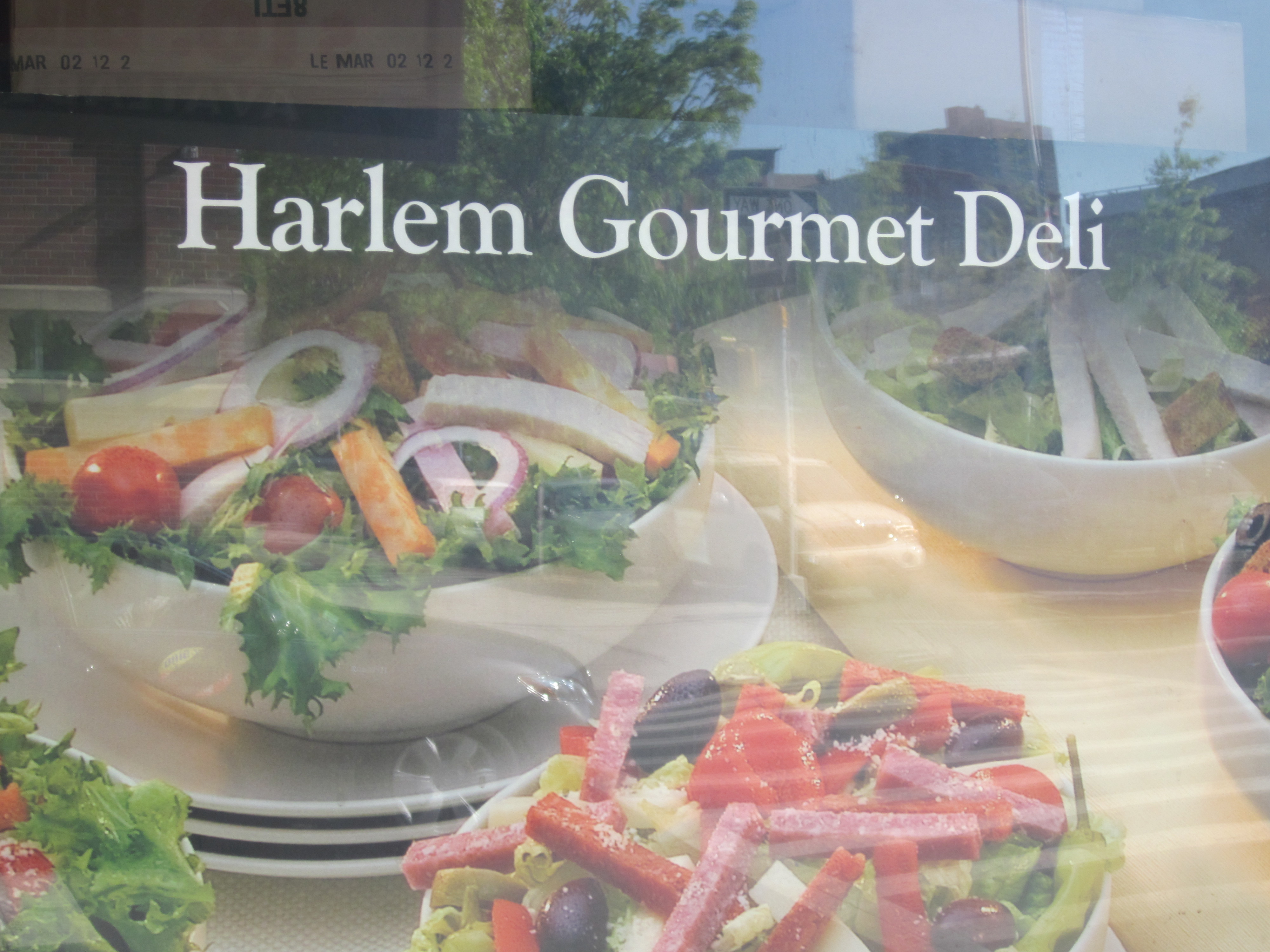
Others have beautiful photographic displays of the delicious dishes they prepare along with the many combination options.

If you are short of cash, the gourmet deli conveniently provides the services of an ATM, with only a small, $2 to $5 surcharge.

Many of the gourmet delis also offer, along with soda and chips, games of chance like Lotto.

Depending on the religious convictions of the owner, beer is often available at the gourmet deli and sometimes even wine.

But religious convictions are never a consideration or factor regarding cigarettes.

Here’s  one that hasn’t even opened yet. Welcome to the neighborhood A&A Gourmet!

A Senegalese Stomping Ground on 116th Street

17 Apr

Africa Kine
256 W. 116th Street

Mike from Yonkers notified our group via email that he wanted to choose a place from his “old stomping ground.” Who knew that Mike from Yonkers’ old stomping ground was the area around 116th Street and Eighth Avenue known as Little Senegal? What we do know is that Mike from Yonkers has some sort of obsession or kinship with African food. In the past, he has directed us to the late, Treichville Treichville Tasting Menu, African American Marayway in the Bronx The Un American African Place, and Salimata Eating Guinea Fowl in a Guinean Place in Little Senegal, just around the corner from his most recent pick, Africa Kine. And like 116th being his old stomping ground, this obsession has never been explained.

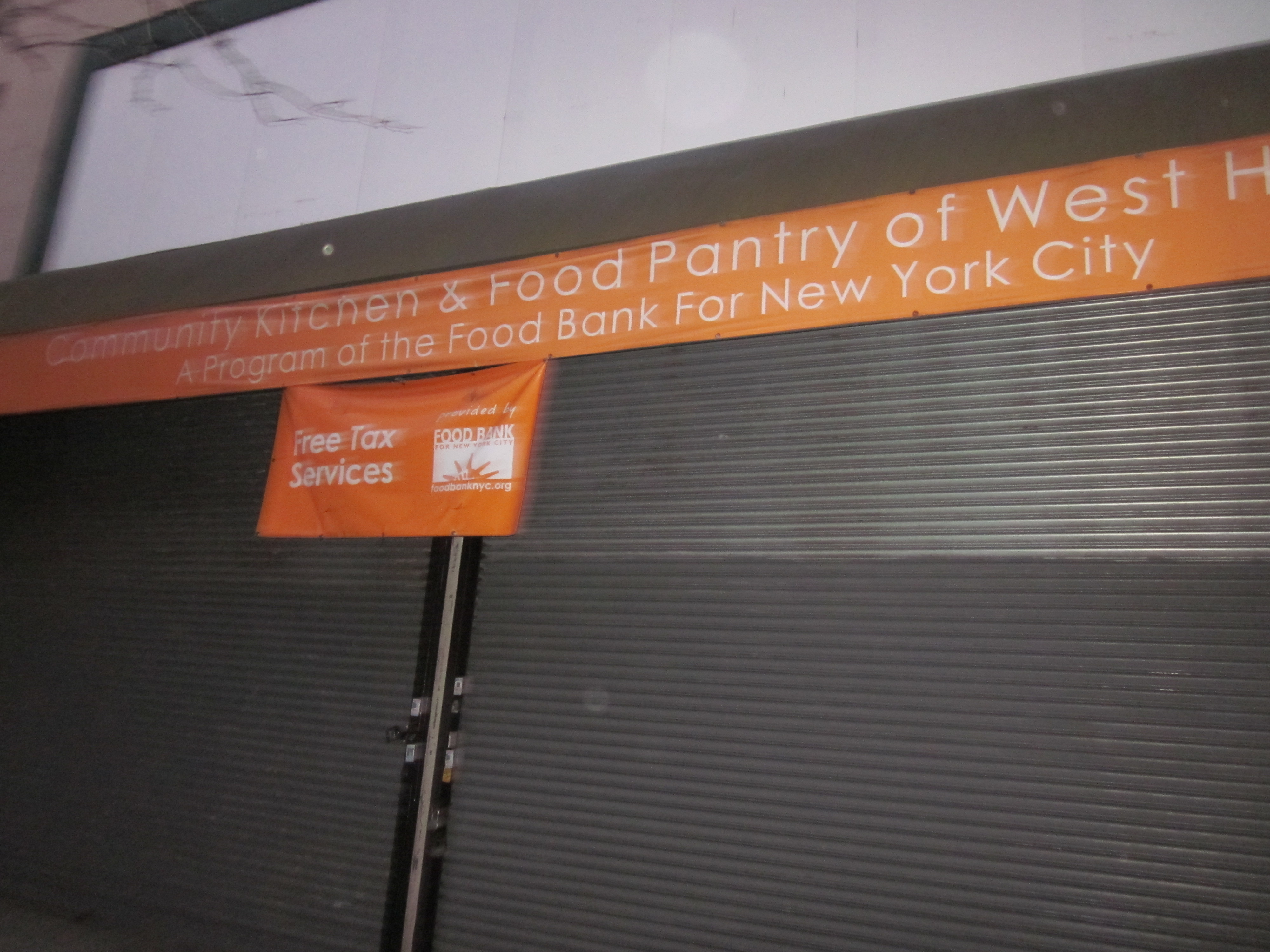
I never claimed the same area as my old stomping ground, but having lived just a couple of blocks from it, I could have been justified for doing so. I even spent a few months volunteering at the community food bank next door to Africa Kine, just after the economic meltdown of 2008.

The soup kitchen next door.

I worked at the soup kitchen washing pots and pans, bagging garbage, prepping food, and even shoveling ice and snow so the food trucks could gain entry to the kitchen. I stopped soon after the chef of the kitchen, who caught on that I was a writer, had me read the beginnings of his autobiographical novel and when, local Mormon missionaries began to flood in to help out making the kitchen more populated than one you would find at a four-star restaurant. But those are stories for another time and place.

Since my work at the food bank, a raucous, busy beer garden, called the Harlem Tavern has opened across the street, along with a meat market that specializes in local, organic beef and where the butchers wear pork pie hats while they work, and a cookie place where the cheapest, albeit, very good and very large cookie, is four dollars.

Those new establishments, among others made parking tough for the group, but Zio and I had no troubles getting to Africa Kine, which was enshrouded in dark netting along with scaffolding in front making it hard to distinguish. On the way in, we passed a legless beggar in a wheelchair and as we entered and started upstairs to the dining area, we both noticed a woman, face down, arms out on a prayer mat.

“Don’t take her picture,” Zio whispered to me. “It would be disrespectful. We don’t want an incident.”

Inflation hits Little Senegal.

Africa Kine is possibly the most notable Senegalese restaurant in Little Senegal. The dining area is spacious and modern, with high ceilings, comfortable booths, big tables and a number of flat screen televisions, and described in the restaurant’s elaborate website Africa Kine as “luxurious.” Either way, it was most definitely a far cry from what we experienced at either Salimata, Treichville or African American Marayway.

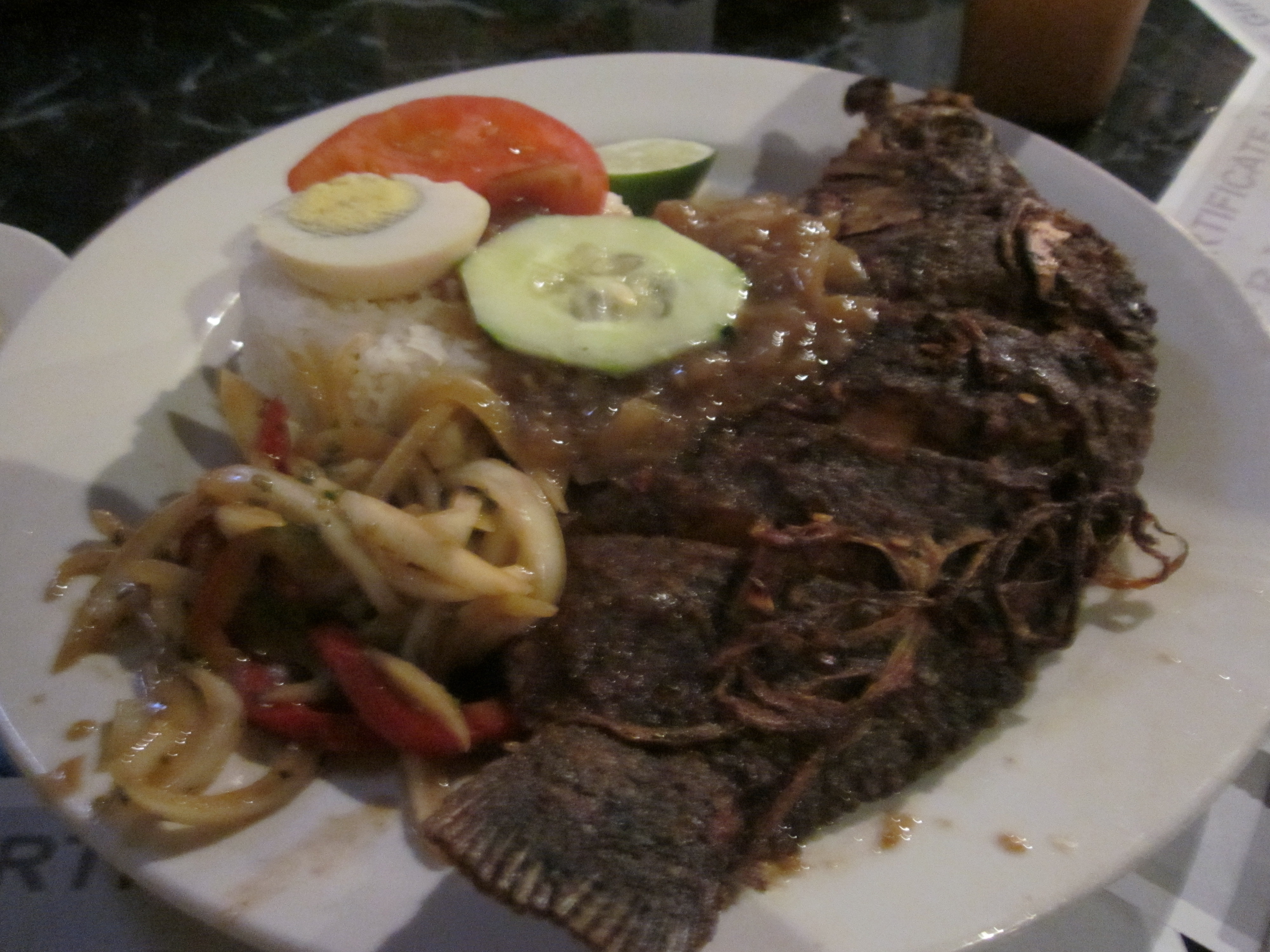
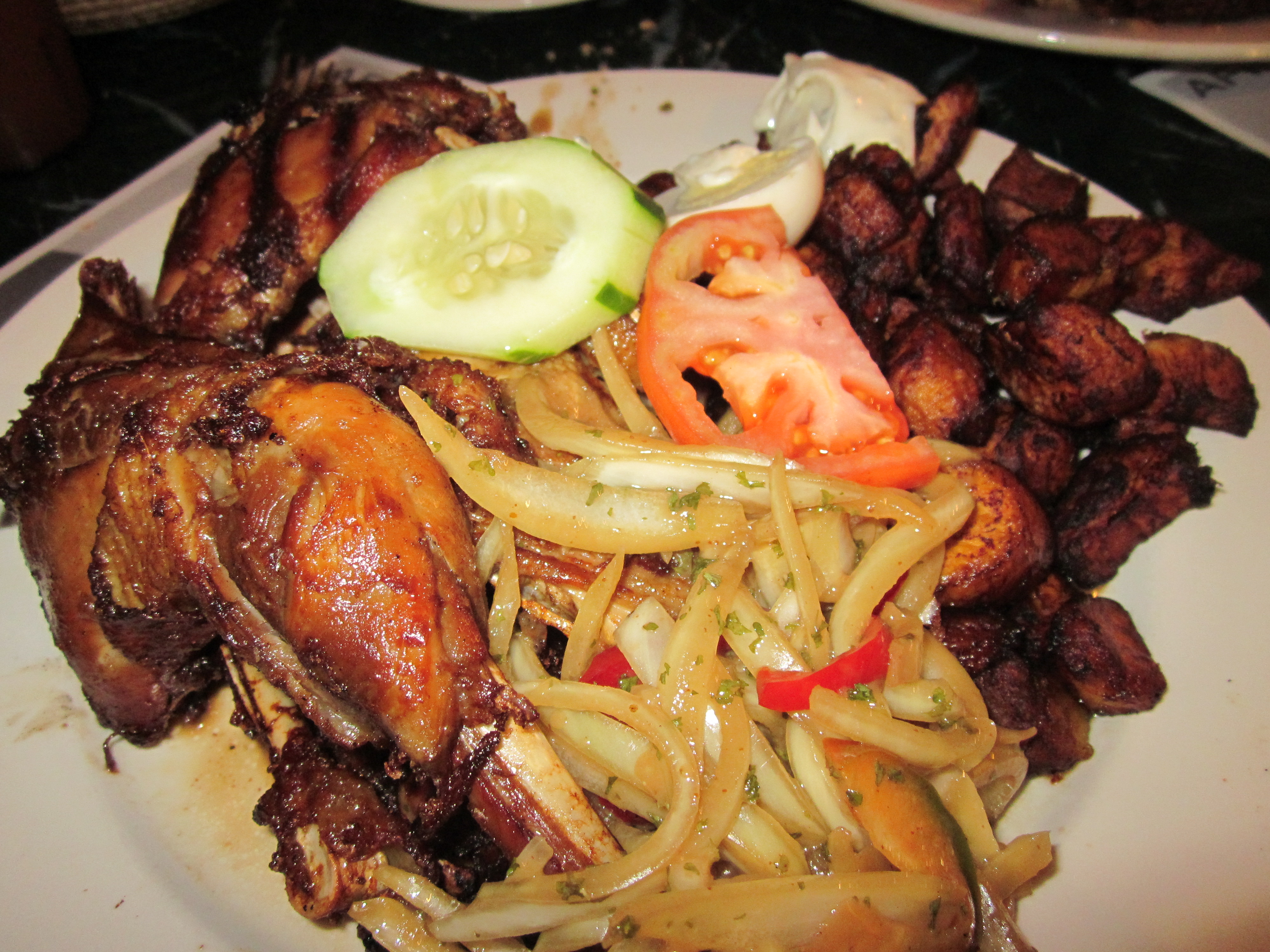
The others joined us soon after at a big table in the back of the “luxurious” dining room. While we sipped spicy homemade ginger beer, we perused what, by now was a familiar menu thanks to the African culinary education bestowed upon us courtesy of Mike from Yonkers. There was guinea fowl, chicken, lamb, goat, fish, grilled or fried, and steak. The entrees all came with a choice of one of an assortment of starches; couscous, rice, plantains, yam and a small chopped iceberg salad. Each dish came with onions, sliced, lightly grilled with a mustard-based sauce on them, and scattered over the meat and fish. Most of the entrees also included half a hard boiled egg.

Grilled fish with onions and half a hard boiled egg.

I’m no expert on guinea fowl, but if I recall, the guinea fowl at Salimata was better, or maybe more distinguishable, than what we experienced at Africa Kine. The fish and lamb were also all solid, but there were no raves from our now very picky Senegalese aficionados. So, though the surroundings were comfortable, and yes, bordering on luxurious, the food was not as memorable as many of the more humble African places we have visited.

Grilled guinea fowl with onions and a half hard boiled egg (and plantains).

What there was at Africa Kine, however, was plenty of food; the portions more than generous.

“Really now, how can they say people in Africa are starving? Zio griped. “Just look at all this food?”

“Yeah, we just ate a village,” Gerry quipped.

And of that village, there were no leftovers.