
Archive | Spirits RSS feed for this section

The Happiest of All Hours: Paris Blues

26 Oct

I was taking pictures of the scaffold-shrouded exterior of Paris Blues when a man’s head popped out of the door.

“Come on in,” the man said to me.

“I plan to,” I responded.

And after taking a few more pictures, I walked into the dark bar.

I took a seat and noticed a third person hunched at the end of the bar near the door sleeping comfortably.

It had been several years since I’d been to Paris Blues, but not much had changed inside except for the small stage where, at the time I walked in, another man was fiddling with a drum set.

The stage at Paris Blues

Live music was new—at least to me. The man who had gestured me inside was now behind the bar. He mumbled something about the other man up on the stage with the drum set.

“Taught him everything he knows about drums,” the bartender, who told me his name was Jer, short for Jerry, said.

“You play?” I asked.

“Used to,” he said.

Live music at Paris Blues

The younger man up on the stage snorted and soon their conversation turned to the Jets.

“They lost because they were playing scared,” the younger man said.

“No, they weren’t scared,” Jer said, ‘They lost, that’s all.” And that effectively ended the conversation.

A super-sized television set behind the stage that I knew had not been there when I visited last was on to a late afternoon rerun of  Bonanza.

The beer options, according to Jer, included Budweiser, Corona, “Heiny,” and Sugar Hill. I was in Harlem. I thought it only fitting to choose the latter.
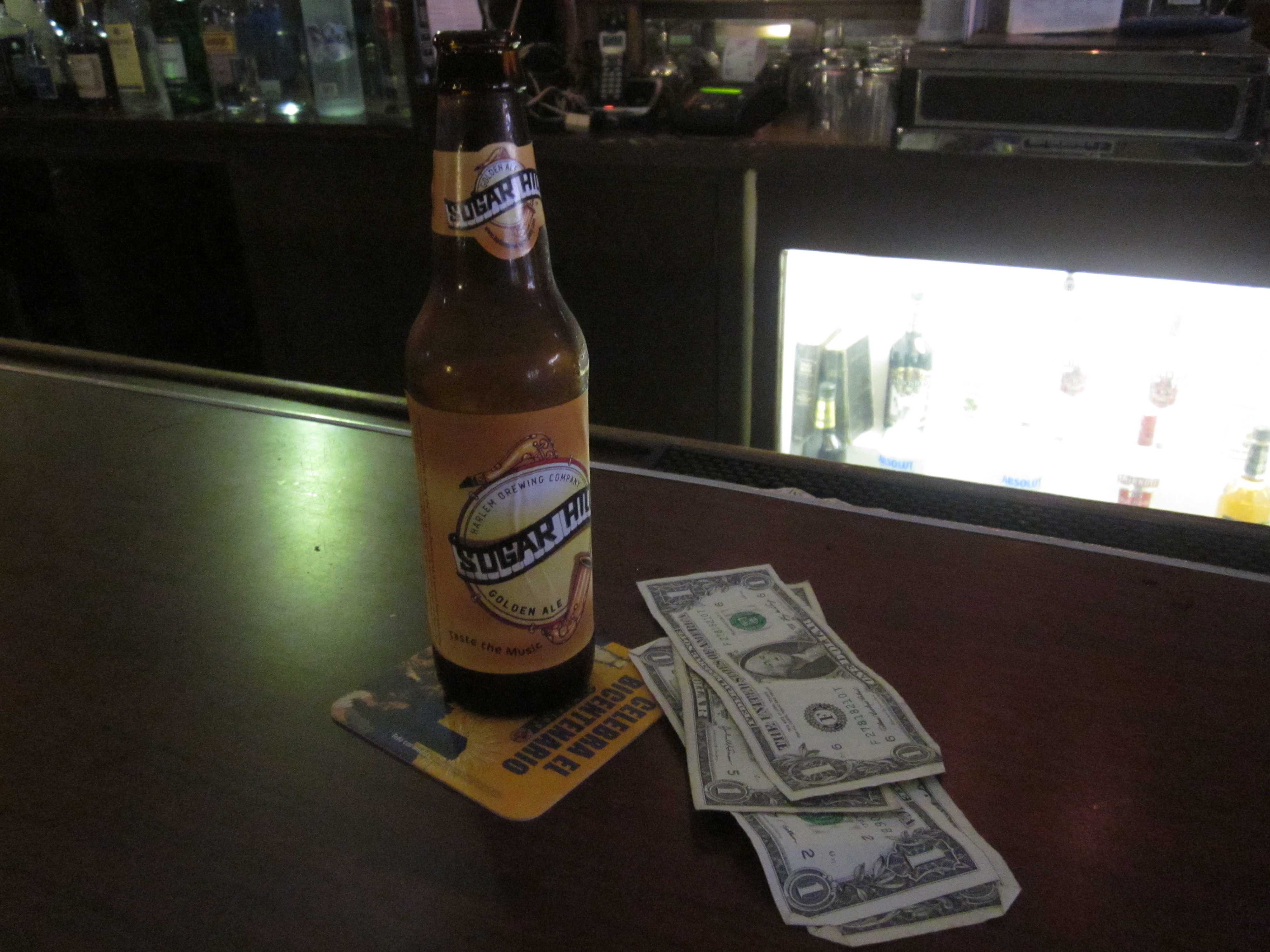
The beer of choice in Harlem

After serving me the beer, Jer moved around the bar and roused the sleeping man who silently got up and went outside.

Paris Blues, Jer told me, had been open for 43 years.

“How many of those have you been working here?” I asked.

“’bout 30 or so,” he answered.

African American icons proudly on display.

I really didn’t know why it had taken me so long to return to Paris Blues. Trombonist Frank Lacey, who I once saw perform with trumpet player, Roy Hargrove on the French Caribbean island of Martinique, was scheduled to perform later that evening.

“You get lots of tourists here?” I asked as I sipped more of my beer.

Jer nodded. “Japanese, Germans, busloads of ‘em. They’ll be in here tonight.”

On the television, a rainmaker had brought rain to the Ponderosa and a little girl was healed of a television sickness. The Cartwright men all smiled at the end and then the familiar theme song played.

Happy hour entertainment.

I finished my beer and thanked Jer.

“Come on back,” he said as I was leaving.

I told him I would.

The man who had been sleeping inside was sitting on a bench outside the bar. I nodded at him and headed down the street. It was beginning to rain in Harlem. After about a block, I turned around.  I could see the man on the bench slowly get up from his seat. I watched for a moment as he walked back into Paris Blues.

Paris Blues
2021 Adam Clayton Powell, Jr. Blvd
Harlem

Vodka Amongst the Cranberries

23 Aug

The Cape Codder

I have no insecurities about imbibing a cocktail with a pinkish hue. Not if the pink comes from a substantial splash of cranberry juice—the dark red of the juice turning pink when mixing with the spirit of choice: vodka. And especially if that vodka is a gift from our Russian allies. Add a few ice cubes and a slice of lime and after a few sips, any doubts I might have had about my manhood and those stone age stereotypes regarding “girlie” cocktails immediately disappear.

Still, there are times when vodka and cranberry juice taste better than others. And it has nothing to do with the vodka or the juice.


It has to do with where you drink it.

A Lime Cut Three Ways: The Third Cut

20 Jul

Rum Punch

I’ve saved probably my oldest, most reliable “lime” drink for the last cut. Looking back on the three cuts, besides the presence of lime, I’ve noticed that all three use spirits derived from sugar cane.

In the first cut, The Caipirinha, I used cachaca from Brazil. In the second cut, The Mojito , I used a white, neutral Puerto Rican rum, and now here, for the third cut, I am using one of my favorites, a full bodied, dark West Indian rum.

The recipe for a good rum punch, this one put together from many trips to the Caribbean, is a universal one. And here it is in my best patois:


1 part sour

2 parts sweet

3 parts strong

4 parts weak


The sour, sweet, strong, and the weak. (plus a dash of bitter).

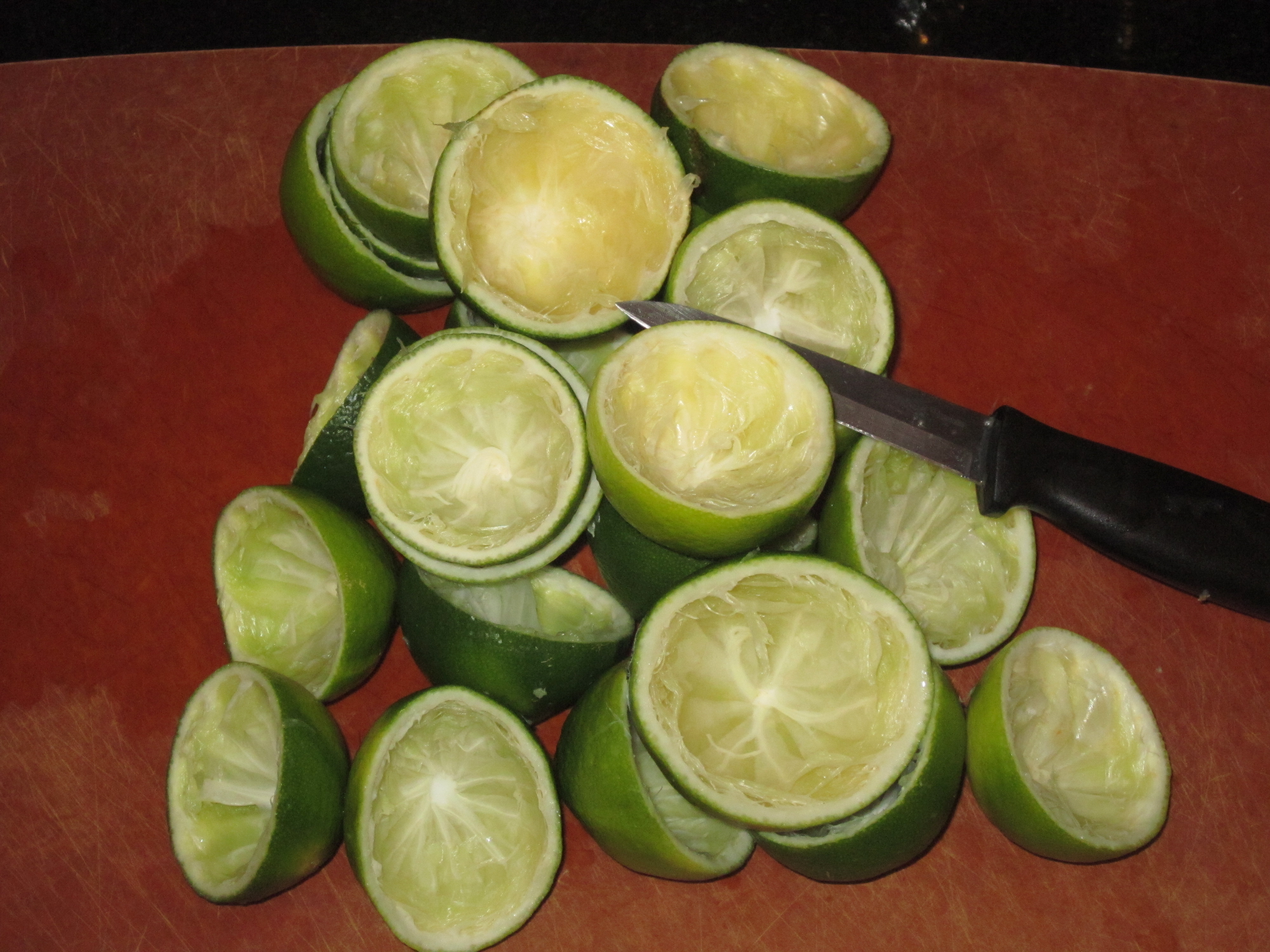
The differences between the rum punches come in what forms those parts take. The first part, however, is standard. The sour must be lime juice, freshly squeezed. I’ve seen recipes that call for lemon juice, but it’s just not the same—and not as good in my opinion.

The two parts sweet offers many variations. Some use grenadine syrup. Others fruit-flavored syrups that are sold in Caribbean markets. I use, as I have in the other two lime drinks in this series, simple brown demerara sugar syrup.

The strong is, of course, the alcohol, and in the Caribbean it is always rum. Mixologists might tweak the cocktail by adding a sweet, colorful liqueur or another type of spirit other than rum. I never get that fancy.

The only variation I’ve included is the addition of overproof rum (or rum with a 60 plus alc/vol) to one of the three “strong” parts. In the past few years, I’ve pretty much ceased that practice. Imbibing a rum punch spiked with overproof rum can be fun, liven a party and provide “memorable” moments. At my age, however, the consequences faced the next day are no longer very pretty to justify adding it to the punch.

So now I just stick to three parts of dark rum; something from Jamaica, Trinidad, Barbados, or one of the other islands once colonized by Great Britain. Don’t go for an “aged” rum or one that comes slickly packaged and advertised as “super premium.” An expensive “sipping” rum will just be wasted amongst all those other ingredients.

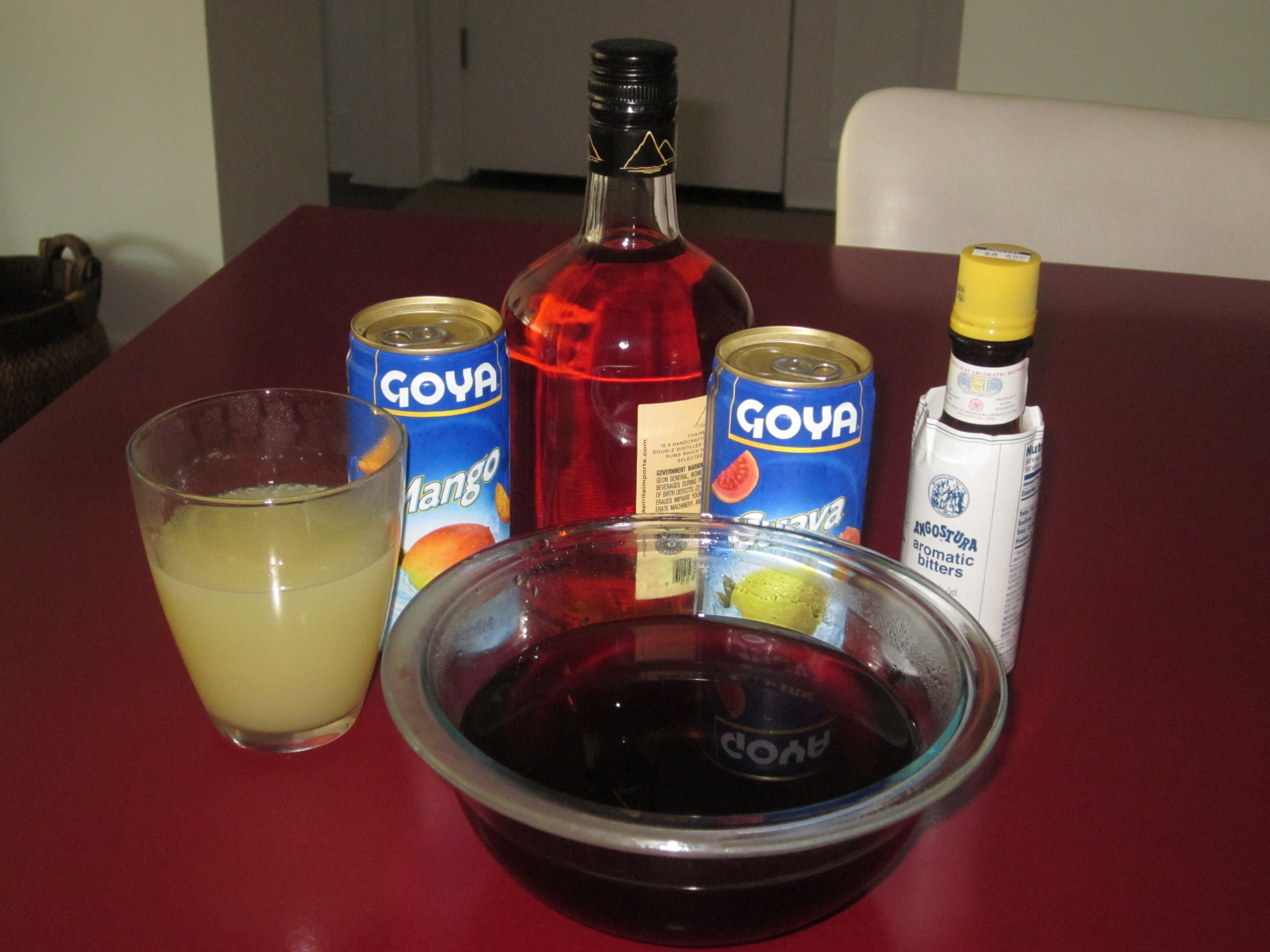
The weak in the recipe calls for the most variation. That’s where personal preference really comes into play. I like adding tropical juices; preferably mango and guava. Others add pineapple or orange juice to the punch. You can add whatever type of fruit juice you like.

Adding nectar to the rum.

And for me, four parts of fruit juice, makes the punch just too sweet so for one of the four parts of sweet, I just add ice or water. Don’t worry, your punch will not be watered down and if it seems that way, just balance it out with a little more rum or fruit juice.

Now as far as the parts go, they can be tablespoons, half cups, or more. I just go with each part being a full cup. You’ll end up with a nice jug of punch that will quickly be consumed at a party or, if it’s just for you, store it in your refrigerator. With all that alcohol, it will last for weeks and only get better with age. Just make sure to shake it up before serving.

Store the rum punch in the refrigerator…right next to the milk.

Here are the ingredients and quantities I use in making my version of the rum punch:

1 cup of freshly squeezed lime juice

2 cups of simple sugar syrup

3 cups of dark, West Indian rum

4 cups combined of mango and guava nectar, or 3 cups of juice/nectar, plus one cup of water (or a handful of ice).

Angostura Bitters

Combine the first four ingredients in a punch bowl or jug. Refrigerate for at least an hour before serving.

To serve, pour into ice-filled glasses and top with a splash of Angostura Bitters. If you have fresh nutmeg, grate a little into the glass.

Stir and sip.

A Lime Cut Three Ways: The Second Cut

20 Jun

The Mojito

I always thought of the mojito as an amateur’s drink. Part of my thinking was because of the rum used. I’m partial to the rums of either the West Indies; Jamaica, Barbados, Trinidad, etc., which are molasses-based, and robust, or the exquisite French island “agricole” rums of Martinique and Guadeloupe, made from distilled sugar cane juice. The rum traditionally used for the mojito is of the smoother, Spanish variety; Puerto Rican, Cuban, Dominican, etc. So smooth, in fact, that to me, the rum is indistinguishable; practically devoid of any flavor.

Further damaging the mojito appeal in my narrow mind was that the rum usually poured into the drink was the one with the enormous marketing budget making it, in my estimation, the Coca Cola of rums. And speaking of Coca Cola, the rum in question is usually best enjoyed in that abomination: rum and coke. But there I go again, displaying my rum snobbery by thrashing a drink enjoyed over the years by millions of people. It’s an unseemly trait of mine that, as I grow older, hope I am losing. Who am I, some sort of food and beverage critic or something? It’s not my place to belittle one’s rum preference?

Cuba Libre??

A big part of my conversion to the mojito was the forest of mint that, since we moved to our new apartment, has accumulated on our terrace. Mint, along with lime, are the dominating flavors of the mojito and excellent bedfellows they make.

A forest of mint.

You can take your mint tea, mint ice cream, mint and lamb and whatever else you might use fresh mint for. I use it exclusively for the mojito. And yes, I do use smooth—err—bland, Puerto Rican rum in the drink (though not the Coca Cola of rums whose name will not be mentioned here). I wouldn’t dare attempt a mojito with a rum from Martinique or Trinidad. The result would be a completely different drink. The neutral rum from Puerto Rico seems to meld the other two dominant flavors of lime and mint perfectly in the cocktail.

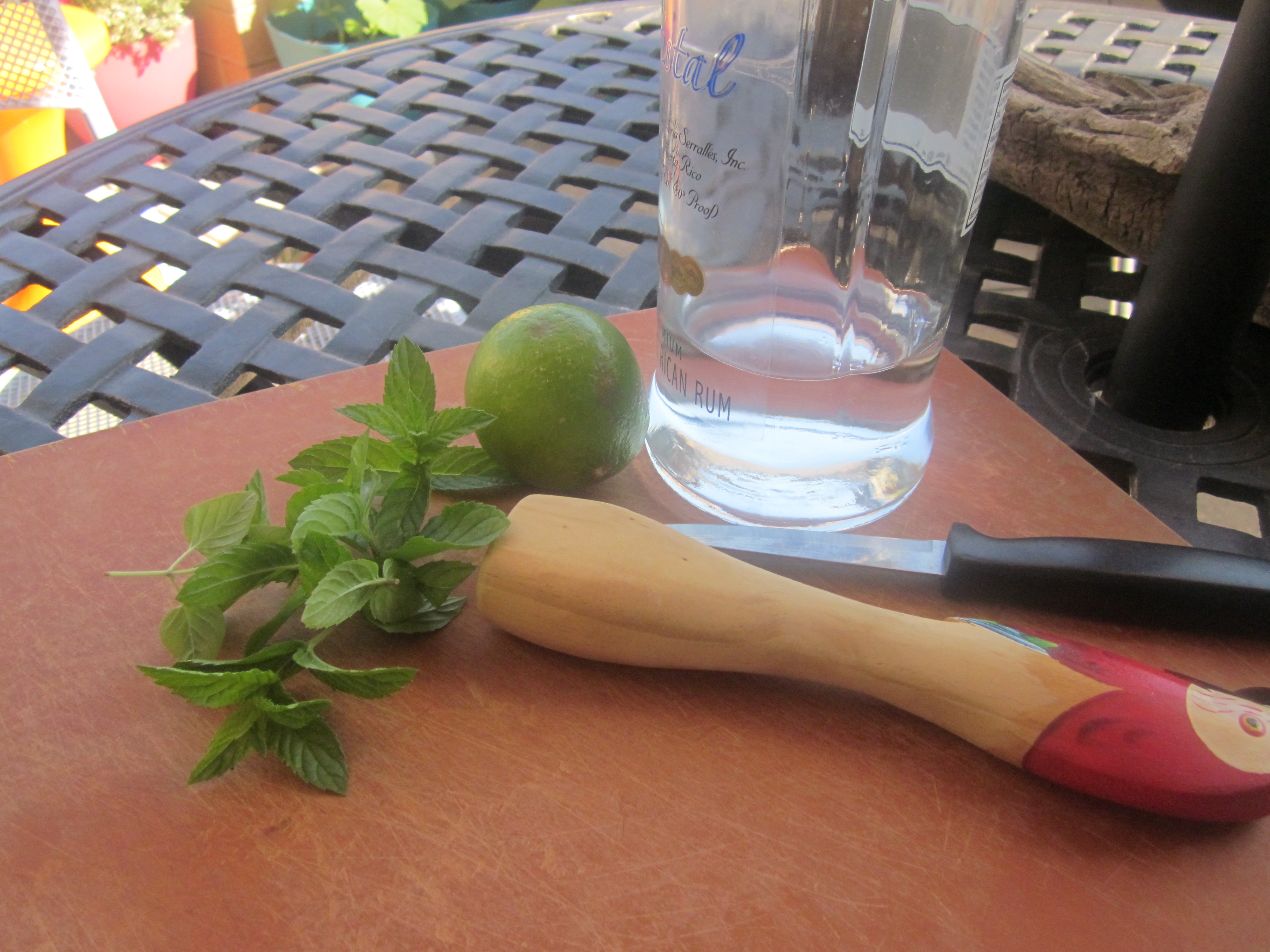
Mojito mix

What follows is my version of the  mojito.

Ingredients:

1 lime cut into tenths.

10 or more fresh mint leaves including sprigs.

4 teaspoons simple sugar syrup*

2 ounces of white Spanish rum (Puerto Rican or Domincan, if you can get Cuban, I’m sure that would work well too).

A splash or two of seltzer

*You can use superfine sugar, granulated sugar, or even confectioner’s sugar instead of simple syrup, but I prefer homemade syrup which eliminates having to dissolve the sugar into the drink. The recipe for simple sugar syrup can be found on my post, A Lime Cut Three Ways: The First Cut.

Add most of the lime and mint leaves, saving a few of each, to a highball glass. Mash and muddle the mint and lime together with a pestle or whatever type of apparatus you might have on hand.

Add the sugar syrup, the rum, and ice and stir.

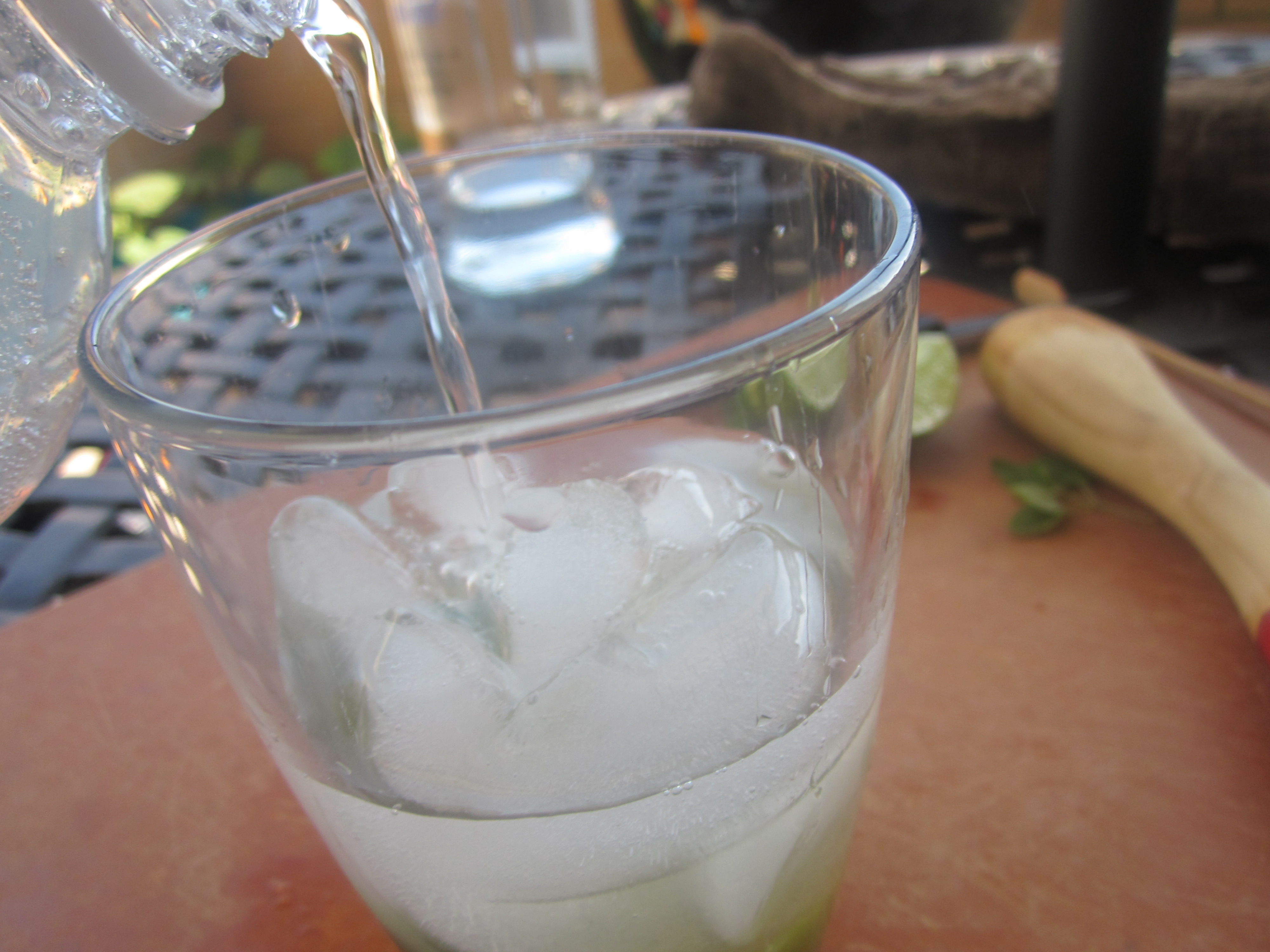
Pour in a splash or two of seltzer to top off the cocktail and stir again.

A splash of seltzer.

Garnish with a couple of lime pieces and a sprig or two of mint.

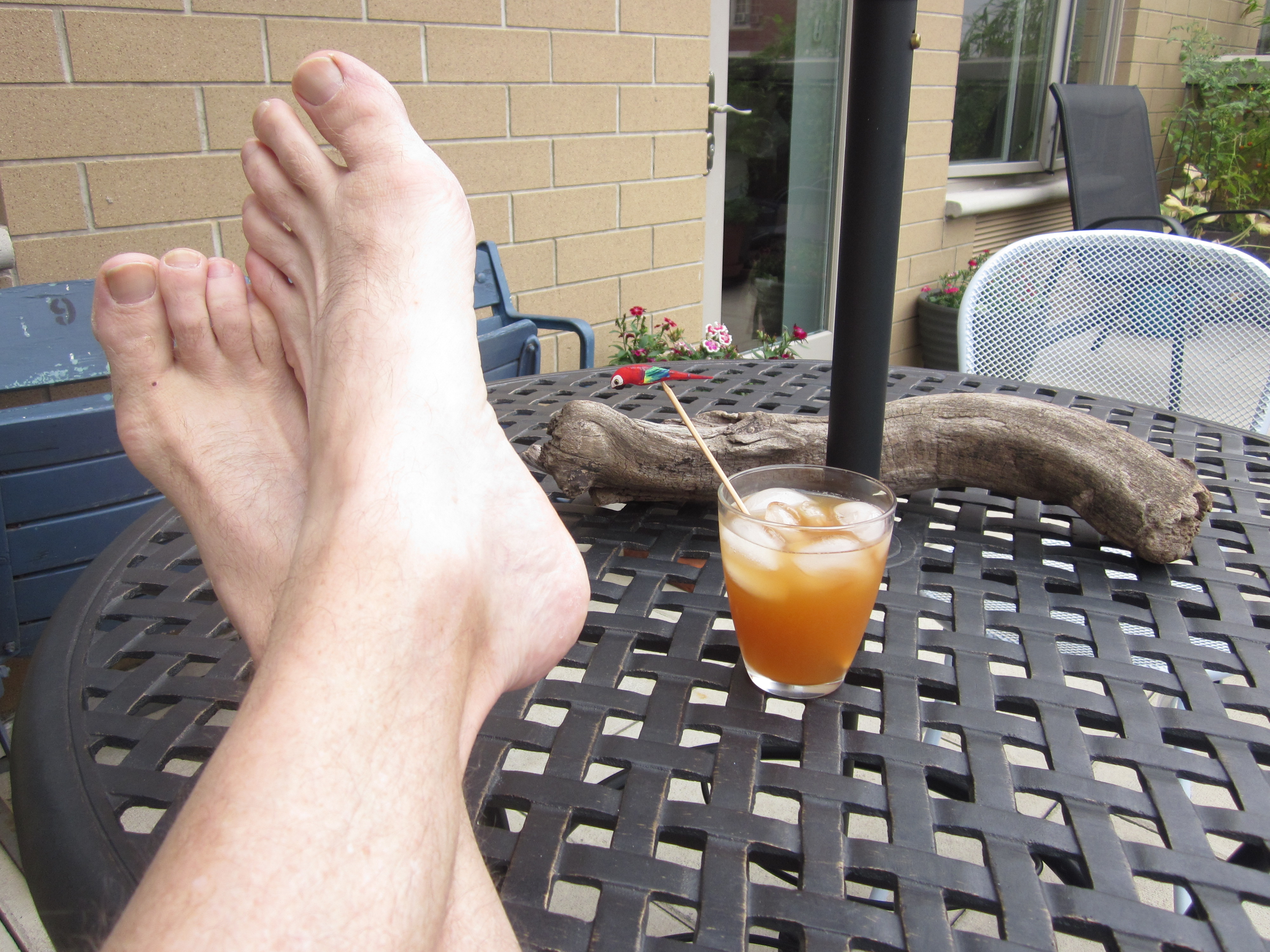
Sit back, put your feet up, and enjoy.

The mojito

I no longer demean the mojito and want to admit here that I was very wrong about its many merits. It is a summer cocktail supreme and I now count it as one of my go to drinks. Could it be that this public admission is testament that I am finally maturing? One can only hope.

A Lime Cut Three Ways: The First Cut

1 Jun

The Caipirinha

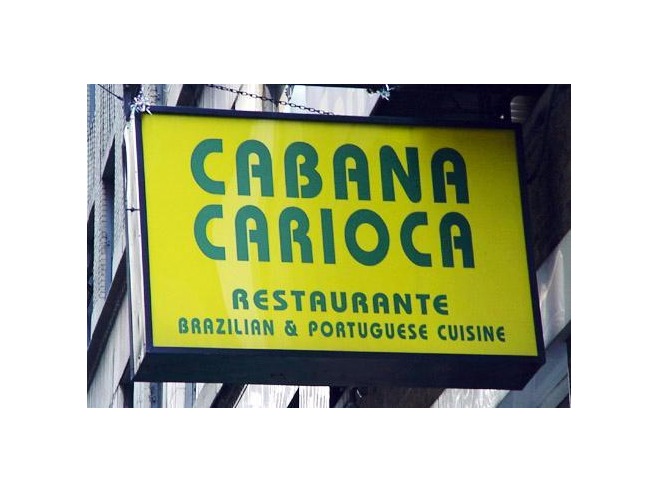
My first exposure to Brazilian food, if you can call it that, was at a three-level place in the theater district called Cabana Carioca. At lunch on all three levels, there was an “all you can eat” buffet were rice and beans, plantains, potatoes, hearts of palm salad, baby shrimp salad, chorizo, roast chicken and  macaroni were some of the offerings. Depending what level you ate, was what you paid. The higher you climbed, the cheaper the buffet.

On the main level was a flat out, standard restaurant. I don’t think I ever ate there, but maybe I did. I just don’t remember. The second level, where the kitchen was located, was a bit more casual than the main level and the most popular of the three.  It was on the second level where I ate most of my meals. The third level was bare bones; dark and usually empty—used probably only when the other two levels were packed or for private parties, but still serving the restaurants’ enormous portions of steaks, fish, shrimp, and the specialty: feijoada, also known as the “Brazilian National Dish.”

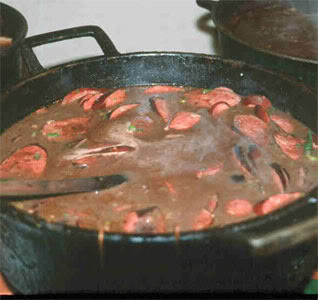
Cabana Carioca’s feijoada came in a cast iron pot stuffed with black beans and a variety of meats; pork shoulder, chorizo, kidney, beef, and other cuts that at the time, I could not identify. They were all coated in the black gravy of the beans and, really, since by then I was probably on my second or third caipirinha, no longer cared what I might be shoveling into my mouth.

The Brazilian National Dish

Along with the alcohol’s numbing effect, the caipirinha, as opposed to beer, helped cut through the density of the feijoada and made it much easier to navigate. The only problem was the next day’s hangover from too much cachaca, the Brazilian spirit made from pressed and then distilled sugar cane juice and used to make the caipirinha.

I think the last time I had a caipirinha at Cabana Carioca was in 1998 watching Brazil lose to France in the World Cup. The restaurant, all three levels, closed soon after and now, both its caipirinha and feijoada are just memories.

I’ve never had the fortitude to try to resurrect the feijoada in my kitchen, but the caipirinha is a frequent guest. The ingredients are simple; cachaca (available at most liquor stores), sugar, ice, and of course limes. Despite the easy ingredients, making a really good caipirinha requires a little sweat, or, as they used to say, “elbow grease.” The result, however, is well worth the effort.
What follows is the first cut of the lime: the caipirinha.

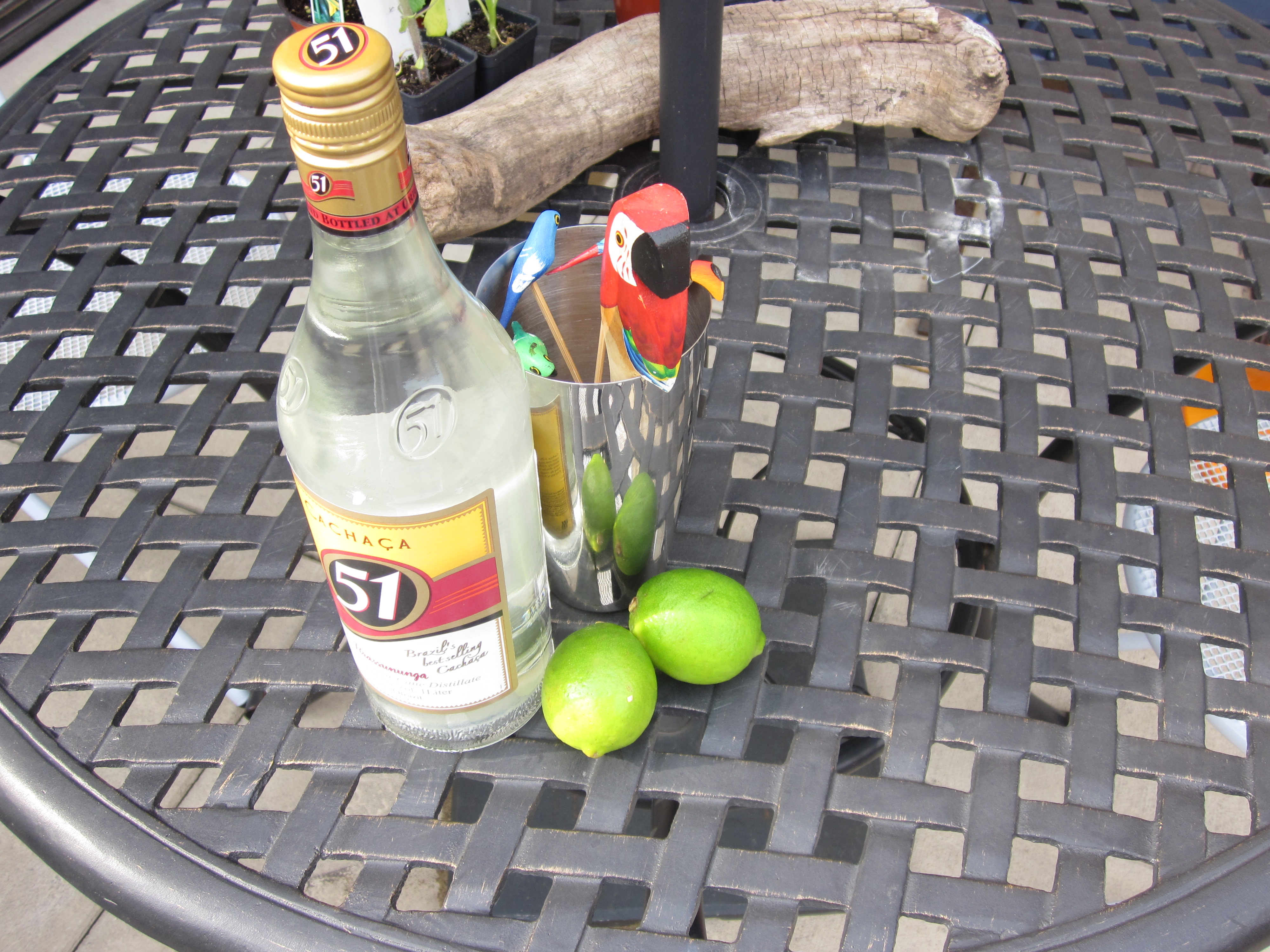
Some of the tools and ingredients in making a caipirinha.

Ingredients:

1 or 2 limes

2 to 3 ounces of cachaca*

2 to 3 teaspoons of sugar syrup **

3-5 ice cubes

*Spirit importers are beginning to market “premium” cachaca, which really just translates into a glitzy bottle design along with an upscale marketing campaign all in the hopes of selling a much higher priced product. I advise you not to go that route when purchasing cachaca for your caipirinhas. In Brazil there are two very popular brands that are used at most restaurants and clubs in making caipirinhas and they can be found here for well under $20 a liter. Seek them out. I guarantee you will not be disappointed.

**Most caipirinha recipes call for granulated sugar. I prefer pre-made sugar syrup thus skipping the “dissolving” process that is necessary in making the drink. To make simple sugar syrup, combine equal amounts of sugar and water, bring to a boil, lower the heat and let cook until the granules have dissolved. The syrup will last for weeks in your refrigerator. I like to use Demerara brown sugar for my syrup, but basic white sugar works just as well.


Sugar syrup and cut up limes.


To make the caipirinha you will need:

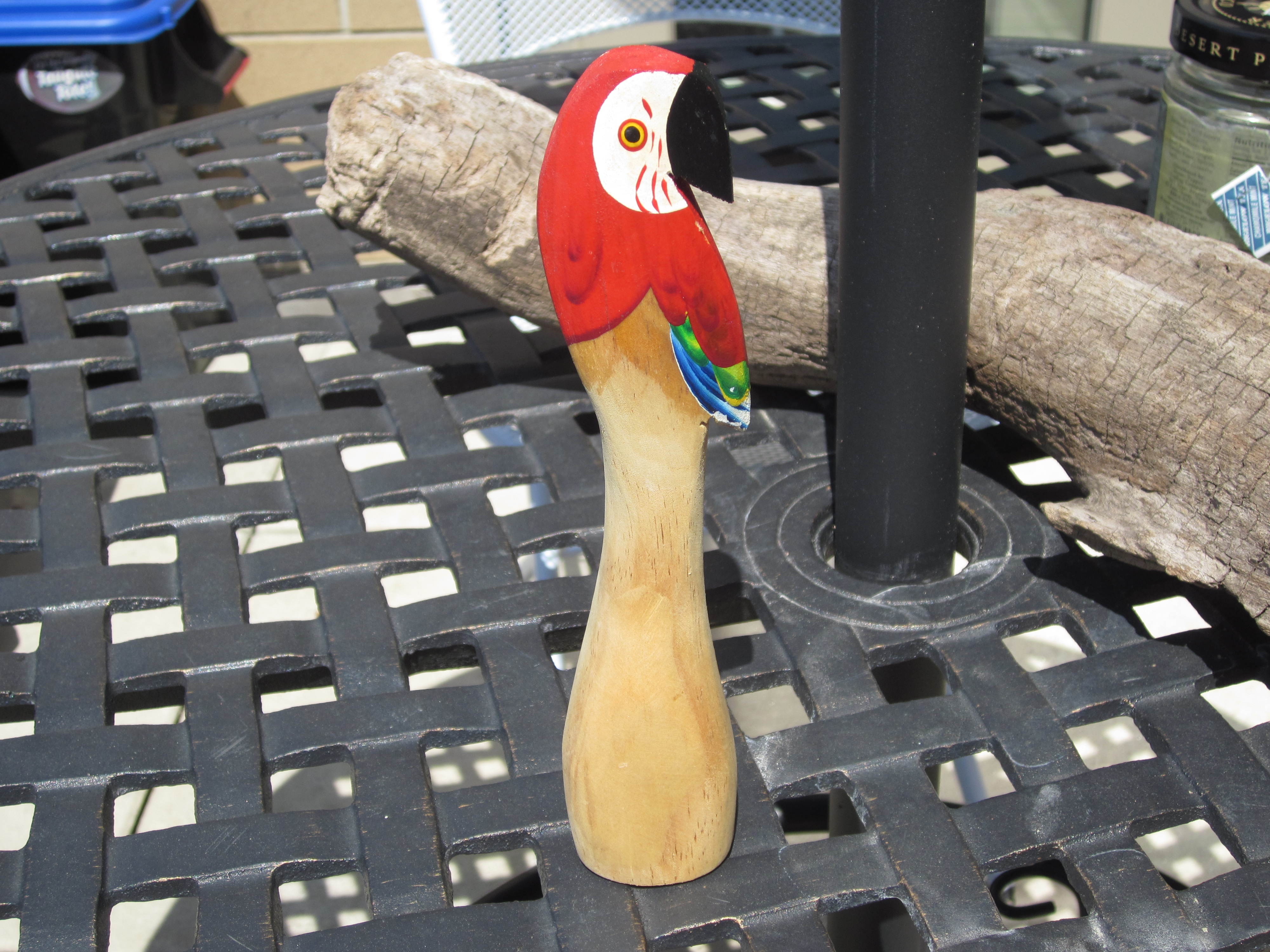
1 lime muddler. I have a parrot lime muddler that was given to me by my brother; a souvenir he picked up on a trip to Brazil.

The parrot

Cocktail shaker and strainer.

Cut the lime into eighths or even tenths.

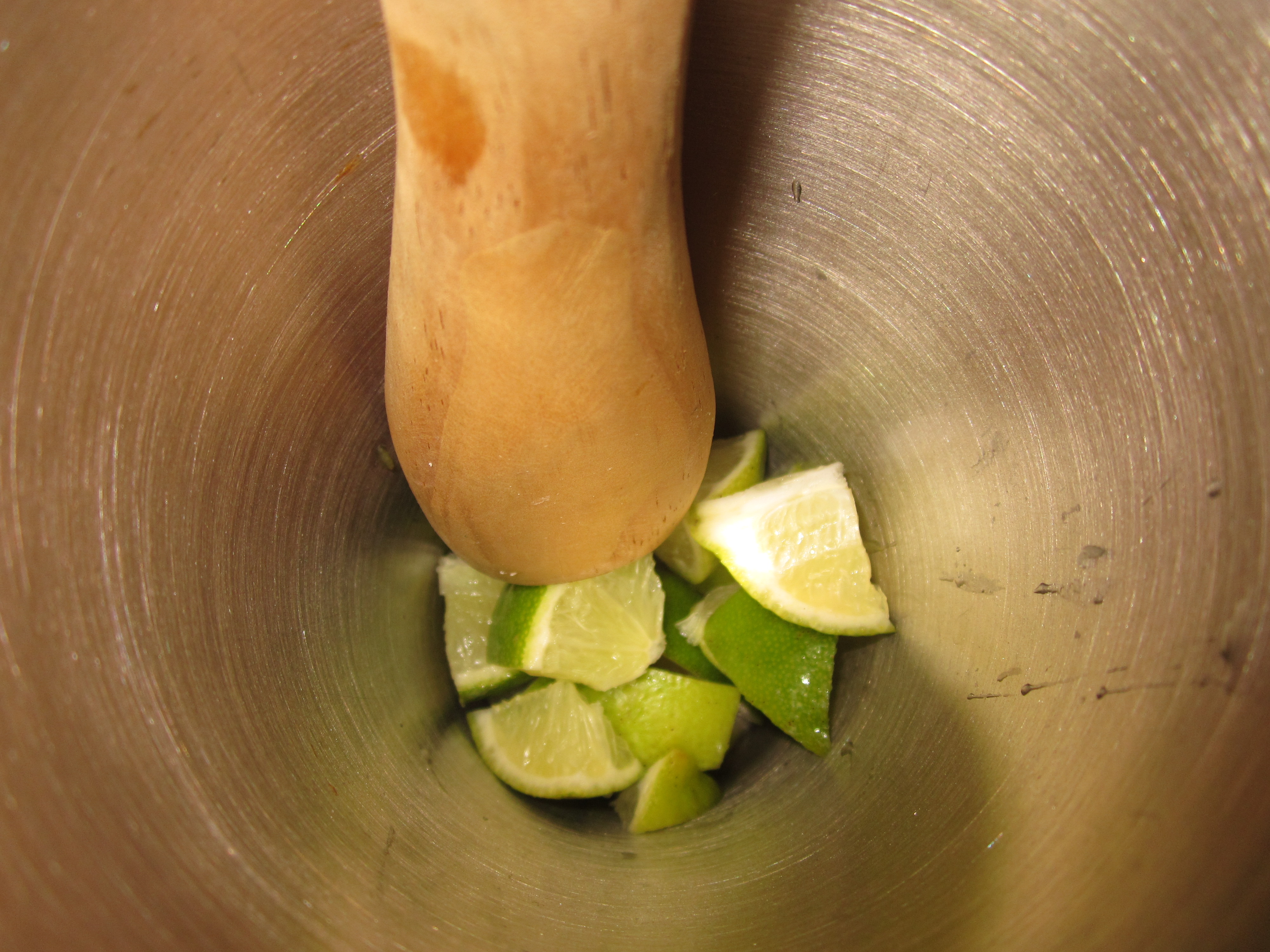
Toss the lime pieces into the cocktail shaker and using your muddler, it can be a pestle, if you have a mortar and pestle, or anything that can mash and muddle lime pieces, muddle mash the lime, extracting the juice from both the rind and the pulp. Don’t be stingy with that aforementioned elbow grease.

Let the lime muddling begin.

Add the sugar syrup, cachaca and a some ice cubes.

Shake vigorously and then strain into an ice cube filled glass.

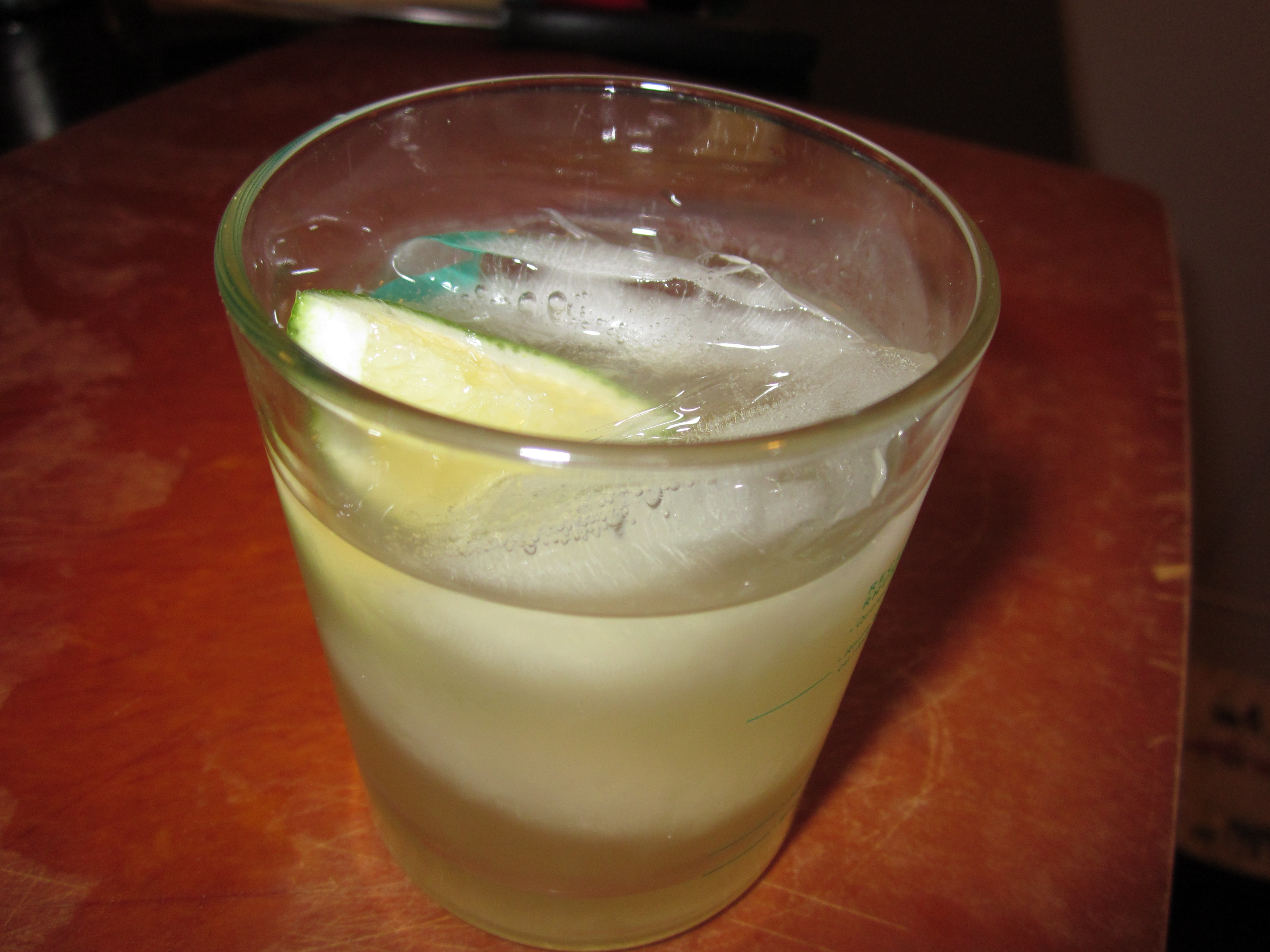
Almost cocktail time.

Do not be fooled by the drink’s petite size. It will be tempting to down it in a few gulps, but try to sip slowly.  Drinking the caipirinha too hastily will only mean a quicker return to the kitchen and more work for you to make another.