Tag Archives: cooking

A Lime Cut Three Ways: The Second Cut

20 Jun

The Mojito

I always thought of the mojito as an amateur’s drink. Part of my thinking was because of the rum used. I’m partial to the rums of either the West Indies; Jamaica, Barbados, Trinidad, etc., which are molasses-based, and robust, or the exquisite French island “agricole” rums of Martinique and Guadeloupe, made from distilled sugar cane juice. The rum traditionally used for the mojito is of the smoother, Spanish variety; Puerto Rican, Cuban, Dominican, etc. So smooth, in fact, that to me, the rum is indistinguishable; practically devoid of any flavor.

Further damaging the mojito appeal in my narrow mind was that the rum usually poured into the drink was the one with the enormous marketing budget making it, in my estimation, the Coca Cola of rums. And speaking of Coca Cola, the rum in question is usually best enjoyed in that abomination: rum and coke. But there I go again, displaying my rum snobbery by thrashing a drink enjoyed over the years by millions of people. It’s an unseemly trait of mine that, as I grow older, hope I am losing. Who am I, some sort of food and beverage critic or something? It’s not my place to belittle one’s rum preference?

Cuba Libre??

A big part of my conversion to the mojito was the forest of mint that, since we moved to our new apartment, has accumulated on our terrace. Mint, along with lime, are the dominating flavors of the mojito and excellent bedfellows they make.

A forest of mint.

You can take your mint tea, mint ice cream, mint and lamb and whatever else you might use fresh mint for. I use it exclusively for the mojito. And yes, I do use smooth—err—bland, Puerto Rican rum in the drink (though not the Coca Cola of rums whose name will not be mentioned here). I wouldn’t dare attempt a mojito with a rum from Martinique or Trinidad. The result would be a completely different drink. The neutral rum from Puerto Rico seems to meld the other two dominant flavors of lime and mint perfectly in the cocktail.

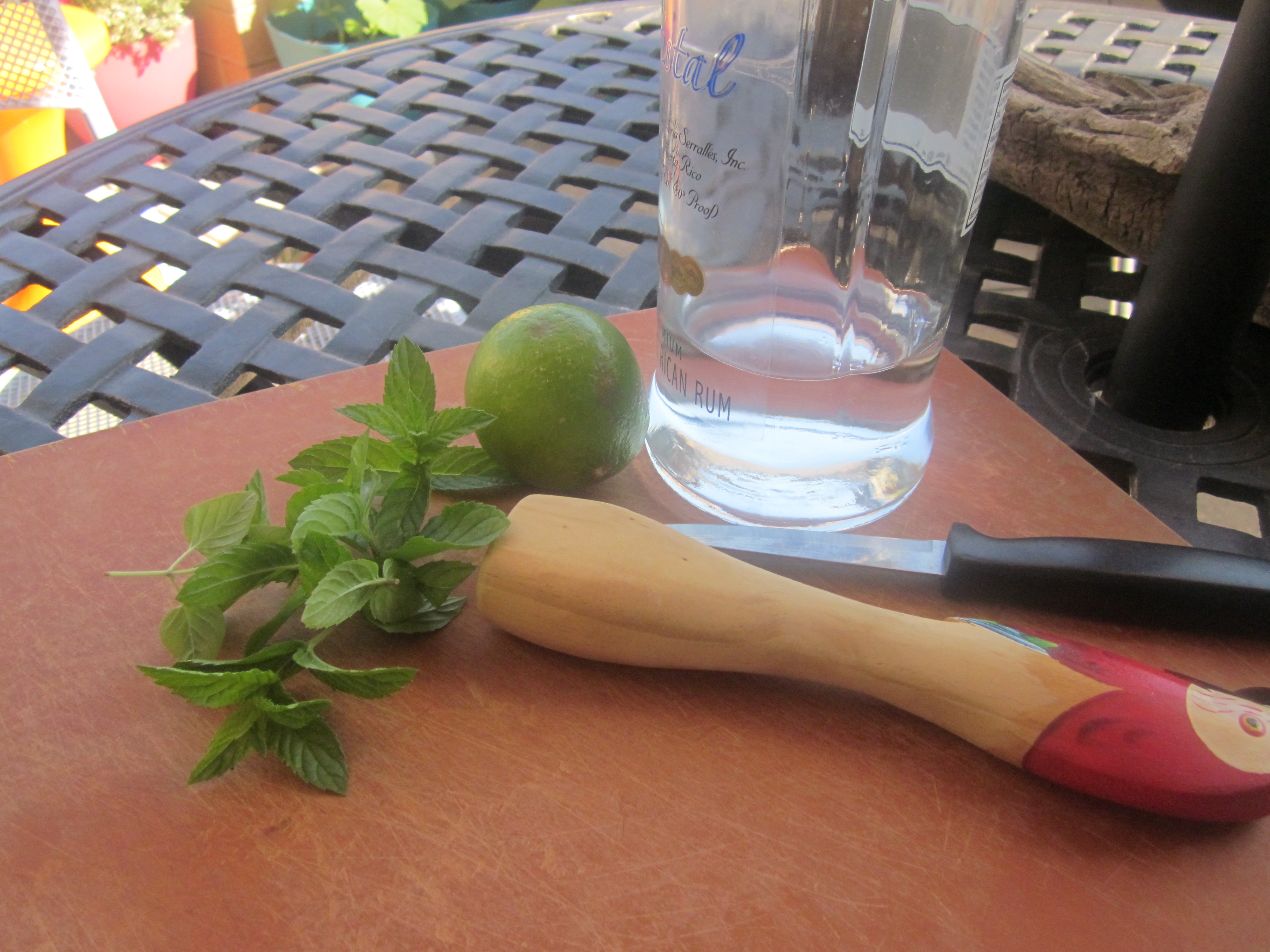
Mojito mix

What follows is my version of the  mojito.

Ingredients:

1 lime cut into tenths.

10 or more fresh mint leaves including sprigs.

4 teaspoons simple sugar syrup*

2 ounces of white Spanish rum (Puerto Rican or Domincan, if you can get Cuban, I’m sure that would work well too).

A splash or two of seltzer

*You can use superfine sugar, granulated sugar, or even confectioner’s sugar instead of simple syrup, but I prefer homemade syrup which eliminates having to dissolve the sugar into the drink. The recipe for simple sugar syrup can be found on my post, A Lime Cut Three Ways: The First Cut.

Add most of the lime and mint leaves, saving a few of each, to a highball glass. Mash and muddle the mint and lime together with a pestle or whatever type of apparatus you might have on hand.

Add the sugar syrup, the rum, and ice and stir.

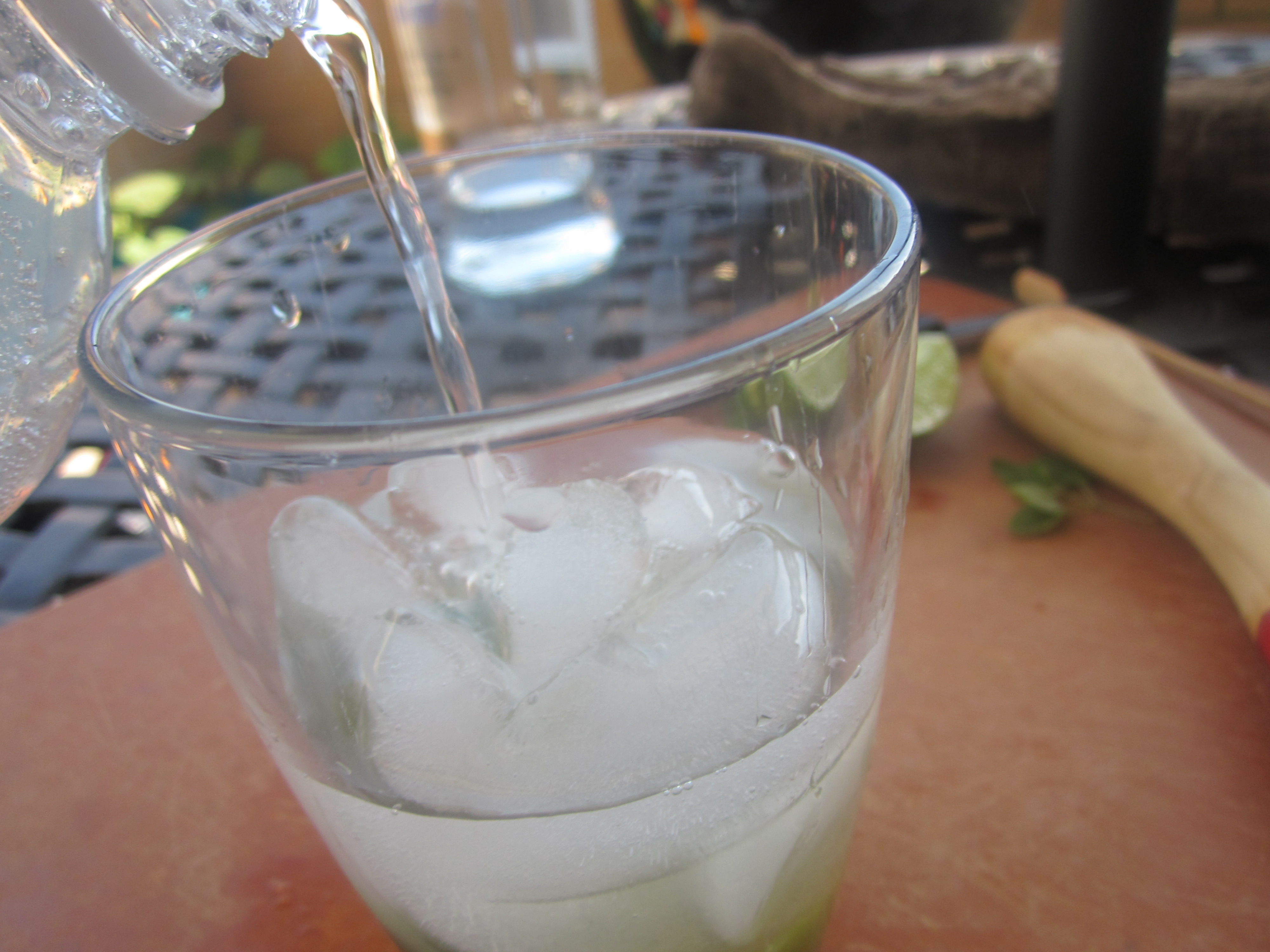
Pour in a splash or two of seltzer to top off the cocktail and stir again.

A splash of seltzer.

Garnish with a couple of lime pieces and a sprig or two of mint.

Sit back, put your feet up, and enjoy.

The mojito

I no longer demean the mojito and want to admit here that I was very wrong about its many merits. It is a summer cocktail supreme and I now count it as one of my go to drinks. Could it be that this public admission is testament that I am finally maturing? One can only hope.

A Lime Cut Three Ways: The First Cut

1 Jun

The Caipirinha

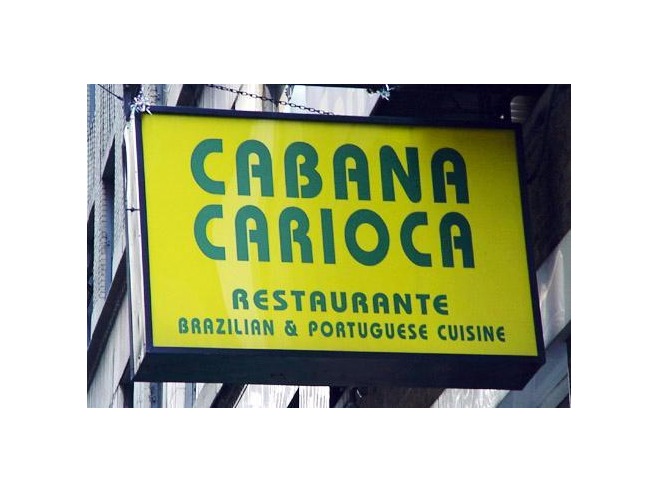
My first exposure to Brazilian food, if you can call it that, was at a three-level place in the theater district called Cabana Carioca. At lunch on all three levels, there was an “all you can eat” buffet were rice and beans, plantains, potatoes, hearts of palm salad, baby shrimp salad, chorizo, roast chicken and  macaroni were some of the offerings. Depending what level you ate, was what you paid. The higher you climbed, the cheaper the buffet.

On the main level was a flat out, standard restaurant. I don’t think I ever ate there, but maybe I did. I just don’t remember. The second level, where the kitchen was located, was a bit more casual than the main level and the most popular of the three.  It was on the second level where I ate most of my meals. The third level was bare bones; dark and usually empty—used probably only when the other two levels were packed or for private parties, but still serving the restaurants’ enormous portions of steaks, fish, shrimp, and the specialty: feijoada, also known as the “Brazilian National Dish.”

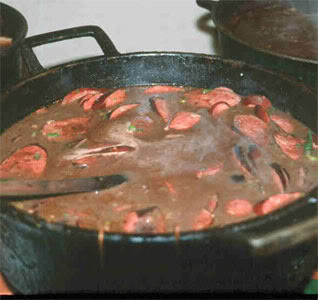
Cabana Carioca’s feijoada came in a cast iron pot stuffed with black beans and a variety of meats; pork shoulder, chorizo, kidney, beef, and other cuts that at the time, I could not identify. They were all coated in the black gravy of the beans and, really, since by then I was probably on my second or third caipirinha, no longer cared what I might be shoveling into my mouth.

The Brazilian National Dish

Along with the alcohol’s numbing effect, the caipirinha, as opposed to beer, helped cut through the density of the feijoada and made it much easier to navigate. The only problem was the next day’s hangover from too much cachaca, the Brazilian spirit made from pressed and then distilled sugar cane juice and used to make the caipirinha.

I think the last time I had a caipirinha at Cabana Carioca was in 1998 watching Brazil lose to France in the World Cup. The restaurant, all three levels, closed soon after and now, both its caipirinha and feijoada are just memories.

I’ve never had the fortitude to try to resurrect the feijoada in my kitchen, but the caipirinha is a frequent guest. The ingredients are simple; cachaca (available at most liquor stores), sugar, ice, and of course limes. Despite the easy ingredients, making a really good caipirinha requires a little sweat, or, as they used to say, “elbow grease.” The result, however, is well worth the effort.
What follows is the first cut of the lime: the caipirinha.

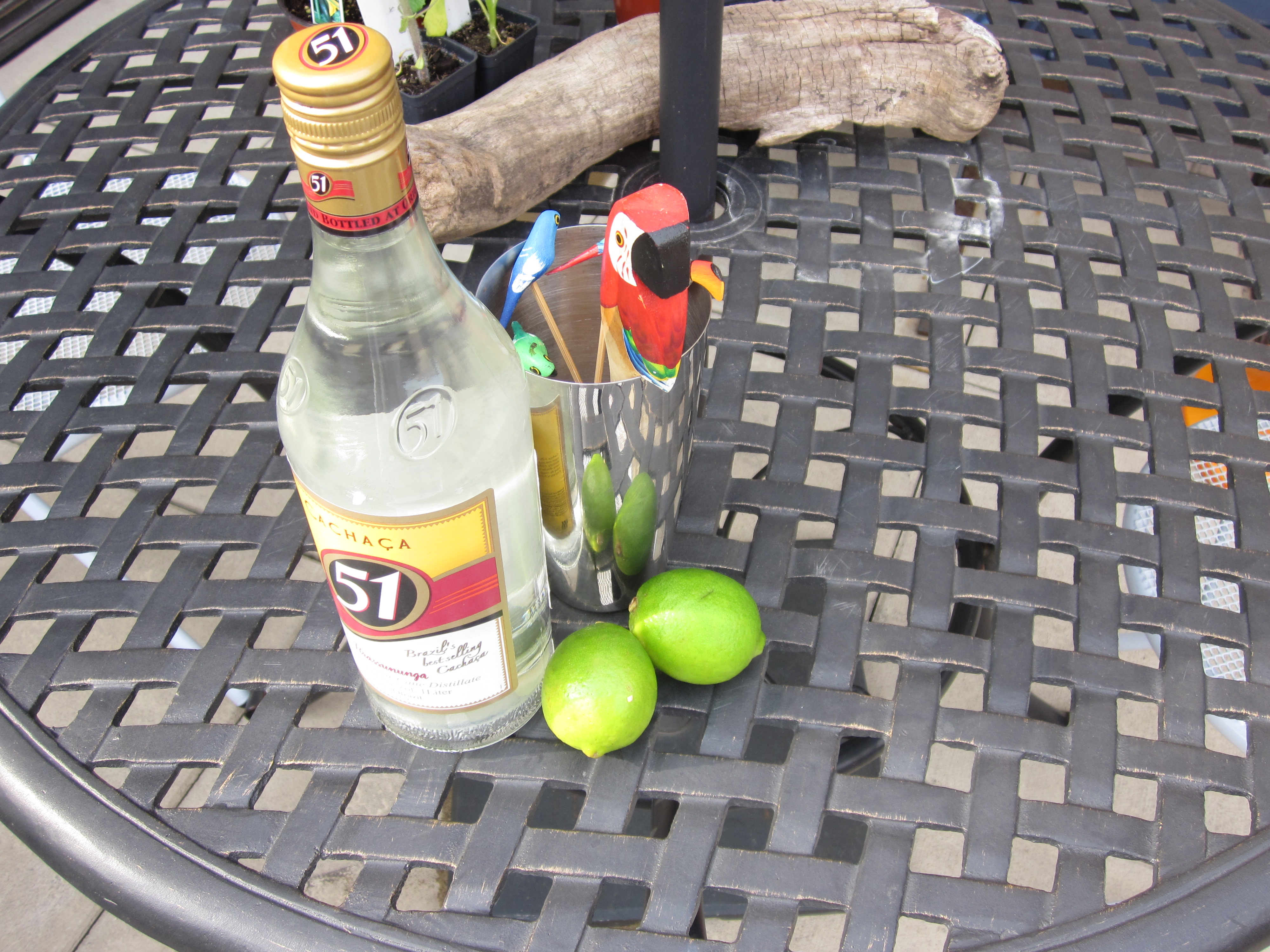
Some of the tools and ingredients in making a caipirinha.

Ingredients:

1 or 2 limes

2 to 3 ounces of cachaca*

2 to 3 teaspoons of sugar syrup **

3-5 ice cubes

*Spirit importers are beginning to market “premium” cachaca, which really just translates into a glitzy bottle design along with an upscale marketing campaign all in the hopes of selling a much higher priced product. I advise you not to go that route when purchasing cachaca for your caipirinhas. In Brazil there are two very popular brands that are used at most restaurants and clubs in making caipirinhas and they can be found here for well under $20 a liter. Seek them out. I guarantee you will not be disappointed.

**Most caipirinha recipes call for granulated sugar. I prefer pre-made sugar syrup thus skipping the “dissolving” process that is necessary in making the drink. To make simple sugar syrup, combine equal amounts of sugar and water, bring to a boil, lower the heat and let cook until the granules have dissolved. The syrup will last for weeks in your refrigerator. I like to use Demerara brown sugar for my syrup, but basic white sugar works just as well.


Sugar syrup and cut up limes.


To make the caipirinha you will need:

1 lime muddler. I have a parrot lime muddler that was given to me by my brother; a souvenir he picked up on a trip to Brazil.

The parrot

Cocktail shaker and strainer.

Cut the lime into eighths or even tenths.

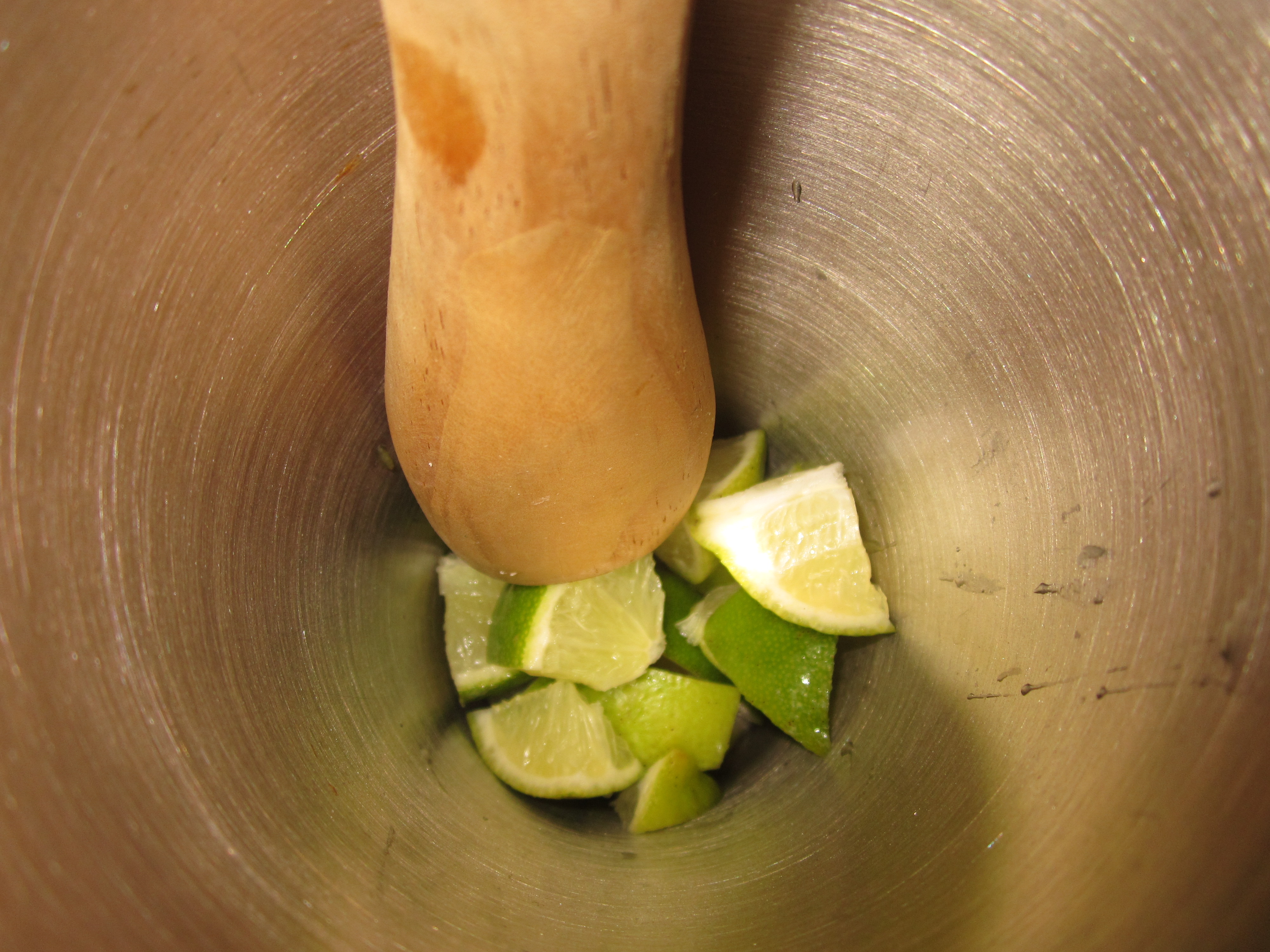
Toss the lime pieces into the cocktail shaker and using your muddler, it can be a pestle, if you have a mortar and pestle, or anything that can mash and muddle lime pieces, muddle mash the lime, extracting the juice from both the rind and the pulp. Don’t be stingy with that aforementioned elbow grease.

Let the lime muddling begin.

Add the sugar syrup, cachaca and a some ice cubes.

Shake vigorously and then strain into an ice cube filled glass.

Almost cocktail time.

Do not be fooled by the drink’s petite size. It will be tempting to down it in a few gulps, but try to sip slowly.  Drinking the caipirinha too hastily will only mean a quicker return to the kitchen and more work for you to make another.

The Noodles on Prince Street

22 May

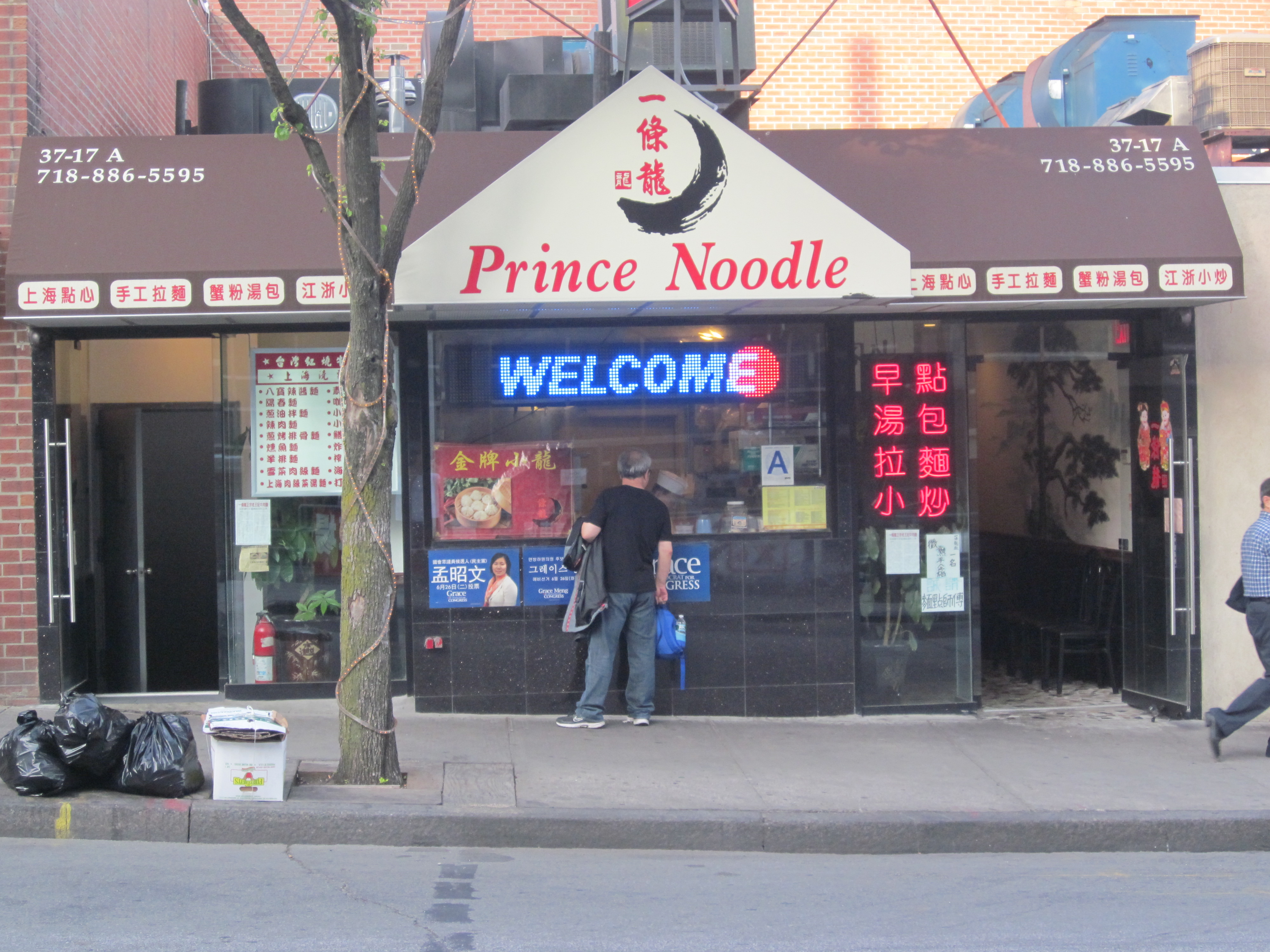
Prince Noodle House
3717 Prince Street
Unit A
Flushing
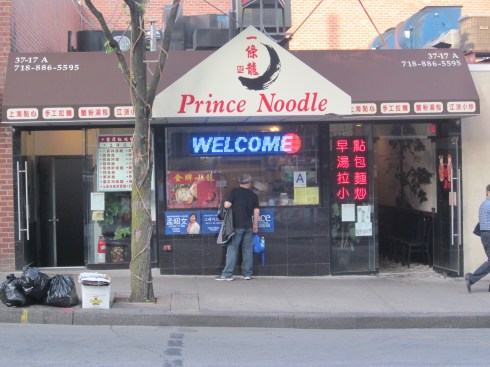
I’ve gone over the rules of our Chow City group many times in these electronic pages. We look for $20 and under places. We do our best to unearth those that are under the foodie radar, which nowadays is practically impossible. We look for virgin territory in terms of cuisines, but after ten years, the only cuisines we’ve skipped are the big name items (French, German, “American,” nouveau or fusion anything).

But there was one clause that was really never discussed or spelled out in our unwritten rule book. It didn’t have to be; it was taken for granted. That was the concept of waiting in line for a table at a restaurant. It goes against everything we hold sacred when it comes to eating; it’s a shock to our eating sensibilities.

So when Rick suggested a very well documented—at least by foodies—noodles and dumpling place in Flushing called Nan Xiang Dumpling House, I gently pointed out that, from my knowledge of these things, the place has become a “foodie destination.”

Rick understood immediately and, knowing the unwritten (and never mentioned) rule, quickly dismissed his original choice and instead went with an alternate, quite literally, down the road from Nan Xiang, the road in this case being Prince Street, called Prince Noodle House.

Of our group, only Mike from Yonkers, who was called to an urgent co-op board meeting, did not make the trip to bustling Flushing. There was absolutely no wait or line to get into the Prince Noodle House and we were given a big round table next to a large celebratory party of Asians.

One of the reasons Rick decided on, first Nan Xiang Dumpling, and then the Prince Noodle House were the aforementioned dumplings; in particular soup dumplings. He wanted to experience the Shanghai-style dumpling where the soup is “frozen” within the dumpling only to melt inside when steamed. Prince Noodle had them on their menu, here called  “soup buns,” so we ordered the crab meat mini buns and the “special” mini buns for the table.
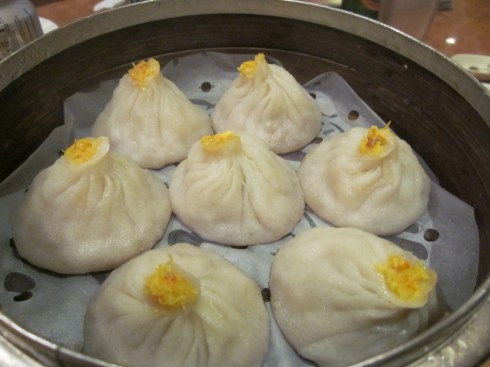
Crab meat soup buns

While we ate the soup buns, improperly at first and not with the provided spoons, the soup bursting all over our plates, Eugene told us of his trip to Jefferson City, Missouri where he attended a wedding.

“It was ridiculous,” he complained. “The wedding was catered. All they had was Mountain Dew, a keg of beer, and franks and beans. Can you imagine that?”

We couldn’t imagine it especially for a man used to the all you can eat buffets on the cruise ships and all-inclusive resort he regularly frequents.

While Eugene railed about his Jefferson City experience, I peered behind me at the big table. They were given one of those rotating round trays so they could spin it around making sharing easier. How come we didn’t get one of those, I wondered? The food was beginning to assemble on their table and I liked what I saw.

I asked our waiter about a dish they ordered that was a mix of a green, spinach like vegetable combined with what looked like tofu.

The waiter pointed to something on the menu called “malantou (kalimeris indica) w. dried tofu.”

“Indica means cannabis, or marijuana,” Zio offered as if he really knew of such things.

I ordered one for our table along with five spiced beef.
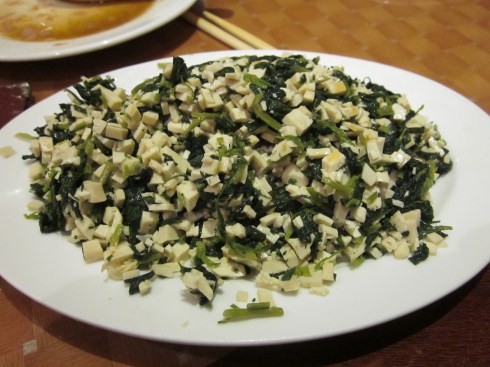
Kalimeris indica, also known as malantou with dried tofu

Served at room temperature, the malantou, vinegary greens mixed with dried shredded tofu, was a refreshing appetizer, though did not induce the melancholic buzz worthy of its name. The five spiced beef, on the other hand, thin slices of roast beef, cured with five spice powder and a sweet soy sauce drizzled over it, also served at room temperature, were addictive in a more familiar way, at least for us, than what Zio had presumed we would experience with the malantou.
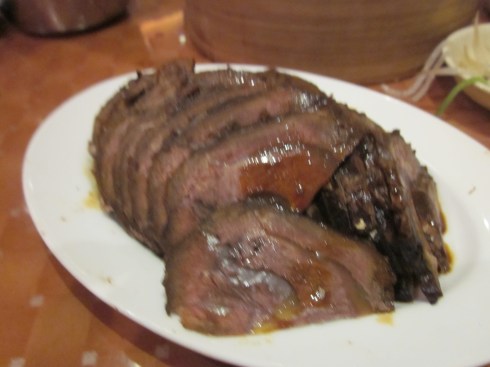
Five spiced (roast) beef

Gerry immediately had his sight set on the “sliced fish swimm hot chili pepper sauce,” that was on the menu, highlighted in red to indicate that it was spicy. No one had any disagreement with his choice or of Rick’s twice sautéed pork belly.

I thought we should at least try some of the noodles at Prince Noodle House and ordered hot and spicy pork noodle soup. I added a rice dish, snow cabbage with rice cake and pork, while Zio studied the menu for one last dish.

The waiter hovered over his shoulder. “I want this,” he said, pointing to something on the menu.

The waiter bent down closer to see what Zio was pointing to.

“You want crap fish?” he said.

“Huh?” Zio immediately got flustered.

“The crap fish?” the waiter said again.

Zio looked at the menu. What he was pointing to read: “spicy bean paste Buffalo crap fish.”

“Yes, I want…number 102,” Zio concurred, indicating the number adjacent to the item where the a and the r had obviously and mistakenly transposed.

Sliced fish “swimm” in hot chili pepper sauce

First to come out was the family-sized sliced fish that, in an enormous casserole dish, was literally “swimm” in hot chili pepper sauce. A few bites brought tears to Eugene’s eyes, a sheen to Rick’s forehead, and loud honking from Gerry’s prominent, yet distinguished nose.

The noodle soup was equally spicy and the noodles, hand pulled, gelatinous in texture, lived up to its princely reputation.

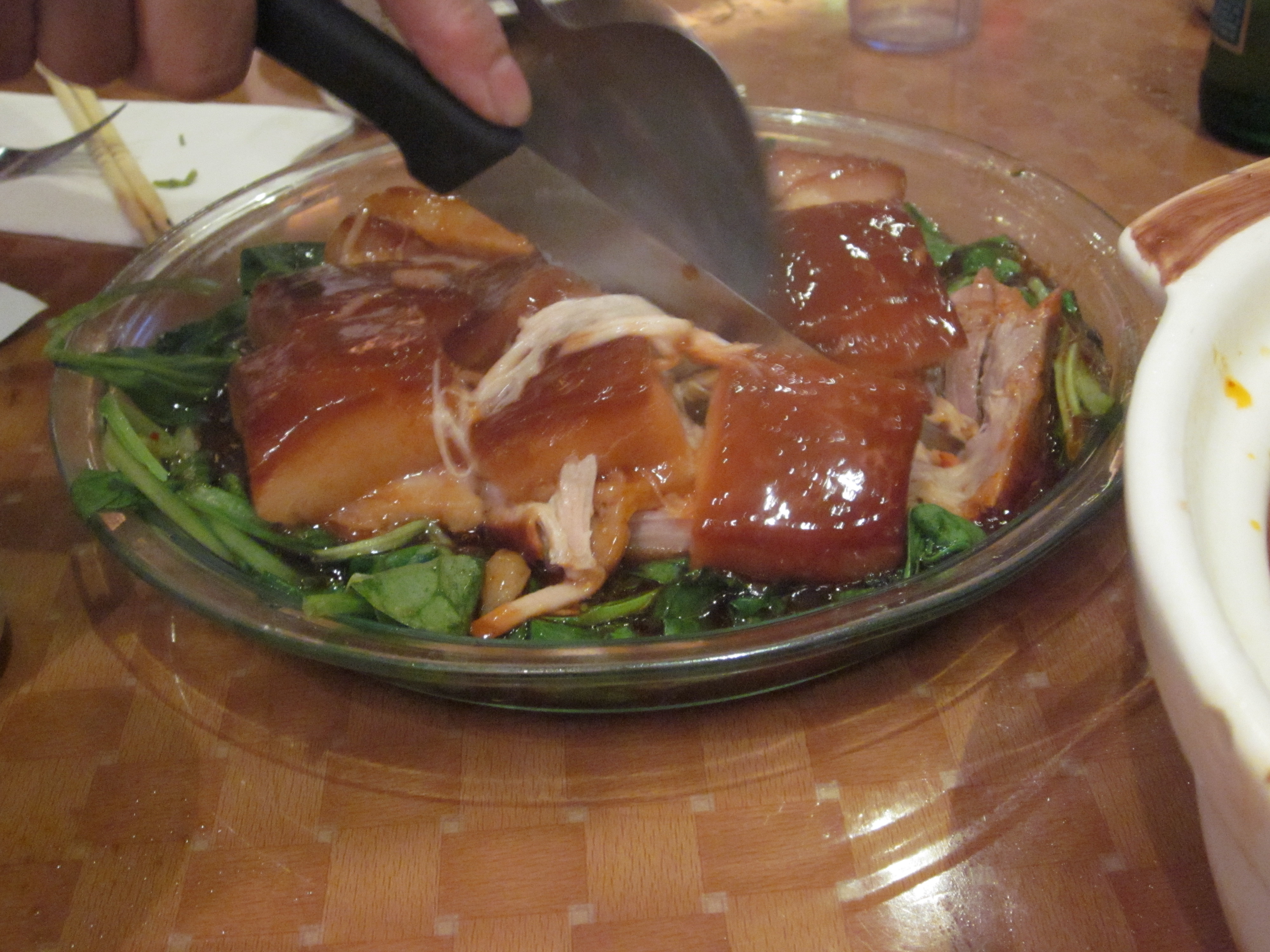
Relief from the heat came with the arrival of the pork belly and the snow cabbage and rice cake. Covered with a one inch layer of fat and glazed to a burnished reddish color, the pork belly was ultra tender; the meat kept moist by its fatty coat and marinated with light soy sauce, sugar and rice wine.
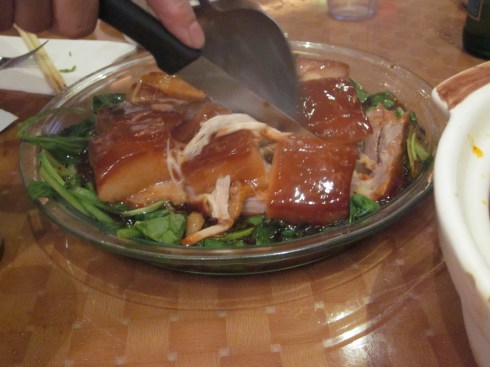
Sauteed pork belly

Last to arrive was the whole carp. Smothered in a bean paste and topped with scallions and ginger, Zio was the first to sample it. He didn’t have much to say as he picked through the many bones. Gerry tried a few bites.

“Hmmm, crap fish has a very unique taste,” he said with a straight face.
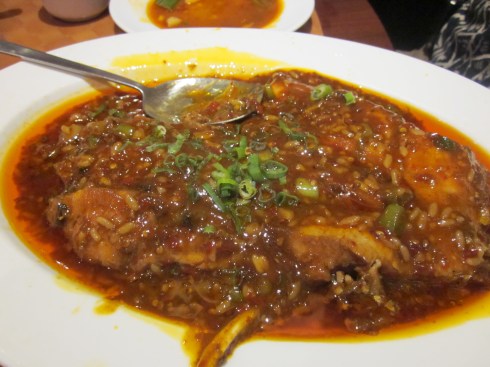
There’s crap fish under all that spicy bean paste.

While we polished off almost everything but the unfortunate carp, the dishes on the rotating tray on the table behind us kept piling up. We were done and they were just starting on a huge platter of lobster. Despite having completely stuffed our faces, we gawked enviously as we paraded out of the now fully booked restaurant.

Good thing we didn’t have to wait, I thought to myself as I made my way back to the parking lot where my car was parked. Once inside my car, I stared through the windshield at Prince Street. I noticed a line had formed outside of the Nan Xiang Dumpling House. Maybe the soup dumplings and noodles were better than the stuff we just experienced at Prince Noodle House, but I wasn’t going to wait to find out.

The line for soup dumplings at Nan Xiang

The Yummy Contagion

18 May

The yumminess is spreading and I’m not sure if that’s a good thing.

The Yummy Contagion has  left its terrible mark on the wonderful cuisine of Thailand. It’s gotten so bad that not only is Thai food referred to as yummy, but some also say it’s become “yum yum.”

I very much like sushi. I just don’t like it when it’s “yummy.”

You could describe dim sum is yummy, but no one is forcing you.

I’m not sure I really want to know what one might encounter within the Yummy House.

By the way, the noodles at Yummy Noodles are…

Neckbones Presents: The Bizarre Eats of Chow City

16 May

We each have our own definition of what might be bizarre when it comes to what we eat. To some, llama hoof in black bean sauce might seem bizarre, but to others, that is sustenance

Here in the city where I dwell, there is ample evidence of peculiar, even exotic, eats. In this new segment of Fried Neck Bones…and Some Home Fries, I intend to wander the city streets, mostly aimlessly, searching for the unusual, the weird and wacky.

Weird—wacky—odd; these are all subjective terms when referring to food. What I think is bizarre, or downright disgusting, others might thoroughly enjoy, and even indulge in regularly. So I promise not to judge. I pledge to do my best to respect my fellow man’s questionable taste in food stuffs. If I slip and begin to preach or moralize on the food choices of others, please don’t hesitate to call me on it. Sometimes I just need to be reminded.

The Hawaiian

In my decades of devouring pizza, I have heard tell of an unusual slice called “The Hawaiian.” I have even seen it on display at various pizzerias; the pineapple being the prominent ingredient sitting, unappealingly, on top of the crust surrounding by cheese and ham, the combination repellent to my pizza snob sensibilities.

I knew that in pursuing the bizarre foods of New York there would be challenges. I now needed to search out a slice of Hawaiian and summon the courage to actually sample it.

My first stop was 2 Bros’ Pizza, a chain of 99 cent-slice pizzerias, They advertised the “Hawaiian,” on a display menu. I perused the pre-made cold pies on display but saw none with the customary pineapple.

“Do you have the Hawaiian?” I asked the African man behind the counter.

“The what?”

“The Hawaiian,” I said again, this time pointing to the reference on the list of pies.

He went to the same display of pies I had inspected and returned shaking his head. “No, we don’t have the Hawaiian today.”

“Will you be making any?”

“Not today,” he said.

“Ever?” I inquired hopefully.

“Yes, maybe tomorrow we make it.”

I thanked him for his help and exited.

My next stop was a Chilean-run pizzeria I knew of on the Upper West Side called Freddie & Peppers. I have had their pizza in the past and knew they usually offered very unusual combinations of slices. They just might have the Hawaiian.

I checked out the pre-made pies behind their counter but again, didn’t see any with pineapple. On their menu, there was a mention of a “Hawaiian.”

I asked the South American man behind the counter if he had the Hawaiian.

He looked perplexed. “No, we don’t have that,” he said.

I could tell from his look and the way he responded, that the Hawaiian was not something they made very often or at all anymore. I didn’t press it further or suggest that maybe it would be a good idea to remove it from their menu so as not to disappoint a driven man on a ridiculous quest.

Finally, I stopped at Maria’s Pizzeria further uptown. I double-parked and peered in. On the window was a menu. I saw it there listed as The Hawaiiana.

I ran inside. There it was: a slice adorned with pieces of ham, mozzarella, and, of course, pineapple.

I quickly ordered it and took it home for a family sampling.

The Hawaiian

After reheating it, I cut the slice into pieces, one each for the 8 and 12-year old, another for my discerning wife, and a piece for myself.

The 8-year old looked at it, made a face and shook his head.

“Try it,” I said.

“I don’t want to,” he said. This is from a boy who will eat eel and now calls Part One of the Fazool Trilogy Pasta e Ceci one of his favorite pasta dishes.

“It’s just pineapple.”

He shook his head and left the kitchen.

The 12-year old didn’t hesitate, but he rarely hesitates on anything pizza-related. He ate it heartily. “What do you think?” I asked.

His mouth full, he gave me the thumb’s up.

“Would you order it?”

“No, never,” he said after swallowing.

I nodded.

He eyed his brother’s uneaten piece. “Can I have his?”

I said he could and he stuffed it down.

Now the more mature palates sampled.

“It tastes like it came from a can,” my wife said.

She was right. The pineapple had a metallic flavor to it and its sweetness overpowered the ham and cheese. Though I could find no visual evidence of tomato sauce, there was a hint of it in the slice. How it got there, I don’t know.

The Hawaiian was edible…at least to all of us but the 8-yar old. No one gagged. And we all swallowed what we chewed. Still, I wondered, what would motivate a chef to think to put slices of canned pineapple on a pizza? Did he/she think the sweet would meld with the salty? Maybe some people just need a little sugar on their pizza? And if they do, who am I to deny them that gratification.

The Fazool Trilogy: Part Three

9 May

Of the Italian-American all star bean trio I have written about in the Fazool Trilogy, it is this dish that most refer to when they speak in that slang my high school Italian teacher reviled, “fazool.”

And in honor of my high school Italian teacher’s pet name for me, “pigrone” or lazybones, I’ve titled my version of pasta e fagioli accordingly.

It’s not just because I was a lazy student  in my high school Italian class that I’ve named the dish this way but because, by using canned beans instead of dried, which require soaking and then cooking on their own, I’ve cut a huge corner in preparation. I’m all for cutting corners in cooking if the results are pretty much negligible either way. And in my experience, I find little difference between taking the time to soak the dried beans instead of using canned. Certainly not enough to warrant the extra time and effort.

Unlike pasta e ceci, and pasta lenticchie, my grandmother did not make pasta e fagioli much for me. I remember her serving heaping bowls of it to my grandfather at lunch when he would come in from gardening, construction, house painting; whatever  handy work he was doing at the time. I don’t recall my brothers and I being forced fed what my grandfather ate heartily. Maybe she assumed that we would totally reject the concept of the pale cannellini bean and rather have a tuna fish or peanut butter and jelly sandwich. And looking back now, that’s a shame. As a result, I came to my appreciation of pasta e fagioli later in life.

When they say “fazool” this is what they mean.

My grandmother, I do know, made pasta e fagioli with the legume of choice for the dish, the cannellini bean. I have known Italians, however, who swear by the kidney bean when making their “fazool.” To me that changes the dish completely, but who am I to judge anyone on their fagioli preference?

All of the bean dishes in the Fazool Trilogy are unique and not just because of the type of bean. The first in the Trilogy, Pasta e Ceci, is more like a pasta dish; the pasta being the dominant part of the dish with the chick peas folded into the pasta.

In the Fazool Trilogy: Part Two, Pasta e Lenticchie, the lentils are the main attraction while the strands of broken spaghetti fill out and balance the dish by adding much needed starch to the heftiness of the lentils.

Pasta e fagioli, at least the way I like to make it, is more like a soup, or stew, than the other two. And because it has a more liquid consistency, unlike the others, I add a little meat flavoring, chopped smoked ham or pancetta. If you want to keep it meatless, you won’t lose much; the same can be said with adding meat to the other two in the Trilogy.

What follows below is my pretty standard, and hopefully not too difficult, recipe.

Lazybones Pasta e Fagioli

Ingredients

1 tbs of olive oil

2 cans of cannellini beans, (15-16 ounces) drained and rinsed.

1 medium onion, chopped fine

1 celery rib, chopped fine

1 medium carrot chopped fine

3 garlic cloves, minced

1 tsp dried oregano

¼ tsp red pepper flakes

3 to 4 cups of chicken broth (beef broth works too)

2 cups water

1 tsp salt

1 28 ounce can of diced or chopped tomatoes with juices (I like pieces of tomato in my broth, so I usually go with diced or chopped; sometimes crushed is just puree)

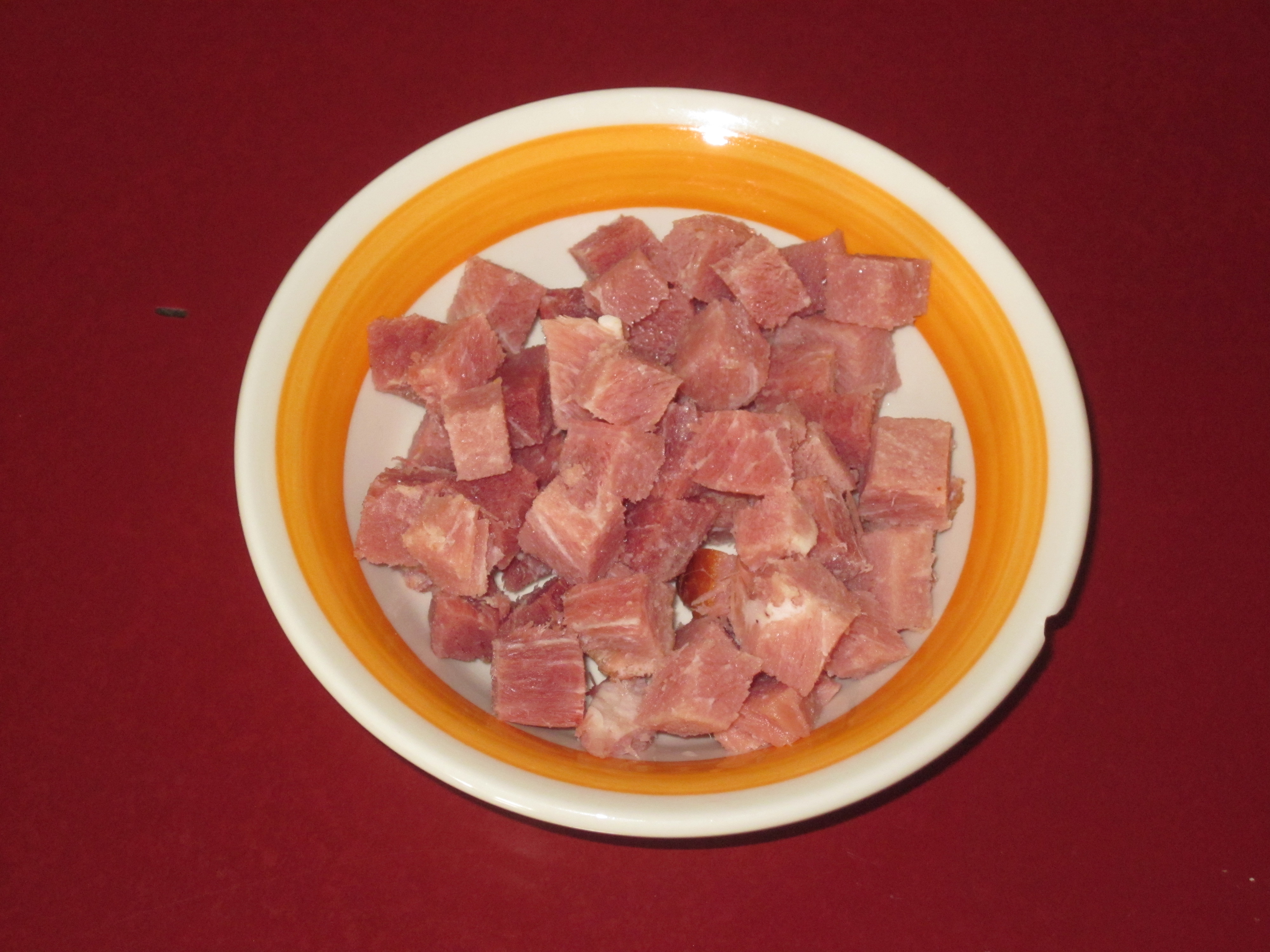
3 ounces smoked ham, pancetta, or bacon (I prefer the first two to bacon just because bacon’s strong flavor influences the dish more than I like, but it still works. For this batch I’ve used smoked ham).

1 secret ingredient (that’s not so secret anymore, to find out what it is, refer to The Fazool Trilogy: Part Two.)

Secret ingredient

8 ounces of a small pasta shape (I like ditalini, but small shells, elbows, and tubetini also work).

¼ cup chopped fresh Italian parsley

Grated Parmesan cheese

The pasta of Pasta Fagioli

Heat the oil in a heavy Dutch oven or wide bottomed pot over medium-high heat.
Add the ham, pancetta or bacon and cook until it browns lightly, around 5 minutes.

Chopped smoked ham

Stir in the onions, celery, and carrots, until they are softened. Around 7 minutes.

Add garlic, red pepper flakes, and oregano, stir for about 1 minute.

Pour in tomatoes and the secret ingredient that’s not so secret anymore and bring to a boil.

Pasta e Fagioli minus the pasta and the fagioli.

Add the broth, water, 1 teaspoon salt, beans, and bring to a boil and then simmer for about ten minutes.

Drop the pasta into the pot and cook until it is a minute from being al dente. Timing depends on the pasta shape and brand; check the package. (Beware of overcooking the pasta; you don’t want mush).

Turn off the heat, stir in the parsley, ladle into bowls, and add the desired amount of freshly grated parmesan cheese.

Pasta e Fagioli

Like the others in the Trilogy, Pasta e Fagioli is best served with a crusty bread and a green salad.

Thus concludes the Fazool Trilogy, however, I am always open to suggestions and ideas on how this series can be continued and transformed into epic status. So please don’t hesitate to comment with your fazool insight.

A Senegalese Stomping Ground on 116th Street

17 Apr

Africa Kine
256 W. 116th Street

Mike from Yonkers notified our group via email that he wanted to choose a place from his “old stomping ground.” Who knew that Mike from Yonkers’ old stomping ground was the area around 116th Street and Eighth Avenue known as Little Senegal? What we do know is that Mike from Yonkers has some sort of obsession or kinship with African food. In the past, he has directed us to the late, Treichville Treichville Tasting Menu, African American Marayway in the Bronx The Un American African Place, and Salimata Eating Guinea Fowl in a Guinean Place in Little Senegal, just around the corner from his most recent pick, Africa Kine. And like 116th being his old stomping ground, this obsession has never been explained.

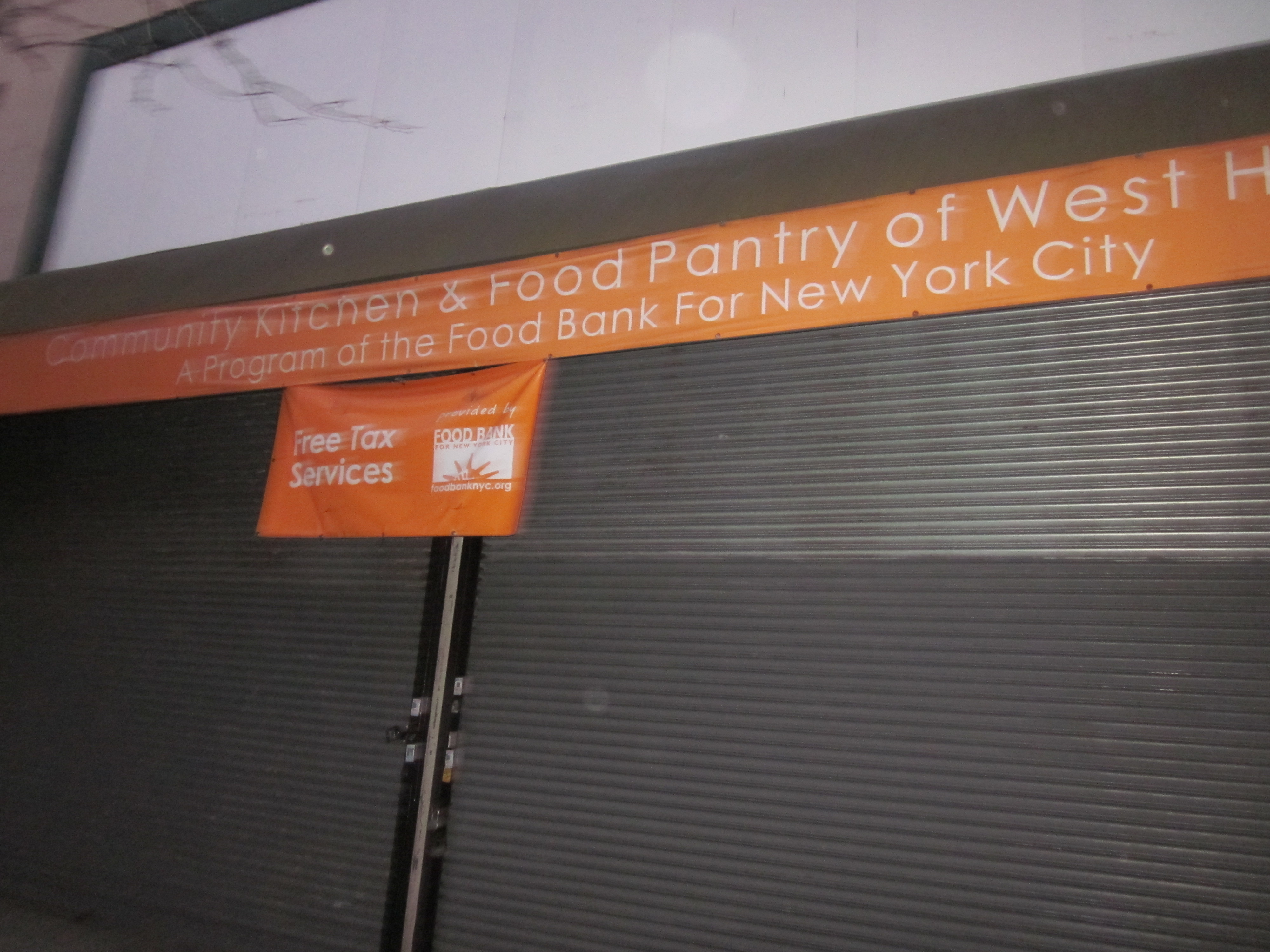
I never claimed the same area as my old stomping ground, but having lived just a couple of blocks from it, I could have been justified for doing so. I even spent a few months volunteering at the community food bank next door to Africa Kine, just after the economic meltdown of 2008.

The soup kitchen next door.

I worked at the soup kitchen washing pots and pans, bagging garbage, prepping food, and even shoveling ice and snow so the food trucks could gain entry to the kitchen. I stopped soon after the chef of the kitchen, who caught on that I was a writer, had me read the beginnings of his autobiographical novel and when, local Mormon missionaries began to flood in to help out making the kitchen more populated than one you would find at a four-star restaurant. But those are stories for another time and place.

Since my work at the food bank, a raucous, busy beer garden, called the Harlem Tavern has opened across the street, along with a meat market that specializes in local, organic beef and where the butchers wear pork pie hats while they work, and a cookie place where the cheapest, albeit, very good and very large cookie, is four dollars.

Those new establishments, among others made parking tough for the group, but Zio and I had no troubles getting to Africa Kine, which was enshrouded in dark netting along with scaffolding in front making it hard to distinguish. On the way in, we passed a legless beggar in a wheelchair and as we entered and started upstairs to the dining area, we both noticed a woman, face down, arms out on a prayer mat.

“Don’t take her picture,” Zio whispered to me. “It would be disrespectful. We don’t want an incident.”

Inflation hits Little Senegal.

Africa Kine is possibly the most notable Senegalese restaurant in Little Senegal. The dining area is spacious and modern, with high ceilings, comfortable booths, big tables and a number of flat screen televisions, and described in the restaurant’s elaborate website Africa Kine as “luxurious.” Either way, it was most definitely a far cry from what we experienced at either Salimata, Treichville or African American Marayway.

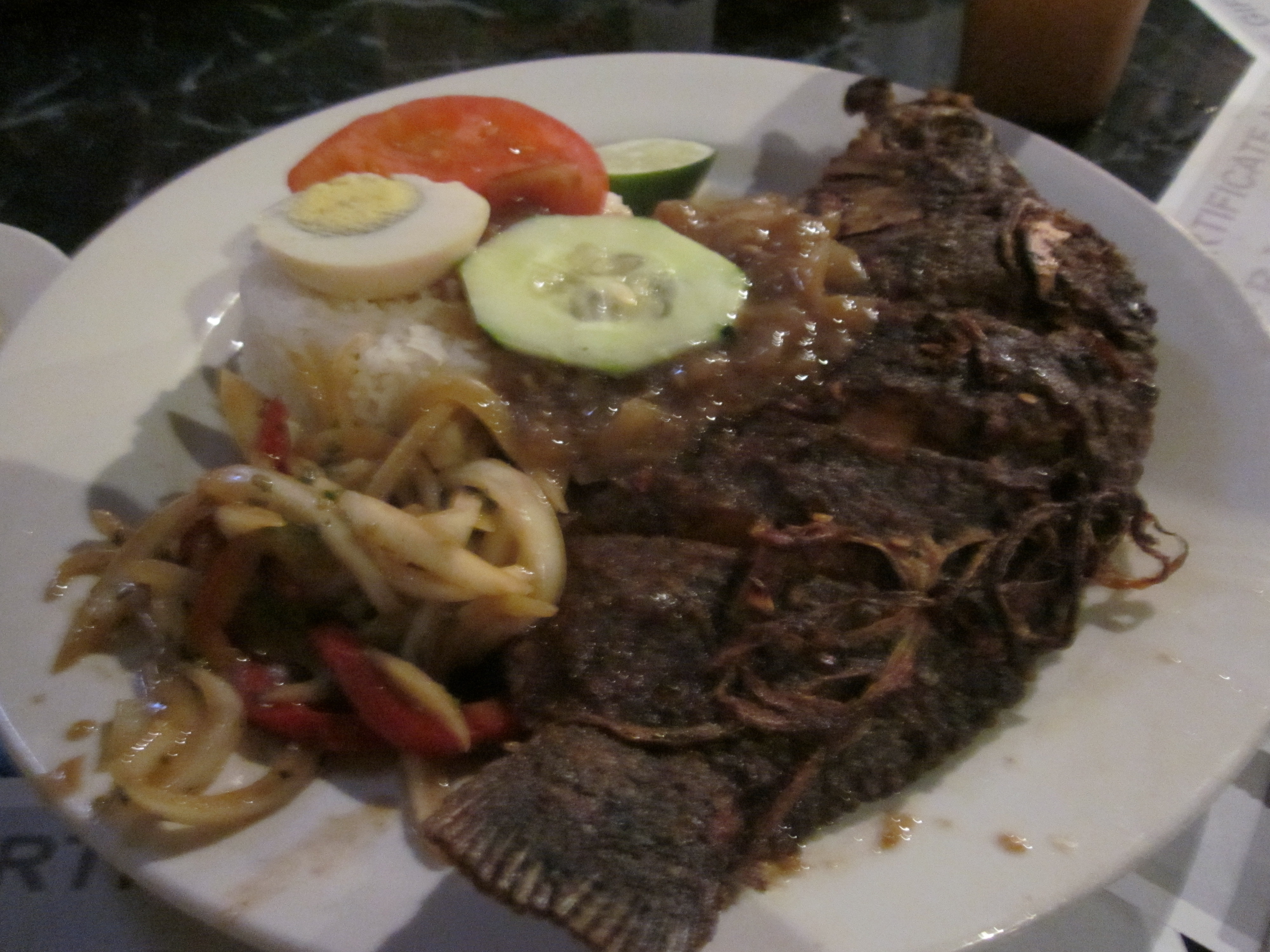
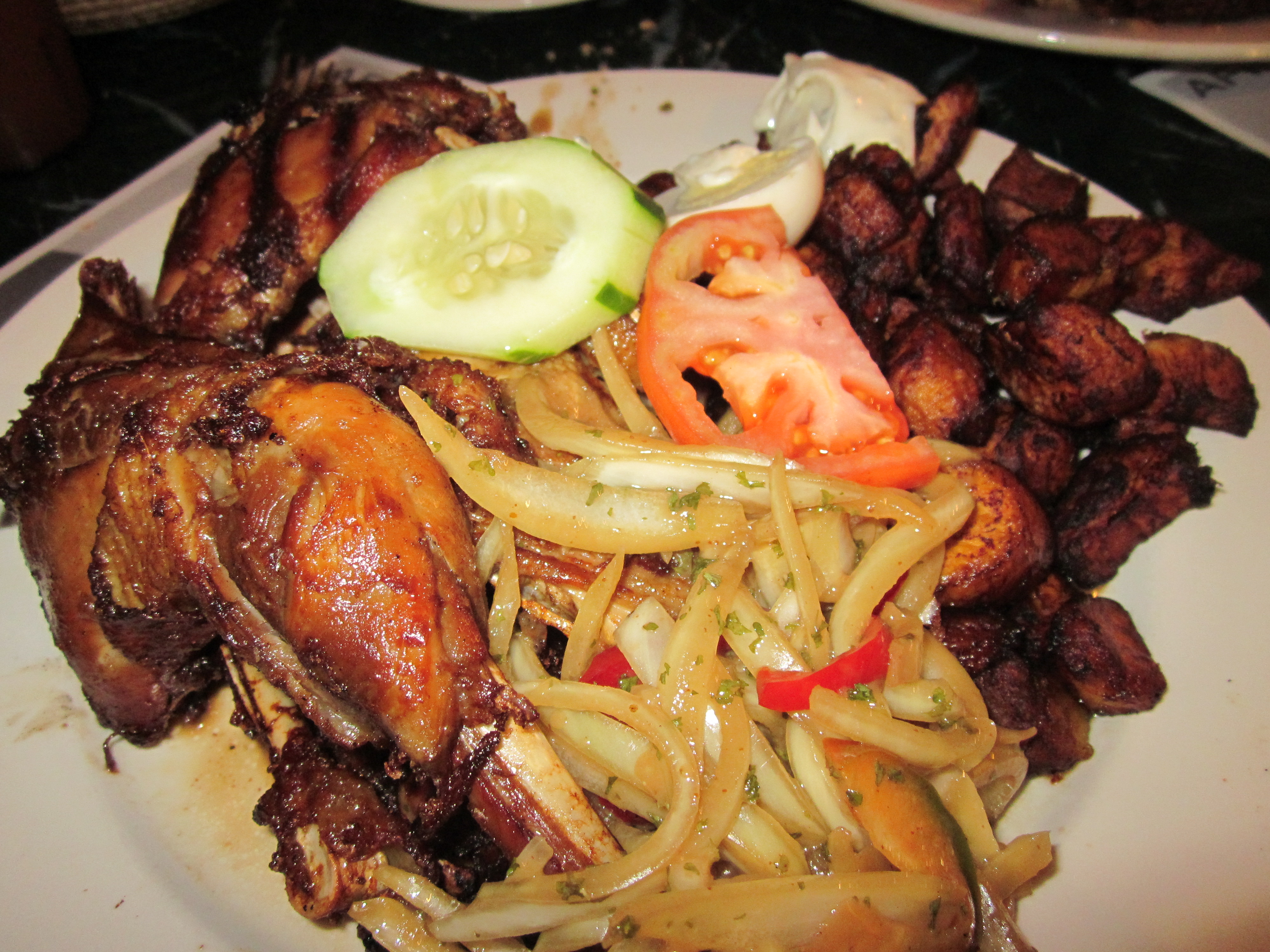
The others joined us soon after at a big table in the back of the “luxurious” dining room. While we sipped spicy homemade ginger beer, we perused what, by now was a familiar menu thanks to the African culinary education bestowed upon us courtesy of Mike from Yonkers. There was guinea fowl, chicken, lamb, goat, fish, grilled or fried, and steak. The entrees all came with a choice of one of an assortment of starches; couscous, rice, plantains, yam and a small chopped iceberg salad. Each dish came with onions, sliced, lightly grilled with a mustard-based sauce on them, and scattered over the meat and fish. Most of the entrees also included half a hard boiled egg.

Grilled fish with onions and half a hard boiled egg.

I’m no expert on guinea fowl, but if I recall, the guinea fowl at Salimata was better, or maybe more distinguishable, than what we experienced at Africa Kine. The fish and lamb were also all solid, but there were no raves from our now very picky Senegalese aficionados. So, though the surroundings were comfortable, and yes, bordering on luxurious, the food was not as memorable as many of the more humble African places we have visited.

Grilled guinea fowl with onions and a half hard boiled egg (and plantains).

What there was at Africa Kine, however, was plenty of food; the portions more than generous.

“Really now, how can they say people in Africa are starving? Zio griped. “Just look at all this food?”

“Yeah, we just ate a village,” Gerry quipped.

And of that village, there were no leftovers.

A Royal Serving of Baba Ghanoush

10 Apr

Queen Sheeba
317 W. 141st Street.

Zio and I were hungry. The next scheduled meeting with our group of gluttons had been postponed, but we couldn’t wait. We needed our food fix now. I suggested Margie’s Red Rose Diner on 144th Street, but when Zio and I arrived the gate was pulled down and there was a handwritten sign on it saying Margie’s would be closed in January, reopening February 28th. The date was March 8th. The gate was still down.

Plan B was a few blocks away, just down the hill from City College. A place I noticed while looking for parking when bringing my son to piano lessons at the Harlem School of the Arts. Queen Sheeba seemed like an odd choice for the neighborhood, but maybe not. It was advertised as Middle Eastern; halal, of course, and the specific country, Yemen.

There was a Hispanic couple at one of the tables in the ornately decorated restaurant along with a few children running around…obviously related to the owners.

Queen Sheeba’s art

The couple was talking loud, commenting favorably on the food and trying to engage the host/waiter/owner and then us into their conversation.

“Are those your grandkids?” the man at the table, gesturing to the children, asked the owner, who’s English was either truly limited or just pretending that it was so he had an out when it came to talking to his clientele.

He nodded that they were.

“How old are you?” the man at the table asked.

“Fifteen,” he replied with practically a straight face; the curve of a mischievous grin barely apparent.

“Okay, you don’t have to tell me. But you look great,” the man said. “Me, I’m 52.”

I took a closer look at him from our table. He didn’t look so great for 52, but I kept my mouth shut.

The female half of the couple saw me peeking. “Try the rice, it’s really good,” she said to Zio and I.

“Yeah, everything is good here,” her companion said in a booming voice so the owner would hear. “The lamb. The chicken. We’re coming back again. Enjoy your meal.” And then the two of them waddled out.

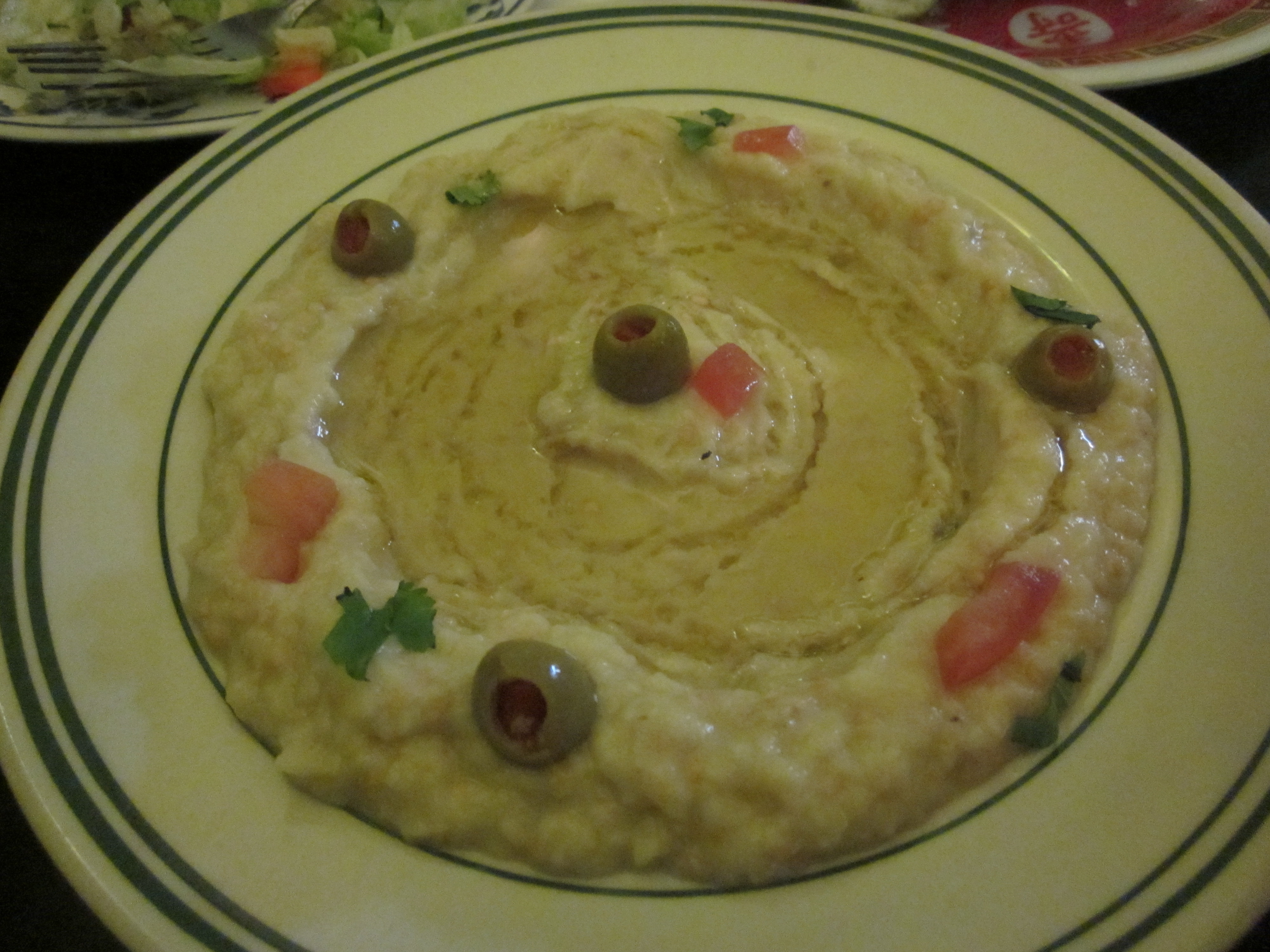
The Queen’s Baba Ghanoush.

Zio and I started with the restaurant’s baba ghanoush, which, drizzled with olive oil and garnished with pimento-stuffed olives, ranked in the upper echelon in the unofficial baba ganoush ratings. The pita bread it came with was warm and was the perfect texture for scooping baba ganoush.

Spaghetti or stewed fish? Both looked delectable to Zio.

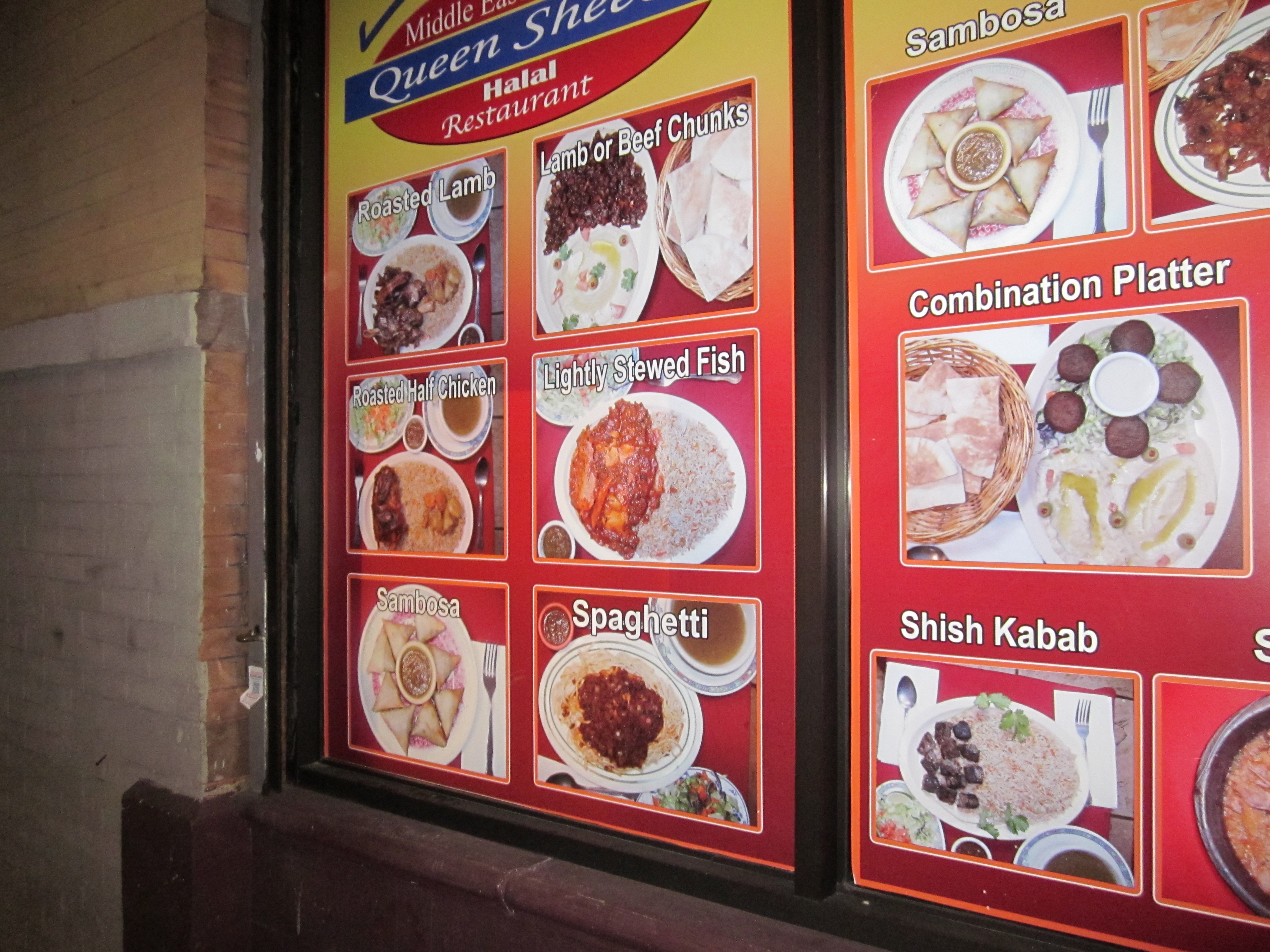
Though Zio was tempted by the picture of the spaghetti displayed on the restaurant’s window; spaghetti—Yemeni-style would be adventurous to say the least, he couldn’t get himself to order it. Zio tends to be a wee bit predictable at times and if there is fish on the menu, that’s where he invariably goes. At  Queen Sheeba, he stuck to his pattern and tried the lightly stewed tilapia while I was intrigued by the “Yemen Dish” called Saltah.

A salad came out first. It looked undressed and there was a greenish sauce that came with it. Zio sprinkled it on the salad and so did I. As we took our first bite of the chopped iceberg lettuce, we winced; the sauce was no dressing but a spicy condiment for our meals. Even though it brought tears to our eyes, we were undeterred and ate all of the crispy hot sauce drenched salad.

Next we were brought bowls of muddy brown soup; a beef broth that was rich and thickened somewhat with mashed lentils…I think. I asked our waiter what type of soup it was. The answer was undecipherable. Whatever the soup was called, it was—and I’ll make an exception here and use the word I try to avoid when describing anything I eat—delicious.

Soup with no name.

Our entrees followed; Zio’s fish smothered in a onion, tomato, and pepper sauce accompanied by the highly praised rice.

The satah arrived in a bowl; a comforting stew of vegetables with bits of ground lamb. Though there were a few distinct middle eastern spices in the stew, it reminded me of was a dish my grandmother used to make for me she called “cucuzza longa;” stewed pieces of a long squash that my grandfather grew in his garden, peeled, chopped and served in a tomato-based broth with ground beef. Who knew Yemen had anything in common with Calabria?

Satah: The Yemen dish

Zio was having trouble finishing off his fish, but I made quick work of the satah, catching any remains of the stew with what was left of the pita bread.

The owner/waiter, whose name, we learned was Ali, smiled in pleasure when he saw how well we ate. He brought us Yemen tea, fragrant with cloves as a digestif which I drank along with a fresh, very moist slice of baklava (spelled on Queen Sheeba’s menu as baklawa).

Photos from the friends back home

Since I live in Harlem, though not within walking distance of Queen Sheeba; I asked if they delivered to where I live. I told him my address but he shook his head.  “You don’t?” I asked, disappointed.

Ali went to the counter near the restaurant’s entrance, found a pen and business card and returned to us. He had me write my address and phone number on the card.

“We’ll deliver to you,” he said.

I looked at Zio. “See, you’re special,” he said to me.

“Yeah, how about that,” I said, making sure to slip a take out menu into my coat pocket before we both left.

A Bengali Buffet in the Bronx

3 Apr

Neerob
2109 Starling Ave
Bronx

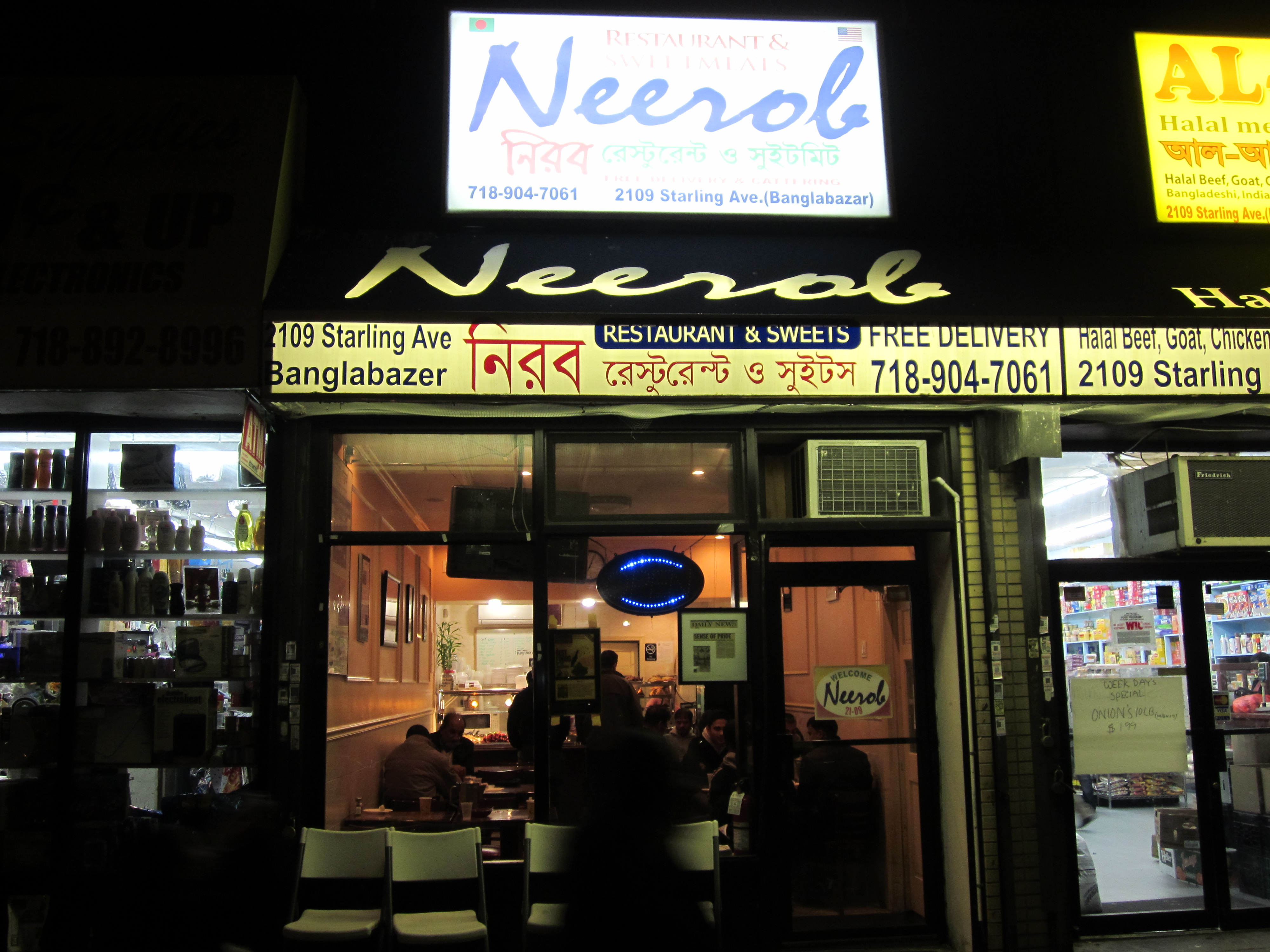
Eugene’s already swarthy skin was a shade darker when he walked into Neerob, the Bengali place in the Parkchester section of the Bronx he choose for our group’s tasting prompting Zio to comment that he fit right in with the rest of the restaurant’s clientele. And it was true. Eugene could pass for a Bengali. He could pass for an Arab, Latino, mulatto, Greek, or Sicilian. He had that versatile, dusky look; our own Anthony Quinn.

His skin had darkened from a week in Punta Cana, at a resort where he happily exclaimed that you never had to leave the property. “They had 11 restaurants,” Eugene crowed. “Italian, Asian, Tex-Mex, a Brazilian where they come and slice the meat for you. The place was so big they take you around on mini buses.”

Apparently there was no Bengali food at the Punta Cana resort though and when Eugene looked around the small restaurant he nodded approvingly at his choice. “Now this is the kind of place for us,” he proudly proclaimed.

Eugene the Greek (or Arab, or Latino, or Sicilian, or Quasimodo) at the buffet.

He made no mention of the framed New York Times review on the wall. Or of the Daily News and Time Out New York blurbs that were also displayed. And when we first started convening, now over ten years ago, framed New York Times reviews would have been a problem. If the Times had written it up, the place had officially been “discovered” and we had very loose rules against that. We needed to make the discovery and let the Times unearth it after our experience, and many times that is exactly what happened. Now, however, the restaurant world, even the one we lived in, had changed. Nothing was undiscovered anymore whether by the Times or on the internet

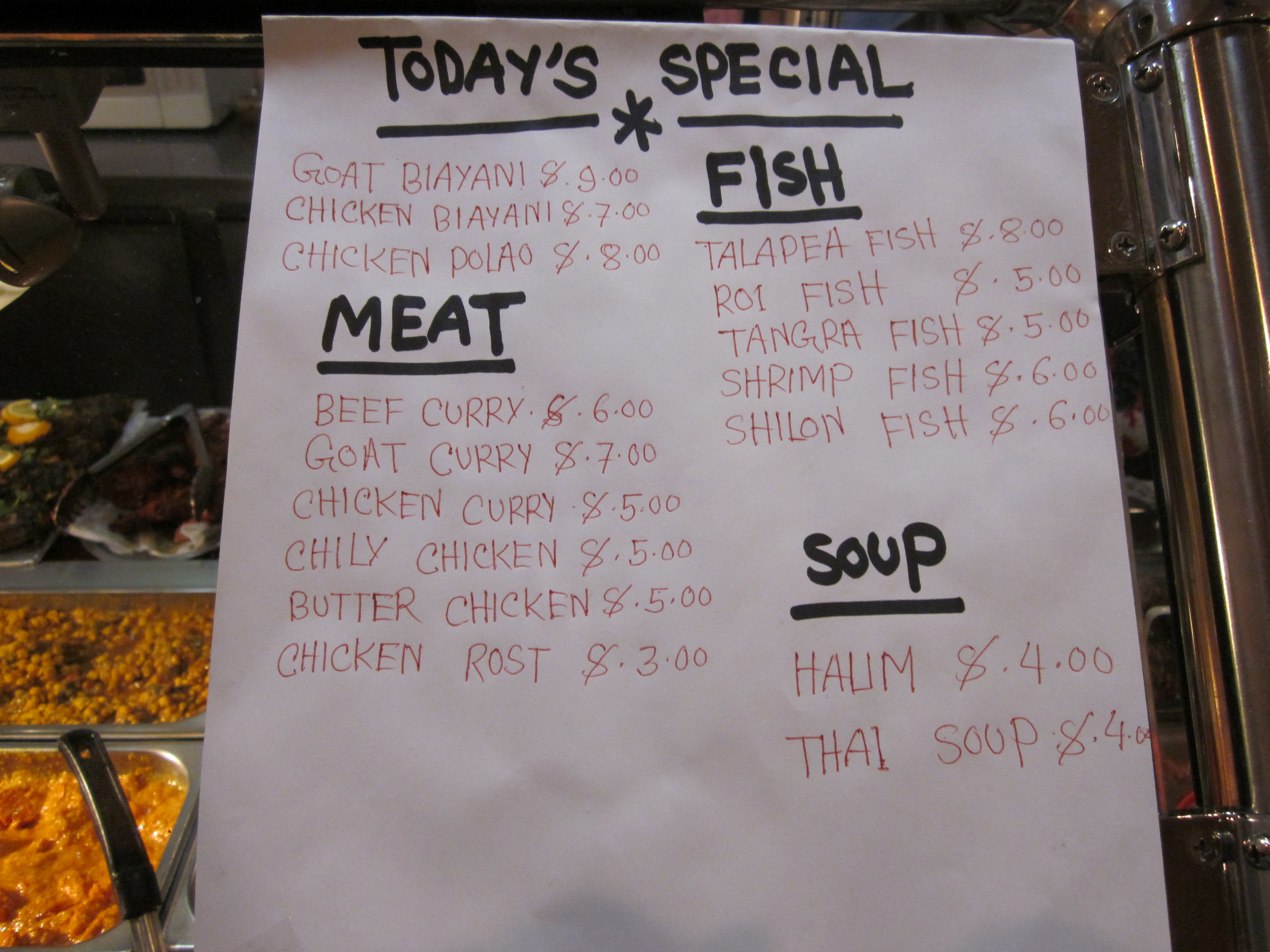
Neerob’s  specials of the day.

As it had at Singh’s Roti Shop, (A Double(s) Dose of Roti on Liberty Avenue) where we last met, that I was taking pictures of the restaurant and its food, caught the eye of Neerob’s owner. The camera being a giveaway that this group of non-Bengalis (Eugene aside) and non-Parkchester regulars, were either food critics or food bloggers. He immediately took an interest in our group, arranging tables so our party of six would have enough room and then bringing us a sampling of vegetable pakoras accompanied by squeeze bottles of a hot chili sauce and a cilantro based condiment.

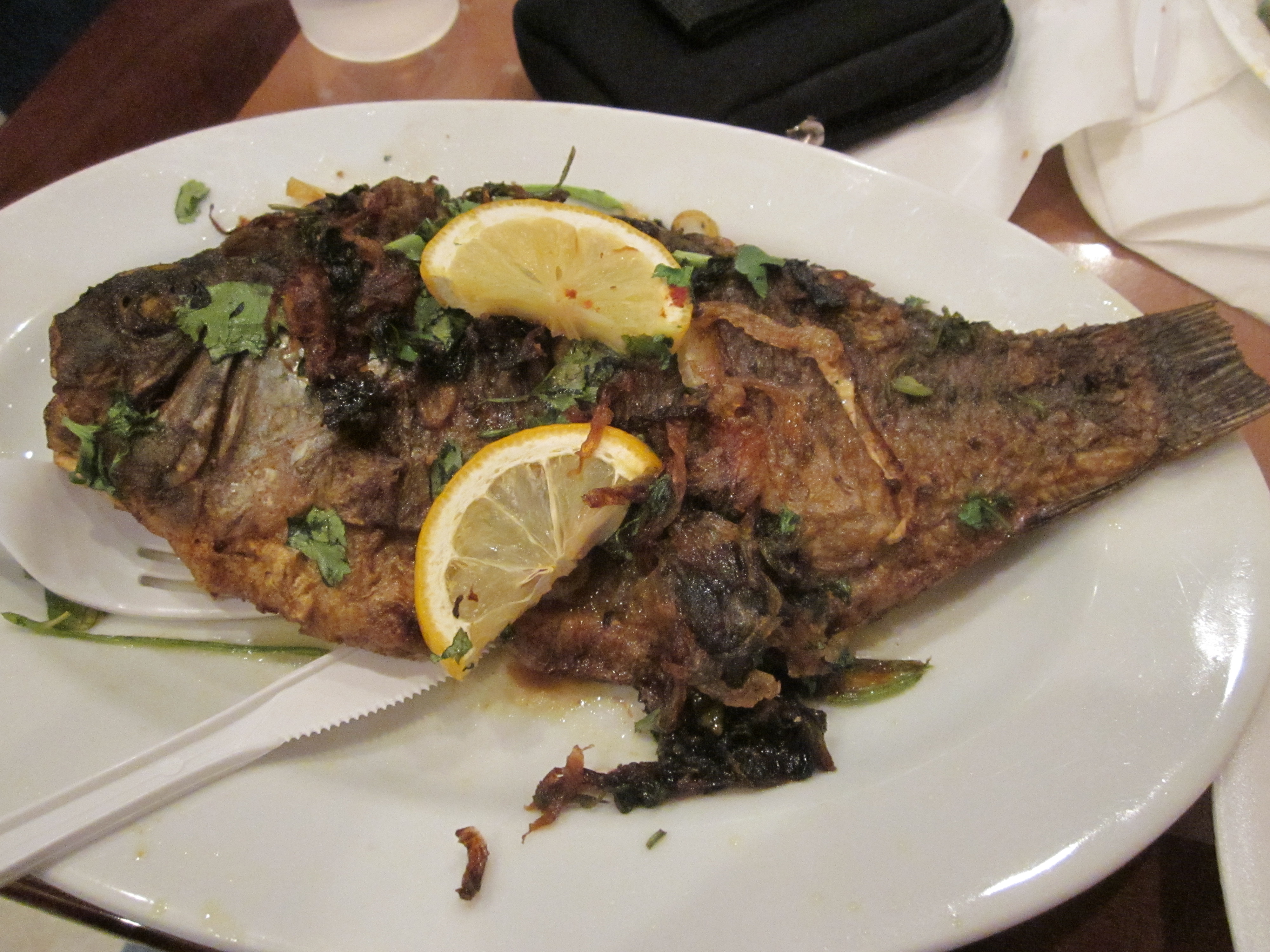
Once everyone found parking, which wasn’t easy, and got to the restaurant, we crammed around the glass enclosed steam table looking at the offerings. Our very friendly host explained what we were gaping at; goat biryani, chicken curry, fried whole tilapia, bright red chicken tikka, saag with chicken, okra, lentils,and a smaller whole fish smothered in a red, tomato-based sauce.

Some of the steam table offerings at Neerob.

“It’s a fish like we have in our country,” our host said when I asked him about the smaller fish. “Like a sardine. One bone. Very good.”

He pointed to something that looked like semi-mashed vegetables and said that these accompany the fish.

I knew I wanted it and the others let him know what they were interested in.

“Leave it to me,” he said.

And we did.

A few moments later, the paper plates and bowls with our favorite utensils; plastic forks and spoons, began to arrive.

The mashed vegetables were placed in front of me. They were powerfully flavored and fiery in spice, obviously an accompaniment to the main dishes. I found out later that they were called “bhartas.”

Roi fish a.k.a. Bengali Sardines

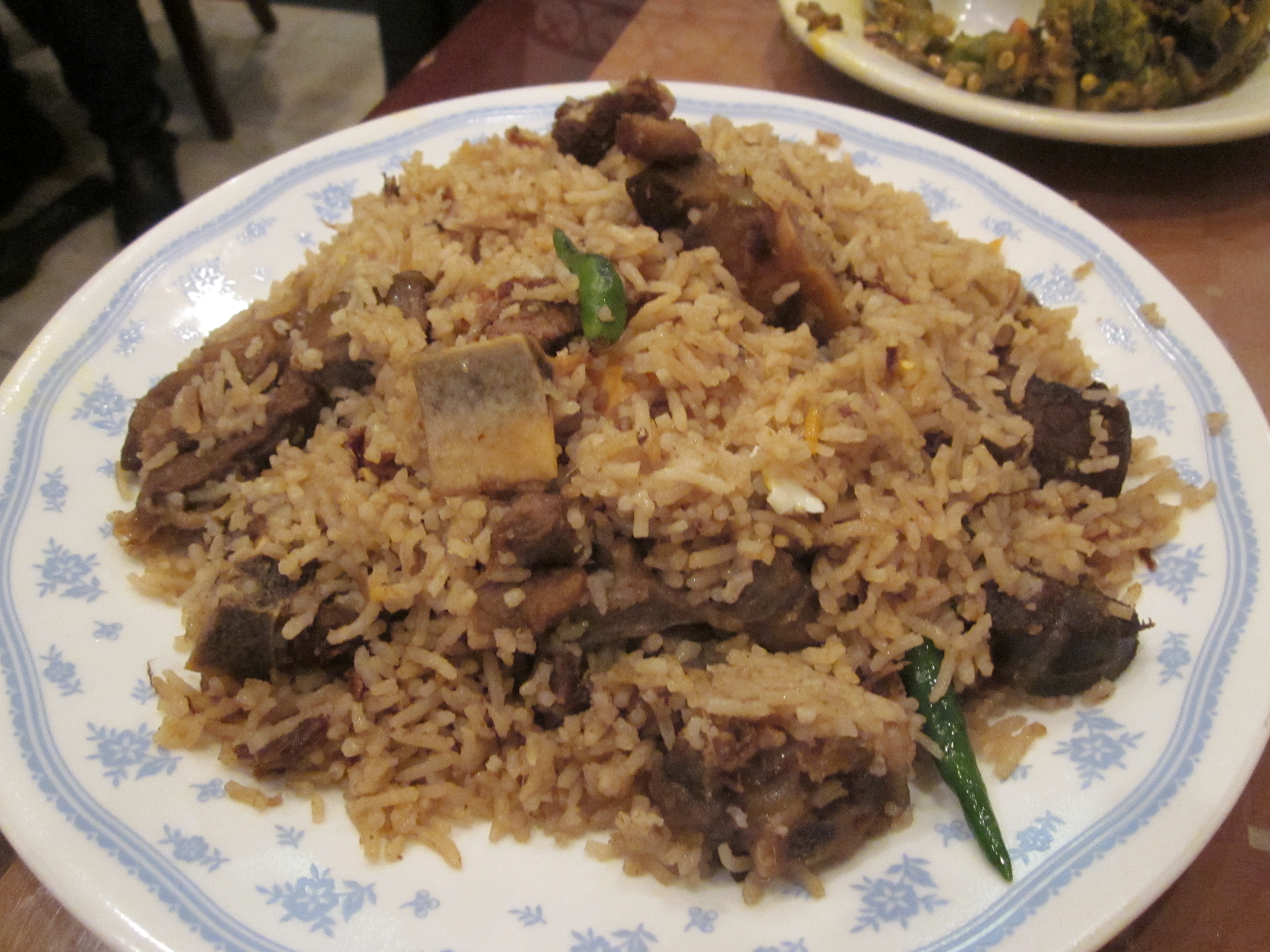
The small fish was delectable, moist with oil, and separated easily from the small bone. We somehow ordered two plates of goat biryani but no one was disappointed; the tiny pieces of goat a gamey match to the bland basmati rice.

Goat biryani

We shared the bowls and plates as they made their way around the table, the fish cheeks of the tilapia, however, were gone before they got to Zio and I; Rick making quick work of them.

Grilled tilapia, cheeks still intact.

Whatever was left was easily finished with the accompanying warm nan bread. And though we ate like the gluttons we are, we wanted more. There were sweets and our host wanted us to sample some. Who were we to refuse?

He brought fried gulab jamun balls in syrup and two, pale sweet balls that had Zio scratching his thinning hair. “It’s a matzoh ball?” he said, staring at it curiously.

But it was more like a sweetened cottage cheese ball. And it and all the sweets helped take the fire out of our mouths.

Matzoh balls the Bengali way.

The almost indecipherable check was brought to us. Eugene squinted but was able to add it up, and when he told us what we owed for the feast we just devoured, I, and everyone else, couldn’t care less that the New York Times, among others, had scooped us.  Neerob, in Eugene’s words, was most definitely, “our kind of place.”

The Fazool Trilogy: Part Two

30 Mar

Part Two of the Fazool Trilogy features a dish that I have never seen on a restaurant menu anywhere. And I wonder why? Thankfully, my grandmother, known in the family as “Nanny,”  introduced me to the tiny legume and the hearty, almost meat-like broth it made when cooked and then combined with broken bits of spaghetti.

When I would call to say I was coming over for lunch, she would say, “I’ll make lentichhie. Or ceci.” (Pasta e Ceci). The pasta part was a given.  She would serve a big bowl  with her homemade loaf bread and a salad; the lunch would fortify me easily until dinner.

As I have said, there were never any written recipes.  And back when I was younger, I didn’t really pay attention to what went into Nanny’s meals. It was the end result that was my only concern.

So now  I’ve tried my best to recreate her simple, Calabrese dishes. There always, however, seems to be something missing. I can never exactly duplicate what I remember. Still, I get close enough to continue trying.

Pasta e Lenticchie

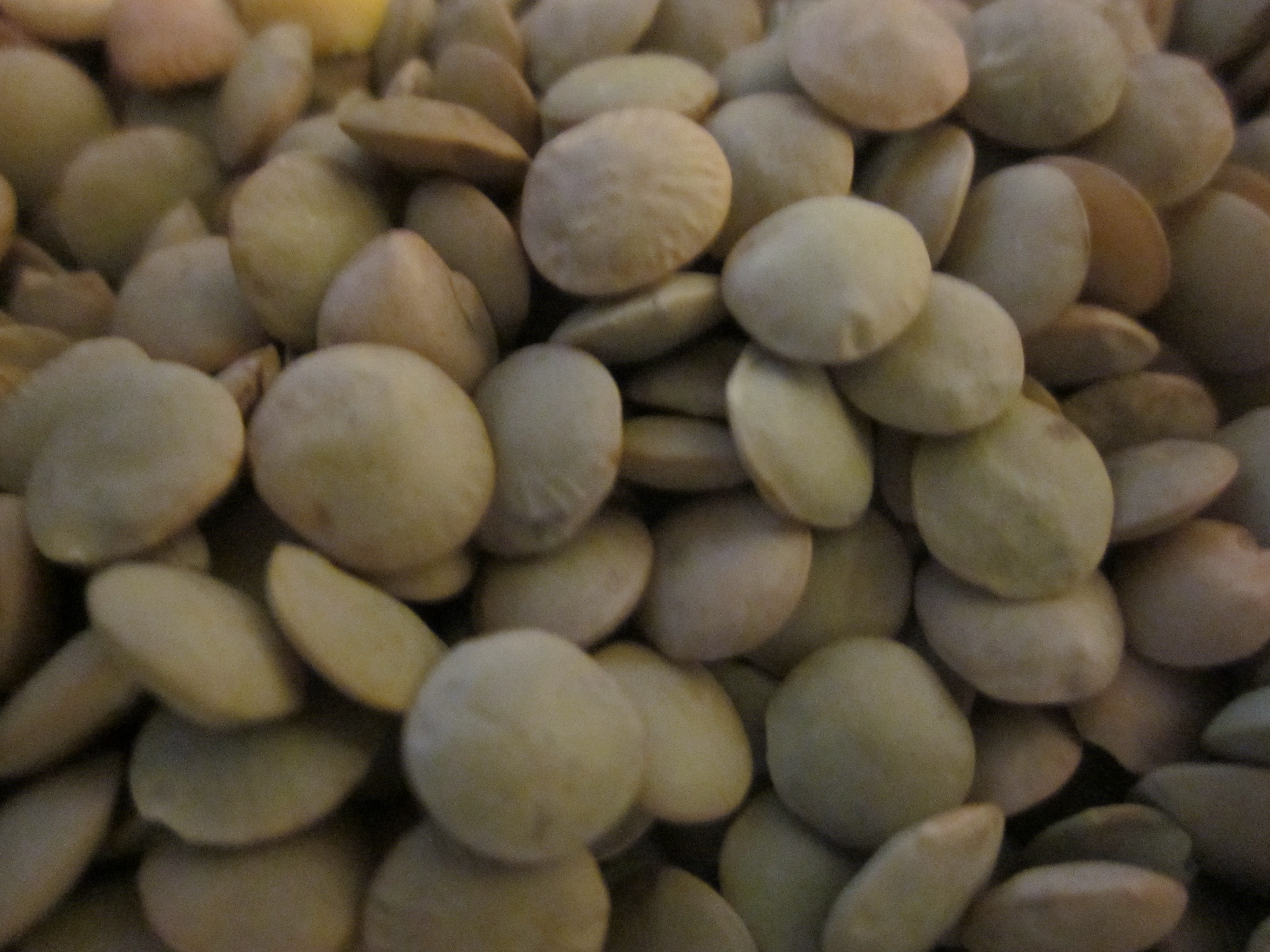
1lb bag of dried lentils (Some use the fancy French lentils, but fancy was not in Nanny’s vocabulary;. She used, and so do I, the basic green, most inexpensive lentils).

1 onion-diced

2 garlic cloves-minced

½ teaspoon dried thyme

1 bay leaf

6-8 cups chicken broth or water, or a combination of both. (The more liquid, the soupier the dish, which, in this case, is not a bad thing. It just depends on your mood and taste).

1 cup plum tomatoes, chopped, juice retained.

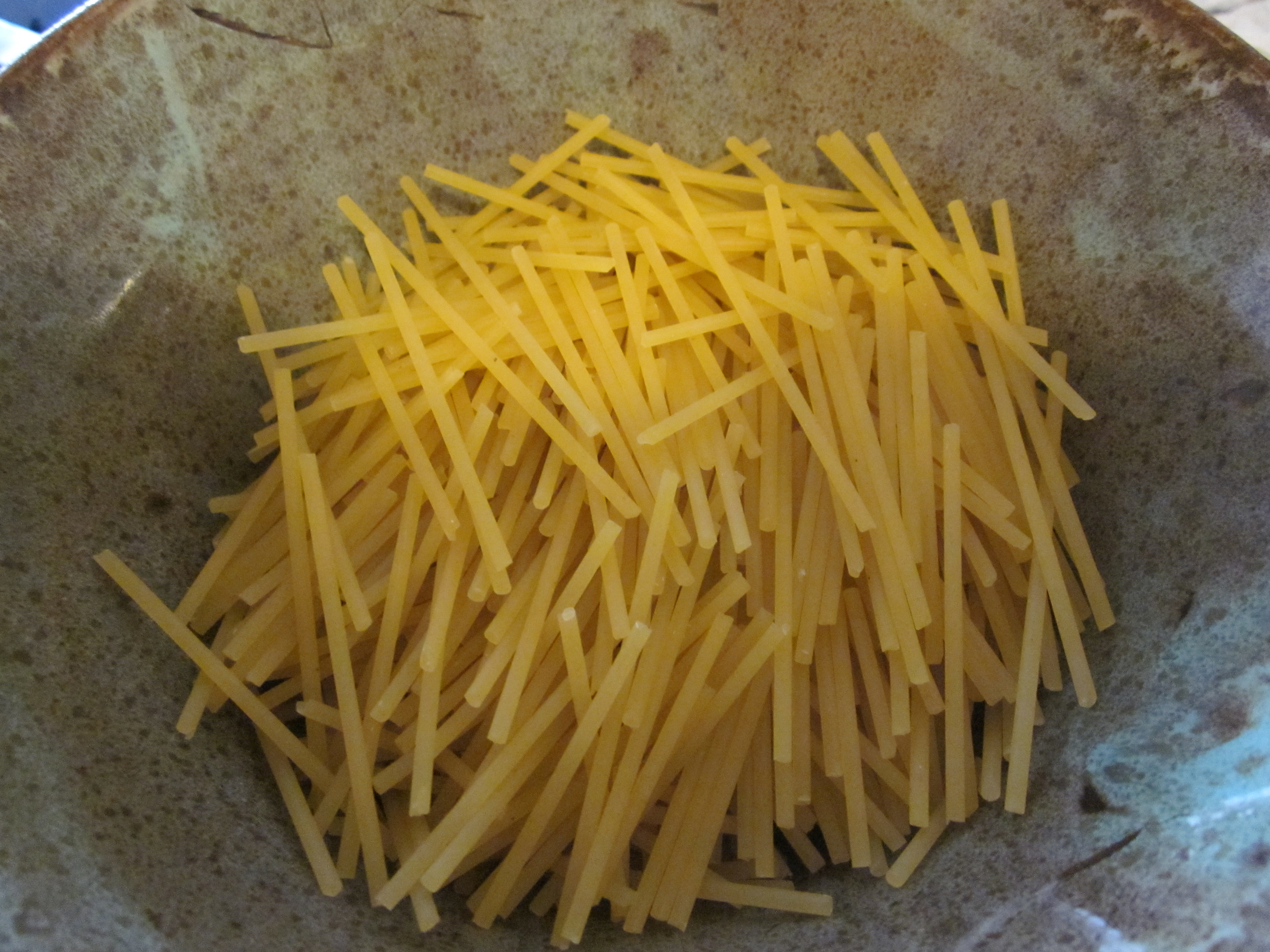
½ lb of spaghetti, broken into 1 inch pieces (you can also use tubetti, ditalini, or small elbows)

4 tbs olive oil

Salt and pepper

Grated pecorino Romano or Parmesean  Reggiano.

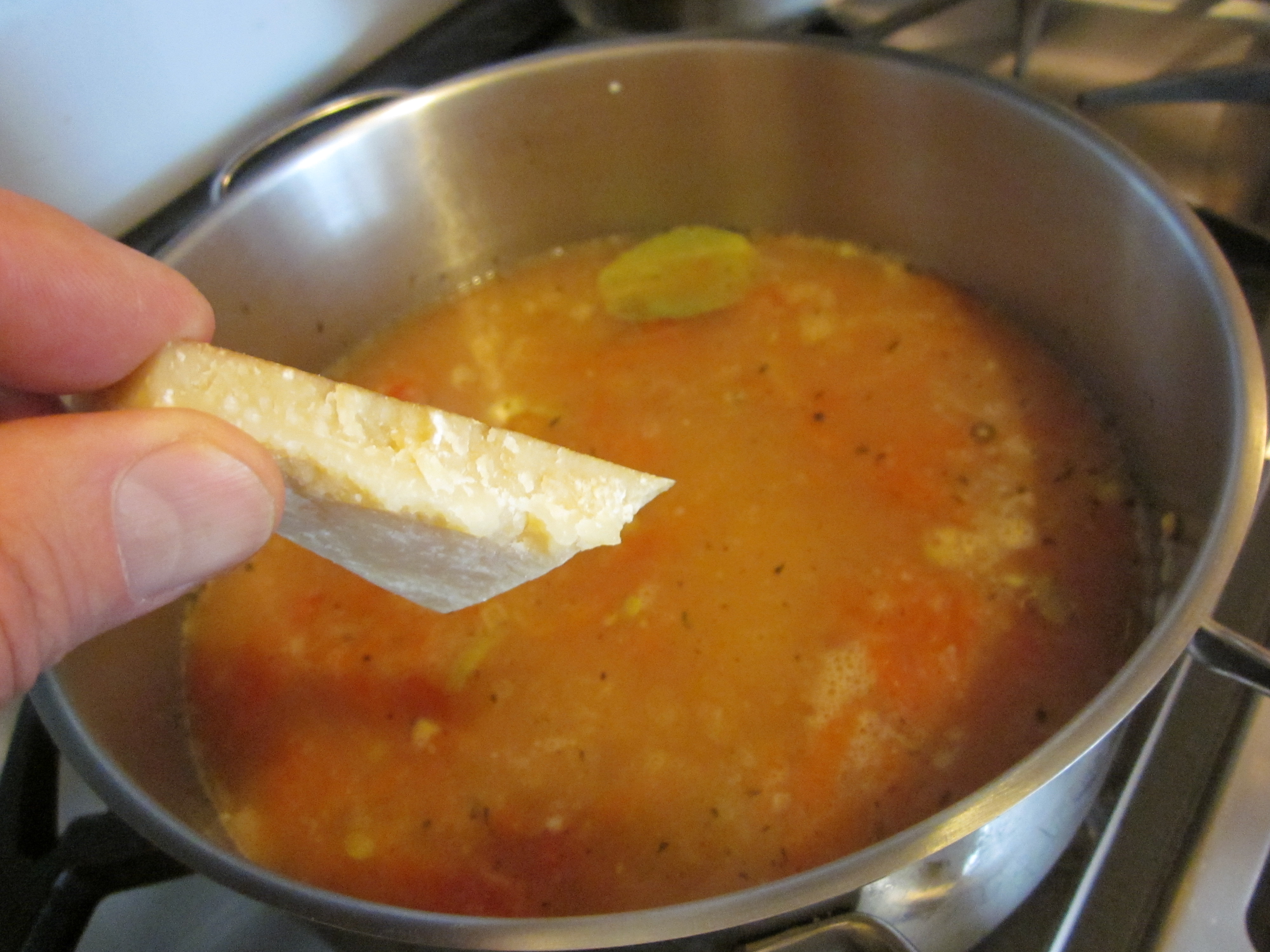
1 secret ingredient (the picture of which, you will find below).*

Name that ingredient.

Rinse the lentils in cold water a few times to remove any dirt or grit.

In a Dutch oven, heat the olive oil.

Sauté the onions until soft; about five minutes over medium heat.

Add the garlic and thyme for another one to two minutes.

Toss in the lentils and sauté for about a minute.

Pour in the chicken broth/water and the tomatoes.

Add the bay leaf.

Salt and pepper to taste.

Bring to boil and then reduce to a simmer.

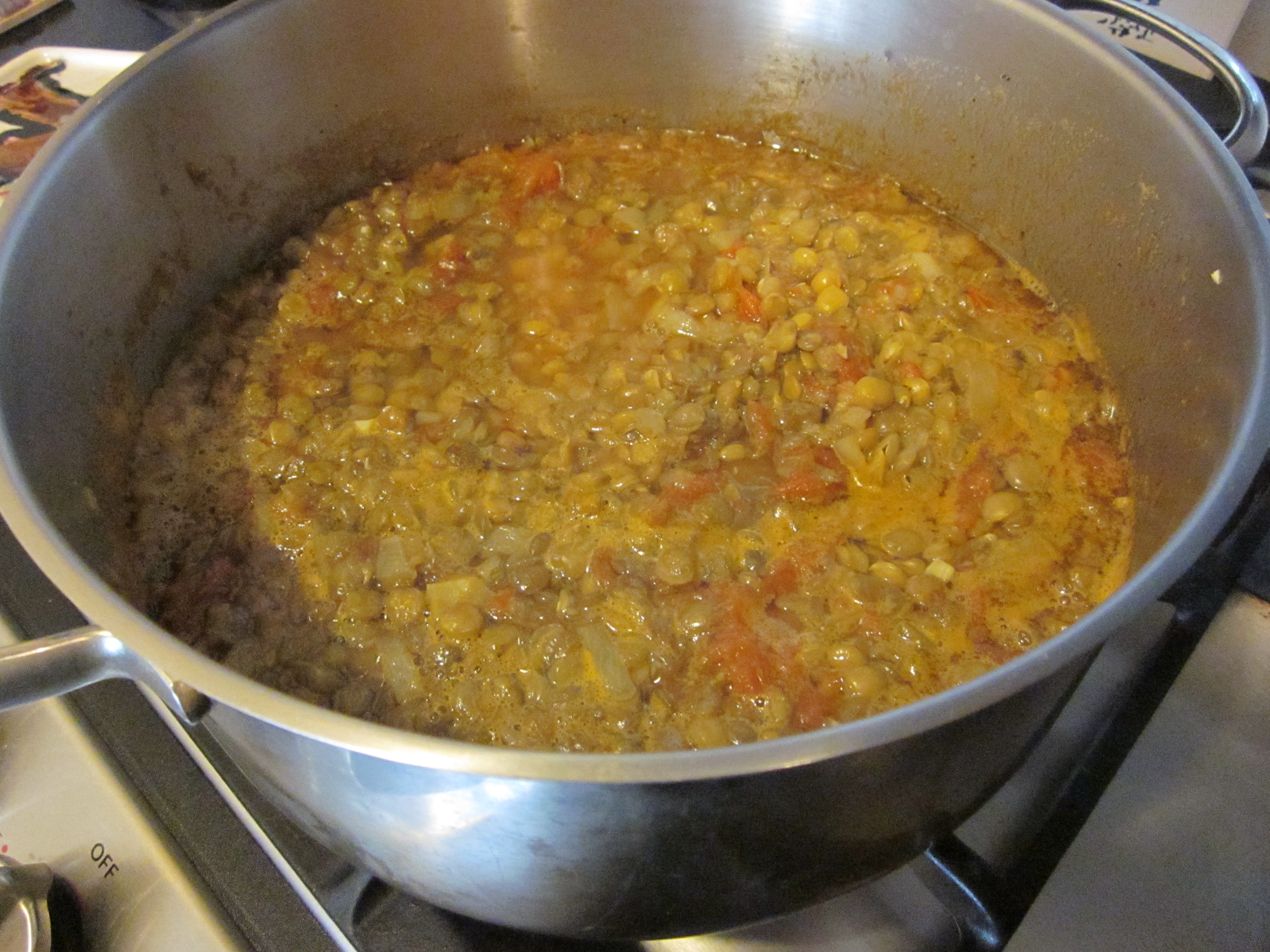
Cook for about 30-40 minutes, or until the lentils are soft, but not mushy.

You can add the spaghetti and cook it with the lentils, but I prefer to cook them separately.

So, in another pot, boil water and add the spaghetti pieces. Cook until al dente, drain, but reserve a few tablespoons of the cooking liquid.

Add the spaghetti pieces and the remains of the pasta cooking liquid to the lentils.

Stir, and cook for another minute or two.

Scoop into bowls.

Top with grated cheese and a little chopped parsely.

Enjoy with crusty bread and a salad

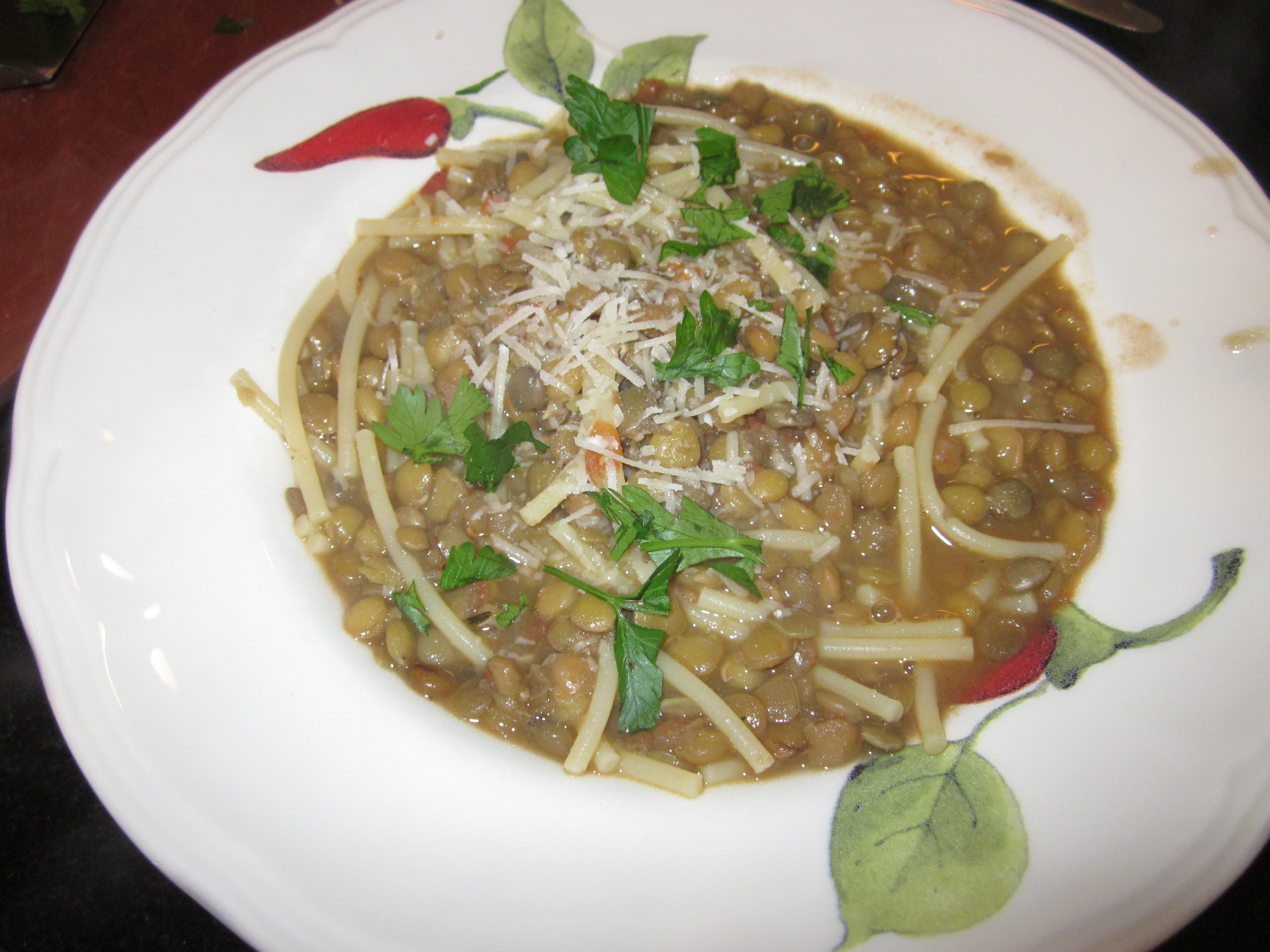
Pasta e lenticchie

*You correctly guessed the secret ingredient as a parmesean Reggiano rind. I  really don’t know what the rind adds to the dish; many include one when they make Sunday sauce and pasta e fagioli (Part Three of the Trilogy  to come).  If nothing else, the rind imparts a salty, aged flavor to the creation that maybe is just in our heads. Or maybe not. If you have one lying around, toss it in. It won’t hurt the dish.