Tag Archives: culture

A Recipe for the 4th of July: 2012

3 Jul

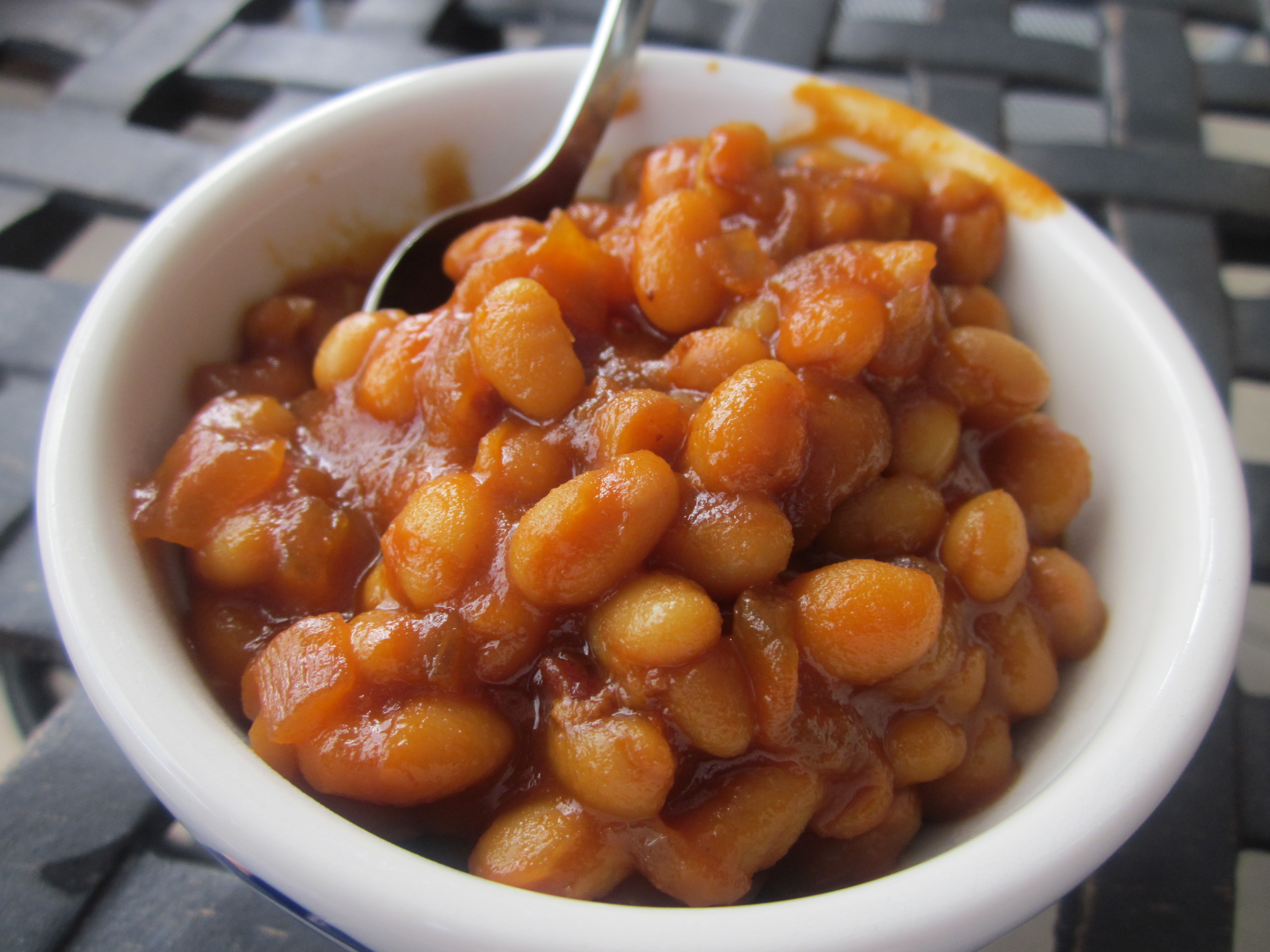
Last year at this time I posted a recipe for the 4th of July. It was for the simple grilled hot dog on a bun: A Recipe for the 4th of July.  This year I am adding a side dish that complements the tube steak like no other: Barbecued baked (that aren’t baked) beans.

Like I do in so much of my limited cooking, I choose the easy path to the hard. I like to cut corners. I admit to being lazy at times. But I try to do it without sacrificing too much flavor or quality.

As I’ve discussed in the previous posts I’ve called  The Fazool Trilogy, The quality of most beans from a can as compared to dried, is, in my estimation, minimal.  And that miniscule difference just does not justify the extra time and effort in soaking and then cooking the beans. So I cut that process out. Just make sure you drain and rinse the canned beans in cold water before using them.

I’m lazy, but not this lazy.

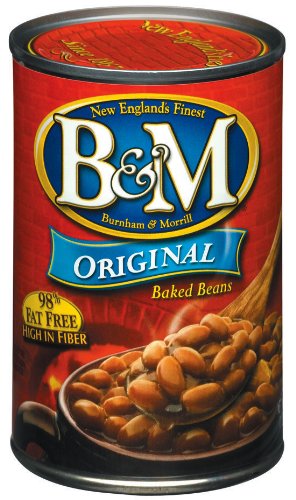
Some might say if you are going to be lazy, go all the way. Just buy a can of pre-made baked beans. And to be honest, there are one or two that aren’t too far off in taste. Nothing a little doctoring won’t shore up. But by doing it the way I’ve chosen, you can control the flavor; the sweetness, salt content, and even add a few tricks of your own into it.

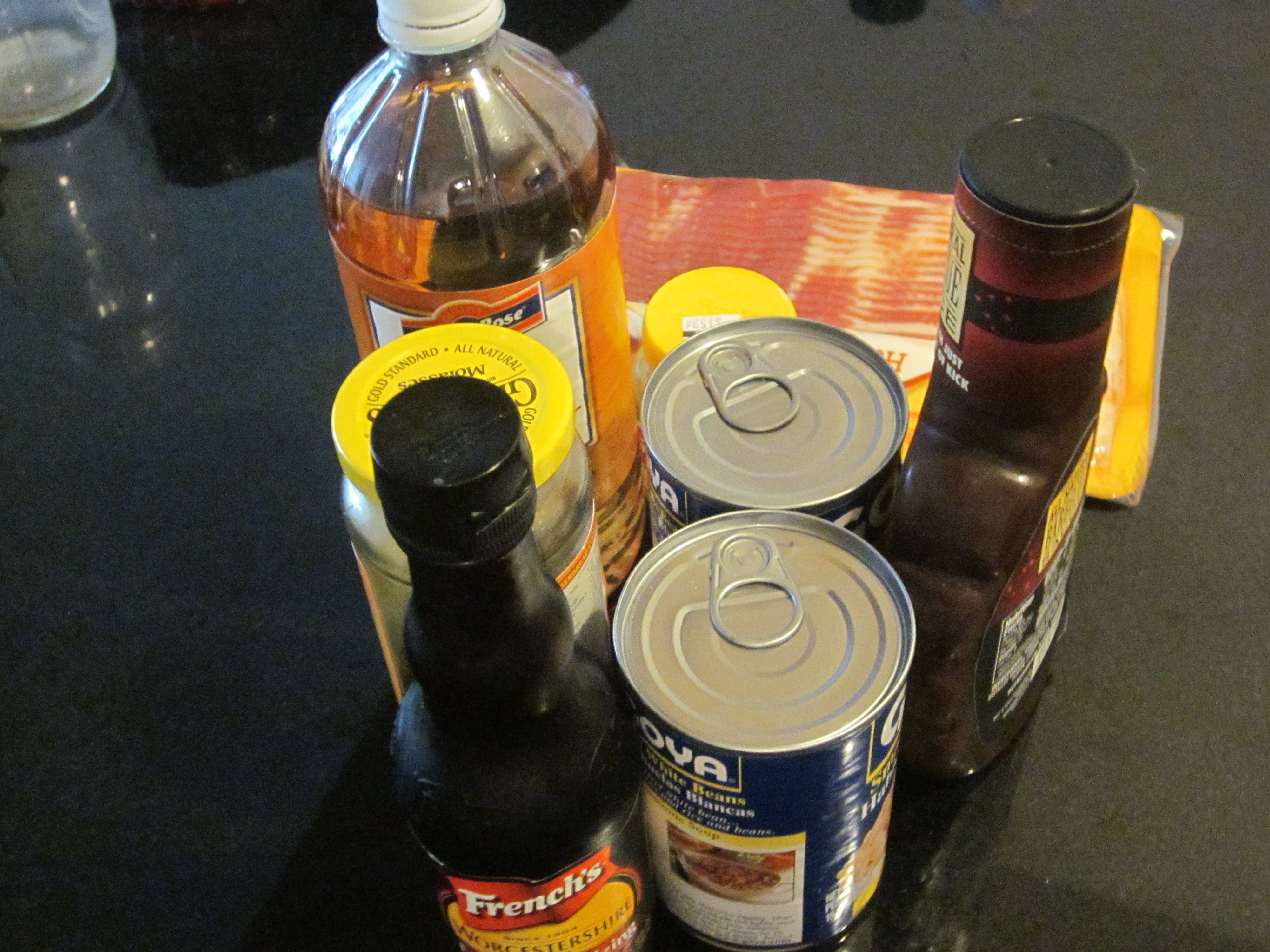
For my version of barbecued baked beans you will need the following:

2 15 or 16 ounce cans of small white beans*

2 strips of bacon, diced

1 medium onion, chopped.

2 tbs molasses

2 tbs brown sugar

1 cup of ketchup

1 tbs of yellow mustard (the cheap, glow in the dark kind).

1 tsp of Worcestershire sauce

1 tsp of apple cider vinegar

2 cups of water

Dash or two of hot sauce.

Salt and pepper to taste

*The traditional bean of choice for baked beans is the Navy bean. Some recipes call for the “Great Northern” bean while others prefer the pinto bean. Any of the above, as long as they are about pebble size, will suffice and absorb the flavors of the barbecue sauce.

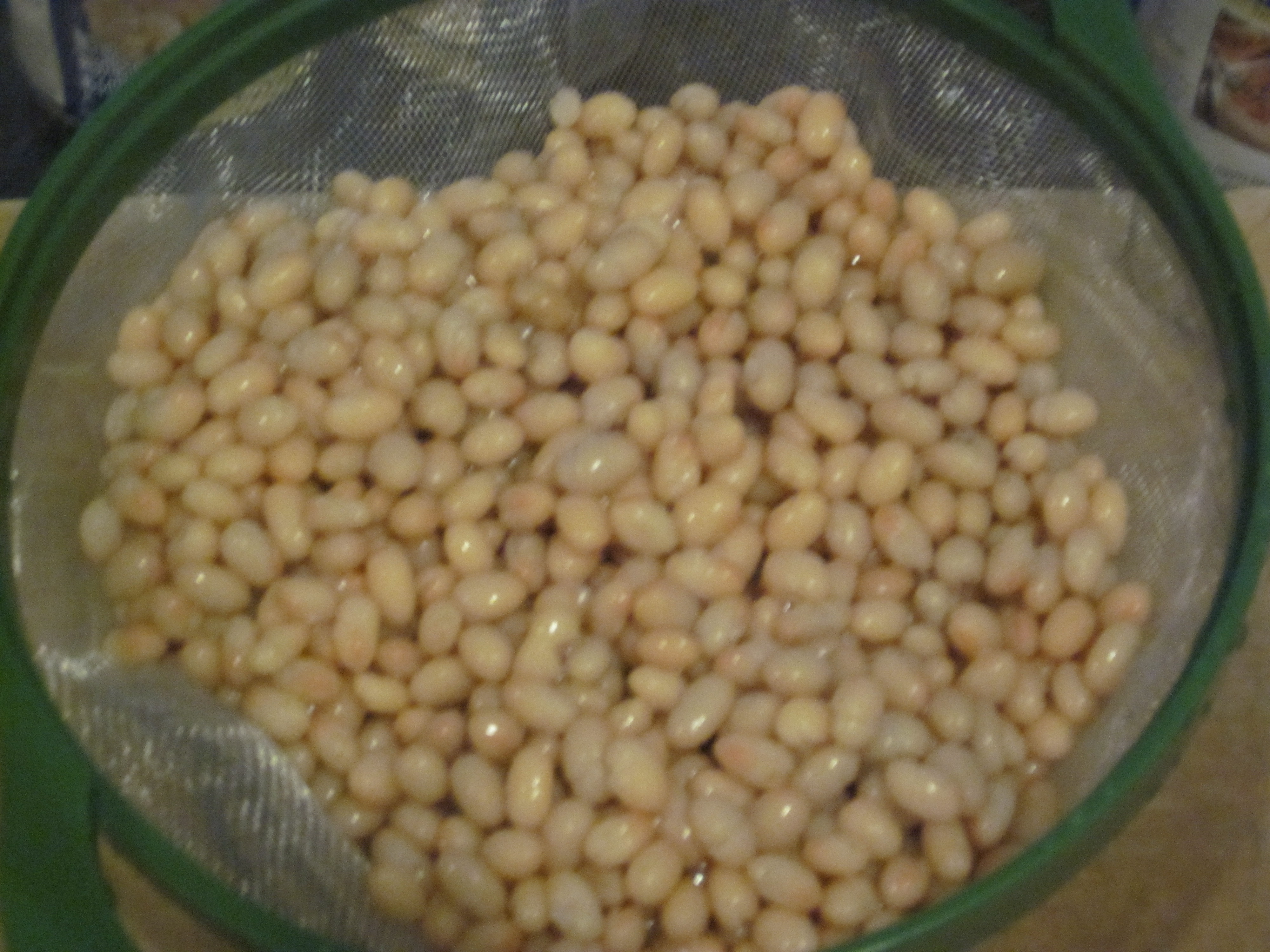
Rinse the beans in cold water and strain.

Rinsing the beans.

In a large saucepan, cook the bacon until the fat renders.

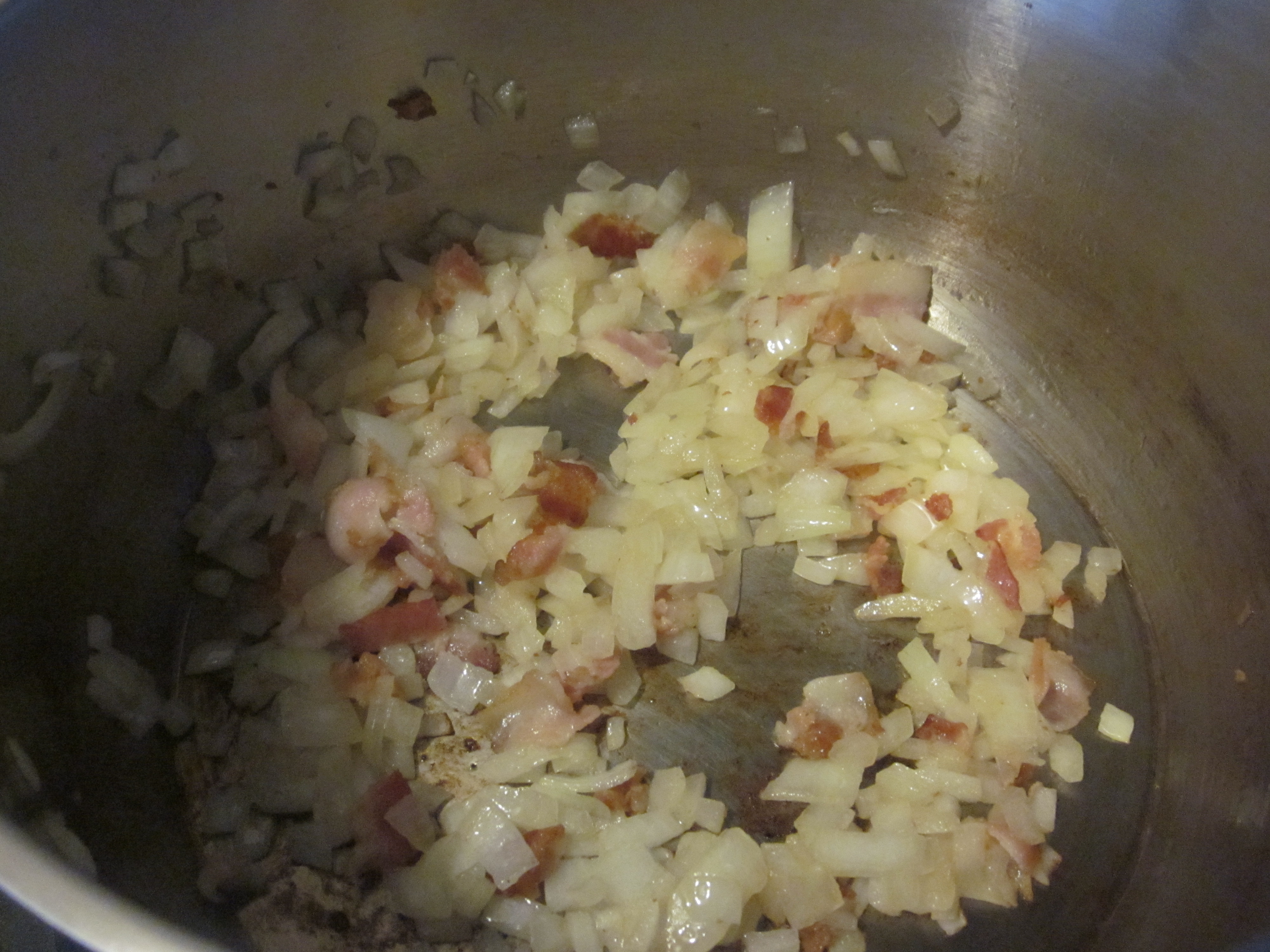
Add the onion and fry in the bacon fat for about five minutes or until softened.

Softening the onions in the bacon fat.

Pour in the water and deglaze the bottom of the pan.

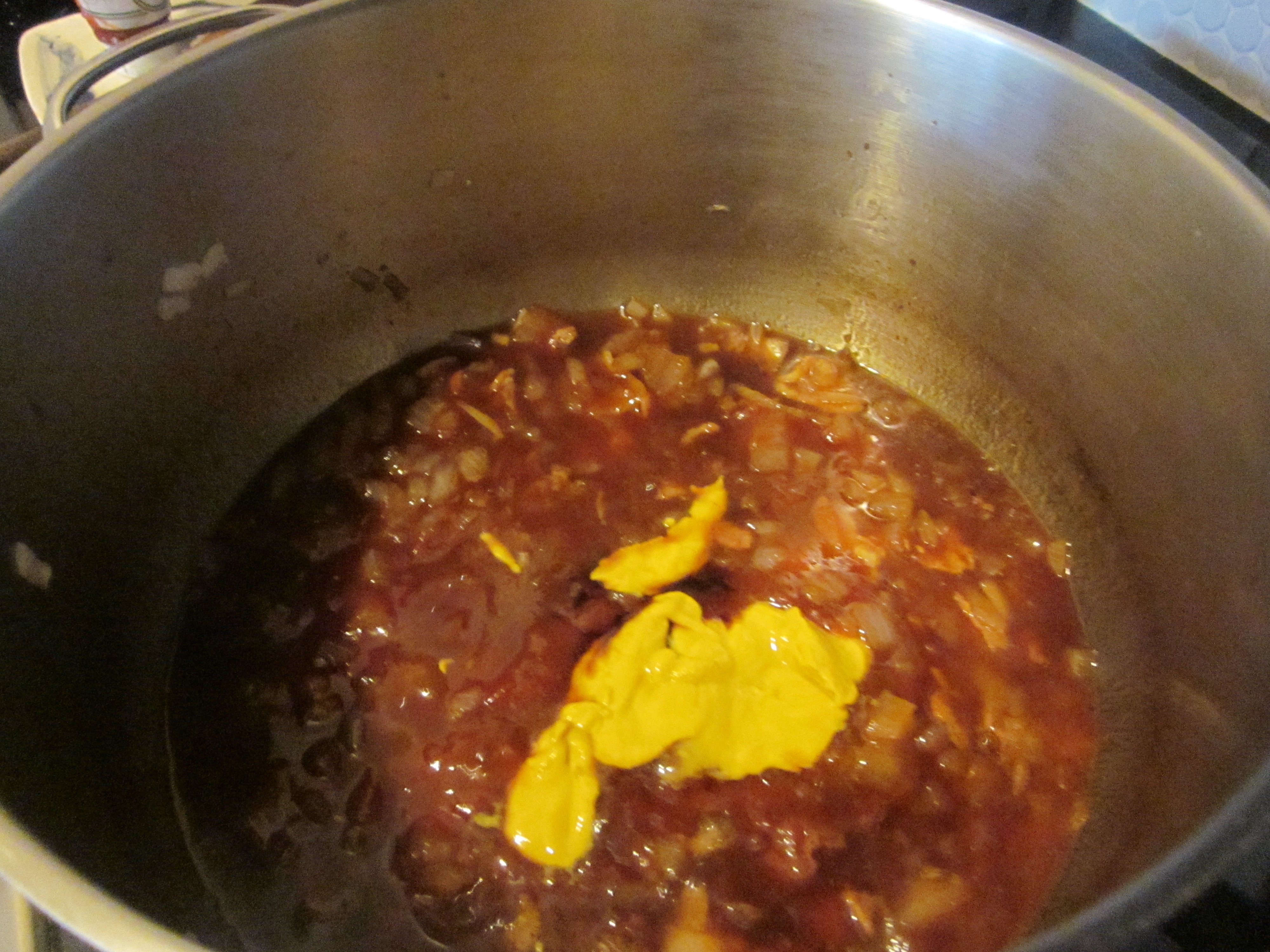
Add the ketchup, molasses, brown sugar, mustard, Worcestershire sauce, and vinegar.

The liquid ingredients getting ready for the arrival of the beans.

Stir and bring to a boil and then simmer for about ten minutes.

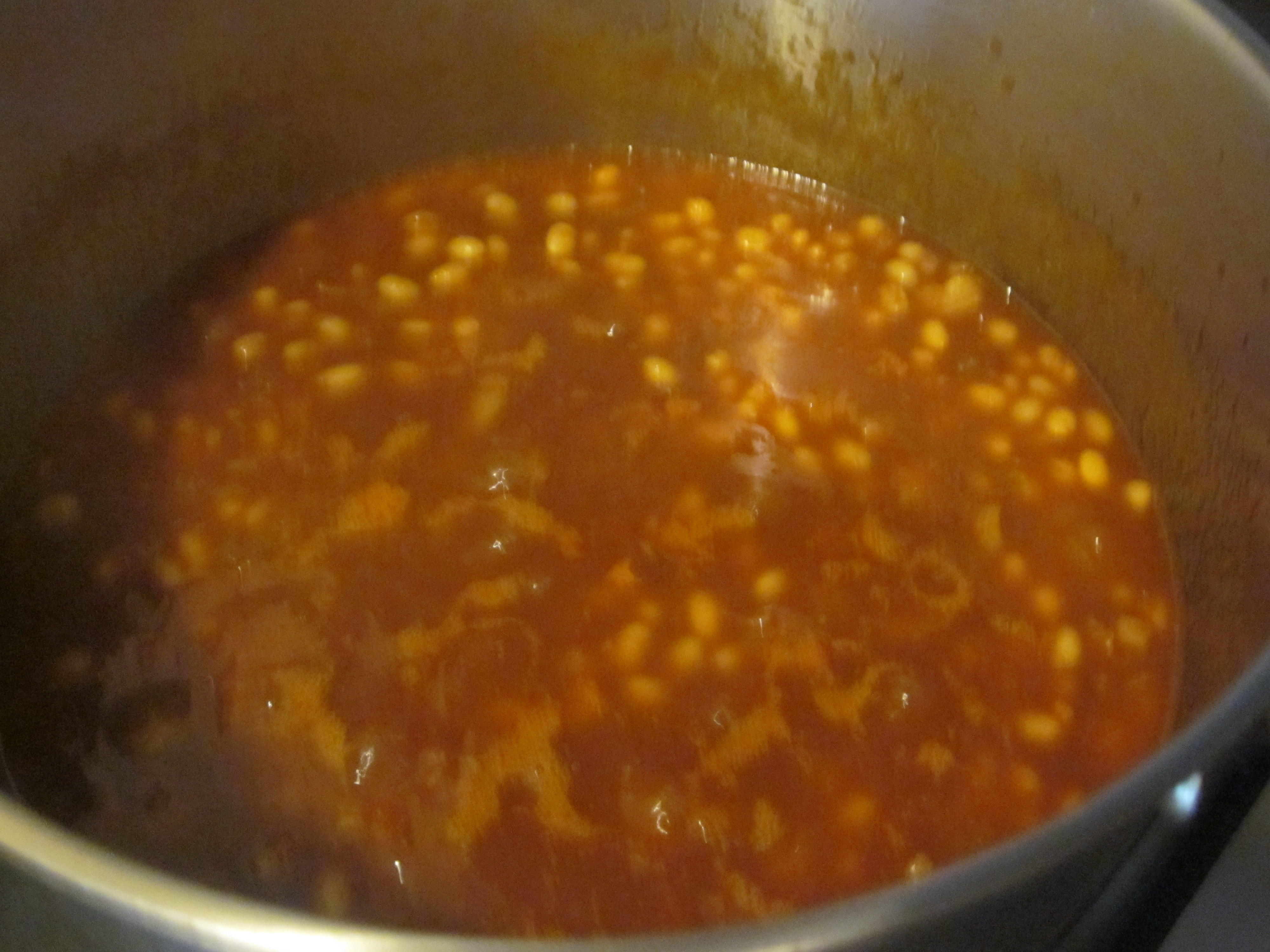
Add the beans.

Cooking down the beans.

Lower the heat to a simmer and cook for about a half hour or 45 minutes, stirring occasionally, until most of the liquid is cooked off and thickened to what resembles a barbecue sauce.

Drop in a few dashes of hot sauce.

Stir again and serve.

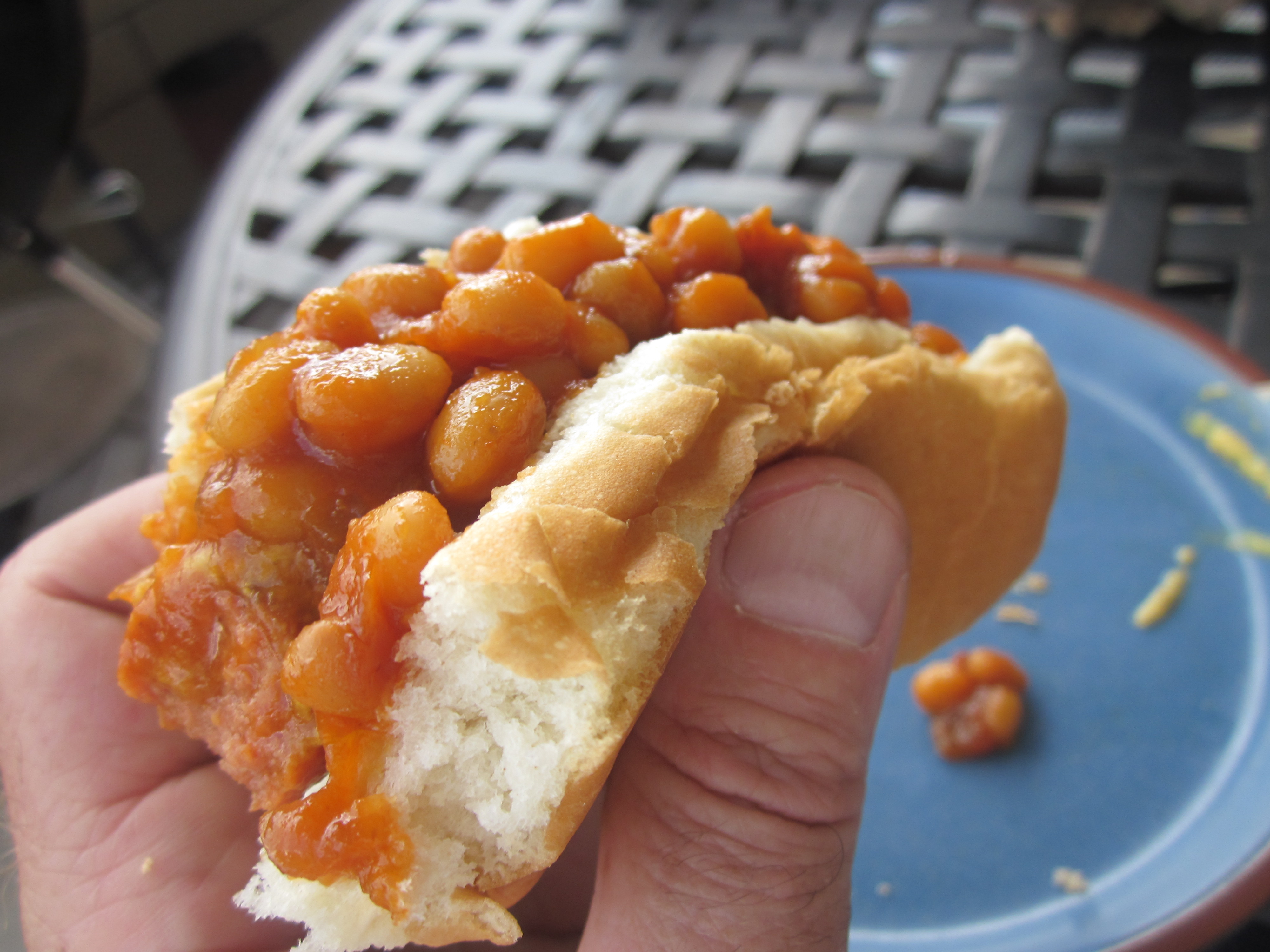
The baked beans not only are one of my favorite side dishes for a barbecue, they also make a delicious topping to a Fourth of  July hot dog.

The Sweetbread Tango

26 Jun

La Esquina Criolla

94-67 Corona Ave,
Elmhurst
 

“How do you want your steak cooked,” the waitress asked in her heavy Spanish accent.

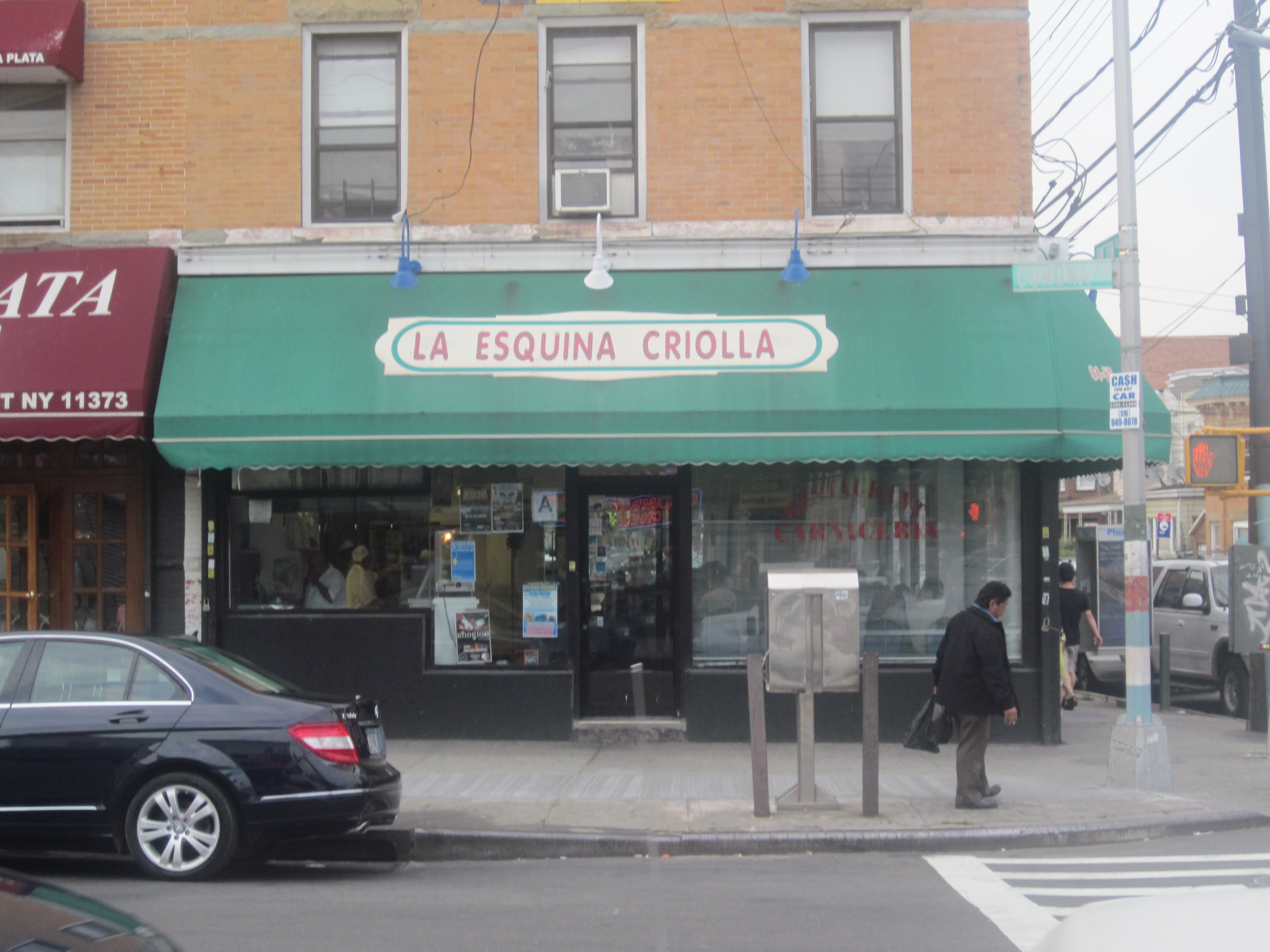
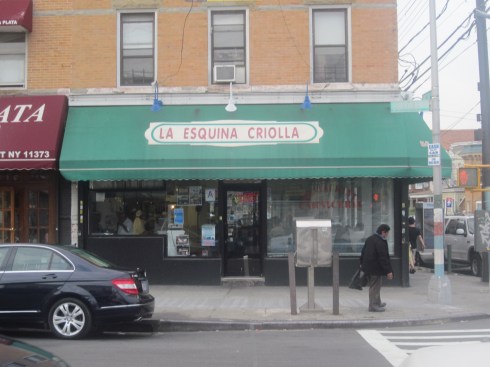
We were in Elmhurst at the corner of Corona Avenue and Junction Boulevard in what was advertised as an Argentinean/Uruguayan restaurant called La Esquina Criolla.

“That’s a first for our group,” Rick said after hearing the question from our waitress.  And he was right. It was the first time in the ten plus years we had been convening that we were asked how we wanted anything cooked, much less a steak.

Did that mean our standards were changing? That now we were graduating to a different, higher quality of restaurant? I certainly hoped not and believed that the question before us was just a blip; an aberration in our continual journey to unearth diverse, ethnic eats within our frugal, even grubby, standards.

When I chose La Esquina Criolla, I knew I was treading on dangerous ground. That we would we probably be going over our $20 per person budget as well as dining at an established foodie destination where, what was confirmed later, wine was served in stemmed wine glasses. But that did not stop me. I went ahead with the choice anyway. Red meat was something our group rarely, if at all, dined on and I thought that for once we should have that experience despite the potential monetary risks. I believed this place, La Esquina Criolla would be our best bet to at least keep it close.
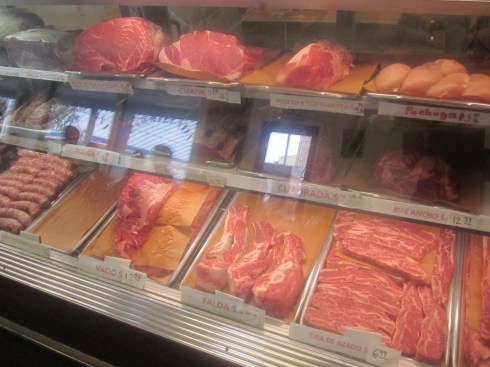
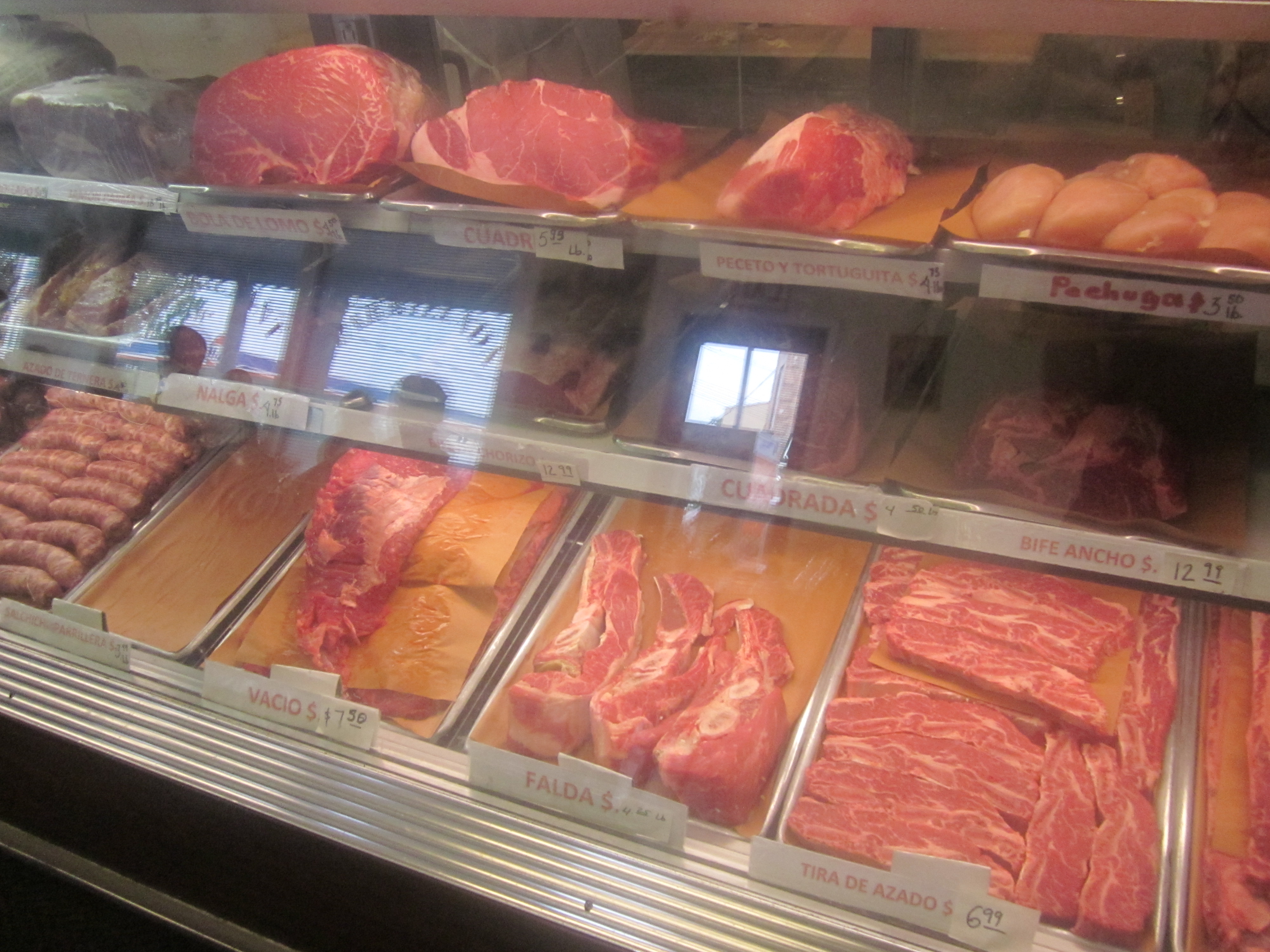
Red meat for sale.

“You’re in trouble with this one,” Gerry teased, glancing at the menu and the prices next to many of the “carnes a la parilla,” which ranged from $16 to $24.

“I have an allowance,” I said, trying to rationalize the stark reality spelled out in front of us. “Most of my other choices were so under our budget, that I’m entitled to go over here and still, really, come out no worse than even. It’s called a carryover balance.”

Eugene’s reading glasses were balanced on the tip of his nose. “Uh huh,” he nodded dubiously.

The raw meats we were soon to order were displayed behind the counter; La Esquina Criolla doubled as a butcher shop. There was flank steak, skirt steak, shell steak, blood sausage, known as morcilla, chorizo, kidney, sweetbreads, lamb, and short ribs.

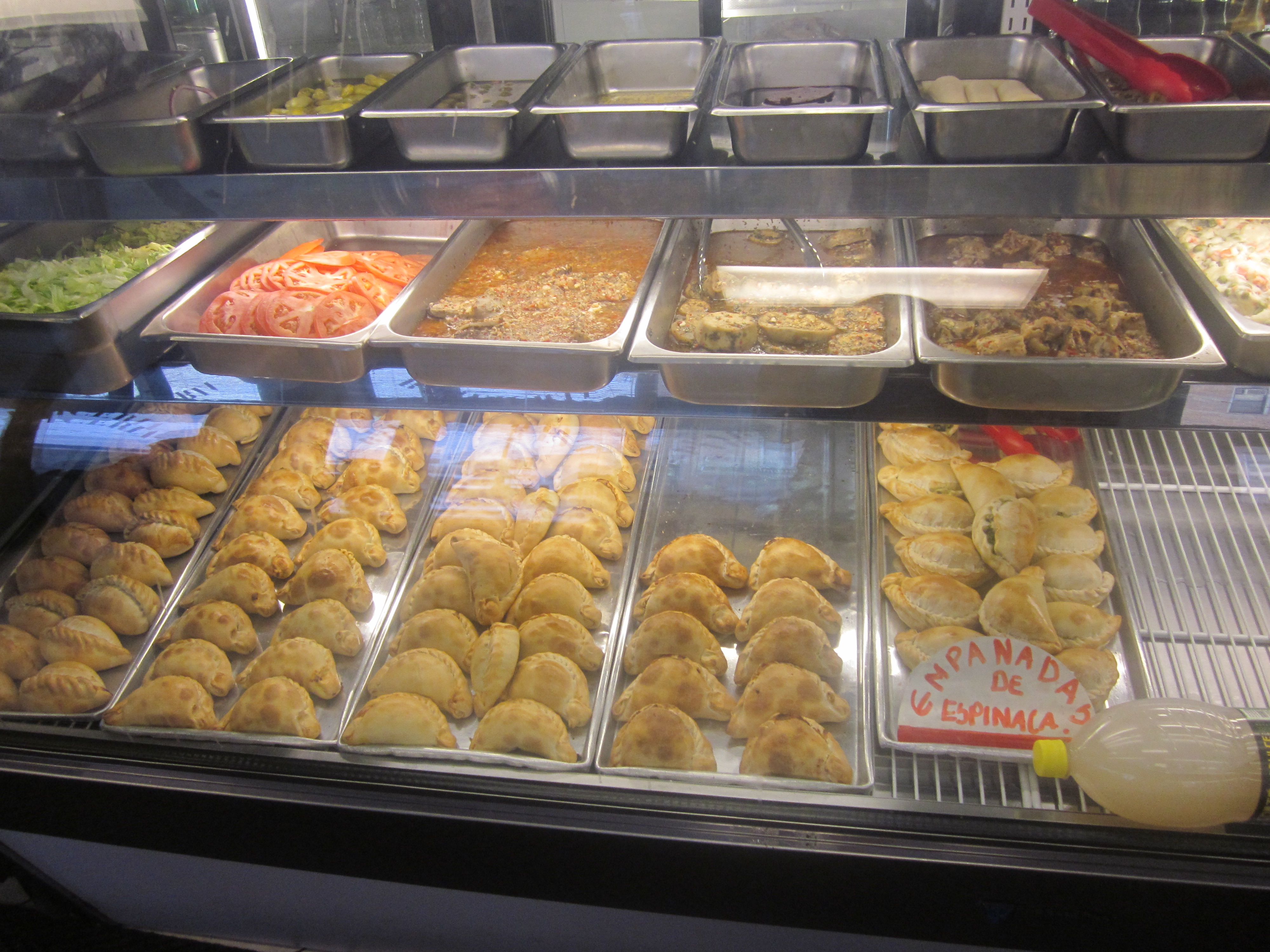
Displayed behind the counter adjacent to the meats were a selection of empanadas; meat, chicken and spinach along with a few other appetizers; marinated eggplant, beef tongue, and hearts of palm to name a few.
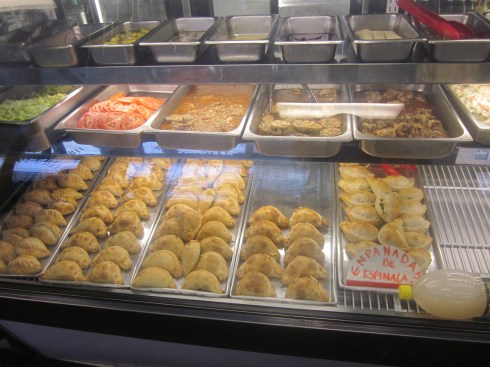
Empanadas…and more empanadas.

While we decided what to order, we were brought toasted bread and slices of grilled sausage. We knew we had to be careful how we ordered, but the temptations were many. The empanadas, of course were a must. A “parrillada completa,” or combination of a variety of meats made sense, despite the $38 price (for two). With it we would get to sample skirt steak, short rib, sweetbread, tripe, kidney, black and Argentinean sausage. To that we added another skirt steak for two, a flank steak, and an appetizer of grilled provolone in oregano sauce.

The entrees all came with side orders; a dry potato salad, potato, beet and hard boiled egg, a bland mixed salad, and plantains.

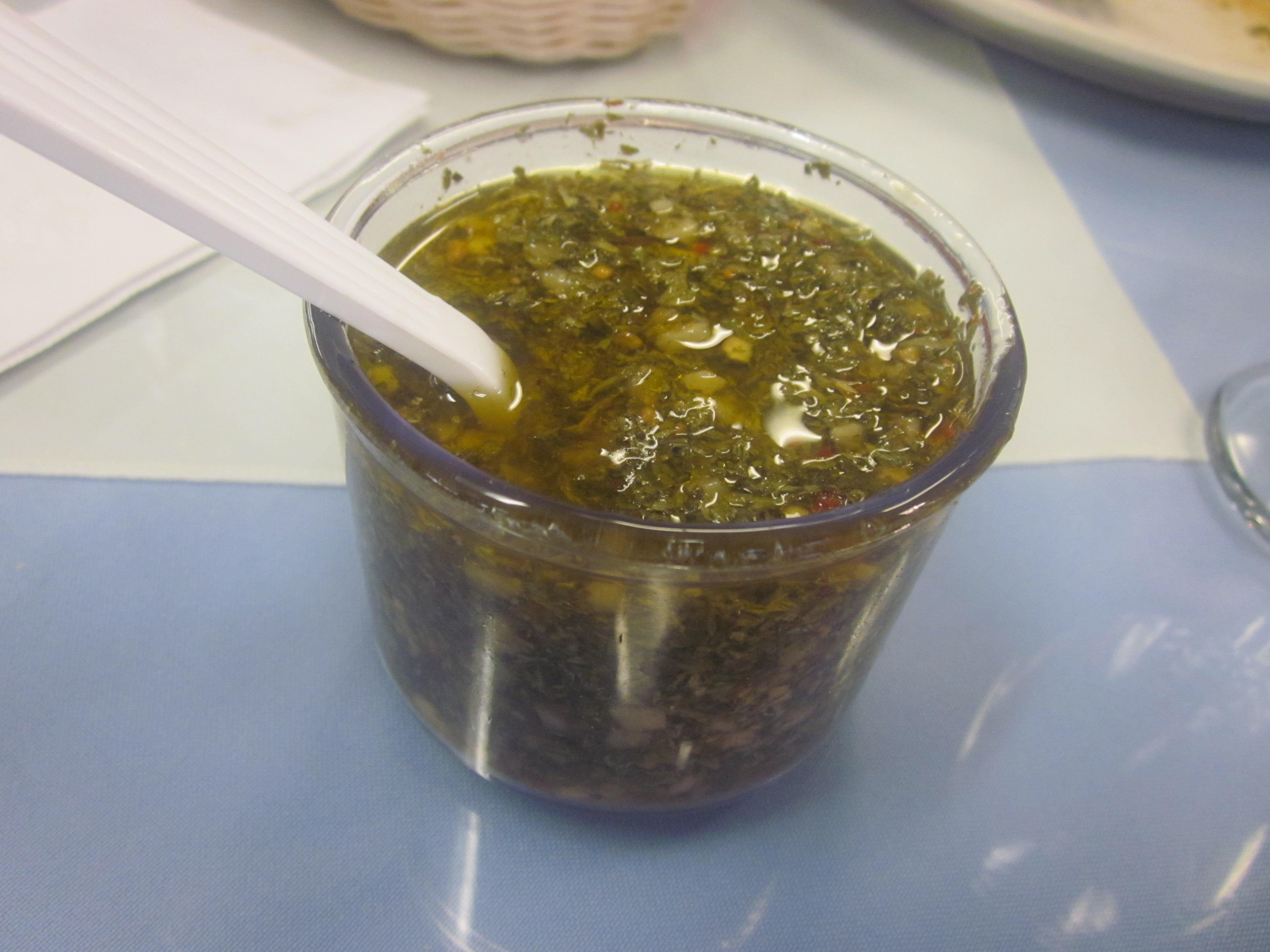
While we ate the buttery-crusted empanadas served with the tableside tangy homemade chimichurri sauce, a procession of ancient tango ballads played.
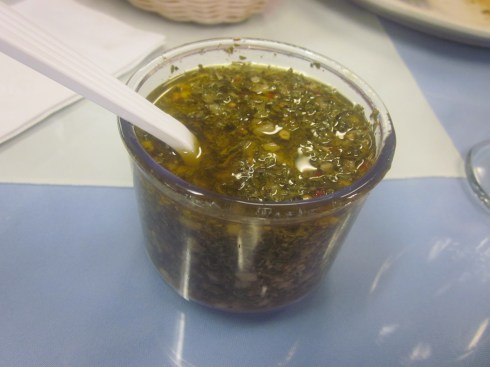
An Argentinean condiment supreme.

“Why does this music make me think of monocle-wearing Nazis,” Zio pondered.

“You’re confused,” Gerry said to him. “Those were the Boys of Brazil you’re thinking of. Wrong country.”

“Didn’t they escape to Argentina also?”

“Sure, there are plenty of retired Nazis in Argentina,” Rick confirmed. “And they love that old school tango.”

“Yes, herr commandant, I have heard about the tango classes at the Russian front.”

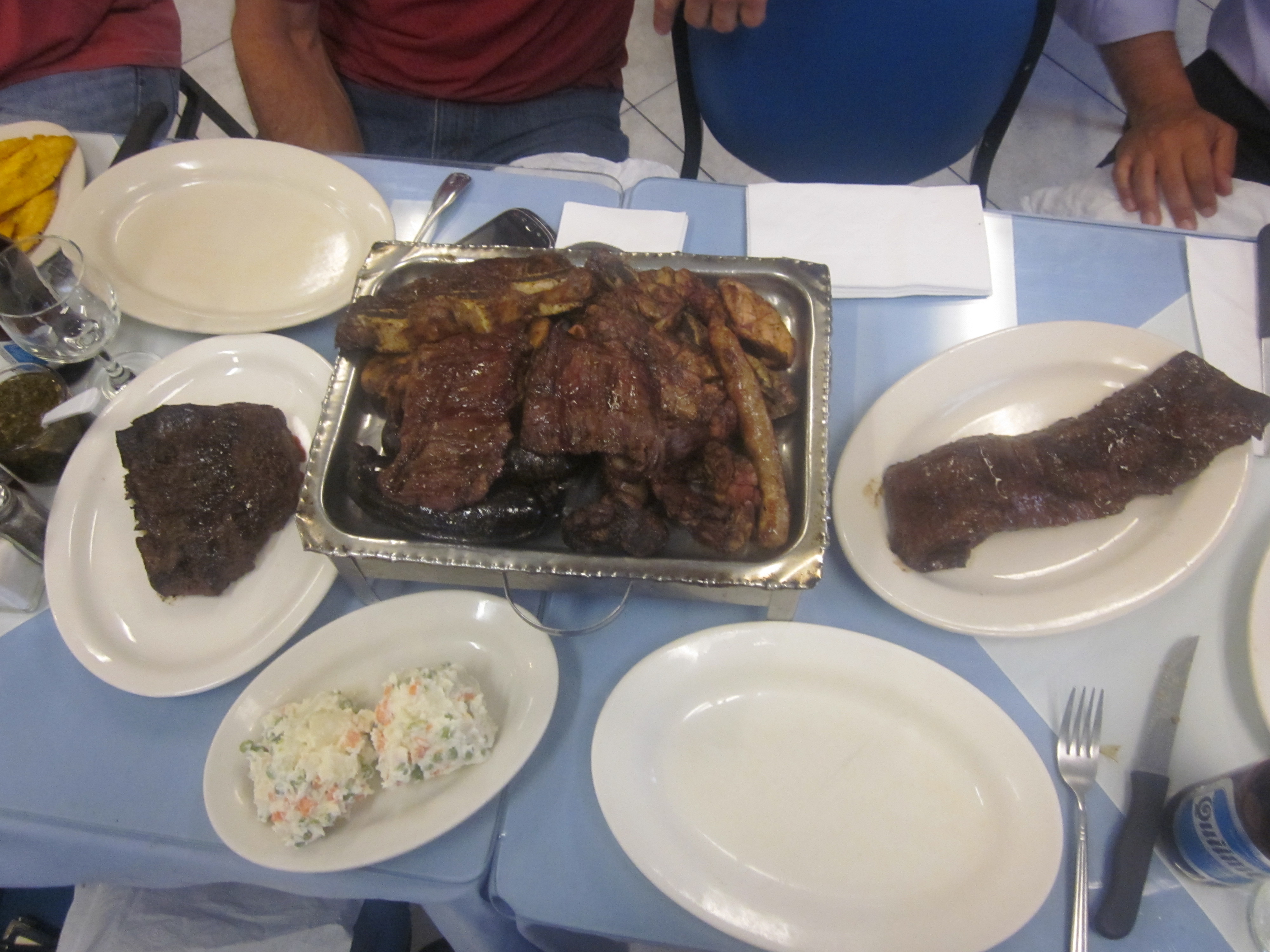
Halting the conversation was the arrival of a sizable silver serving tray adorned with a selection of charred meats. This was the “parrillada completa” for two, but judging from the size of it, was more than enough for three or four, even if the three or four included the gluttons in our group.
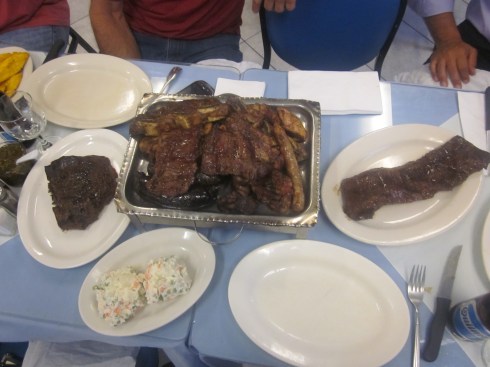
The Parillada Completa for two, flanked by flank steak on the left and skirt steak on the right.

On separate smaller plates were the other meats; the flank steak and the skirt steak for two. Including what we got in the “parrillada completa,” if you did the math we had enough skirt steak for three, but who was counting?

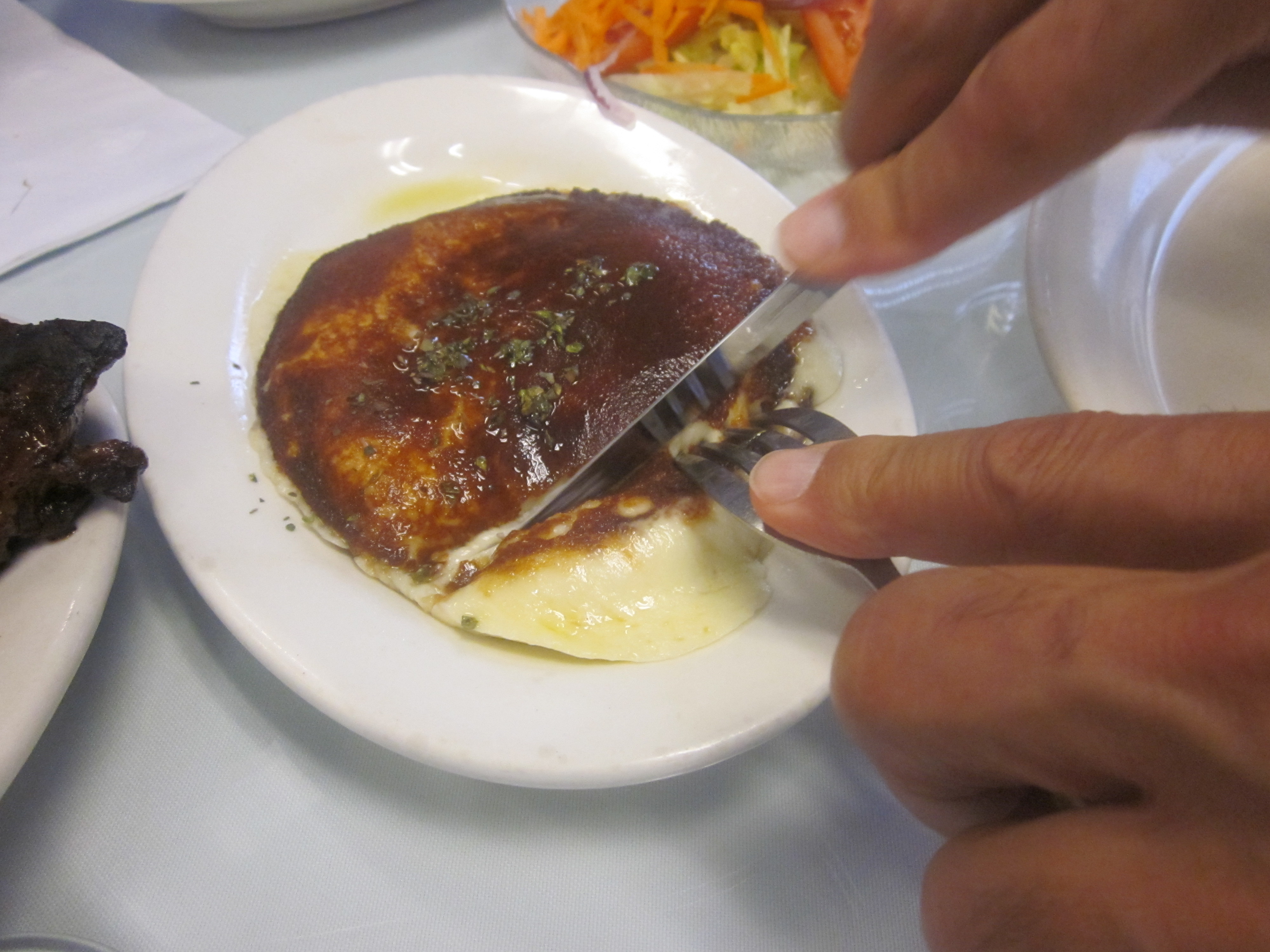
The grilled provolone came as advertised, toasted on the outside, the cheese oozing from it when sliced and doused with oregano flavored olive oil. We sawed through the steaks, cooked as we ordered, medium rare; the juices flowing from them onto the platters.
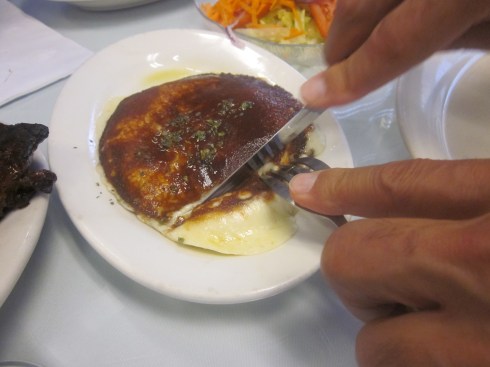
Grilled Provolone

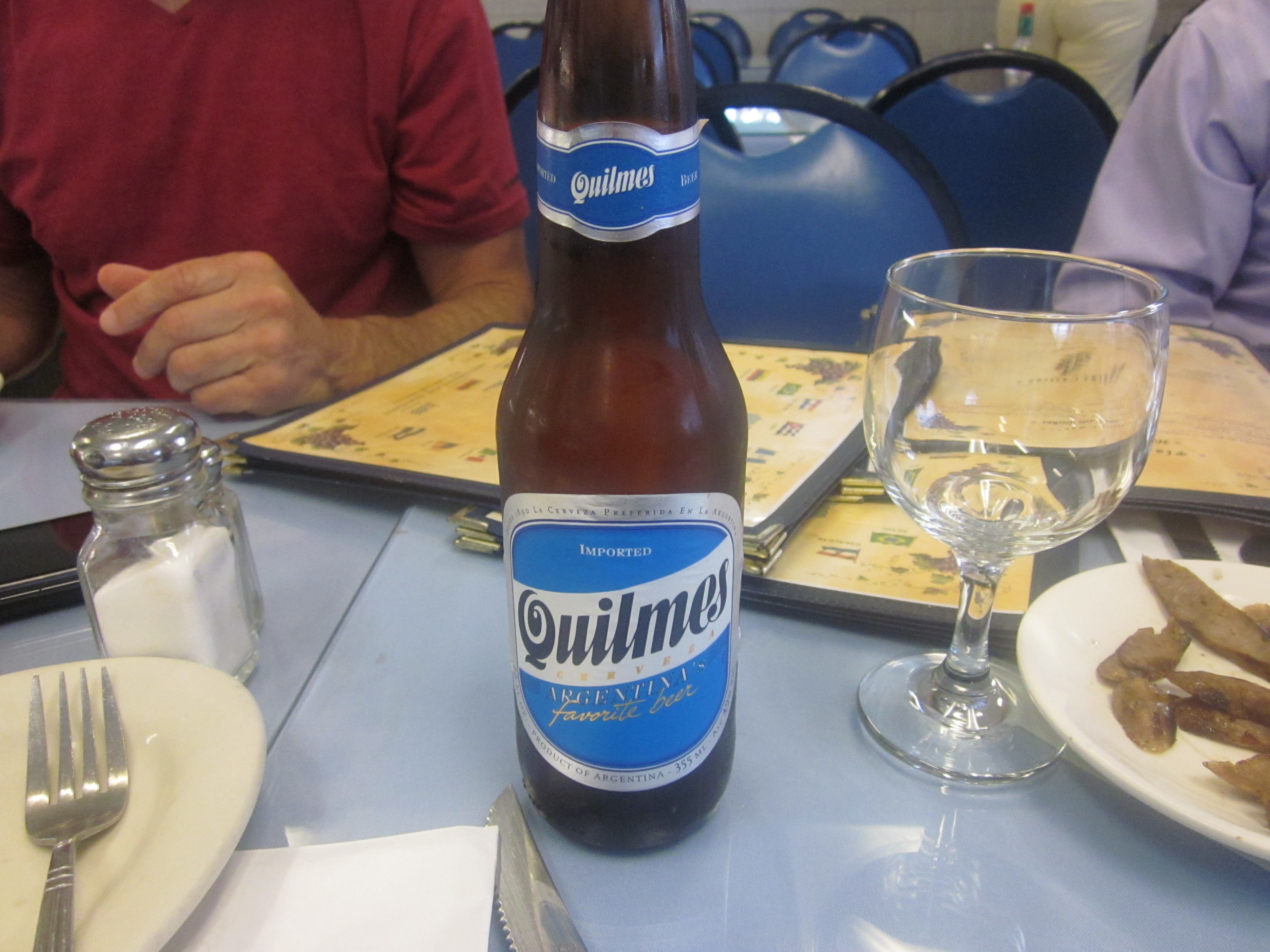
While we chewed, moving from one cut of meat to the other, some of us paused to cleanse our palates with gulps of the Argentinean beer, Quilmes; Zio instead choosing the toxic sludge that is diet Coke to accompany his meal.
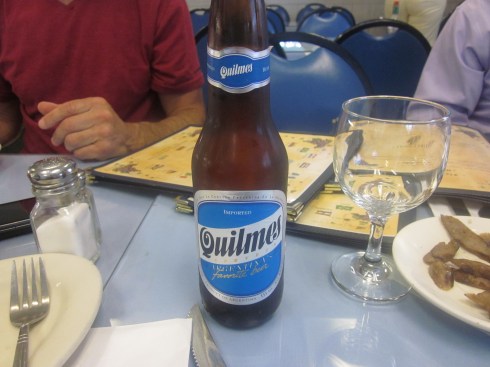
A beer and a glass…with a stem.

It was about then when, to my astonishment I noticed Rick sipping red wine from the aforementioned stemmed glass. He shrugged when he saw that I had noticed. He didn’t have to qualify his choice in any way. It was the glass that was more of note than what was in it.

We were making very good progress; the meats on the platters were slowly vanishing.

“You want a beet?” Rick offered Zio from the platter of cold potato and beets.

Zio thought about it for a moment and then nodded. “Yeah, what the hell. Give me a beet.”

Soon all was gone with the exception of a shriveled piece of tripe and a “burnt end” of sweetbread that even Gerry would not touch.
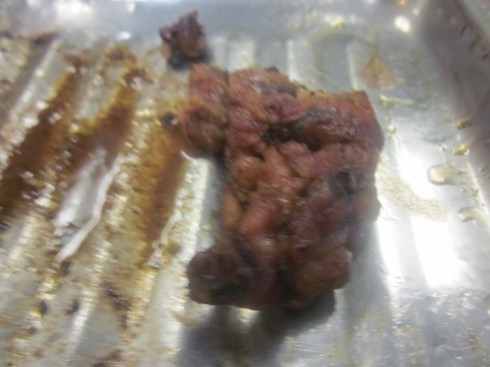
A sweetbread burnt end.

Seeing that there really was nothing left in front of us, the waitress recited what was on the menu for dessert. Zio, who seemed to go silent after that last beet, perked up when he heard there was quince paste.

“I love quince paste,” he announced. “I had it the other day.”

“Bring us the check,” Eugene said, making the executive decision that there would be no dessert, as if we needed it after all that. No one, not even Zio and his penchant for quince paste, dared to stand up to Eugene’s resolve.

The check came. We waited silently as Eugene perused it. We knew we had done some major damage. I chewed on my knuckles in anticipation. My own self-imposed standards were on the line here.

“$30 each,” he said. I let out a sigh of moderate relief. We were over budget, but we had beer, some of us more than one, and even red wine—in a stemmed wine glass. That would account for at least $5. And of course our waitress deserved a generous tip for having to put up with us. It wasn’t as bad as it could have been.
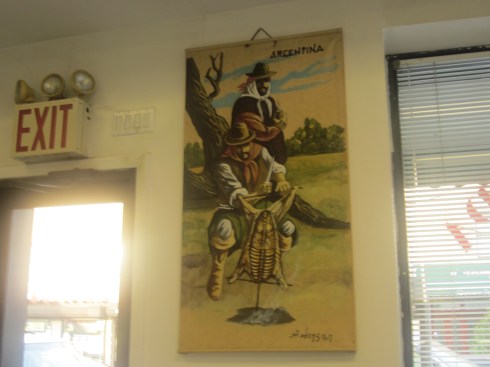
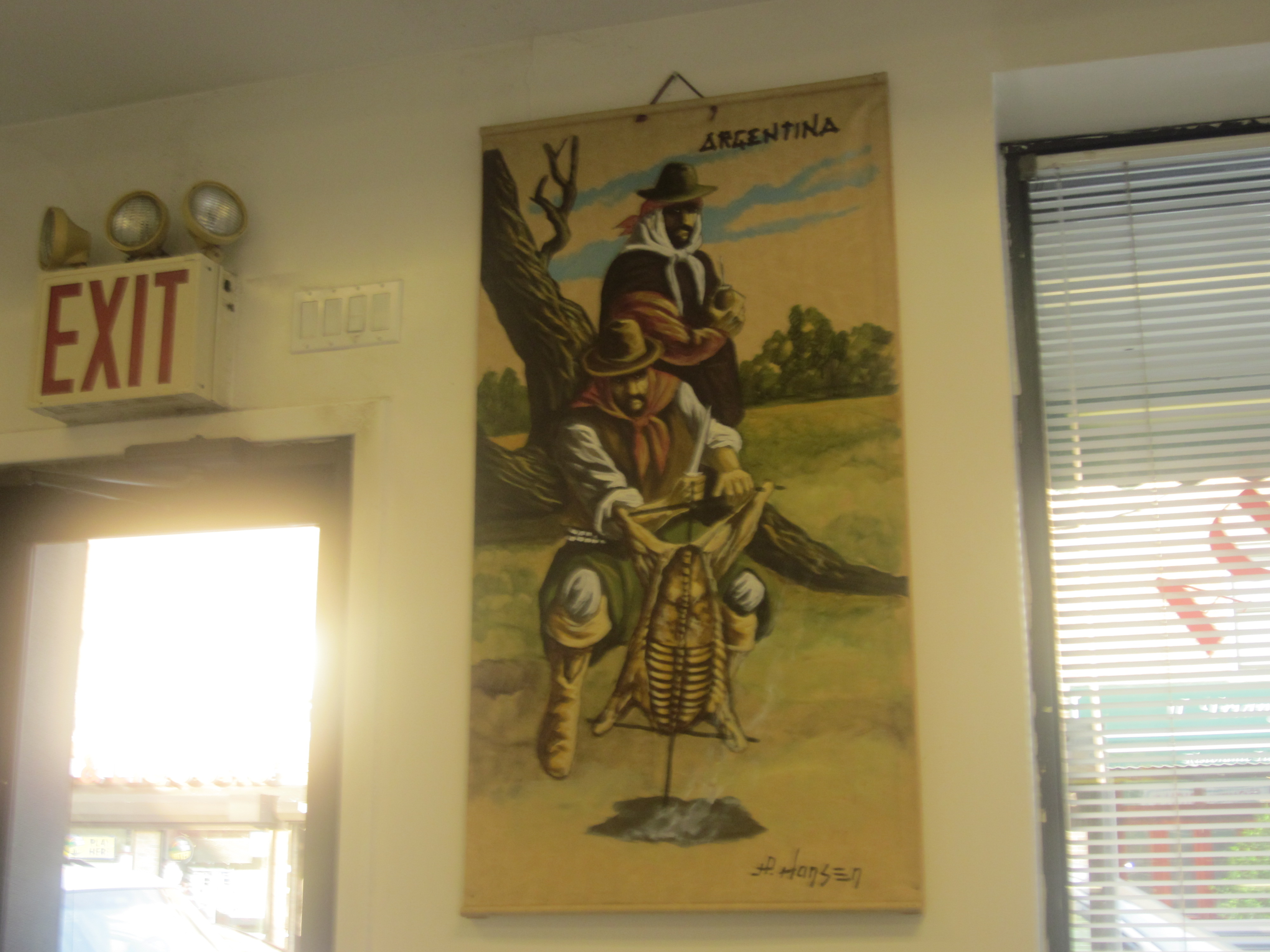
The rough life on the pampas of Elmhurst.

We stumbled out of the restaurant. The tango music was still playing. I had a piece of parsley from the chimichurri sauce stuck between my teeth. There wasn’t much I could do;  I would have to wait until I got home before I could attend to it.

Today’s Special(s)

22 Jun

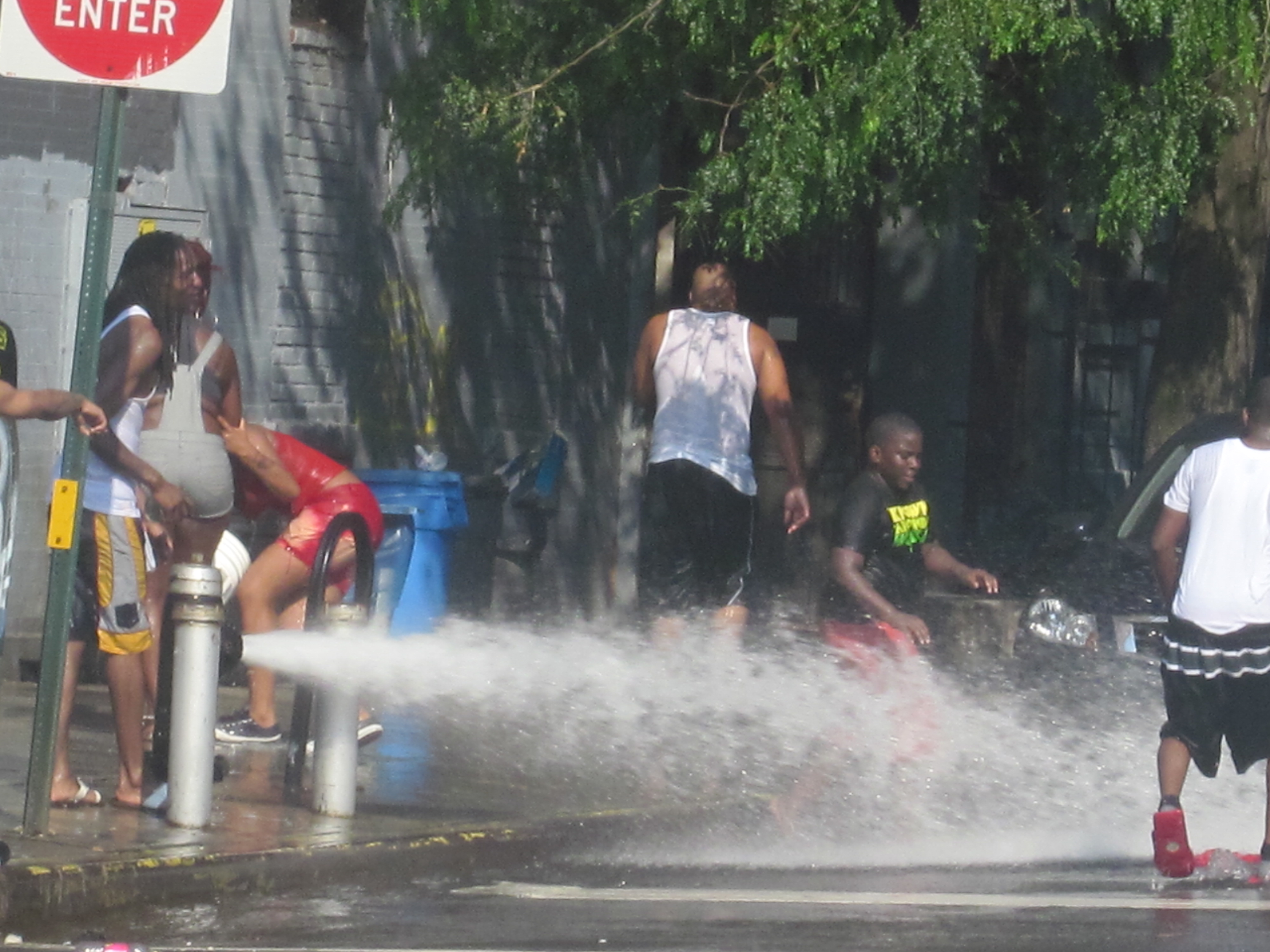
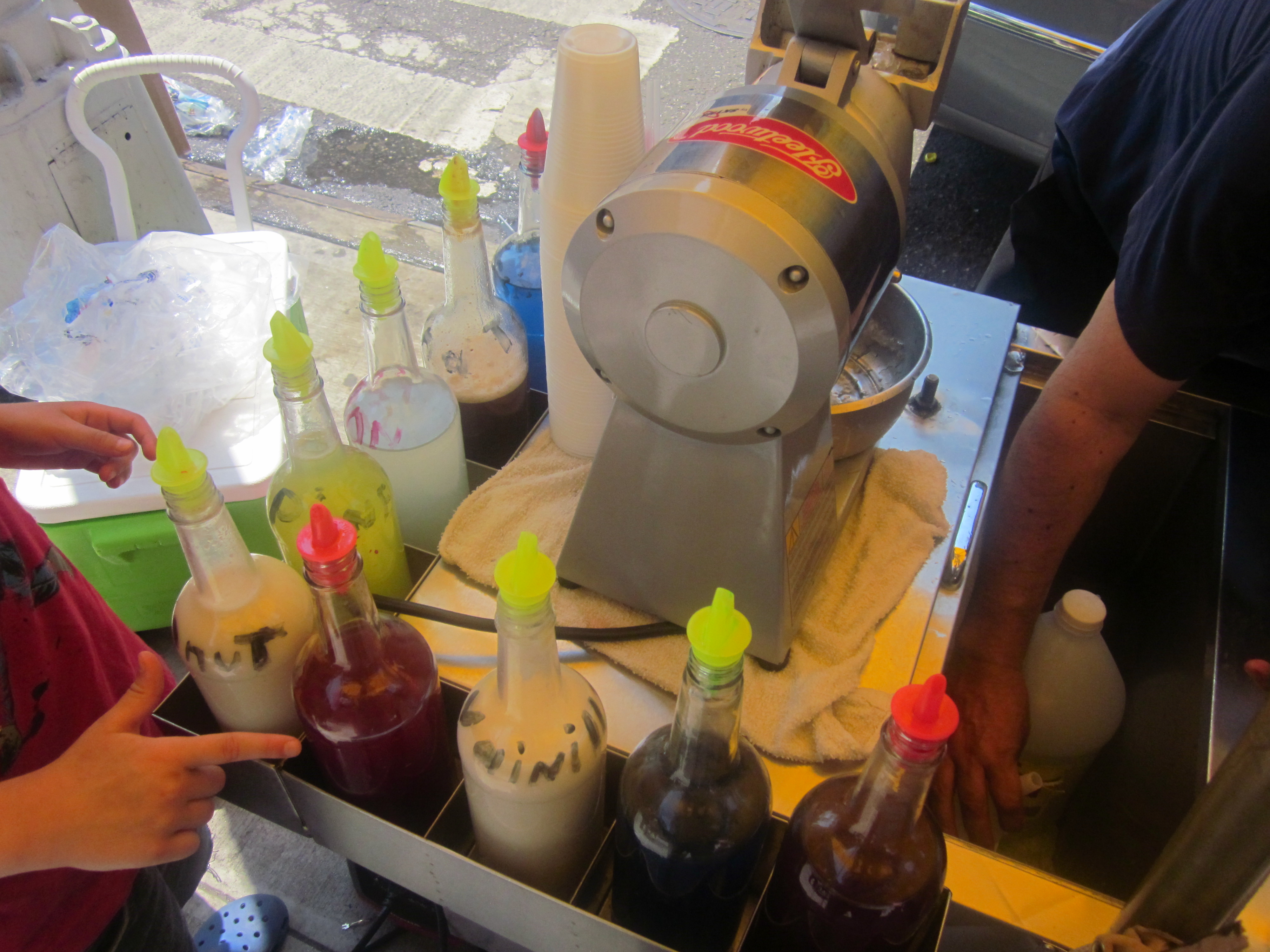
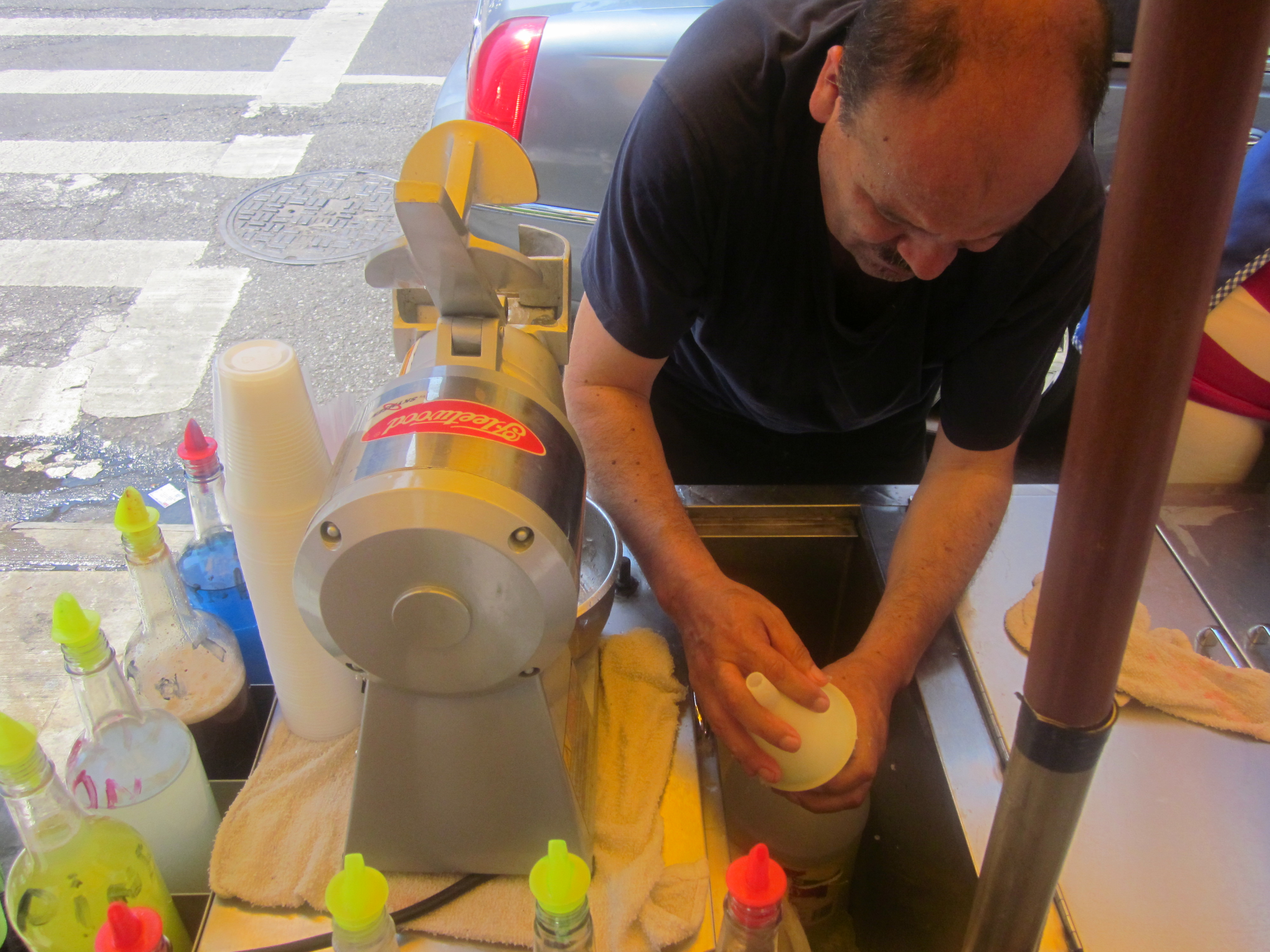
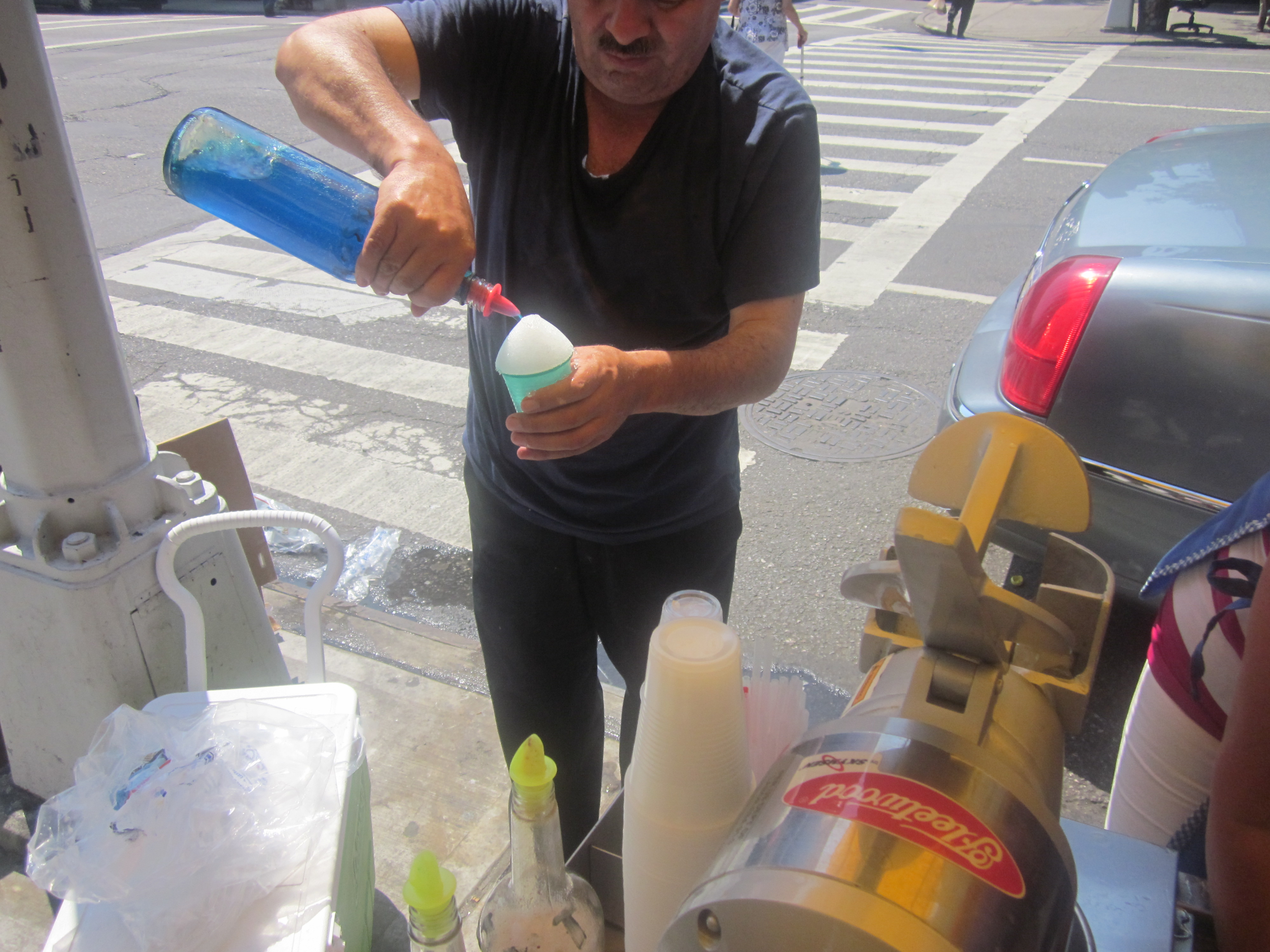
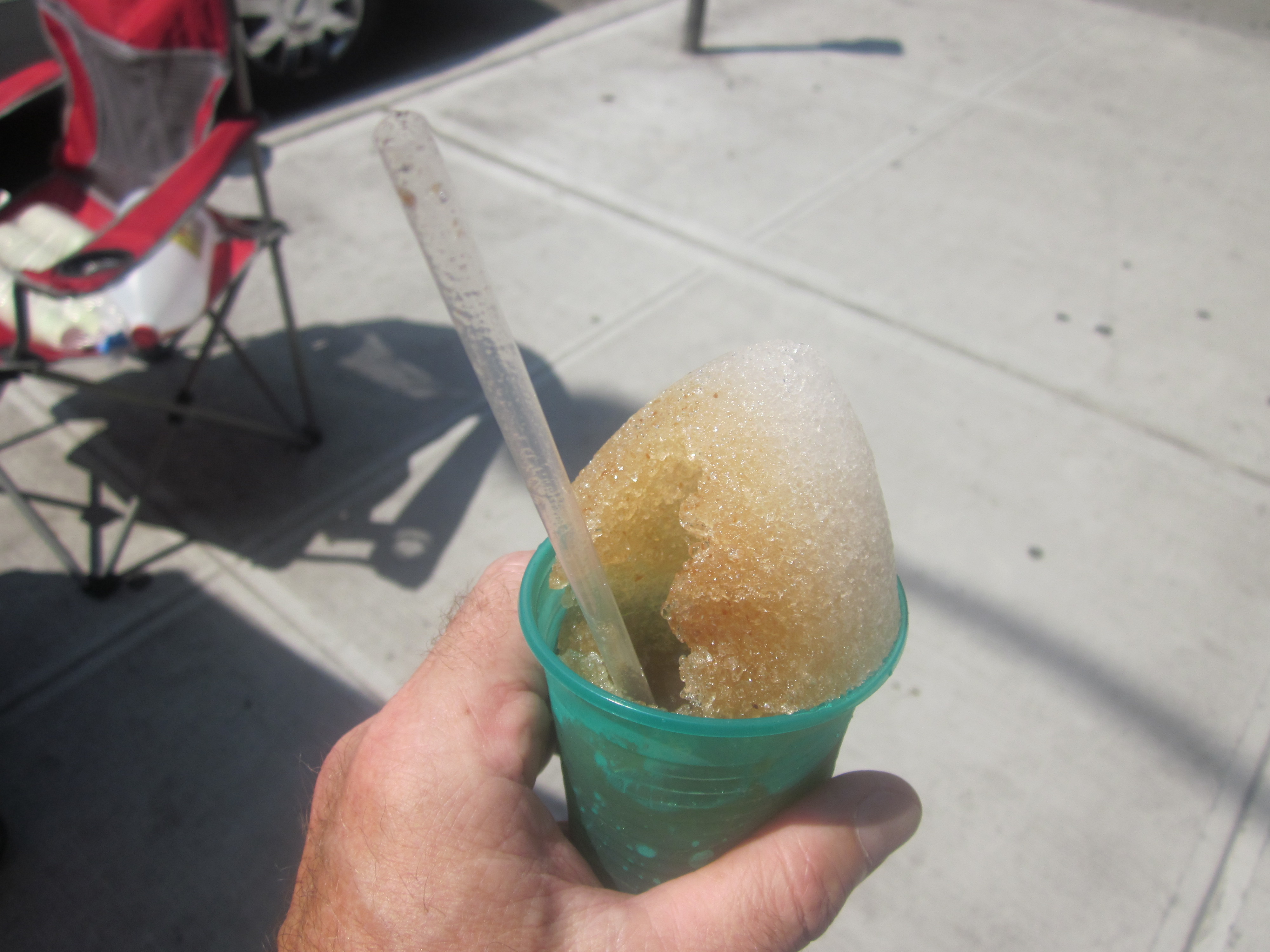
A cold shower.

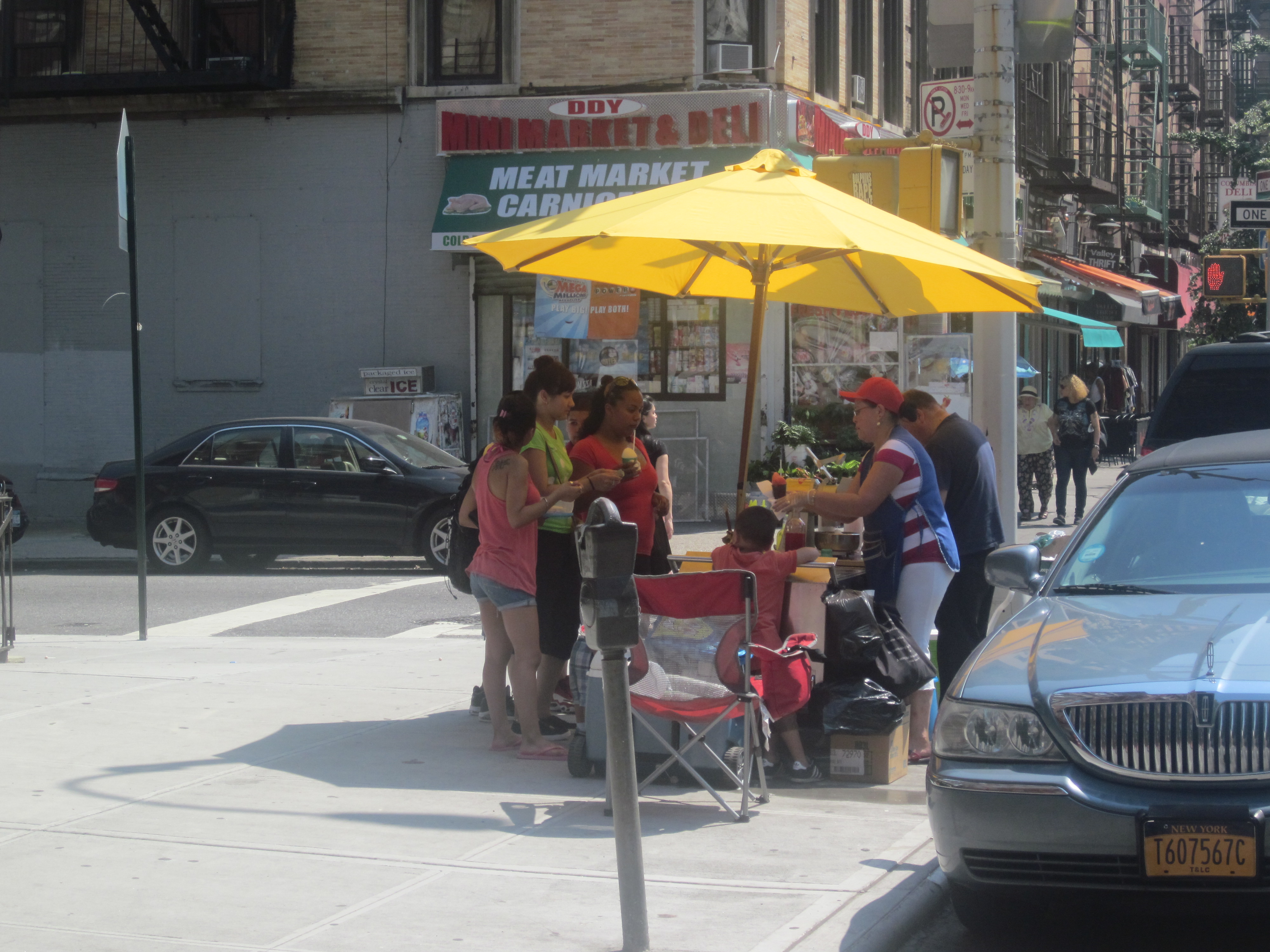
And an even colder refreshment.

The Iceman neareth

Tamarindo please.

Sweet relief!

A Night of Good Humor

13 Jun

The bells woke up me up.  I could hear them from my open window coming from the street below. I was trying to sleep away the hot day.  I forced myself out of bed. I had to get downstairs fast. I had to get to the bells.

I put on a dirty, ripped tee shirt and slid on my flip flops. I rushed out the door and started down the four flights to the street.

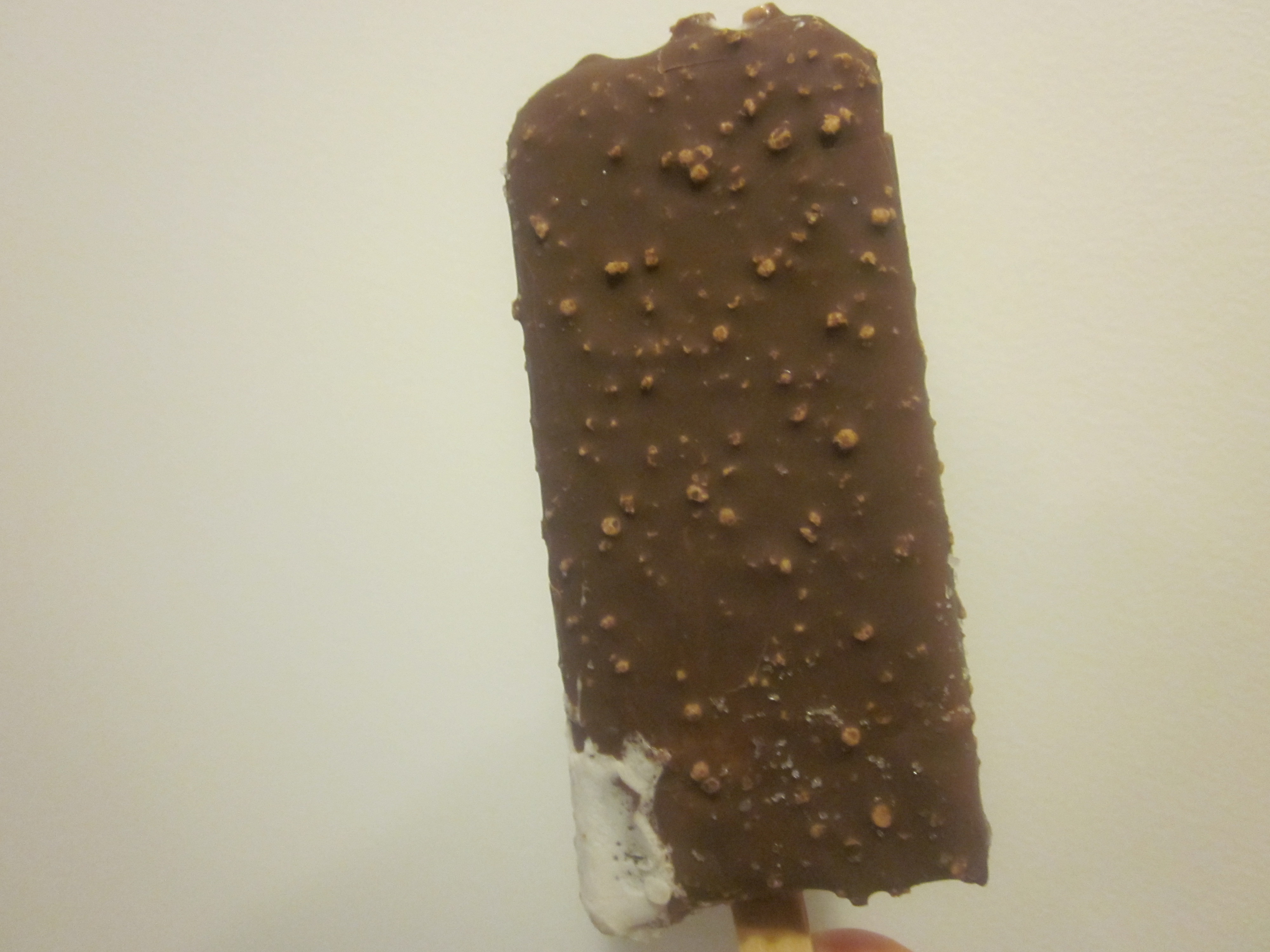
Mrs. Robbins was trudging up the steps. She was in a wrinkled  house dress, holding an ice cream bar in one hand that was melting rapidly.

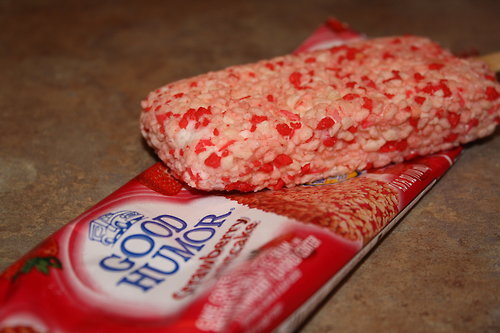
“You better hurry,” she said. “He’s selling out fast.” As she spoke she tried to catch the red cookie crumbs that were falling from the ice cream bar.

“You got strawberry shortcake?” I said.

“Always,” she replied. “And lucky I got there when I did. Those kids behind me are gonna be disappointed if they want their strawberry shortcake. And I know that geezer Baskin will blame me for eating the last one. Too bad, I say. Let him eat a toasted almond for a change. Nothing wrong with toasted almond. Or chocolate éclair. Now that’s a very fine ice cream bar.”

Mrs. Robbins could go on, but I had no time to listen. I ran down the stairs and out into the dusk. It was still brutally hot. I heard the bells, but they were fading. I wasn’t sure which direction to run.

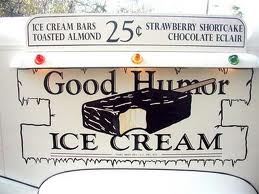
A truck was slowly moving down the street and then stopped right in front of where I was standing. A man poked his head out. “I got ice cream here,” he said.

I stared at the rainbow colored ice cream cone painted on the side of the truck. “You want a Salty Pimp?” the man asked me, “or how about a Bea Arthur?”

I didn’t know what to say. And there were no bells.

Where you can get a “salty pimp.”

“Okay, maybe next time,” the man said as he drove the truck away.

I listened for the bells again. I could hear them faintly, but soon they were drowned out by something else. That song. It was coming from that other ice cream truck. I covered my ears.  Stop it, I cried to myself. I can’t stand it!

The loud truck parked in front of me. The music blasted. The ice cream head smiled cruelly at me; the source of so many nightmares.

The stuff nightmares are made of.

I ran from it. Ran down the street as far away from the truck as I could get. The song faded. I turned down an alley. There it was. The old white truck. And I could hear the bells.

My flops flipped as I ran faster. I could see the man in the white suit and white hat by the side of the truck. There was a line of boys and girls waiting. I needed to get on that line. I shoved my hands into my pockets. And then I froze. “No,” I cried. “No! No! No!”

I forgot to take two bits for the ice cream. I sat down on a stoop and buried my head in my hands.

“What’s the matter, kid,” a gravely-voiced man asked me. “We all have bad days.”

I looked up. It was Carvel. The last guy I wanted to see.

“Forgot something, did ya?”

I didn’t want to hear it from him. Taunting me with his toasted coconut marshmallow sundae; his brown betty’s. Knowing how loyal I am to the other guy. That I would never betray him.”

Everybody likes ice cream

“Listen, kid, I remember that solid you did for me?”

“What?” I scowled. “What solid?”

“The time you helped me with the dry ice.”

I nodded. Yeah, I remembered. His truck broke down and I helped get his boxes of dry ice to his new store before all his ice cream melted.

“I never forget a solid,” he said.

He reached into his pocket, pulled out a fifty cent piece and flipped it to me. “Go on now. Go get yourself an ice cream.

I looked at the coin and quickly ran down the street. The line of children was gone. The man in the white suit and hat was getting into the passenger seat of his truck. He was leaving, but before he did, I could hear him clang the bells.

I ran right up to him. My face was red, dripping with sweat. He smiled at me. “Just in time, sonny,” he said and then slowly climbed out. “Can’t say there is much left back there though. Not on a hot one like this.”

I walked with him to the side of the truck. He opened the freezer. A wisp of fog drifted from the open door. He reached in. “Hmmm, I thought I had some left,” he said as his hand searched the freezer.

My face contorted. The tears were close. I tried to control them from coming.

“Oh…wait…” He smiled again. “One more. But you’ll have to take whatever it is.”

“I’ll take it,” I said, nodding eagerly. “I don’t care.”

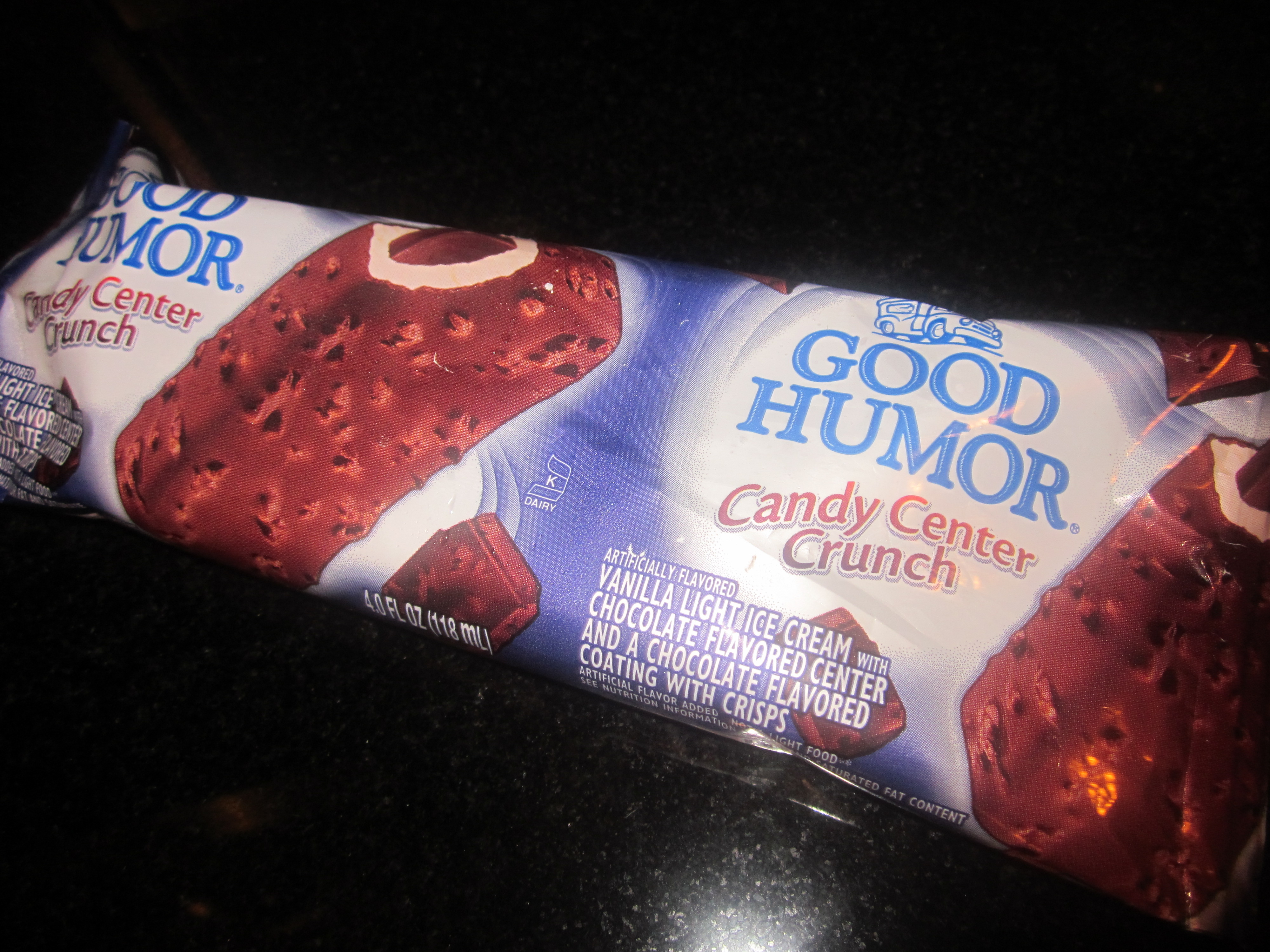
He pulled out the last remaining ice cream bar. My eyes opened wide. So did my mouth. The ice cream was wrapped in blue paper. I knew what it was. The one with the chocolate candy in the center. God is good, I thought.

“Well, well, from that look on your face, I guess it’s your lucky day, sonny boy,” he said.

I gave him the fifty cent piece. He slid it into his changer and then clicked out two dimes for me. I waited a moment.

He looked at me and shrugged. “Sorry, sonny, you ever hear of inflation? The cost of ice cream is going up. Get used to it.”

I didn’t know what he was talking about and really didn’t care. I pocketed the twenty cents and moved away from the truck with my ice cream.

He got back in, started the truck up, and as he drove away, pulled the string to the bells a few times.

I returned to the stoop where I had run into Carvel and sat down. I unwrapped the ice cream and slowly, methodically, started to work on the chocolate icing.

A thing of beauty.

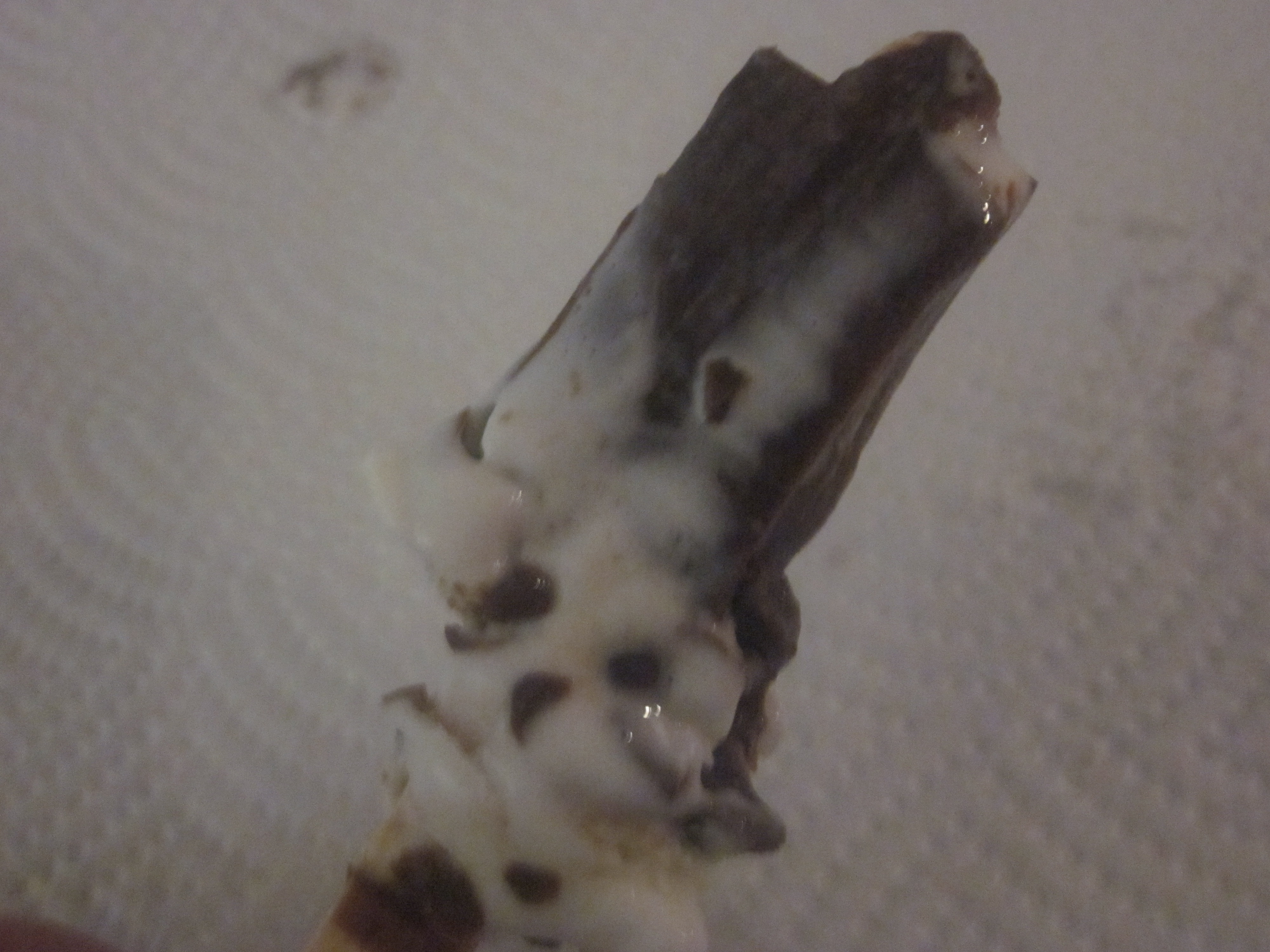
The vanilla ice cream was revealed. I wanted to make it last before I got to the candy, but in the heat, I had to work faster than I liked. The tip of chocolate candy emerged. And then more until the chocolate candy center was totally exposed, clinging fragilely to the stick.

Eureka!

I started to lick it. I knew I had to be careful here. That it was delicate. But I was weak. I couldn’t resist. I took a bite, savoring the cold, rich chocolate. I wanted more and took another, bigger bite. Just as I did, the candy crumbled, pulling away from the stick. I frantically tried to catch it with my hand but only was able to rescue a tiny portion. The rest splattered on the dirty pavement.

I looked down at the glob of chocolate. An army of ants were on it immediately. I still held the stick. I licked it, making sure I cleaned whatever chocolate remained. I stood up, tossed the stick into the garbage.

The sun had gone down but my room was still stifling when I returned. I got back into bed. Tomorrow, they said, was going to be even hotter. I closed my eyes.  I didn’t care. As long as I heard the bells.

Lechonera Encanto

8 Jun

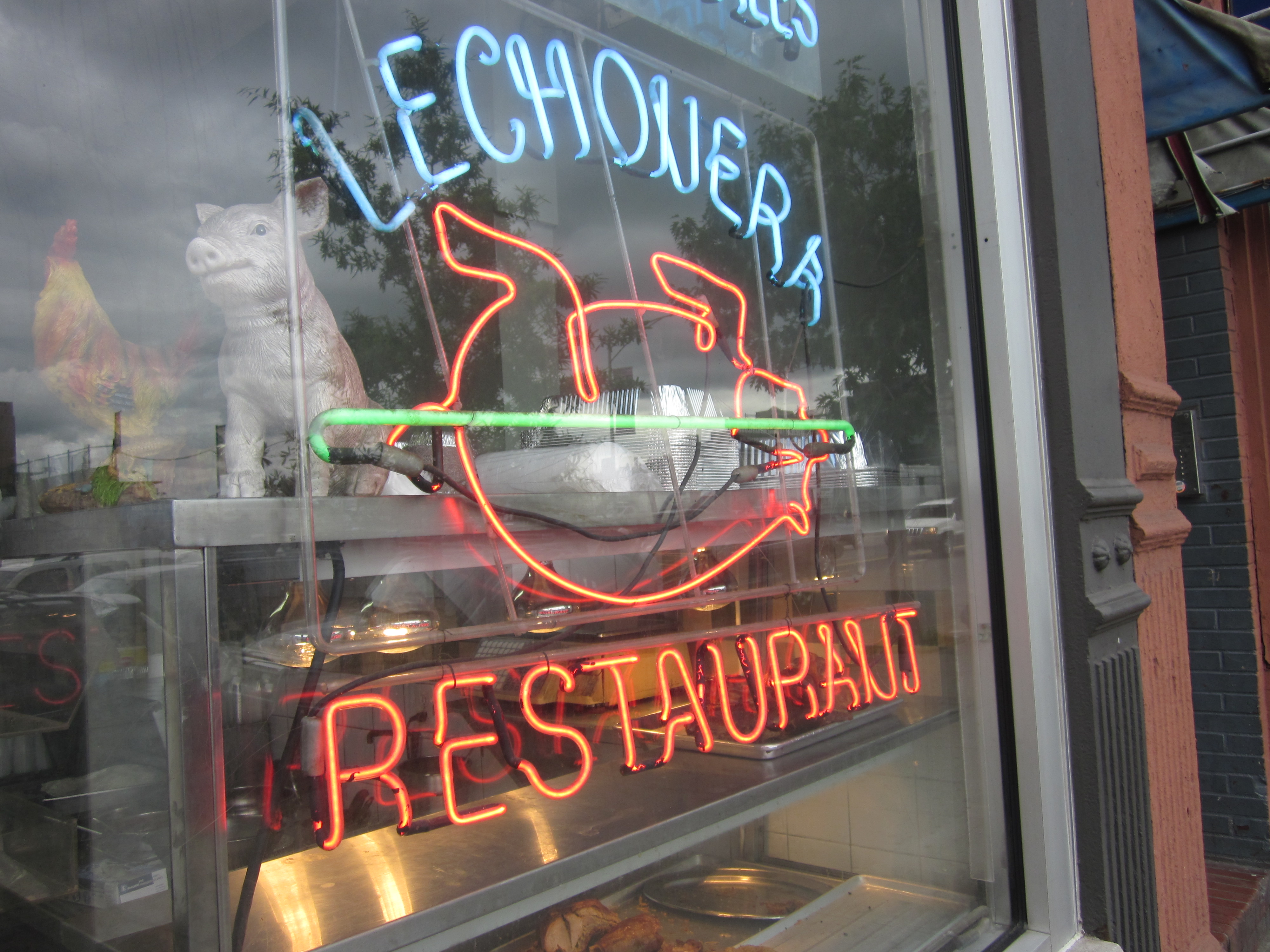
Lechonera La Isla
256 E. 125th Street

Last year, around this time, when I started seeing the Puerto Rican flags streaming from car antennas, out of apartment windows, and draped across uptown streets, I immediately thought of the Cuchy Frito man, specifically, Cal Tjader’s rendition and the celebration of all pig parts fried Cuchy Frito Man.

I am seeing those same flags again now. And this year, instead of Cal Tjader and cuchifritos, I thought I would celebrate La Isla del Encanto by stopping by my local lechonera, Lechonera La Isla, for a taste of pernil, roast pork shoulder.

Plenty of room at the lechonera.

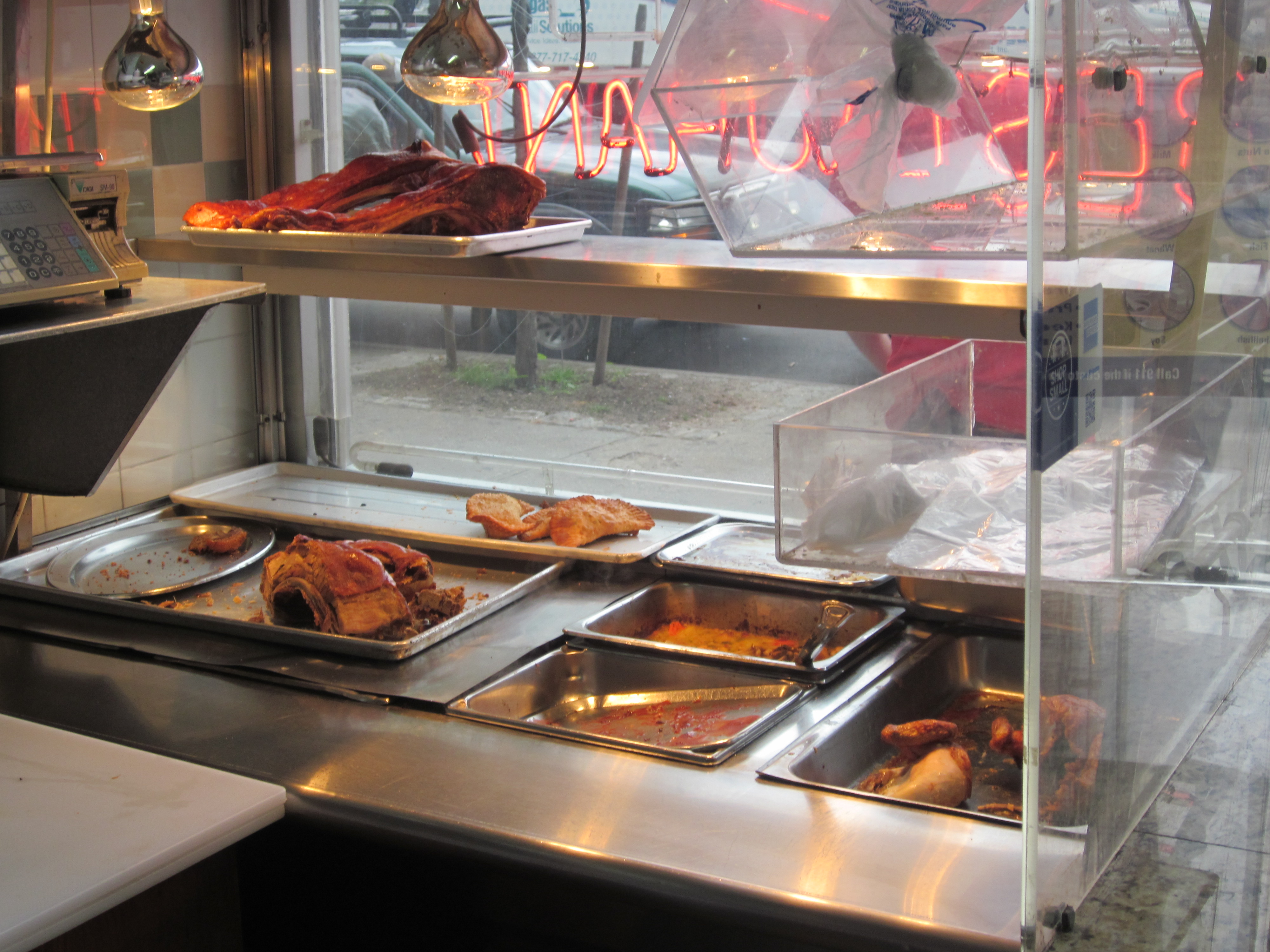
La Lechonera La Isla was quiet when I walked in; the few stools of the small restaurant counter were empty. There was beef stew available along with oxtails and roast chicken. And there were a few slabs of pernil that had been roasted to sweet oblivion.

The day’s remains soon to be devoured.

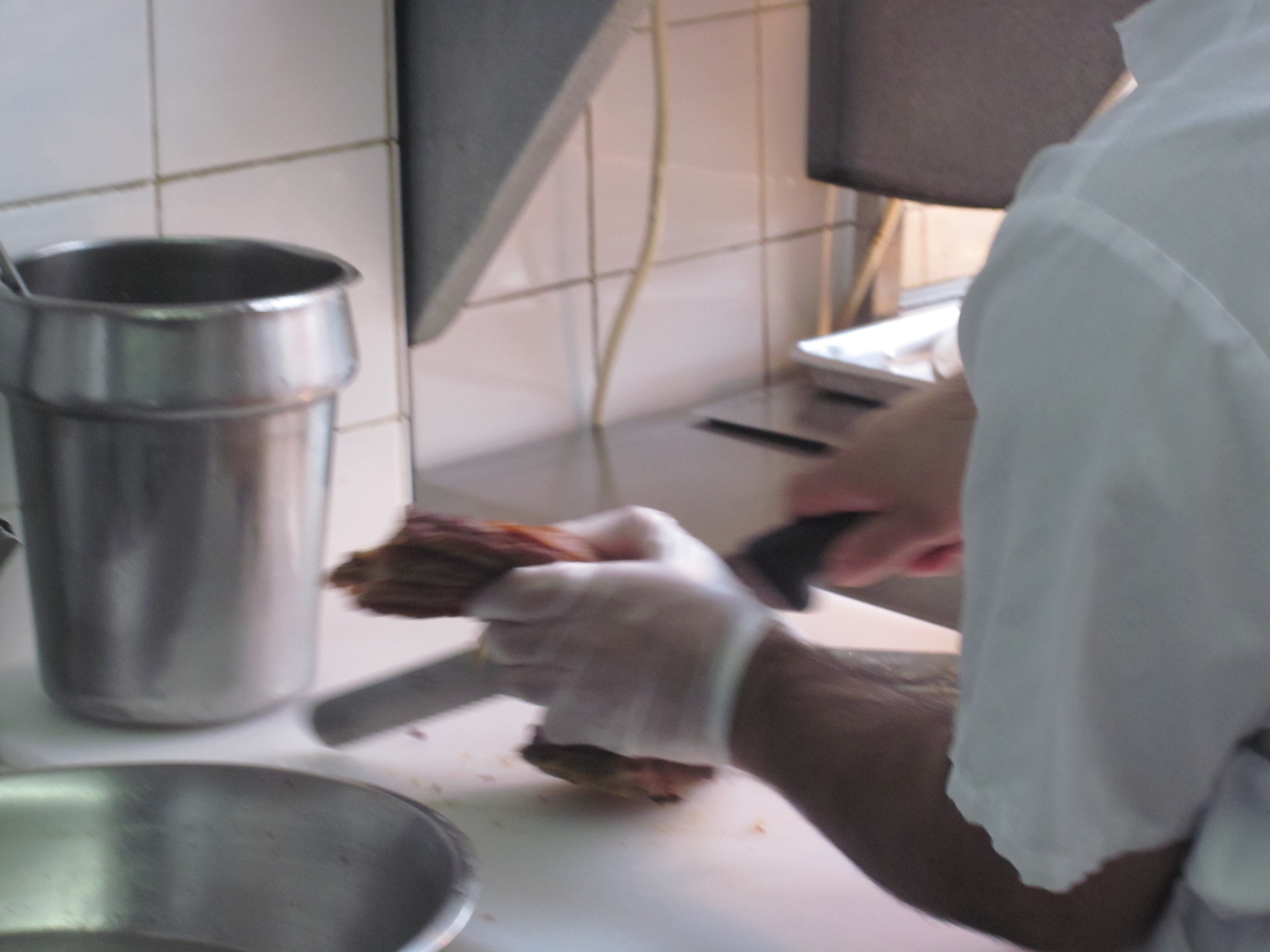
“When do you close,” I asked the young man who was chopping the pernil into pieces for me.

“When we run out of food,” he replied, his cleaver slamming into the very dense crackling of the pig skin. “Basically, my Mom cooks everything in the morning and when it’s gone, I can go home.”

I was lucky;  he hadn’t gone home.

Trying not to be too bold, I peered into the kitchen hoping to catch a glimpse of Mom at work. But from what I could see, the kitchen was dark and quiet. Apparently Mom had gone home.

Sawing through the good stuff.

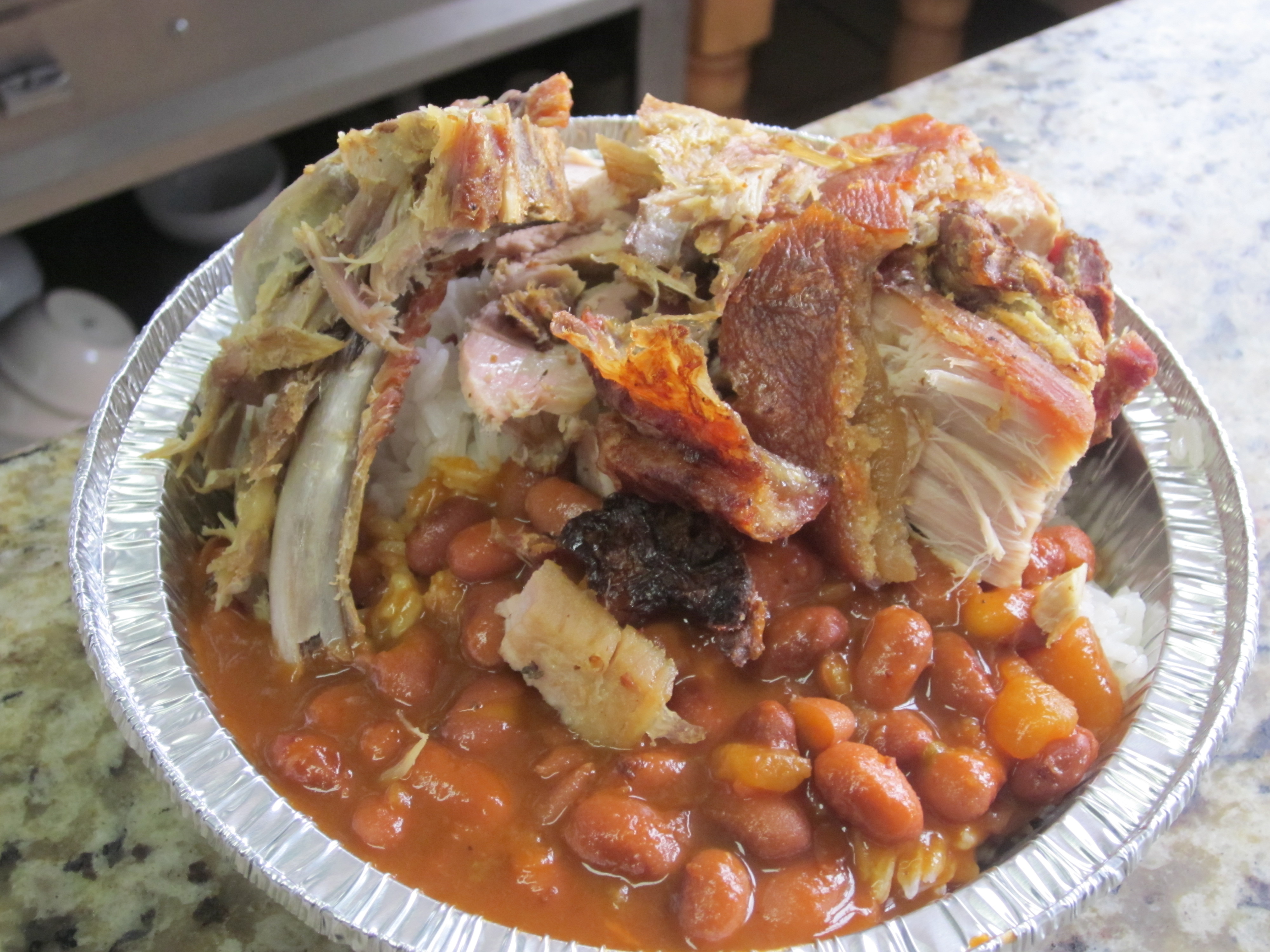
He layered a generous portion of pork on top of rice and red beans. An accompaniment of a homemade hot sauce; onions marinated in scotch bonnet peppers and vinegar set my mouth happily on fire while a drizzle of a tangy mojo (garlic sauce) just added to the gathering of fiery flavors now imbedded there.

Roast pork and rice and beans.

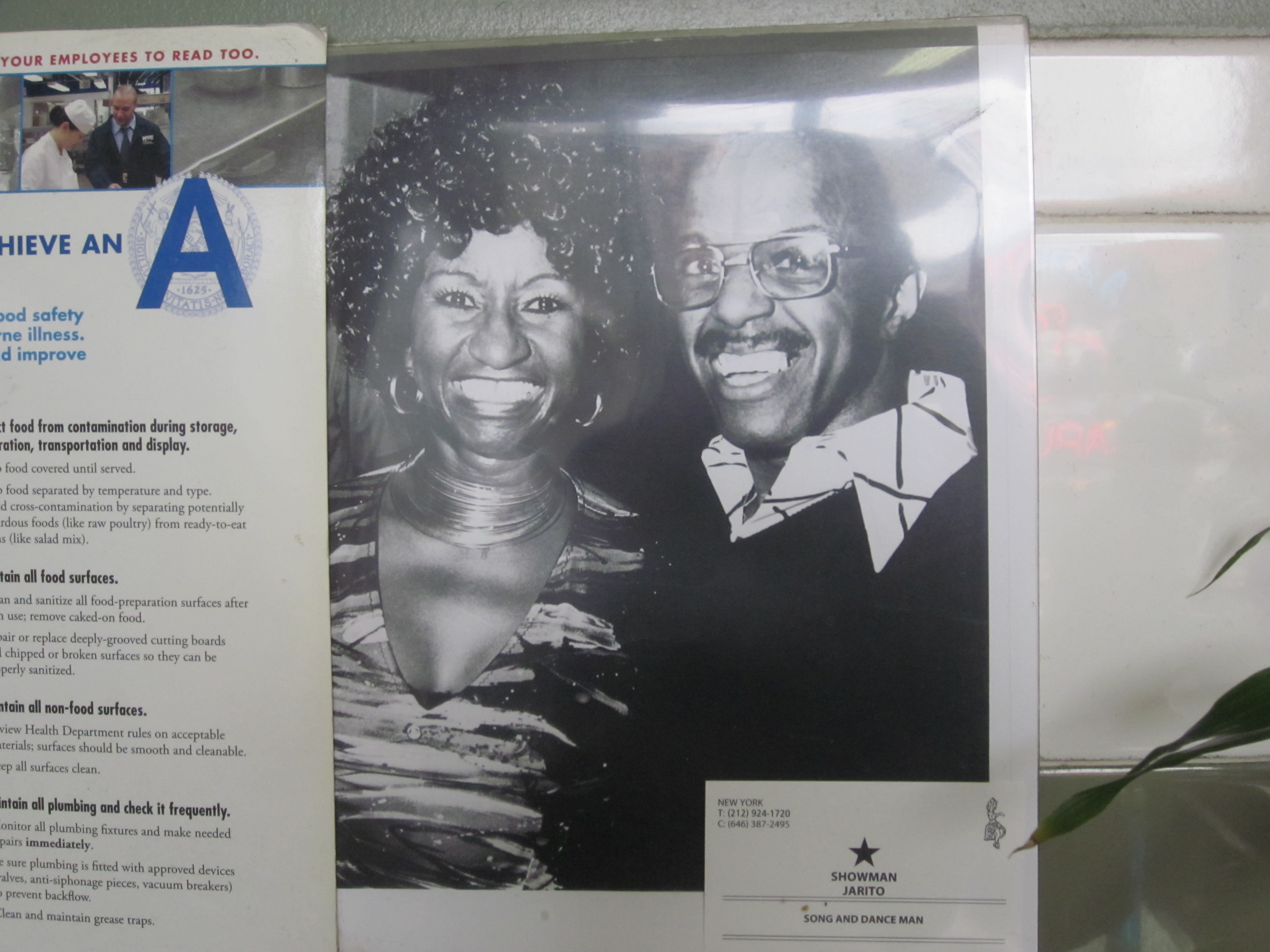
The traffic on 125th Street heading towards the Triorough (now known as the RFK) Bridge was bumper to bumper. Instead of Cuban-born Celia Cruz whose picture was adorned on the busy walls of the lechonera, or Tito Puente, who I once saw on 86th Street just after performing at the parade, sitting in the shade being fanned by a group of elderly ladies, the only sounds I heard while gnawing through the delicious cracklings, was that of honking horns. I really didn’t mind, the food provided all the music I needed.

A smile from Celia Cruz to help the pernil go down.


The Bizarre Eats of Chow City: Boneless Chicken Wings

6 Jun

In this, the second installment of The Bizarre Eats of Chow City, I seek out and sample the strange phenomena known as the boneless chicken wing.

I had heard about them. I knew that they existed, but never really gave them much thought.  Recently, however, I would pass a placard near my home advertising them.  I could no longer hide behind my prejudices and fears. I needed to walk the walk, before I could attempt to talk the talk. It was time I summoned the courage to actually try the boneless chicken wing.

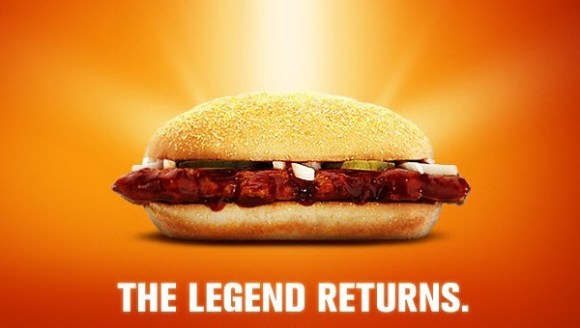
Years ago,  McDonald’s was pushing a boneless spare rib sandwich they called the “McRib.” I wondered about it just as I wondered about the boneless chicken wing, but never dared try one. The McRib was resurrected briefly a couple of years ago on a limited basis and still, I would not try it. For me, it is hard enough to walk into a McDonald’s much less order something so bizarre, so exotic as a boneless spare rib sandwich.  I just couldn’t do it. I scoffed at the concept; repulsed that the mega corporation would stoop so low as to remove what makes the meat on the spare rib so delectable; the rib itself, just to convenience the already very lazy consumer. I was taking a very hard line and really, intolerant stance.

Bizarre Foods, Mickey D’s style.

I think I have mellowed somewhat over the years. And for the sake of journalistic integrity, I now will take culinary risks to root out the truth. Thus, though the McRib is no longer available, the boneless chicken wing is.

There were plenty of sports’ bars and chicken wing joints I knew of that now offered the “boneless” chicken wing along with the traditional, two or three jointed wing whose tiny bones I had so many times plucked clean; the sauce, be it Buffalo, barbecue, jerk, happily licked and sucked from my greasy fingers. That tactile thrill, I knew would be gone, but that did not deter me. That a nearby Applebee’s advertised them out front made my quest an easy one. And that I would not attempt this folly alone; I had three very willing volunteers who agreed to take a break from their elementary and middle school studies to assist me on this project.

The place where they serve the boneless chicken wing.

I called my local Applebee’s and after being placed on hold for what seemed like a very long time, I was able to put in an order of the boneless chicken wings. I had a choice of  bleu cheese or Ranch dressing to accompany the “wings.” I choose the bleu cheese. Along with my three volunteers,  we entered Applebee’s.  I made sure not to stare at the diners and their  multi-colored drinks, the overflowing baskets of fries, and frisbee-sized burgers.  My order was ready. We paid, and then quickly exited the bustling restaurant.

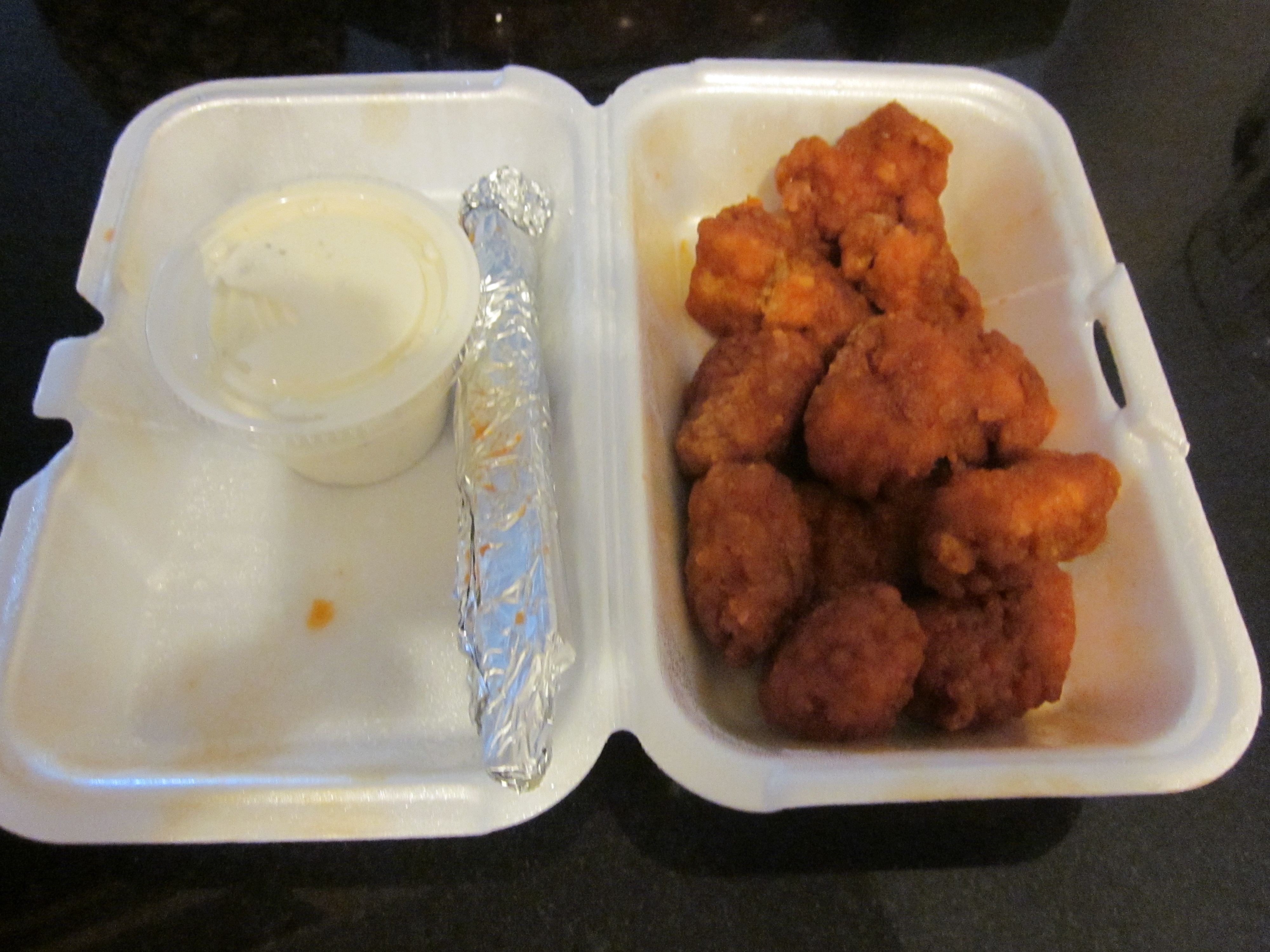
Once home. I opened up the styrofoam container revealing the reddish-brown, oddly shaped, “wings.”

1310-1490 calories

I gave myself and each of the volunteers including an added volunteer, my wife who showed none of the same fear or repulsion I had to the laboratory altered concoction that came in the styrofoam container, one “wing” each. We all sampled.

The younger of the student volunteers at first complained that they were too spicy. After a few sips of limeade and then another few bites, they no longer minded the spice and wanted another.

“It’s a composite chicken wing,” my wife said, referring to the composite Little League baseball bat we had heard so much about from the oldest of the student volunteers.

Composite baseball bat

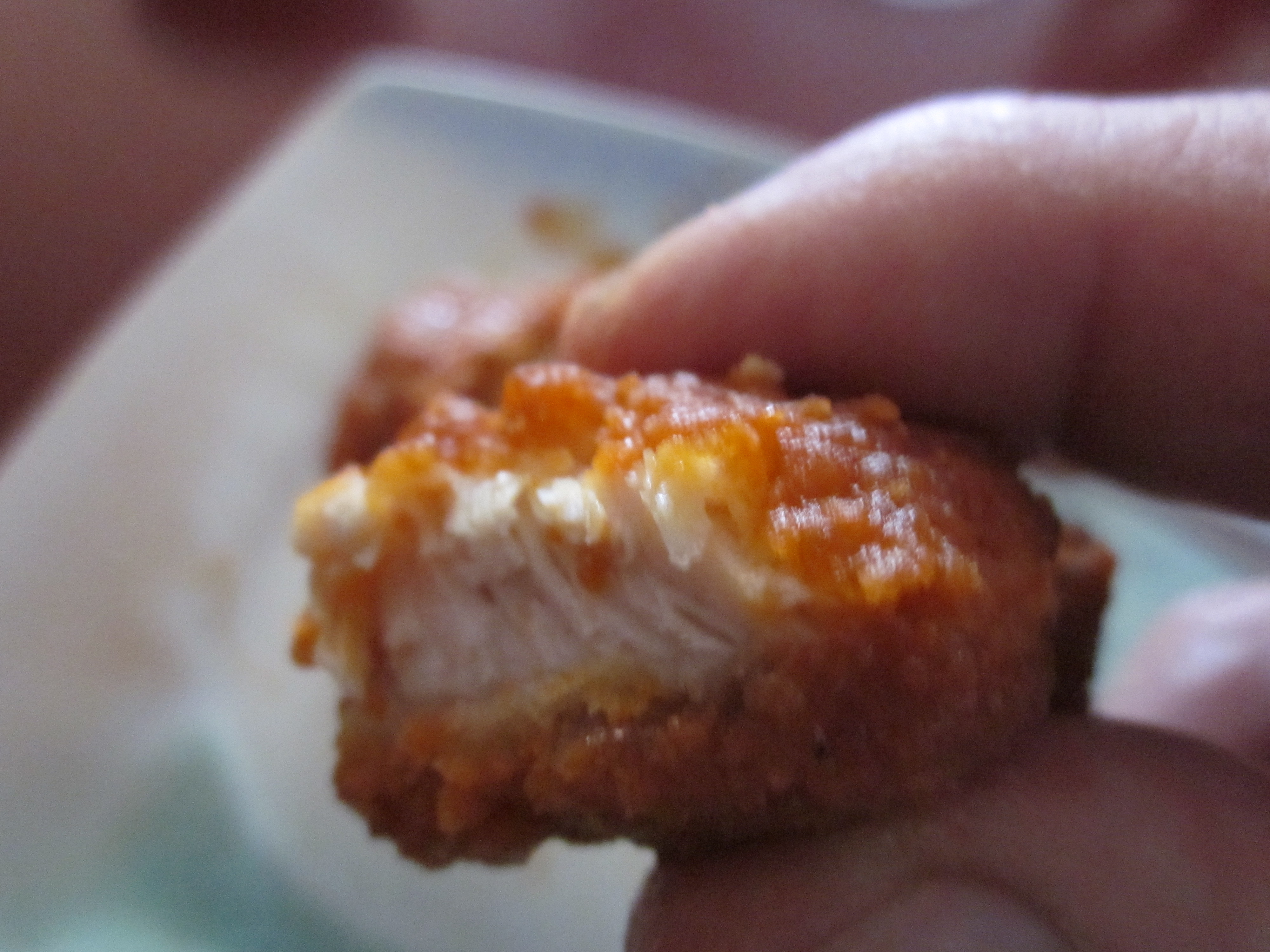
And they were a composite. Unlike the traditional chicken wing, these “wings” you could eat with a fork if you wanted. They were chicken “tenders” shaped into something resembling a chicken wing, breaded, and fried in the manner of the Buffalo chicken wing.

Composite chicken “wing”

“Can we have another,” all of the volunteers asked.

They each got another. There were two left. The oldest student volunteer, even though he already ate a big sandwich, eyed them covetously.  The youngest did not want a third. The oldest grabbed it. The “wings” were quickly devoured.

“Let’s get them again,” one of the students said. “They’re really good.”

I didn’t agree. To me, they were dry and had a chemical taste. And the loss of being able to really handle the wing with your fingers, making sure the bones were plucked clean, detracted just too much from the chicken wing experience. But if nothing else, this experiment taught me to once again restrain myself from imposing my personal preferences on others. If  the people want a chicken wing without bones, who am I to deny them that right?

A Lime Cut Three Ways: The First Cut

1 Jun

The Caipirinha

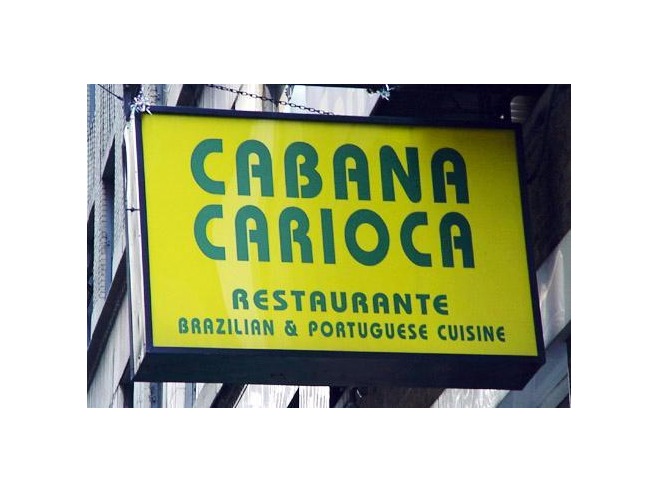
My first exposure to Brazilian food, if you can call it that, was at a three-level place in the theater district called Cabana Carioca. At lunch on all three levels, there was an “all you can eat” buffet were rice and beans, plantains, potatoes, hearts of palm salad, baby shrimp salad, chorizo, roast chicken and  macaroni were some of the offerings. Depending what level you ate, was what you paid. The higher you climbed, the cheaper the buffet.

On the main level was a flat out, standard restaurant. I don’t think I ever ate there, but maybe I did. I just don’t remember. The second level, where the kitchen was located, was a bit more casual than the main level and the most popular of the three.  It was on the second level where I ate most of my meals. The third level was bare bones; dark and usually empty—used probably only when the other two levels were packed or for private parties, but still serving the restaurants’ enormous portions of steaks, fish, shrimp, and the specialty: feijoada, also known as the “Brazilian National Dish.”

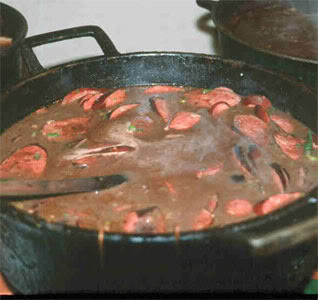
Cabana Carioca’s feijoada came in a cast iron pot stuffed with black beans and a variety of meats; pork shoulder, chorizo, kidney, beef, and other cuts that at the time, I could not identify. They were all coated in the black gravy of the beans and, really, since by then I was probably on my second or third caipirinha, no longer cared what I might be shoveling into my mouth.

The Brazilian National Dish

Along with the alcohol’s numbing effect, the caipirinha, as opposed to beer, helped cut through the density of the feijoada and made it much easier to navigate. The only problem was the next day’s hangover from too much cachaca, the Brazilian spirit made from pressed and then distilled sugar cane juice and used to make the caipirinha.

I think the last time I had a caipirinha at Cabana Carioca was in 1998 watching Brazil lose to France in the World Cup. The restaurant, all three levels, closed soon after and now, both its caipirinha and feijoada are just memories.

I’ve never had the fortitude to try to resurrect the feijoada in my kitchen, but the caipirinha is a frequent guest. The ingredients are simple; cachaca (available at most liquor stores), sugar, ice, and of course limes. Despite the easy ingredients, making a really good caipirinha requires a little sweat, or, as they used to say, “elbow grease.” The result, however, is well worth the effort.
What follows is the first cut of the lime: the caipirinha.

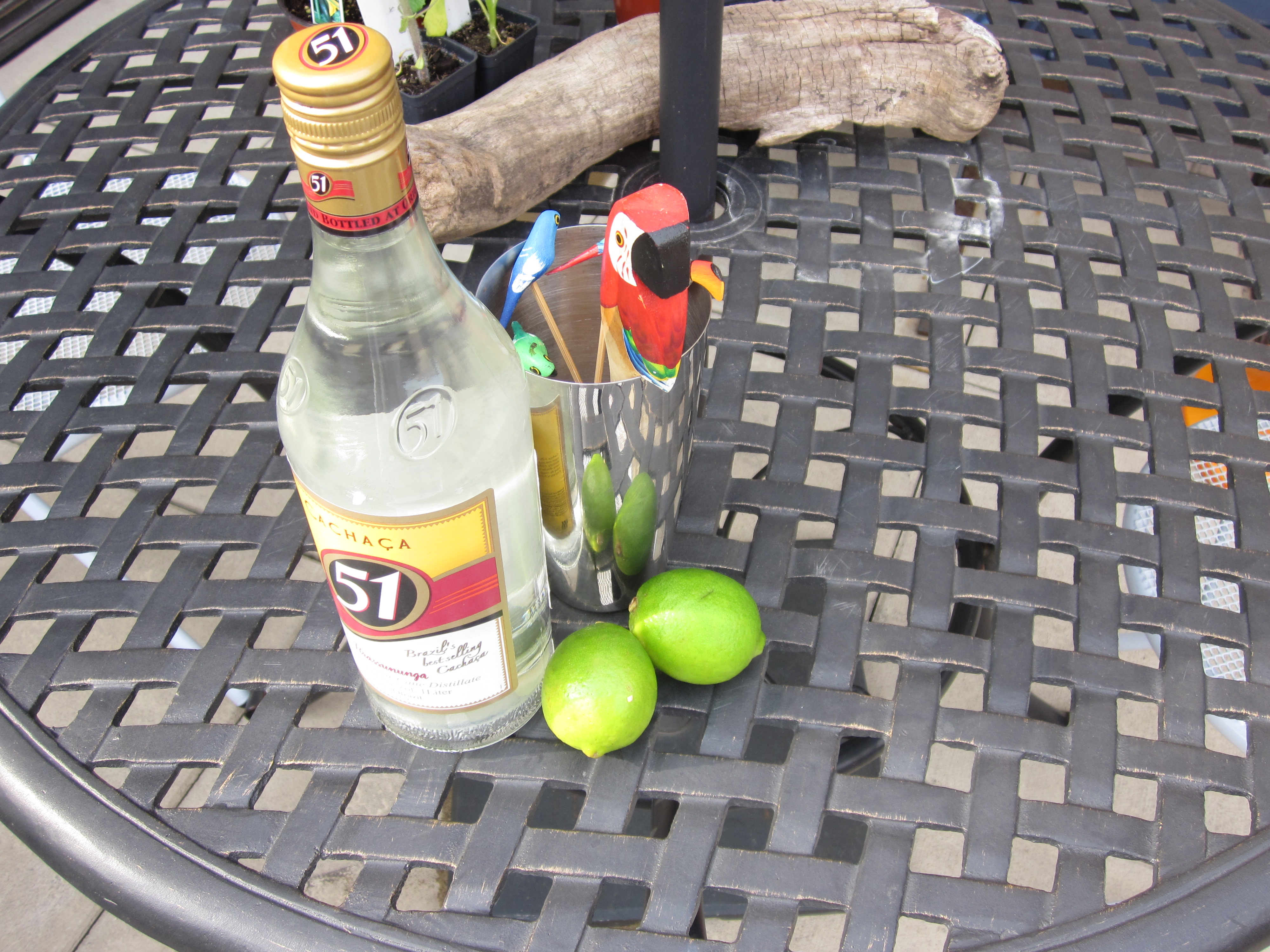
Some of the tools and ingredients in making a caipirinha.

Ingredients:

1 or 2 limes

2 to 3 ounces of cachaca*

2 to 3 teaspoons of sugar syrup **

3-5 ice cubes

*Spirit importers are beginning to market “premium” cachaca, which really just translates into a glitzy bottle design along with an upscale marketing campaign all in the hopes of selling a much higher priced product. I advise you not to go that route when purchasing cachaca for your caipirinhas. In Brazil there are two very popular brands that are used at most restaurants and clubs in making caipirinhas and they can be found here for well under $20 a liter. Seek them out. I guarantee you will not be disappointed.

**Most caipirinha recipes call for granulated sugar. I prefer pre-made sugar syrup thus skipping the “dissolving” process that is necessary in making the drink. To make simple sugar syrup, combine equal amounts of sugar and water, bring to a boil, lower the heat and let cook until the granules have dissolved. The syrup will last for weeks in your refrigerator. I like to use Demerara brown sugar for my syrup, but basic white sugar works just as well.


Sugar syrup and cut up limes.


To make the caipirinha you will need:

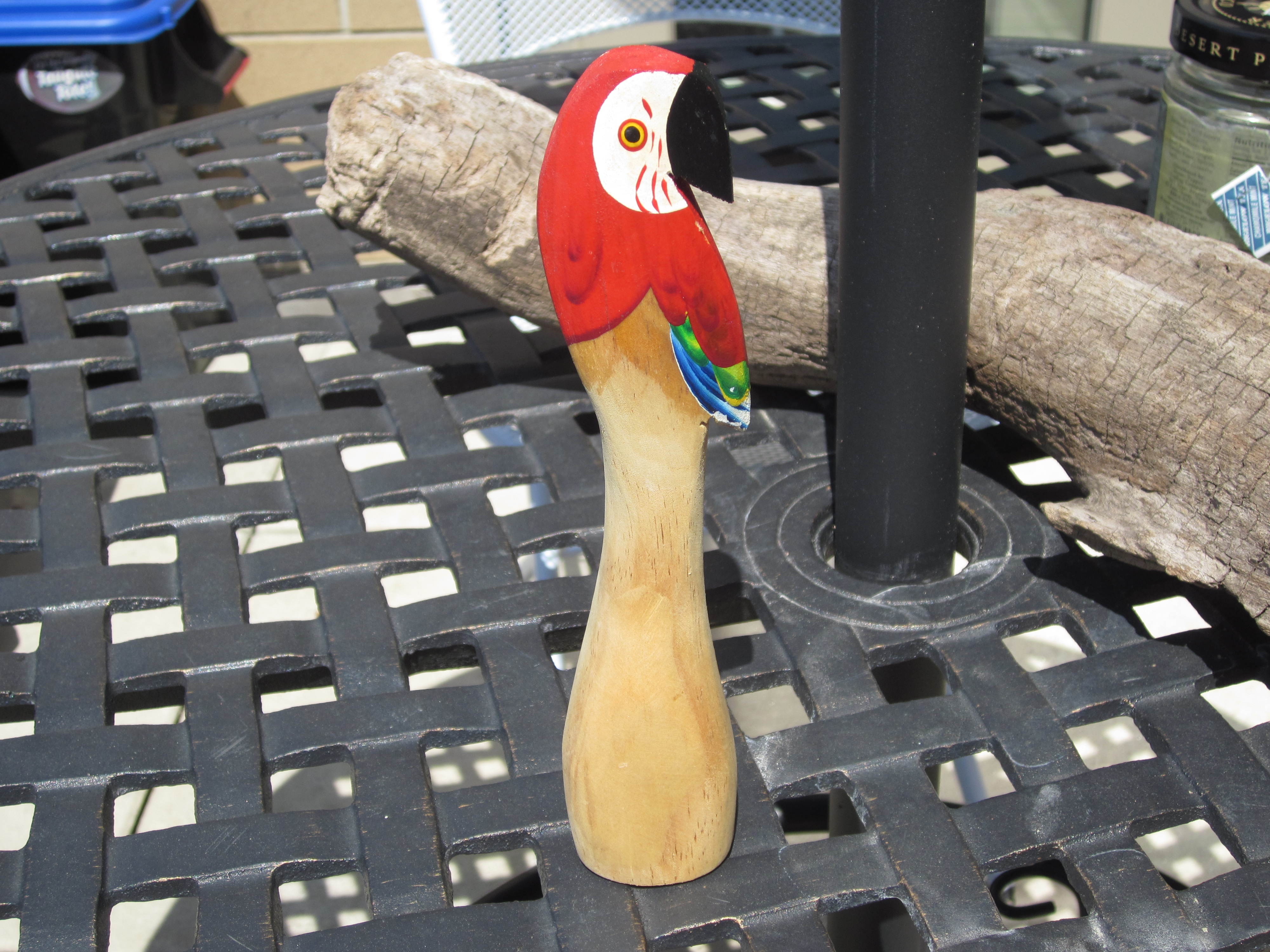
1 lime muddler. I have a parrot lime muddler that was given to me by my brother; a souvenir he picked up on a trip to Brazil.

The parrot

Cocktail shaker and strainer.

Cut the lime into eighths or even tenths.

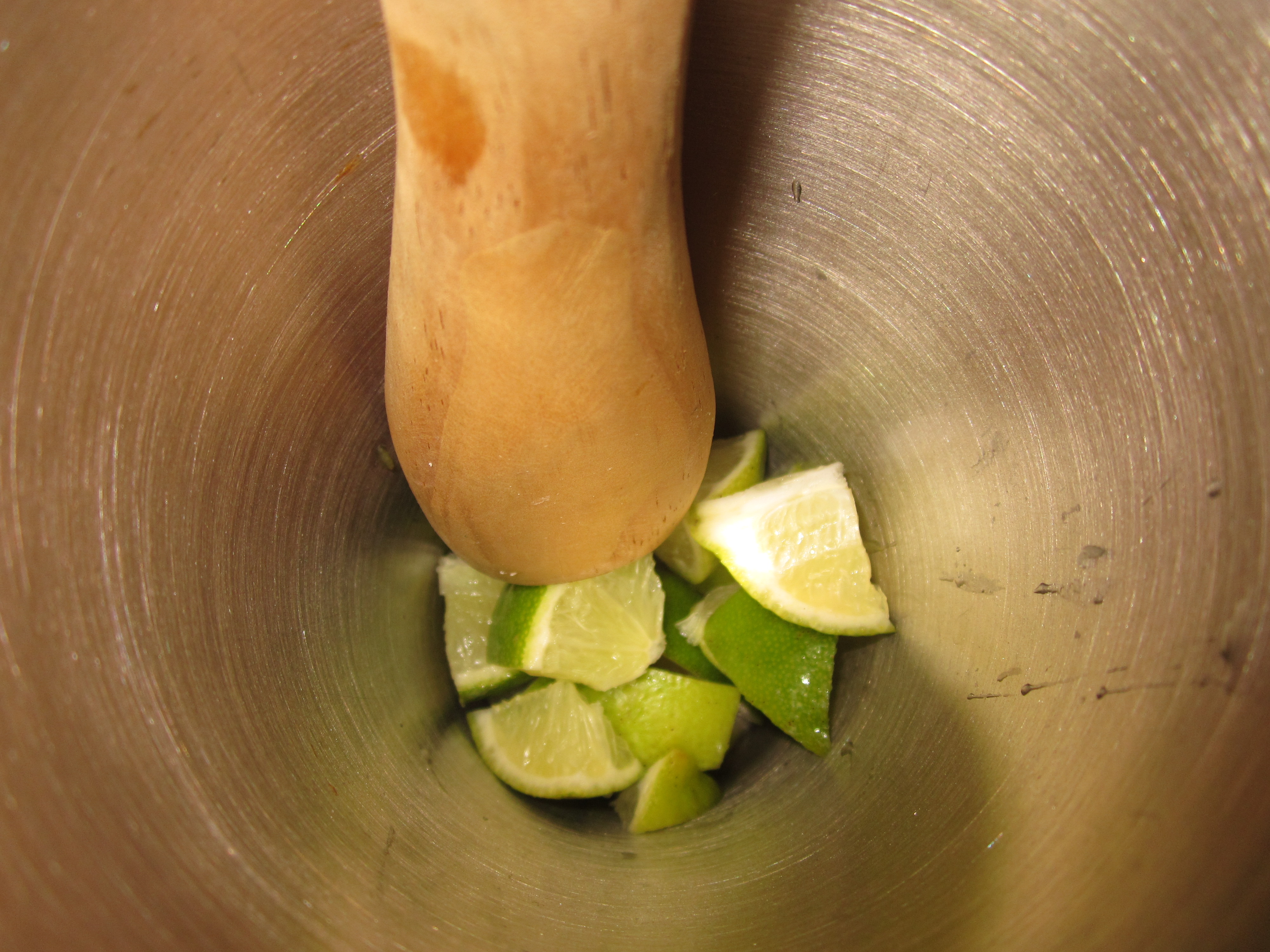
Toss the lime pieces into the cocktail shaker and using your muddler, it can be a pestle, if you have a mortar and pestle, or anything that can mash and muddle lime pieces, muddle mash the lime, extracting the juice from both the rind and the pulp. Don’t be stingy with that aforementioned elbow grease.

Let the lime muddling begin.

Add the sugar syrup, cachaca and a some ice cubes.

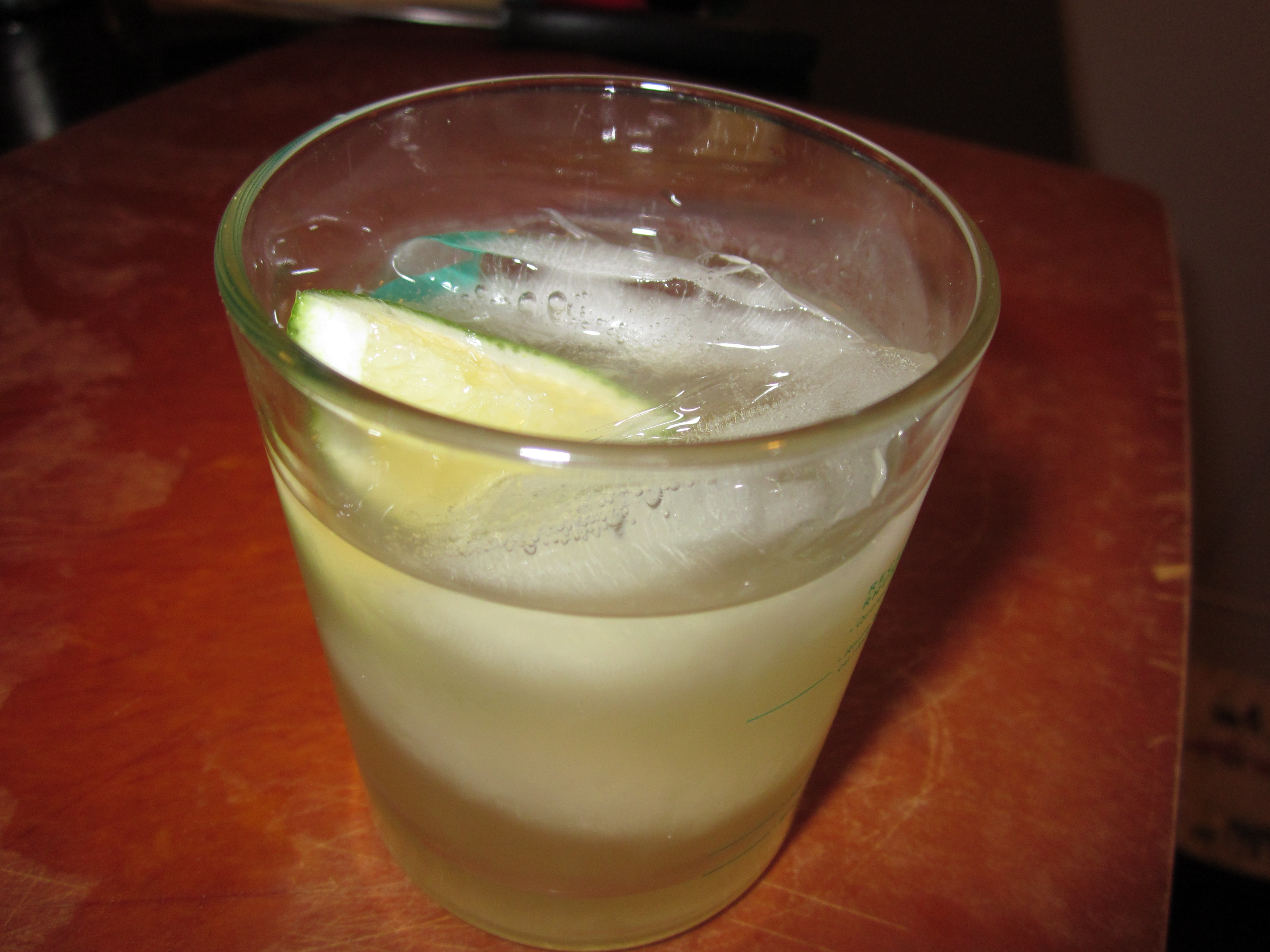
Shake vigorously and then strain into an ice cube filled glass.

Almost cocktail time.

Do not be fooled by the drink’s petite size. It will be tempting to down it in a few gulps, but try to sip slowly.  Drinking the caipirinha too hastily will only mean a quicker return to the kitchen and more work for you to make another.

The Happiest of All Hours: Malachy’s Donegal Inn Edition

24 May

When I first moved to New York back in the good old dirty days, there was a neighborhood bar that became my local hangout called The Donegal. I frequented the place, on the corner of 72nd and Columbus, with my team after softball games on the Great Lawn, when the Great Lawn was a much used dust bowl, not the fenced-in grass museum it is now.

And since it was close to my apartment, I would also spend time by myself there watching numerous sporting events; the Yankees, boxing, and especially the New York football Giants. This was well before satellite television and when all we in New York got to see on Sunday was either the Giants or the Jets no matter how bad both teams were.
There was a white-haired, bespectacled Irish bartender named Timothy who knew me as a regular and treated me well, buying back frequent rounds for myself or whoever I was with.

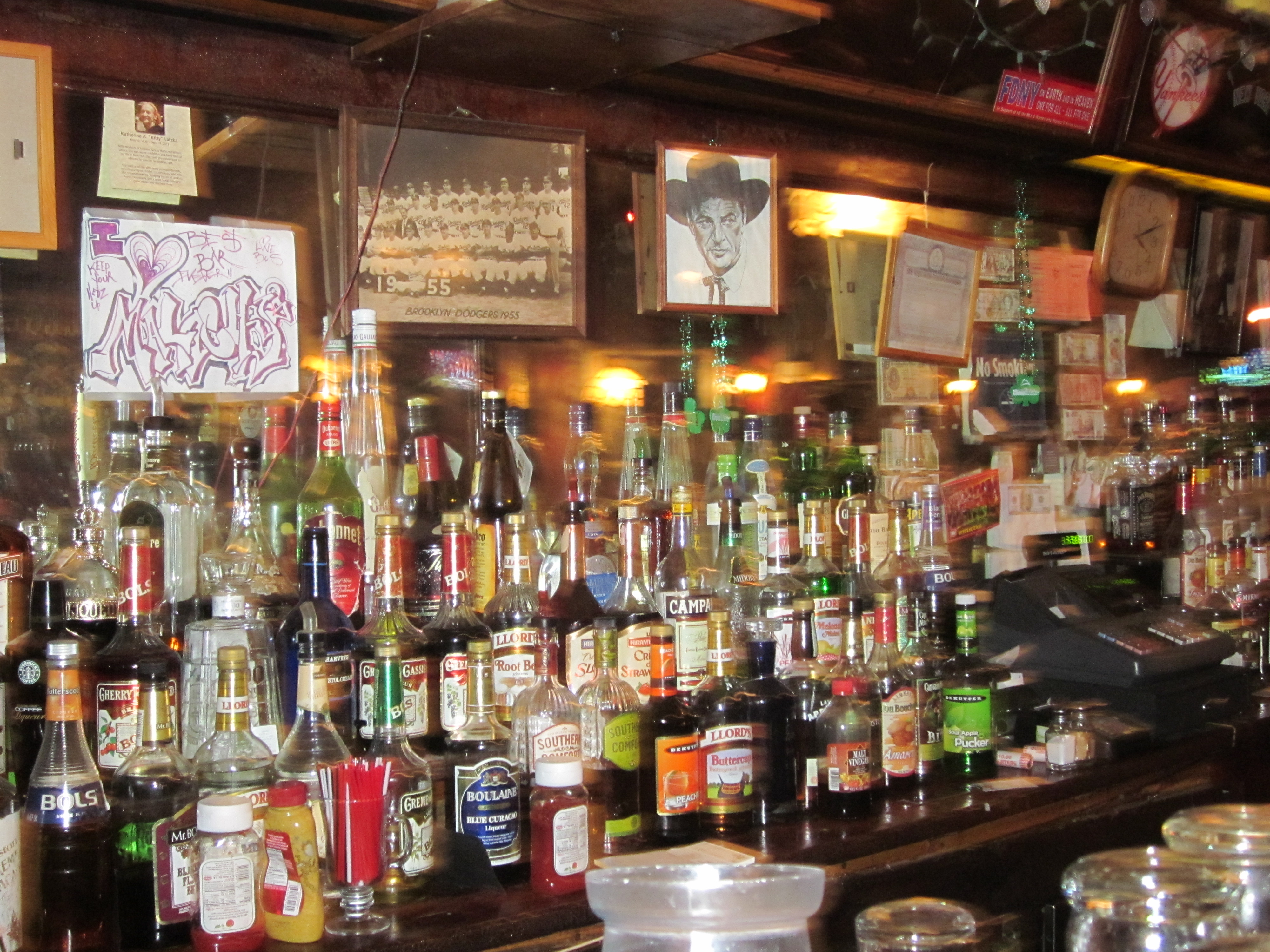
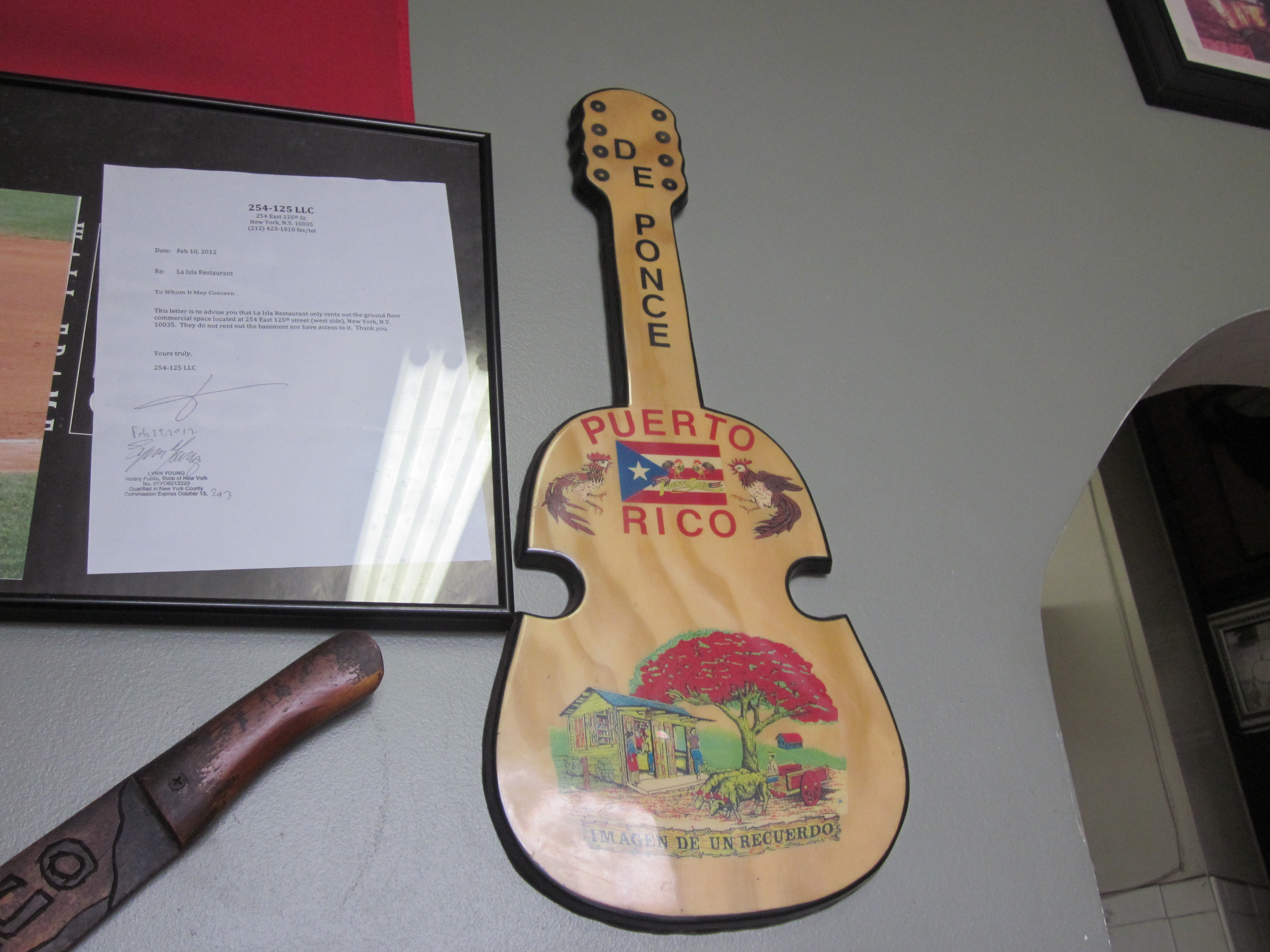
The place was dark and dingy; the tables and chairs rickety. There were relics on the walls; photos of old baseball players, movie stars, and other dusty mementos. It was a gathering ground for a number of older gentlemen and a few ladies who still lived at the nearby SRO’s that, at the time, were a big part of the neighborhood. There was food; burgers, fries, eggs, chicken wings, and a few sandwiches. It was a dive, which was, of course, an attraction to me.

Malachy’s Donegal’s fine furnishing, just like I remembered it.

The Donegal also had what we used to call a “big screen” television. The picture, projected from the front, was usually blurry and had a bluish tinge to it. But we liked its unique “bigness.”

I remember watching a Monday Night game where the Giants were playing the Dallas Cowboys that resulted in a close loss for the Giants and then a shoving match with a loud Cowboys’ fan. With respect to the Donegal, we took the shoving outside.
I moved away from New York for awhile and when I returned, the Donegal was not quite the same. Timothy had disappeared. The neighborhood was changing. And I found other dives more appealing. After awhile, I noticed that the Donegal was renamed Malachy’s. I never returned to Malachy’s until recently, when I found myself in the neighborhood during the Happiest of Hours. I wondered if there would be anything I would remember about the place.
Though the name was changed to Malachy’s,  when I returned from my happy hour there , I did a search online for the Donegal and discovered that Malachy’s official name was actually Malachy’s Donegal Inn. So the bond had not  been totally severed.

Malachy’s Donegal Inn

103 W. 72nd St

As soon as I entered, I was pleased to notice that, despite the many years I had been away, not much had changed, with the exception, most prominently, of the numerous flat screen television as opposed to the one “big screen” I remembered. But that was to be expected.

The day’s specials.

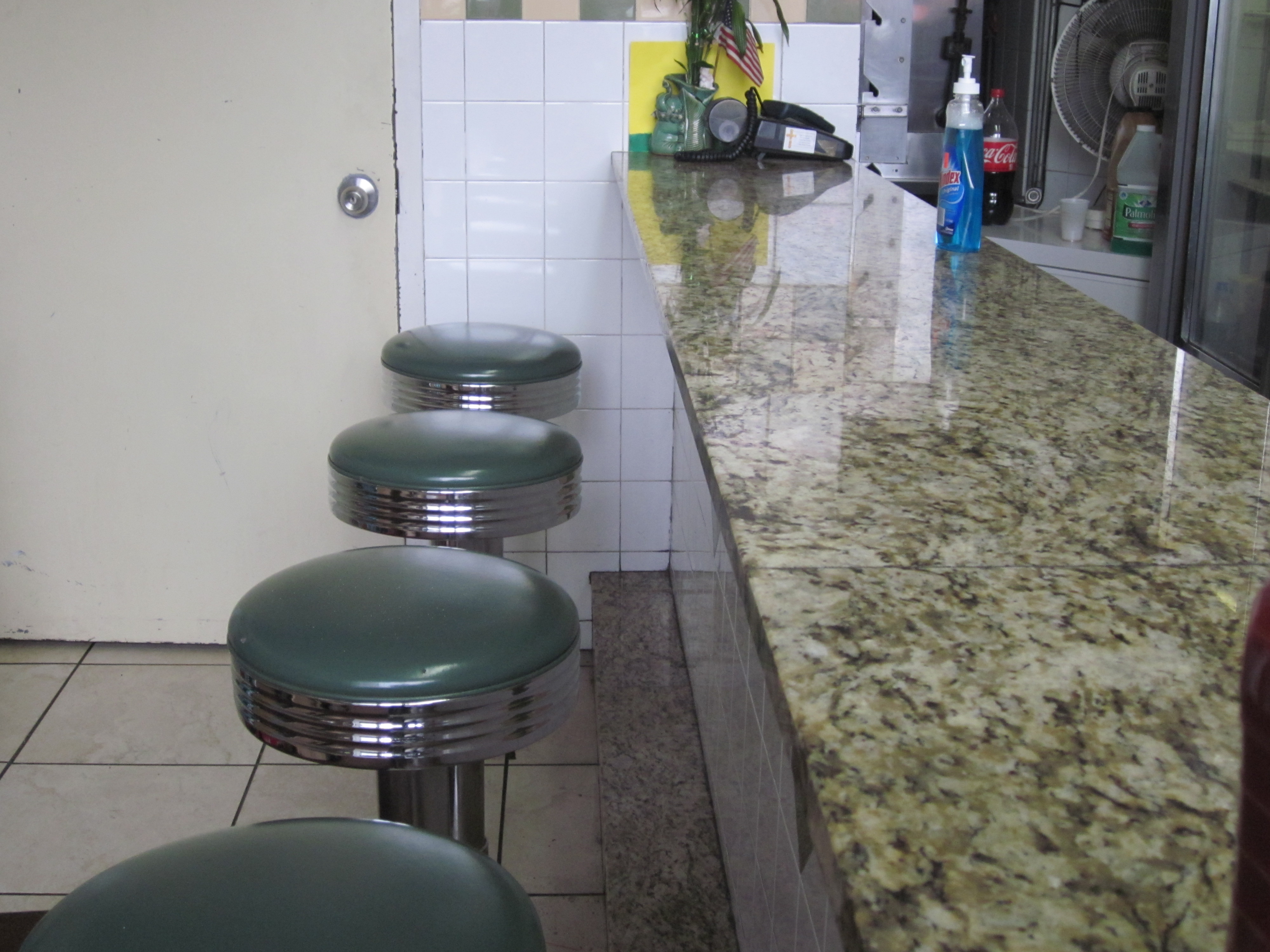
There were plenty of seats at the bar and the tables were all empty. A few gentlemen were drinking beer from bottles and talking loudly in the otherwise quiet bar. They reminded me of the patrons I used to know at The Donegal and I wondered if any of the same SRO’s still existed around the now very lofty real estate of West 72nd Street.

From where I sat, I could look up and see The Babe.  It was nice to know he hadn’t moved from his spot in over 25 years.

The Babe surrounded by Christmas lights, circa 1983.

Roberto Clemente was in his same place as well, but the wings’ special was a new and welcome addition.

Gary Cooper and the Brooklyn Dodgers had always been part of the Donegal’s scenery.

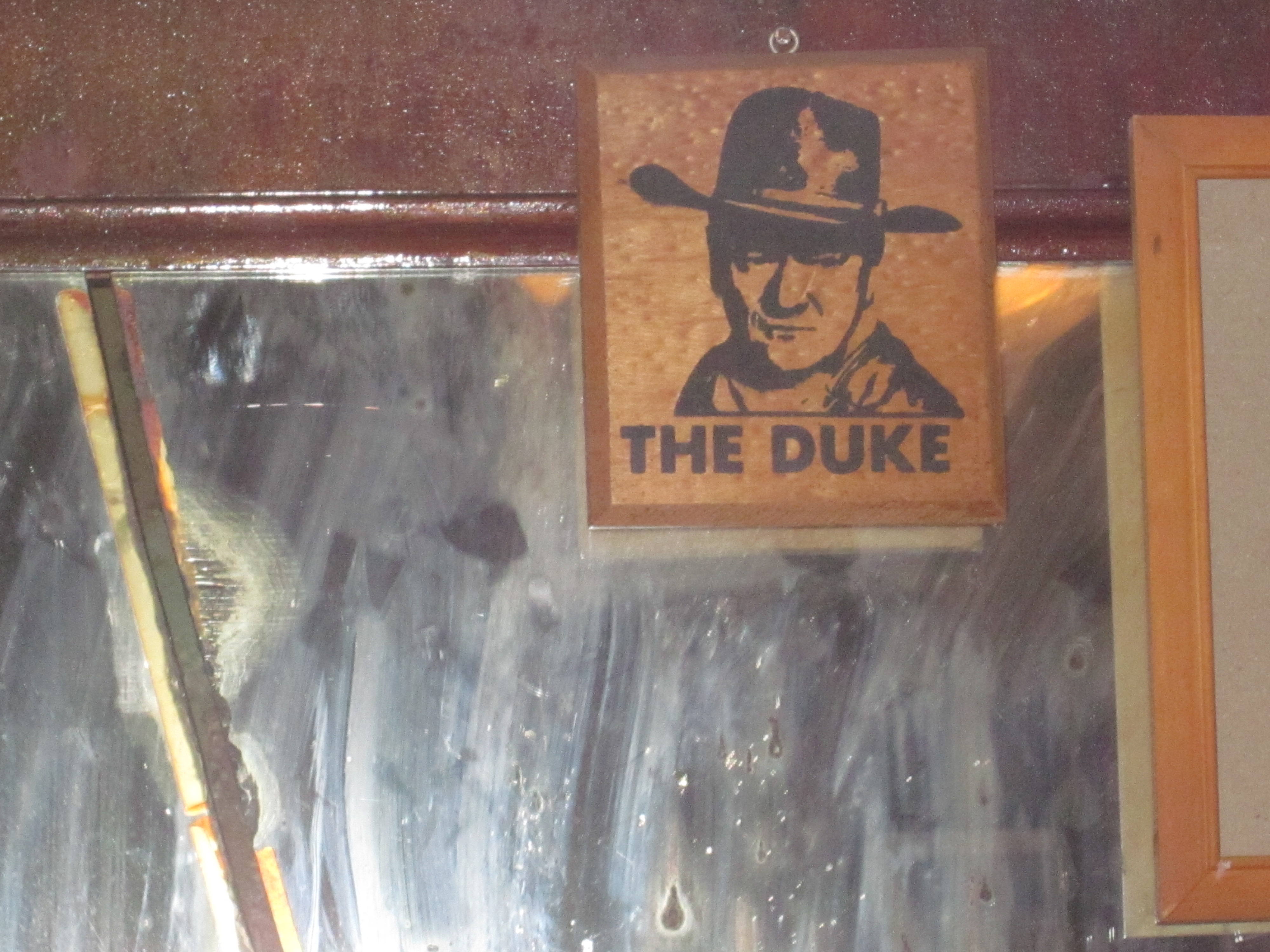
As had The Duke.

I ordered the only “exotic” beer I remembered from when I used to visit: a Bass.

Getting $15.50 back from a $20 made me “happy.”

While I drank the cold beer, I overheard the gentlemen at the bar discussing old movies. “Wasn’t Cagney in a picture where he was in AA?” one of the gentlemen asked the others.

No one answered him.

He took a sip from his bottle. “Or was it Alan Hale in that picture?”

“Junior or Senior?” someone asked, but that pretty much ended the discussion.

A man with a cellphone to his ear took the seat next to me. The bartender came over.  The man ordered a beer and asked to look at a menu. After giving him a few moments, the bartender returned.

“What’s good?” the man asked.

“The specials, brisket or the pastrami,” the bartender replied.

“What do you suggest?”

“Apples or oranges,” the bartender said, a look of impatience on his face.

“Pastrami,” The man said. The bartender nodded and took the menu back.

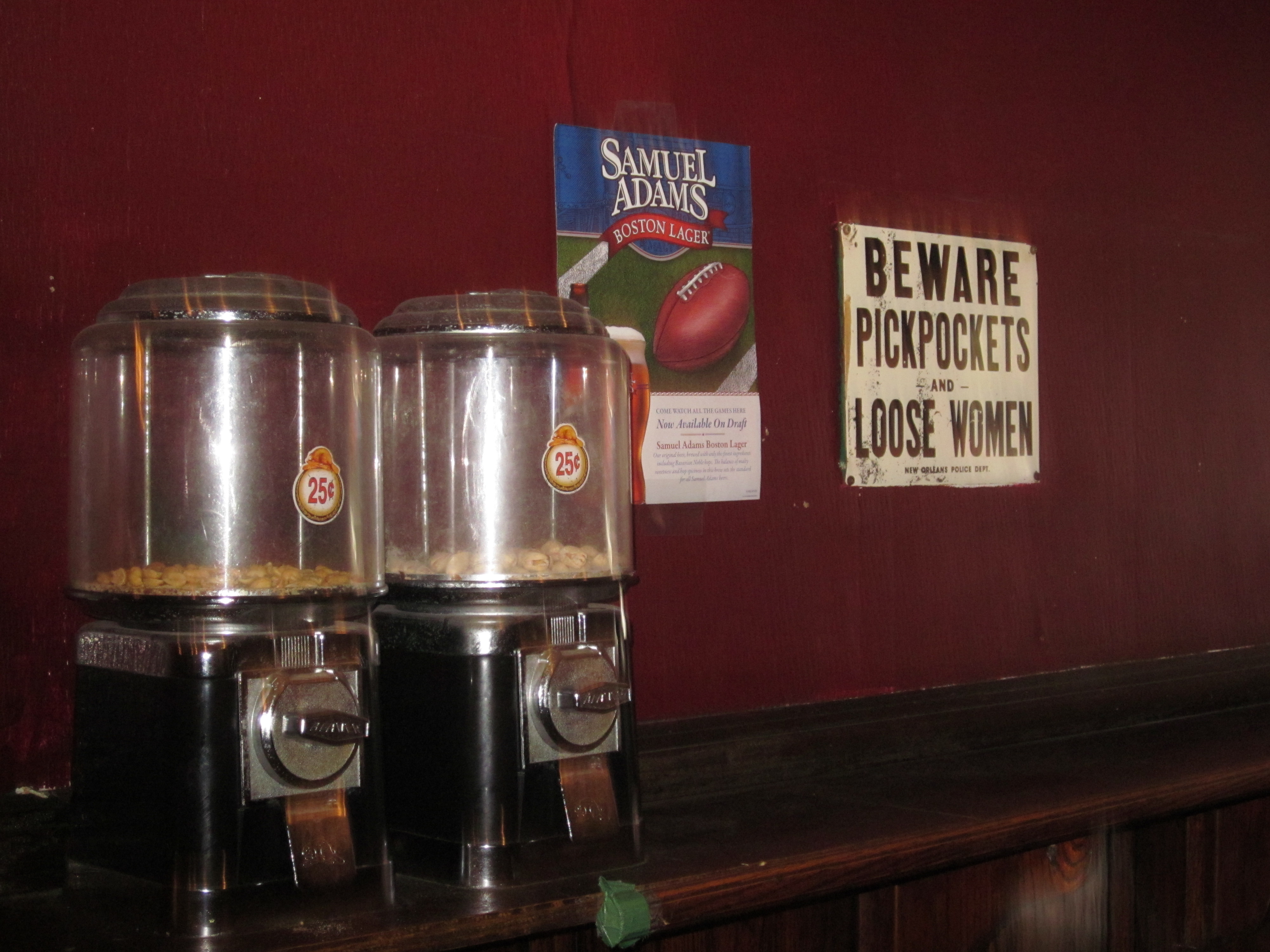
Peanuts or pistachios are always a good go to option when hungry.

A few minutes later, the bartender returned with the man’s sandwich. I glanced at it. The pastrami looked lean, juicy; the sandwich surrounded by fries. I had to admit, it looked damn good.

I finished my beer and thanked the bartender. Just because Malachy’s was no longer The Donegal, was that really a good reason to desert what had been a comfortable refuge for me? Had I been a bit too hasty in my split with the place?

The regret I was feeling as I walked out was cut short by the realization that I could always return, preferably on a Sunday, where along with an unlimited dose of NFL action, I could take full advantage of the 20 cent wing special.

“I think this is the beginning of a beautiful friendship.”

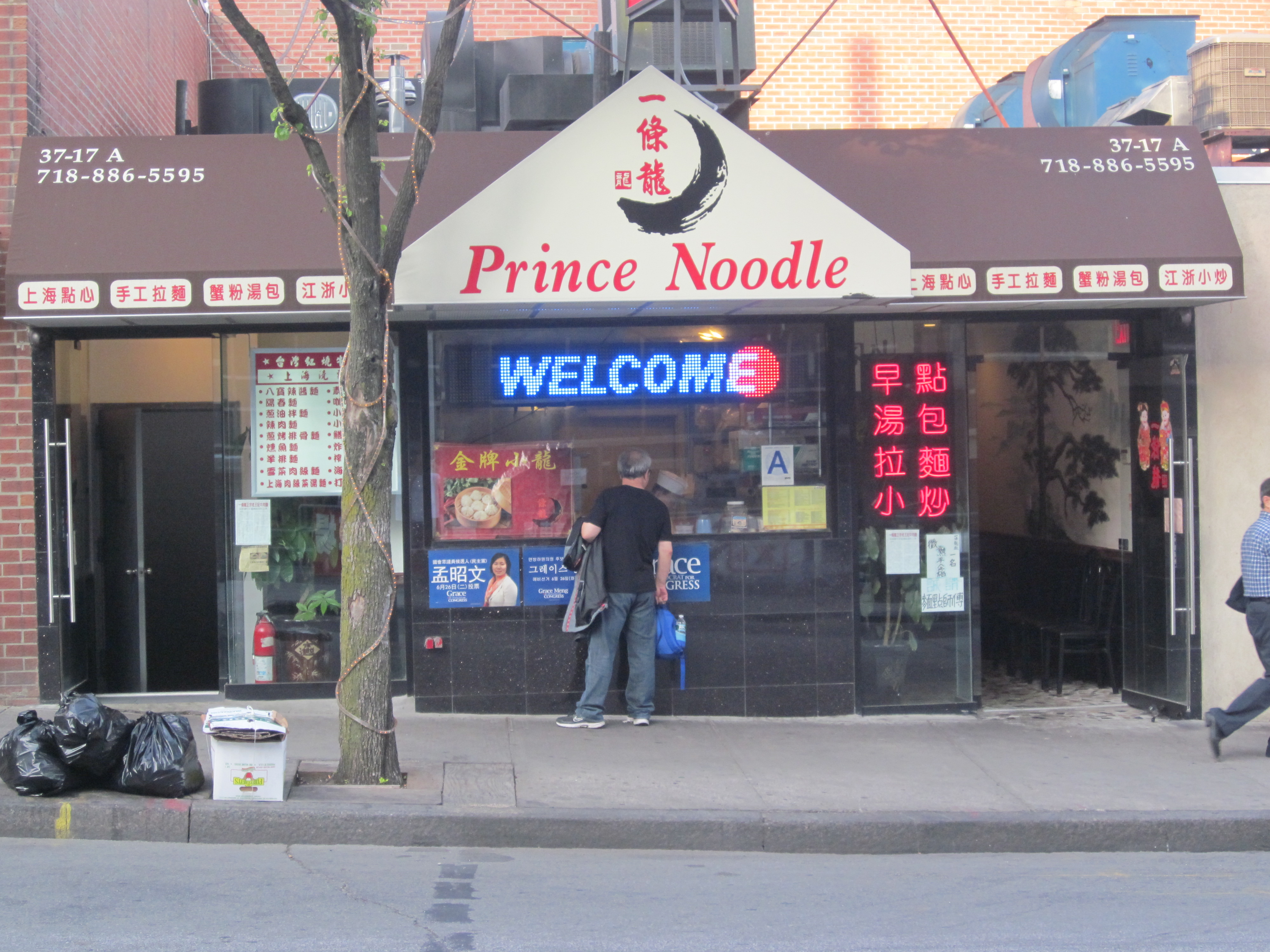
The Noodles on Prince Street

22 May

Prince Noodle House
3717 Prince Street
Unit A
Flushing

I’ve gone over the rules of our Chow City group many times in these electronic pages. We look for $20 and under places. We do our best to unearth those that are under the foodie radar, which nowadays is practically impossible. We look for virgin territory in terms of cuisines, but after ten years, the only cuisines we’ve skipped are the big name items (French, German, “American,” nouveau or fusion anything).

But there was one clause that was really never discussed or spelled out in our unwritten rule book. It didn’t have to be; it was taken for granted. That was the concept of waiting in line for a table at a restaurant. It goes against everything we hold sacred when it comes to eating; it’s a shock to our eating sensibilities.

So when Rick suggested a very well documented—at least by foodies—noodles and dumpling place in Flushing called Nan Xiang Dumpling House, I gently pointed out that, from my knowledge of these things, the place has become a “foodie destination.”

Rick understood immediately and, knowing the unwritten (and never mentioned) rule, quickly dismissed his original choice and instead went with an alternate, quite literally, down the road from Nan Xiang, the road in this case being Prince Street, called Prince Noodle House.

Of our group, only Mike from Yonkers, who was called to an urgent co-op board meeting, did not make the trip to bustling Flushing. There was absolutely no wait or line to get into the Prince Noodle House and we were given a big round table next to a large celebratory party of Asians.

One of the reasons Rick decided on, first Nan Xiang Dumpling, and then the Prince Noodle House were the aforementioned dumplings; in particular soup dumplings. He wanted to experience the Shanghai-style dumpling where the soup is “frozen” within the dumpling only to melt inside when steamed. Prince Noodle had them on their menu, here called  “soup buns,” so we ordered the crab meat mini buns and the “special” mini buns for the table.

Crab meat soup buns

While we ate the soup buns, improperly at first and not with the provided spoons, the soup bursting all over our plates, Eugene told us of his trip to Jefferson City, Missouri where he attended a wedding.

“It was ridiculous,” he complained. “The wedding was catered. All they had was Mountain Dew, a keg of beer, and franks and beans. Can you imagine that?”

We couldn’t imagine it especially for a man used to the all you can eat buffets on the cruise ships and all-inclusive resort he regularly frequents.

While Eugene railed about his Jefferson City experience, I peered behind me at the big table. They were given one of those rotating round trays so they could spin it around making sharing easier. How come we didn’t get one of those, I wondered? The food was beginning to assemble on their table and I liked what I saw.

I asked our waiter about a dish they ordered that was a mix of a green, spinach like vegetable combined with what looked like tofu.

The waiter pointed to something on the menu called “malantou (kalimeris indica) w. dried tofu.”

“Indica means cannabis, or marijuana,” Zio offered as if he really knew of such things.

I ordered one for our table along with five spiced beef.

Kalimeris indica, also known as malantou with dried tofu

Served at room temperature, the malantou, vinegary greens mixed with dried shredded tofu, was a refreshing appetizer, though did not induce the melancholic buzz worthy of its name. The five spiced beef, on the other hand, thin slices of roast beef, cured with five spice powder and a sweet soy sauce drizzled over it, also served at room temperature, were addictive in a more familiar way, at least for us, than what Zio had presumed we would experience with the malantou.

Five spiced (roast) beef

Gerry immediately had his sight set on the “sliced fish swimm hot chili pepper sauce,” that was on the menu, highlighted in red to indicate that it was spicy. No one had any disagreement with his choice or of Rick’s twice sautéed pork belly.

I thought we should at least try some of the noodles at Prince Noodle House and ordered hot and spicy pork noodle soup. I added a rice dish, snow cabbage with rice cake and pork, while Zio studied the menu for one last dish.

The waiter hovered over his shoulder. “I want this,” he said, pointing to something on the menu.

The waiter bent down closer to see what Zio was pointing to.

“You want crap fish?” he said.

“Huh?” Zio immediately got flustered.

“The crap fish?” the waiter said again.

Zio looked at the menu. What he was pointing to read: “spicy bean paste Buffalo crap fish.”

“Yes, I want…number 102,” Zio concurred, indicating the number adjacent to the item where the a and the r had obviously and mistakenly transposed.

Sliced fish “swimm” in hot chili pepper sauce

First to come out was the family-sized sliced fish that, in an enormous casserole dish, was literally “swimm” in hot chili pepper sauce. A few bites brought tears to Eugene’s eyes, a sheen to Rick’s forehead, and loud honking from Gerry’s prominent, yet distinguished nose.

The noodle soup was equally spicy and the noodles, hand pulled, gelatinous in texture, lived up to its princely reputation.

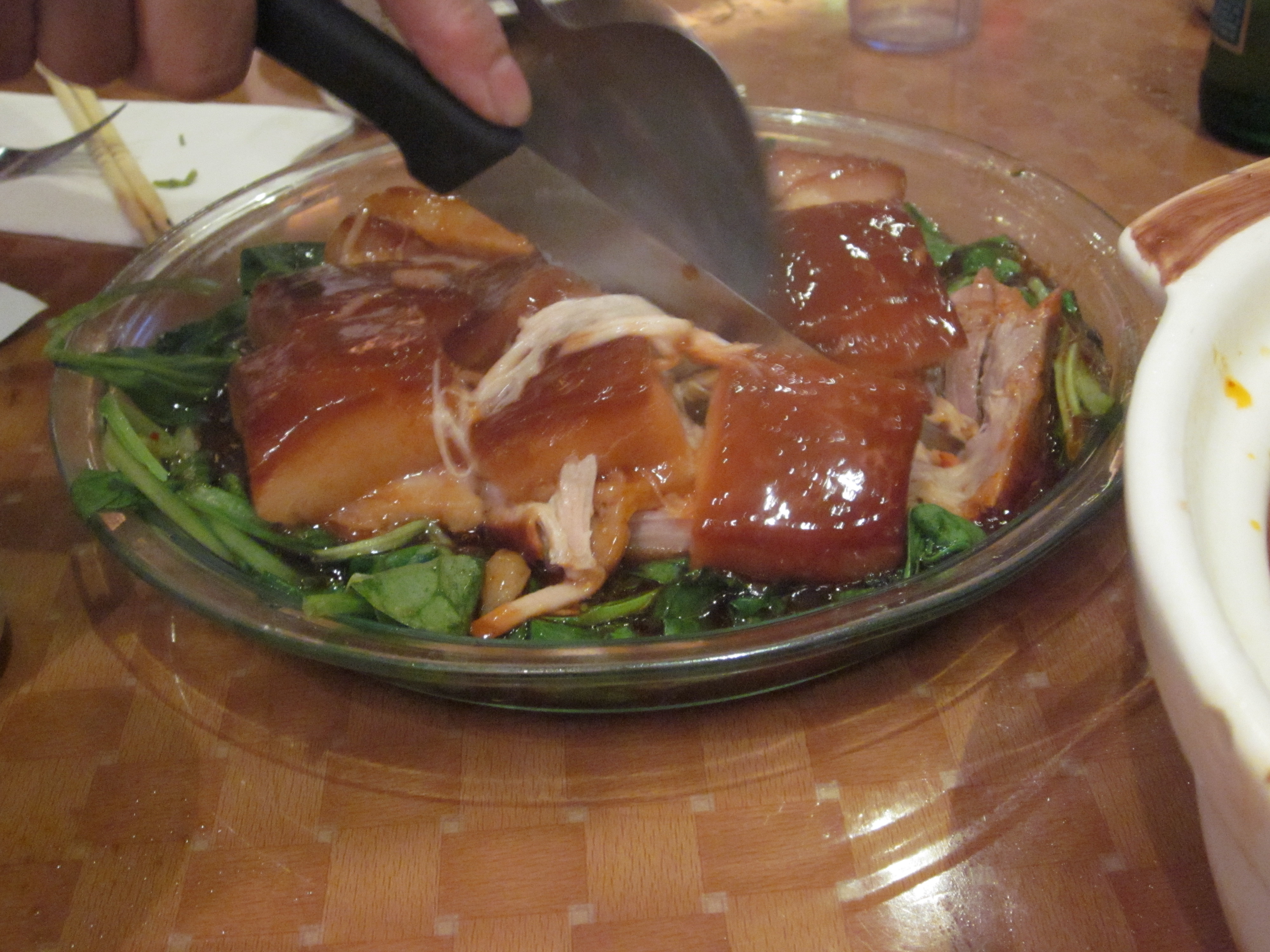
Relief from the heat came with the arrival of the pork belly and the snow cabbage and rice cake. Covered with a one inch layer of fat and glazed to a burnished reddish color, the pork belly was ultra tender; the meat kept moist by its fatty coat and marinated with light soy sauce, sugar and rice wine.

Sauteed pork belly

Last to arrive was the whole carp. Smothered in a bean paste and topped with scallions and ginger, Zio was the first to sample it. He didn’t have much to say as he picked through the many bones. Gerry tried a few bites.

“Hmmm, crap fish has a very unique taste,” he said with a straight face.

There’s crap fish under all that spicy bean paste.

While we polished off almost everything but the unfortunate carp, the dishes on the rotating tray on the table behind us kept piling up. We were done and they were just starting on a huge platter of lobster. Despite having completely stuffed our faces, we gawked enviously as we paraded out of the now fully booked restaurant.

Good thing we didn’t have to wait, I thought to myself as I made my way back to the parking lot where my car was parked. Once inside my car, I stared through the windshield at Prince Street. I noticed a line had formed outside of the Nan Xiang Dumpling House. Maybe the soup dumplings and noodles were better than the stuff we just experienced at Prince Noodle House, but I wasn’t going to wait to find out.

The line for soup dumplings at Nan Xiang

Tony and Tina’s Post-Honeymoon Burek

11 May

Tony & Tina’s Pizzeria
2483 Arthur Avenue
Bronx

I planned to meet Zio at 593 Crescent Avenue in the Belmont section of the Bronx. This was just off Arthur Avenue, also known as the Little Italy of the Bronx. But I wasn’t making the trek for Italian food; the area is also an enclave for Albanians, Bosnians and Kosovans. I wanted the Albanian equivalent of pizza, known as a burek and Djerdan Burek was, according to Google maps, just a half block from Roberto Paciullo’s place, Roberto’s, and the planned destination for our consumption of  bureks.

“I’m bringing the Colonel,” Zio said over the phone on the morning before we were to meet.

It was no problem with me if he brought the Colonel, his long time companion, and the mother of his children, though for some reason he wasn’t very enthusiastic about it.

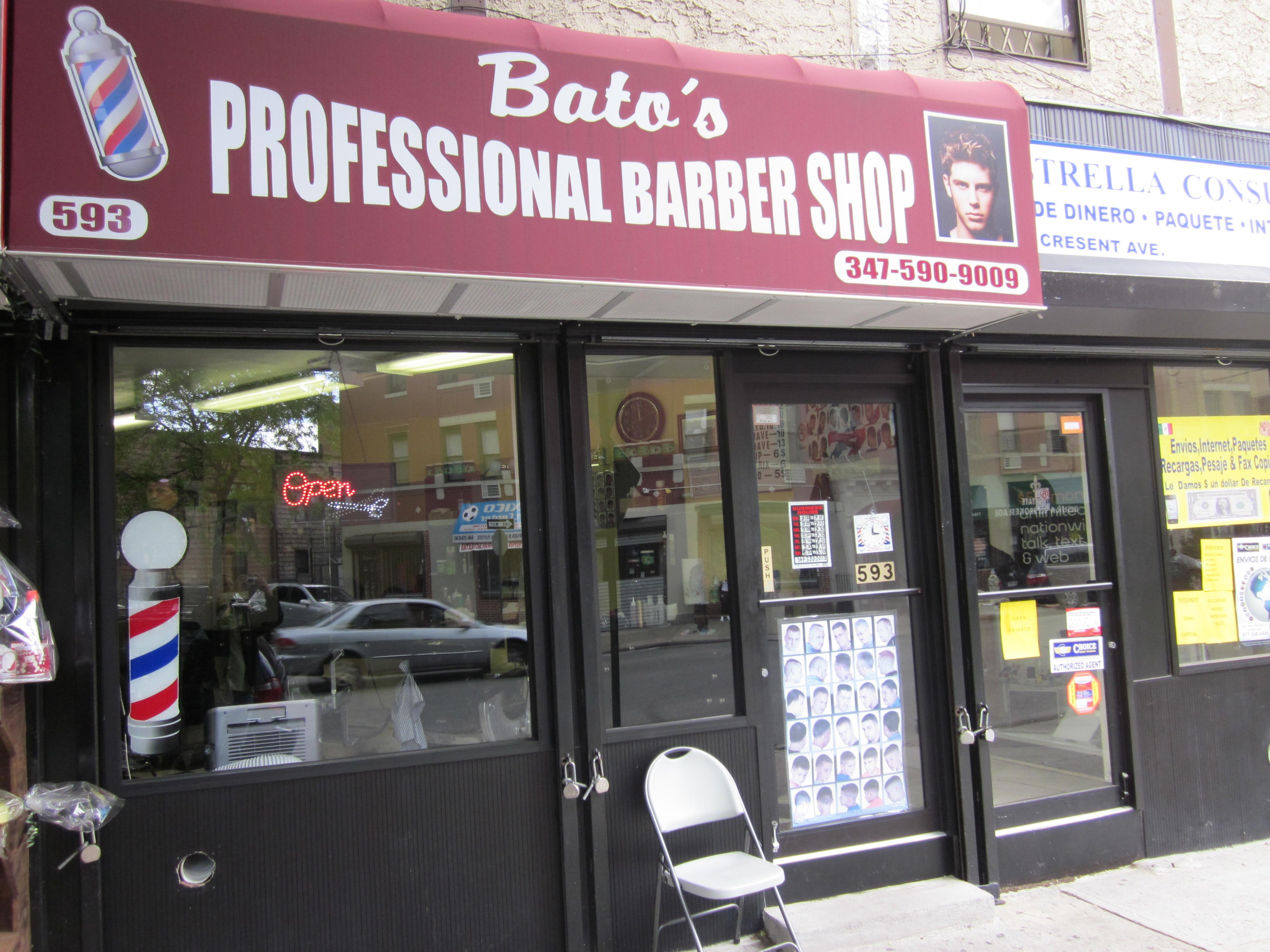
When I arrived at 593 Crescent Avenue, my enthusiasm waned as well, but not because we would be dining with the Colonel. Instead of being greeted with the smell of freshly baked bureks, I was confronted with the odor of hair tonic from Bato’s Professional Barber Shop. I peered inside hopefully thinking that maybe the bureks were sold in the back of the barber shop, but from what I could see through the window, there was no food at Bato’s.

593 Crescent, where you can get a trim and a shave, but no burek.

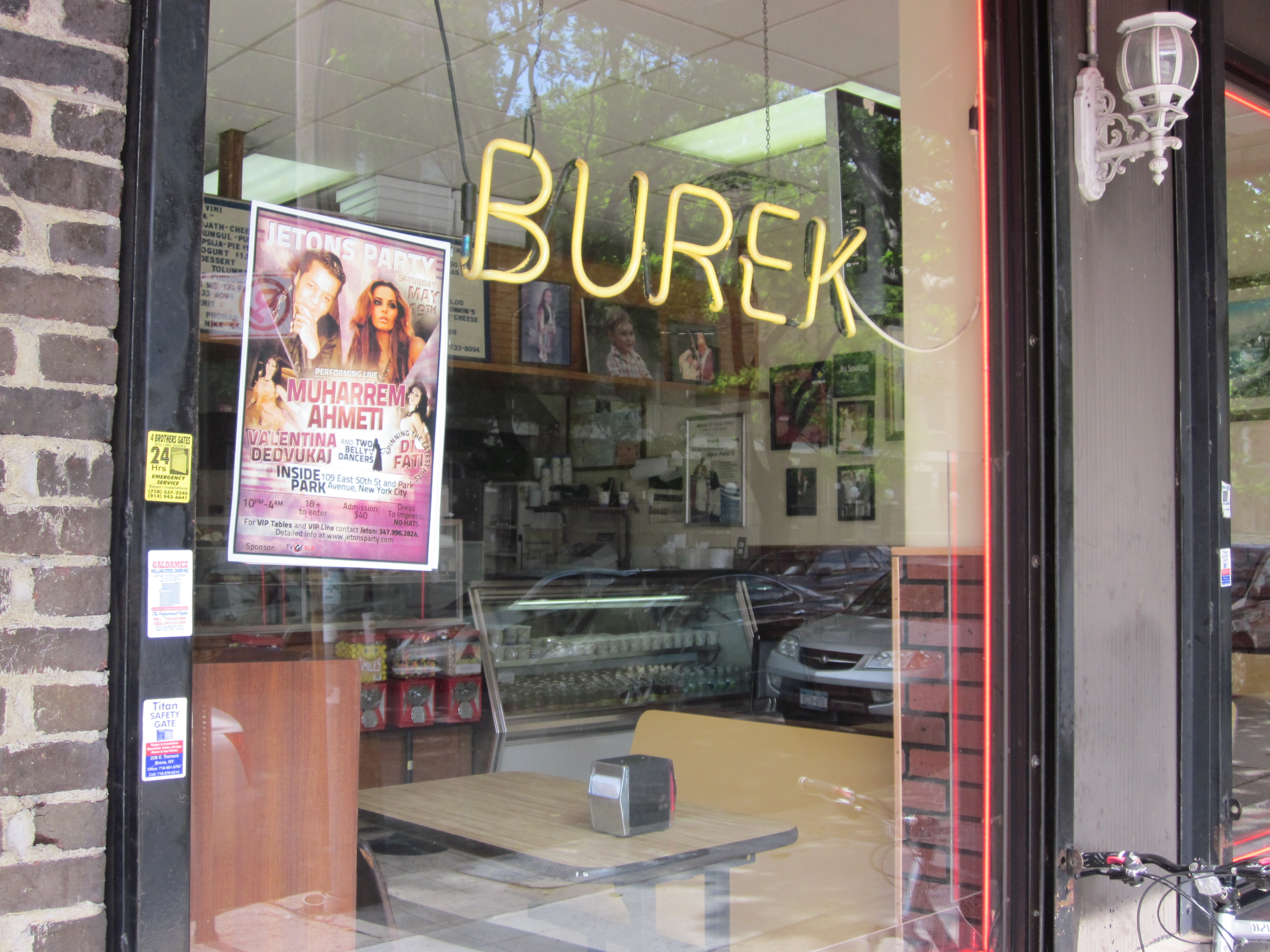
I knew there were bureks not too far from Crescent Avenue. I even noticed a “burek” sign in a window a block from Fordham Road when I was driving into the neighborhood. So Zio, the Colonel and I decided to head in that direction.

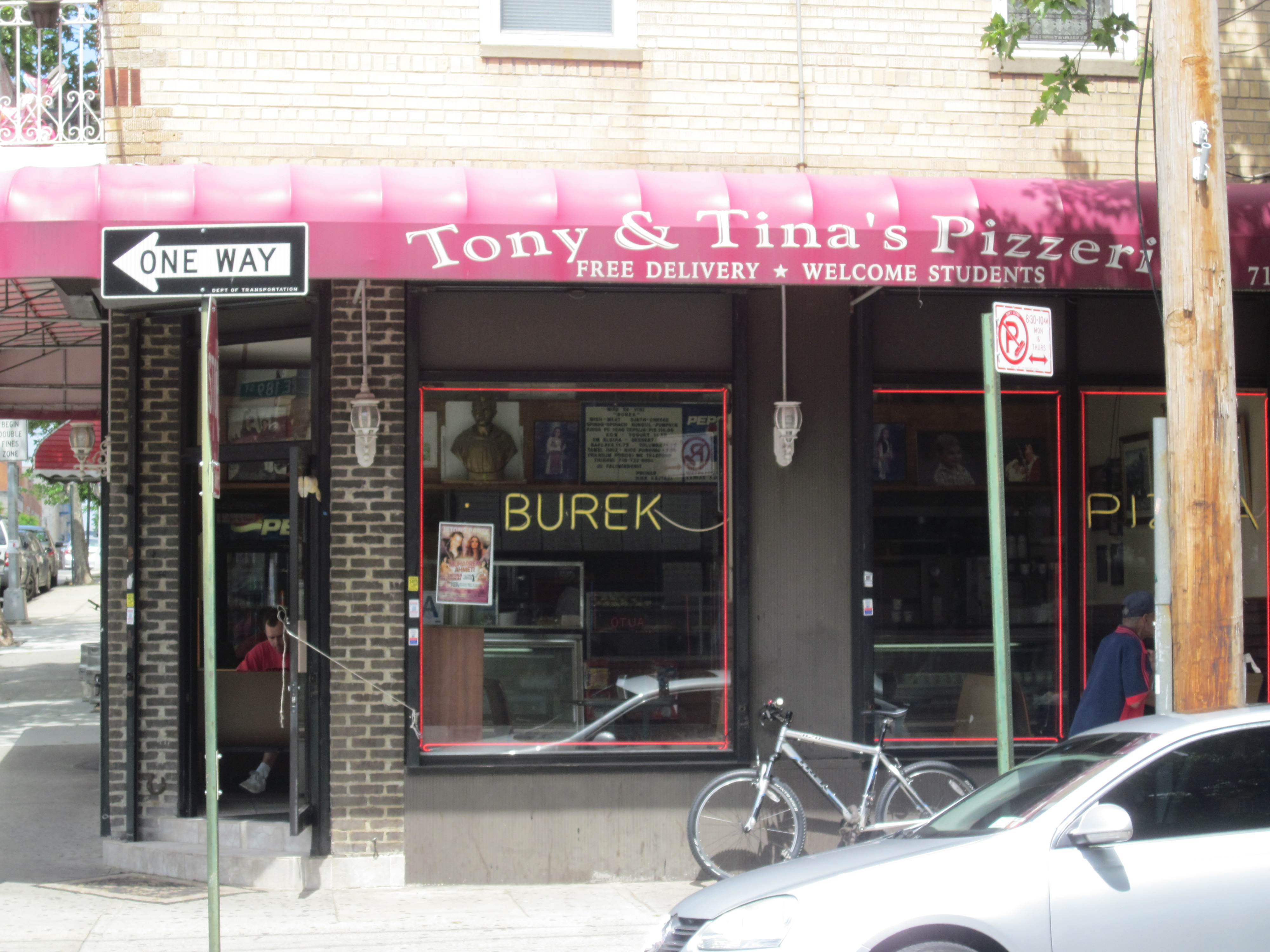
We strolled past Randazzo’s Seafood, Dominick’s Restaurant, Roberto Paciullo’s other place, Trattoria Zero Otto NoveAnn & Tony’s Restaurant (“Five Generations”), and the Arthur Avenue Baking Company, before arriving at Tony & Tina’s Pizzeria.

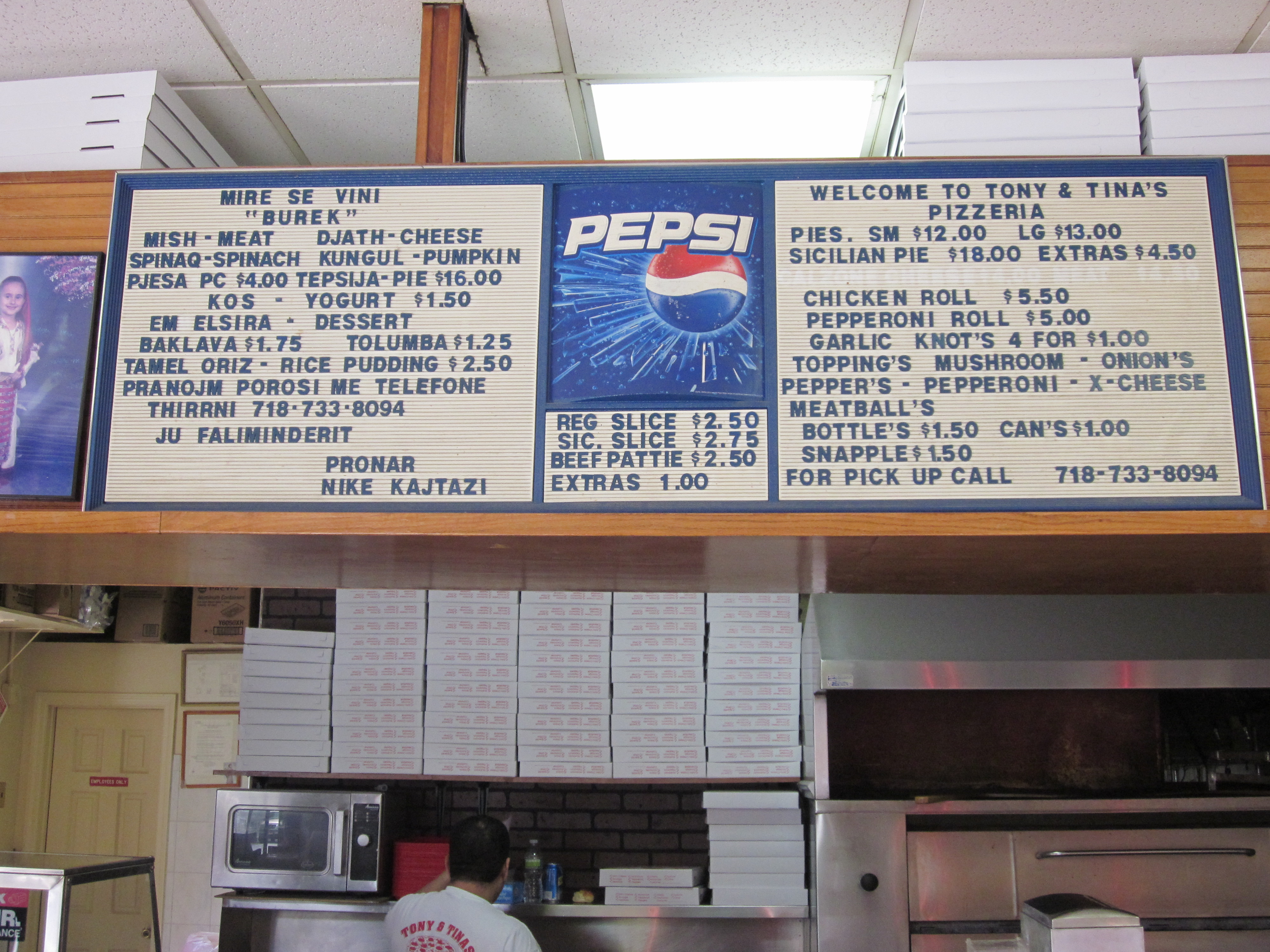
Inside the small pizzeria, we glanced at the assemblage of phyllo dough stuffed pies behind the counter known as bureks. And then we turned our attention to the pizza, garlic knots and calzones on the other side of the counter. Zio’s jaw drooped slightly as he stared at the wan, cold, cheese-congealed pizza. “Is that what an Albanian pizza looks like?” he asked incredulously.

“I don’t know,” I said. “I’ve never been to Albania.”

Stick to the items in Albanian.

We went for the combination platter of bureks; cheese, meat, spinach and a spiral shaped one stuffed with sweet pumpkin. As we were about the dig in, the Colonel got a phone call.

“Sorry, I have to take this,” she said, walking out of the pizzeria, cell phone in hand.

“Should we wait?” I asked

“Are you kidding?” Zio scoffed, and quickly began to devour one of the meat bureks.

Meat burek

I was a little hesitant.

“She’ll end up just taking a few bites, anyway,” he garbled with his mouth full of phyllo dough.

The Colonel was outside, leaning against a parked car, cell phone attached to her ear. I decided to take Zio’s advice and began eating.

Cheese burek

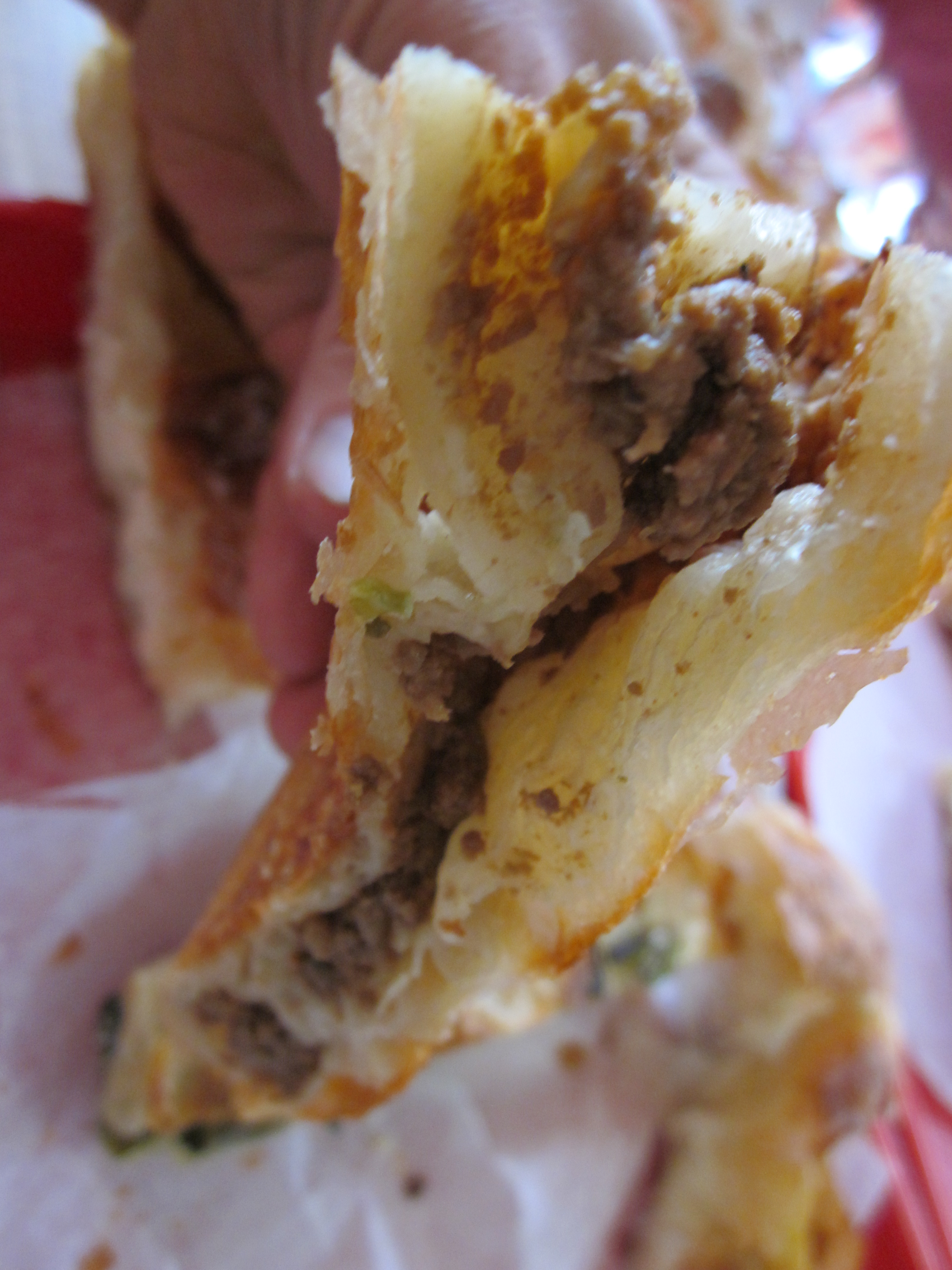
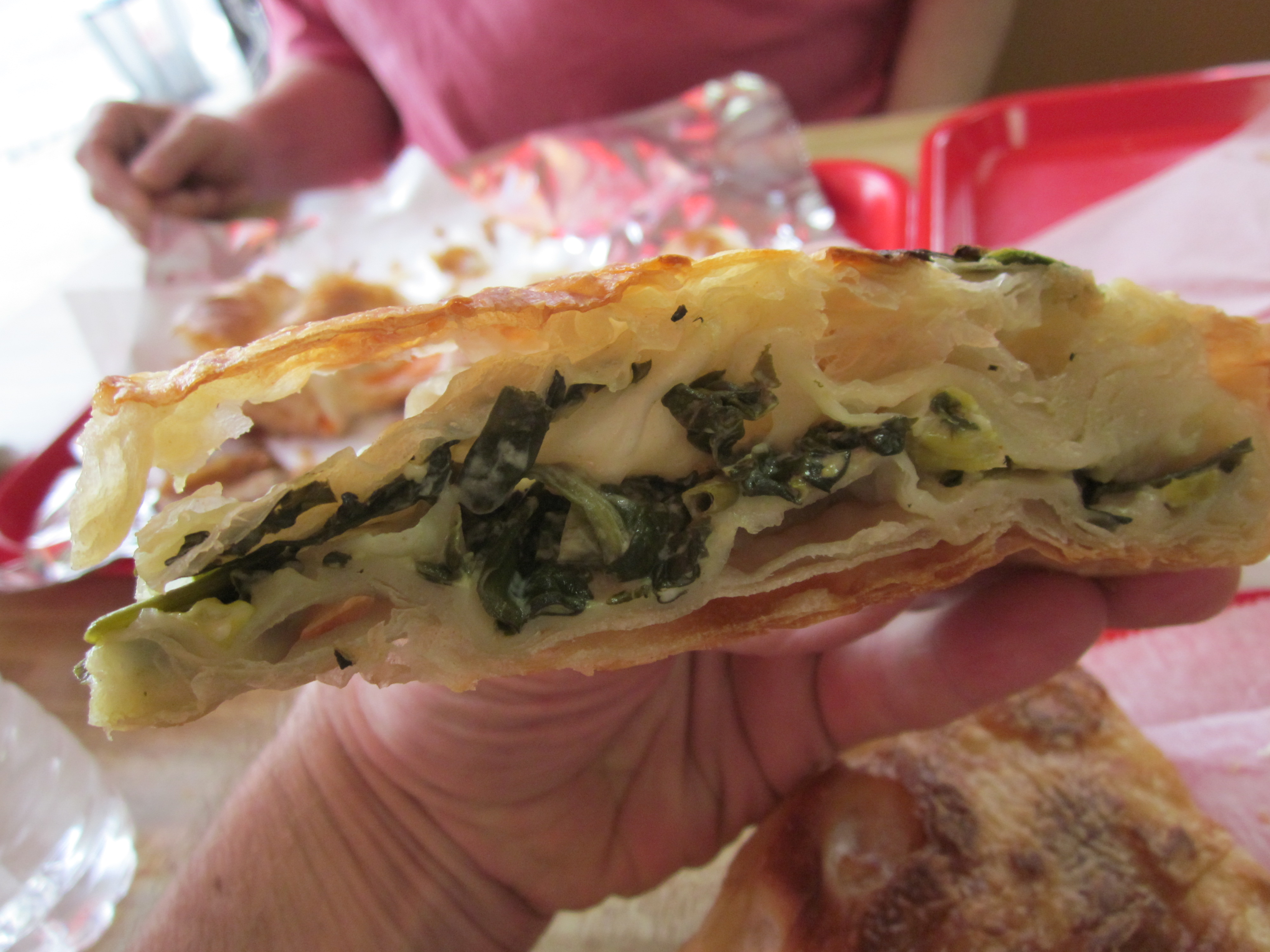
All the bureks were flaky and fresh; the cheese mild but not too dense, while the spinach was fragrant with onion. The ground meat in the meat burek had just enough grease to slightly absorb into the pie dough.

Spinach burek

The Colonel returned. “That was my friend M,” she said. “She’s almost 10 centimeters dilated.”

“Uh huh,” Zio muttered disinterestedly, his mouth now stuffed with a cheese burek.

The Colonel took a tiny bite of each and then bagged the rest.

“What did I tell ya,” Zio said.

I tried to answer, but I felt a tickle in my throat. I drank some water. The tickle was still there. I coughed and then took another sip of water. I coughed again. A miniscule flake of phyllo dough was caught in my windpipe. I coughed once more. The flake finally dislodged.

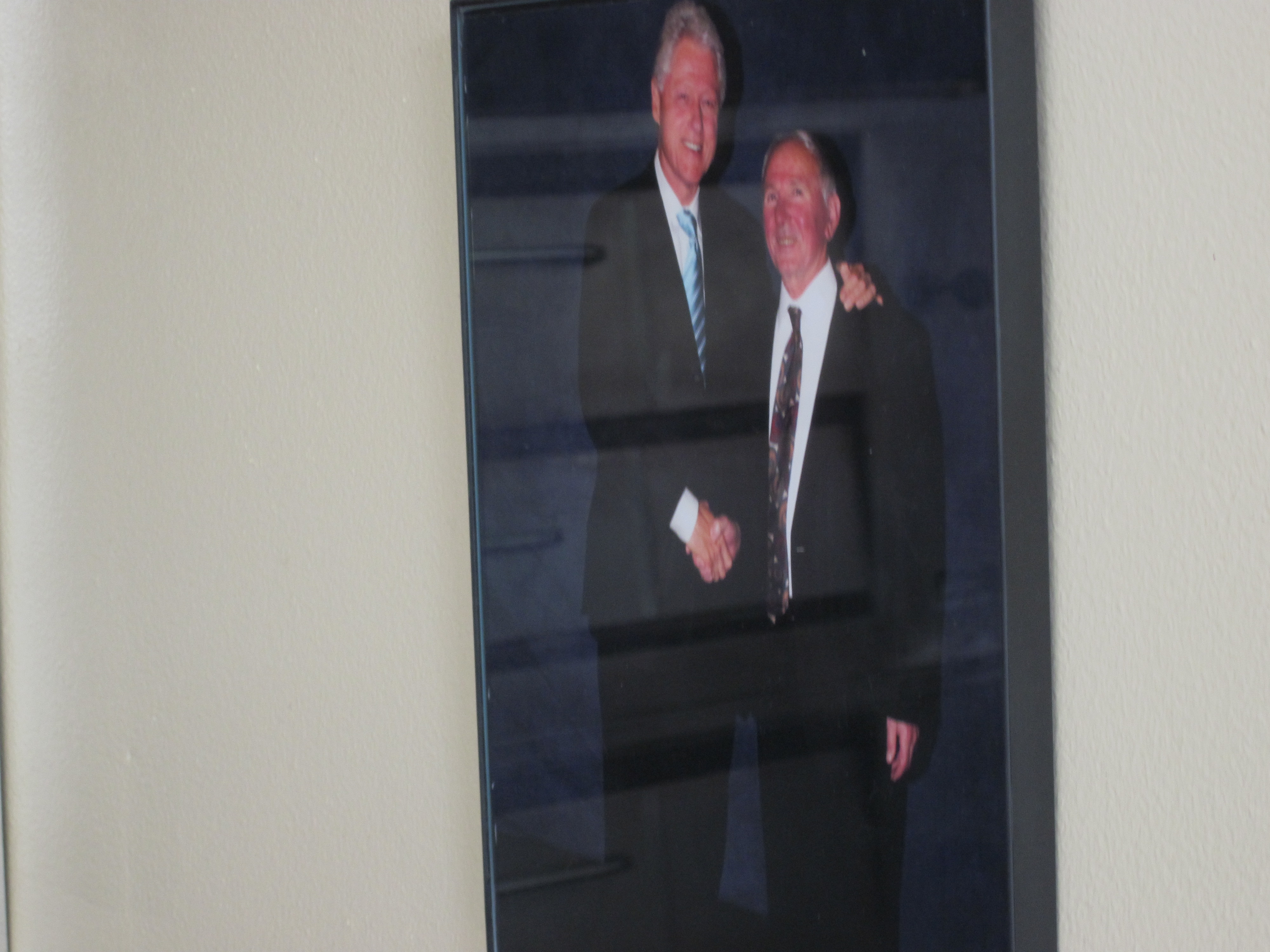
Bill Clinton: A friend and ally of the burek.

The Colonel took her bag of  nibbled bureks, and the three of us walked back down Arthur Avenue, Zio stopping briefly at Umberto’s Clam House, where  a sign said:“Bus tours are welcome.”

“Didn’t they used to sell live chickens here?” Zio asked.

“They did,” I said. “I once wanted to buy one, but they told me you needed to order it at least a day in advance so they could kill the bird and then clean it up.”

Zio stared at the colorful sign proclaiming Umberto’s many happy hour specials. He shook his head. “Isn’t Umberto’s where Joey Gallo was whacked?” he asked.

“Yeah, but that was at the original on Mulberry Street,” I replied.

He continued to stare and then shook his head. “I liked it better when it was a chicken place,” he said. And then we continued our walk through the Little Italy of the Bronx.