Tag Archives: Food

The Poor Man’s Pupusas of Port Chester

11 Sep

El Tesoro II

14 South Main St.
Port Chester

When Gerry sent out the email revealing his choice for our most recent adventure, there were doubts among us of its authenticity. His first obviously mock pick, for some reason known only to Gerry, was a fictional restaurant in Brewster, Massachusetts. Even Zio, who has been slow, as he is on most things, in recognizing Gerry’s much too subtle sense of humor, knew that we weren’t schlepping five hours to Cape Cod for dinner.

A few days later, Gerry came up with another destination. This one, El Tesoro II, in Port Chester, New York, I knew was genuine. Zio, however, had his doubts. He responded in an email writing the following: “I take it this is one of Gerry’s confusing attempts at humor. If I can’t get there with my senior metro card I will be relaxed about sitting this one out.”

Port Chester is approximately 24 miles from Manhattan. Gerry has had us put on the mileage before; taking us to Yonkers, Valhalla, White Plains, Fort Lee, Jersey City, and, worst of all, Sheepshead Bay, Brooklyn. When it’s Gerry’s pick, we come to expect to battle the rush hour traffic leaving the city. Apparently, Zio wasn’t going to take it anymore, yet when the day arrived, his attitude changed and he not only agreed to travel to Port Chester, but to chauffeur me up there with him.

Rick, however, who lives roughly 77 miles from Port Chester, was a game day drop out. Attributing his cancellation to a late work-related meeting, Rick needed no excuse. He was more than justified in bowing out—Gerry’s cruel joke could be taken only so far.

Zio and I expected a long haul up to Port Chester but as it turned out during this rush hour, there was no rush. The roads were surprisingly clear and we made it to the stark streets of Port Chester several minutes before the scheduled meeting time.

Those few minutes gave Zio and I time to take a look at the nearby eating offerings of Port Chester. Besides El Tesoro II, which claimed two Central American countries; Guatemala and Salvador as the cuisines featured, there were a couple of Peruvian diners, a chili dog dive, and, across the street where a monstrous, correctional facility-like mall stood, there was an Applebee’s and a Buffalo Wild Wings.

Two of Port Chester’s inviting eateries.

We passed a window where numerous colorful parrots frolicked at the Bird House of Westchester, and then entered El Tesoro. There were birds inside the tropically adorned restaurant as well, but these were chickens and they were stuffed.
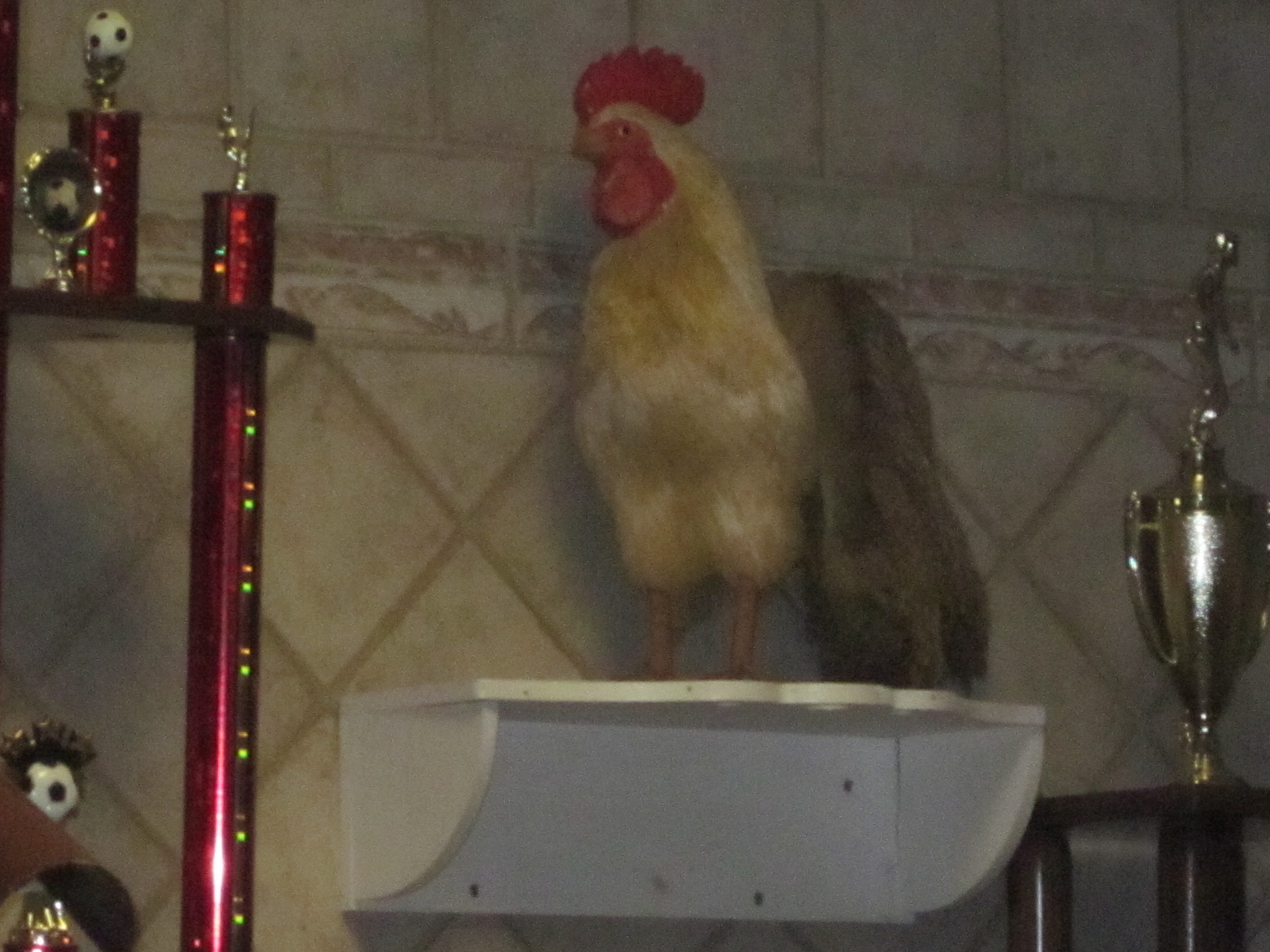
One of the several stuffed hens at El Tesoro.

Our waitress, who Eugene, executing one of his lamer lines, asked if she claimed Italian heritage, revealed that she was, in fact, not from Guatemala or Salvador, but that she was from Honduras. And if there was a difference in the cuisines of the three Central American countries, she wasn’t telling us.

Guatemala or Salvador? Which is it?

From the Salvador-labeled section of the menu were the well-known pupusas which we celebrated many years ago at a restaurant in Washington Heights that still survives called: La Cabana Salvadorena.  (See Pupusa Love). As I vaguely recall, the pupusas were worth loving there and we had to try a few at El Tesoro.

No love for the pupusas of El Tesoro.

Also from the Salvador starters section were the tamales while, representing Guatemala, were the rellenitos, which Gerry bravely ordered. Our waitress described them as platanos (plantains) stuffed with beans. What she didn’t say what that the rellenito was of the sweet variety, deep fried and then sprinkled with granulated sugar? Even with the presence of the beans, you really just wanted to take the thing and dunk it in your coffee; it was that sweet.

Maybe Dunkin Donuts should consider adding the rellenito to their doughnut menu?

Eugene ordered the garanchas; tiny tortillas topped with beef, cheese and the Guatemalan version of pico de gallo, which, after sampling one, did not live up to the more familiar Mexican version.

Garanchas

As we proceeded to sample the food, what we tasted, unfortunately were mediocre replicas of the major influences from the north (Mexico) and the south (South America).

The carne guisada I ordered, familiar to me at other Latin restaurants as beef stew, was, here, more like ropa vieja; shredded beef in a very bland tomato sauce.

“It’s mushy,” Zio commented about the tamale. “I like Mexican tamales better.” The tamale was dense with corn masa and stuffed with pork but Zio’s description was accurate. It was mushy.

Salvadorian tamale

Mike from Yonkers did not expect potatoes added to the rice in his pollo saltado, the Guatemalan attempt at the Peruvian specialty. “Too much starch,” he said and, in a rare display, put his fork down well before his usual meticulous cleaning his plate.

Pollo Saltado

Zio had ordered the pollo frito in what the menu described as “our secret seasoning.” He offered a wing and/or leg of the chicken to any takers, but there were none. “The fried chicken was really dry,” he confessed to me on the way back to the city.

I’m not sure what was expected of the chile relleno Gerry ordered, but again, what I tasted of it was a poor man’s version of the Mexican dish. The flavor, or lack therof, just not what any of us were accustomed to.

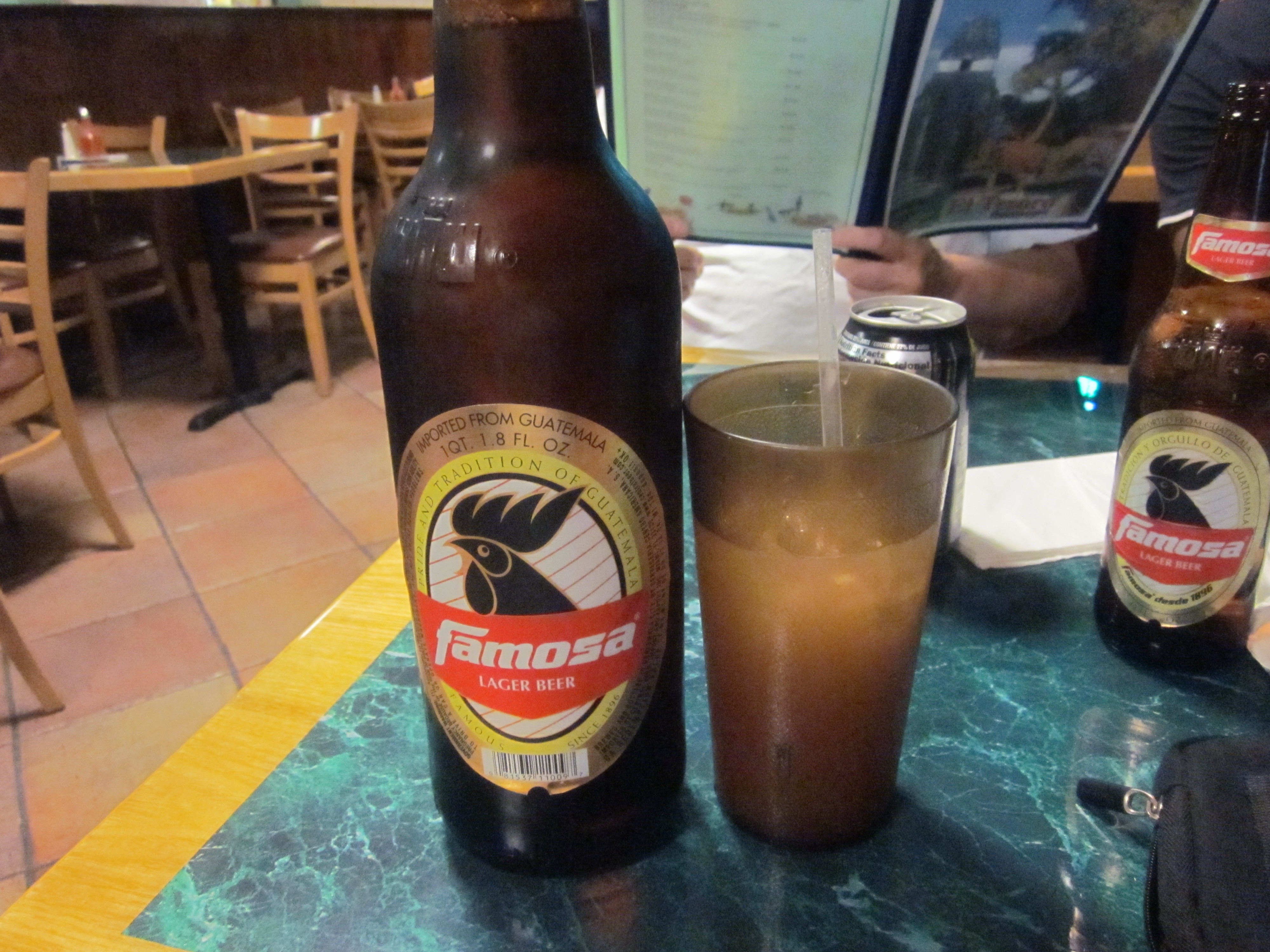
Things weren’t all lackluster at El Tesoro. The Famosa beers were cold and delicious. The service was cheery. Even the incessant screeching of a toddler added life to the otherwise drab Port Chester experience and, not that it was what I was seeking, made me feel right at home.
Fusion Files: The Not So Well Being Edition

7 Sep

It’s my somber duty to report that the well being of Dino’s Well Being Fusion Deli & Cafe is not very good.

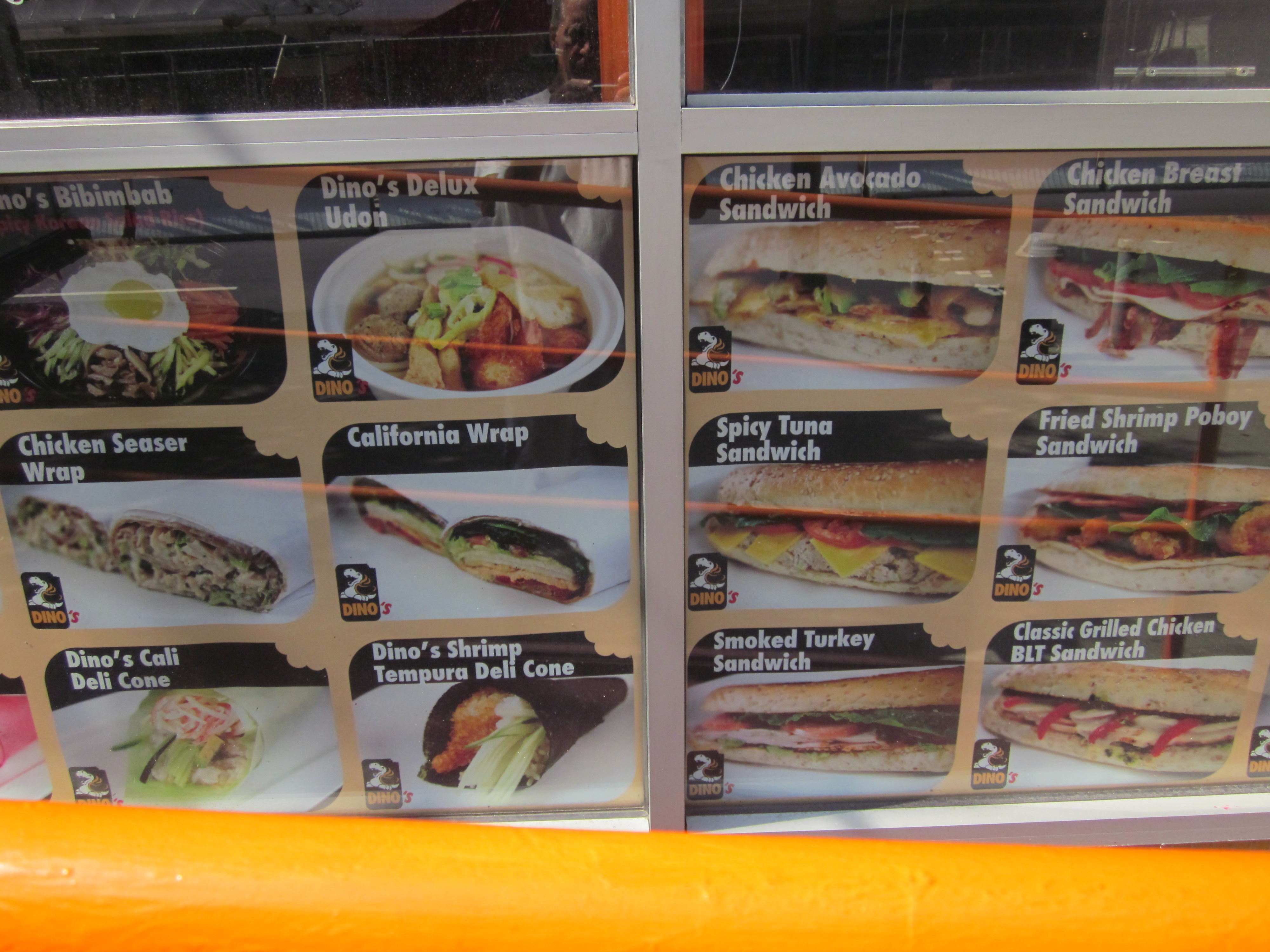
But Dino’s unfortunate demise had nothing to do with its diverse menu where you could order a “chicken Seasor wrap” the “deluxe udon,” or the “bibimbab,” paired with a “fried shrimp po boy.”

Fusion options like those documented at Dino’s are irresistible and certainly well intentioned to boost one’s well being. There had to be another reason why Dino’s went kaput. And I discovered it when a man, who noticed me taking a picture of the Well Being Cafe, came up to me and, with a sad, but knowing smile on his face, shook his head and said: “That place is spooked.”

Sometimes if a place is spooked, no matter how much well being it has, it’s just got no chance.

Today’s Special: Back to School Edition

4 Sep

I’ve got a doctorate from this school.

My diploma.

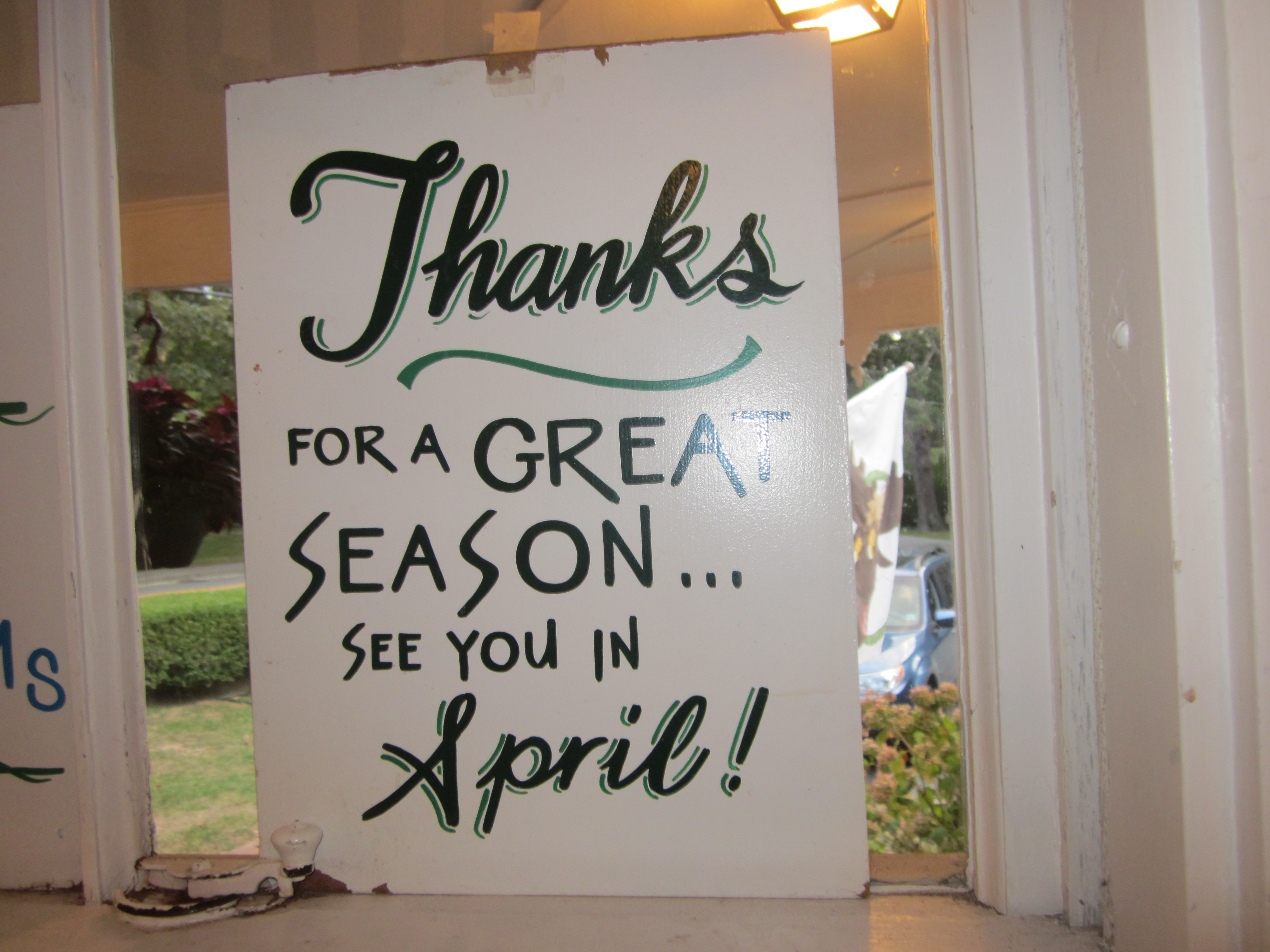
Sadly the best schools close for the season.

A Medley of Lobster Rolls

29 Aug

When you are on vacation in Cape Cod, there is always the possibility of a rainy day. And that strikes fear into the hearts of parents who dread the prospect of having to entertain their children in cozy cottage confines.

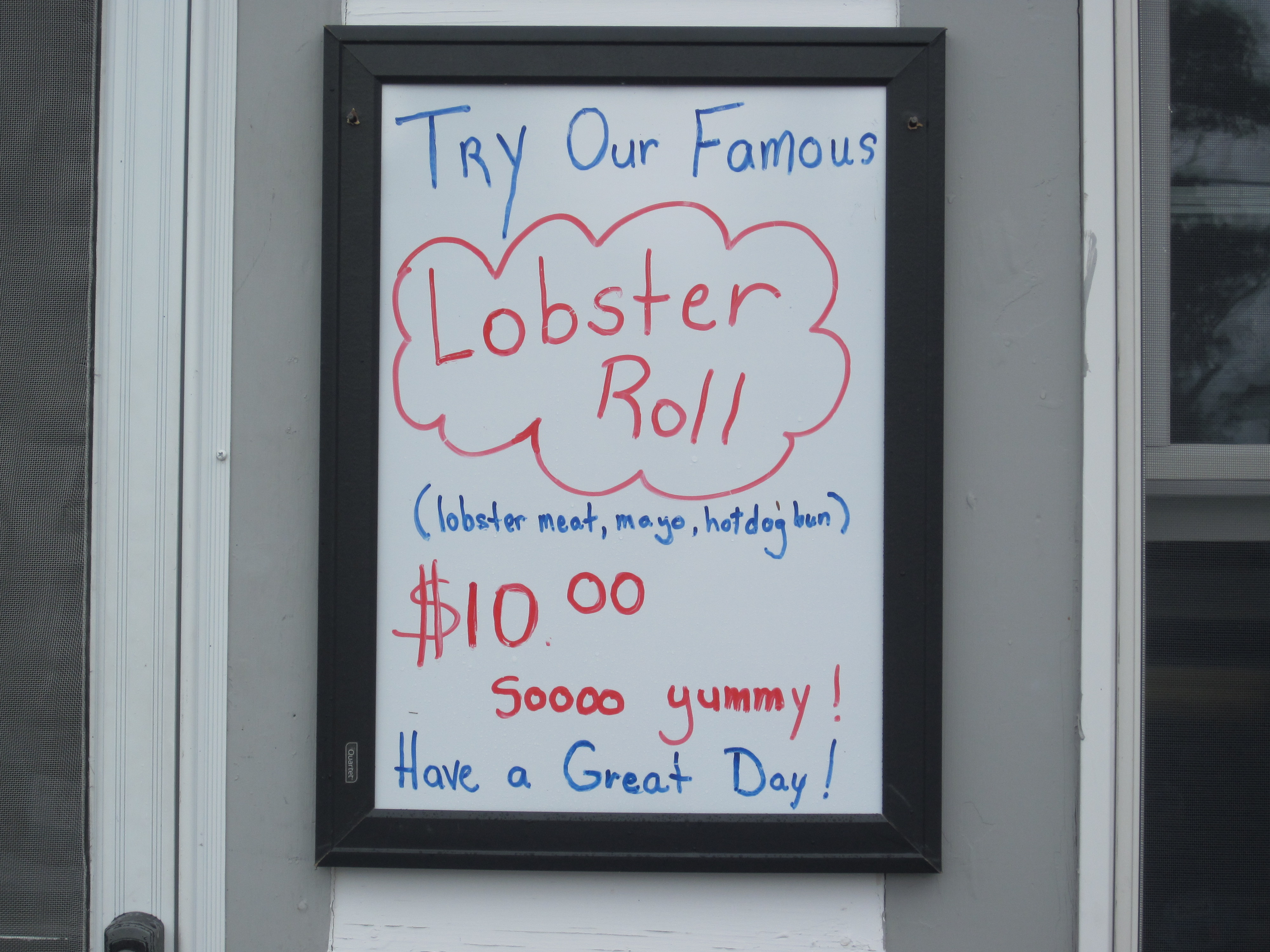
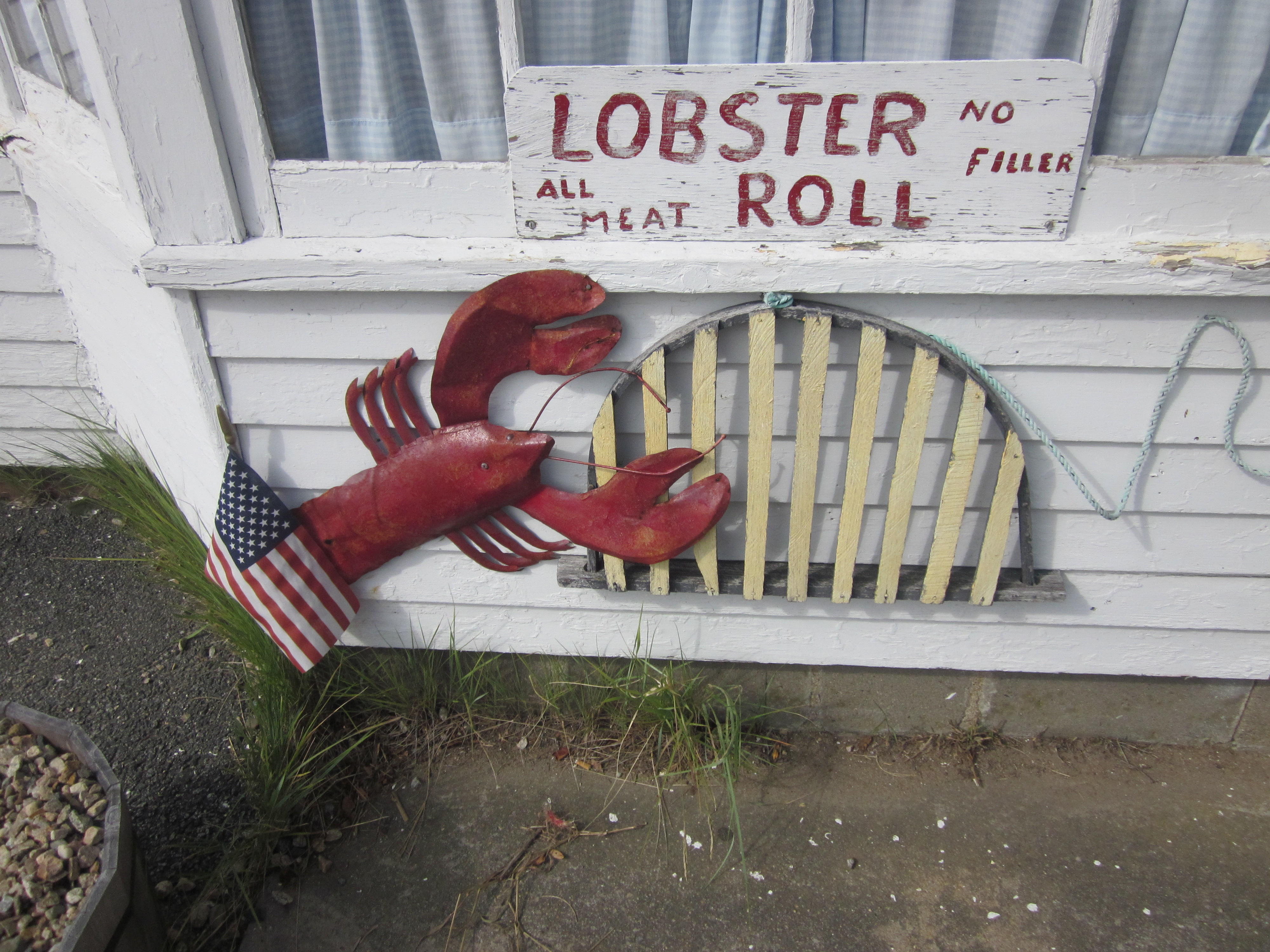
Besides resorting to making another Cape Codder  (see Vodka Amongst the Cranberries), there is another option. To escape the hysteria from cabin fever, volunteer, grudgingly at first, to drive out into the deluge in search of lunch. When you do, you will soon be greeted, as I was, by a number of lobster roll options. Lobster rolls, of course, will, not only get the family to temporarily forget about the rainy day blues but your stature within the family will be elevated to hero status.

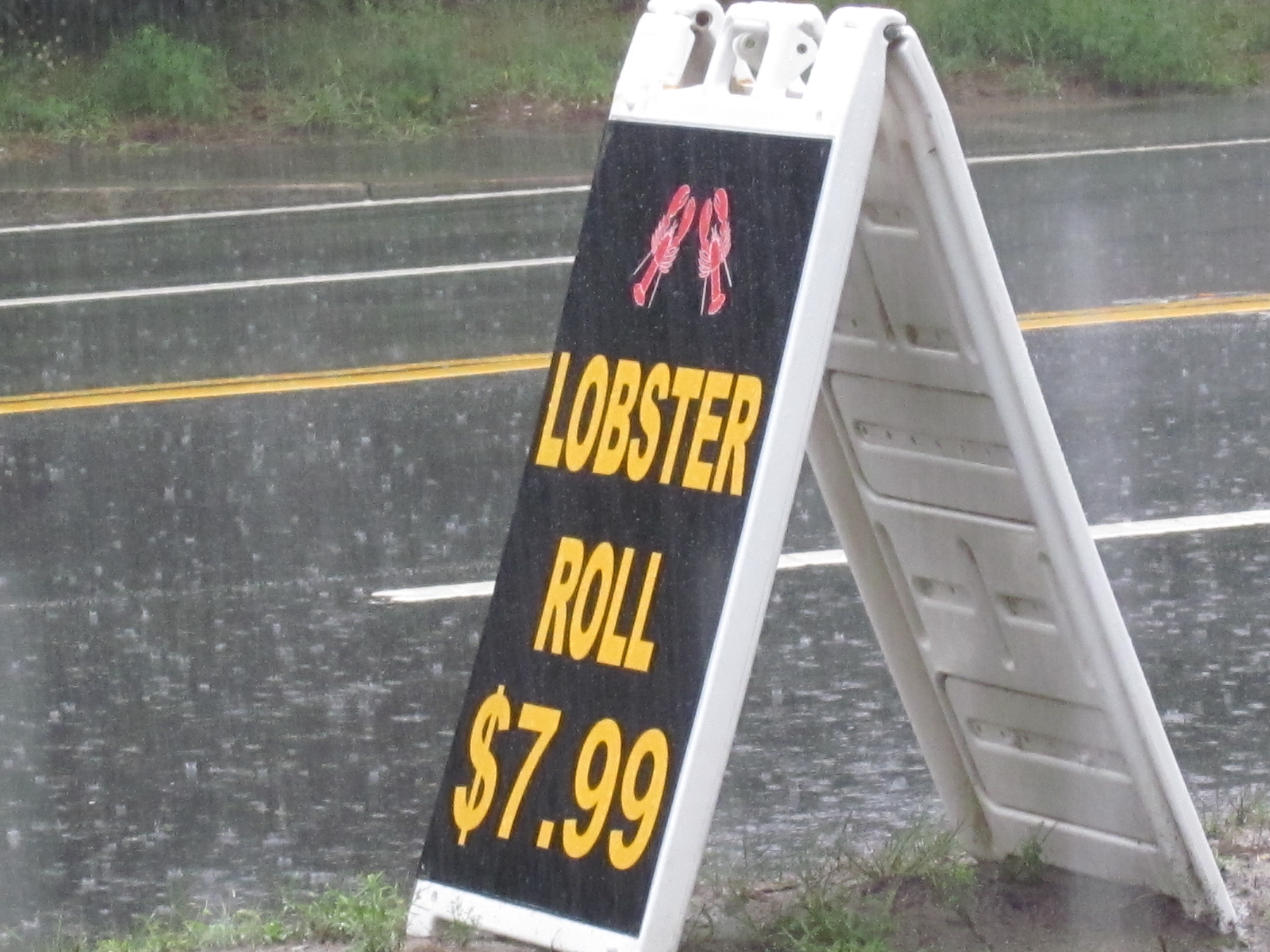
First you notice the $7.99 option at a small market. And then just down the road, there is the $8.49 offering at a deli. But you remember the $10 lobster rolls you had the previous year on the Cape and there was certainly nothing wrong with those. The choices have you in a quandary and you almost drive off the road.

I’ll take two specials, please.

Being the decisive man you are, however, you know what you have to do. You pull into the market and order two of the $7.99 offerings. Dodging the raindrops, you get back into your car and drive down to the deli where two young men with thick Russian accents brag that their lobsters rolls are the best on the Cape. “You’ve sold me,” you tell them.

Finally, you return to the seafood shack where you went the previous year and order two of the reliable $10 lobster rolls—just in case the Russians were wrong.

Your bounty now in three separate bags, you have delicious incentive to return to the madness that is a Cape Cod cottage on a rainy day.

Preventing any skirmishes, you cut the lobster rolls in half so everyone can taste one of each.

The least expensive, $7.99 option*, despite the added bonus of the hot dog roll being toasted, got the fewest accolades.

The toasted bun lobster roll from Nauset Market.

The $8.49** lobster roll, though bursting with meat and light on the mayonnaise, was not, the Russian opinion aside, “the best lobster roll on the Cape. It was, however, very good.

The Russians didn’t say that there would be anything “green” in the “best lobster roll on the Cape.” Not that I’m complaining.

The clear winner was the priciest at $10***, but the added two dollars resulted in a lobster roll bursting with meat and though a tad heavy on the mayonnaise,  the best of the three.

A bit heavy on the mayo, but made up for by the abundance of fresh lobster meat.

By the time the lobster rolls are consumed, the rain will have stopped. The doors will open and the soothing and constant sound of a basketball clanging against a backboard will replace the inside board game bickering. Before long it will be time to ponder a pre-dinner Cape Codder.

*Nauset Market, 5030 State Highway, Eastham, MA

**Maurice’s Market, 80 State Highway, Wellfleet, MA

***Young’s Fish Market, Rock Harbor Rd, Orleans, MA

Children’s Menu: Circa 2012

22 Aug

Why do children have all the good choices?

Coppertoned Eggplant

14 Aug

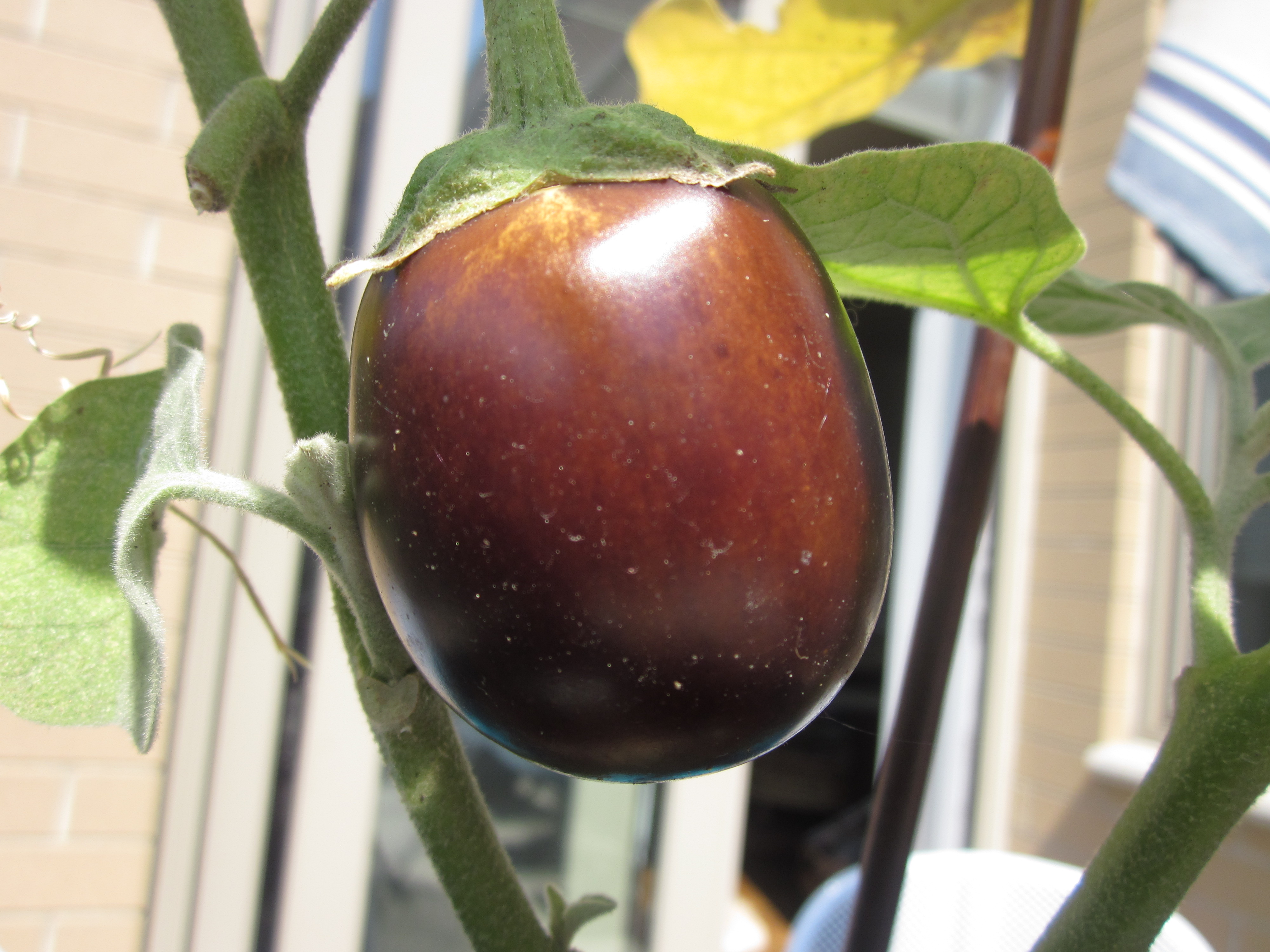
I don’t know what is more abundant, the summer eggplant crop or the recipes on what to do with all of them. And here I am joining the fray with one of my own.

This one is not unfamiliar. It’s the summer version of eggplant parmigiana. The difference between the summer and non-summer is that the eggplant is  grilled as opposed to the traditional egg-dipped, breaded and then fried (though my non-summer version is baked, never fried, but that’s another story).

 Ingredients

2 medium to large eggplants-sliced into ½  inch rounds*.

3 tbs of olive oil

1 ½ cups shredded mozzarella

½ cup of grated parmigiana or pecorino cheese

4-6 cups of marinara sauce (recipe below**)

6 fresh basil leaves

Salt and crushed red pepper to taste.

*You could peel the eggplant if the tough skin bothers you. I peel them when I am making eggplant parmigiana in the oven. But I think charring the skins adds to the summery flavor of this dish.

After slicing the eggplants, sprinkle with salt (Kosher or sea salt preferred) and coat with olive oil.

If using a gas grill, turn it on and warm it up. Using a charcoal grill is a bit trickier, but the results will be more satisfying. The eggplant will gain a smoky flavor that can’t be replicated with the gas grill. The problem is trying to keep the eggplants from falling through the cooking grate as a sacrifice to the charcoal gods. You’ll need one of those vegetable and/or fish baskets to go over the original grate. I have yet to find one I really like so I tend to cook vegetables on the gas grill. And even when grilling on a gas grill, I usually lose a few through the grates no matter how careful I am.

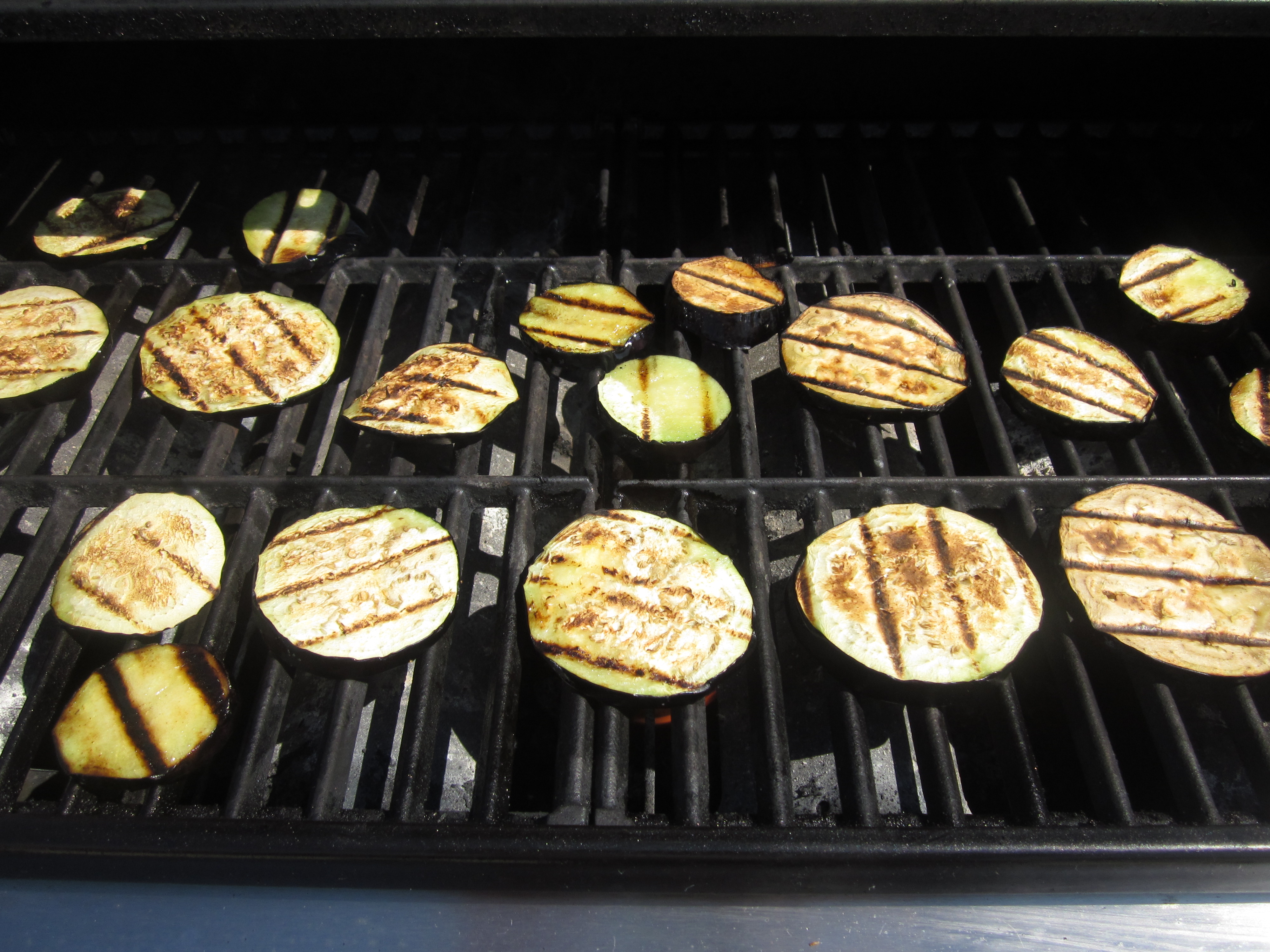
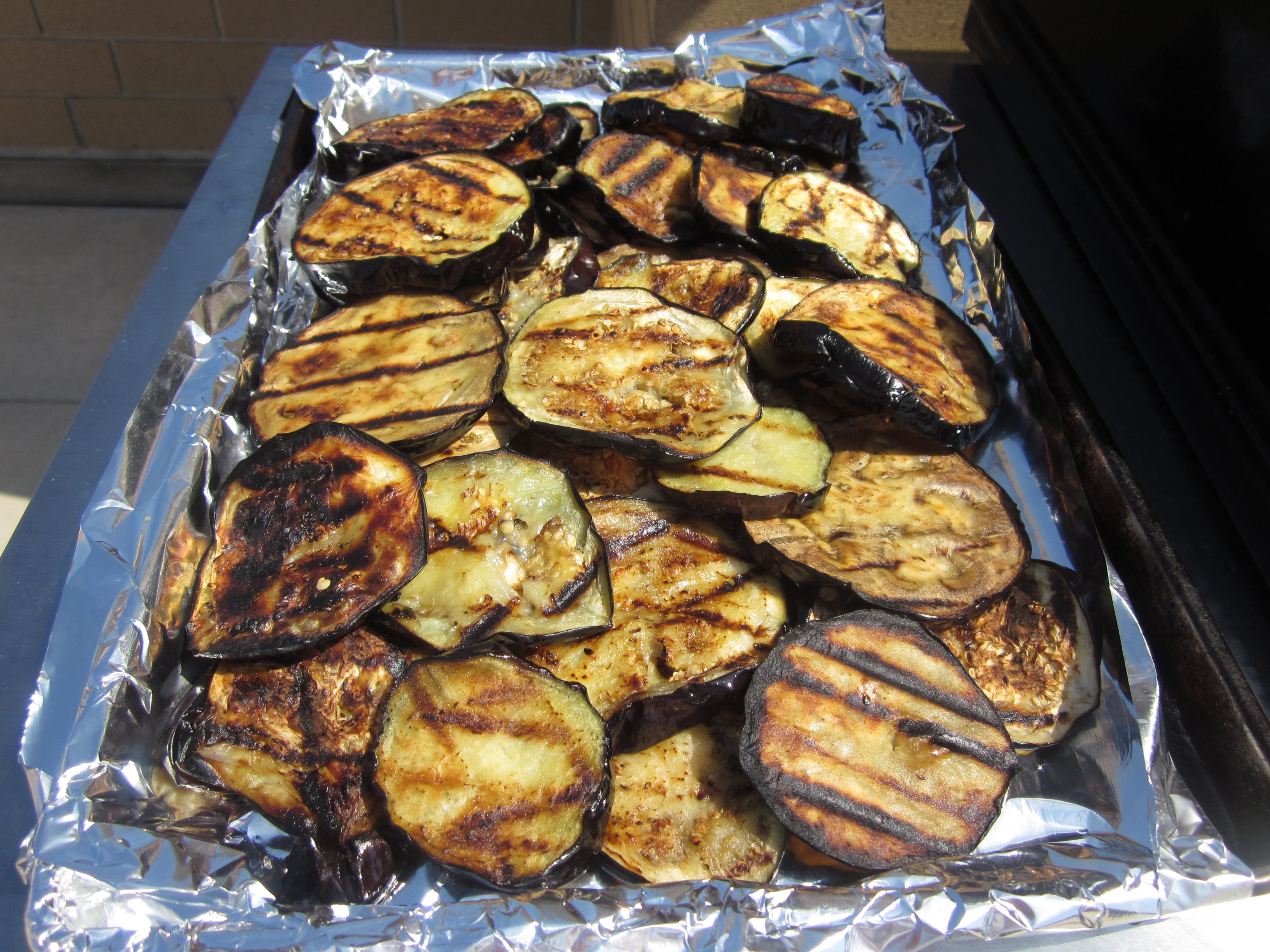
Grill the eggplant until it has that nice, even Coppertone tan. Tan lines, in this case, are more than acceptable. The char lines from the grill grate add to the beauty of the eggplant’s appearance.

Tan lines accepted.

Remove the eggplant from the grill and let them cool while you put the parmigiana together.

Copptertoned eggplant

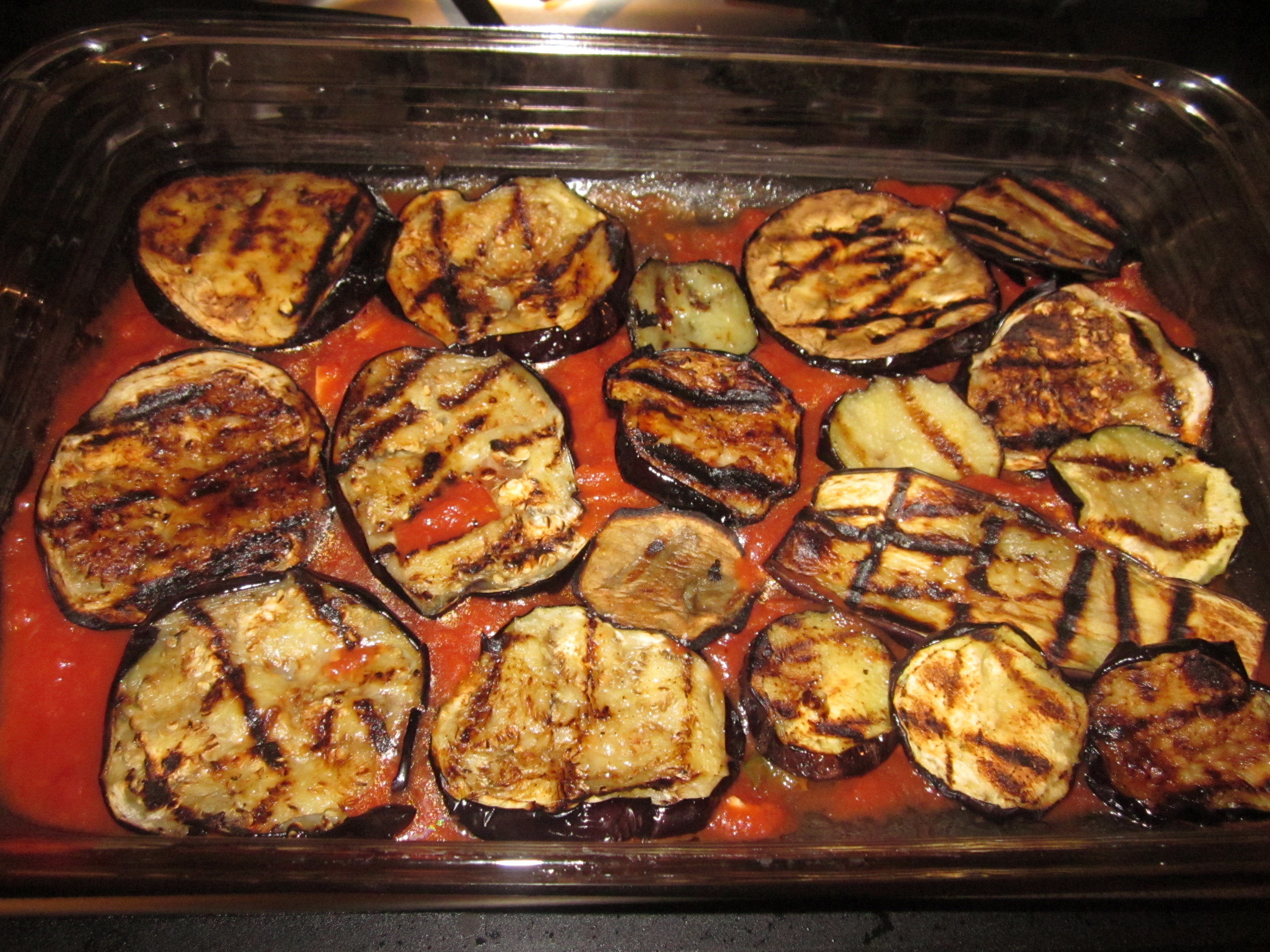
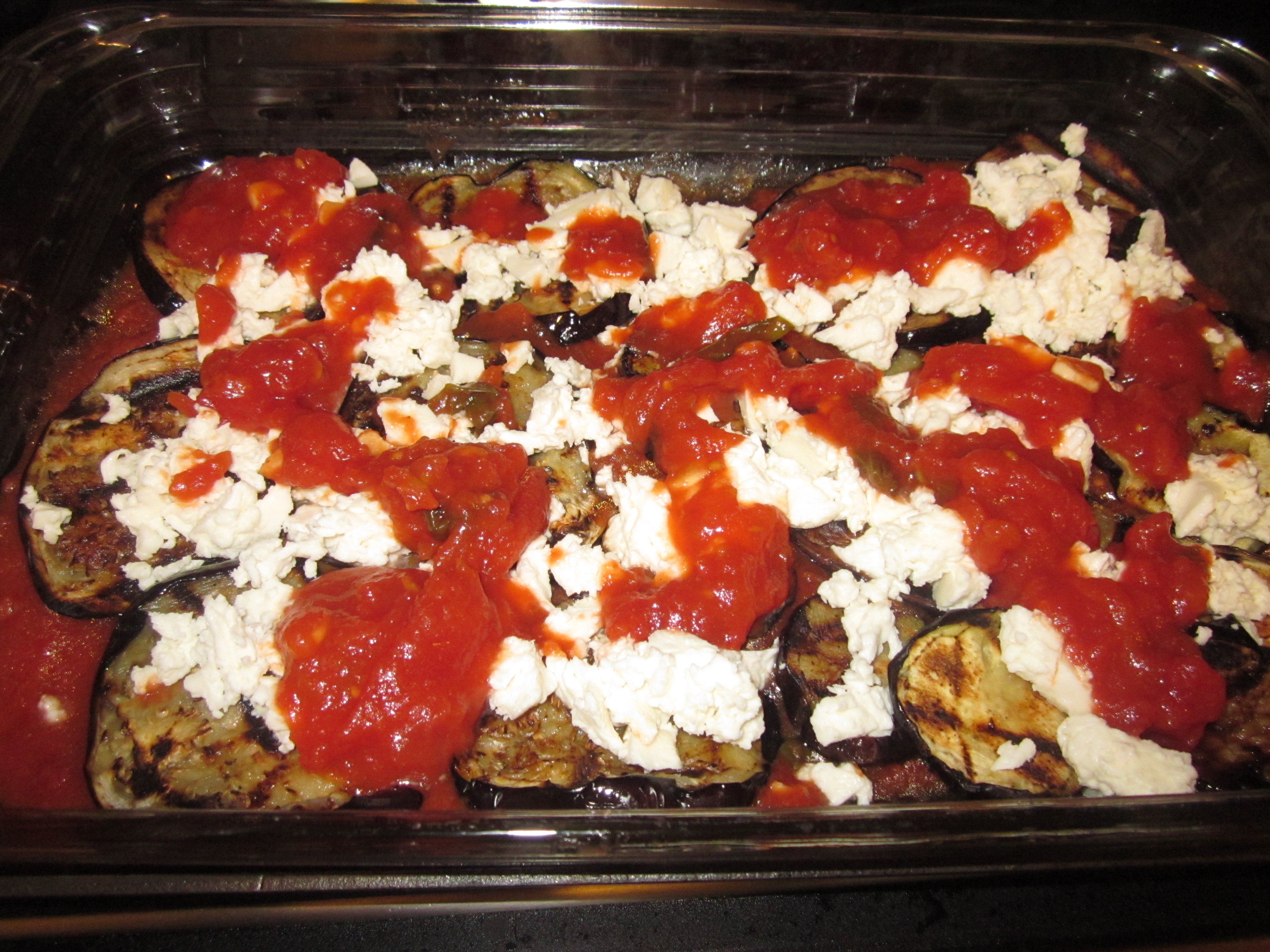
Pre-heat the oven to 375 degrees. Using a 9 inch, by 13 inch baking dish, (or something similar) spread about a cup and a half of the tomato sauce on the bottom of the dish. Arrange the eggplant slices on top of the sauce, add another half cup of sauce over the eggplant and sprinkle half of mozzarella over all.

Building the parmigiana

Add another layer of eggplant slices and repeat with the sauce and mozzarella. Continue until you have used all the eggplant. Make sure you’ve saved some sauce and mozzarella to coat the top of the last layer.

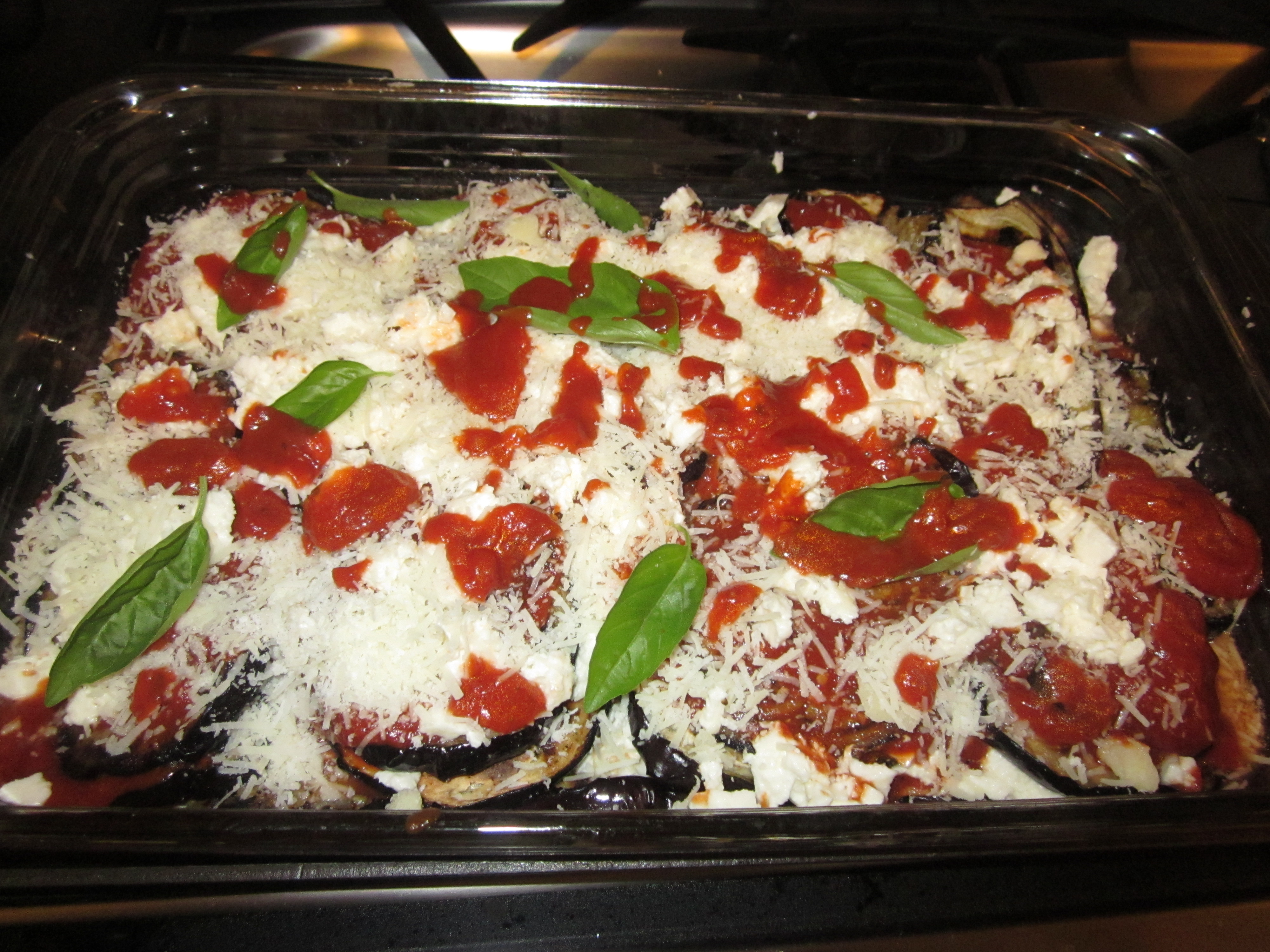
Scatter the fresh basil leaves evenly over the sauce and mozzarella and then sprinkle the parmigiana cheese over all.

Put the dish in the oven and cook for about 15 or 20 minutes or until the sauce bubbles and the cheese has melted. Remove from the oven and serve warm.


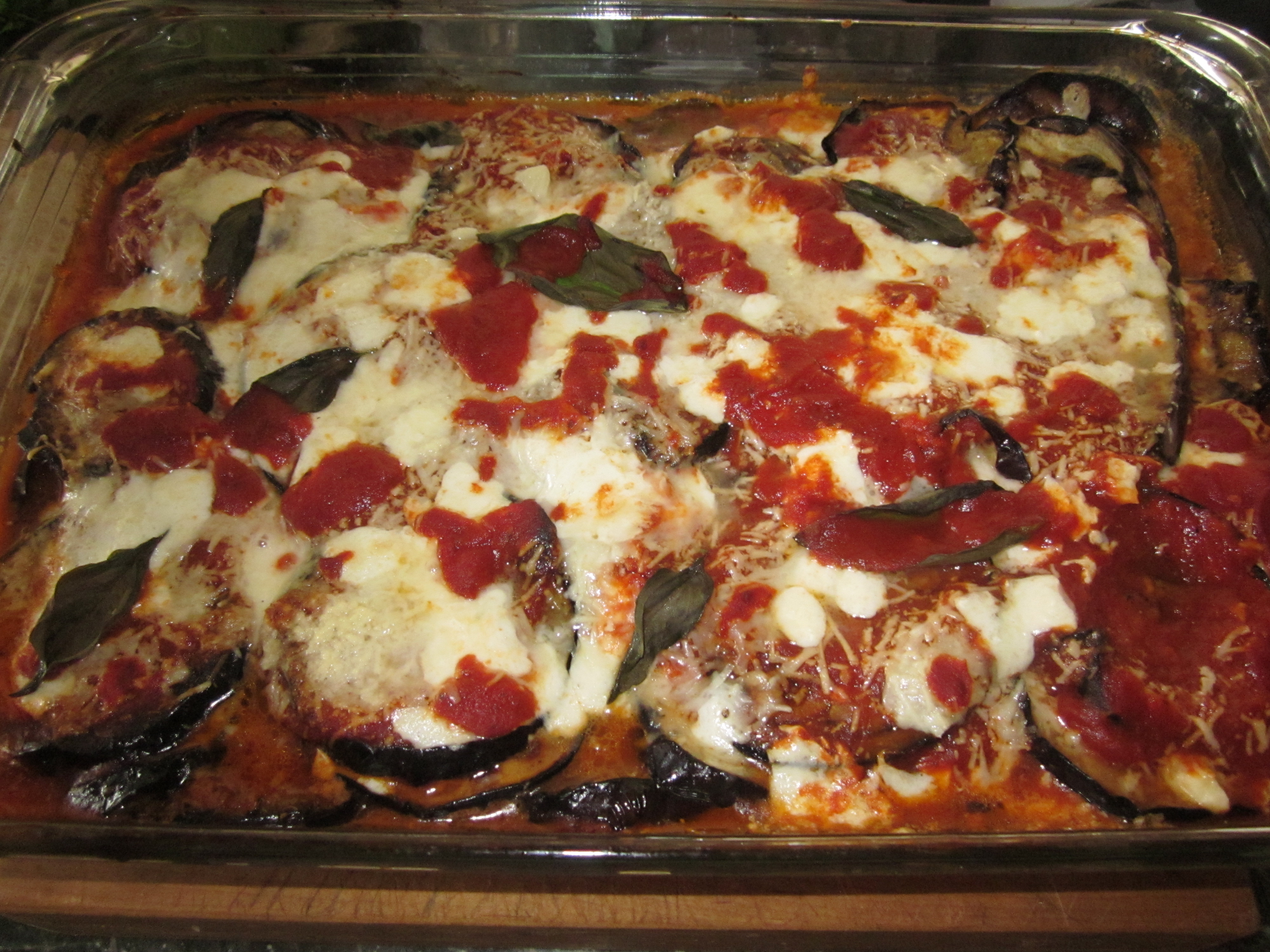
Coppertoned eggplant parmigiana


**Simple marinara Sauce recipe

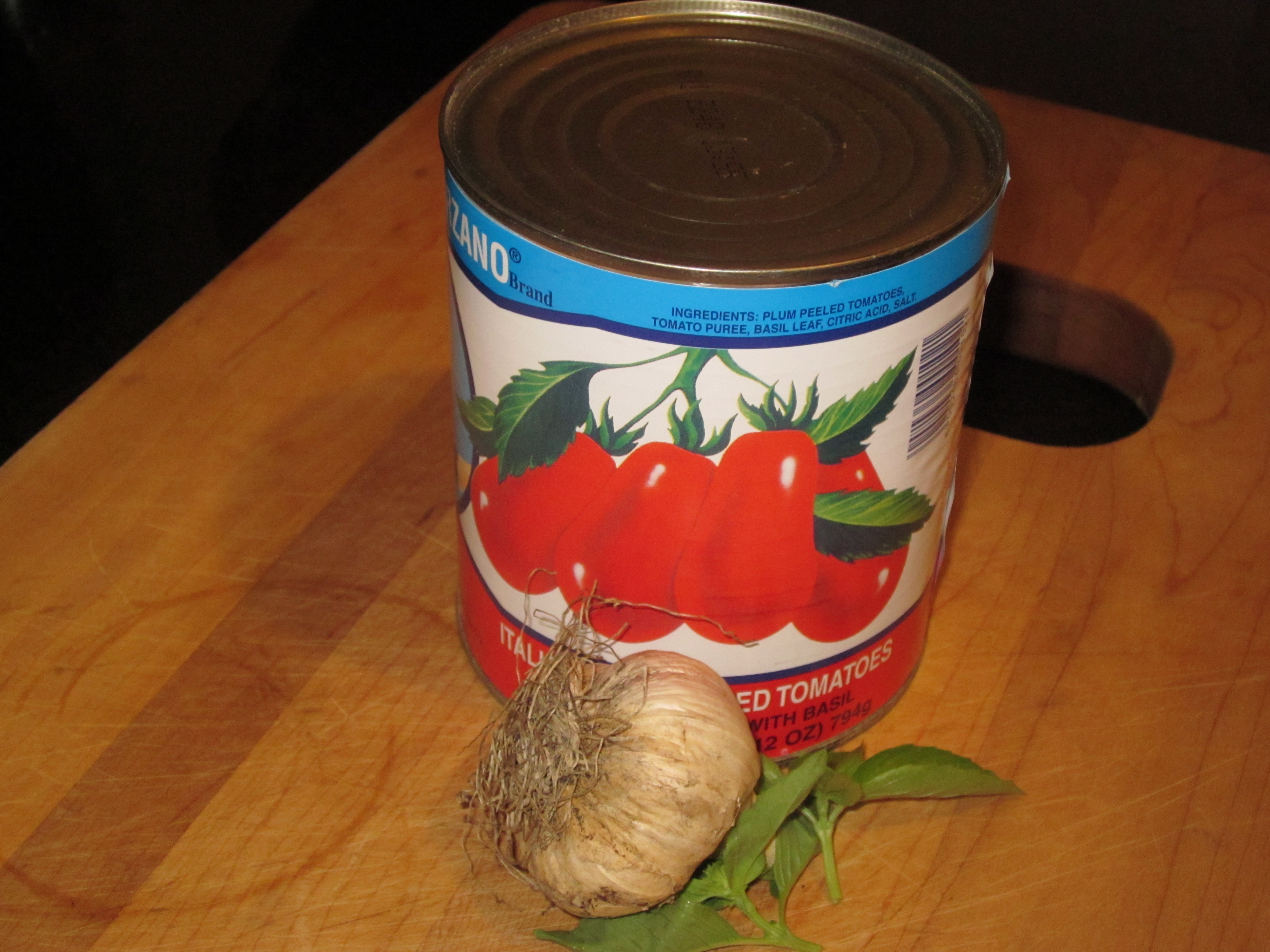
1 28 ounce can of good Italian whole peeled tomatoes

3 tbs olive oil

2 cloves of garlic, sliced or chopped. (The finer the slice or chop, the more garlicky the flavor).

¼ tsp of crushed red pepper

4-6 fresh basil leaves

Salt to taste


Empty the tomatoes in a bowl and crush with your hands.

Pour the olive oil into a skillet and heat to medium-high.

Add the garlic and cook until very slightly browned.

Toss in the tomatoes.

Add the crushed red pepper and basil and a moderate sprinkling of salt. Bring to a simmer and cook for 20 minutes.

Marinara sauce can be made well ahead of time and kept in the refrigerator for up to a week or frozen and then thawed when needed.

Red Sauce Revisited

8 Aug

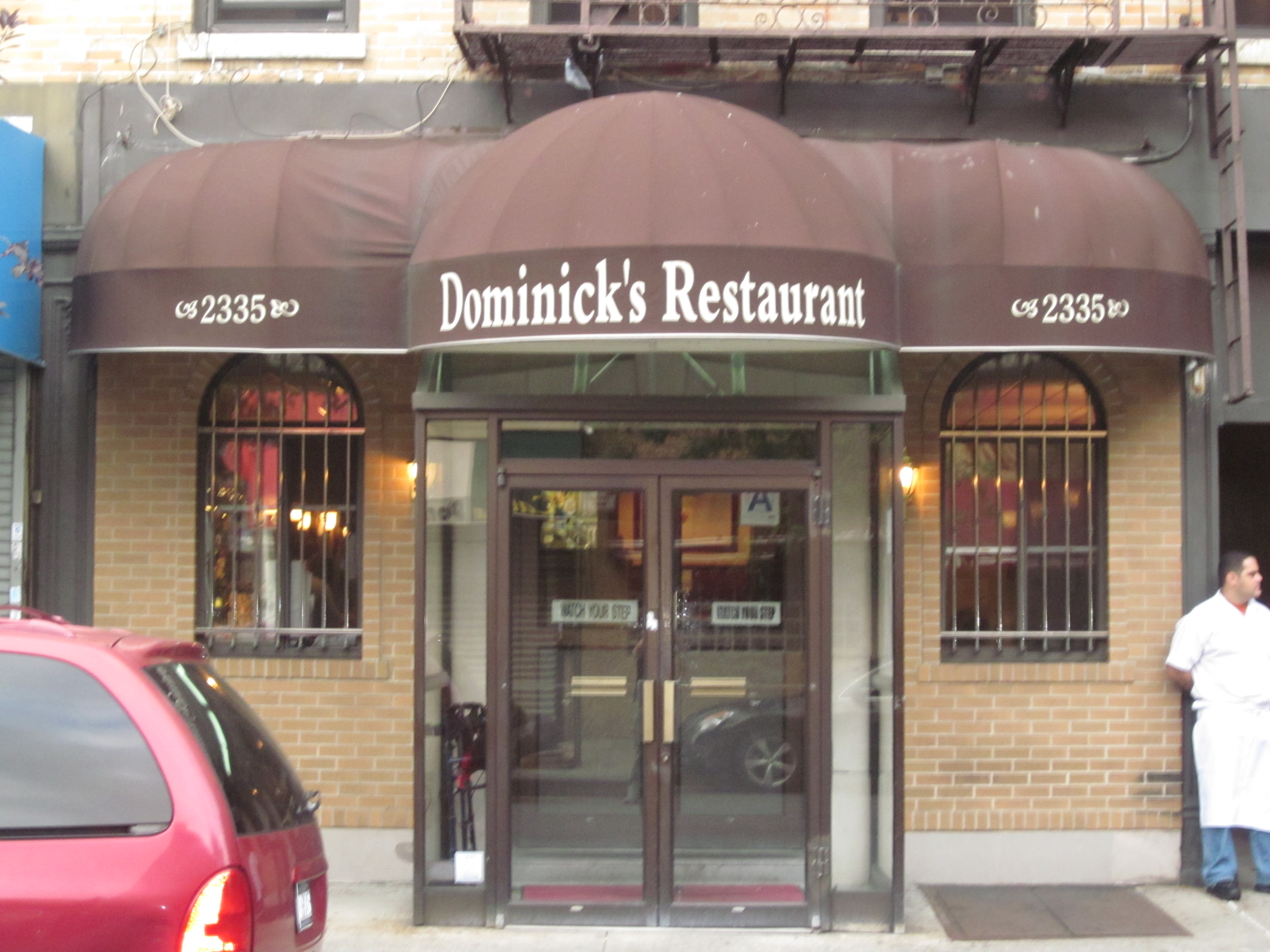
Dominick’s

2335 Arthur Avenue

The Bronx

There was a restaurant in the Bronx. It was a small, red sauce Italian joint that didn’t take reservations. You couldn’t pay with a credit card either. And there was no menu. When seats opened up, you squeezed into a table, oftentimes sharing with an extended family from Jersey who remembered the place from the “old days.” One of the two waiters would come over. Usually it was the one who was missing a thumb.  “Whaddya want?” He would brusquely ask before you were even settled.

“Whaddya got?” was the usual response.

“We got baked clams, stuffed artichoke, veal marsala, veal francese, chicken scarpariello. We got steak, linguini and calamari. We got mussels, ziti marinara, rigatoni with sausage and broccoli rabe. We got zuppa di pesce. We got steak…” And it went on and on. The menu recited.

“Do you have veal chops.”

“Veal chops?” The waiter who was missing a thumb stared dully. “Lemme check.”

He would disappear into the kitchen.

A few moments later he would reappear. “Yeah, we got ‘em. You start with a salad?”

Of course we would.

Wine was served in juice glasses poured from an over sized jug behind the small bar.

The salad came. Our group shared the large platter of iceberg lettuce redolent with red wine vinegar, speckled with onions, out of season tomatoes, and a smattering of provolone cheese.

The place was filling up. It was cold outside and no one wanted to wait in the cold. The bar area was packed. There were people overhanging our table. Our stuffed artichokes came. The eyes of those waiting were upon us…and the artichokes. We didn’t care. Let them wait.

“Hey, can we get a piece of your bread while we wait?” a wise guy snickered, his hand moving to our bread basket.

“Don’t be an idiot, Ralph,” the woman with him with the big hair and overpowering perfume spat back at him.

“Hey, this is a family place. We’re all family. What’s wrong with breaking bread with brothers?”

“Jerk off,” she muttered, rolling her eyes. “I’m sorry,” she said sympathetically to us while her companion continued to grin like an idiot.

We polished off the artichokes easily, soaking up the olive oil dampened breadcrumbs with the crusty bread from the aforementioned bread basket. Butter never accompanied it—unless someone with no class or dignity stooped so low as to request it.

An enormous platter of linguini with calamari in a rich red sauce came next along with two dinosaur-sized veal chops with grilled onions and peppers. The calamari was fork tender; the sauce tangy with tomato and red wine. The veal chop was cooked to medium rare perfection; a slight char on the outside; the juices running from it with every forkful.

We finished everything.

The waiter minus one thumb returned. “Anything else? Some espresso?”

We needed the espresso to revive us after all that food. Clear glasses with stove-top espresso appeared along with a bottle of sambuca. The coffee and the liqueur combining to act as a jolting digestif.

“We’ll take the check,” we said to our waiter the next time he scurried past.

I would watch as he conferred with the bartender who wrote down something on a small scratch pad and handed it back to the waiter.

“$65,” the waiter said, not showing us what he held in his hand. There were no words on the piece of paper from what I could see; just check marks and cross outs, like a sloppy tic tac toe game.

We had no complaints. We paid and left a generous tip. Gathering our stuff we pushed through the overflowing crowd that was now ready to pounce on the seats we just deserted.

That was a long time ago. During the restaurant’s glory years. But nothing stays the same. The crowds got more unruly. One time a strange hand even reached into the bread basket. They soon opened up another room upstairs to handle the overflow. The platters got a little smaller, the calamari was not as tender, the red sauce not so special, and the number barked by a waiter—the one missing a thumb retired to the Jersey shore—kept going up. And up. It was time to say goodbye. Or at least take a leave of absence.

The divorce lasted almost twenty years. But I was ready to reunite. To make amends. To give Dominick’s, the red sauce joint in the Bronx, another chance. And what better way to experience nostalgia than with two old friends who I spent many an evening with at the same tables over twenty years ago.

But before entering, I noticed something unusual, at least for Dominick’s. It was a menu. A big one. And it was on prominent display right next to the entrance. I scanned it. There were even prices attached to the Italian-American classics I was very familiar with.

The Menu on the door.

I was a few minutes early. I ordered a drink at the bar and marveled at how deserted the small dining room was. Only a couple of the tables were occupied.

I sipped my drink and tried to recall if I was with Gerry or Paulie D, the two friends I was waiting for, the time Mayor Ed Koch and his entourage were hustled immediately to a large table. There was no waiting for hizzoner.

And, on this day, when my friends arrived there was no wait for the three of us either. Maybe change is good, I thought.

Paulie D, who I hadn’t seen for probably as long as it had been since I had been to Dominick’s, was the impetus for this reunion. He, also after a long hiatus, had returned to Dominick’s recently and relayed to Gerry that it was as good as ever. Gerry, a founding member of the Chow City group, whose adventures have been and continue to be chronicled on Fried Neck Bones…and Some Home Fries, passed the word to me and our dinner was arranged. Not only could I catch up with Paulie D, but I would also see if my youthful infatuation with Bronx red sauce stood the test of time.

A waiter approached us at the bar. Despite his complete lack of hair and that he was now wearing glasses, I recognized him from the “old days.” He had both thumbs and unlike his former colleague, did more than grunt when taking our orders. He shook my hand. “Good to see you again,” the waiter, whose name was Patsy, said as he looked into my eyes as if I were a still a regular.

We shared a long table and ordered more drinks. Wine, I was surprised to see, was served now in a stemmed glass. I handled it gingerly.

“So what are we gonna have?” Patsy asked, leaning over the table. There might have been a menu on display outside the restaurant, but we weren’t getting any table side. That was encouraging.

No one said anything.  But I, for one, had to hear it. So I opened my mouth. “Whaddya got?” I asked.

And then the recitation began: “We got mussels, baked clams, calamari. We got veal marsala, veal francese. We got chicken scarpariello. We got steak…”

“What about stuffed peppers?” Paulie D inquired.

Patsy nodded.

“Chicken francese?” Gerry asked.

“Sure, we can make it.”

“And ziti marinara,” Paulie D added.

“Anything else?”

I looked at Gerry and then at Paulie D.

“Let’s get the mussels,” Gerry said.

I thanked Gerry for not neglecting them.

“You gonna start with a salad?” Patsy asked, but he really didn’t have to.

“You gonna have salad?”

And then Patsy, who wrote none of our order down, departed.

Bread was brought to the table; crusty pane di casa, probably from Addeo’s bakery across the street. I noticed that along with the bread, there was a small plate with individual plastic packets of butter. And we didn’t even have to ask for it. I had to rethink my earlier belief about change.  Maybe it wasn’t as good as I originally thought.

The salad was as I remembered it: iceberg lettuce, onions, a few unripe tomatoes, and slices of provolone all in a vinegary dressing. The platter was just enough for the three of us.

Next to arrive were the peppers. On the plate were two extra large bell peppers stuffed with seasoned ground beef and smothered with a chunky tomato sauce.

Paulie D, who, before we ordered, reminded us that he was a “picky eater.”  In Paulie D’s case, that meant no seafood, no chicken on the bone, not even steak. But stuffed peppers were fair game and knowing Gerry and I would be eating the mussels, we left most of the peppers to him. Paulie D did himself proud; devouring one of the monsters effortlessly.

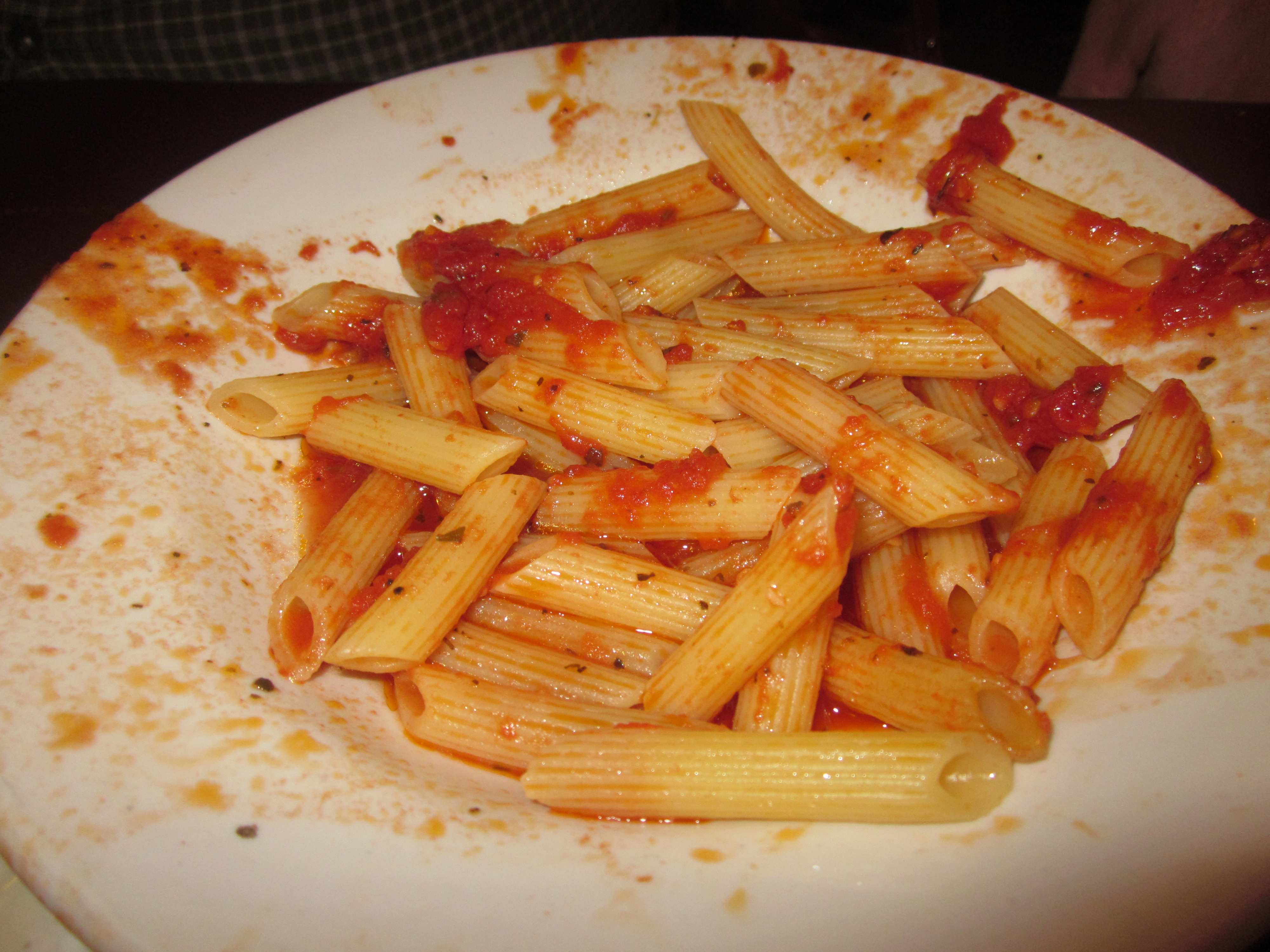
The remains of a stuffed pepper…smothered in a red sauce with a little penne.

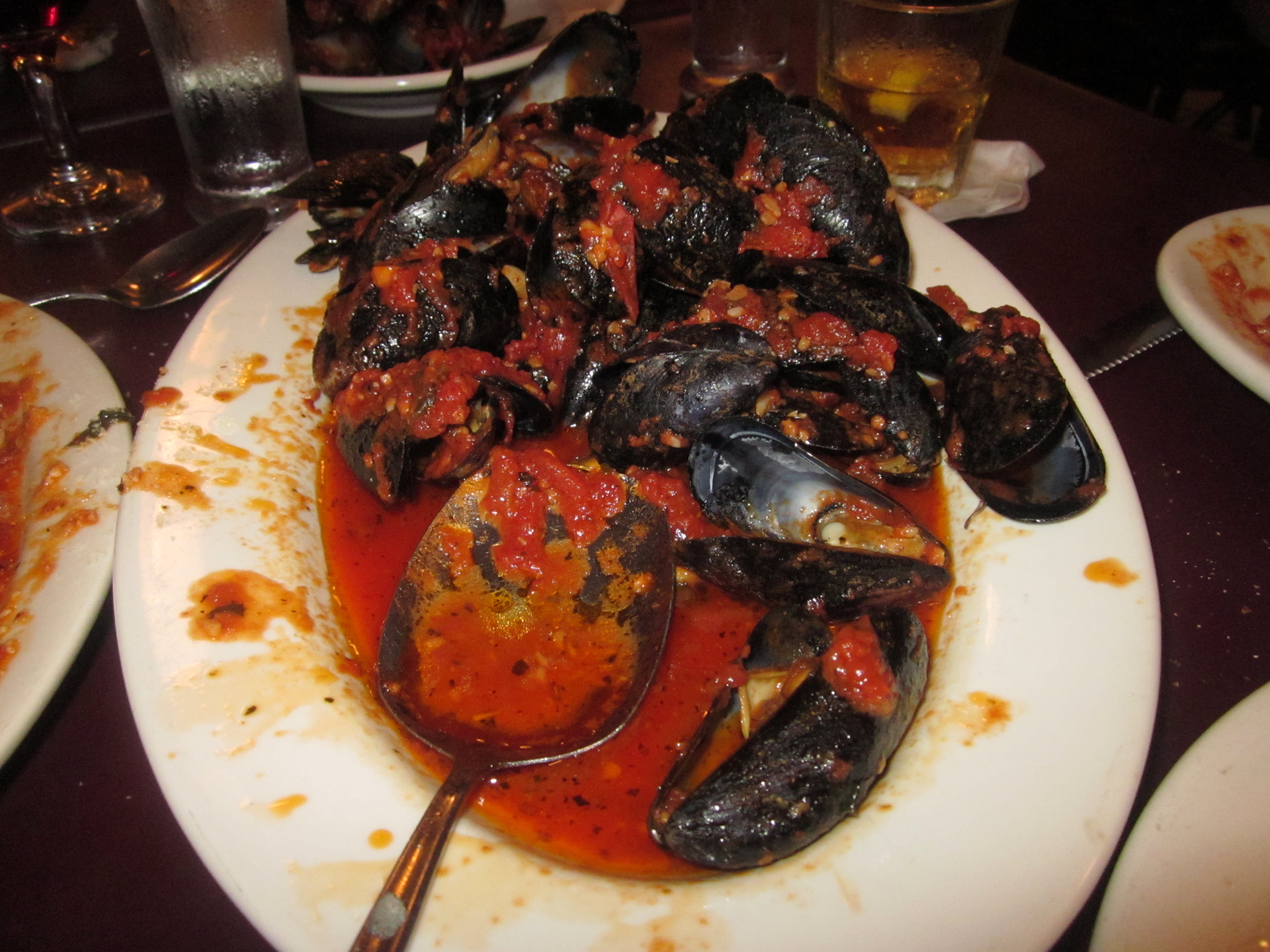
The big platter of mussels took up most of the room at our table. Gerry and I worked methodically through the mound, plucking the sweet tiny bodies from their shells and swirling them in the garlicky, wine infused marinara sauce.

When the ziti arrived, penne on this night, I piled a few of the mussels on top of it, creating my own makeshift “ziti” and mussels.

Mussels…marinara of course.

Even the lemon-tinged chicken francese was soon swimming in red sauce, but I didn’t’ care.

There was bread left over. I broke off a piece and soaked it the soup of sauce that remained on my plate. And then I did it again—until all the sauce on my plate was gone.

Patsy returned. “You want espresso? Coffee?”

I thought for a moment. In the “old days” I could still fall asleep after a late night espresso. No more. And I wasn’t alone. None of us needed coffee.

Patsy conferred with the bartender and returned with the scratch pad scribbled with the unintelligible tic tac toe scrawl.

“$120,” he said to us.

I quickly tried to calculate what the rate of inflation of Italian red sauce joints in the Bronx might be since Ed Koch was the Mayor. The challenge being too much for my red sauce inebriated brain, I gave up that idea quickly and just decided to pay my share without thinking any more on it.

We rose and headed for the exit. The busboys quickly cleared our mess, but there was no urgent demand for our table.

Patsy waited by the door. “Hope to see you soon, gentlemen,” he said, seemingly looking me in the eye. There were no questions asked about my long absence. Even if I was totally wrong, and Patsy’s heartfelt greeting and hand shake were all just an act to suck me back to Dominick’s and its addictive red sauce, which I noticed was now sold in local grocery stores by the jar, I tried not to believe it. In my somewhat twisted, ego maniacal mind I sensed that maybe my presence was missed at this place.

Outside, Arthur Avenue was as quiet as Dominick’s was inside.

“It’s Monday,” Paulie D said. “That’s the secret. Come on a Monday and you’ll have the place to yourself.”

I’d have to remember that, I told myself.

Stalking Corn on Dyckman Street

31 Jul

Cachapas y Mas
107 Dyckman Street
Inwood

There was a small booth on Dyckman street where corn along with other farm fresh goods were being sold. Across the street a vendor was selling roasted corn and batata (sweet potato) cooked on a gas grill. Further down the block another vendor had homemade empanadas hanging on hooks inside his makeshift cart. This was the scene I encountered on Dyckman Street on a humid summer evening on the way to Cachapas y Mas, the Veneuzuelan fast food place Zio had chosen for our group.

Roasted corn for sale on Dyckman Street.

Besides the abundance of corn, Dyckman Street, in the Inwood section of upper Manhattan was bustling; teeming with urban humanity—the street congested and loud with honking livery drivers. On the sidewalks, microscopic shorts for women hugged tightly over curvy female mannequins, while for men there were flamboyant, colorful dress shirts on racks. Wedged between the retail stores were an assortment of fast food fried chicken places, Dominican bakeries, and a number of Latin-style steakhouses; in other words, my kind of street.

Cachapas y Mas was clean, with a row of wooden picnic tables along with a few smaller, plastic-topped tables and chairs. A slick, flat screen television broadcast soccer from a Spanish language station. The menu was displayed on a digital screen above the cashier that electronically would shift from a picture of “cachapas,” to one of “patacones,” to one of “arepas,” and finally to “yoyos;”

Yoyos, patacones and empanadas.

I did scant research once Zio announced his pick, but enough to learn that the food was Venezuelan and that the specialty were meats sandwiched between either griddle toasted corn cakes (arepas and cachapas) or fried green plantains, also known as tostones (patacones) or yellow plantain, i.e. maduros (yoyos).

Our group of five, soon to be six once Rick arrived, grabbed one of the picnic tables and added two of the plastic chairs at either end to accommodate all of us. From where I sat, my eyes were just not up to the task of reading anything from the digital screen so I got up for a closer look.

The “man in charge,” either the owner or manager, noticed my curiosity—and my trusty camera—and offered advice. He suggested a drink called papelon to start. Over the din and through his accented English, he explained that the drink was made from lime with brown sugar—two of my favorite ingredients. How could I resist?

The papelon was a bit too sweet for me, but I found it refreshing. A little less sugar and maybe a shot or two of rum would have transformed the drink into a very exceptional cocktail.

Papelon: The Venezuelan cocktail, sans rum.

I brought the drink back to the table. A line to order was beginning to form. Though proper etiquette would have us wait until our party of six arrived; we were still waiting for Rick, but Mike from Yonkers and Zio, especially when noticing the line, would never let etiquette stand in the way of their gluttony, immediately got on the line.

Eugene, Gerry and I shook our heads at the rude behavior of our comrades.

“No class,” Gerry said, glancing at the time. “It’s not like Rick is more than a few minutes late.”

“I know. It’s pitiful. Sad, really.” I added while shaking my head at their disgraceful behavior.

Eugene said nothing; instead he rose and joined the line.

I sipped my papelon, squinted at the digital menu again, peered out onto Dyckman Street and not seeing Rick, took my place on the line behind Eugene.

As the line moved slowly forward, I turned around. Rick had arrived and was already on the line, a few spots behind me.

Yoyos or patacones? Those were the two finalists. But stuffed with what? They all pretty much had the same choices; cheese, ham and cheese, chicken, shredded beef, roast pork, steak, chorizo, grilled chicken or, if you had a thing against meat, and if you did, why were you here, then there was the avocado salad arepa offering.

I decided on a shredded beef patacone along with a pastelito; an empanada like snack the owner recommended that was stuffed with meat and cheese. What harm would a little more grease do?

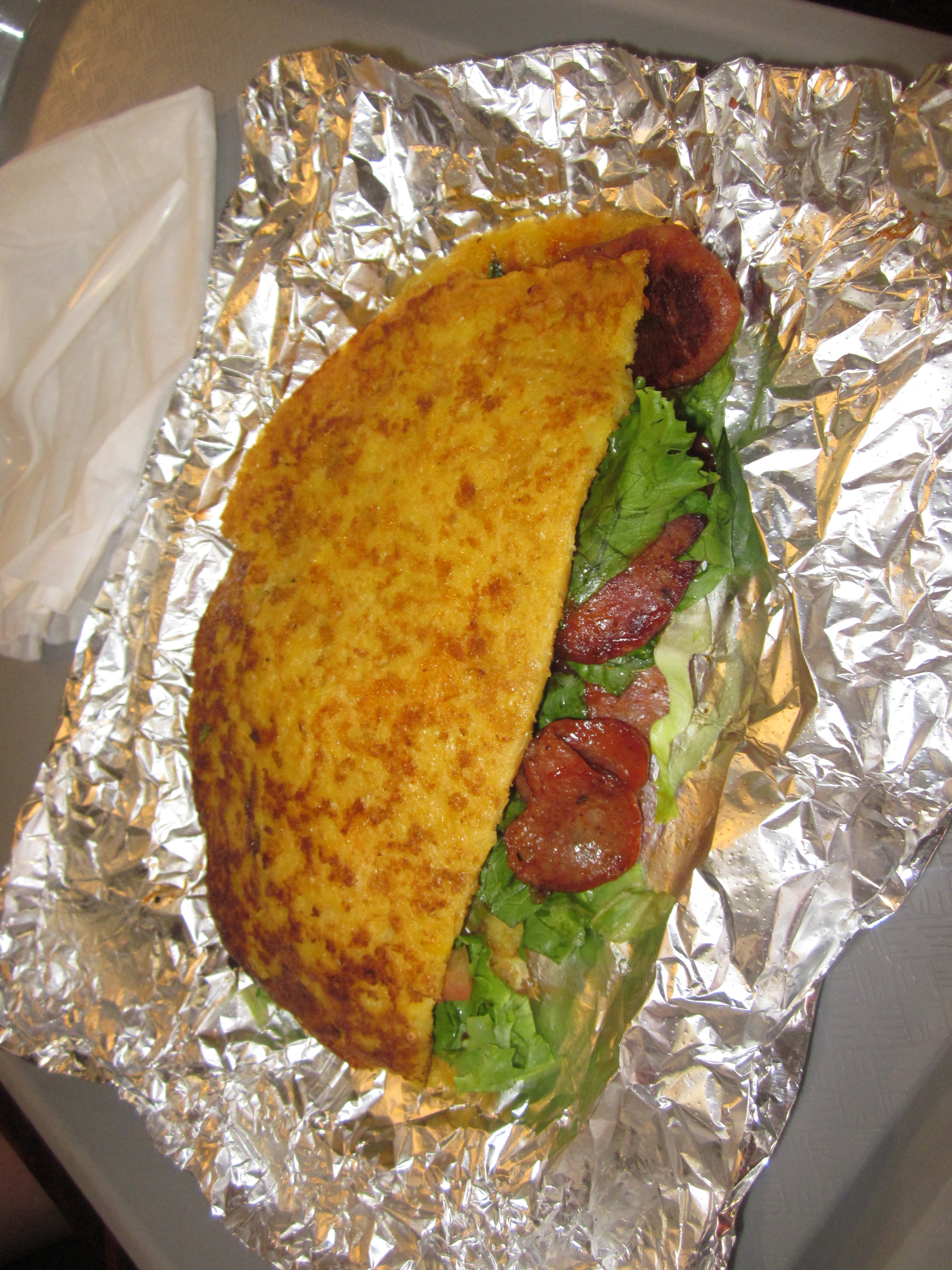
All of us returned to the table to wait for our names to be called with our orders. Of course, Mike from Yonkers and Zio were first. Both ordering cachapas; Zio’s stuffed with chorizo, Mike from Yonkers with shredded beef.

Chorizo cachapas

Zio generously offered me a taste. The corn cake was slightly sweet and dense, but rich with the flavor of fresh corn. It complemented the salty chorizo perfectly. While they ate, I dug through the pastelito. It reminded me somewhat of a meat and cheese calzone, but with a Latin flair.

I heard the Spanish sing song of my name and shot up from my seat returning moments later with the patacone. Using the plastic fork and knife provided, I tried to saw through the fried green plantain. Both utensils were not up to the task, bending to the tough tostone exterior. Giving up, I ate it how it probably should have been eaten; like a sandwich. And though I was able to maneuver some of the juicy shredded beef into my mouth, much of it dropped onto my plastic tray.

Patacone with shredded beef

Zio easily finished the chorizo cachapas, but despite its gargantuan size, it just was  not enough for his prodigious appetite. “I need more,” he mumbled and got up and ordered a beef empanada. The ground beef, onions and spices stuffed into a cornmeal pastry.

After taking a few bites, Zio put the empanada down. “It has a distinctly Alpo-like flavor,” he commented.

Nothing Alpo-like about this empanada.

He offered the remains of meat pie to me. I took a bite. “Hmmm, maybe, but it’s the best Alpo-like empanada I’ve ever had,” I said approvingly. The cornmeal pastry was crunchy with bits of coarse ground cornmeal and the meat was pungent, even aromatic, I was guessing from the amalgam of spices.

We make quick work of the cachapas, patacones, and empanadas and soon the dirty paper plates and napkins were piled high on our trays. With the exception of not experiencing a yoyo, I was more than satisfied with Cachapas y Mas.

The mess left behind.

As I made my way to my car, I could feel the patacone and all the other bites I had at Cachapas y Mas laying heavily in my belly.  The buzz on Dyckman Street had subsided somewhat.  I noticed that though the men’s flowered dress shirts had been removed from the street, the microscopic shorts on the female mannequins were still on display.  Dyckman Street, I realized, was a place for those with better self control than I.  I would be back.  But it wouldn’t be soon.

Recession Special

27 Jul

Is “recession”  a new Zagat  food category? Can anyone chime in on their number one recession eatery? Why do I feel like I’m missing out on something?

The Chinatown Congee Wars: Part Two

24 Jul

Great N.Y. Noodletown vs. Congee Village

With my trusty congee taster, Luigi, away on a fresh air fund break, I needed an aide to help me finalize the war I started a couple of weeks ago. I knew no other worthy accomplice than Zio. And he was more than ready for the task.

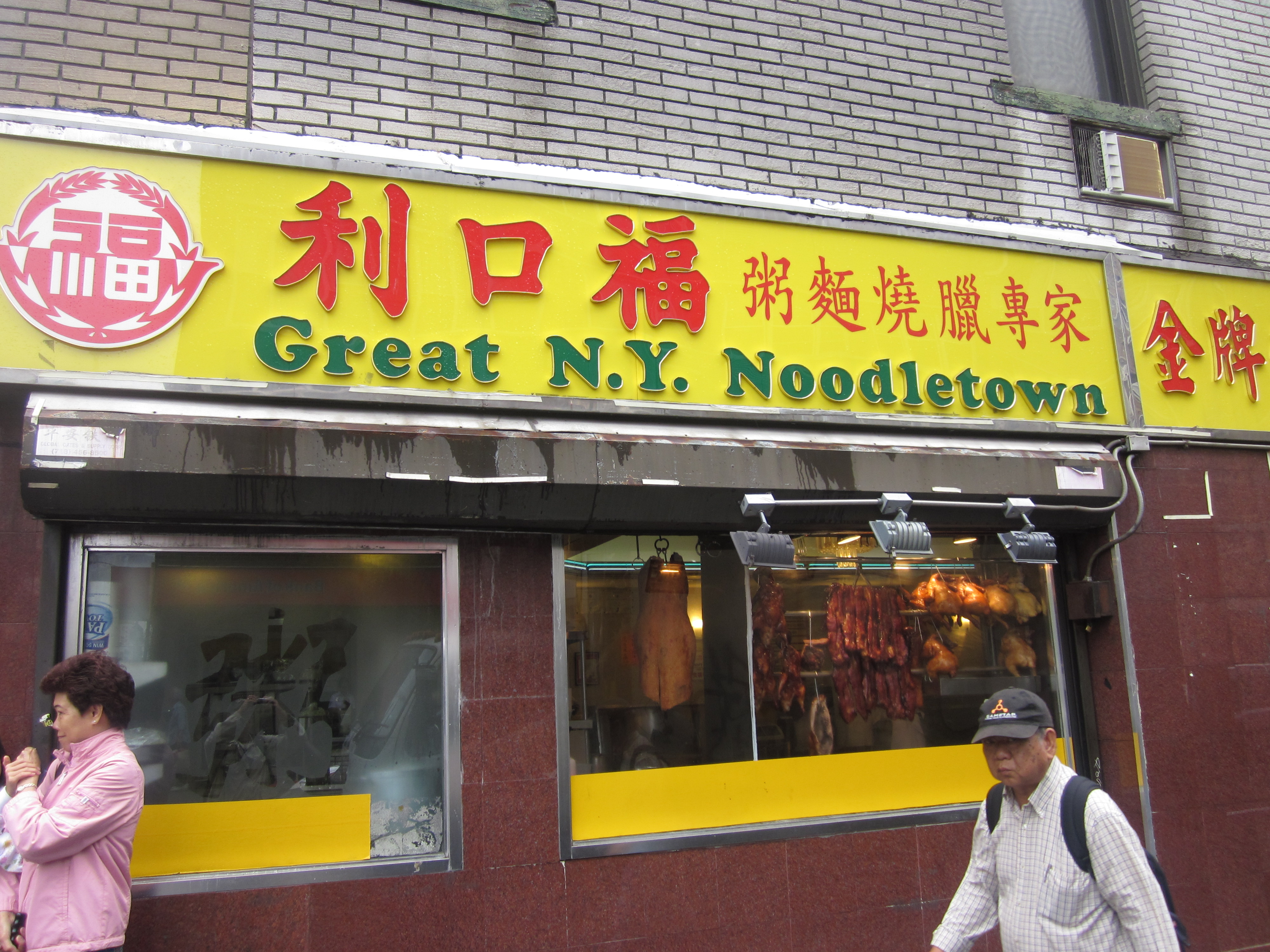
Great N.Y. Noodletown
28 ½ Bowery

Noodletown

On an overcast morning, I found him loitering next to Great N.Y. Noodletown on the Bowery in Chinatown. One of the elderly women that Luigi had observed were so prevalent in Chinatown (The Chinatown Congee Wars: Part One) was sitting next to where Zio was standing, selling umbrellas, a handkerchief covering her mouth. Was she ahead of the whooping cough curve, or was the precaution a leftover from the bird flu epidemic? Zio didn’t seem to mind the close proximity and as soon as I arrived, we went into the restaurant.

Neither Zio nor I were strangers to Great N.Y. Noodletown though when I visited it was not usually for congee.  I do recall ordering the comforting porridge at least once, but my memory of it is dim. It must have made enough of an impression, however, for me to include it in this very serious challenge.

Using all our resolve, Zio and I tried not to peek at the salt baked shrimp, the roast pig on rice, the squid with flowering chives, the triple delight noodles and all the other Noodletown greatest hits found on the menu. Instead we focused on congee only.

Knowing how good the shrimp usually is at Noodletown, I ordered a bowl of shrimp congee. Zio, also sticking to seafood, went with the sliced fish.

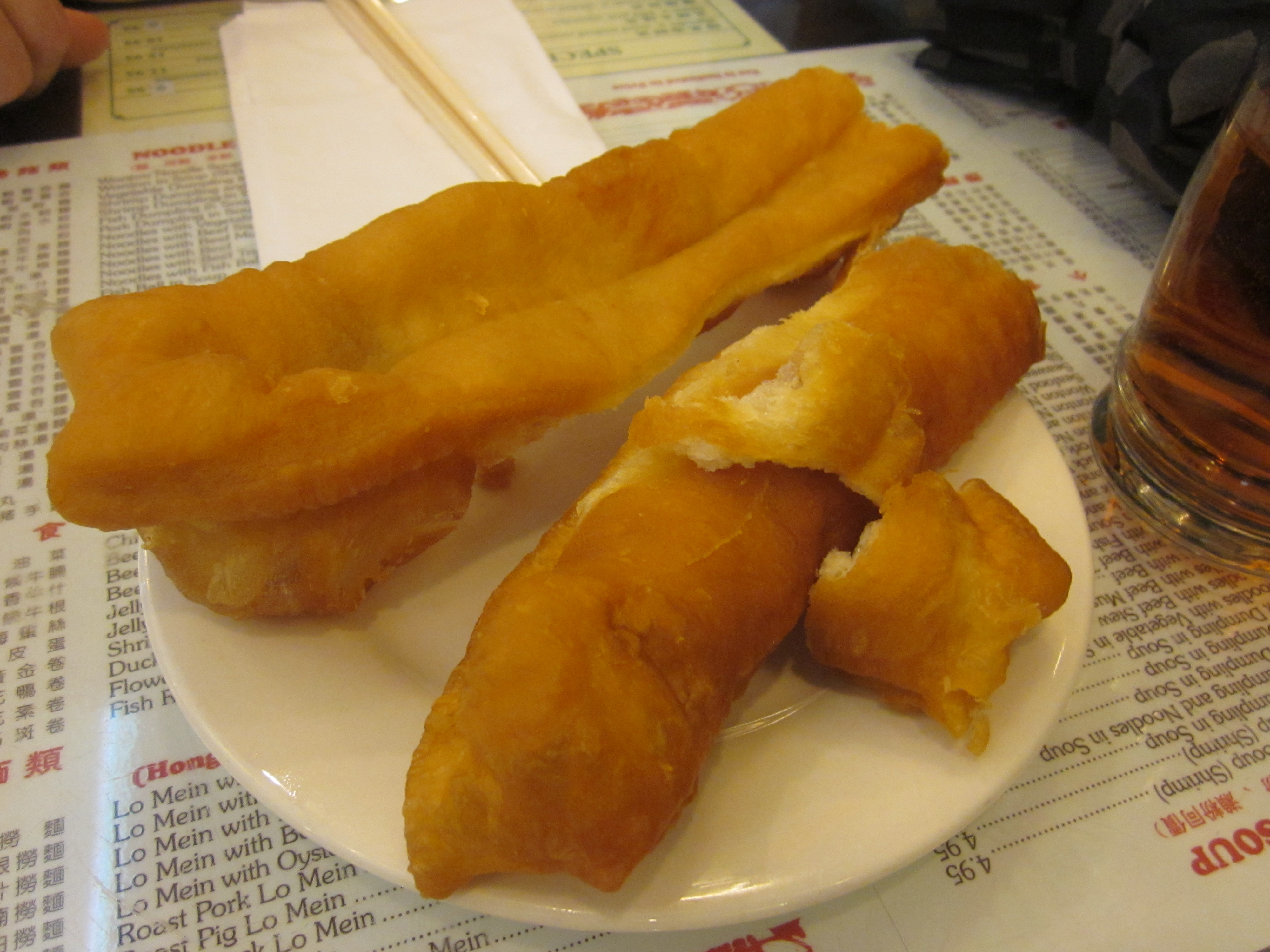
Of course, I needed to also compare Noodletown’s “cruller” with Big Wong’s and Congee’s.

The Noodletown cruller

“What the…?” Zio gasped when the cruller appeared on our table.

“It goes with the congee,” I explained.

But he was skeptical. He broke off a piece and ate it. “It’s like a grease sponge,” he said, demonstrating by squeezing the cruller and showing me the oil slick on his finger.

“Yeah, that’s why it’s a perfect accompaniment to congee. The grease works as a foil to the starch of the congee,” was the justification I offered, though not with much conviction.

Our bowls arrived. The steam from them formed a cumulus-like cloud around Zio’s rotund face. “You can’t eat this for about ten minutes,” he said. “You’ll fry the inside of your mouth.”

“That’s what the cruller is for,” I said. “Dip it in, like a doughnut.”

Zio scoffed at the idea.

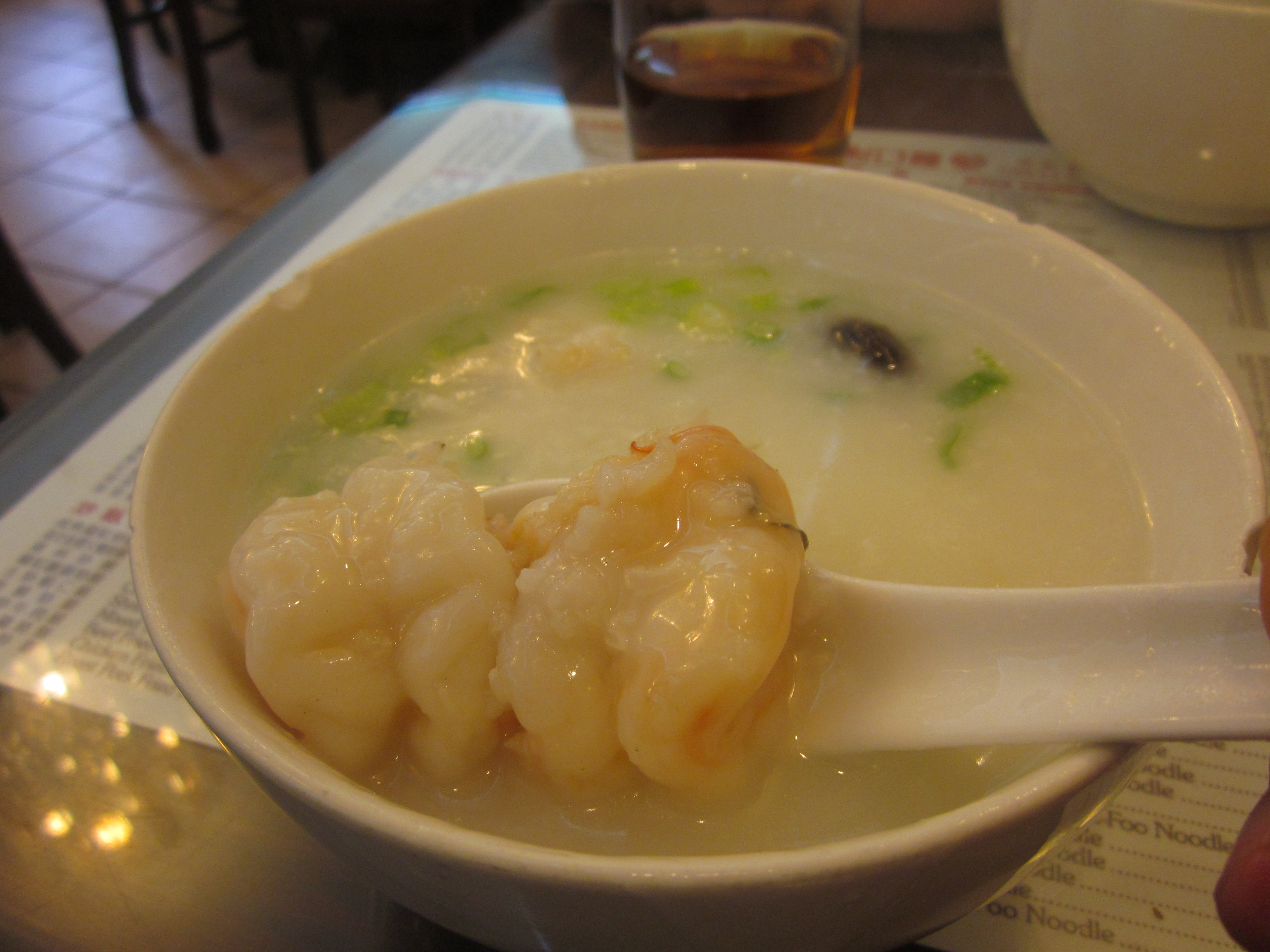
Less than ten minutes later we were sipping the brutally hot gruel. The thin, rice porridge was infused with the flavor of the shrimp. And the pieces of shrimp—I counted six in my bowl—were bigger than golf balls.

Golf ball-sized shrimp.

Zio soon had his head buried in his congee. Using his spoon like a skilled surgeon, he methodically brought the hot soup and pieces of sliced fish to his open mouth, taking it in masterfully.

I watched his performance for a moment and then said, “You might not want to finish it.”

He picked his head up. “Huh?”

“We’ve got another place to try after this,” I reminded him. “Save room. If you eat too much here, you won’t be able to give the other contestant a fair shake.”

He thought for a moment. “You’re right,” he said and put down his spoon.

Reluctantly, we had the bowls wrapped up; our waiter sliding on plastic gloves in front of us, and then pouring each bowl into a take out container.

Congee Village
207 Bowery

Though the congee at N.Y. Noodletown was light, I could feel the density of the two enormous shrimps I ate while walking up the Bowery to our next destination. I hoped the exercise would offer relief and lesson the load there. There was still more work to do.

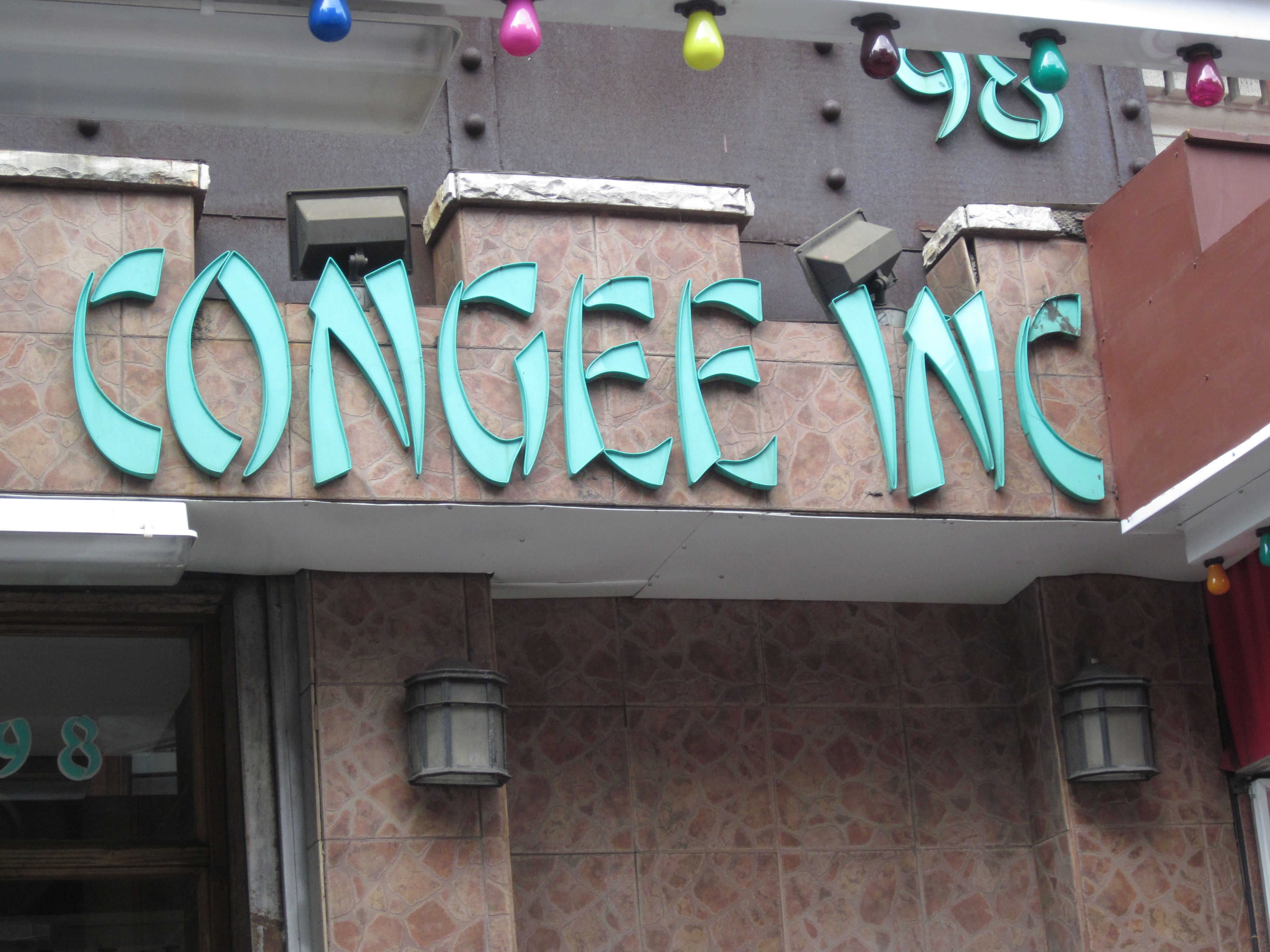
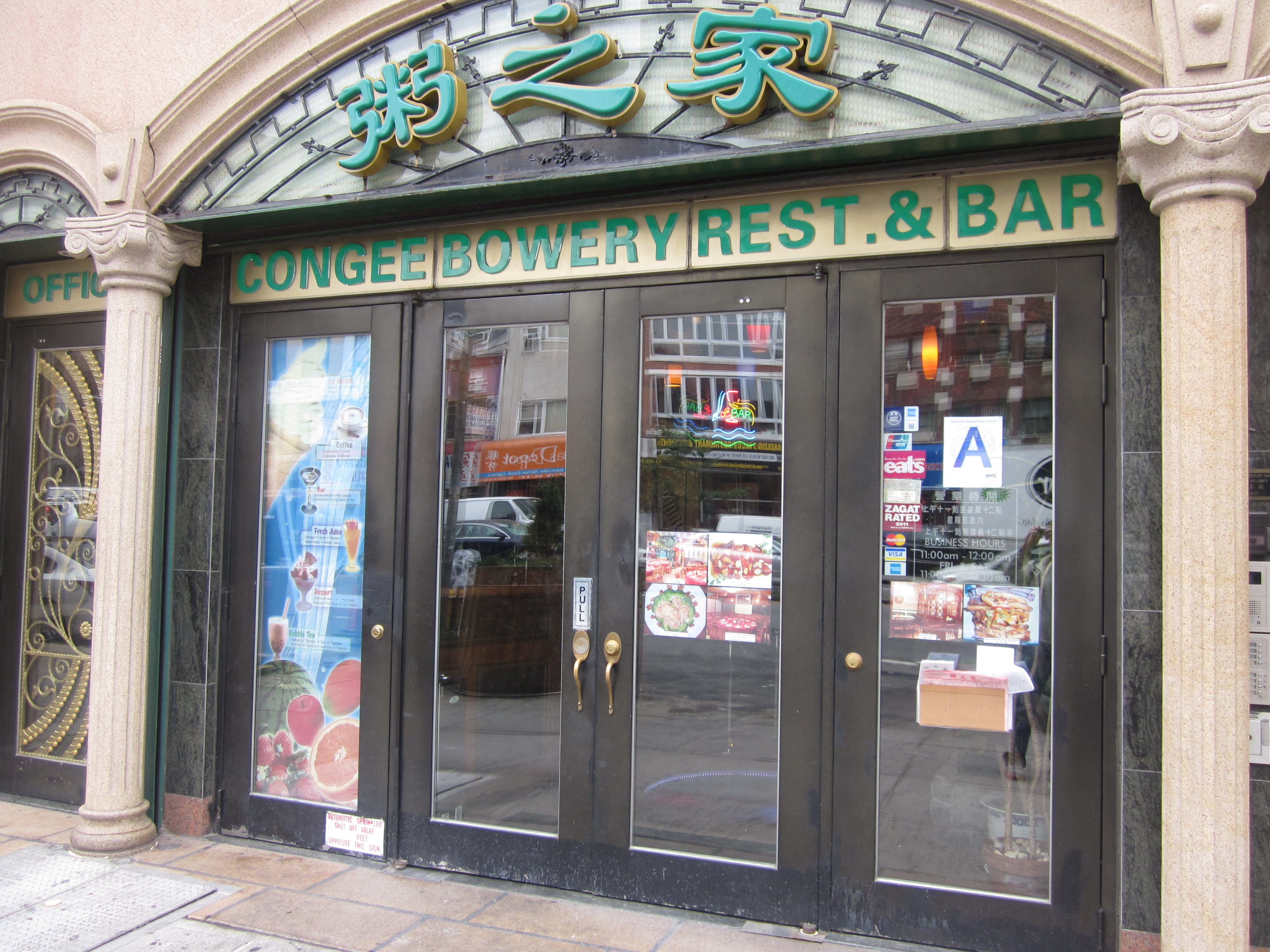
For sticklers, Congee Village might not be considered a Chinatown restaurant. Located a few blocks north of Delancey Street, you could say the restaurant was technically in the Lower East Side. But Chinese-run restaurant supply and lighting stores populated the street northward, along with an abundance of signage in Chinese; enough to figure Congee Village within Chinatown’s expanding sprawl.

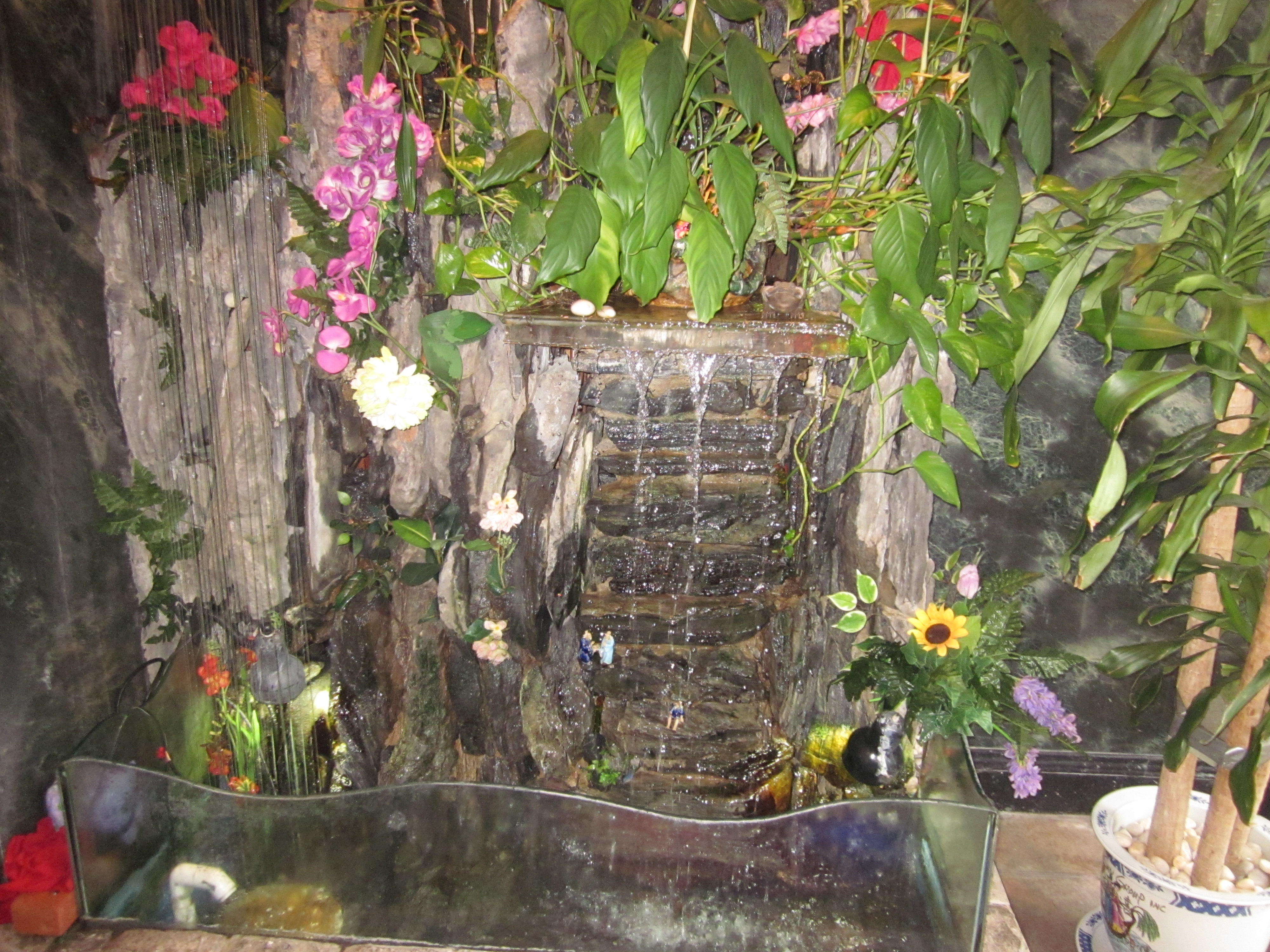
A full bar and a trickling waterfall greeted us as we entered the very ornate Congee Village. This was a complete departure from the grungy, yet refreshingly familiar confines just experienced at N.Y Noodletown.

Congee Village waterfall

A lovely waterfall greets you upon entrance to Congee Village.

We were given a table in the dark, burnished wood laden dining room complete with large, family-sized booths and a flat screen television tuned, at this hour, to NY1 news. There were tablecloths and wine glasses on the tables yet the napkins were of the thin, paper variety.

“What a tourist trap,” Zio muttered.

I looked around. The few tables that were occupied were with groups of Chinese couples and families, and unless they were out of town Chinese, I had to disagree.

“Looks like a local favorite to me,” I said.

The menu, tourist trap or not, was impressive. Despite the name of the restaurant, we had to flip through a number of colorful pages to find the congee. When we did, the prices, waterfall and full bar notwithstanding, were actually lower than N.Y. Noodletown’s.

Sticking to the seafood theme of the day, I ordered the “crab porridge,” while Zio this time choose squid. If there were crullers, I just didn’t have the courage to order them.

The bowls arrived and looked like what Luigi and I had at Congee; pots with long handles. Smaller bowls were given out making it easier to share.

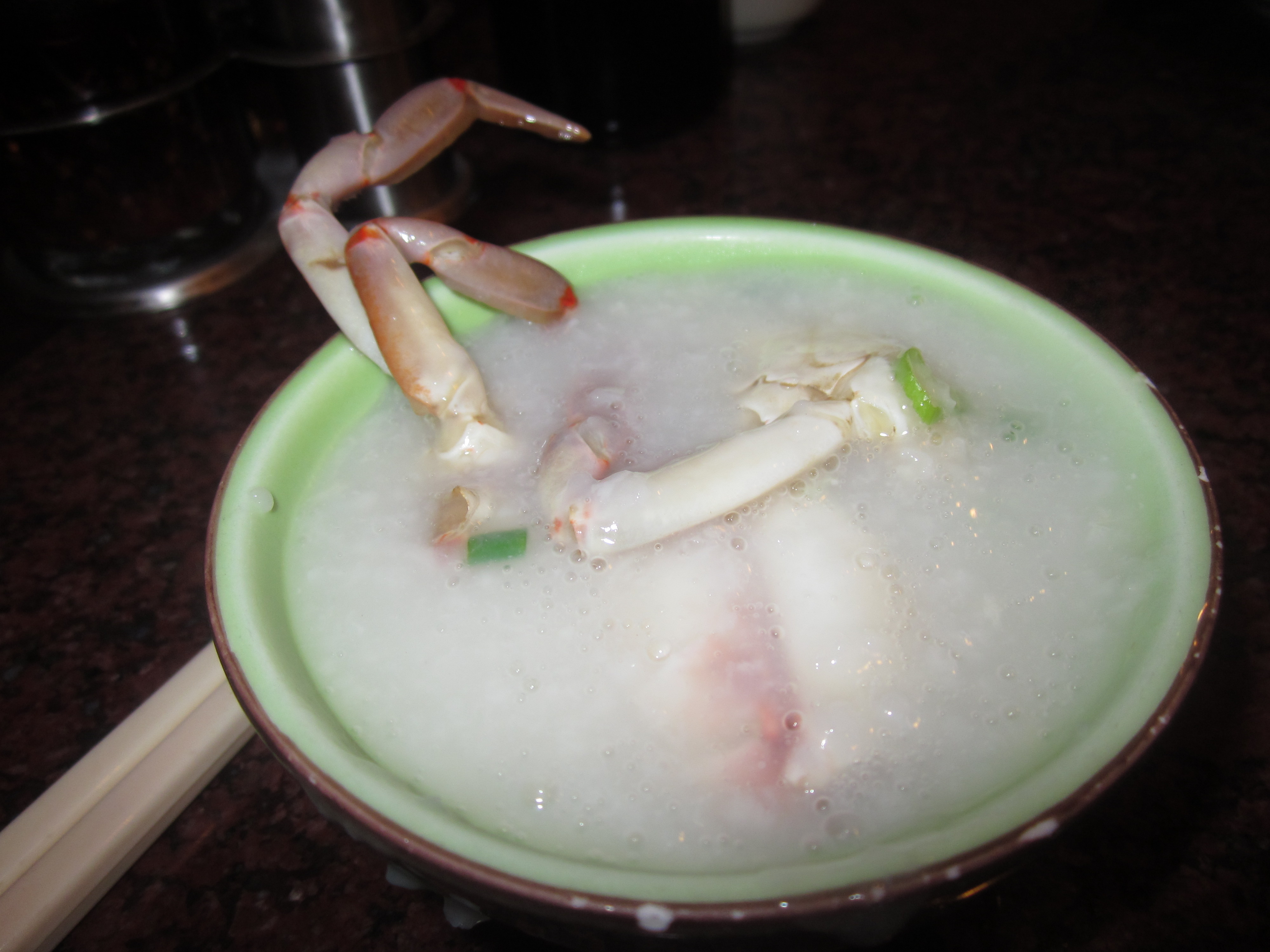
Crab porridge

A whole, blue crab was in my bowl, chopped into a few pieces. Like the shrimp infused the congee at Noodletown, the crab definitely added flavor to the bowl here at Congee Village. The melding of the shellfish broth with the rice congee was a revelatory match. To eat the crab, however, I had to fish out the pieces and pick the shells apart with my fingers. It was messy work and the thin napkins weren’t helping. But the congee was so good, even Zio’s crude, distasteful remark about what my fingers looked like coated in crab shells and overcooked rice gruel didn’t deter from my enjoyment of it.

Zio fished a piece of squid out of his congee. It was scored with numerous criss cross patterns. He examined it. “Why do they get fancy with the squid,” he complained.

“Does it taste good?” I asked.

“Yeah, it’s fantastic,” Zio said.

“Then who cares.”

I sampled a piece and though it was tougher than I like, it too worked amazingly with the bland congee.

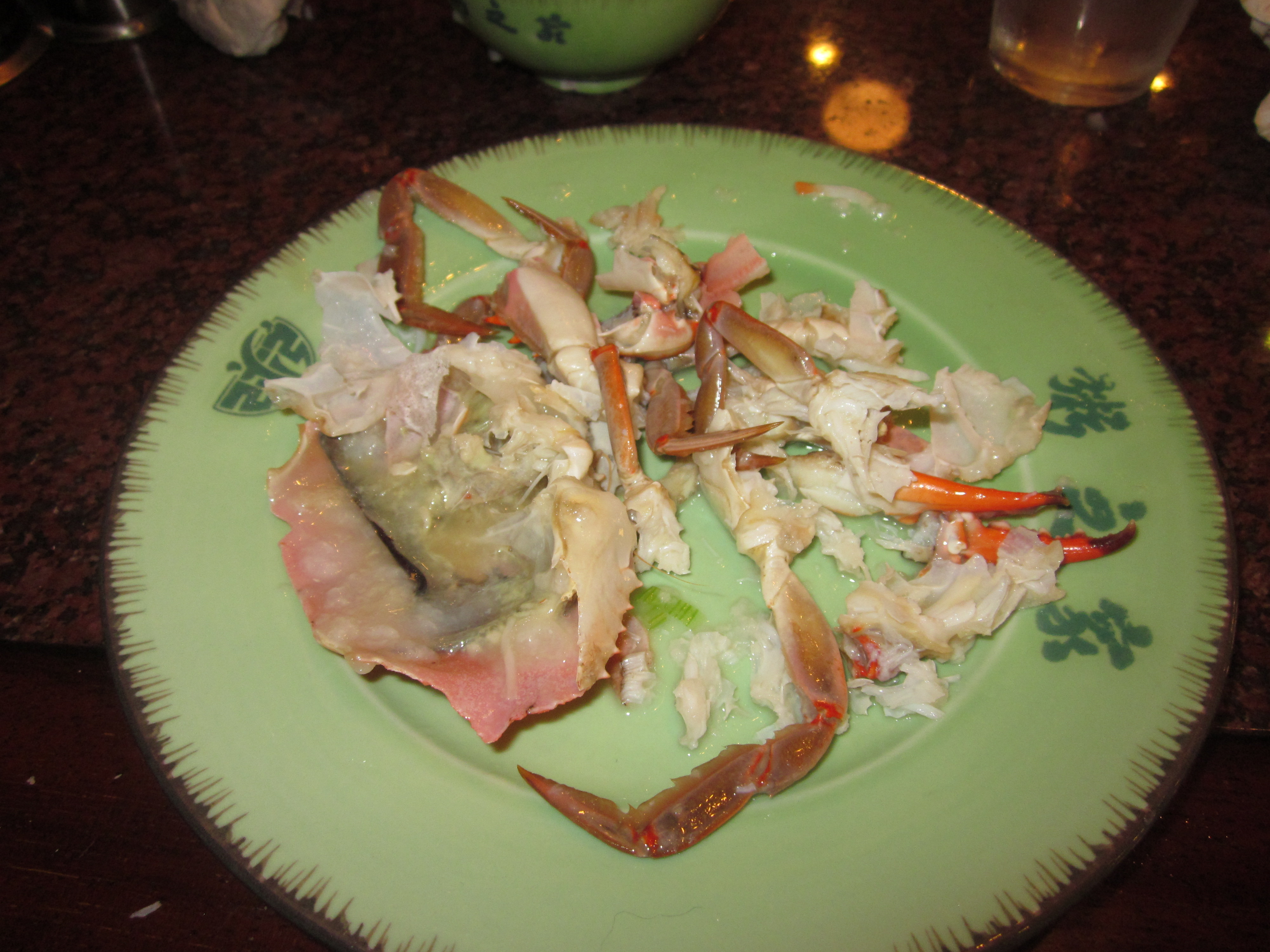
There would be no leftovers here. We could finish the congee and not worry about having to sample another. The crab remains were scattered across my small plate.

The remains of the crab.

“So what do you think?” I asked Zio.

“We really gotta pick a winner?” he whined.

I thought for a moment. I didn’t want to either. Each of the four congee joints had their merits. At Congee, I would stick with the pork and preserved egg while at Big Wong, how could I resist the roast pork congee? There was no denying that Noodletown’s shrimp congee was a one of a kind. And here, at Congee Village, I’ll forever swear by their crab porridge.

Yes, I know I’ve copped out. I couldn’t crown a champion. I’m just no good at these things—these numbered lists where you have to rank your favorites, whatever they may be. Congee preference is subjective. No matter how expert my opinion, I really can’t change someone else’s taste inclination. And in this case, one man’s congee just might be another man’s gruel.