Tag Archives: New York City

Yak Under the Tracks

15 Mar

After traveling to Queens numerous times in the almost four years we had been doing this, in 2005, we coined the area under the number 7 train tracks around Roosevelt Avenue and in the environs of Woodside, East Elmhurst and Jackson Heights as the “epicenter” of our Chow City food universe. And it pretty much remains so six years later.
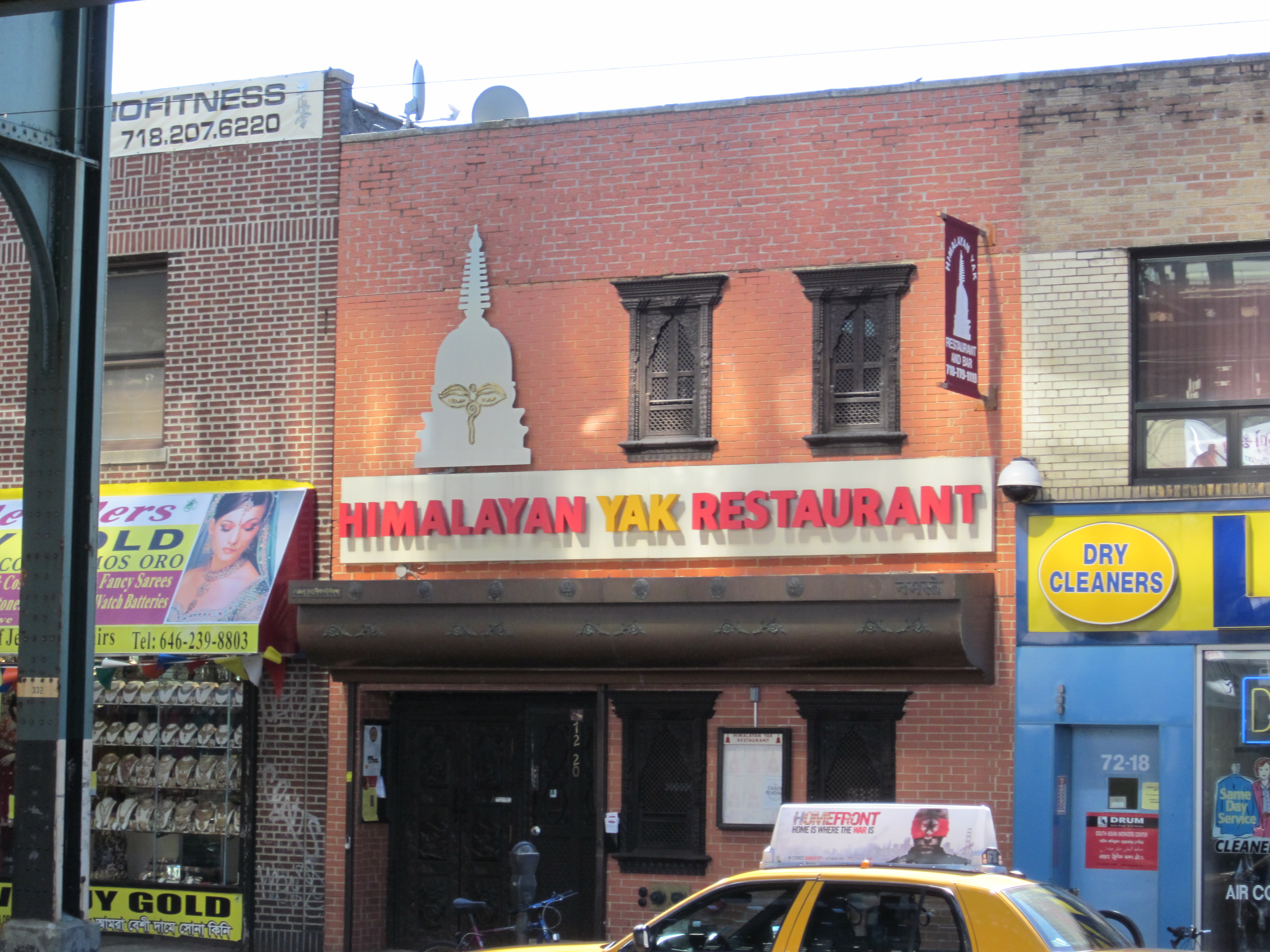
Himalayan Yak
72-20 Roosevelt Avenue
Jackson Heights, Queens

Eugene had his sights set on a Tibetan restaurant for a long time. We really don’t know why the cuisine of Tibet intrigued him. He didn’t know much about the region. He didn’t know it had many high mountains. He didn’t know it had monks. But something was telling him—or so he casually said as if he were referring to Chinese food, “that it was time we ate Tibetan.”
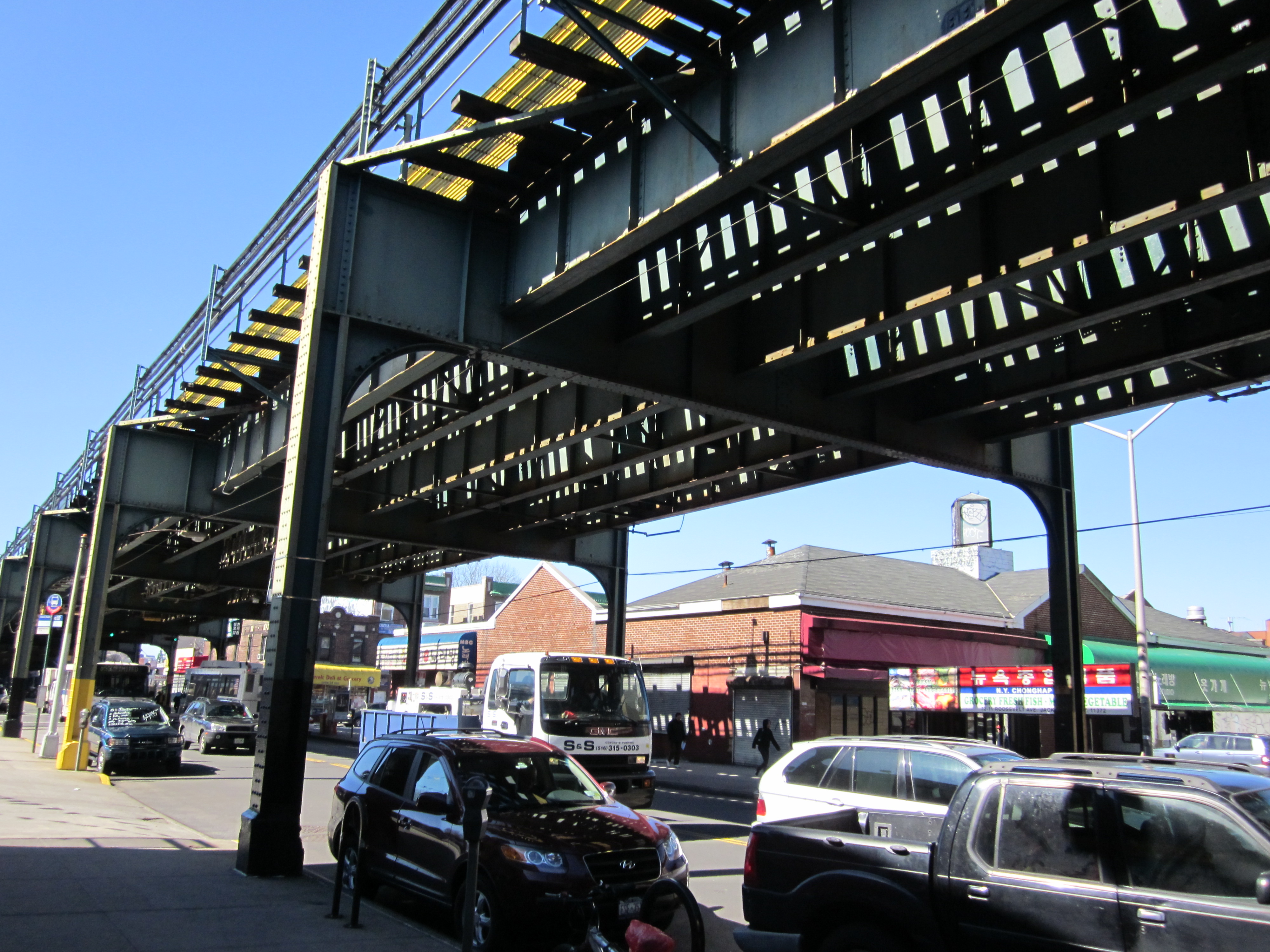


So Himalayan Yak was found—in the epicenter of our culinary universe, just under the number 7 train on Roosevelt Avenue in Jackson Heights, Queens. Though the title implied yak might be on the menu, there were no yak offerings to be found there. That was fine with Zio who grumbled upon learning where we were to eat that he was, quite frankly, getting sick of yak. “No matter how you prepare it, it still tastes like yak, smells like yak, and looks like yak.”
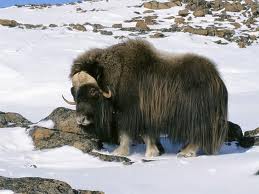


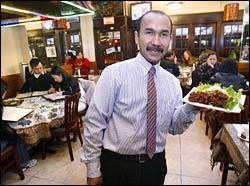
Though there was no yak on the menu, there was, however the promise of goat brain and ox tongue. Zio brightened at that prospect but was disappointed when our genial Tibetan waiter quickly informed us with a straight face that they were out of brains and tongue. We would have to settle for more pedestrian fare such as shabaleb, a doughy patty stuffed with a tough slab of ground beef that was pink, almost tartare-like. Or the la phing, a cold spicy bean jelly that was tossed with garlic, vinegar and soy sauce that our newest member, Mike from Yonkers took one bite of and, to the dismay of the rest of us, immediately spit out into his napkin and excused himself to run to the bathroom. The la phing and its slime-like consistency certainly had to be an acquired tasted among the Tibetans, but regardless, we expected more temerity from the Tae Kwon Do-trained Mike from Yonkers.  The tsel phing, on the other hand, bean thread in a broth with vegetables and two tingmos (Tibetan steamed rolls) was the perfect comforting antidote to the admittedly revolting la phing.


One of Yak’s special entrees was the gyuma, ten very dark sausages filled with beef that were so good would they would undoubtedly tempt even a vegan monk. What we sampled from the Nepalese kitchen side of the menu was reminiscent to Indian food. The haku chhwela, roasted pieces of lamb were tender and fragrant with Indian spices, while the achar was similar to aloo gobi, pieces of potato and cauliflower in a thick curry. Both were devoured almost instantaneously by our gluttonous group.

Though they do not need worldly pleasures to find fulfillment, Tibetan monks, I had heard, make an exception when it comes to sweets. You wouldn’t know it from what was offered at the Yak. The dey-see, steamed rice with yogurt, raisins and butter had only a hint of sugar and would have made a better breakfast choice than one to follow the likes of ten beef-filled sausages, while the bhatsa markhu, a hand made pasta that reminded Rick of cavetelli with barley, sugar, butter and grated cheese and according to Gerry tasted somewhat like the Jewish dish, kugel, remained practically untouched, a rarity in our insatiable circle.

Our feast was accompanied by a pot of buttered and salted Tibetan tea. The creamy, salty tea at first was a shock, but after a few sips grew on all of us. It would have been the perfect beverage for a wind-chilled night in a tent in the mountains. Not so perfect, however, for a muggy September evening with the scent of gasoline from the next door gas station.


“Good news for all meat lovers,” proclaims a streaming headline on the Himalayan Yak website: www.himalayanyakrestaurant.com. “We now have Yak meat on our menu.” This might be good news for meat lovers, but maybe not so for yaks. I recently returned to Himalayan Yak for the first time since our 2005 visit and could not find any yak on my menu. Besides the supposed addition of yak meat, the restaurant has blossomed—if you can call it that—by adding three flat panel LCD television screens positioned next to bucolic scenes of Tibet and a Buddhist altar and proudly, as all restaurants do, displaying their well earned blue A from the Department of Health in their window…and on their website. There is also live Tibetan, Hindi, and Nepali music in the now sleek dining room. I confess to never having heard Nepali or Tibetan music but wonder if it’s prominent enough to help drown out the consistent rumbling of the number 7 train just outside Himalayan Yak’s door.
Black and White Fantasy

11 Mar

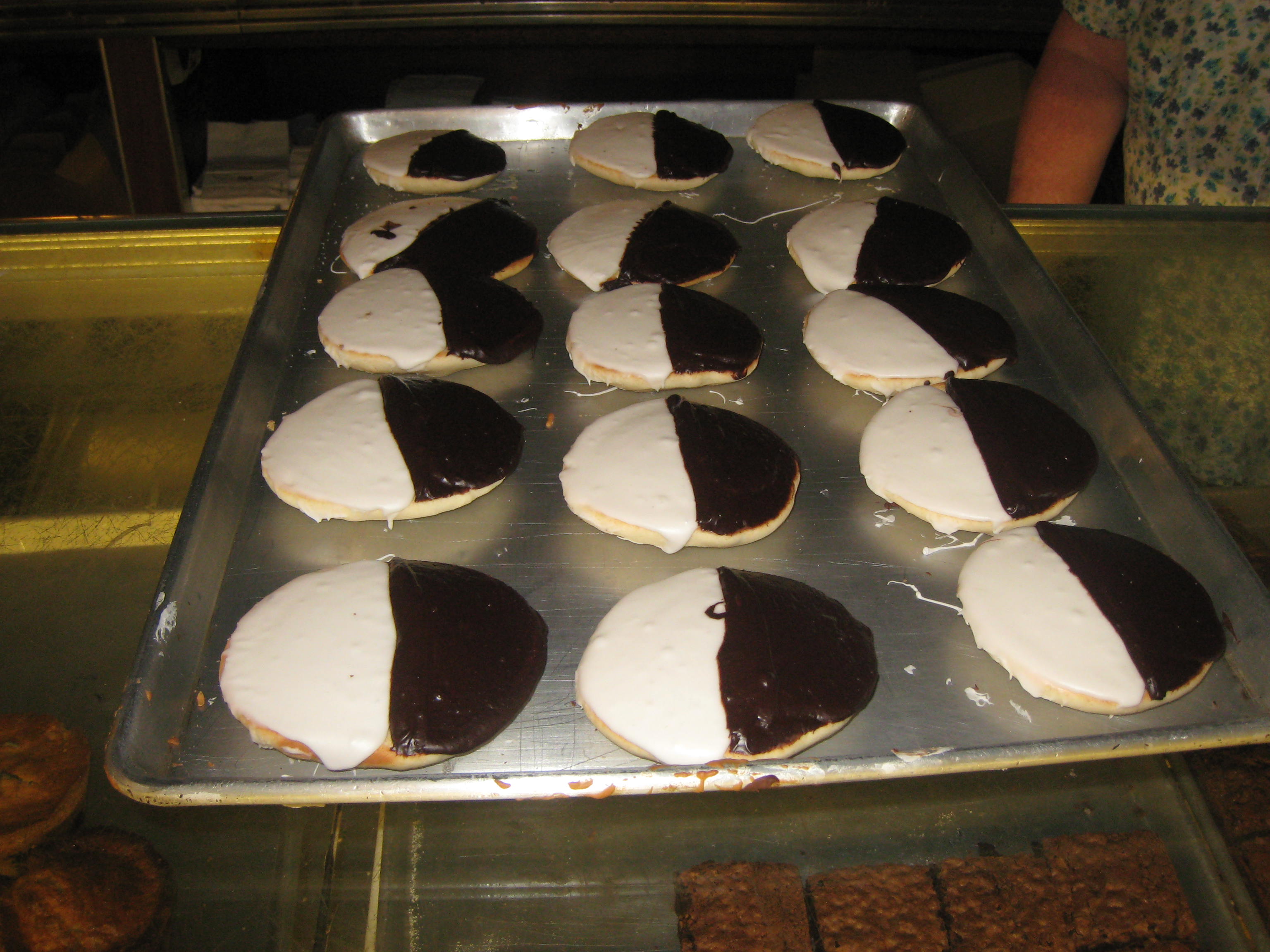
I can see them from outside the shop.

They’ve just come from the oven

and now spread out on a sheet.

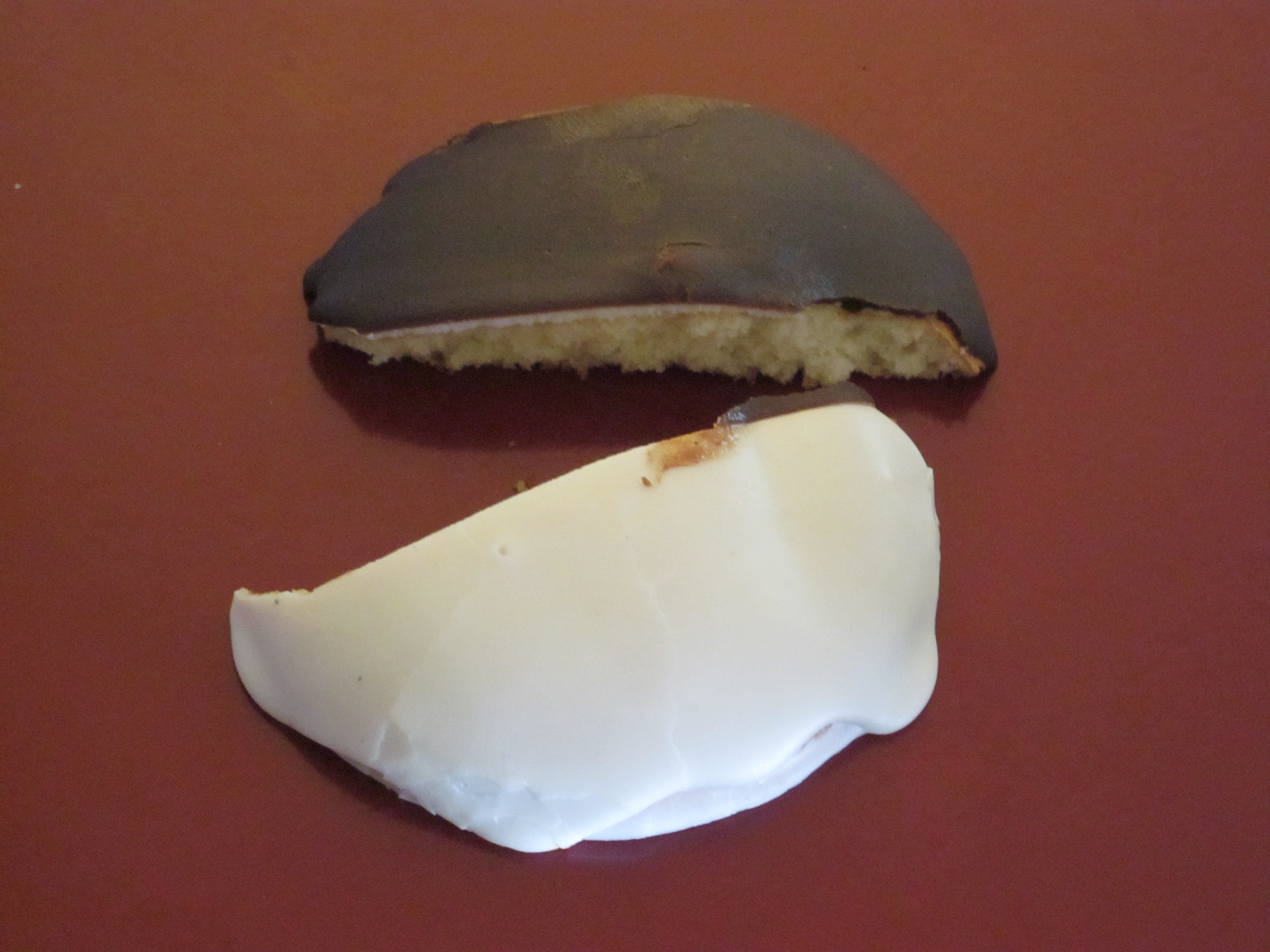
Rows of round cookies

with shiny frosting on top.

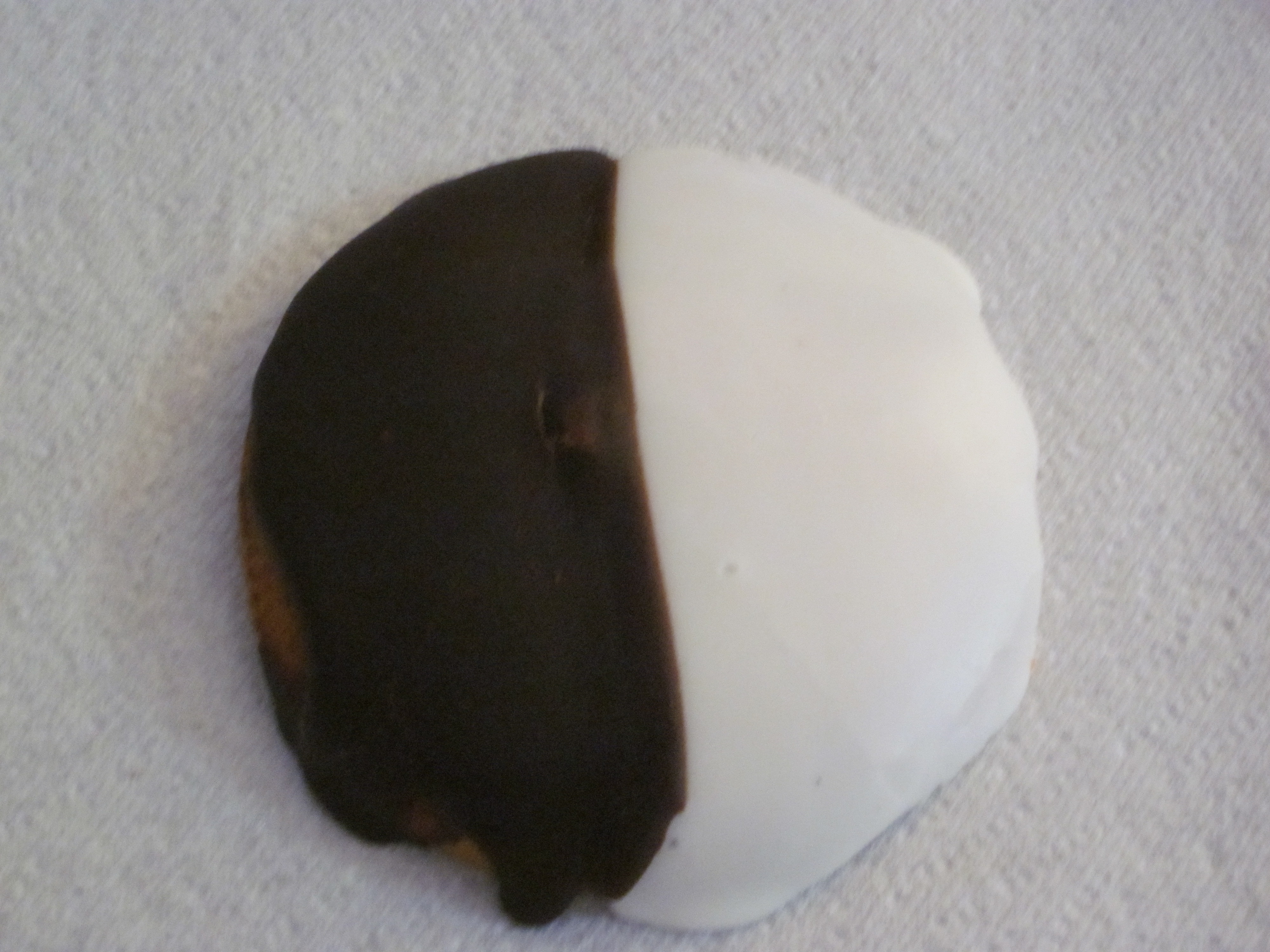
Half black.

Half white.

No need to compete.

Equal partners in sweet sin.

The yang

and the yin.

Ebony

and ivory

existing as one.

Equal partners

in blissful harmony.

I’ll buy one for sure

and save it for later

I say every time.

But I have no control.

I have no restraint.

And my hand is in the bag

before I’m even out the door.

Inside the bag, my hand gropes the warm moist mound.

What am I searching for?

What will be found?

Determined fingers break off a piece.

Will it be white?

Will it be black?

I have no preference.

I play no favors.

I want to be fair.

I want to do what’s right.

I pull it out

and look at what I hold in my finger.

My heart sinks a bit.

And then I get mad.

I’m not happy.

I don’t like the sight.

Because in my finger,

I hold the white.

Harmony broken,

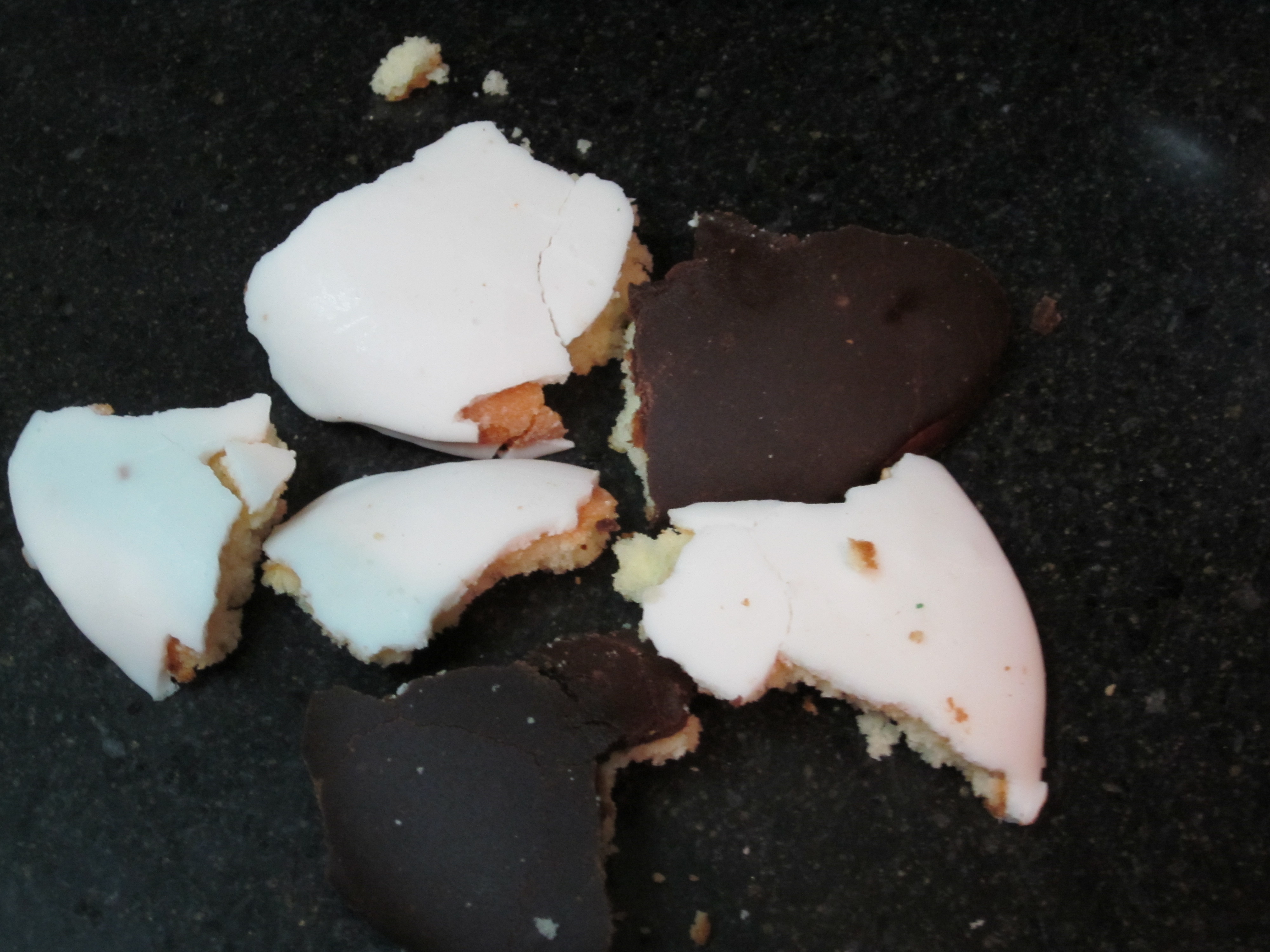
I pull out the cracked cookie.

Black is better,

There’s no denying.

If I said any different,

I’d just be lying.

Still it wouldn’t make sense,

to throw the white away.

So I’ll eat it first and get

that out of the way.

One sweet brother gone

half a cookie remains.

So much for togetherness.

Nothing stays the same.

I’ll eat the black

until nothing is left.

I’ll enjoy every bite,

I’ll have no regrets.

My belly full now,

remorse sets in.

My mind is in conflict.

Because I favored the yin,

when in my heart,

I know I’ve panged,

to give equal respect to the yang.

Some say it’s a fantasy;

that there’s no such thing

as cookie equality.

But peace can exist

in one perfect round.

A place where sweet truths

can often be found.

It’s not hard to discover

the secret of black and white.

It’s easy really.

All it takes is one bite.

The cookie crumbles.

Extending Familia

8 Mar

This 2005 visit to Braulio’s & Familia marked a return, albeit, temporarily by Charlie to our group. More significantly, it was the debut of new member, Mike from Yonkers. And as I recall, the company was more memorable than the meal.

Braulio’s & Familia
3908 63rd Street
Woodside

Was Gerry usurped when Zio choose Braulio’s & Famlia, the Ecuadorian restaurant, as our most recent destination? Or was there a leak among the participants to aide Zio in his choice. The facts show that there was no crime committed. A couple of months back Gerry had chosen an Ecuadorian restaurant in Portchester, an increasingly multi-ethnic suburb in Westchester. But his pick was waylaid by circumstances beyond anyone’s control: a wall collapsed on the West Side Highway and Gerry’s knee buckled under the pain of the knife; he had surgery on it the day before. Thinking he might be a food hero and limp courageously to the table, he did not postpone our dinner. But even as devoted Gerry is to our cause, the percodan he was taking to alleviate the pain would not only take away the pain, it would numb his senses, including the all important sense of taste. So, regrettably, his unique yet remote Portchester selection was nixed.

Zio’s selection came next and, as he always does, he researched the internet studiously,  narrowing his choices between Braulio’s and an Indian restaurant in Richmond Hill , Queens . The pick was Braulio’s, located in Woodside, a block from the shadow of the elevated number 7 train, a neighborhood so ripe with a variety of inexpensive ethnic restaurants that traveling to Portchester would be folly. Though Rick was excused from joining us, we were most happy to welcome Charlie back, who made the trek from Pennsylvania .

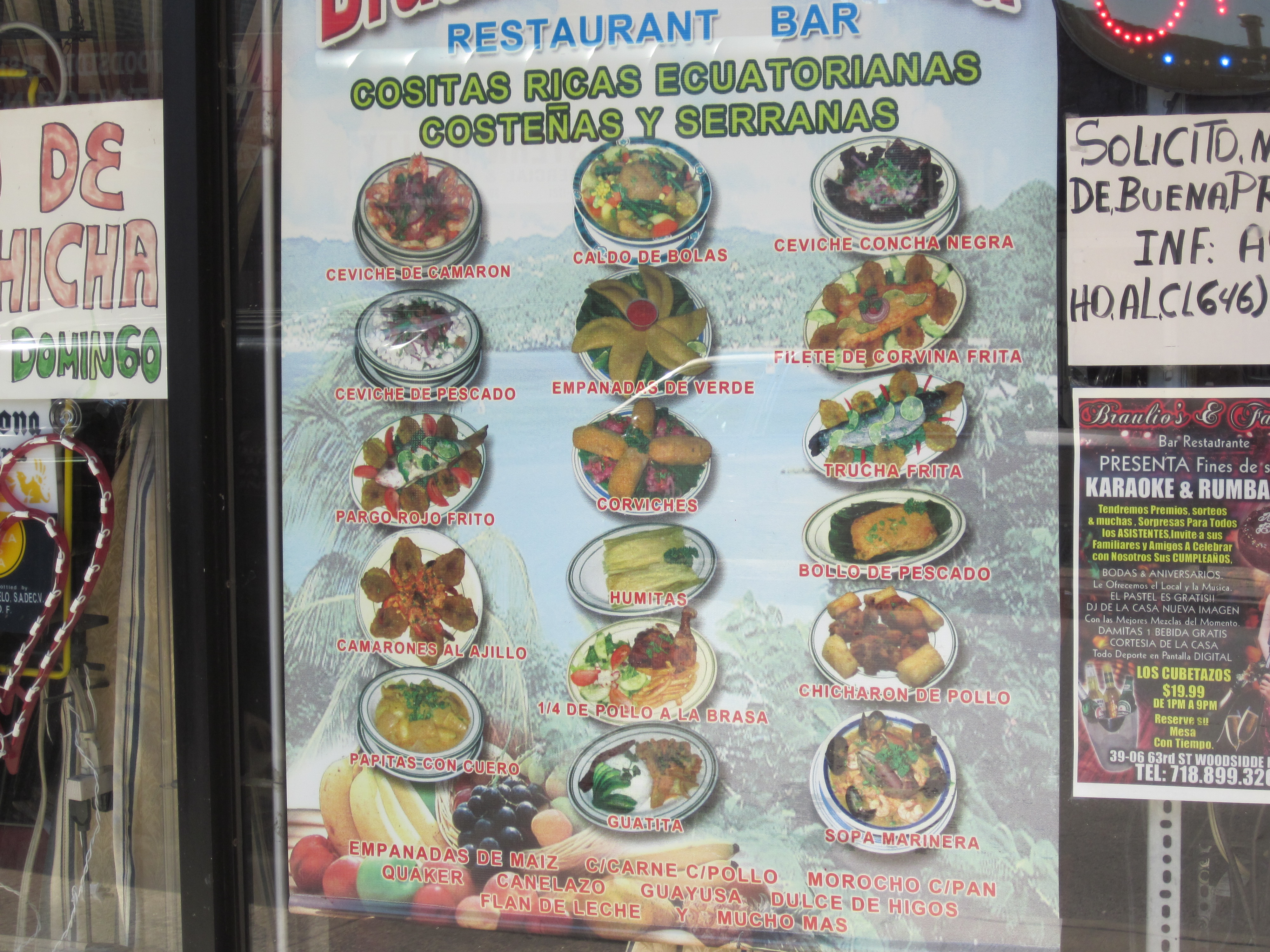
Our host, Senor Braulio, was on hand to make sure we were comfortable and if he could be of any help with the menu. We always appreciate assistance from the waiters or owners who might guide us in properly selecting the restaurant’s absolute authentic cuisine and Senor Braulio was more than happy to do so. So, instead of poring over the impressive and extensive menu ourselves, we gladly let him order for the table.


Both Peru and Ecuador are renowned for their ceviche and we previously experienced Peruvian ceviche at the excellent La Pollada de Laura in Corona two years ago. Now was our chance to sample the Ecuadorian version. To accommodate our extended familia of six, Senor Braulio had the kitchen prepare a custom-made, mixed seafood ceviche.

Dried hominy corn kernels, crackers, a spicy yellow pepper garlic sauce and bread that intentionally or not, was stale, was brought to our table as accompaniments to our ceviche. We, however, are an impatient group and began munching on the accompaniments—even the stale bread. Finally the big bowl of ceviche arrived brimming with seafood in a marinade. Unlike the clear marinade of Peru, this marinade was green. There was octopus, shrimp, fish, and what is known as “black clam.” I asked Senor Braulio about the black clam and it wasn’t that the clam belly was black, just the shell. Since there were no shells to be seen, we took his word on this. The ceviche was tangy with lime and vinegar, the green color coming from the extremely generous amount of cilantro tossed in. The seafood was “cooked” perfectly in the marinade; nothing tough or suspicious tasting or smelling.


As we waited for our meat platter, Senor Braulio pulled down a big screen and turned his many televisions on to EcuaTV, the television station of Ecuador . He came over to our table and apologetically exclaimed that there was a big soccer match on and hoped we wouldn’t mind, which of course we did not. It was Barcelona (not the Spanish city) vs. Nacional, two Ecuadorian club teams. The restaurant soon was full with groups of men, large bottles of Pilsener, Ecuodorian beer in front of them, watching the game with comparable zeal to our watching a Sunday NFL game.

Soon the huge meat platter appeared; a variety of grilled, seasoned meats, beef, pork, chicken, and sausage along with steamed hominy, green fried plantains, and a very pleasant green salad in a cilantro-flavored vinaigrette. Senor Braulio estimated properly and there was more than enough for the six of us. The meats and the accompaniments were perfectly fine, but what was missing was variety. By ordering familia-style we were not able to sample the curiously-named “ball soup” or the Ecuadorian fried fish, or the rice with black clams, or the tripe with potato, just to name some of the menu’s interesting offerings. In retrospect, opting for the easy route and having Senor Braulio order was a mistake.

Joining us to help devour the food was a potentially new member to our group, Mike from Yonkers . Mike from Yonkers displayed proper passion for our venture, but raised a few eyebrows within our circle when he expressed concern that there might be more food coming after the gigantic meat platter. He quickly realized his error—the promise of more food should never be cause for concern—and knew better than to refuse a few bites of the dessert of figs and cheese.

There’s always room for some figs and cheese.

On a recent visit to, I passed Braulio’s & Familia. They have prospered since our 2005 visit and on the take out menu I noticed that they now have karaoke on the weekends and that the ball soup is still available. Their menu also claimed a website but when I tried it at home, it came up blank.  Charlie has not returned to the group since our visit to Braulio’s & Familia, though Mike from Yonkers has become a mainstay. You will read much more about him in the posts to come here on the Adventures of Chow City segment of Fried Neck Bones…and Some Home Fries.

C is for Chow

4 Mar

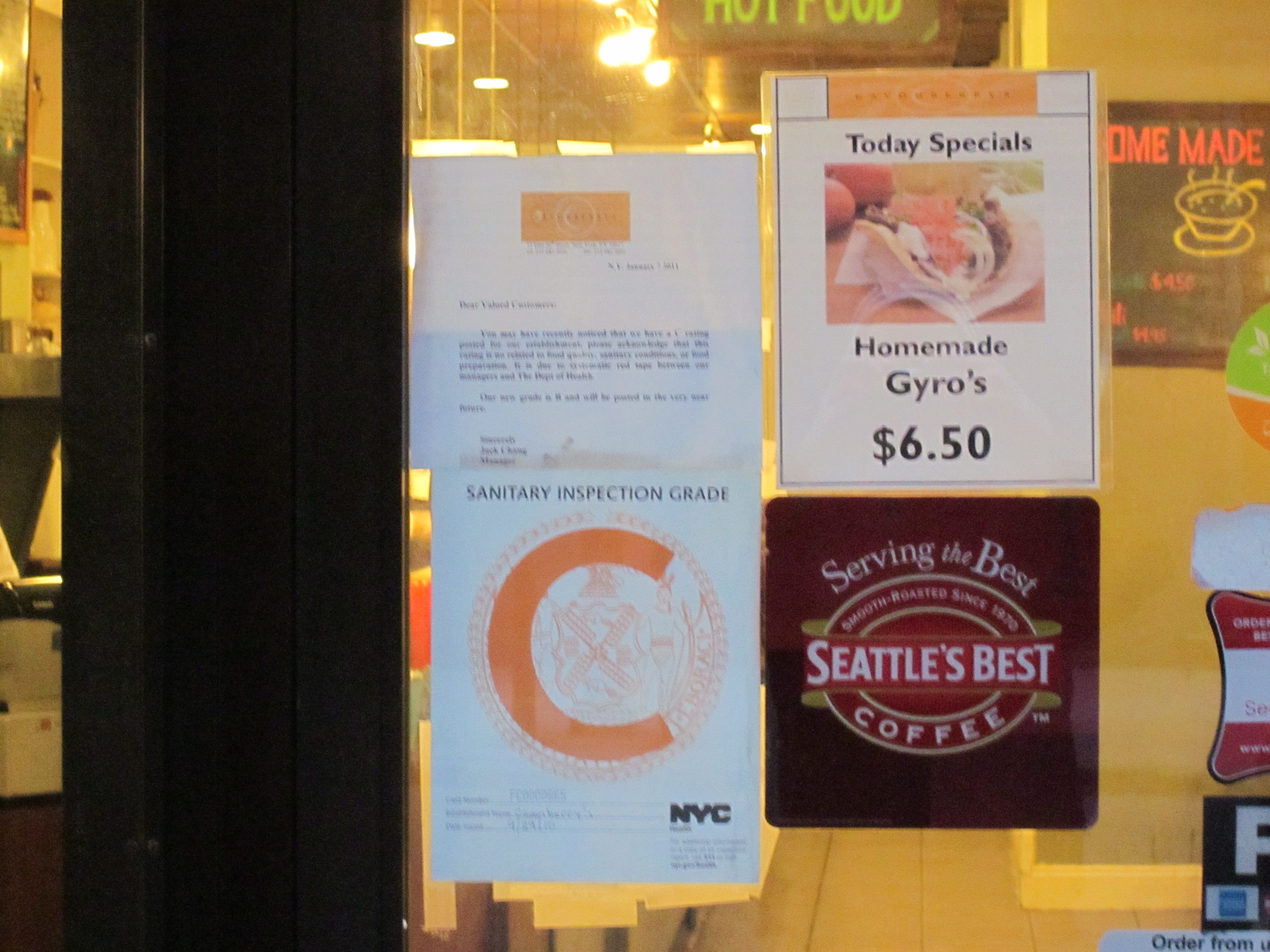
I don’t know about you, but I’m tired of seeing all those glowing blue “A’s” in restaurant windows.

They are everywhere; on Dunkin Donuts windows, Subway sandwich shops, and, like above, in the window of an Ethiopian restaurant. Their smug perfection is right up there in your face; a constant reminder of the absence of them on so many of my own report cards. Sure, we all strive for perfection, but really, what kind of world would it be if everyone was an “A?” So when, finally, I came across a big orange  C, I felt much better.

Now that’s a grade I can relate to.  I was so excited I almost ordered the homemade gyro. Almost.

Have a great weekend. Look for a new Adventure in Chow City on Tuesday.

Harlem’s Sisters

1 Mar

I remember having dual purposes in bringing our group to Sister’s Caribbean Cuisine. It met our criteria as you will read below and I also had been assigned to review it for a weekly New York-based magazine. I felt slightly guilty about reviewing it. Would my coverage of Sister’s in a major glossy destroy the authenticity we seek out for our group? Read my postscript  below to learn the answer.

Sister’s Caribbean Cuisine
47 E. 124th
Harlem

With a few notable exceptions (overpriced Turkish food in remote Sheepshead Bay—thanks Gerry) our group has had little difficulty in meeting our criteria of a $20 per person maximum tab, drinks excluded. Many of our choices have been much less than that; the Old Poland Bakery from earlier this year possibly being the record low. But it’s not only about price with us, it’s also about atmosphere. For our group the ideal atmosphere is no atmosphere. Paper plates and utensils are a good sign. Wobbly tables are encouraging. Friendly waiters and/or owners whom we have to converse with using hand signals due to language difficulties is usually a plus. And, of course, the food must be exciting and genuine. It can’t be dumbed down for a “crossover” clientele. We want what “they” are having; “they” being those who live or work near the establishment usually of the same ethnicity of that particular restaurant.

In many ways, Sister’s Caribbean Cuisine, located in the middle of Harlem across from Marcus Garvey Park, epitomized what we search for. The restaurant was small and much of the business was takeout, but it was sparkling clean and along with a few paintings of Caribbean scenes, curiously and to Eugene’s delight, there was a large photo of the 1980’s Boston Celtics playing on the parquet floor of old Boston Garden. Good R&B from the ‘70’s was playing. Our table was not wobbly, nor did we need sign language to converse with the affable Marlyn, host/owner of Sister’s. But we did eat off paper plates and the menu seemed genuine.


The food on the menu was primarily Caribbean, though not from one particular island. Marlyn, was from Guyana and her country was represented on the menu by masala curry chicken, chunks of chicken on the bone in a thick, dark brown curry fragrant with Caribbean and East Indian spices, her cooks were from Trinidad and that island’s specialty, roti, curried chicken, beef or vegetables wrapped in an Indian-spiced flatbread was available, as was Jamaican jerk chicken, here minus the smoky flavor from a genuine jerk pit, but tender and fragrant with a mild bite of heat. Salt cod, known as “saltfish” in the Caribbean was stewed in a piquant tomato-based sauce. Marlyn was impressed with our tenacity when we went above and beyond by ordering yet another dish, the oxtail stew, served in the same tomato-based sauce as the codfish.

It wasn’t that the four of us, Zio was absent, back in Glastonbury doing his part in ridding eastern Connecticut of a variety of pests and vermin, could not handle the entrees, it was what came with them. Each entrée was accompanied by a paper plate with two sides that exceeded the size of the entrée. We had piles of rice and peas, the rice speckled with kidney beans and infused with coconut milk. We had callaloo, the Caribbean equivalent of collard greens, here mixed with okra. We had curried chick peas and potatoes, and cabbage and carrots, and string beans, and collard greens, and macaroni and cheese, and corn bread. And, of course, we ate all of it and added three desserts as well; carrot cake, pecan pie, and despite Gerry’s vague “I just don’t like it,” referring to our last choice: red velvet cake. For all that food, and a few drinks, including sweet homemade sorrel and lemonade, our tab was a lowly $45. So, as far as our experience at Sister’s Caribbean Cuisine, in the words of our ignominious commander-in-chief, “mission accomplished.”


I now live not far from Sister’s and I am happy to report that despite my review, it remains exactly as it was in 2005. Even the photo of Boston Garden is still on the wall. Though in my recent visit, I chatted with a man working the orders behind the counter. He explained that Marlyn had “retired” but soon her sister (one of the three “Sisters” of Sisters) was about to resume her lead role in running the restaurant. And when she did there might be “some changes.” I wasn’t sure if that was good or bad, but I planned on finding out.

And the Answer is…

28 Feb

On Friday I gave you a simple red curtain. Here it is again.

Now,  a few hours after taking the above picture. They wait in line…

…to get here.

So they can eat this.


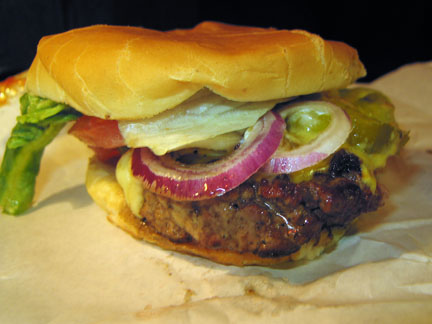
Burger Joint Burger


Yes, it’s the Burger Joint off the lobby of Le Parker Meridien Hotel.  The burgers here are rated by many as the best in New York City. And I just might have to agree. This one had you stumped.  No one knew what was behind that red curtain.  Last month’s was too easy; this one too difficult. Where is that middle ground? Maybe we’ll all find it the next time we play Name That Place.

Name that Place

25 Feb

The clamoring for another round of Name that Place has been deafening. So back by popular demand is the newest Name that Place challenge. In the last game, I was rightly criticized for making the image, along with a couple of hints, much too obvious. This time I plan on making all you contestants work a little.  Take a look below:

What’s behind that red curtain?

It’s a simple blood  red curtain, is it not? But often there are long lines to get to the carnivorous treasures  behind that curtain. And that’s as much as I’m saying.

Let me know your answers in the comments section below and on Monday I will reveal the “place.” Once again, all winners will be treated to a year’s subscription of Fried Neck Bones…and Some Home Fries; an award with an indeterminable monetary value, yet considered by many, priceless.

Spice Tsunami

22 Feb

Upi Jaya, of which I have written of below, was our first experience as a group with Indonesian food. We still had not replaced Charlie and for this venture were only four. After eating at Upi Jaya, I think those of us that were present were unanimous in proclaiming the restaurant, along with Tandoori Hut and Malaysian Rasa Sayang as our top three places in the three years we had been gathering for these dinners.


Upi Jaya
76-04 Woodside Aveue
Elmhurst


Upon awakening the morning after eating at Upi Jaya my youngest son shrieked, my wife cowered, and the dog sniffed curiously around me. It was as if there had been a full moon and I had been out all night stalking fresh meat in the forest. There was a raw, coarse odor permeating from my pores; something earthy, yet not of this earth.

It has been a very tough year for Indonesia. The tsunami devastated many of the islands and the earthquake last month added another tragic punch. We’ve all donated to tsunami relief, but I thought that bringing our intrepid group to eat at this Indonesian restaurant in Elmhurst, Queens, one of only five in New York, would, in some small way, help the suffering economy thousands of miles and half a world away. And at the same time we would be satisfying our collective consciences, we would be happily filling our already bloated stomachs.


Rick was a late scratch so there were only four of us for this outing, but Som, the owner of Upi Jaya and a very helpful host, had a table ready. He was anxious for us to try Indonesian cuisine and pleased that we were the adventurous types who were willing to take on anything. And here that meant pulling no punches when it came to the spice meter. None of us had really ever had authentic Indonesian food, so just about everything on the menu was virgin territory. We left the ordering in Som’s very capable hands.

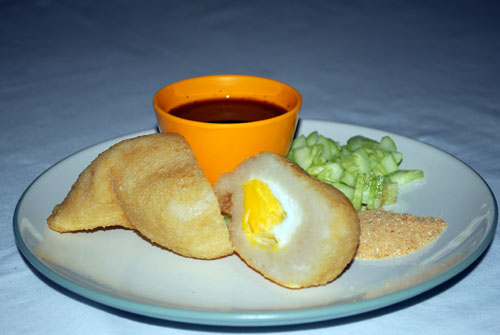
While we waited for our food, Indonesian Karaoke tracks with videos were playing on the television. With the words slowly displayed on the screen, we soon were getting the hang of the tricky Malay language spoken in Indonesia. But the music and the videos were, after a bit, just a distraction to the food. To start, Som brought out one of the specialties of the house, gado gado, a mixed salad smothered in a spicy, though not hiccup-inducing, peanut sauce—kind of an Indonesian cole slaw. Along with the salad, we had pempek kapal selam, a broiled fish cake with a cooked egg yolk inside, served in a hot and sour, cold soup like sauce, and the one familiar item on the menu, beef sate, though the dark, spicy peanut sauce was different than what I’ve had in Thai and Malaysian restaurants.


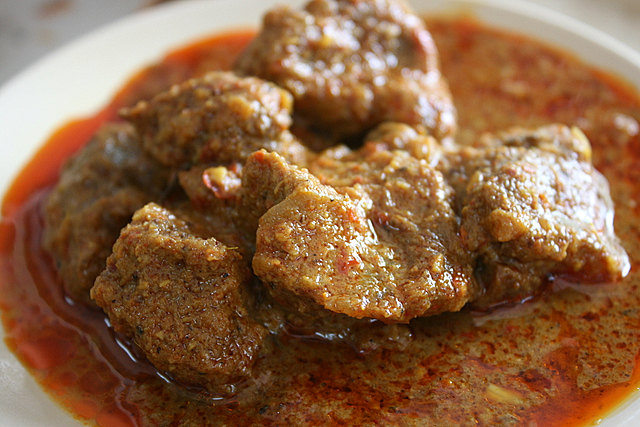
The most famous item on the menu, according to Som, was rending padang, pieces of beef rubbed in a fiery paste and slow cooked to absolute tenderness. We ordered the small portion, which was more than enough for our group especially since, with the heat in the dish  being truly volcanic, a little went a very long way. Then there were the curry beef ribs in a chili/garlic coconut milk sauce and shrimp broiled and cooked with chopped chili peppers. The only relief for the spice assault was the white rice—and that, with shaved fried garlic bits on top, even had a bite to it. Finally, Som recommended a vegetable which we, thinking it would be a cooling alternative, gladly agreed to. But we should have known better; the sayur daun singkong, a soup of kale and coconut leaf also had a sizzling snap to it.

The waiter kept the water coming, but it did nothing to diminish the heat in our mouths. Some might think eating hot spicy food like what was served at Upi Jaya is a masochistic experience, but they are wrong. If done right, as it was here, the experience is thrilling; almost cleansing in a way. We were having food that yes had intense heat, but it also had intense flavor and for the first time all winter, at least temporarily, my sinuses actually seemed clear. But would I risk a night banished from the bed and quarantined from my children to repeat the experience? I think, for another taste of the amazing rending padang, I might just risk it and I’m sure, if necessary,  Zio would allow me refuge at his Astoria love shack.


Upi Jaya is, thankfully, still in business but I, unfortunately, have never been back since that early spring evening in 2005. A big mistake on my part and one I hope to rectify very soon.

Goomba Joe’s Polpette

18 Feb

What’s with the meatball? It’s become the hot, trendy food item lately. You see them everywhere, made from all kinds of things. Lamb, beans, raisins, pine nuts, chicken, turkey, and salmon are just some of the ingredients you might find in what is loosely called a “meatball.” Then they serve it with brown gravy, chili sauce, salsa verde, or whatever else they might think goes well with their particular “meatball.” There’s even a place here in New York called The Meatball Shop where that’s all they serve—five different kinds of meatballs daily including a “special.” I haven’t been there yet, but when I do go, I want my meatball straight up.

When I was young, my family didn’t even call them meatballs. They were, I always thought, “porpetta;” the Calabrese dialect my grandparents used instead of the classic Italian “polpette.” Or maybe my grandparents pronounced it correctly and it was I who skewed it to “porpetta,” but I don’t think so. Anyway, my grandmother’s “porpetta” were as close to perfection as anything she made, and that’s saying a lot. And I’m grateful that the smell of the meatballs frying on a Sunday morning is permanently ingrained in my memory. When I got older and was on my own, I would watch her make them, but never really took notes and she refused to give out her recipes. I’ve tried to replicate my grandmother’s porpetta,  but have always fallen short in some way; too tough, too spicy, whatever.

About a decade ago, after moving into a new apartment building, I befriended an Italian-American neighbor who I bonded with through our mutual love of food, and Italian food in particular. He was a skilled, home-style cook and the smells emanating from his apartment were similar to what I remember coming from my grandmother’s kitchen. He often invited my family to dinners at his apartment where he would mix cuisines in the menu of the evening usually combining Italian with Puerto Rican food in respect for his long time partner who hailed from that Caribbean island. It might be, for example, spaghetti with homemade pesto (using basil grown on his terrace) along with pernil (roast pork) and rice and gandules. But no matter what was on the menu, you could always count on some sort of pasta dish. One of our first dinners together, my friend, Giuseppe, who I kiddingly called “Mamma G” because of his prowess in the kitchen, served my family meatballs. After a taste of one, I was astounded. Did he know Anna Magaro, my grandmother? These were very close to hers. I needed the recipe.

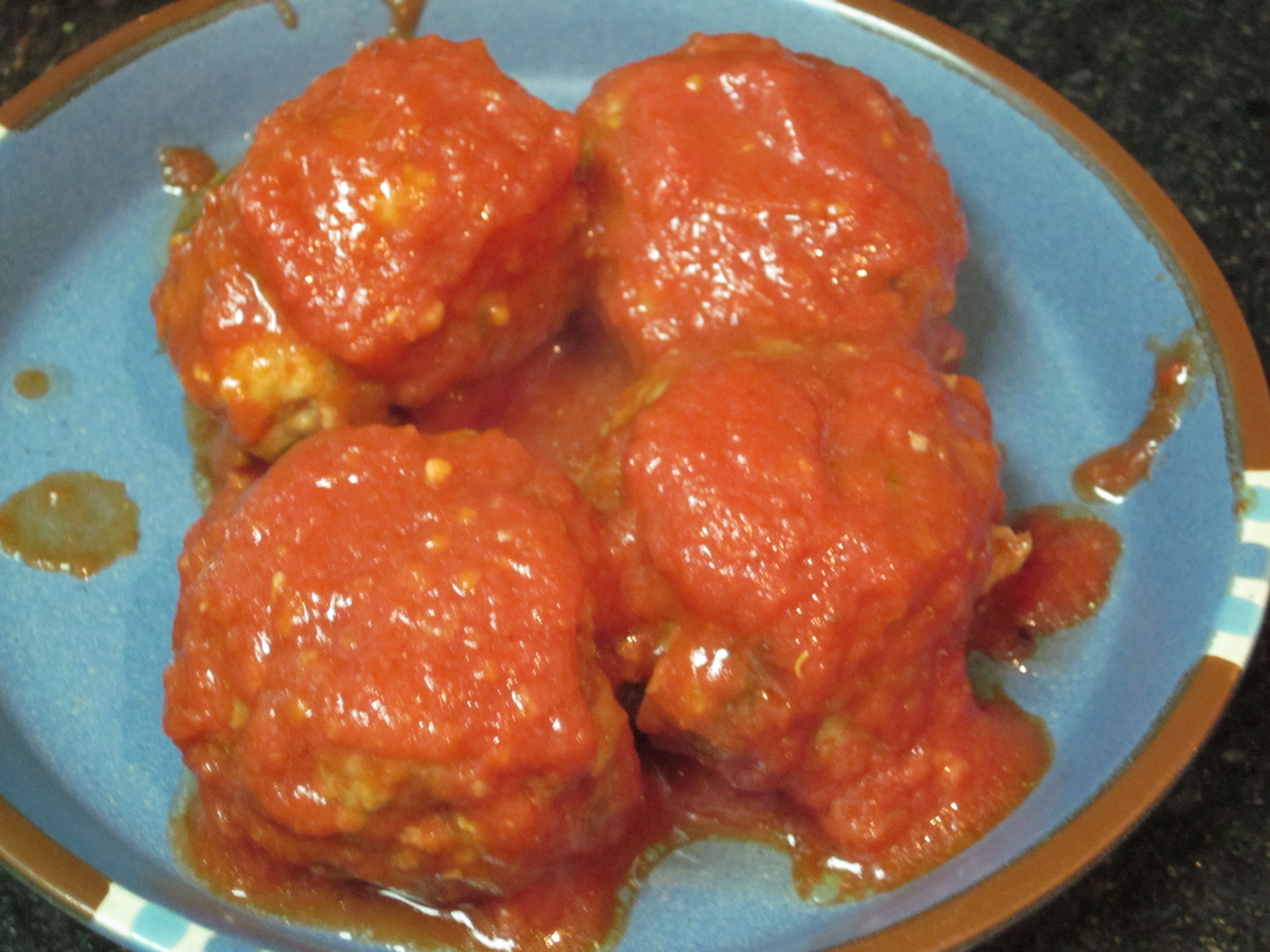
A few days later he emailed me his detailed meatball recipe, he titled “Goomba Joe’s Polpette.” I’ve copied below exactly what he sent me many years ago with a few of my own notes added, and it’s as reliable as you will find if you have any interest in making the traditional Neapolitan Italian meatball.

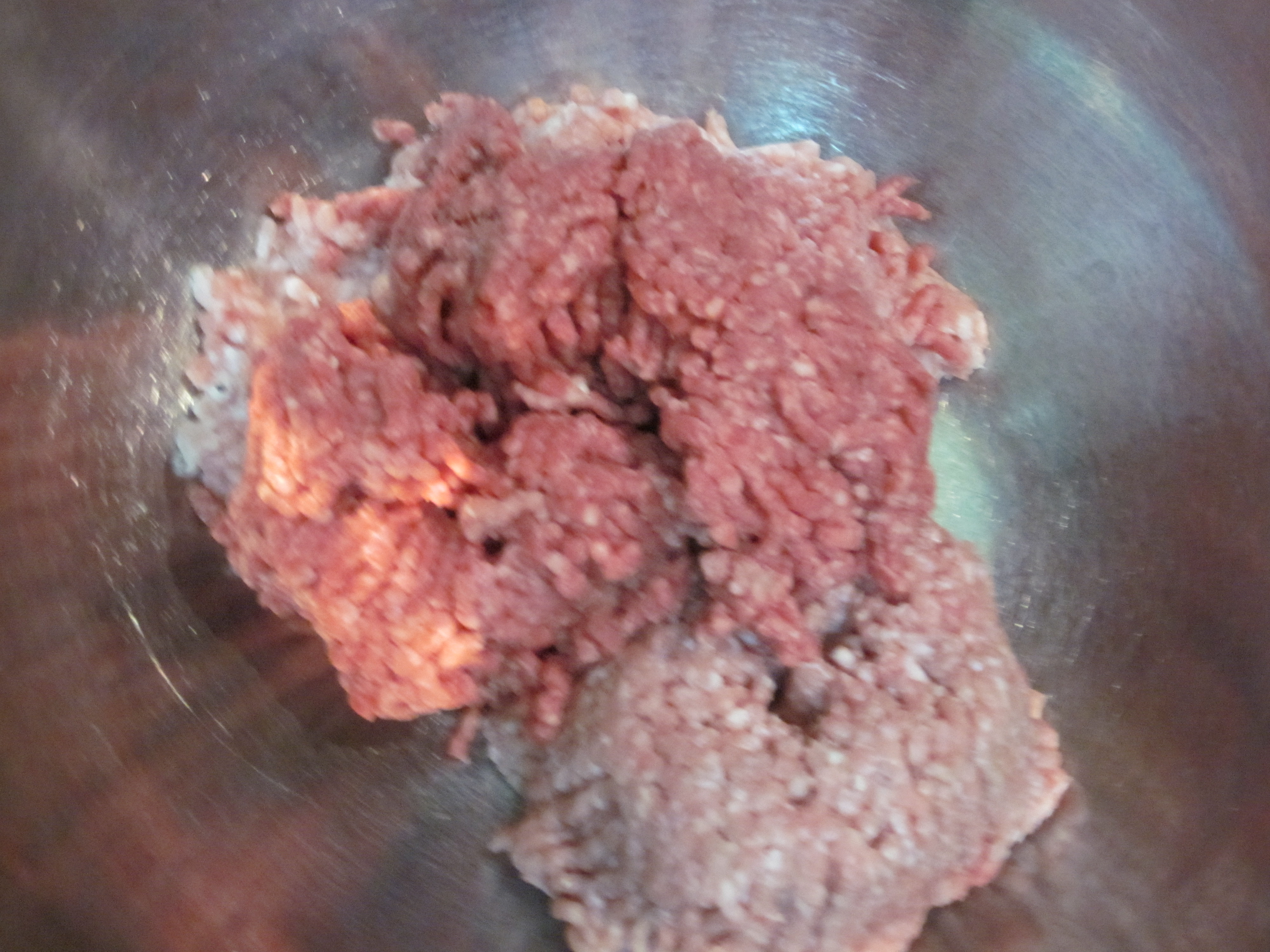
The meat.

Ingredients

1lb of ground chuck

½ lb of ground pork

(both in a large bowl)

Hard Italian bread (no shortening) about 1/3 of the meat volume. Soak in H20, squeeze well and crumble (irregular sizes ok) over the meat. (Never use bread crumbs, you get cement balls).

Never use bread crumbs!

Salt (careful, if cheese is salty)

Black pepper (I like corns, medium grind). I’m not stingy

2-3 eggs (size counts)

Romano or Parma grated cheese (more; less?; ample)

Fistful of Italian flat parsley, chopped coarsely (not minced)

2-3 cloves of garlic* minced coarsely (I have occasionally used minced onion, but that’s not Napolitano traditional).

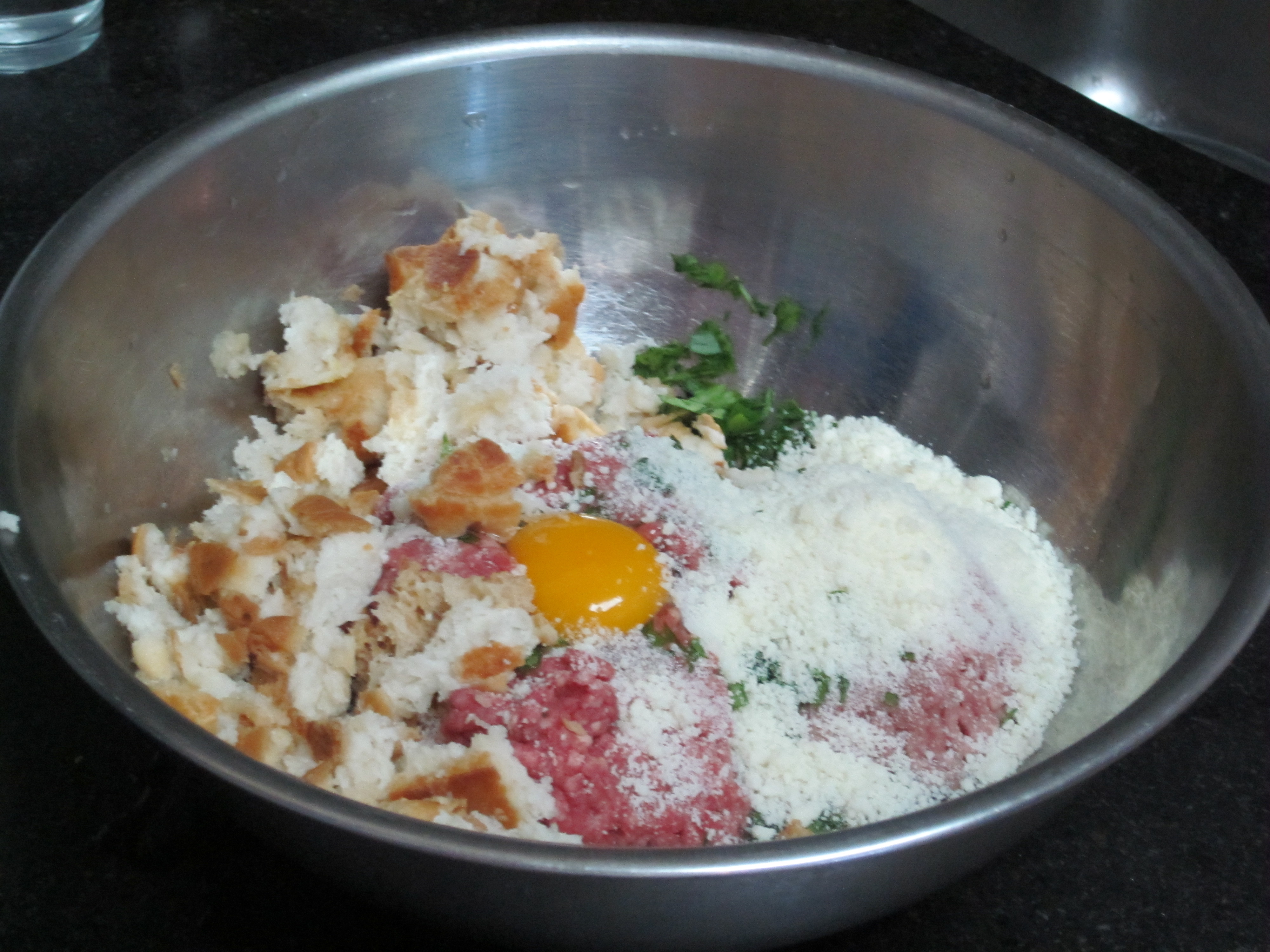
The mess before mixing.

Mix the whole mess with hands so that all the stuff is more or less evenly distributed.

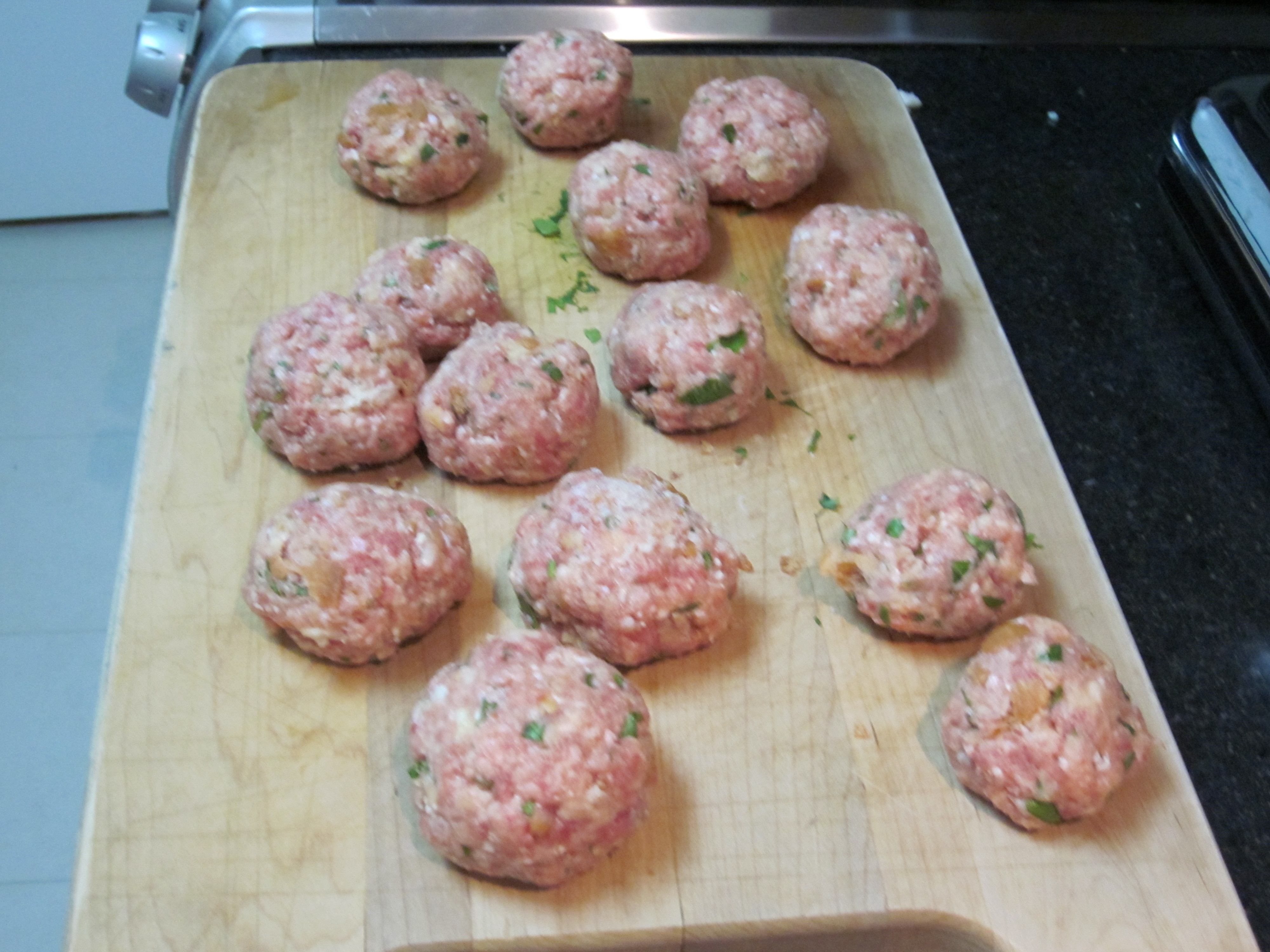
Roll into balls, size matters—whatever you want. (My Ma used to dip her hands in a bit of cold water as she rolled; I don’t seem to find that necessary).

Size matters.

Estimate ½ the altitude of the balls and pour olive oil (could be veggie), but don’t waste XV** for this. Bring to solid frying heat and FRY your balls. Don’t crowd. If oil is deep enough, you may get away with turning them over ONCE. They should end up golden brown. They may not be totally cooked inside, but since they will go into gravy***, not to worry. Drain on a brown paper bag (Ha Ha!). Cover lightly at back of stove till ready to “sauce.”

Don’t crowd them.

Eliz**** adds the polpette to the gravy only for the last ½ hour or so before serving. She says they rob the gravy of the liquid; also, they may break up. A longer time at low or warm would not be a tragedy.

Note: MB’s are not meant to flavor the gravy, so your marinaras should work well.

Another note: After frying, strain the fry oil for future use. Put some sauce in the pan and deglaze all those goodies. Put the stuff in the sauce (or gravy) pot for even added flavor.

My notes:

*I don’t believe my grandmother used garlic in the meatballs and I’ve since eliminated it. Garlic is my very good friend, but I put plenty in my sauce so a double whammy, I find, isn’t necessary and the meatball has a milder flavor and closer to what I remember from my grandmother’s.

**Giuseppe’s “XV’ was his abbreviation for Extra Virgin.

***He called it gravy. I called it sauce. The right terminology for what we were making was a constant battle between us but more on that for another day.

****Eliz was Giuseppe’s mother, now deceased.

Goomba Joe’s Polpette

In memory of Joseph “Goomba Joe/Mamma G” Peluso, July 17, 1929-February 7, 2011.

The Pierogies of Old Poland

15 Feb

I had never been to Greenpoint, Brooklyn before our visit to Old Poland Bakery & Restaurant in early 2005. It was an eye-opener in some ways to me. First, it’s not easy to get there from Manhattan via public transportation. The closest train is the G train which has no Manhattan stops. You need to take either the L to Lorimer Street in Williamsburg and switch to the G or take the 7 to Queens where you can connect to the G at 45 Road. Maybe because it’s so inaccessible that it has remained a strong Polish enclave. At least it was that way in 2005 when I visited and wrote what appears below.

Old Poland Bakery: circa 2005

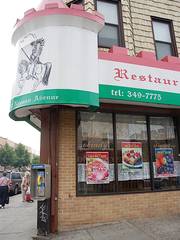
Old Poland Bakery & Restaurant
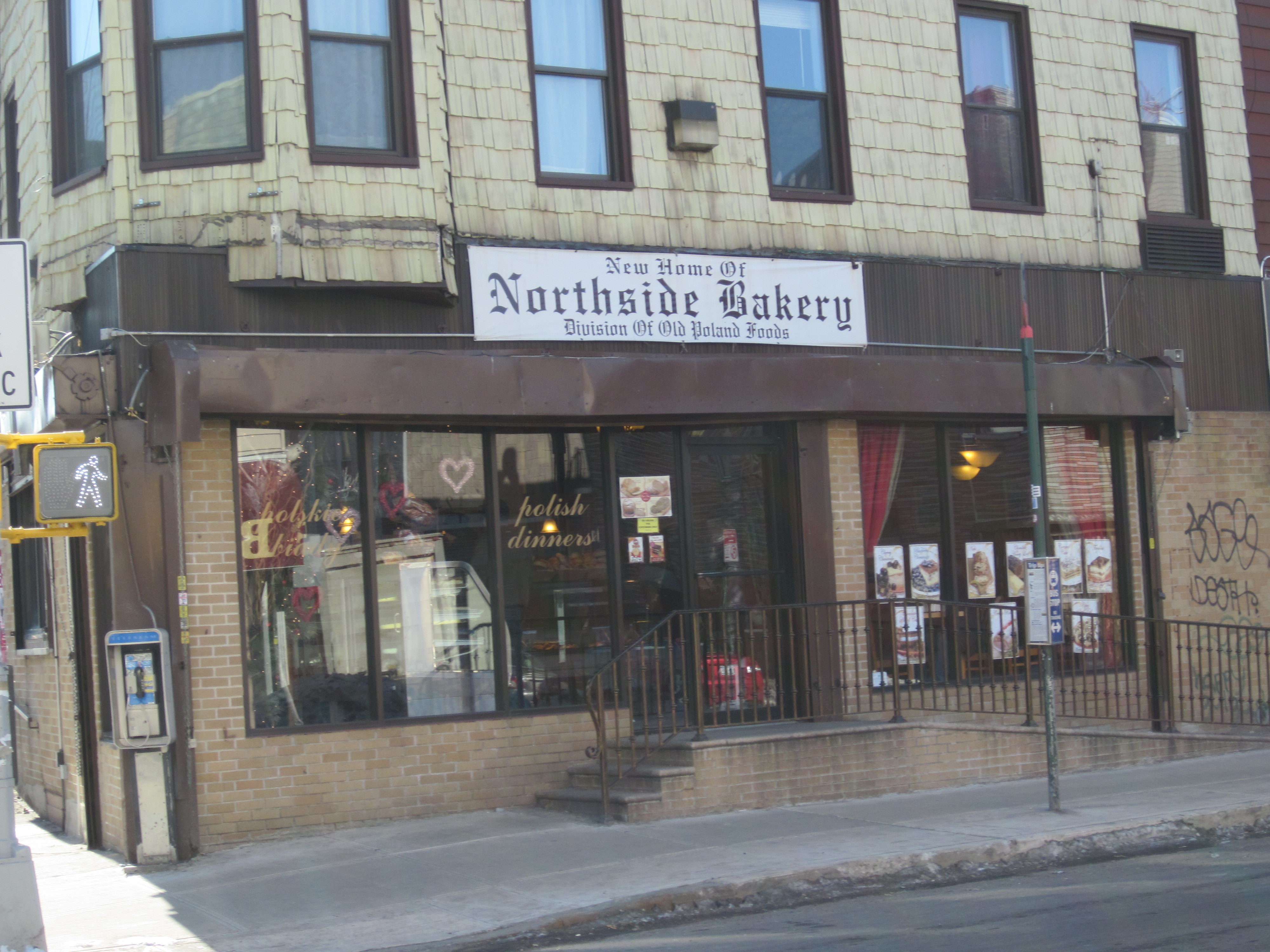
(Now Northside Bakery)
190 Nassau Avenue,
Greenpoint

Rick deliberated long and hard before choosing the Old Poland Bakery & Restaurant in Greenpoint, Brooklyn. And the fact that whenever he called the place and asked—in English—about a reservation and to make sure they would be still open when we got there they hung up on him, was either a very good sign or we were in big trouble. But when we arrived, saw the faces that populated the restaurant—yes we were still in New York—and noticed the prices of the food written in magic marker on cardboard, we quickly realized that we might just have hit the mother lode. That this brightly-lit combination bakery and Polish diner was exactly what we all yearned to discover.

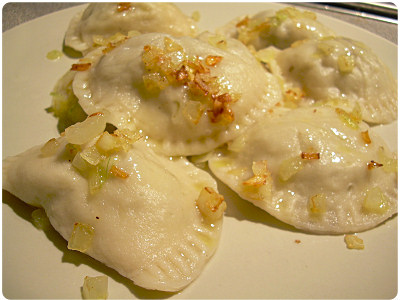
Of course there was a television and of course on the television was a Polish station with Polish cartoons and news of the Polish football league. Both were watched silently and intently by men with ample guts, close-cropped hair, ruddy faces and wearing colorful sweaters. Rick and I hoped for some help with the menu and some guidance on what we should order but our request was met with a blank stare and then a shrug by the pretty woman taking orders behind the counter. There was no table service here; you had to go up and pay when you ordered. We decided we should take shifts in ordering. I had the first shift and choose a selection of pierogies; meat, potato, and sauerkraut, and cheese blintzes. Inexplicably, the same pretty woman this time had no difficulty understanding me. While waiting we sampled a variety of Polish beers that, beyond their colorful names and labels, were not worth remembering though they did add a balance to the density of the pierogies. This starter selection of starch was seriously testing our mettle.


The next round—and really the last included something called a “Polish Plate.” With a name like that how could we pass it up? We also agreed on pork tenderloin, lima bean stew, and at Eugene’s unexplained insistence, that old Polish favorite, roast beef. The Polish plate consisted of a variety of Polish favorites like grilled kielbasa, potato pancake, more of those feathery pierogies, and an excellent meatloaf accompanied by pickled beets and red cabbage. The pork tenderloin was cooked perfectly and smothered in a thick, but not overly rich gravy. The surprise favorite of our selections was the lima bean stew, with chunks of smoked sausage and in a dense cabbage broth it was most definitely a hearty meal. The roast beef? Think college cafeteria.

Zio, who in less than a week would become a nonno, braved the bakery section and ordered carrot cake and a chocolate-covered cream puff, that was rivaled only by the sauerkraut filled pierogi in its density-quotient. But food density had yet to thwart Zio.

Though I wouldn’t put the cuisine of Eastern Europe high on my very long list of ethnic food favorites, a visit to Greenpoint where the Old Poland Bakery & Restaurant was located was worth it for the “we’re in another world” factor alone. Not to mention the ridiculously low tab of $11 per person including beers.


But things change. Though still a Polish enclave for sure, gentrification has crept into Greenpoint despite how difficult it is to reach via public transportations. The growth of nearby Williamsburg has extended into Greenpoint with new developments and restorations of single and two-family homes. Old Poland Bakery is now called the Northside Bakery (a Division of Old Poland Foods) and when I recently visited, I noticed that the space had been compressed into half of what I remembered. There is a small food counter and bakery space with now just a few tables. There was a television, and the patrons and women behind the counter were glancing at it, but not Polish news, cartoons, or sports;  instead they were all watching “The View.”