Tag Archives: Travel

The Pierogies of Old Poland

15 Feb

I had never been to Greenpoint, Brooklyn before our visit to Old Poland Bakery & Restaurant in early 2005. It was an eye-opener in some ways to me. First, it’s not easy to get there from Manhattan via public transportation. The closest train is the G train which has no Manhattan stops. You need to take either the L to Lorimer Street in Williamsburg and switch to the G or take the 7 to Queens where you can connect to the G at 45 Road. Maybe because it’s so inaccessible that it has remained a strong Polish enclave. At least it was that way in 2005 when I visited and wrote what appears below.
Old Poland Bakery: circa 2005

Old Poland Bakery & Restaurant
(Now Northside Bakery)
190 Nassau Avenue,
Greenpoint

Rick deliberated long and hard before choosing the Old Poland Bakery & Restaurant in Greenpoint, Brooklyn. And the fact that whenever he called the place and asked—in English—about a reservation and to make sure they would be still open when we got there they hung up on him, was either a very good sign or we were in big trouble. But when we arrived, saw the faces that populated the restaurant—yes we were still in New York—and noticed the prices of the food written in magic marker on cardboard, we quickly realized that we might just have hit the mother lode. That this brightly-lit combination bakery and Polish diner was exactly what we all yearned to discover.

Of course there was a television and of course on the television was a Polish station with Polish cartoons and news of the Polish football league. Both were watched silently and intently by men with ample guts, close-cropped hair, ruddy faces and wearing colorful sweaters. Rick and I hoped for some help with the menu and some guidance on what we should order but our request was met with a blank stare and then a shrug by the pretty woman taking orders behind the counter. There was no table service here; you had to go up and pay when you ordered. We decided we should take shifts in ordering. I had the first shift and choose a selection of pierogies; meat, potato, and sauerkraut, and cheese blintzes. Inexplicably, the same pretty woman this time had no difficulty understanding me. While waiting we sampled a variety of Polish beers that, beyond their colorful names and labels, were not worth remembering though they did add a balance to the density of the pierogies. This starter selection of starch was seriously testing our mettle.
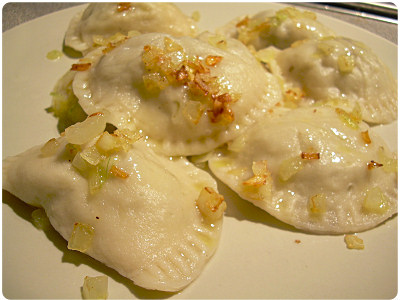


The next round—and really the last included something called a “Polish Plate.” With a name like that how could we pass it up? We also agreed on pork tenderloin, lima bean stew, and at Eugene’s unexplained insistence, that old Polish favorite, roast beef. The Polish plate consisted of a variety of Polish favorites like grilled kielbasa, potato pancake, more of those feathery pierogies, and an excellent meatloaf accompanied by pickled beets and red cabbage. The pork tenderloin was cooked perfectly and smothered in a thick, but not overly rich gravy. The surprise favorite of our selections was the lima bean stew, with chunks of smoked sausage and in a dense cabbage broth it was most definitely a hearty meal. The roast beef? Think college cafeteria.

Zio, who in less than a week would become a nonno, braved the bakery section and ordered carrot cake and a chocolate-covered cream puff, that was rivaled only by the sauerkraut filled pierogi in its density-quotient. But food density had yet to thwart Zio.

Though I wouldn’t put the cuisine of Eastern Europe high on my very long list of ethnic food favorites, a visit to Greenpoint where the Old Poland Bakery & Restaurant was located was worth it for the “we’re in another world” factor alone. Not to mention the ridiculously low tab of $11 per person including beers.
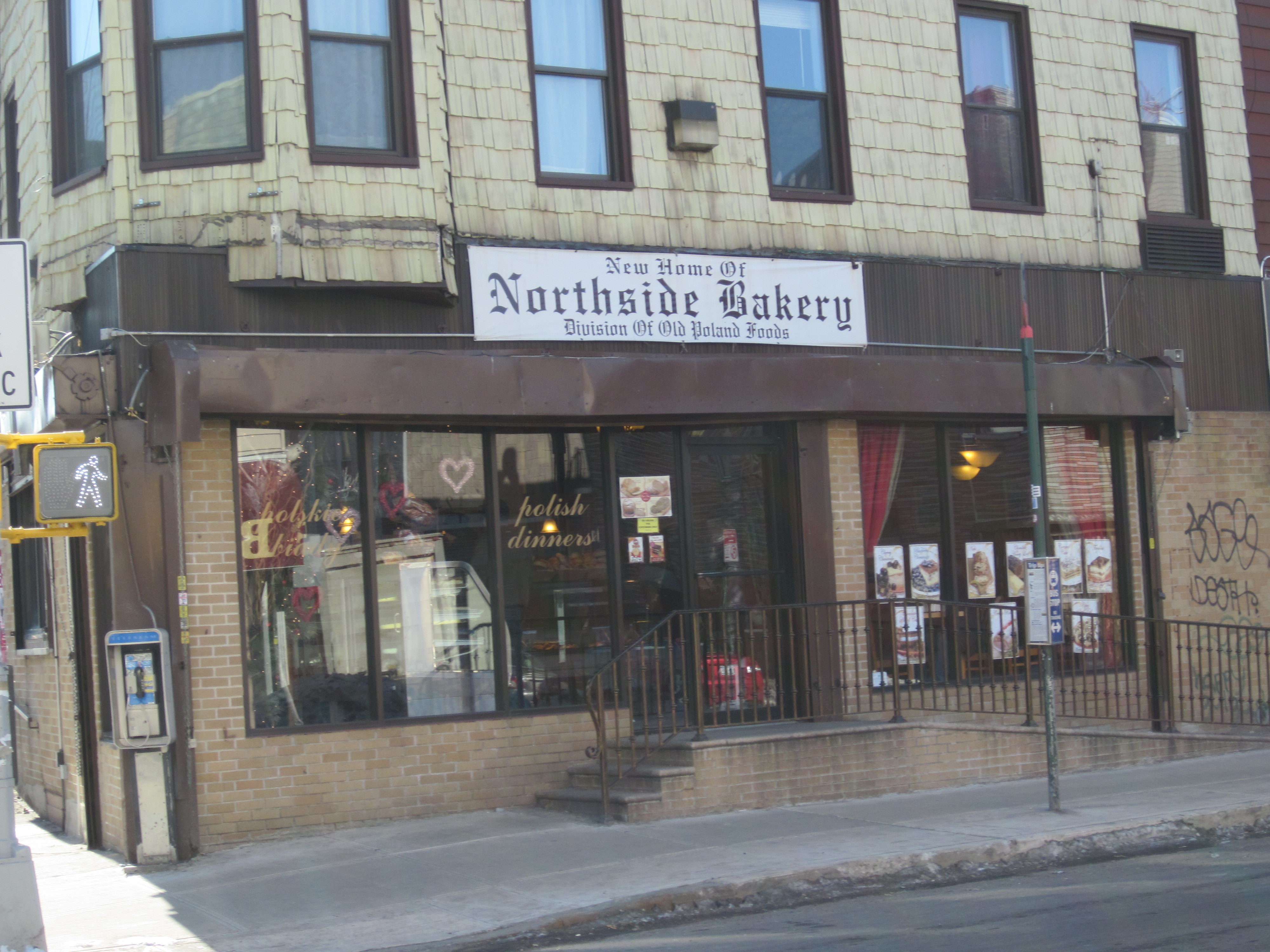


But things change. Though still a Polish enclave for sure, gentrification has crept into Greenpoint despite how difficult it is to reach via public transportations. The growth of nearby Williamsburg has extended into Greenpoint with new developments and restorations of single and two-family homes. Old Poland Bakery is now called the Northside Bakery (a Division of Old Poland Foods) and when I recently visited, I noticed that the space had been compressed into half of what I remembered. There is a small food counter and bakery space with now just a few tables. There was a television, and the patrons and women behind the counter were glancing at it, but not Polish news, cartoons, or sports;  instead they were all watching “The View.”
Busted A** Chicken

28 Jan

I’m cold. I don’t know about you, but I’m damn cold. This winter has been—well, let’s tell it like it is: it’s been hell and that ridiculous groundhog hasn’t even shown up yet. I’m desperate for some heat and you know what they say about desperate times. So in my desperation I’m resorting to warming up my mind, if nothing else, with a hot recipe. Something to get me thinking about sweat, sun, and cold beer. Anyway, where I’m going with this is lighting a cyberfire on a Weber, and cooking up a busted a** chicken. There are other, maybe more politically correct names for it such as “beer can chicken” or “beer up the butt chicken,” but I think my terminology best encompasses the overall experience, both in preparing and eating the bird.

This is my own, award-winning, recipe of busted a** chicken. Yes, I did win an award: third place in the chicken category of the 2002 Jamaican Jerk-Style/Southern Barbecue Cook-Off in Montego Bay, Jamaica. I’m surprised you never read about it. The prize was cash money and, for any doubters, a hand-carved wooden map of the island of Jamaica (see photo below). At the festival, the judge was a Southerner named Rocky and one of my fellow winners was the legendary (in the barbecue world) Big Bob Gibson himself. But enough self promotion and name dropping. Here is the recipe:

My 3rd place trophy

Ingredients:

1 good-sized chicken (around 4 pounds)

1- 12 ounce can of beer (cheap beer preferred: Schaefer, Miller High Life, or Pabst)

For the rub:

2 tablespoons salt

2 tablespoons sugar

2 tablespoons brown sugar

2 tablespoons ground cumin

2 tablespoons chili powder

2 tablespoons freshly cracked black pepper

1 tablespoon cayenne pepper

4 tablespoons paprika

Mix up the dry rub ingredients. Clean out the chicken, removing any spare giblets or body parts that might be in the cavity. Wash and pat dry with paper towels. Massage the rub into the bird’s flesh and inside the cavity, under the wings and legs making sure it’s properly coated. Let the chicken sit for a half hour or so while you prepare the grill.

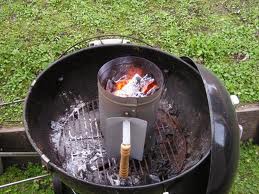
Fill up a starter chimney with hardwood charcoal and light it up. If your charcoal is fresh and dry it should take no more than twenty minutes to be glowing hot. While the charcoal is firing up, go get the beer. Make that two beers: one for the chicken the other for you. For the beer you’re going to use for the chicken, open it up and take a few sips until you’ve drunk about an inch of it. If you’ve got an old school can opener make a few extra incisions into the top of the can. If you don’t, you can poke a few holes in the top with a screwdriver or a nail. Whatever it takes to create more openings.

The beer of choice.

When the charcoal is ready, pull off the grate to the grill and pour in the hot coals. Using a garden trowel or barbecue tongs, stack the coals to one side of the grill. Put the grate back on.

Now it’s time to do the deed. Holding the chicken upright, cavity facing down, slowly impale the chicken on the beer can about two-thirds down onto the can. Place the now busted a** chicken on the grill on the side opposite the hot coals; what they call the “indirect” method. Put the top on the grill keeping the air vents open slightly.

While the chicken cooks, open up the other beer, find a very comfortable seat, and put on some music. Right now, I’m thinking maybe Jack McDuff’s The Honeydripper or Soul Summit with McDuff and the two Boss tenors, Sonny Stitt and Gene Ammons. You’d think country would work too, but I’m a city boy. No country for me with the possible exception of the late Charlie Rich and a few others, also now deceased. After about an hour or maybe a beer or two, check on the chicken. Really there’s not much to do there unless the coals are dying down. If they are, you’ll need to add about ten or twelve hot coals to the grill. The whole process shouldn’t take more than two or two and a half hours.

Music to cook busted a** chicken by.

The bird should have a nice dark brown tan by now. Using sturdy tongs, carefully remove it from the grill. Much of the beer in the can should have evaporated; the vapors from those hops and barley seeping into the flesh of the chicken keeping it moist and adding a hint of malt flavor. Still there might be some hot beer left in the can and you don’t want to drop it and have that spill onto you. That would definitely dampen a very relaxing few hours. Let the chicken stand about 15 minutes before carving. If you’re industrious you might want to make up some cole slaw or a pot of greens to go with the chicken. Enjoy.

Red Stripe: Yes. Lite: Never. And you’re asking a lot of the chicken with a tall boy. Needless to say, this one was not a winner.

Alright now. I feel better already just getting that out. They’re saying we might get an inch or two of snow tomorrow. Enjoy the weekend and I’ll return on Tuesday with another Adventures in Chow City.

Southern (Bronx) BBQ

18 Jan

Before our venture to the South Bronx and Uncle Sal’s, our group had a date at an African restaurant in Harlem called La Marmite. As I vaguely recall, only two or three of us showed up for whatever reason and I never summarized our experience there. We made up for it when we all were in attendance at Uncle Sal’s Ribs and Brew. It was early summer and our dinner there became memorable for many reasons, but probably most of all because it was the only one , in the over two years we had been doing this, where we got to dine “al fresco.”

Uncle Sal’s: circa 2004

Uncle Sal’s Ribs and Brew
R.I.P

After our previous debacle, when only the devoted few got to experience the delectable offerings served at the Senegalese restaurant, La Marmite, the group was now more than ready to reconvene en masse. Even Charlie, who will be relocating to the hinterlands of Emmaus, Pennsylvania with his wife, and soon to be born first child, was present as we made our way to East Tremont Avenue in the Bronx for a taste of Uncle Sal’s Ribs and Brew (formerly known as Uncle Sal’s Ribs and Bibs). We were enticed to this barren stretch of the Bronx just off the Cross Bronx Expressway with the promise of barbecue ribs created by a Sicilian immigrant and his Puerto Rican in-laws. Who could imagine what the end result of that amalgamation of ethnicities would result in? But the possibilities were very promising and incentive enough to make the journey.

Eugene and Gerry, the first to arrive, were a bit concerned when they entered the storefront and only noticed a few small tables. Their worries quickly dissipated when the boisterous Uncle Sal greeted them and directed them to a “backyard” where there were two large picnic tables surrounded by assorted junk; boxes, rusting industrial equipment, and a badly damaged fig tree. Still, on this warm June evening, what could be better than dining “al fresco” on East Tremont Avenue in the Bronx, the sounds of firecrackers in the air, and security cameras reassuringly eying the premises.

We were all present except Rick, who called Uncle Sal to say he was running very late. We did our best to accommodate our comrade by ordering an assortment of selected appetizers while we waited for him to arrive. Uncle Sal recommended the mozzarella sticks, fried ravioli, and chicken wings. None of these fast food offerings really excited us, but we couldn’t disappoint Uncle Sal.


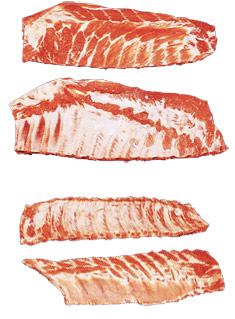
We sat outside in the Bronx evening, sipping beers and listening to a boom box set up on a wobbly table outside waiting what seemed like an interminable time for the appetizers to arrive. When they finally did arrive, we quickly devoured the tasteless deep fried mozzarella, zucchini, and ravioli, and then estimating how long it took for the appetizers to arrive, decided we better get Sal going on main courses. The ribs, of course, were why we came here and we ordered a rack of both the “special cut” and the baby back ribs. The difference, explained Sal, was really just the size; the baby back being the smaller ribs. Besides the ribs, the menu here was vast including pizza, pasta, tacos, and Spanish food. Sal was pushing the shrimp scampi that was “not on the menu,” so we obliged him his Italian heritage and ordered it along with a philly cheesesteak sandwich, and, as a nod to his Latino in-laws, an order of fried pork chops with yellow rice and beans.


It was dark now and one bright bulb lit up the backyard. Sal had switched the radio station appropriately from hip hop to blues. Rick ambled in just in time to salvage a few remaining, now cold zucchini sticks. As the fried food sat heavily in our stomachs, the main courses arrived and despite the density of the appetizers, we had no problems picking apart Sal’s very good ribs, slathered in a not too sweet, subtly tangy sauce. The cheesesteak, cut into six pieces, was also a winner but the scampi, Sal’s praises notwithstanding, tasted like the kind of shrimp scampi you might get at a barbecue joint. Finally, we divvied up the pork chops, sampling some of the rice and beans and the “sides” like corn, cole slaw, and corn bread.

Once we finished, Sal came out, a cigar in his mouth, a rum and coke in his hand, and a satisfied smile on his face, to sit and regale us with stories about his life in Sicily—how he came to America when he was 16, and about his adventures in operating the restaurant. Eugene and Zio were a rapt audience, especially when it came to the stories concerning the health department and health code violations. Sal, unfortunately, does not deliver his ribs to Manhattan, but knowing they are attainable just off the Cross Bronx Expressway might make for a pleasant way to sit out a traffic jam on that cursed thoroughfare.

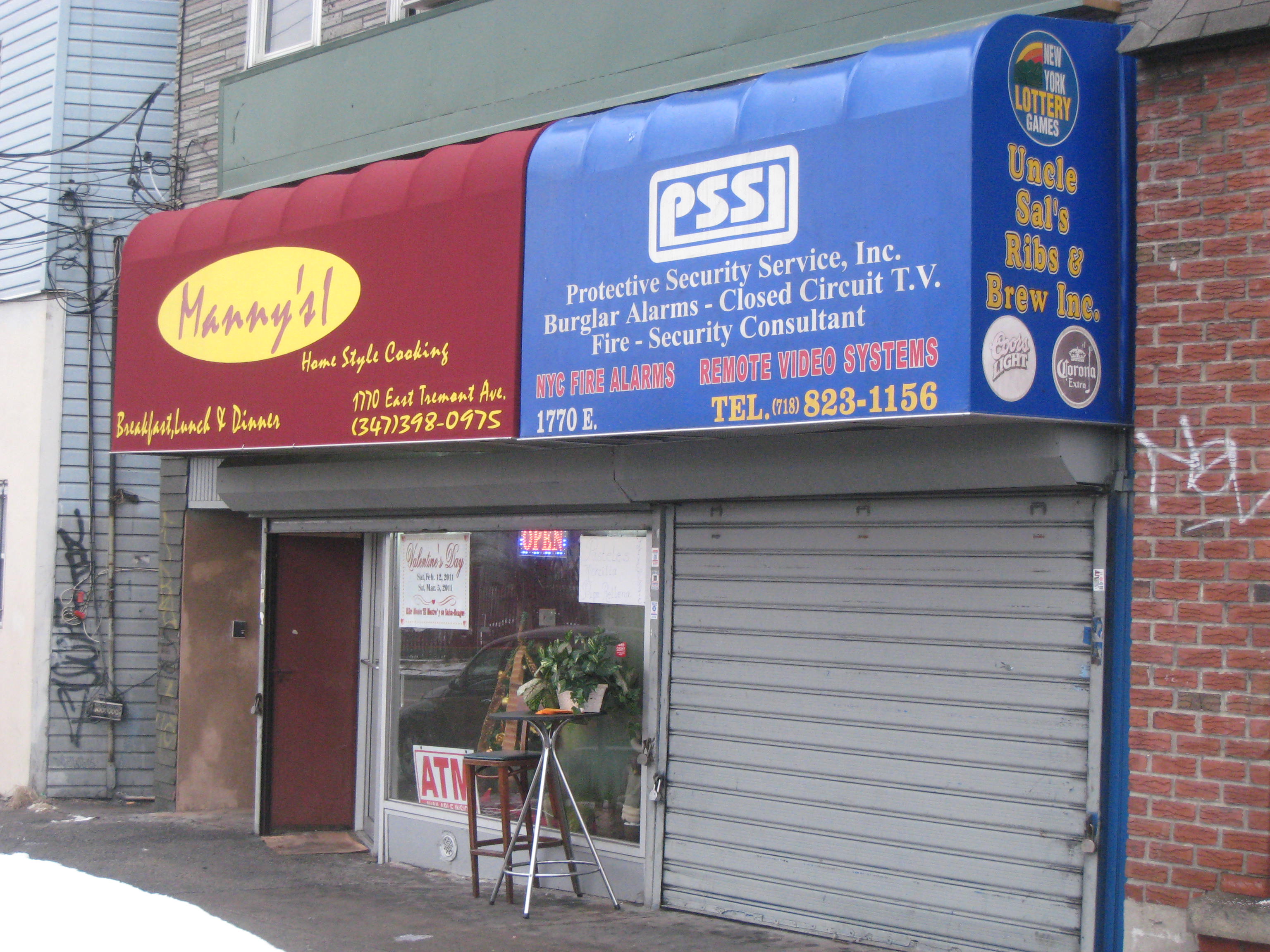
What’s left of Uncle Sal today.

I never did make it back to Uncle Sal’s before he closed. I recently drove to the still restaurant-remote area of East Tremont in the Bronx to see what had replaced Uncle Sal’s. In its place was a restaurant called Manny’s, specializing in Latin American “cuisine.” I went inside to see what else had changed. Instead of the deli-like interior, there was a full bar. I asked the bartender what happened to Uncle Sal’s. “He left a long time ago,” she said. “But he still own the building.” On the awning next to Manny’s, I noticed the Protective Security Service, Inc, and on the side of the awning “Uncle Sal’s Ribs and Brew, Inc.” I guess security services have much more appeal in the East Tremont section of the Bronx than do Uncle Sal’s ribs.

Christmas Cheer

23 Dec

Sorrel

I first sampled a drink made from sorrel in the early 1990’s on the island of Barbados where I was on assignment for a travel magazine. There I met a woman named Carmeta Fraser; more specifically, Senator Carmeta Fraser. She was a dignitary in that country’s government at the time. Her title: Food Promotion Director for the Barbados Marketing Corporation which is now known as the Barbados Agricultural and Marketing Development Corporation. She also had a radio program that was apparently very popular mainly extolling the virtues of local produce. Her motto was: “Let’s eat what we grow, grow what we eat.” I met with her at her modest home where she showed me her extensive garden and treated me to a number of fruit juices made from her garden’s bounty.

Barbados cherry

Golden apple

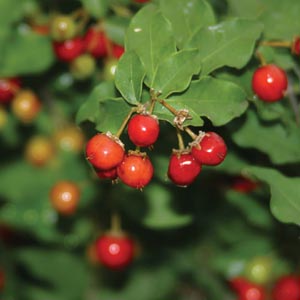
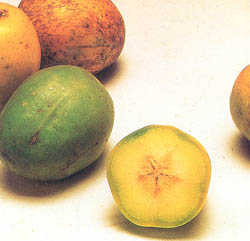
I sampled “cherry cool-ma,” made from the Barbados cherry also known as acerola, a slightly tarter version of cherries we are familiar with here and, as she told me, “packed with vitamin C.” Senator Fraser also had me try her homemade golden apple beer, a non-alcoholic drink made from golden apples from her garden. They call it golden apple in Barbados but elsewhere it is known as June plum, and it tastes nothing like our own golden apples. The juice of the fruit, blended with ginger and sweetened with sugar was distinctive and its taste something I just can’t equate. Finally, Senator Fraser brought out a drink made from sorrel telling me that you can drink it all year round, but it’s really best at Christmas time. A member of the hibiscus family, the plant, according to lore, yields its bright red flowers at Christmas. So in Barbados, and elsewhere in the English-speaking islands of the West Indies, they say  it’s just not Christmas without sorrel drink.

Fresh sorrel

I left Senator Fraser’s home with a number of her booklets promoting the benefits of eating local fruits, vegetables and meats. In one of the booklets was a recipe for sorrel drink and the following Christmas in New York, I made my own version and have been making it around Christmas ever since; adopting a tradition that has nothing to do with my own background. I’m not sure why I’ve adopted it; maybe it’s a reminder of sunshine and warmth during a cold, dark time of year. But whatever the reason, as they say, it’s just not Christmas without sorrel drink.

Senator Fraser passed away a few years after my visit. She is still remembered in Barbados as a pioneer in championing local and even organic produce and this past March a store at Grantley Adams International Airport in Barbados selling locally-made products opened and, to honor her work,  was named, “Carmeta’s.”

Here is my recipe for sorrel drink adapted from Senator Carmeta Fraser’s.

2 cups of dried sorrel*

3 whole cloves

1 ½ tablespoons of grated orange zest

1 ½ grated fresh ginger

2 quarts of boiling water

1 cup of sugar ( ½ cup more if you’ve got a serious sweet tooth)

Place the sorrel and the other ingredients except for the sugar in a large crock or ceramic jug. Pour the boiling water over all and let it steep in a warm, dry place for 48 hours. I keep it in my oven, just remember to take it out if you are using the oven during the process. Strain and add the sugar. Refrigerate for another 48 hours. Serve over ice, a wedge of lime, and, though Senator Fraser was a church-going woman and never mentioned it, an ounce (or two) of rum definitely enhances the drink’s Christmas cheer. If you do add rum, I recommend Barbados’s own Mount Gay or Appleton Estate from Jamaica.


Eels or anchovies?

22 Dec

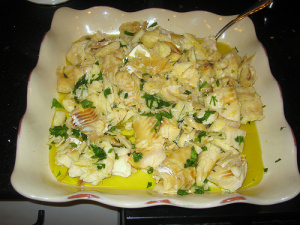
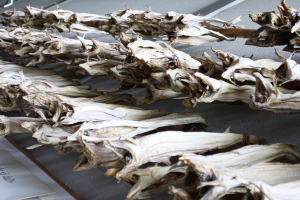
Do we have to choose?

Or can we have both?

Baccala Blues

17 Dec

Baccala Blues

baccala-005

When I was a little boy,

‘bout the age of five.

I’d get real excited,

when Christmas was soon to arrive.

But one year, I’ll never forget,

Something happened that still makes me sweat.


It was a few days before Christmas,

We were by the fireplace, putting up our socks,

When my Granny came to the house carrying an

old wooden box.

I crinkled my nose.

From the box there came a smell.

An odor so strong and so bad,

it was enough to curl my toes.

What was in that box even smelled worse

than that fish they call lox.

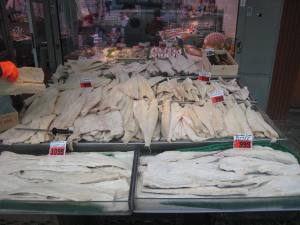
Baccala

I had to know.

“Tell me, Granny, what’s in that box,”  I cried.

“Never you mind,” Granny said.

“Go outside,

go enjoy the snow.”


But now I knew I just had to see.

What was in that box,

that was such a mystery.

I knew I shouldn’t, but I looked anyway,

And what I saw, is why I never forget that day.

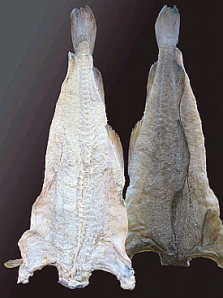
There was salt, skin and bones.

It was some kind of a fish,

but this fish was as hard as a stone.

It even had what looked like a tail.

And a dead mouth that let out a silent wail.

baccala

Then Granny came back

and took the box to the bathroom.

I could hear her filling the tub,

and then a splash,

followed by a sickening thud.

When she left, I opened the door.

The smell was so smelly, I almost fell on the floor.


But  soon I forgot what was in the tub.

Christmas was coming.

I was distracted by joy.

I couldn’t wait for Santa to bring me my toys.

Then on Christmas Eve morning, when my

Granny appeared.

The moment had come,

the one that I feared.

I remembered that thing in the bathroom,

the fish that was no trout.

I knew that today, was the day it would come out.


I watched from a distance as Granny took it from the tub.

The sight of that hideous fish,

was making my little left eye twitch.

She put it in a pot

covered it with water,

and then on the fire to get it hot.

What would happen to Christmas, I wondered.

Would it still go on?

Would Santa come to a house that smelled of rot?


Santa please,

I cried and moaned.

Please hear my plea.

Don’t let that funky fish,

keep you from bringing my toys to me.

Please, Santa, no baccala.

Please, Santa, no baccala.


Finally we all sat, for the Christmas Eve feast.

On the table were clams and chestnuts,

spaghetti and shrimp.

And there was that thing, that fish,

the one that reeks.

Granny made sure I had a piece on my plate.

I stared at it in horror,

and silently prayed that that piece would disintegrate.


What’s it called, I wanted to be told.

“Baccala,” she said, “now eat it, before it gets cold!”

I put it on my fork and slowly brought it to my lips.

I opened my mouth, and took a tiny nip.

I hurriedly reached for my water,

forcing it down.

I drank so much, I hoped I wouldn’t drown.

Everyone at the table laughed and made fun of me.

Even my old Gramps was full of glee.

I felt silly and sad.

I didn’t want to make Granny mad.

That’s when Gramps hugged me tight and looked me in the eyes.

“It’s okay, boy, you just paid your dues,” he said

“‘cause now you’re hooked,

you got the baccala blues.”

baccala

Now that I’m a man,

I’ve learned that Gramps was right.

When it comes to baccala, I’ve seen the light.

It smells and it’s fishy.

It’s got salt by the pound.

But these days I like it so much,

it doesn’t have to be Christmas

to keep it around.

I’ll eat it fried or baked,

in a salad or made into cakes.

The taste of that salty fish is one

I never want to lose.

And that’s what happens,

when a man gets the baccala blues.

Buon Natale

Buon Natale


Name That Place

10 Dec

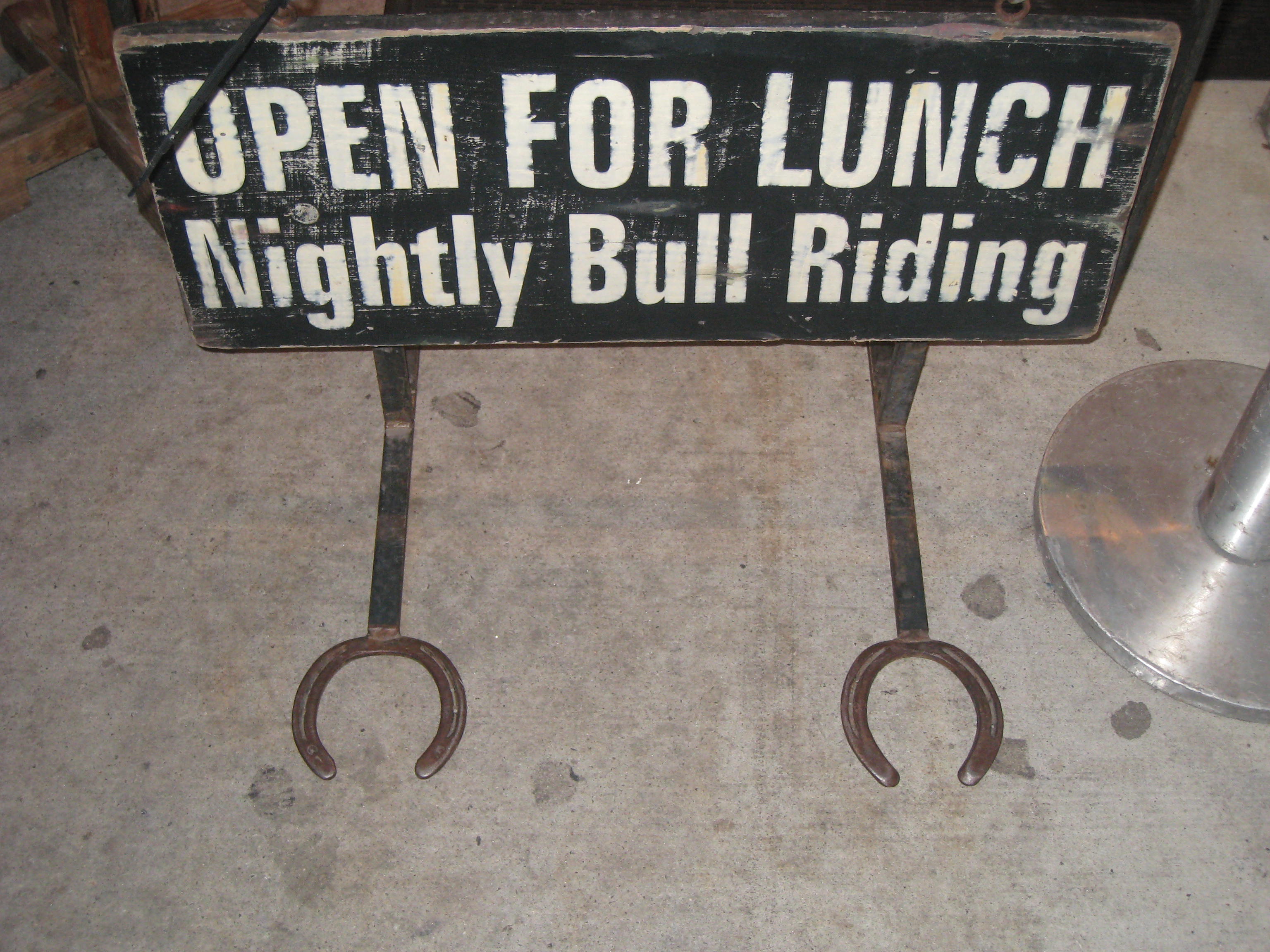
Let’s play, Name that Place.  The first in, we hope, a continuing series.

Correctly guess the name of the establishment in the picture below and win an honorary and, best of all, free subscription to that marvelous new blog Fried Neck Bones…and Some Home Fries.

Dinner and bull riding. What more could one want?

You want hints? Here are two

1. It’s not in Texas

2. It’s not in New Jersey

Did I make it too easy? Put your answers in the comments section below. The answer will appear here on Monday along with the names of the winners.

Have a fantastic weekend.

Across 125th Street

7 Dec

For years I would drive past the M&G Diner on 125th Street and wonder at the restaurant’s flamboyant signs “Soul Food” and “Southern Fried Chicken.” The signage looked authentically from the 1960’s and 70’s and I was curious if the food was, as another one of its signs said, “Old Fashion’, But Good!” Yet I continued to just “drive by;” never getting out of the car to check it out. When it was my turn to pick our destination in September of 2003, the time had finally come. Below is our M&G Diner experience.

M&G Diner: Circa 1974

M&G Diner
R.I.P

If it weren’t for the small poster tacked onto the entrance to the 125th St. subway station announcing an upcoming rally for “Reparations: It’s Time They Pay,” I would have thought I had just stepped onto the set of a 1970’s blaxploitation movie. There was the West African Hair Groomers just a few doors down from Showman’s Café, est. 1942 and on the corner of 125th and Morningside, the big neon “soul food” sign at the M&G Diner. Gerry and Eugene were waiting outside when I arrived. Eugene had arrived first and was marveling at the contrasts found on 125th street where in one store an NBA jacket sold for almost $800 while in another pants were selling for $1 each.

Peering into the spectacularly unadorned diner, I noticed only a few tables; this Harlem legend which I had never experienced was much smaller than I had thought. I suggested we take one of the tables before they disappeared. Rick had already bowed out of this trip due to an attack of either too much drink the night before, some tainted food, or the combination of both. That made five of us—the capacity for one of the tables at the M &G.

“What they do!…they smile in your face…”

“Back Stabbers,” by the O ‘Jays was playing when we entered. We were off to an excellent start.

It had been almost two months since our last venture and judging by Zio’s trim appearance a few minutes later, the layoff had been very good for his waistline. But we were now in a self proclaimed soul food restaurant and we couldn’t worry about our waistlines.  While we waited for Charlie, we perused the succinct menu: fried chicken (leg or breast), short ribs of beef, meat loaf, shell steak, chopped steak, chitterlings, smothered pork chops, ham hocks, fish and grits. With each dinner you were to choose two sides including soul food standards like lima beans, green beans, macaroni and cheese, collard greens, black eyed peas, and yams. Even though the options were not foreign to us, deciding what to order, as it always does, requires deep clear thinking. While looking at the menu, Eugene mentioned jokingly about ordering eggs and despite the music playing loudly from the jukebox, the lone woman behind the counter heard him and barked: “No breakfast served now!” The hand-written signs on the walls announced that the M&G was open 24 hours and that breakfast was served daily but only between 12:00 am until 1:00 pm. You obviously don’t joke about defying the one written rule of the M&G Diner.

We had given Charlie a half hour grace period and he still hadn’t arrived; it was time to begin the ordering process. The woman came from behind the counter equipped with pad in hand. She was running the show; handling all the tables, the counter service and the outgoing orders with brisk, yet good natured efficiency. Now she had moved to our table; she wanted decisive answers—waffling would not be tolerated. After each of us recited our dinner orders, she barked out “Sides?” We were ready for her with our responses and then: “Dinner roll or corn muffin?” Despite her formidable presence and our novice status at the M&G, we handled the drill reasonably well. Zio and Eugene went for the fried chicken, Gerry the smothered pork chops.

“Short ribs,” I said to her when it was my turn to order, but then the pressure got to me and my response of macaroni and cheese and collard greens came out with a slight stammer. I could tell she sensed weakness in me so, in response to the bread query, I rallied with a strong, definitive “corn muffin.”

Charlie walked in soon after we ordered with the lame excuse of being stuck in the office as an alibi for his tardiness. There was no way we were going to risk the wrath of the M&G Queen by summoning her to our table again, so we sent Charlie to the counter to put in his own order.


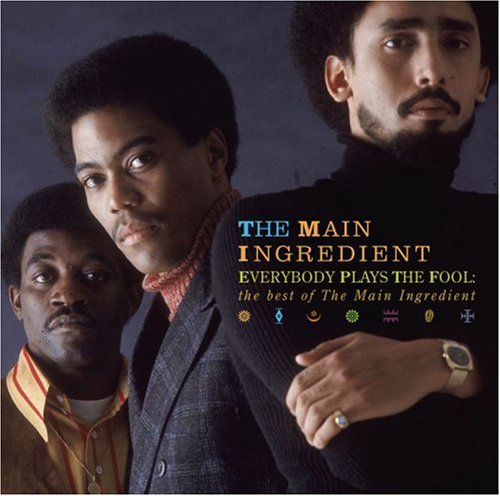
With nothing to munch on and the beverage choices being soda or overly sweet lemonade, all we could do while waiting for our food was listen to the Main Ingredient remind us that “Everybody Plays the Fool.” And then the M&G Queen arrived with our orders, carrying a few plates at a time without, as far as I could tell, even breaking a sweat.

The chicken had been proclaimed in our research as a highlight, and judging from what I saw and sampled, that assessment was accurate; tender and lightly pan-fried the way fried chicken was meant to be prepared as opposed to deep fried in a heavy batter. My short ribs were perfectly cooked, the meat separating cleanly from the fat and bones; the brown sauce, however, a bit thick and bland for my taste. The corn muffins were warm and not overly sweet and Gerry’s pork chops, tender and seasoned perfectly.

Despite the gargantuan portions, almost all of us were willing to sample the cakes and pies for dessert. I was the lone dissenter instead choosing an extra fork in which to pick at all the others. I tried a bit of Zio’s coconut cake, a bit more of Gerry’s sweet potato pie and almost all of Charlie’s chocolate cake and immediately regretted my decision in not ordering a slice of cake for myself. So impressed were we by the desserts, we asked if they were made at the diner. The M&G Queen said no and held out for a minute in revealing where they were from. Without too much coaxing, she gave in and, finally, offering us a smile as well, said they came from the H&H Bakery in Brooklyn as if that meant anything to any of us.

Our tab came in well under the $20 limit and as we were leaving, I heard O.V. Wright on the jukebox moaning something about “A Nickel and a Nail.”  We went our separate ways at 125th St, and as I walked toward the subway,  I noticed that the velvet rope was already out in front of Showman’s Café.


The M&G closed in 2008. A new condo tower had been proposed to be built on the corner where it was located. That project fell through; a casualty of the recession, but the damage was done. M&G was gone and I guess it gave an already struggling business an early out. It’s not easy for something “old fashion’ But Good” to compete with “DD,” “BK,’ “MickeyDs” and the other fast food joints that are now, unfortunately a permanent part of the 125th Street landscape.

The Fusion Files: Part Two

3 Dec

The second in a continuing series.

I’m not sure, but I think fusion here means you can eat your scrambled eggs and (turkey) bacon with your hands.

Have a great weekend. Adventures in Chow City returns on Tuesday with a new installment.

Literary Tacos

30 Nov

We visited El Paso Taqueria, which is chronicled below, in the summer of 2003. It was the first Mexican restaurant we had been to since forming our group. I remember being very surprised as well as upset that soon after Charlie circulated his choice with the other members, the New Yorker magazine came out with one of their restaurant blurbs on, coincidentally, El Paso Taqueria.

El Paso Taqueria
1643 Lexington Ave
East Harlem

Charlie didn’t know that the New Yorker magazine would scoop him on El Paso Taqueria. If he did, he surely would have looked elsewhere to take the group. Once a restaurant is written up by the New Yorker, the kiss of death has been delivered at least for our purposes. A cheap “ethnic” restaurant mentioned by the New Yorker pretty much guarantees that there will be a major change in both clientele and attitude at the restaurant and that was, apparently, the case the night we visited. As a result, our sense of adventure was immediately deflated. But there are other problems: the influx of bluebloods from the neighborhood a few blocks to the south called “Carnegie Hill”, and their incessant questions about what’s on the menu, what to order, how spicy is it, etc., can also breed resentment on a suddenly overworked staff; and  resentment can lead to petulance and impatience. Unfortunately, at El Paso Taqueria, that scenario was playing out for us.


Our listless waitress asked if we wanted guacamole to start, as if we had a choice. Guacamole? Now if she asked us if we wanted the “corn fungus,” that was described in the New Yorker or a “flor de calabaza” quesadilla we would have been seriously impressed. Instead, we got guacamole which turned out to be her final suggestion for us. We were on our own, but maybe, in this case, that was okay. Zio wasted no time and actually restrained himself here and only ordered a mere six varieties of tacos, including tripe and tongue. The mention of tongue prompted Eugene, as if he had rehearsed it, to repeatedly state that he only had one preference for “tongue.” His sniggering comment got a minimal chuckle the first time we heard it, but he persisted with his sad routine until it soon became background noise. I delved in with an order of sopes; a thick tortilla covered with various meats and topped with soft cheese. Of the “platos tipicos” or typical plates, we all were interested in the mole poblano, and the “famous puebla stew.” Could we go wrong if it was so famous? Charlie suggested the “adobo de puerco,” spare ribs in a hot and spicy sauce, and Gerry opted for the exotic “cecina asada” salted beef with cactus jalapenos and onion. Was it enough, we asked the waitress? She shrugged.

It was enough. Everything came at once making the table look like one giant open-faced taco. Most of the dishes, certainly the tacos and sopes looked alike, with the meat simmered in a tomato and pepper sauce and sprinkled with cotija cheese. Only by sampling the meats, could you tell the difference between the tongue and the salted beef or the tripe and the spicy pork. The mole poblano was dark and rich with chocolate while Gerry’s salted beef was extremely high on the spice meter. Charlie’s spare ribs were an interesting variation, but at least from this experience, ribs are not what they do best in Mexico. The stew, with chicken, tomatillos, peppers, and potatoes, was hearty and comforting, but we still wondered what made it famous. Dessert was strawberries in whip cream or bananas in whip cream. We tried both. And, though nothing very exciting, they were a refreshing end to the meal.


From the New Yorker blurb, we learned that El Paso Taqueria began as a lunch truck feeding the Mexican immigrants that were new to the neighborhood of East Harlem, offering a quick, inexpensive and authentic taco or two before getting back to work. The lunch truck became so popular it sprouted the restaurant on 104th and Lexington where we were and a new one on 97th between Madison and Park. But after eating in the restaurant, I think the lunch truck, where you can savor one, two, or maybe three or four tacos at a time, is probably the best and most authentic way to enjoy the food and flavors of El Paso Taqueria. And you don’t even have to order the guacamole.

Looking back on what I wrote, I see how I let being scooped by the New Yorker cloud my summary of our El Paso Taqueria experience. I was hard on the restaurant though it was no fault of theirs. All I could do was complain that the guacamole was pushed on us and that the tacos looked alike. I’ve since reformed my ways and even have an El Paso Taqueria take out menu in my possession which my family uses as our first option when it comes to having Mexican delivered to our home.

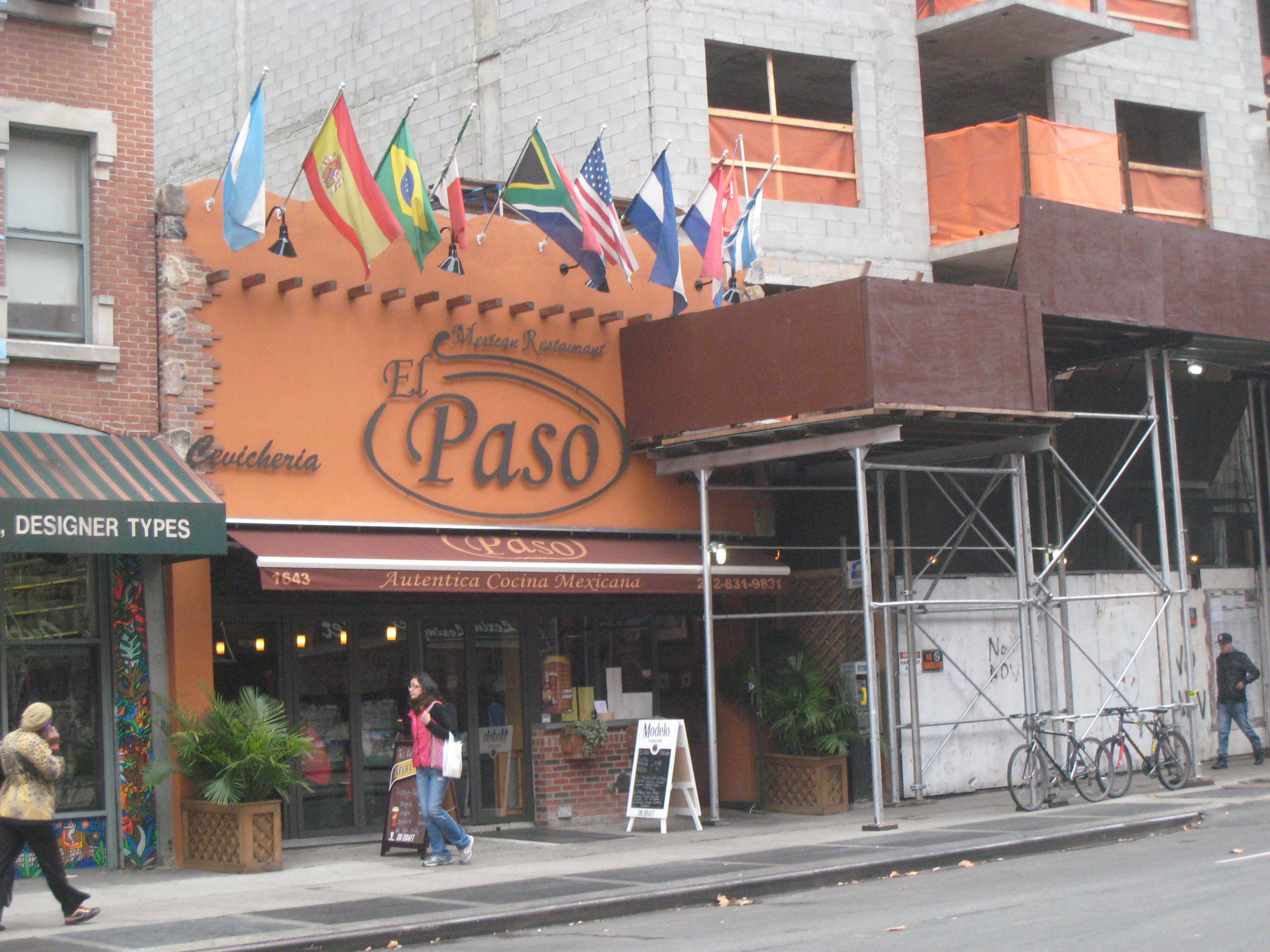
The newest El Paso Taqueria complete with cevicheria and scaffolding.

Like the growing Mexican population in East Harlem—they now are the largest immigrant group in that community surpassing Puerto Ricans and Dominicans—El Paso Taqueria has grown as well. There are now three El Paso Taqueria outlets, including one on 116th Street and another across the street from the original that advertises a “cocktail list” and a “cevicheria.” For the record, there was no ceviche or cockails on the menu when we visited. The original location where we dined has been turned into a take-out taqueria (see photo above).  They also have a colorful website www.elpasotaqueria.com and a new, flashy lunch truck proving that, along with a pretty good taco, there’s nothing like what a little publicity from a renowned literary magazine will do for business.