Archive | Cheap Eats RSS feed for this section

Stalking Corn on Dyckman Street

31 Jul

Cachapas y Mas
107 Dyckman Street
Inwood

There was a small booth on Dyckman street where corn along with other farm fresh goods were being sold. Across the street a vendor was selling roasted corn and batata (sweet potato) cooked on a gas grill. Further down the block another vendor had homemade empanadas hanging on hooks inside his makeshift cart. This was the scene I encountered on Dyckman Street on a humid summer evening on the way to Cachapas y Mas, the Veneuzuelan fast food place Zio had chosen for our group.

Roasted corn for sale on Dyckman Street.

Besides the abundance of corn, Dyckman Street, in the Inwood section of upper Manhattan was bustling; teeming with urban humanity—the street congested and loud with honking livery drivers. On the sidewalks, microscopic shorts for women hugged tightly over curvy female mannequins, while for men there were flamboyant, colorful dress shirts on racks. Wedged between the retail stores were an assortment of fast food fried chicken places, Dominican bakeries, and a number of Latin-style steakhouses; in other words, my kind of street.

Cachapas y Mas was clean, with a row of wooden picnic tables along with a few smaller, plastic-topped tables and chairs. A slick, flat screen television broadcast soccer from a Spanish language station. The menu was displayed on a digital screen above the cashier that electronically would shift from a picture of “cachapas,” to one of “patacones,” to one of “arepas,” and finally to “yoyos;”

Yoyos, patacones and empanadas.

I did scant research once Zio announced his pick, but enough to learn that the food was Venezuelan and that the specialty were meats sandwiched between either griddle toasted corn cakes (arepas and cachapas) or fried green plantains, also known as tostones (patacones) or yellow plantain, i.e. maduros (yoyos).

Our group of five, soon to be six once Rick arrived, grabbed one of the picnic tables and added two of the plastic chairs at either end to accommodate all of us. From where I sat, my eyes were just not up to the task of reading anything from the digital screen so I got up for a closer look.

The “man in charge,” either the owner or manager, noticed my curiosity—and my trusty camera—and offered advice. He suggested a drink called papelon to start. Over the din and through his accented English, he explained that the drink was made from lime with brown sugar—two of my favorite ingredients. How could I resist?

The papelon was a bit too sweet for me, but I found it refreshing. A little less sugar and maybe a shot or two of rum would have transformed the drink into a very exceptional cocktail.

Papelon: The Venezuelan cocktail, sans rum.

I brought the drink back to the table. A line to order was beginning to form. Though proper etiquette would have us wait until our party of six arrived; we were still waiting for Rick, but Mike from Yonkers and Zio, especially when noticing the line, would never let etiquette stand in the way of their gluttony, immediately got on the line.

Eugene, Gerry and I shook our heads at the rude behavior of our comrades.

“No class,” Gerry said, glancing at the time. “It’s not like Rick is more than a few minutes late.”

“I know. It’s pitiful. Sad, really.” I added while shaking my head at their disgraceful behavior.

Eugene said nothing; instead he rose and joined the line.

I sipped my papelon, squinted at the digital menu again, peered out onto Dyckman Street and not seeing Rick, took my place on the line behind Eugene.

As the line moved slowly forward, I turned around. Rick had arrived and was already on the line, a few spots behind me.

Yoyos or patacones? Those were the two finalists. But stuffed with what? They all pretty much had the same choices; cheese, ham and cheese, chicken, shredded beef, roast pork, steak, chorizo, grilled chicken or, if you had a thing against meat, and if you did, why were you here, then there was the avocado salad arepa offering.

I decided on a shredded beef patacone along with a pastelito; an empanada like snack the owner recommended that was stuffed with meat and cheese. What harm would a little more grease do?

All of us returned to the table to wait for our names to be called with our orders. Of course, Mike from Yonkers and Zio were first. Both ordering cachapas; Zio’s stuffed with chorizo, Mike from Yonkers with shredded beef.
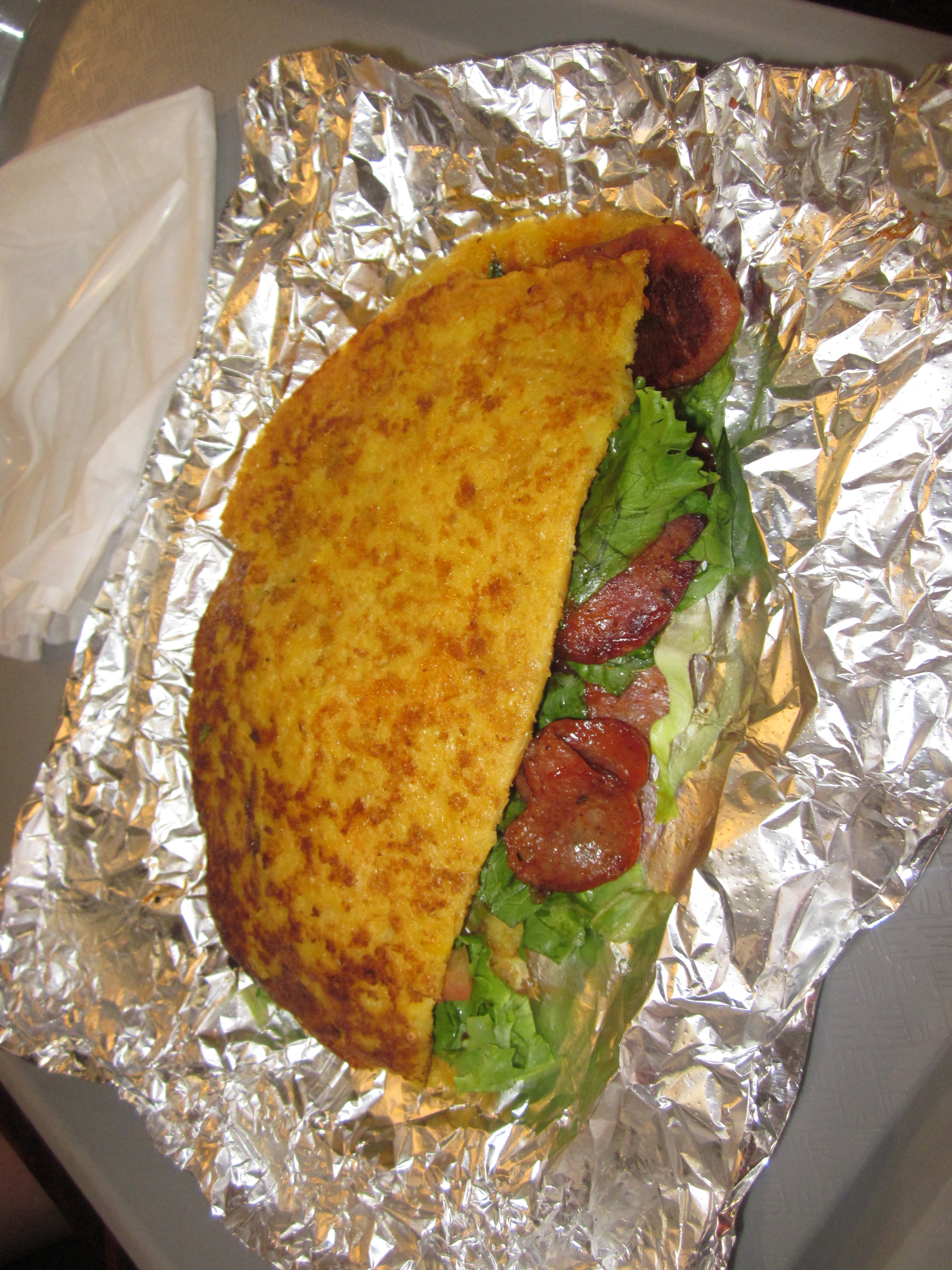
Chorizo cachapas

Zio generously offered me a taste. The corn cake was slightly sweet and dense, but rich with the flavor of fresh corn. It complemented the salty chorizo perfectly. While they ate, I dug through the pastelito. It reminded me somewhat of a meat and cheese calzone, but with a Latin flair.

I heard the Spanish sing song of my name and shot up from my seat returning moments later with the patacone. Using the plastic fork and knife provided, I tried to saw through the fried green plantain. Both utensils were not up to the task, bending to the tough tostone exterior. Giving up, I ate it how it probably should have been eaten; like a sandwich. And though I was able to maneuver some of the juicy shredded beef into my mouth, much of it dropped onto my plastic tray.

Patacone with shredded beef

Zio easily finished the chorizo cachapas, but despite its gargantuan size, it just was  not enough for his prodigious appetite. “I need more,” he mumbled and got up and ordered a beef empanada. The ground beef, onions and spices stuffed into a cornmeal pastry.

After taking a few bites, Zio put the empanada down. “It has a distinctly Alpo-like flavor,” he commented.

Nothing Alpo-like about this empanada.

He offered the remains of meat pie to me. I took a bite. “Hmmm, maybe, but it’s the best Alpo-like empanada I’ve ever had,” I said approvingly. The cornmeal pastry was crunchy with bits of coarse ground cornmeal and the meat was pungent, even aromatic, I was guessing from the amalgam of spices.

We make quick work of the cachapas, patacones, and empanadas and soon the dirty paper plates and napkins were piled high on our trays. With the exception of not experiencing a yoyo, I was more than satisfied with Cachapas y Mas.

The mess left behind.

As I made my way to my car, I could feel the patacone and all the other bites I had at Cachapas y Mas laying heavily in my belly.  The buzz on Dyckman Street had subsided somewhat.  I noticed that though the men’s flowered dress shirts had been removed from the street, the microscopic shorts on the female mannequins were still on display.  Dyckman Street, I realized, was a place for those with better self control than I.  I would be back.  But it wouldn’t be soon.

The Chinatown Congee Wars: Part Two

24 Jul

Great N.Y. Noodletown vs. Congee Village

With my trusty congee taster, Luigi, away on a fresh air fund break, I needed an aide to help me finalize the war I started a couple of weeks ago. I knew no other worthy accomplice than Zio. And he was more than ready for the task.

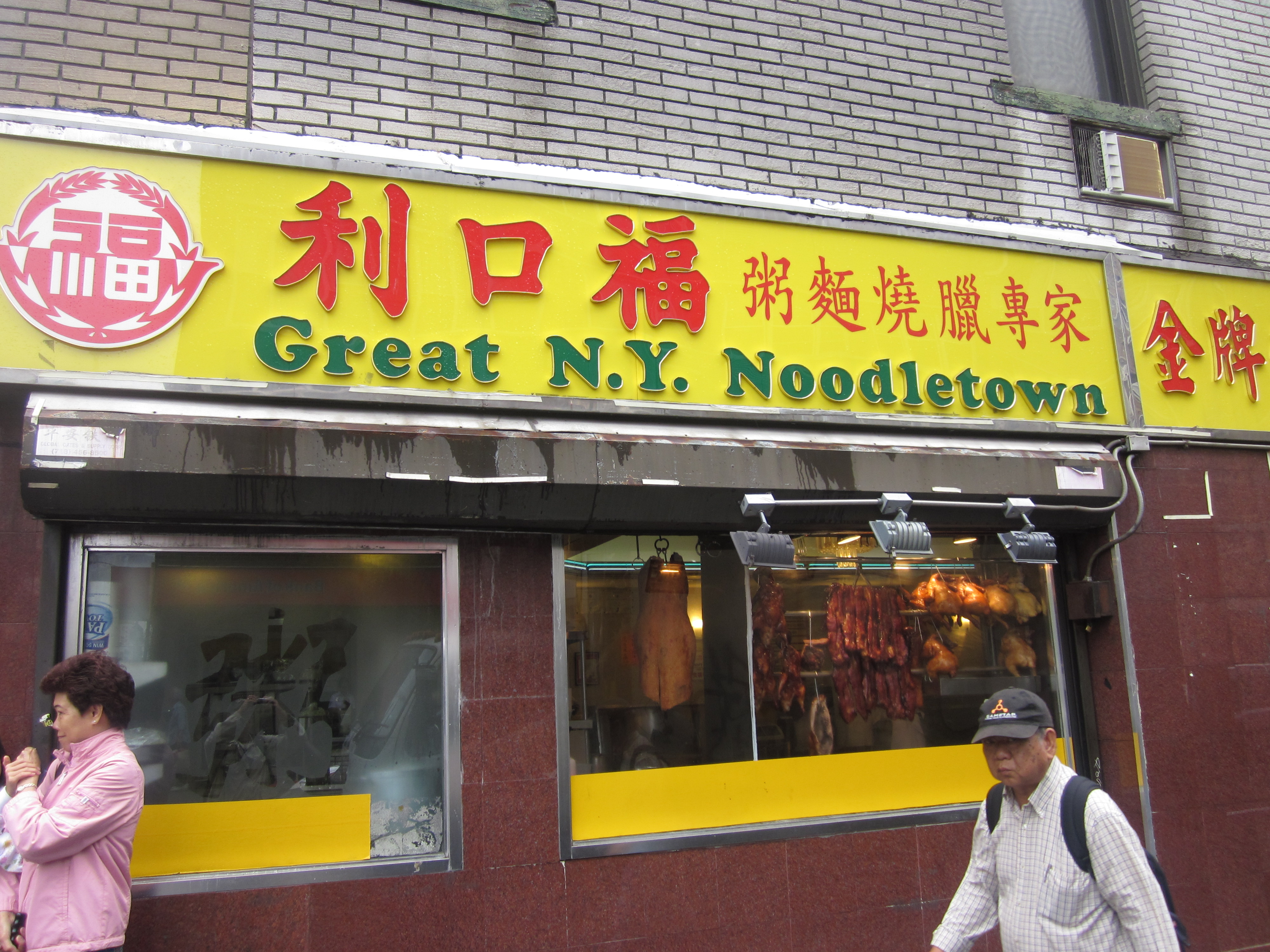
Great N.Y. Noodletown
28 ½ Bowery

Noodletown

On an overcast morning, I found him loitering next to Great N.Y. Noodletown on the Bowery in Chinatown. One of the elderly women that Luigi had observed were so prevalent in Chinatown (The Chinatown Congee Wars: Part One) was sitting next to where Zio was standing, selling umbrellas, a handkerchief covering her mouth. Was she ahead of the whooping cough curve, or was the precaution a leftover from the bird flu epidemic? Zio didn’t seem to mind the close proximity and as soon as I arrived, we went into the restaurant.

Neither Zio nor I were strangers to Great N.Y. Noodletown though when I visited it was not usually for congee.  I do recall ordering the comforting porridge at least once, but my memory of it is dim. It must have made enough of an impression, however, for me to include it in this very serious challenge.

Using all our resolve, Zio and I tried not to peek at the salt baked shrimp, the roast pig on rice, the squid with flowering chives, the triple delight noodles and all the other Noodletown greatest hits found on the menu. Instead we focused on congee only.

Knowing how good the shrimp usually is at Noodletown, I ordered a bowl of shrimp congee. Zio, also sticking to seafood, went with the sliced fish.

Of course, I needed to also compare Noodletown’s “cruller” with Big Wong’s and Congee’s.

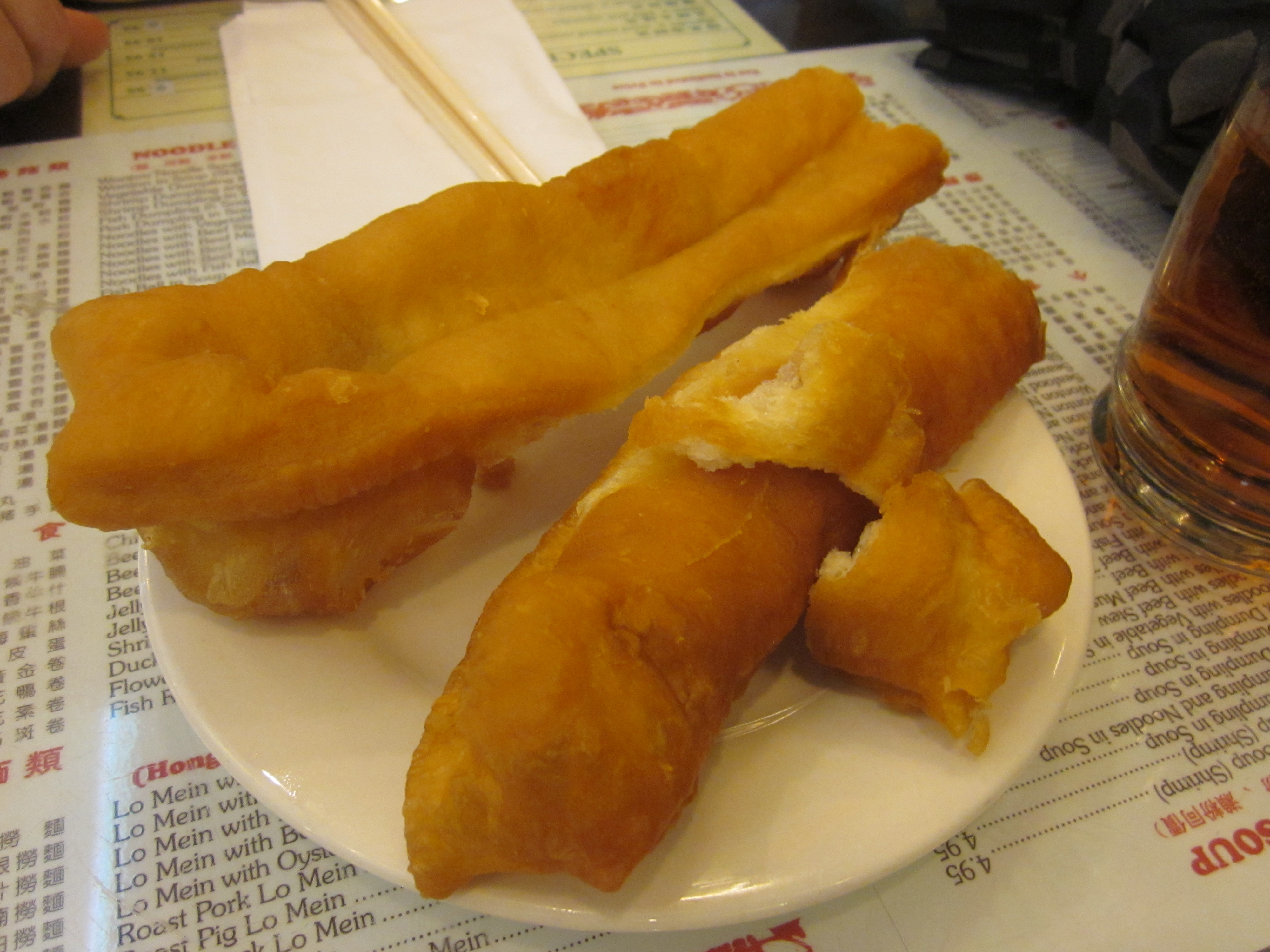
The Noodletown cruller

“What the…?” Zio gasped when the cruller appeared on our table.

“It goes with the congee,” I explained.

But he was skeptical. He broke off a piece and ate it. “It’s like a grease sponge,” he said, demonstrating by squeezing the cruller and showing me the oil slick on his finger.

“Yeah, that’s why it’s a perfect accompaniment to congee. The grease works as a foil to the starch of the congee,” was the justification I offered, though not with much conviction.

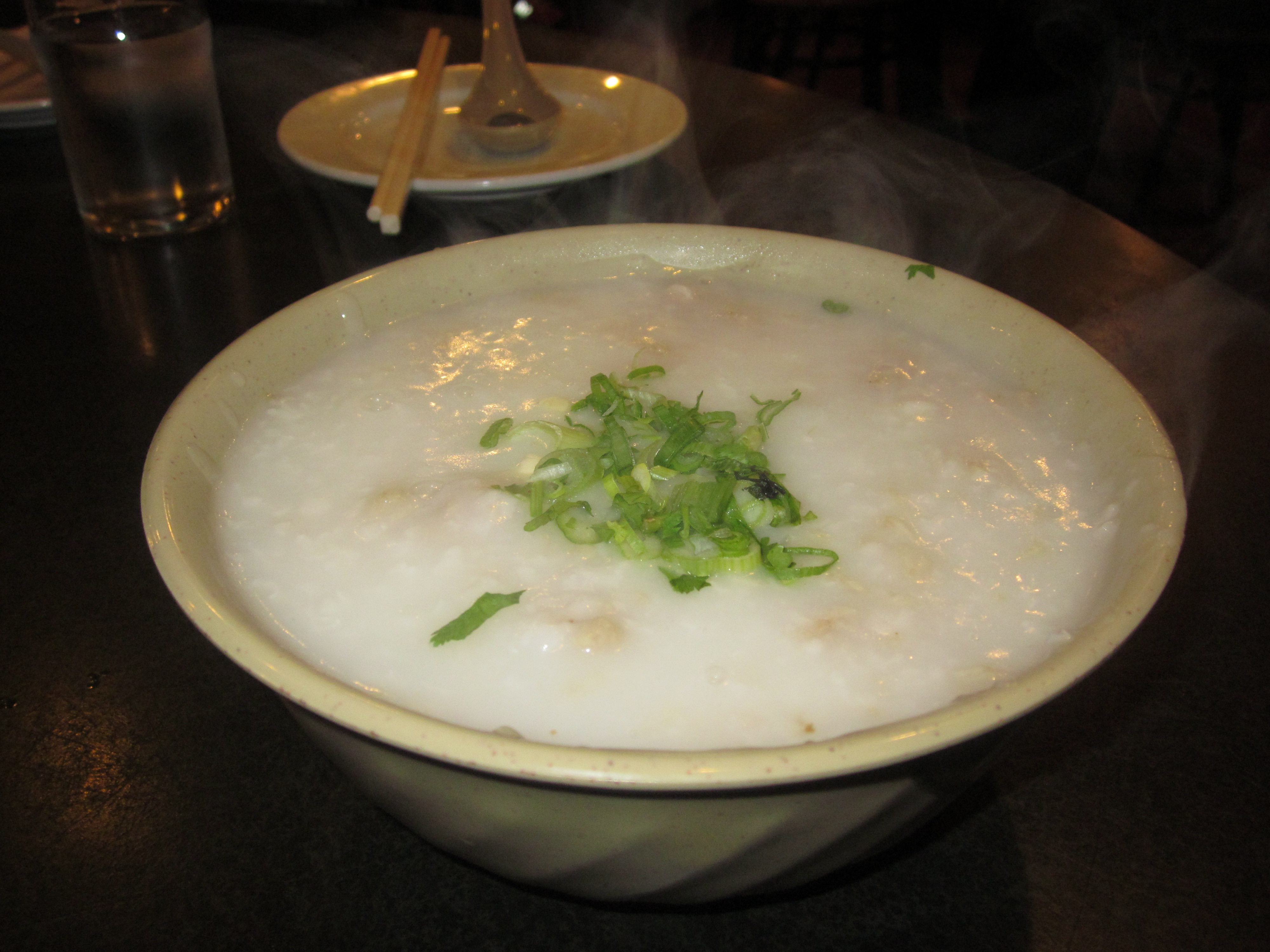
Our bowls arrived. The steam from them formed a cumulus-like cloud around Zio’s rotund face. “You can’t eat this for about ten minutes,” he said. “You’ll fry the inside of your mouth.”

“That’s what the cruller is for,” I said. “Dip it in, like a doughnut.”

Zio scoffed at the idea.

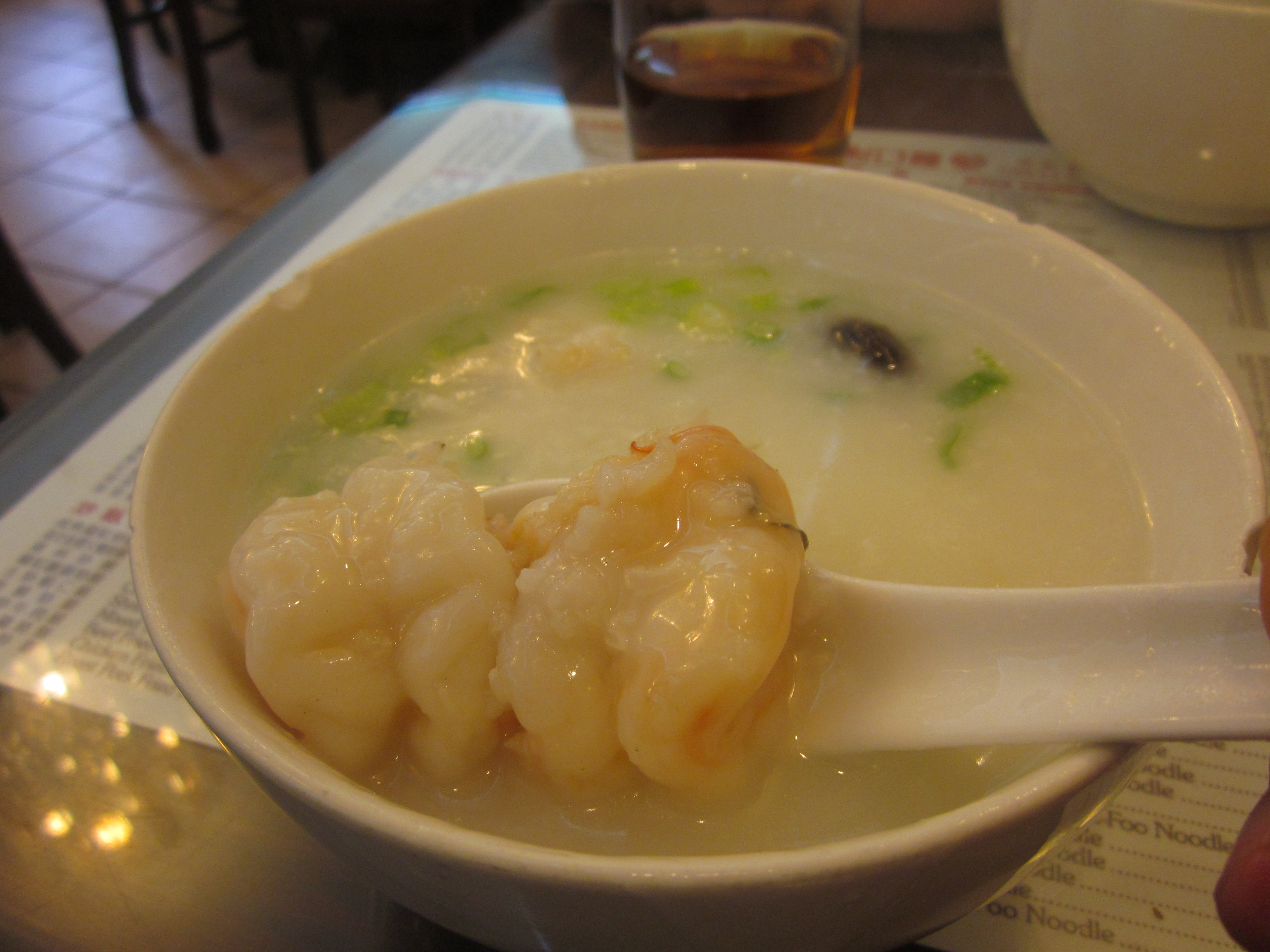
Less than ten minutes later we were sipping the brutally hot gruel. The thin, rice porridge was infused with the flavor of the shrimp. And the pieces of shrimp—I counted six in my bowl—were bigger than golf balls.

Golf ball-sized shrimp.

Zio soon had his head buried in his congee. Using his spoon like a skilled surgeon, he methodically brought the hot soup and pieces of sliced fish to his open mouth, taking it in masterfully.

I watched his performance for a moment and then said, “You might not want to finish it.”

He picked his head up. “Huh?”

“We’ve got another place to try after this,” I reminded him. “Save room. If you eat too much here, you won’t be able to give the other contestant a fair shake.”

He thought for a moment. “You’re right,” he said and put down his spoon.

Reluctantly, we had the bowls wrapped up; our waiter sliding on plastic gloves in front of us, and then pouring each bowl into a take out container.

Congee Village
207 Bowery

Though the congee at N.Y. Noodletown was light, I could feel the density of the two enormous shrimps I ate while walking up the Bowery to our next destination. I hoped the exercise would offer relief and lesson the load there. There was still more work to do.

For sticklers, Congee Village might not be considered a Chinatown restaurant. Located a few blocks north of Delancey Street, you could say the restaurant was technically in the Lower East Side. But Chinese-run restaurant supply and lighting stores populated the street northward, along with an abundance of signage in Chinese; enough to figure Congee Village within Chinatown’s expanding sprawl.

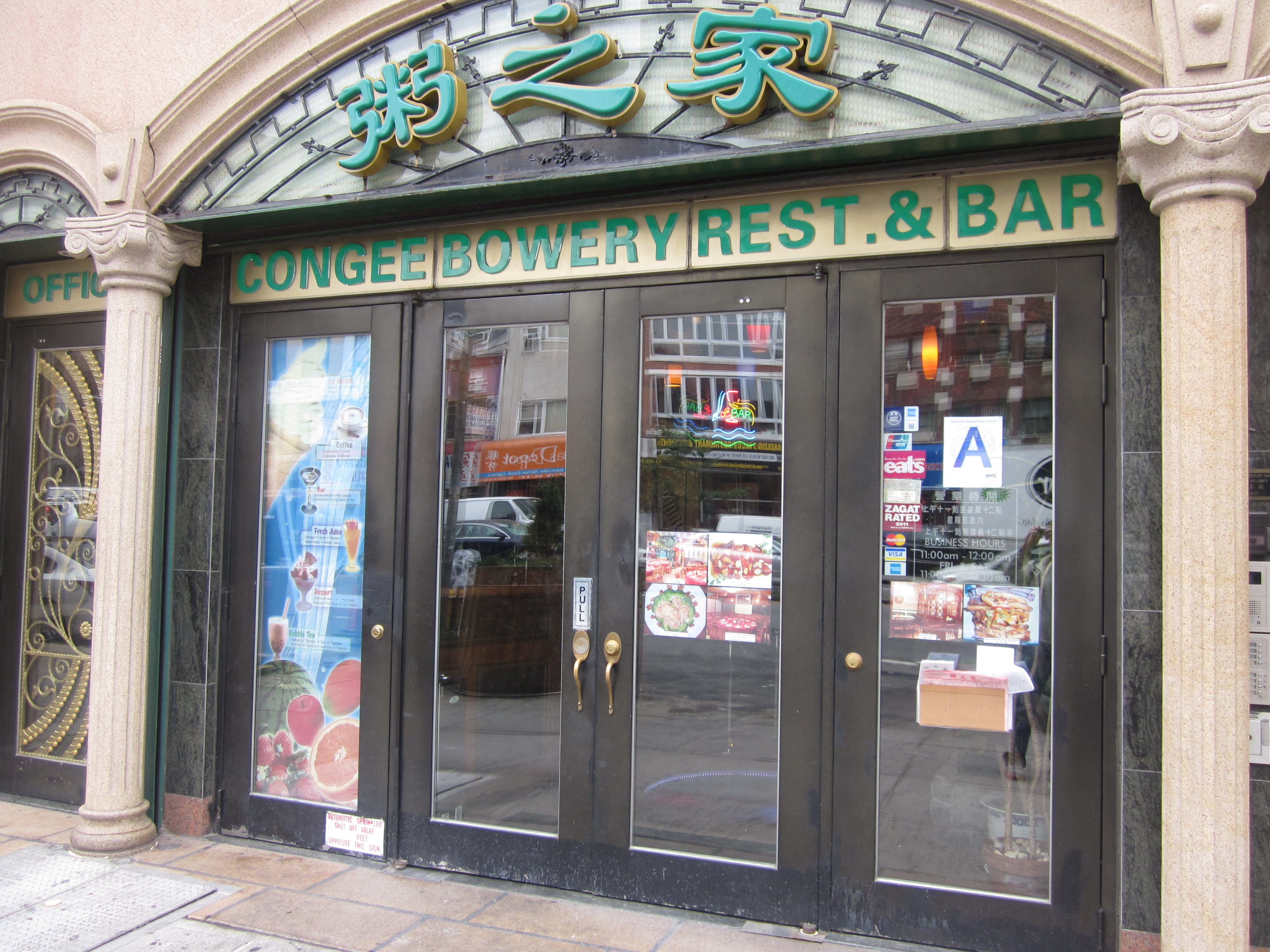
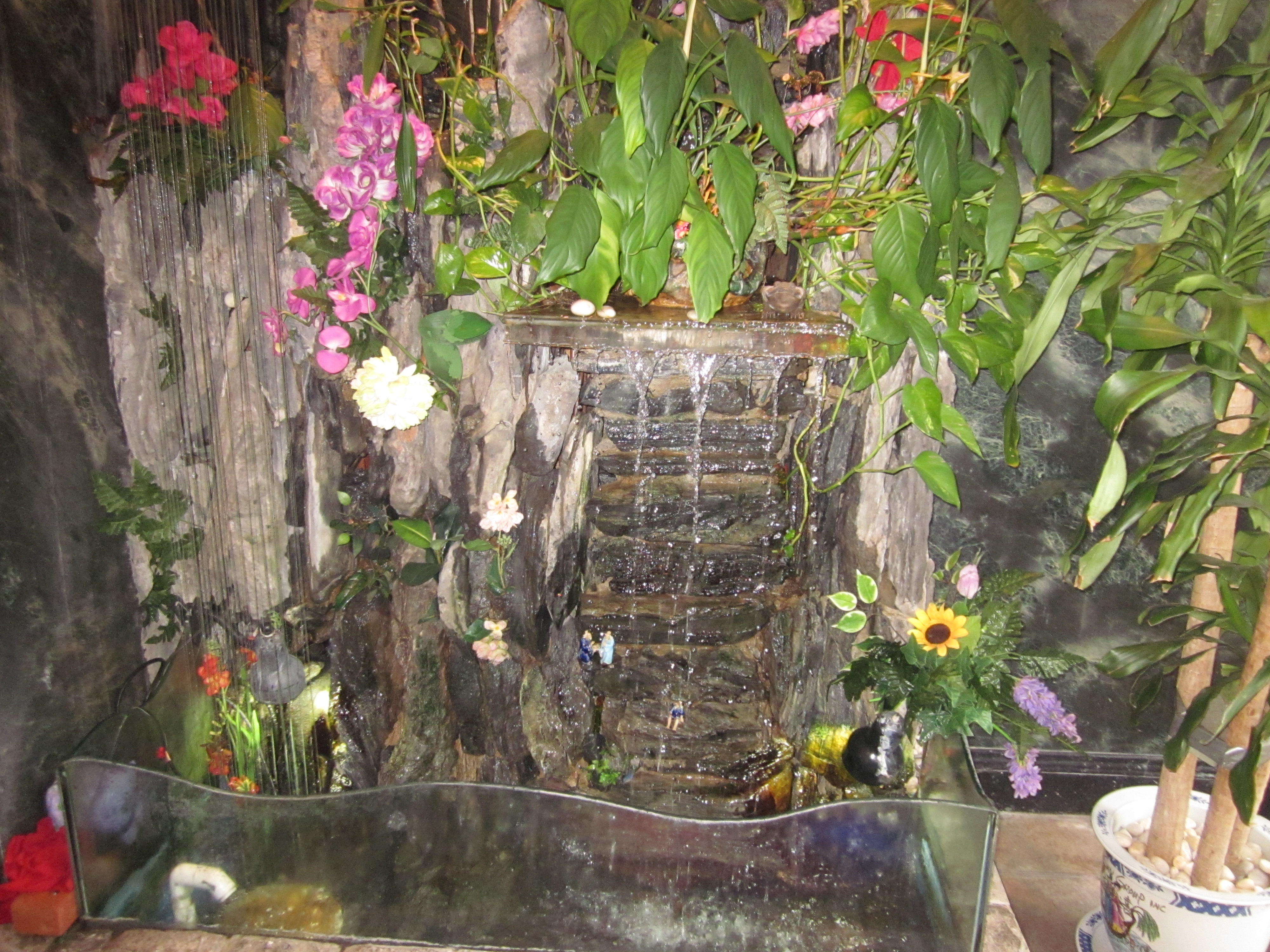
A full bar and a trickling waterfall greeted us as we entered the very ornate Congee Village. This was a complete departure from the grungy, yet refreshingly familiar confines just experienced at N.Y Noodletown.
Congee Village waterfall

A lovely waterfall greets you upon entrance to Congee Village.

We were given a table in the dark, burnished wood laden dining room complete with large, family-sized booths and a flat screen television tuned, at this hour, to NY1 news. There were tablecloths and wine glasses on the tables yet the napkins were of the thin, paper variety.

“What a tourist trap,” Zio muttered.

I looked around. The few tables that were occupied were with groups of Chinese couples and families, and unless they were out of town Chinese, I had to disagree.

“Looks like a local favorite to me,” I said.

The menu, tourist trap or not, was impressive. Despite the name of the restaurant, we had to flip through a number of colorful pages to find the congee. When we did, the prices, waterfall and full bar notwithstanding, were actually lower than N.Y. Noodletown’s.

Sticking to the seafood theme of the day, I ordered the “crab porridge,” while Zio this time choose squid. If there were crullers, I just didn’t have the courage to order them.

The bowls arrived and looked like what Luigi and I had at Congee; pots with long handles. Smaller bowls were given out making it easier to share.

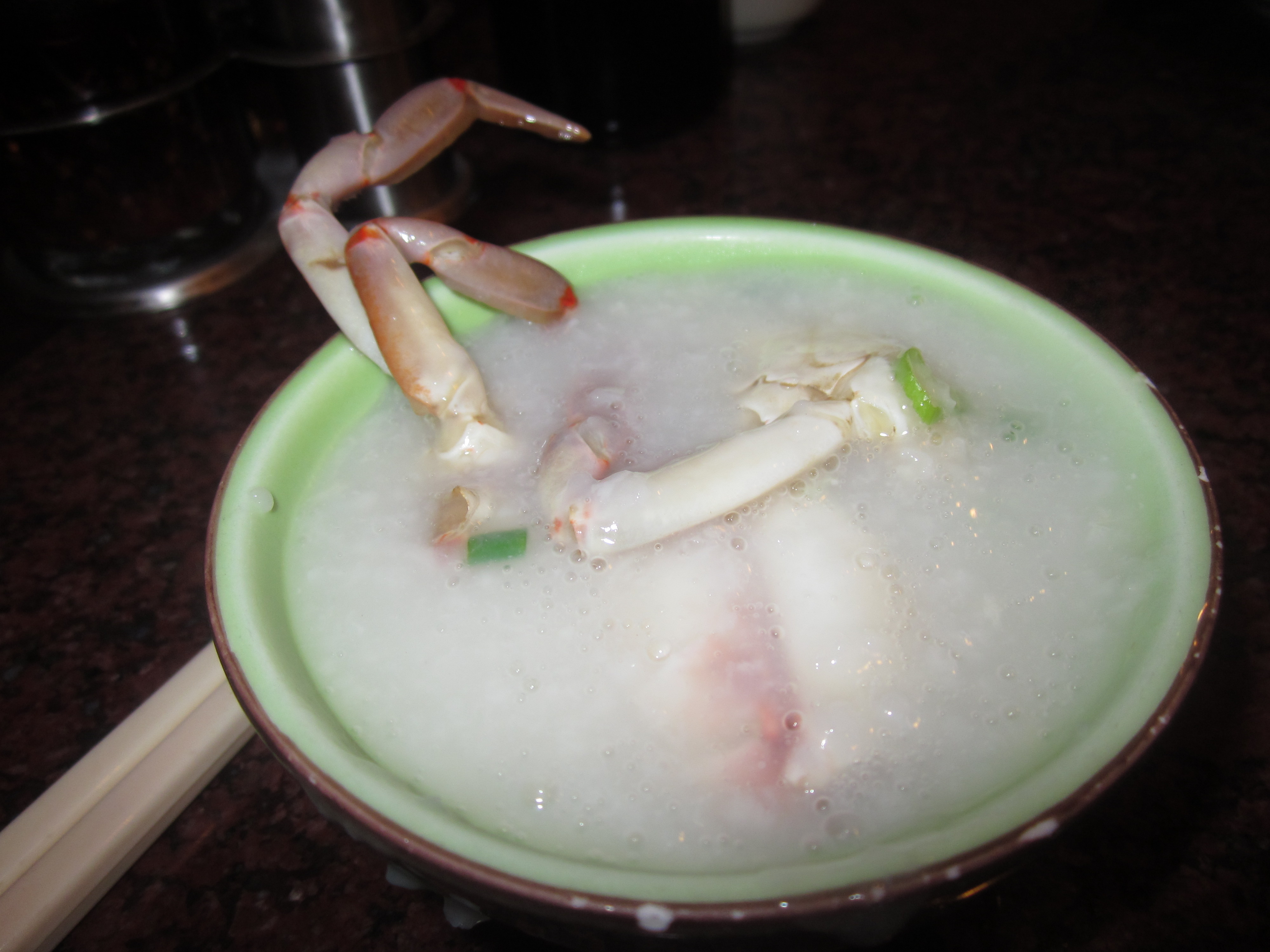
Crab porridge

A whole, blue crab was in my bowl, chopped into a few pieces. Like the shrimp infused the congee at Noodletown, the crab definitely added flavor to the bowl here at Congee Village. The melding of the shellfish broth with the rice congee was a revelatory match. To eat the crab, however, I had to fish out the pieces and pick the shells apart with my fingers. It was messy work and the thin napkins weren’t helping. But the congee was so good, even Zio’s crude, distasteful remark about what my fingers looked like coated in crab shells and overcooked rice gruel didn’t deter from my enjoyment of it.

Zio fished a piece of squid out of his congee. It was scored with numerous criss cross patterns. He examined it. “Why do they get fancy with the squid,” he complained.

“Does it taste good?” I asked.

“Yeah, it’s fantastic,” Zio said.

“Then who cares.”

I sampled a piece and though it was tougher than I like, it too worked amazingly with the bland congee.

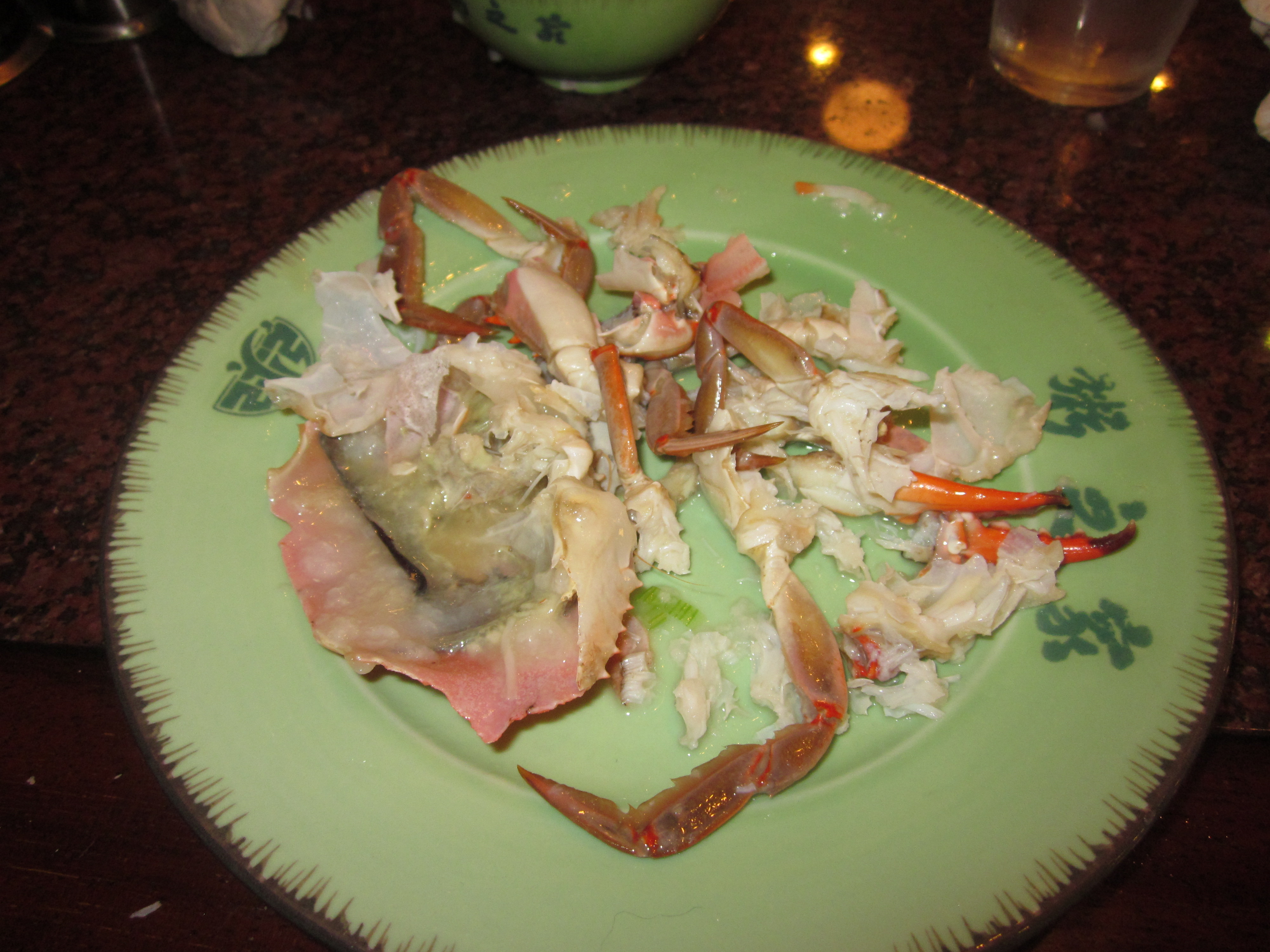
There would be no leftovers here. We could finish the congee and not worry about having to sample another. The crab remains were scattered across my small plate.

The remains of the crab.

“So what do you think?” I asked Zio.

“We really gotta pick a winner?” he whined.

I thought for a moment. I didn’t want to either. Each of the four congee joints had their merits. At Congee, I would stick with the pork and preserved egg while at Big Wong, how could I resist the roast pork congee? There was no denying that Noodletown’s shrimp congee was a one of a kind. And here, at Congee Village, I’ll forever swear by their crab porridge.

Yes, I know I’ve copped out. I couldn’t crown a champion. I’m just no good at these things—these numbered lists where you have to rank your favorites, whatever they may be. Congee preference is subjective. No matter how expert my opinion, I really can’t change someone else’s taste inclination. And in this case, one man’s congee just might be another man’s gruel.

The Chinatown Congee Wars: Part One

13 Jul

Congee vs. Big Wong

Some call it porridge. A more medieval term for it is gruel. In Chinatown it is known as congee; white rice boiled with water, lots of water, until it becomes a thick, hot cereal or soup, depending on what you do with it.

For many who live in Chinatown here in New York it is a breakfast staple. In the last few years, Congee’s popularity has burgeoned beyond Chinatown and now people like me travel to the congested, cramped, sometimes ripe streets of lower Manhattan to get their congee fix.

Congee lovers are often blindly loyal to their favorite places. Me, I keep an open mind. I have, however, narrowed down the crowded Chinatown field to four serious contenders to the congee crown and here, in two parts, using my vast background and experience in the art of overcooked rice, I will ultimately reveal the best congee in Chinatown.

This will not be like the murky college football system known as the BCS where the true champion is settled more by sports writers than by the deserving teams battling it out on the field. The results of the Chinatown Congee Wars will be unequivocal. There will be no talk radio controversy. No happy hour debates. That is unless you happen to disagree with my choice. In which case, you are entitled to your opinion, no matter how misguided it might be. And please, don’t hesitate to express yourself here. I welcome it.

For this first round, I was accompanied by one of my offspring;  the 12-year-old, Luigi. Though he is a mere novice when it comes to the glories of congee, despite his youth, Luigi is a very accomplished eater. What he lacks in experience, he more than makes up for in exuberance. I had complete confidence that he would remain unbiased and not be swayed by perks such as complimentary hot tea or a plastic-wrapped fortune cookie. I was sure he would take his task seriously.

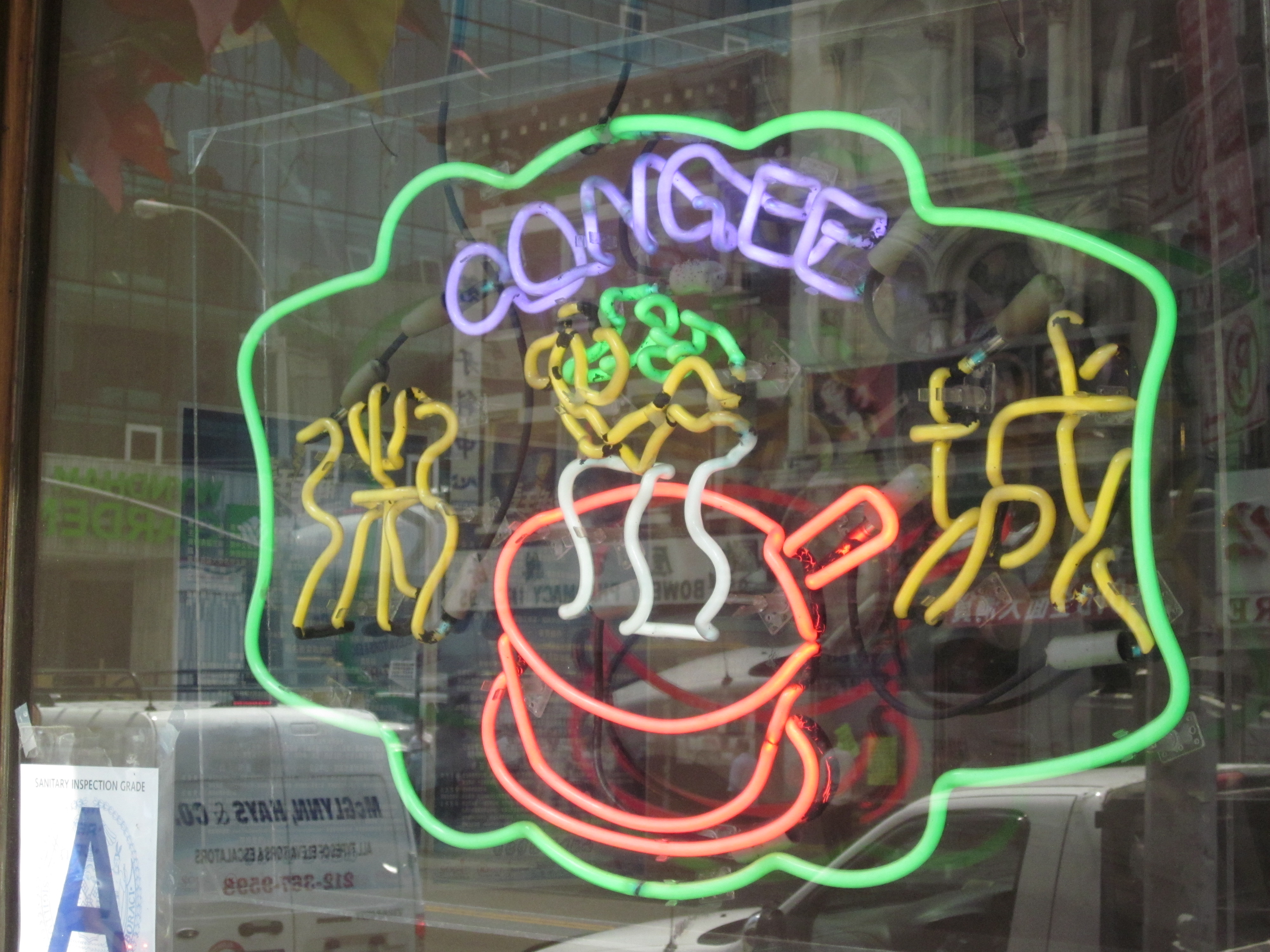
Congee

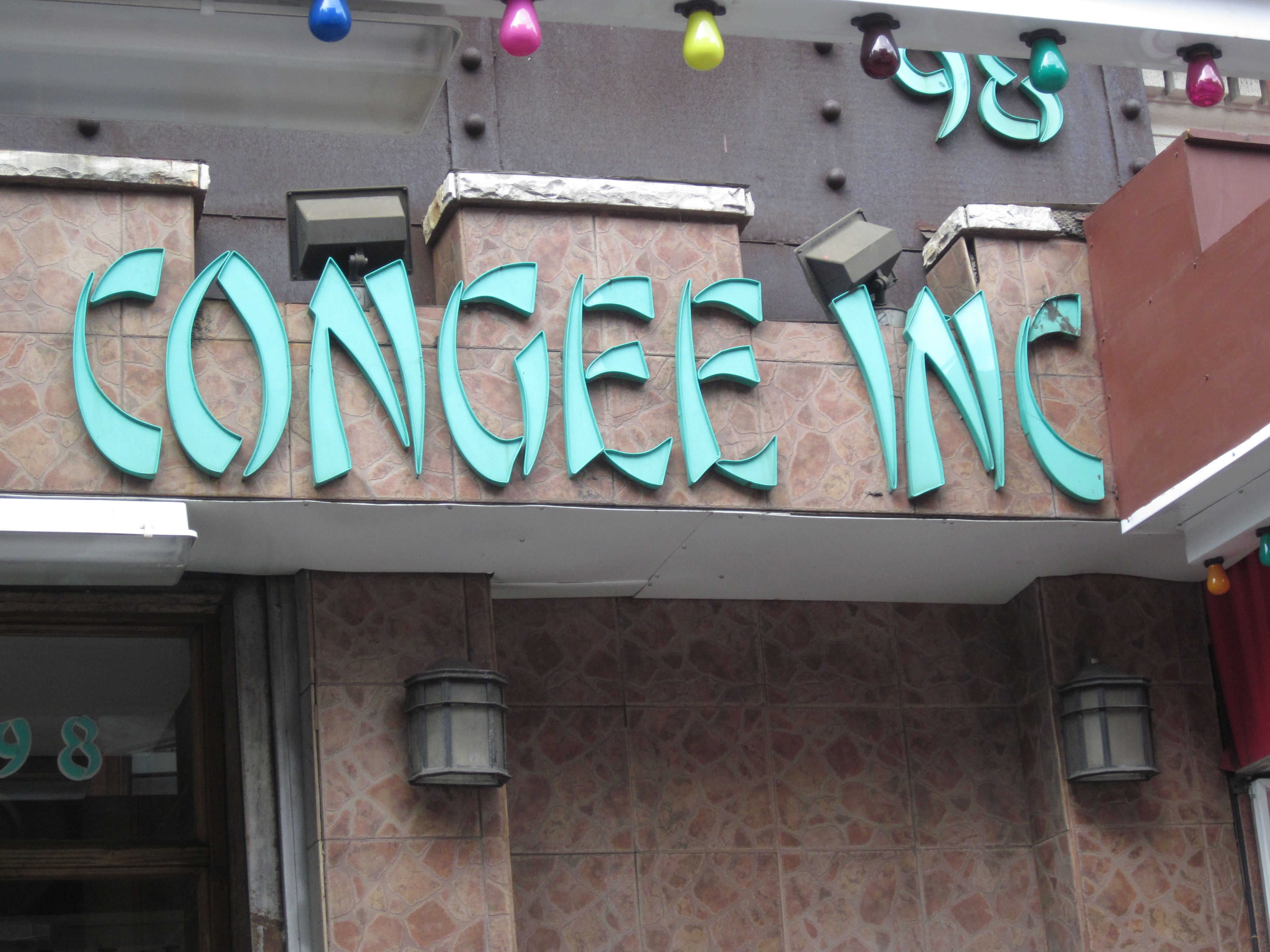
98 Bowery
Chinatown

Our first destination was the appropriately-named Congee.

Located on the Bowery, Congee, I knew was worthy of its name. When we arrived, just before the lunch time bustle, there was only a Chinese family with very young children at one of the other tables. The baby was making a racket in the otherwise quiet restaurant and I noticed, doing its best to decorate its pink, fat cheeks with spoonfuls of gruel.

I told Luigi we had to have the congee. If he wanted something else to offset it, he could, but to be careful and pace himself; we had another congee place to judge.

There were a number of interesting congee offerings including snail and pig’s liver, abalone and frog, and dried scallop and gingko nut, but I wanted to keep it relatively simple. I needed to judge the congee on its own merits without too many exotic ingredients, so I went with the sliced pork and preserved egg variation.

Luigi scoffed at my suggestion of the “healthy vegetarian” congee, instead choosing the beef. Along with it, we had an order of “fried dough,” the usual, bland but deep fried, accompaniment to the porridge.

The congee came out steaming in pots with wooden handles. We stirred, trying to cool it down not wanting to scald our tongues and the roofs of our mouths thus immediately nullifying either of us as legitimate judges.

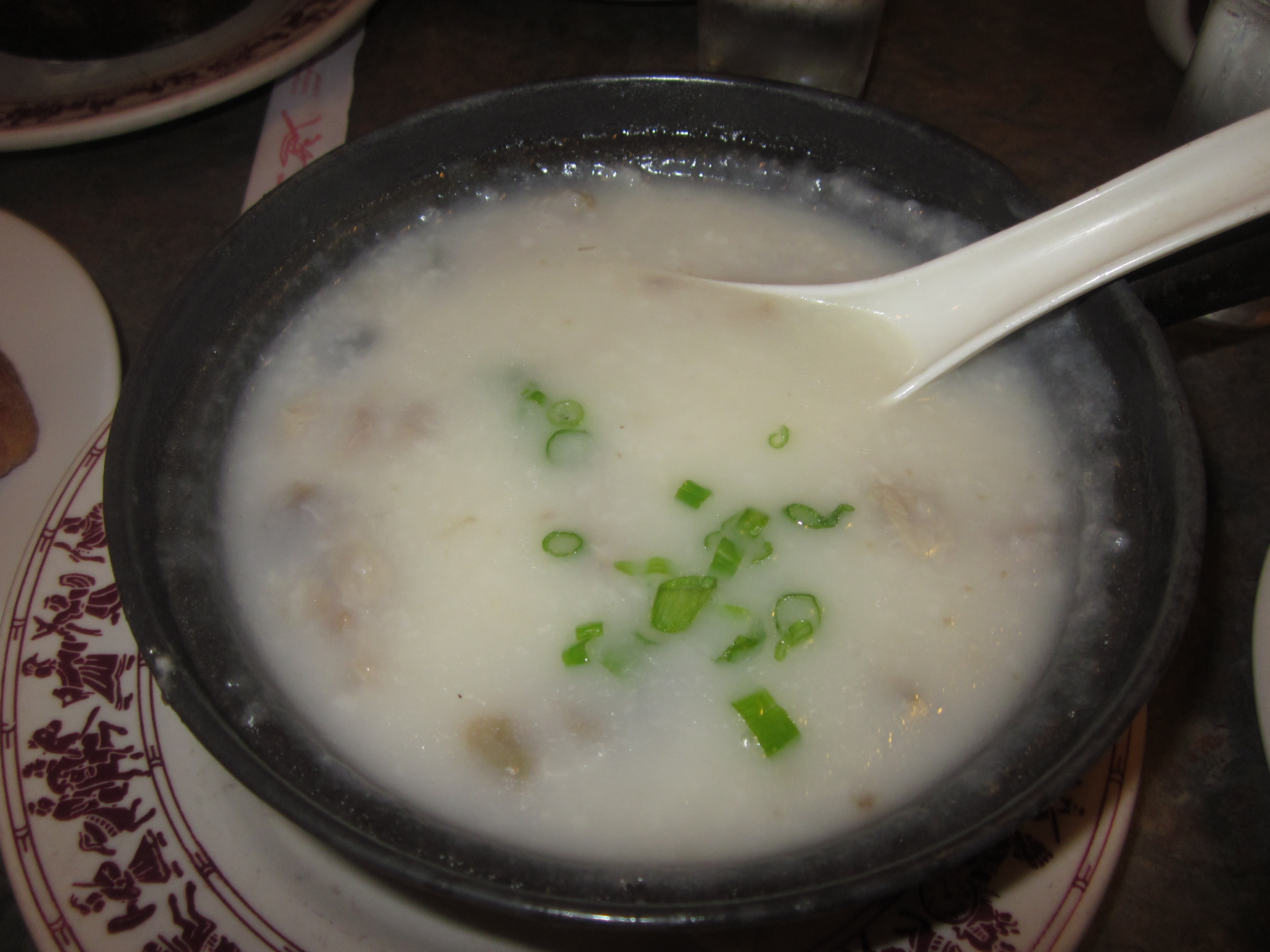
The inside of my mouth, however, after years of impatiently ingesting hot pizza, soup, and other blistering foods, has developed a tough, asbestos-like coating. That hard shell made it easier for me to begin the congee tasting sooner than Luigi. What I tasted I liked. The congee was not overly heavy; the balance of liquid to rice tipping slightly to the liquid. But the pork with preserved egg added a nice hearty supplement.

Sliced pork and preserved egg congee.

Luigi struggled at first with the big pieces of beef; trying to cut through them with spoon and chopstick but to no avail. Using his sharpened incisors, he was able to gnaw the beef apart and enjoy, so he said, the rest of his congee, dipping the somewhat stale pieces of fried dough into the porridge and scooping it into his mouth.

The beef congee at Congee.

I wouldn’t have had any difficulty finishing off the bowl of congee, but we had another place to visit. Using about all the self control I could muster, I signaled for the waiter to bag up our leftovers, and we made our way to our next destination.

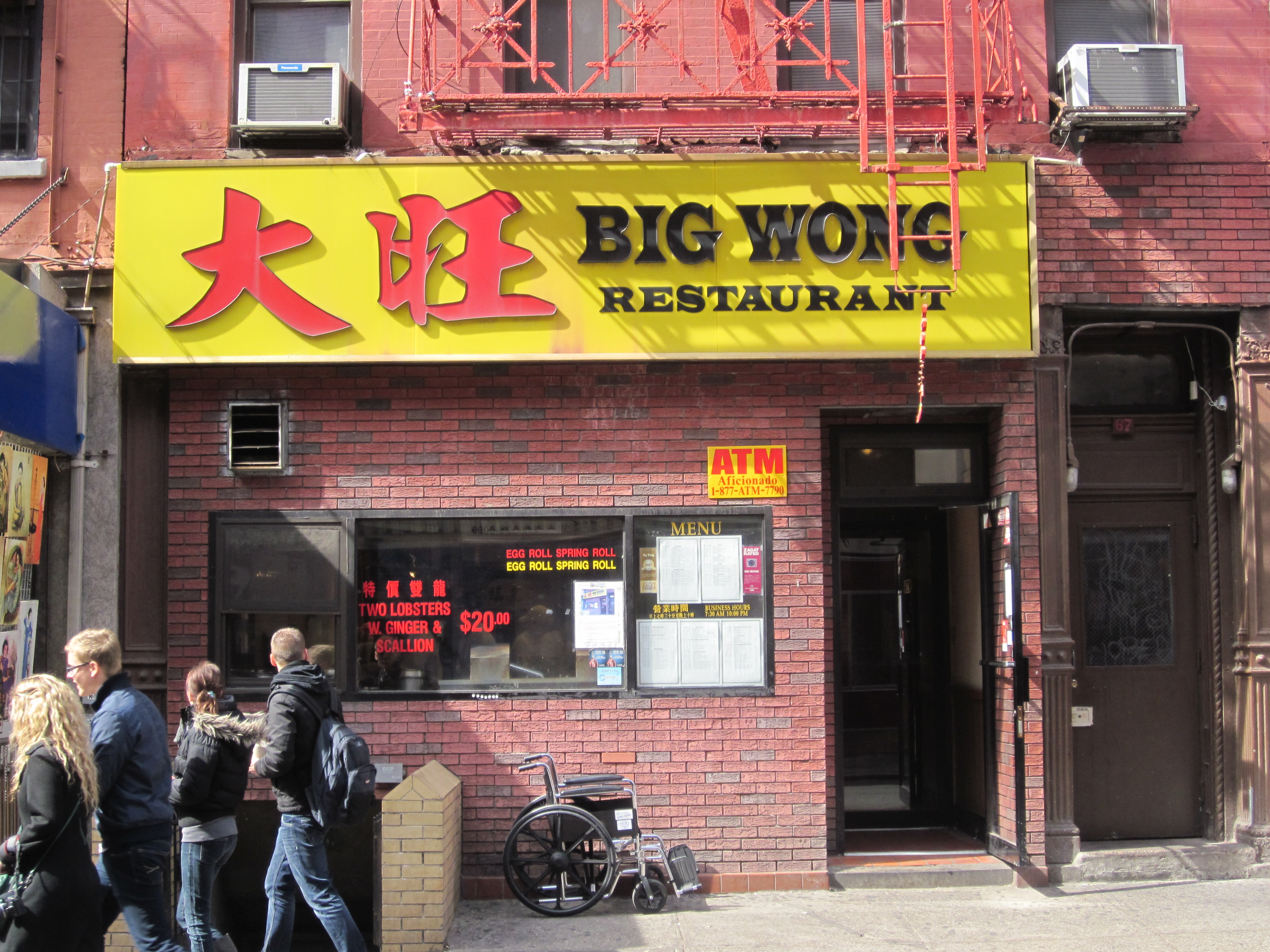
Big Wong King

67 Mott Street
Chinatown


I admit to being partial to Big Wong. It’s been one of my “go to” spots in Chinatown for a very long time. And whenever I go, it’s hard to resist the congee.

I noticed immediately that Big Wong, located in the heart of the tourist mecca of Chinatown on Mott Street, had higher prices for their congee. At Congee, the standard bowls we ordered were $3.95. At Big Wong, most were a dollar, maybe two higher. I knew I couldn’t let price influence my evaluation. The congee had to stand alone regardless of what it cost.

I ordered the roast pork while Luigi went with the chopped beef. Like at Congee, we also ordered the “fried dough.”

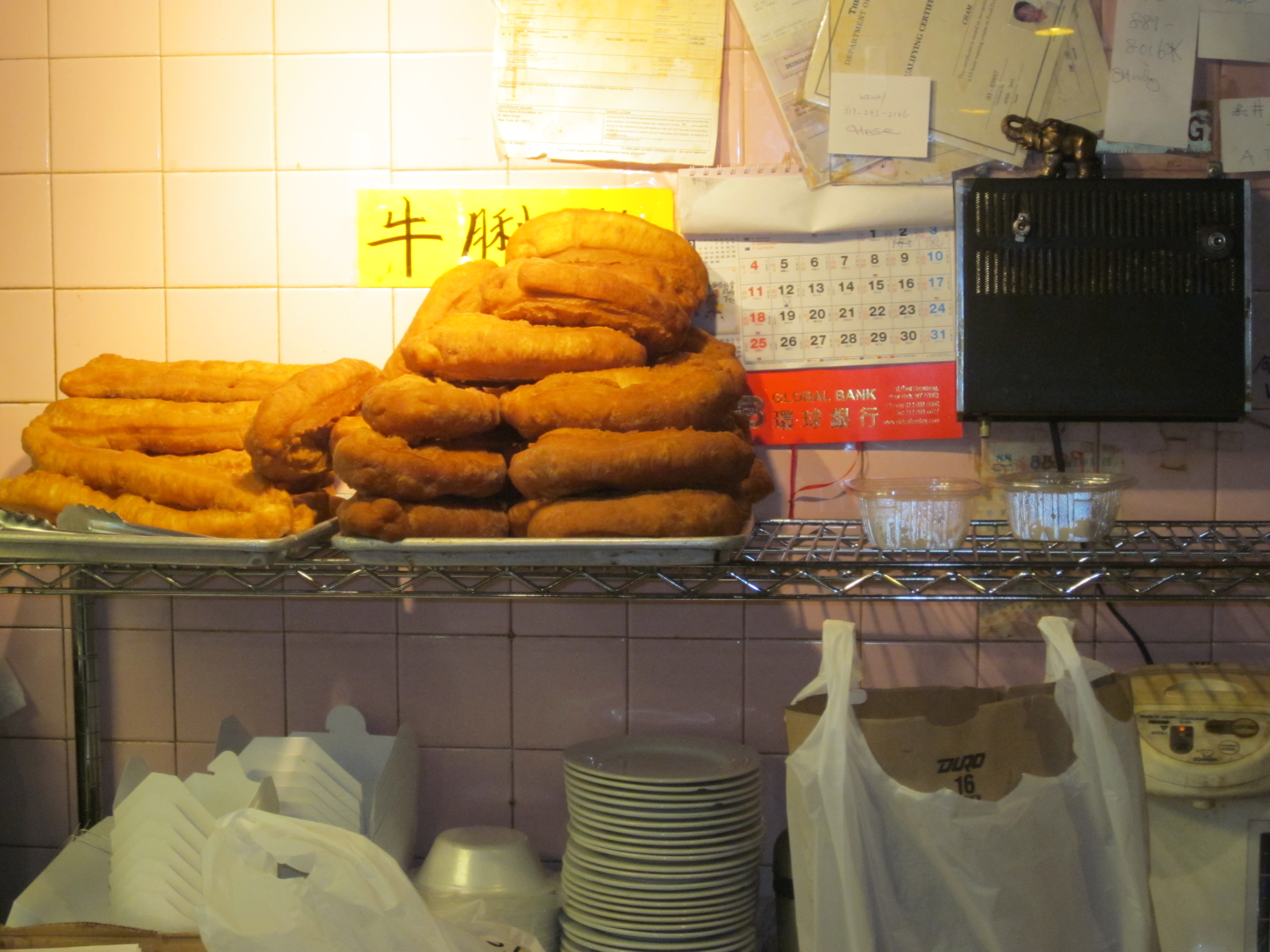
Big Wong’s fried dough or “crullers” ready to be dipped into congee.

“I’m worried that Chinatown will change soon,” Luigi professed to me.

“Why is that?” I asked him.

“There are a lot of old people here,” he said.

I nodded. There were. In fact, we were sharing a round table with three seniors.

“But there are young people too,” I said, gesturing to many who were also dining at Big Wong.

“I hope it doesn’t die,” he said. “I like Chinatown.”

Our bowls arrived. The steam was flowing from them. These were even hotter than what we got at Congee. My asbestos mouth would be no match for the boiling cauldron in front of me.

Hot congee at Big Wong.

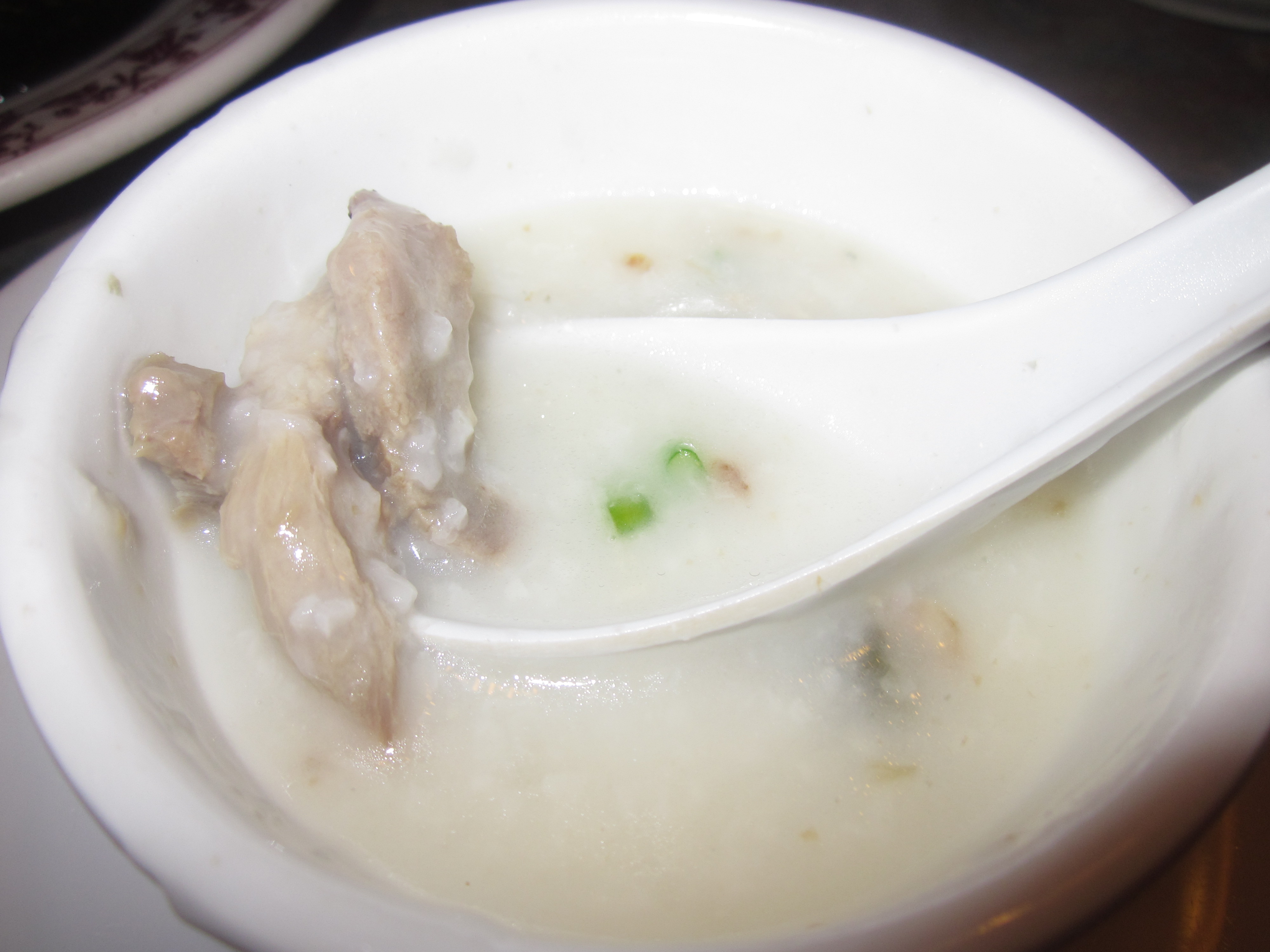
The fried dough, a long, fresh cruller, kept us busy until the congee cooled down somewhat. When I could brave it, I took a spoonful. Mine was rich with roast, barbecued pork, the barbecue tinting the white of the soup turning it  a bronze-like color. Luigi’s had crumbled ground beef. Both were sprinkled with cilantro adding a pleasant garnish to them.

I liked the congee at Big Wong better than what I experienced at Congee. It was heartier; more rice to water and stuffed with meat. Luigi disagreed. “Congee is better,” he said definitively.

“I don’t know, I like Big Wong’s even though it is a few more dollars.”

We were at a standstill. He favored one, while I the other. How would we resolve this?

“Well, the fried dough is better here, isn’t it?” I said.

He agreed, but we weren’t on this mission to judge fried dough.

Congees and a cruller

They say a tie is like kissing your sister? I never had a sister, so I wouldn’t know. Maybe Part Two of the Chinatown Congee Wars will help clear up the muddled picture I’ve created.

Until then, feel free to chime in with your own opinions though I will not be swayed in mine.

A Good Friend is Hard to Find

29 Jun

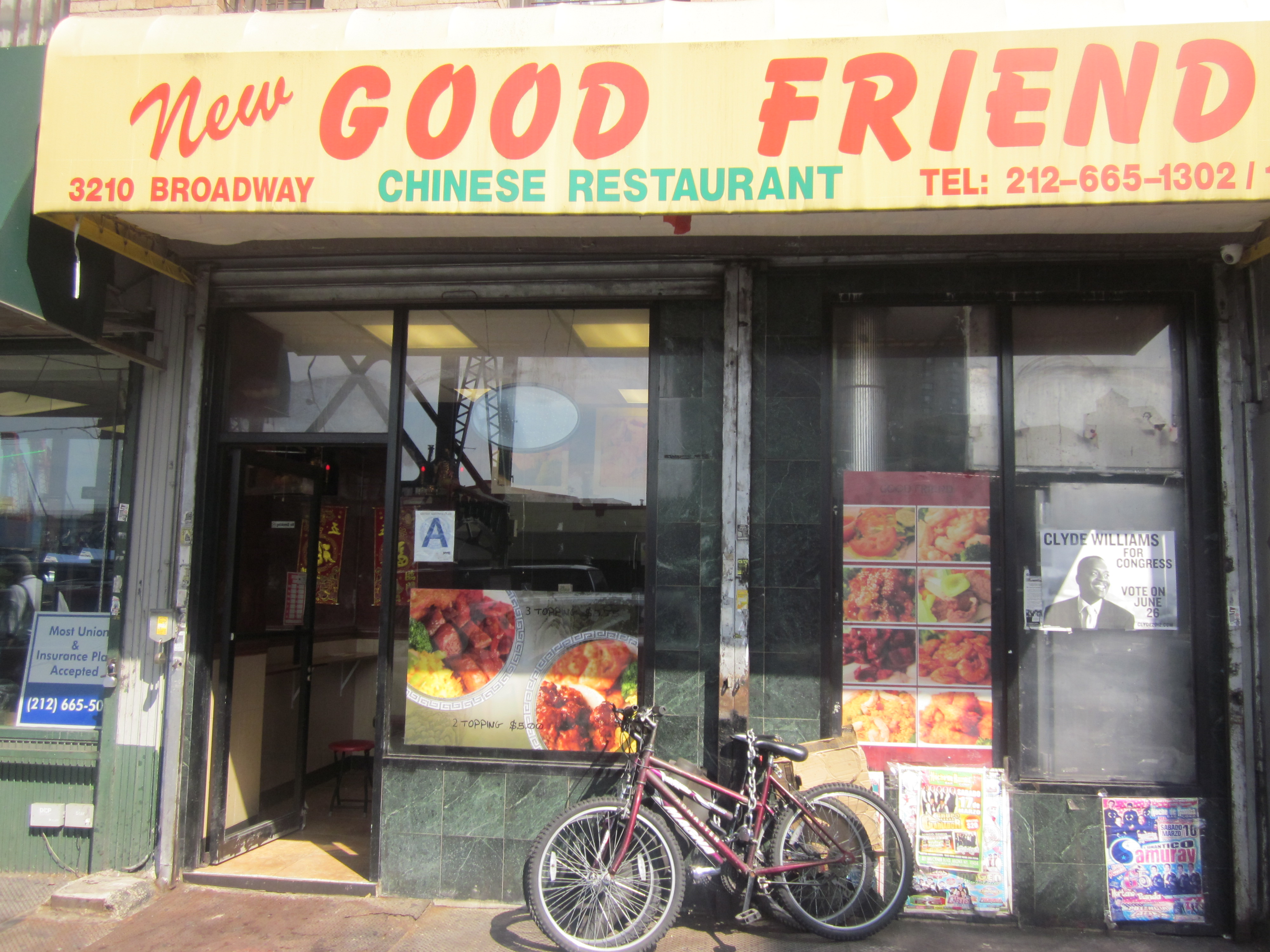
A New Good Friend is even harder.

I’m very happy I’ve found one.


The Sweetbread Tango

26 Jun

La Esquina Criolla

94-67 Corona Ave,
Elmhurst


“How do you want your steak cooked,” the waitress asked in her heavy Spanish accent.

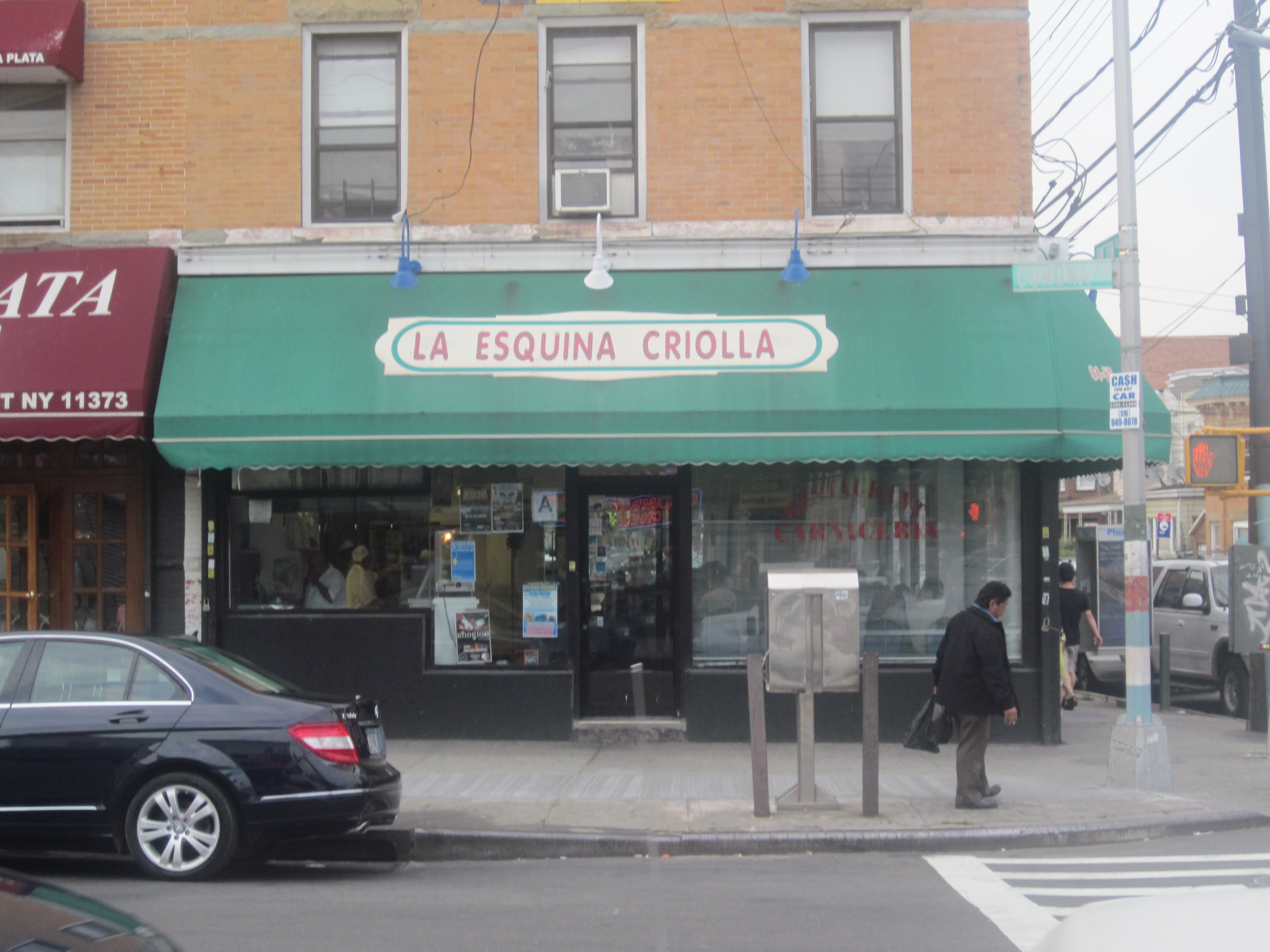
We were in Elmhurst at the corner of Corona Avenue and Junction Boulevard in what was advertised as an Argentinean/Uruguayan restaurant called La Esquina Criolla.

“That’s a first for our group,” Rick said after hearing the question from our waitress.  And he was right. It was the first time in the ten plus years we had been convening that we were asked how we wanted anything cooked, much less a steak.

Did that mean our standards were changing? That now we were graduating to a different, higher quality of restaurant? I certainly hoped not and believed that the question before us was just a blip; an aberration in our continual journey to unearth diverse, ethnic eats within our frugal, even grubby, standards.

When I chose La Esquina Criolla, I knew I was treading on dangerous ground. That we would we probably be going over our $20 per person budget as well as dining at an established foodie destination where, what was confirmed later, wine was served in stemmed wine glasses. But that did not stop me. I went ahead with the choice anyway. Red meat was something our group rarely, if at all, dined on and I thought that for once we should have that experience despite the potential monetary risks. I believed this place, La Esquina Criolla would be our best bet to at least keep it close.

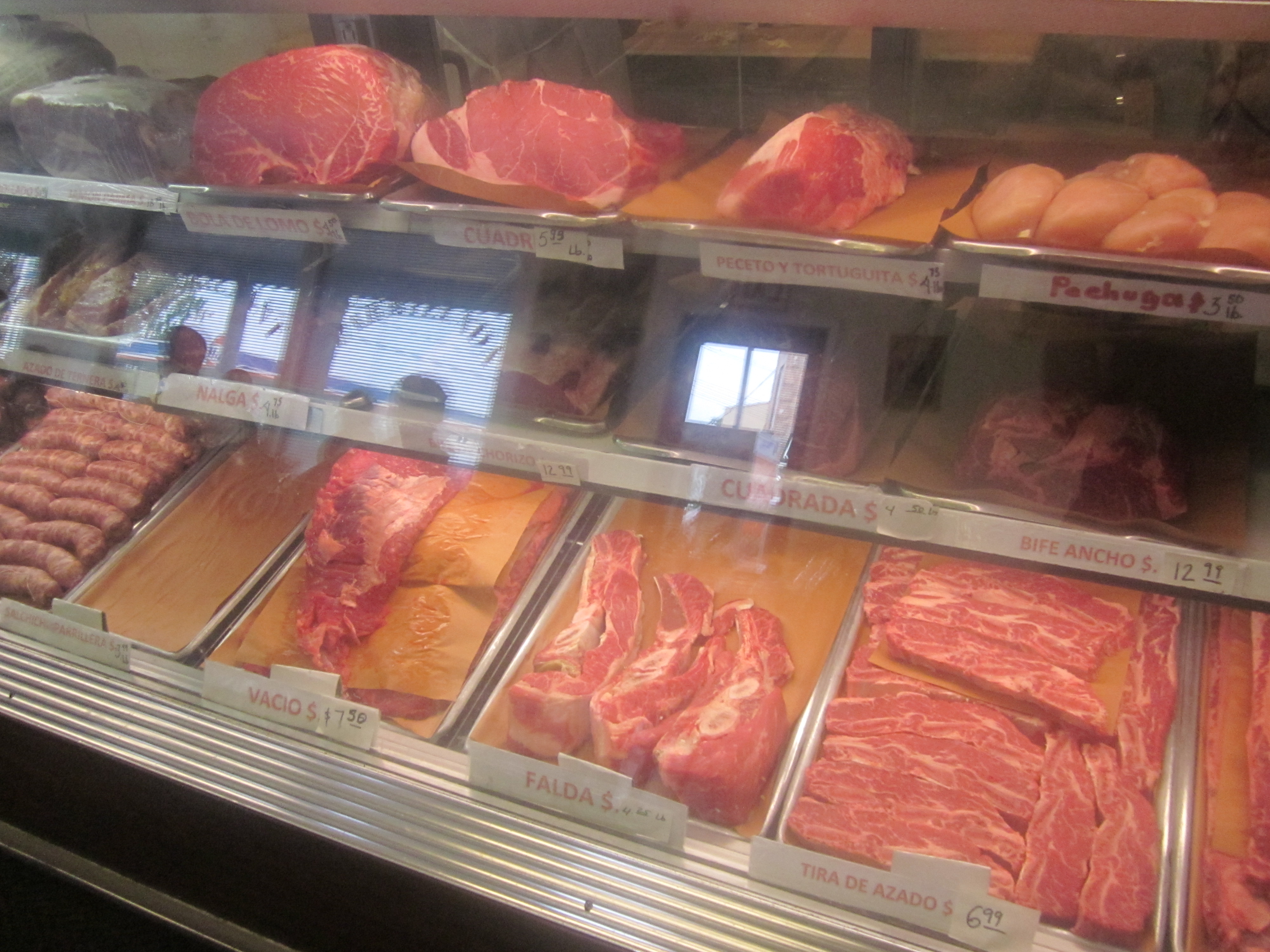
Red meat for sale.

“You’re in trouble with this one,” Gerry teased, glancing at the menu and the prices next to many of the “carnes a la parilla,” which ranged from $16 to $24.

“I have an allowance,” I said, trying to rationalize the stark reality spelled out in front of us. “Most of my other choices were so under our budget, that I’m entitled to go over here and still, really, come out no worse than even. It’s called a carryover balance.”

Eugene’s reading glasses were balanced on the tip of his nose. “Uh huh,” he nodded dubiously.

The raw meats we were soon to order were displayed behind the counter; La Esquina Criolla doubled as a butcher shop. There was flank steak, skirt steak, shell steak, blood sausage, known as morcilla, chorizo, kidney, sweetbreads, lamb, and short ribs.

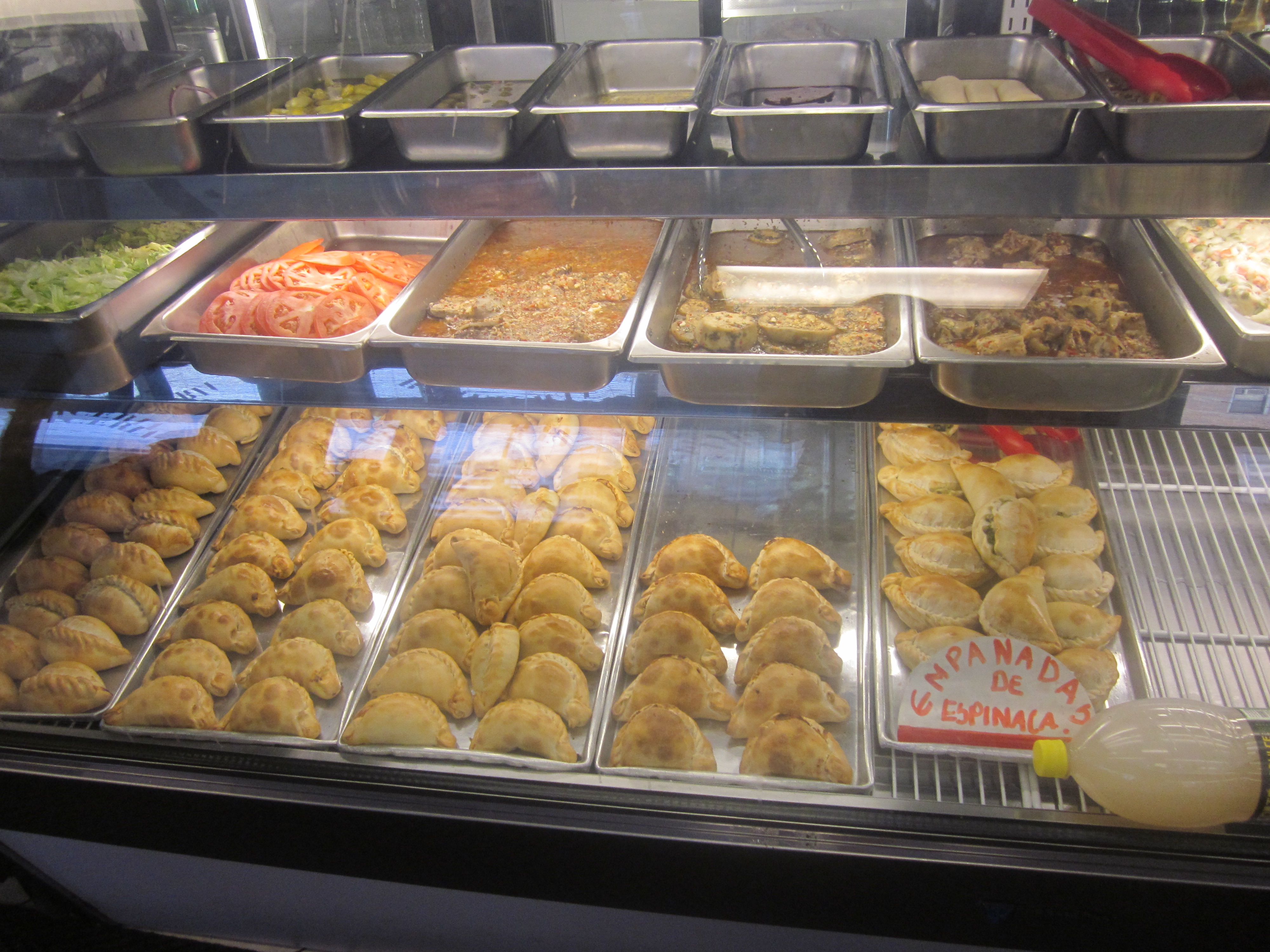
Displayed behind the counter adjacent to the meats were a selection of empanadas; meat, chicken and spinach along with a few other appetizers; marinated eggplant, beef tongue, and hearts of palm to name a few.

Empanadas…and more empanadas.

While we decided what to order, we were brought toasted bread and slices of grilled sausage. We knew we had to be careful how we ordered, but the temptations were many. The empanadas, of course were a must. A “parrillada completa,” or combination of a variety of meats made sense, despite the $38 price (for two). With it we would get to sample skirt steak, short rib, sweetbread, tripe, kidney, black and Argentinean sausage. To that we added another skirt steak for two, a flank steak, and an appetizer of grilled provolone in oregano sauce.

The entrees all came with side orders; a dry potato salad, potato, beet and hard boiled egg, a bland mixed salad, and plantains.

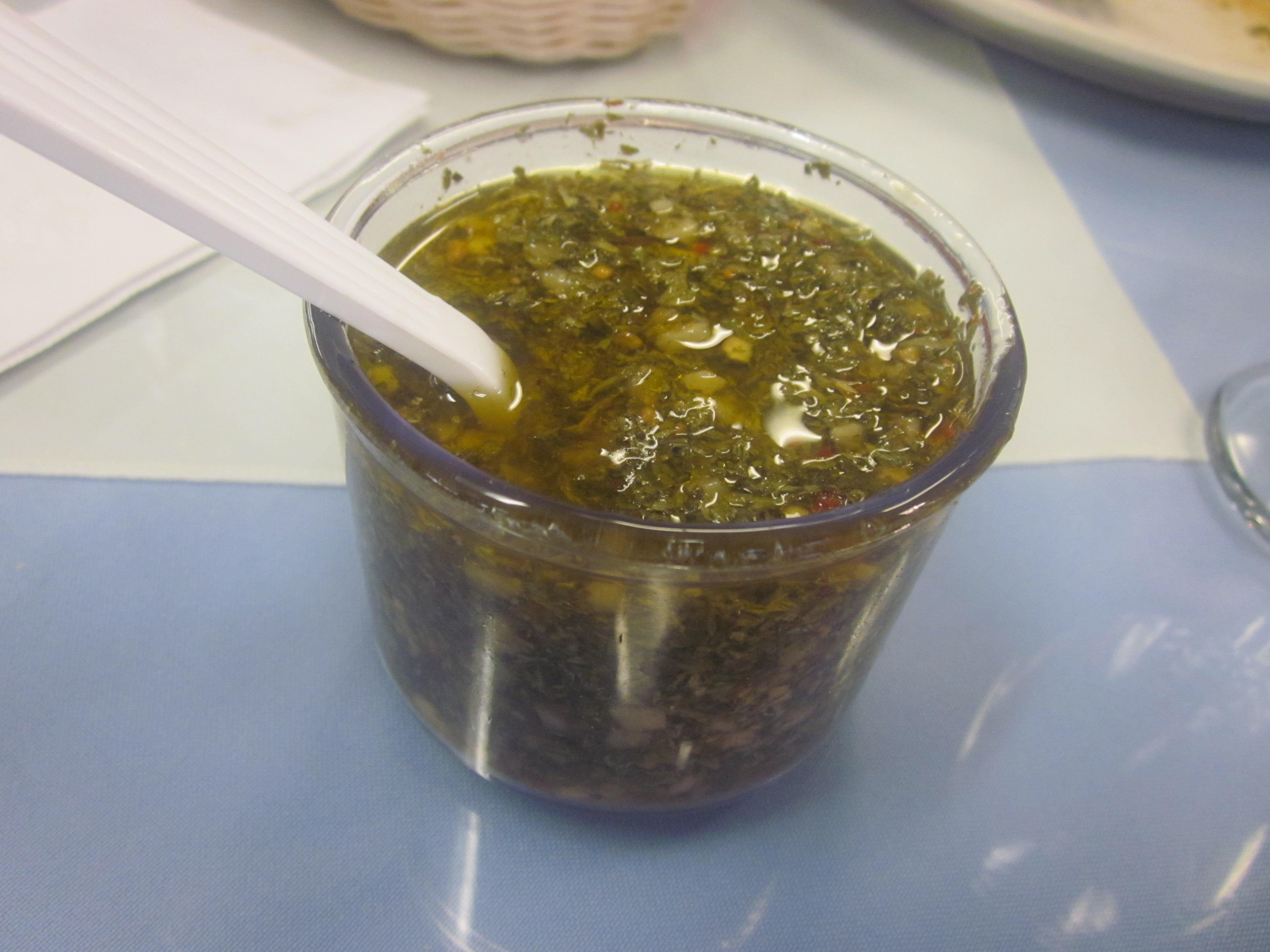
While we ate the buttery-crusted empanadas served with the tableside tangy homemade chimichurri sauce, a procession of ancient tango ballads played.

An Argentinean condiment supreme.

“Why does this music make me think of monocle-wearing Nazis,” Zio pondered.

“You’re confused,” Gerry said to him. “Those were the Boys of Brazil you’re thinking of. Wrong country.”

“Didn’t they escape to Argentina also?”

“Sure, there are plenty of retired Nazis in Argentina,” Rick confirmed. “And they love that old school tango.”

“Yes, herr commandant, I have heard about the tango classes at the Russian front.”

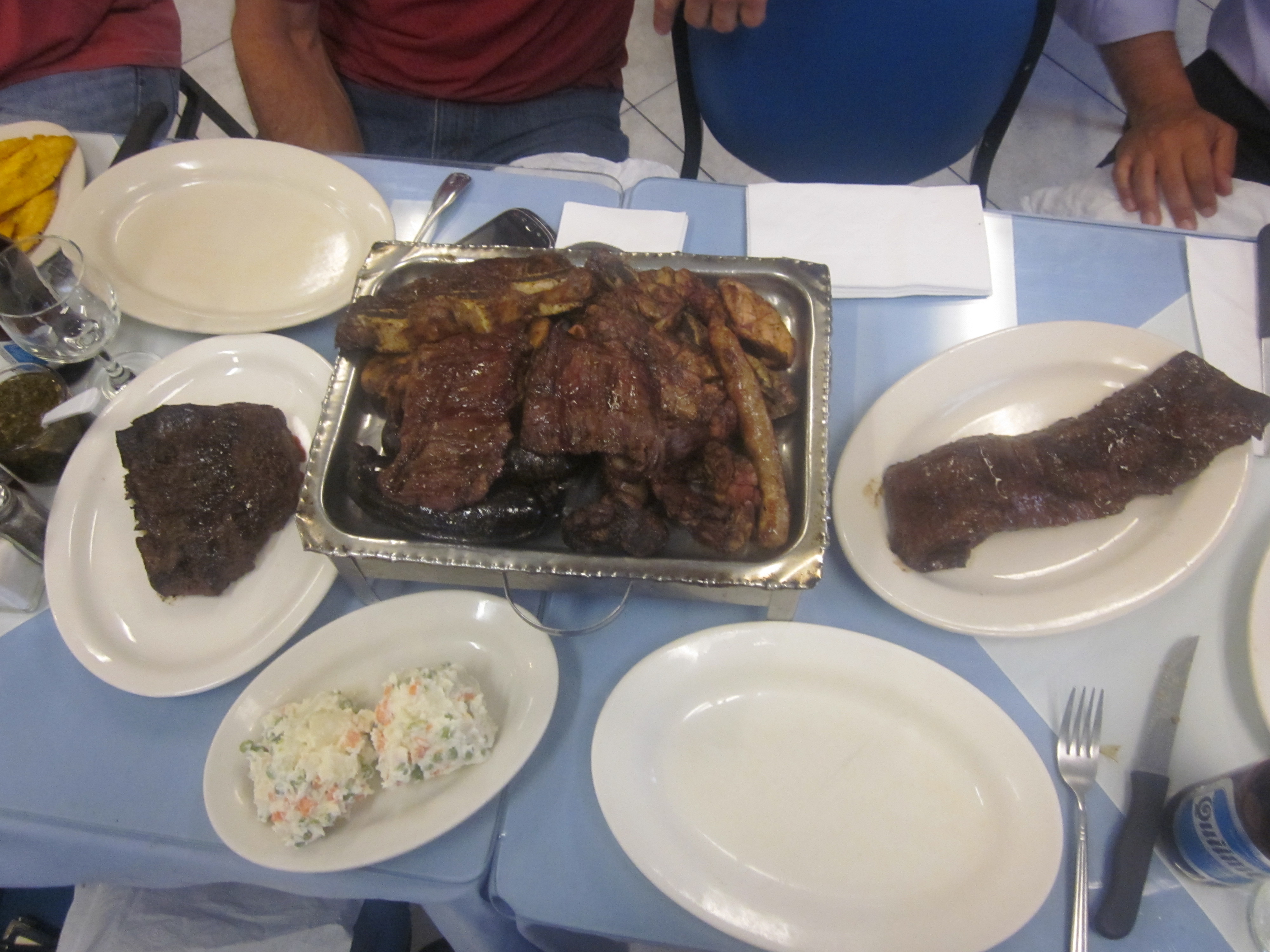
Halting the conversation was the arrival of a sizable silver serving tray adorned with a selection of charred meats. This was the “parrillada completa” for two, but judging from the size of it, was more than enough for three or four, even if the three or four included the gluttons in our group.

The Parillada Completa for two, flanked by flank steak on the left and skirt steak on the right.

On separate smaller plates were the other meats; the flank steak and the skirt steak for two. Including what we got in the “parrillada completa,” if you did the math we had enough skirt steak for three, but who was counting?

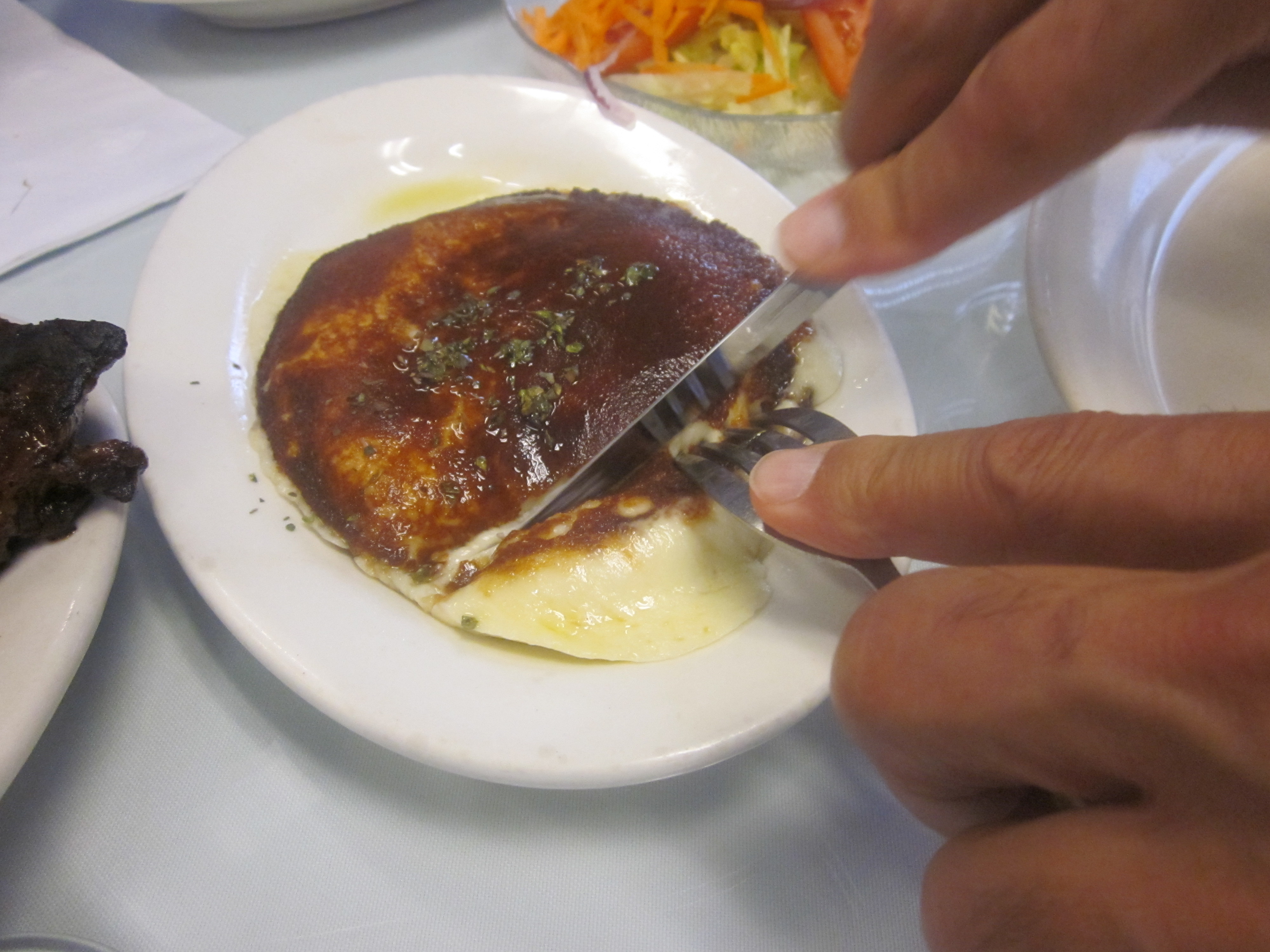
The grilled provolone came as advertised, toasted on the outside, the cheese oozing from it when sliced and doused with oregano flavored olive oil. We sawed through the steaks, cooked as we ordered, medium rare; the juices flowing from them onto the platters.

Grilled Provolone

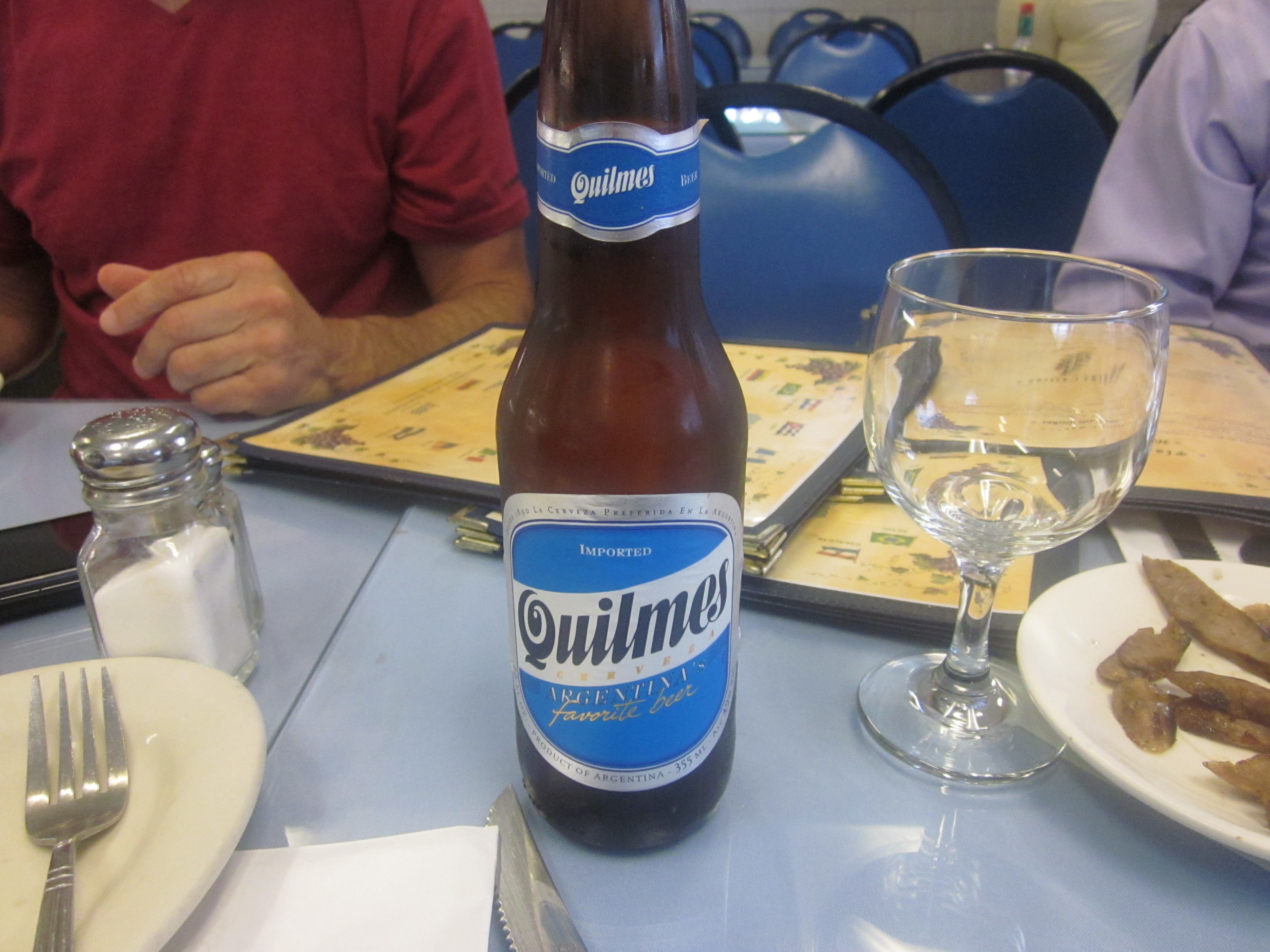
While we chewed, moving from one cut of meat to the other, some of us paused to cleanse our palates with gulps of the Argentinean beer, Quilmes; Zio instead choosing the toxic sludge that is diet Coke to accompany his meal.

A beer and a glass…with a stem.

It was about then when, to my astonishment I noticed Rick sipping red wine from the aforementioned stemmed glass. He shrugged when he saw that I had noticed. He didn’t have to qualify his choice in any way. It was the glass that was more of note than what was in it.

We were making very good progress; the meats on the platters were slowly vanishing.

“You want a beet?” Rick offered Zio from the platter of cold potato and beets.

Zio thought about it for a moment and then nodded. “Yeah, what the hell. Give me a beet.”

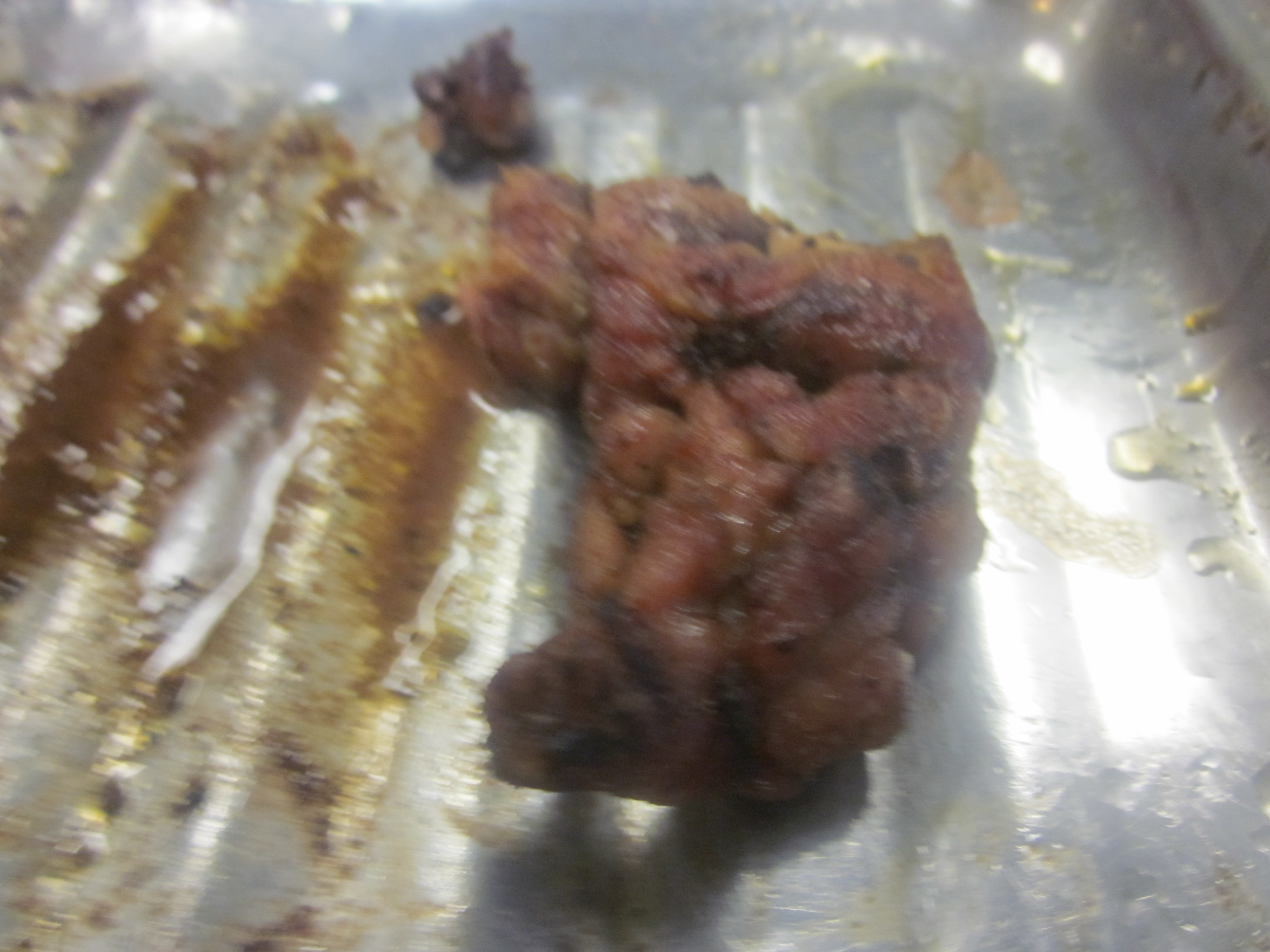
Soon all was gone with the exception of a shriveled piece of tripe and a “burnt end” of sweetbread that even Gerry would not touch.

A sweetbread burnt end.

Seeing that there really was nothing left in front of us, the waitress recited what was on the menu for dessert. Zio, who seemed to go silent after that last beet, perked up when he heard there was quince paste.

“I love quince paste,” he announced. “I had it the other day.”

“Bring us the check,” Eugene said, making the executive decision that there would be no dessert, as if we needed it after all that. No one, not even Zio and his penchant for quince paste, dared to stand up to Eugene’s resolve.

The check came. We waited silently as Eugene perused it. We knew we had done some major damage. I chewed on my knuckles in anticipation. My own self-imposed standards were on the line here.

“$30 each,” he said. I let out a sigh of moderate relief. We were over budget, but we had beer, some of us more than one, and even red wine—in a stemmed wine glass. That would account for at least $5. And of course our waitress deserved a generous tip for having to put up with us. It wasn’t as bad as it could have been.

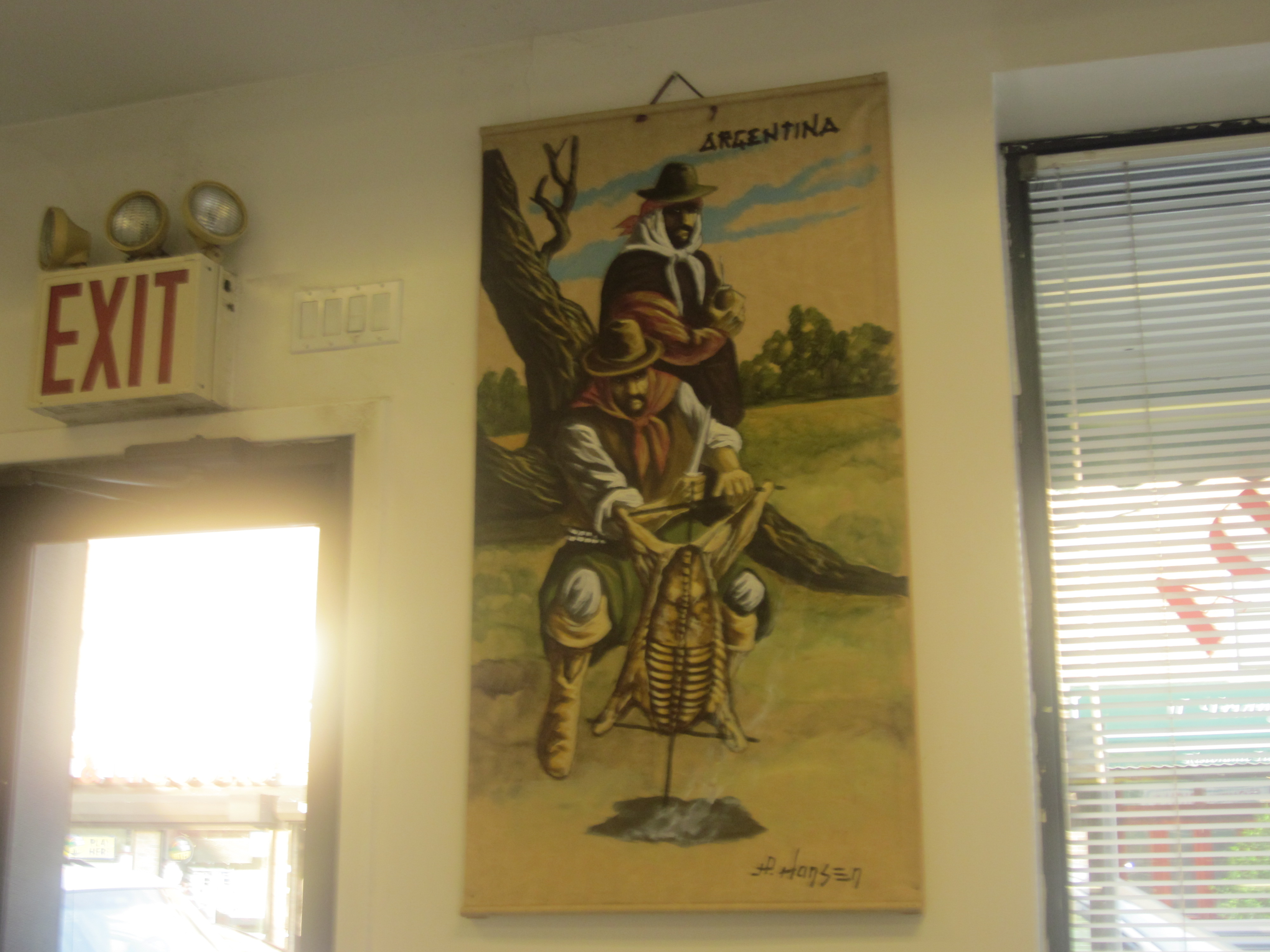
The rough life on the pampas of Elmhurst.

We stumbled out of the restaurant. The tango music was still playing. I had a piece of parsley from the chimichurri sauce stuck between my teeth. There wasn’t much I could do;  I would have to wait until I got home before I could attend to it.

Lechonera Encanto

8 Jun

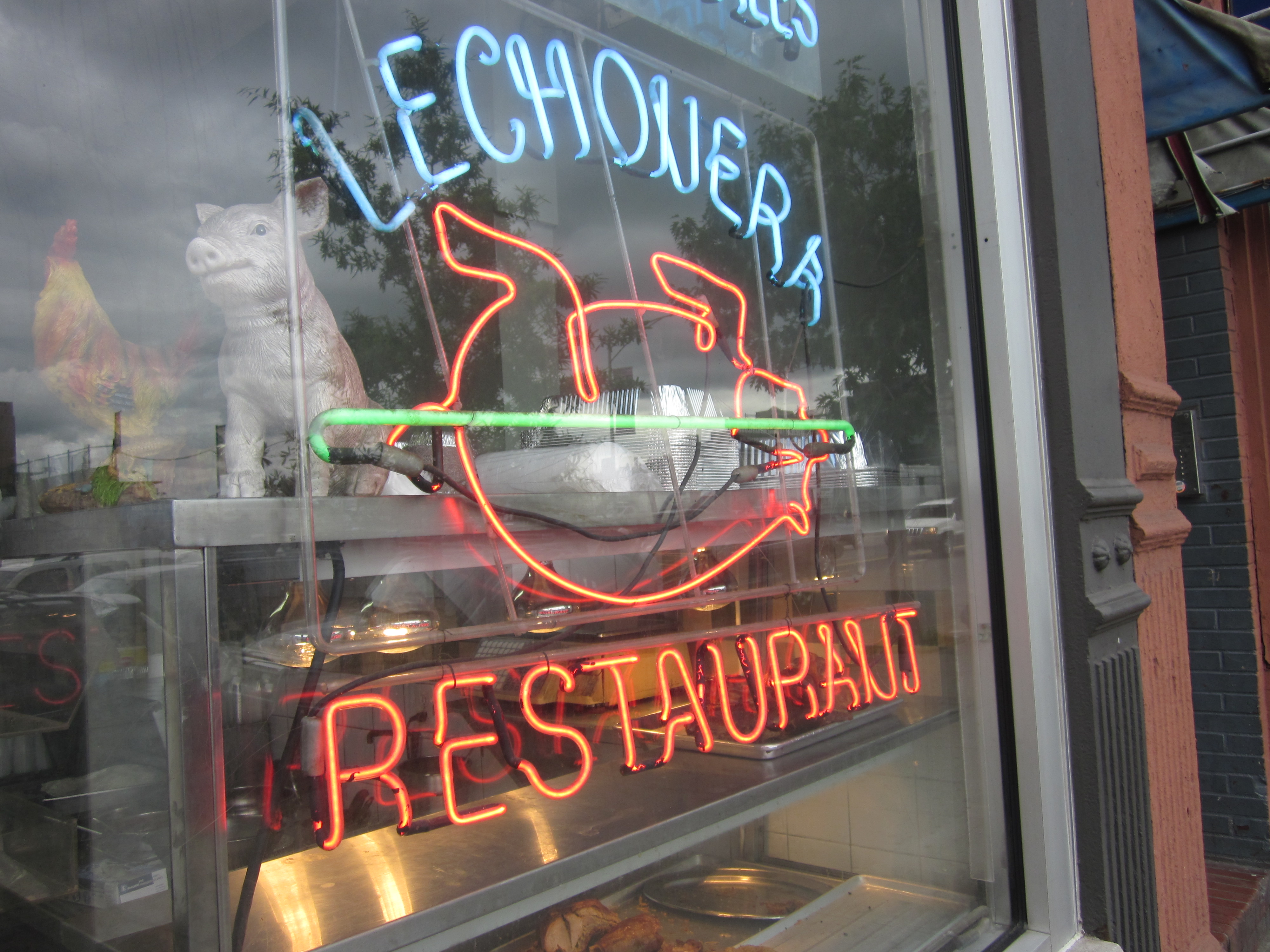
Lechonera La Isla
256 E. 125th Street

Last year, around this time, when I started seeing the Puerto Rican flags streaming from car antennas, out of apartment windows, and draped across uptown streets, I immediately thought of the Cuchy Frito man, specifically, Cal Tjader’s rendition and the celebration of all pig parts fried Cuchy Frito Man.

I am seeing those same flags again now. And this year, instead of Cal Tjader and cuchifritos, I thought I would celebrate La Isla del Encanto by stopping by my local lechonera, Lechonera La Isla, for a taste of pernil, roast pork shoulder.

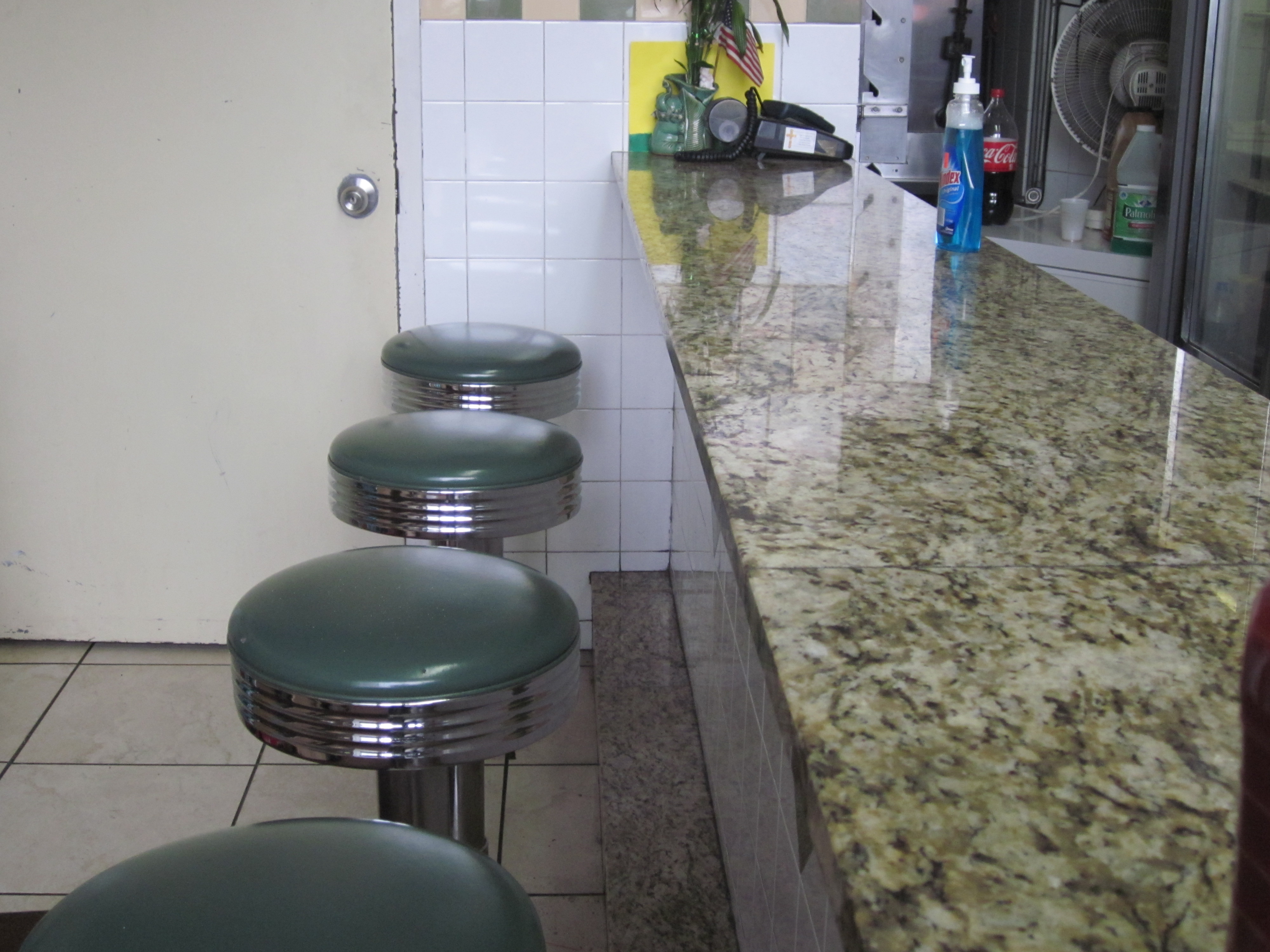
Plenty of room at the lechonera.

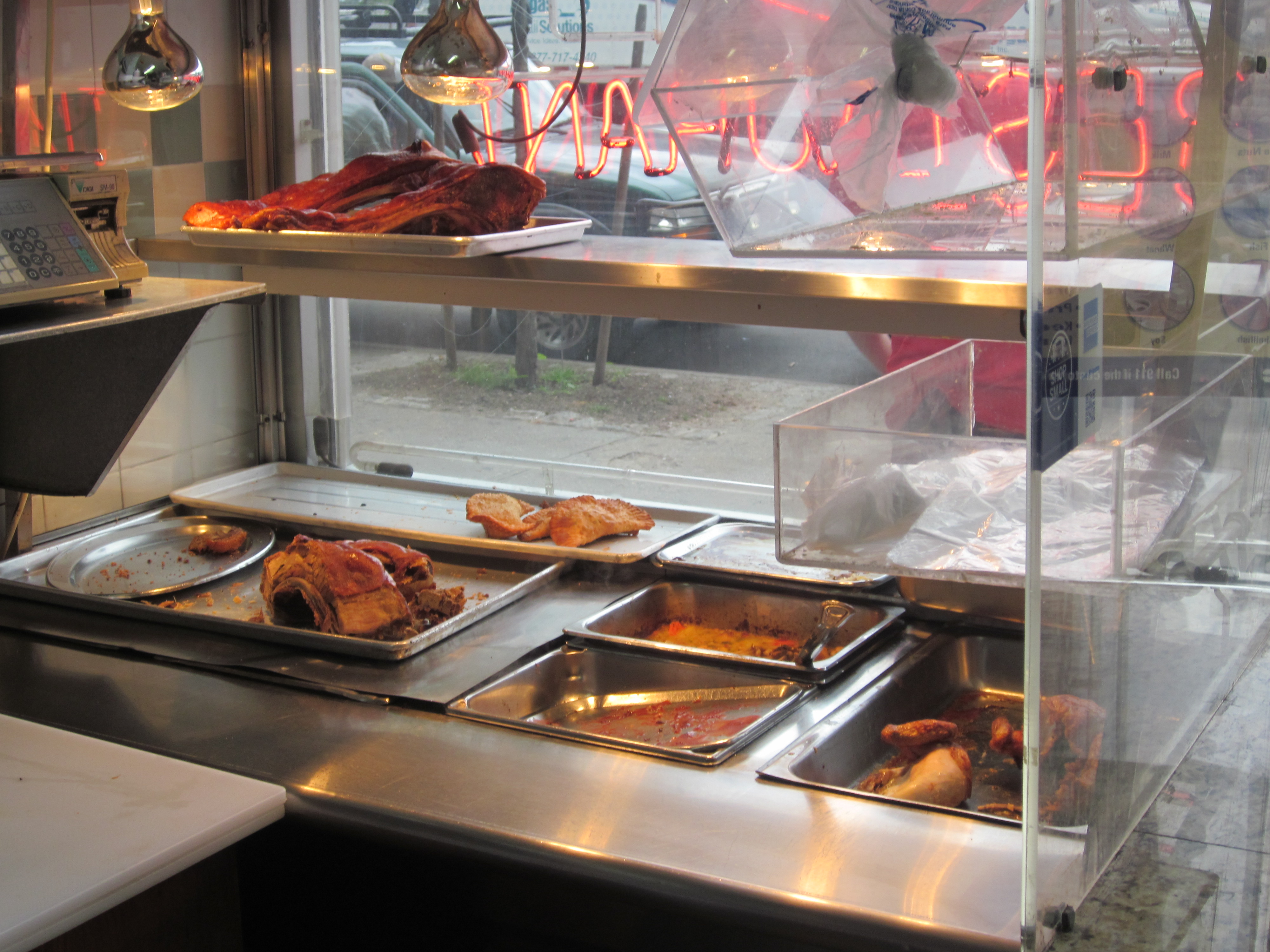
La Lechonera La Isla was quiet when I walked in; the few stools of the small restaurant counter were empty. There was beef stew available along with oxtails and roast chicken. And there were a few slabs of pernil that had been roasted to sweet oblivion.

The day’s remains soon to be devoured.

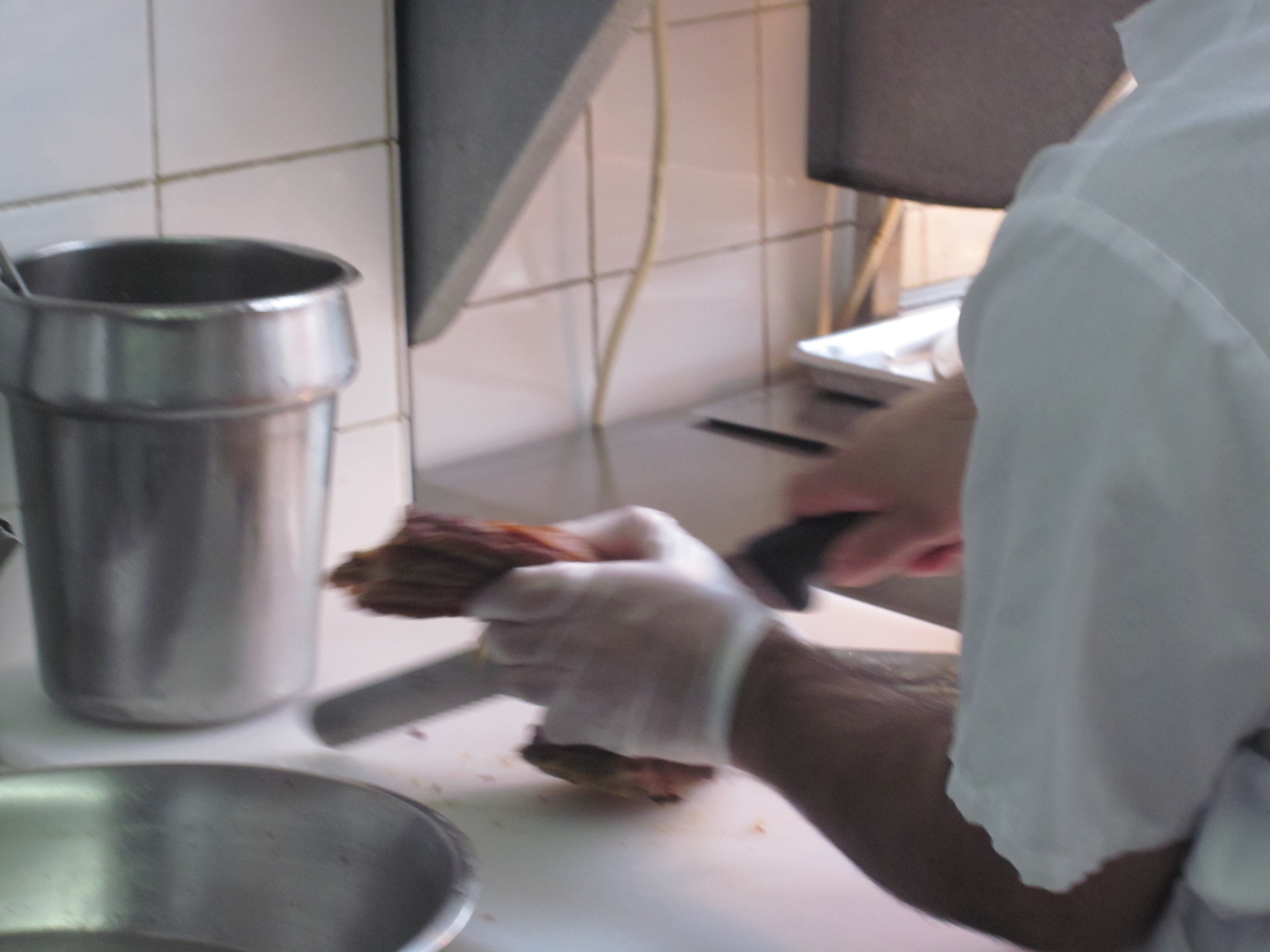
“When do you close,” I asked the young man who was chopping the pernil into pieces for me.

“When we run out of food,” he replied, his cleaver slamming into the very dense crackling of the pig skin. “Basically, my Mom cooks everything in the morning and when it’s gone, I can go home.”

I was lucky;  he hadn’t gone home.

Trying not to be too bold, I peered into the kitchen hoping to catch a glimpse of Mom at work. But from what I could see, the kitchen was dark and quiet. Apparently Mom had gone home.

Sawing through the good stuff.

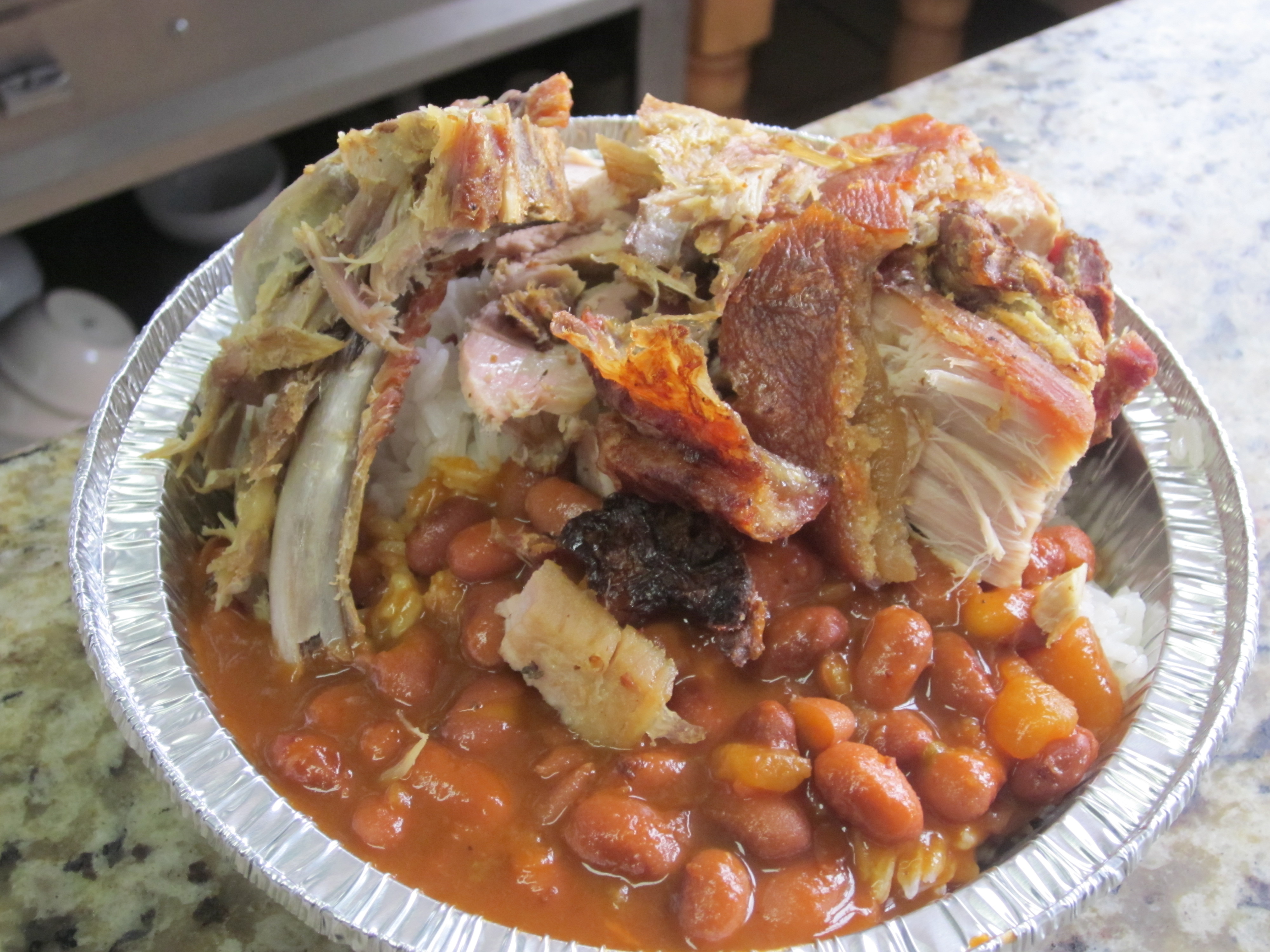
He layered a generous portion of pork on top of rice and red beans. An accompaniment of a homemade hot sauce; onions marinated in scotch bonnet peppers and vinegar set my mouth happily on fire while a drizzle of a tangy mojo (garlic sauce) just added to the gathering of fiery flavors now imbedded there.

Roast pork and rice and beans.

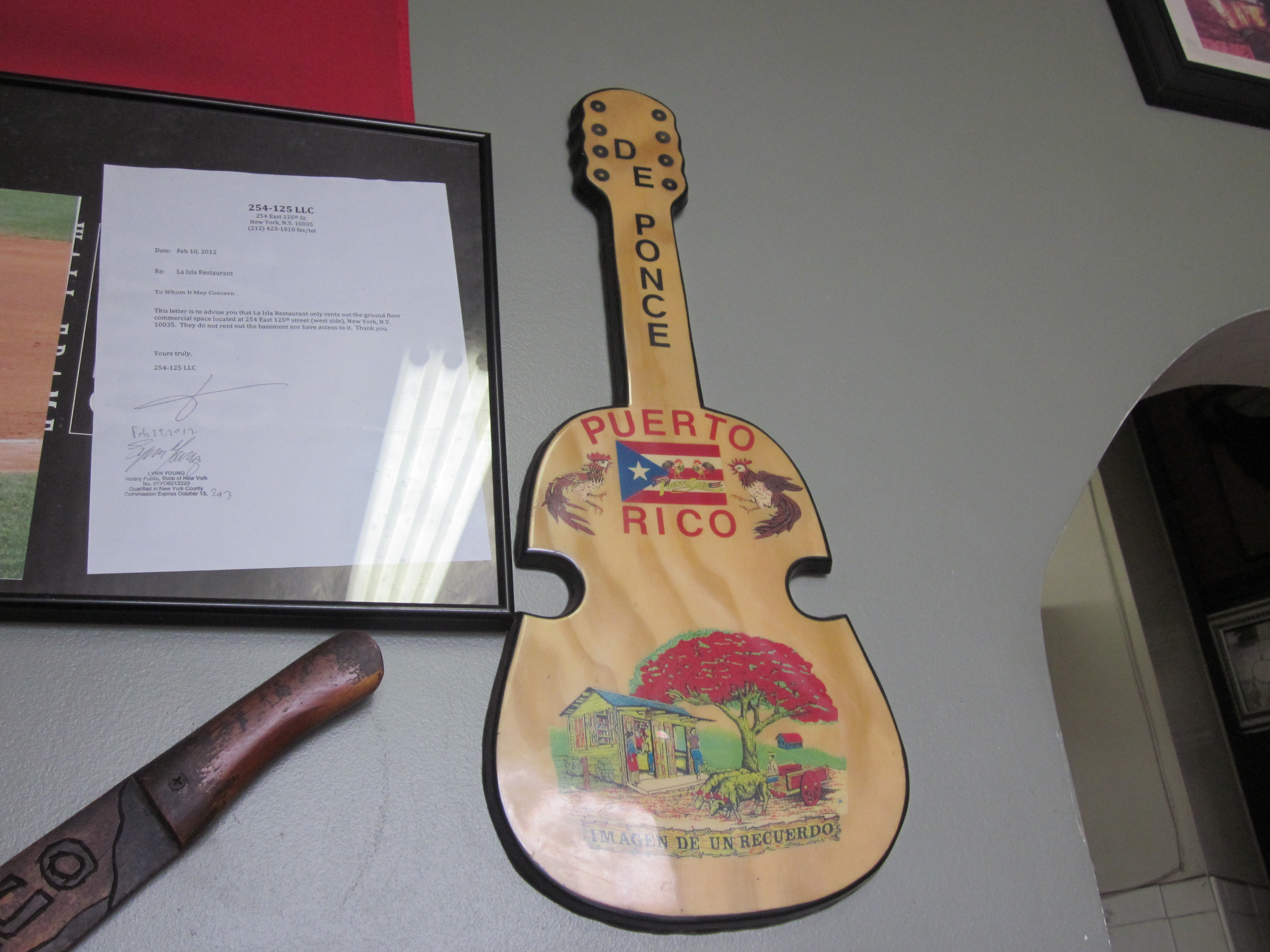
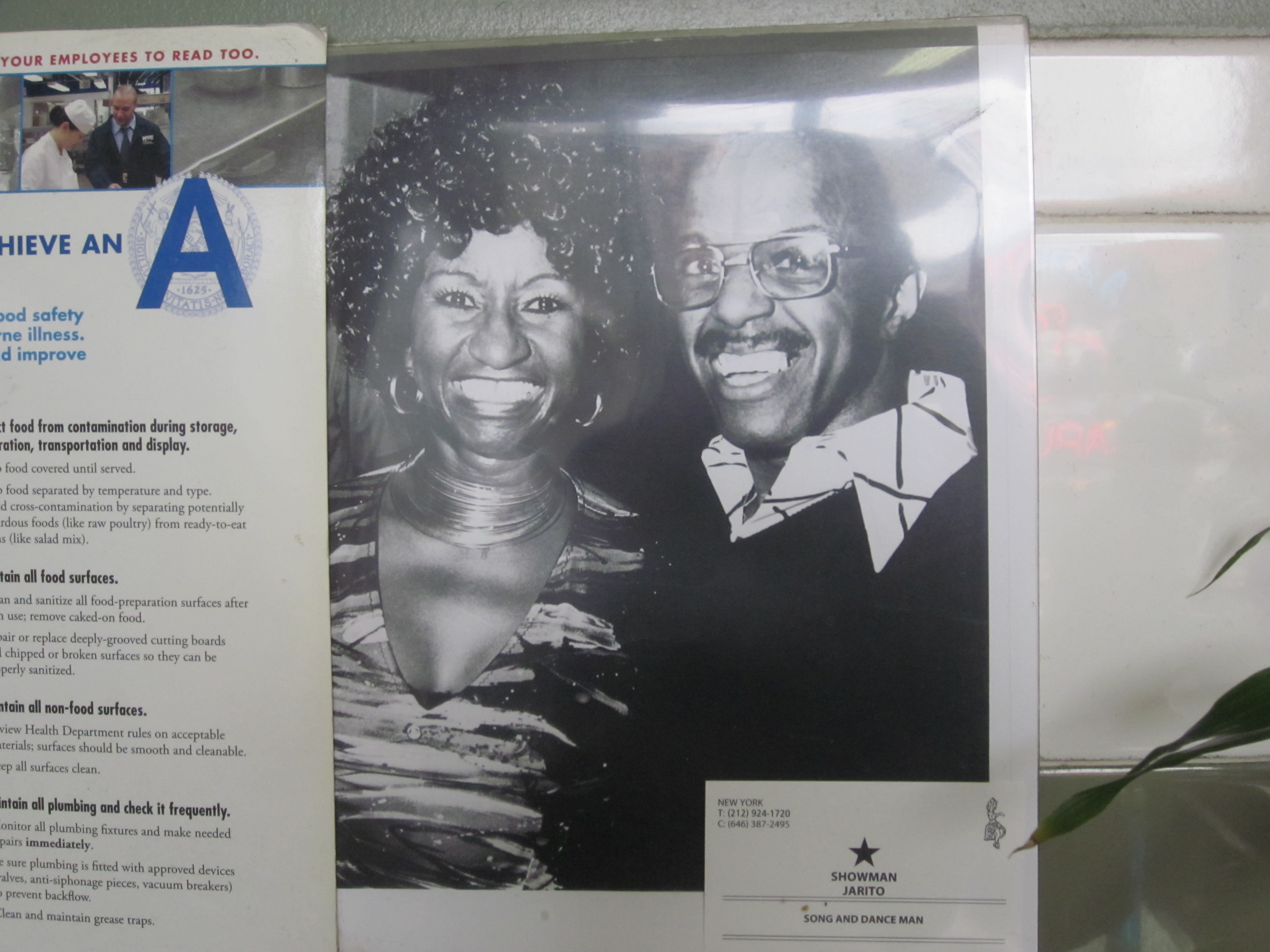
The traffic on 125th Street heading towards the Triorough (now known as the RFK) Bridge was bumper to bumper. Instead of Cuban-born Celia Cruz whose picture was adorned on the busy walls of the lechonera, or Tito Puente, who I once saw on 86th Street just after performing at the parade, sitting in the shade being fanned by a group of elderly ladies, the only sounds I heard while gnawing through the delicious cracklings, was that of honking horns. I really didn’t mind, the food provided all the music I needed.

A smile from Celia Cruz to help the pernil go down.


The Bizarre Eats of Chow City: Boneless Chicken Wings

6 Jun

In this, the second installment of The Bizarre Eats of Chow City, I seek out and sample the strange phenomena known as the boneless chicken wing.

I had heard about them. I knew that they existed, but never really gave them much thought.  Recently, however, I would pass a placard near my home advertising them.  I could no longer hide behind my prejudices and fears. I needed to walk the walk, before I could attempt to talk the talk. It was time I summoned the courage to actually try the boneless chicken wing.

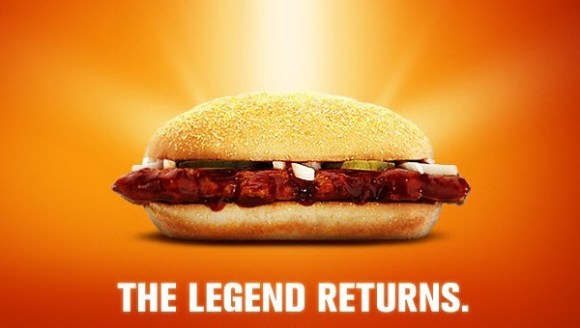
Years ago,  McDonald’s was pushing a boneless spare rib sandwich they called the “McRib.” I wondered about it just as I wondered about the boneless chicken wing, but never dared try one. The McRib was resurrected briefly a couple of years ago on a limited basis and still, I would not try it. For me, it is hard enough to walk into a McDonald’s much less order something so bizarre, so exotic as a boneless spare rib sandwich.  I just couldn’t do it. I scoffed at the concept; repulsed that the mega corporation would stoop so low as to remove what makes the meat on the spare rib so delectable; the rib itself, just to convenience the already very lazy consumer. I was taking a very hard line and really, intolerant stance.

Bizarre Foods, Mickey D’s style.

I think I have mellowed somewhat over the years. And for the sake of journalistic integrity, I now will take culinary risks to root out the truth. Thus, though the McRib is no longer available, the boneless chicken wing is.

There were plenty of sports’ bars and chicken wing joints I knew of that now offered the “boneless” chicken wing along with the traditional, two or three jointed wing whose tiny bones I had so many times plucked clean; the sauce, be it Buffalo, barbecue, jerk, happily licked and sucked from my greasy fingers. That tactile thrill, I knew would be gone, but that did not deter me. That a nearby Applebee’s advertised them out front made my quest an easy one. And that I would not attempt this folly alone; I had three very willing volunteers who agreed to take a break from their elementary and middle school studies to assist me on this project.

The place where they serve the boneless chicken wing.

I called my local Applebee’s and after being placed on hold for what seemed like a very long time, I was able to put in an order of the boneless chicken wings. I had a choice of  bleu cheese or Ranch dressing to accompany the “wings.” I choose the bleu cheese. Along with my three volunteers,  we entered Applebee’s.  I made sure not to stare at the diners and their  multi-colored drinks, the overflowing baskets of fries, and frisbee-sized burgers.  My order was ready. We paid, and then quickly exited the bustling restaurant.

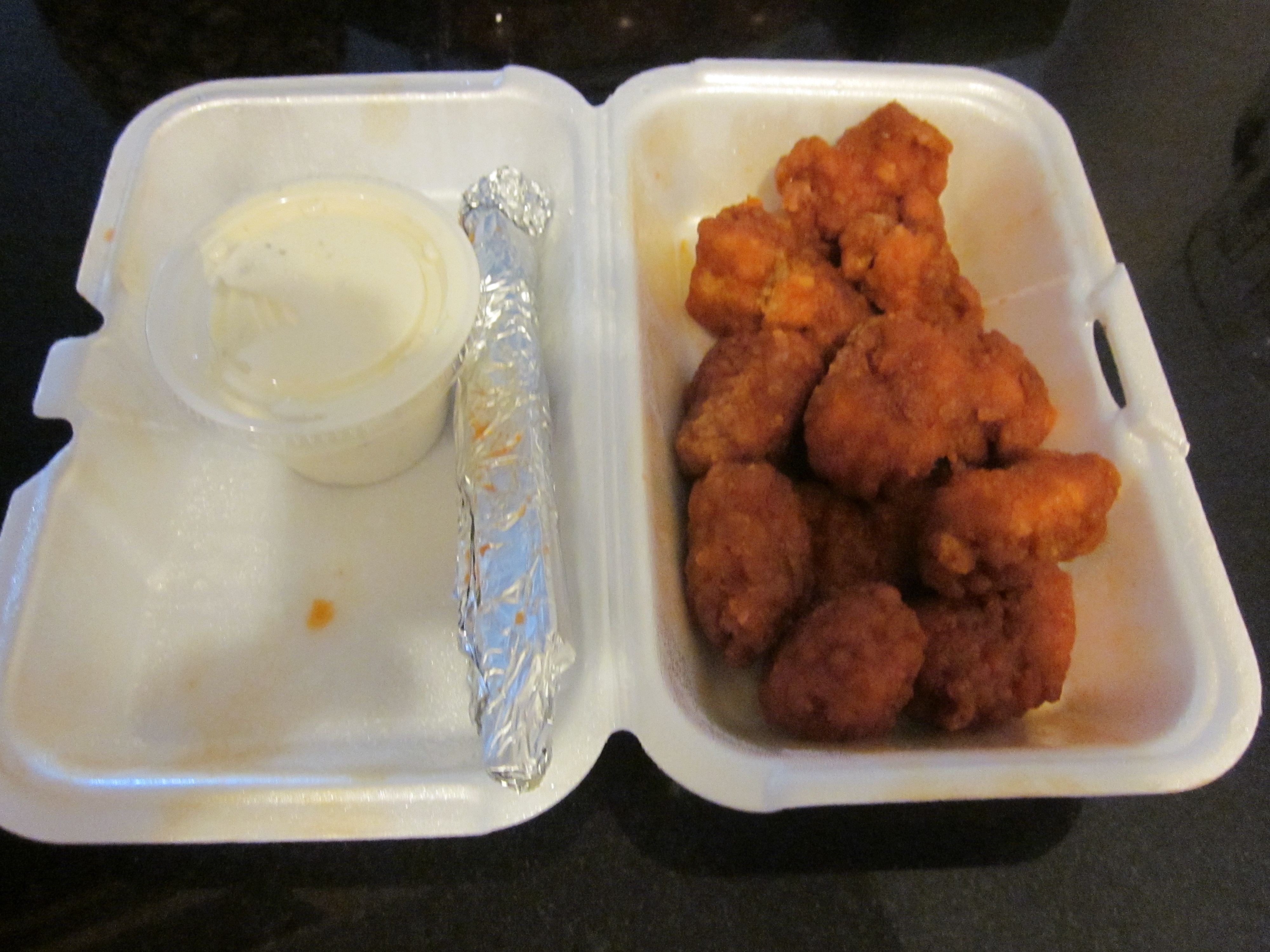
Once home. I opened up the styrofoam container revealing the reddish-brown, oddly shaped, “wings.”

1310-1490 calories

I gave myself and each of the volunteers including an added volunteer, my wife who showed none of the same fear or repulsion I had to the laboratory altered concoction that came in the styrofoam container, one “wing” each. We all sampled.

The younger of the student volunteers at first complained that they were too spicy. After a few sips of limeade and then another few bites, they no longer minded the spice and wanted another.

“It’s a composite chicken wing,” my wife said, referring to the composite Little League baseball bat we had heard so much about from the oldest of the student volunteers.

Composite baseball bat

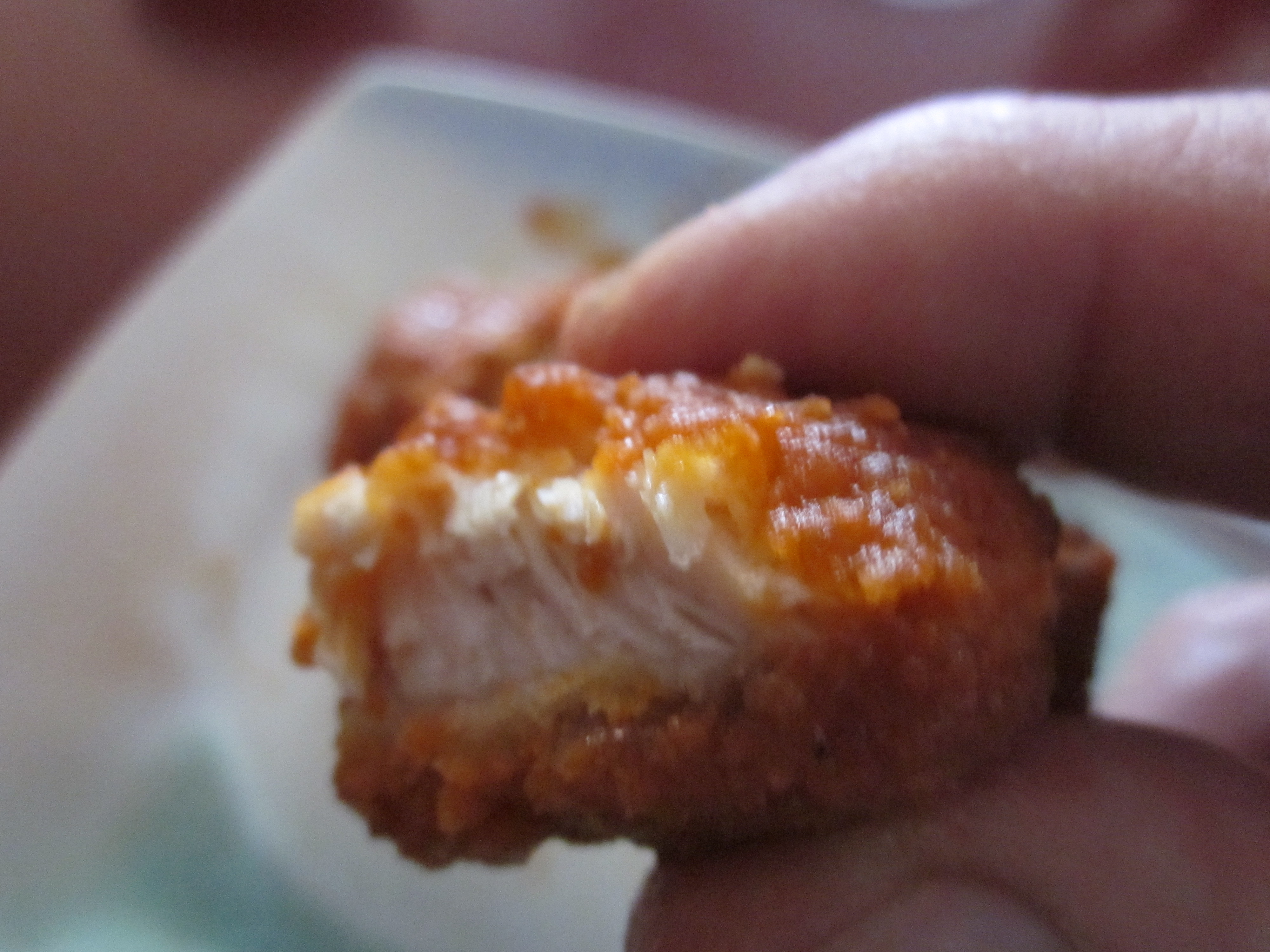
And they were a composite. Unlike the traditional chicken wing, these “wings” you could eat with a fork if you wanted. They were chicken “tenders” shaped into something resembling a chicken wing, breaded, and fried in the manner of the Buffalo chicken wing.

Composite chicken “wing”

“Can we have another,” all of the volunteers asked.

They each got another. There were two left. The oldest student volunteer, even though he already ate a big sandwich, eyed them covetously.  The youngest did not want a third. The oldest grabbed it. The “wings” were quickly devoured.

“Let’s get them again,” one of the students said. “They’re really good.”

I didn’t agree. To me, they were dry and had a chemical taste. And the loss of being able to really handle the wing with your fingers, making sure the bones were plucked clean, detracted just too much from the chicken wing experience. But if nothing else, this experiment taught me to once again restrain myself from imposing my personal preferences on others. If  the people want a chicken wing without bones, who am I to deny them that right?

The Noodle Cure

30 May

Terakawa Ramen

885 9th Avenue

It was disgustingly hot. The shirt I was wearing was sticking to my grimy, sweaty flesh.  I wanted relief. I could walk into a department store and subject myself to a mixture of refrigerated air and the toxins released from hundreds of sample perfumes, both male and female. A plunge in a pool was a better idea, but where was that going to happen? Maybe I just needed a cold shower, which would mean getting off the hot pavement and down into the sweltering subway station for the ride home. No, I wanted more immediate relief and I knew there were other options. I knew there was the noodle cure.

A wait for ramen noodles.

I walked to my first choice; a much celebrated ramen place that I knew had been awarded many stars from the usual subjects: Yelp, Urbanspoon, New York Magazine, etc. But many stars can often mean long waits and I’ve already deliberated on my feelings about waiting on line for food The Noodles on Prince Street. It was early; there was a chance I could get lucky. As I got closer, I saw the people; sweaty, grimy too—there were obviously others who knew of the noodle cure. Or maybe they just wanted to wait in line to see if all those stars were deserved.

I turned around and headed back uptown. I knew of another noodle place. From a distance, I could see that no one was lingering outside. My pace quickened as I crossed the street. I pushed the door open. The small semi-circular counter was barren; I had the noodle place to myself.

An empty ramen house.

Even before I ordered the “Tan Tan Noodles;” a big bowl of ramen noodles in a spicy sesame sauce with minced pork, bean sprouts and scallion, I could feel my body cool. I was ready for what was to come.

A loop of Michael Jackson hits played as I tore apart the pan fried pork dumplings I ordered as a side dish. Rich with minced pork and buckwheat, the dumplings were just an amusement before the main attraction.

Pork dumplings

And then the tan tan noodles arrived. The steam was rising thickly from the bowl. I let it wash over the pores of my face before stirring the soup. Using my chopsticks, I pulled out some of the noodles. More steam was released. I blew on them just a bit and then slurped them into my mouth.  I was assaulted by heat on two levels; first from the temperature of the broth and next from the spice within it; the combination bringing a quick sheen to my forehead.

I’m about to take the “noodle cure.”

Alternating between chopsticks and spoon, I slurped relentlessly, the sound almost in rhythm with Michael Jackson’s “Man in the Mirror.” My only breaks were to use the much too thin paper napkin to blow my nose and dab at the sweat on my face.

Finally I was done. The bowl empty. I paid, “cash only,” and cleared my nose once more before walking back out to the hot street. My shirt no longer stuck to my not as grimy or sweaty flesh.  The ramen was hot but now I was cool. And that’s the funny thing about the Noodle Cure.

How does one join the “Ramen of the Month” club?

The Noodles on Prince Street

22 May

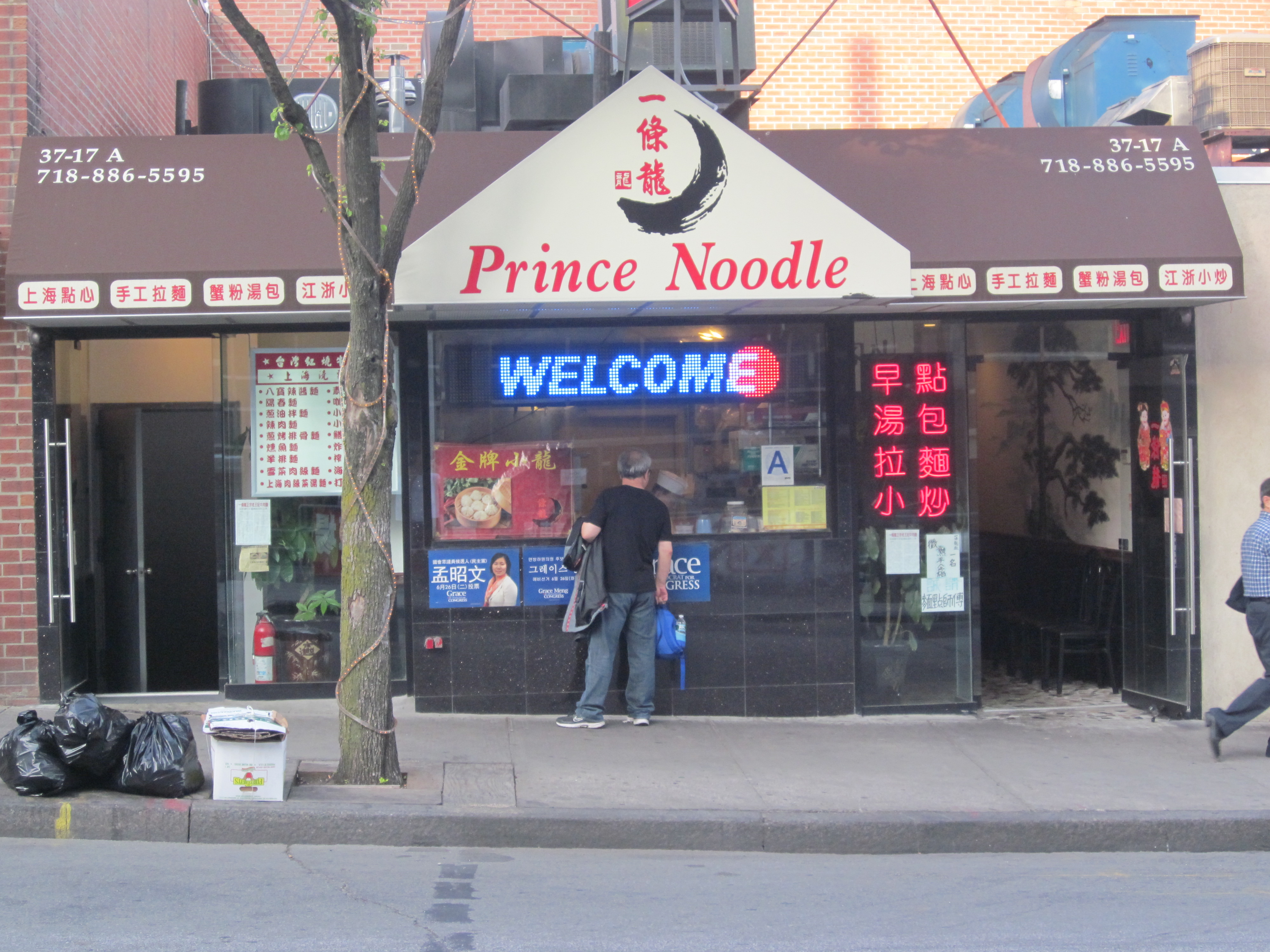
Prince Noodle House
3717 Prince Street
Unit A
Flushing

I’ve gone over the rules of our Chow City group many times in these electronic pages. We look for $20 and under places. We do our best to unearth those that are under the foodie radar, which nowadays is practically impossible. We look for virgin territory in terms of cuisines, but after ten years, the only cuisines we’ve skipped are the big name items (French, German, “American,” nouveau or fusion anything).

But there was one clause that was really never discussed or spelled out in our unwritten rule book. It didn’t have to be; it was taken for granted. That was the concept of waiting in line for a table at a restaurant. It goes against everything we hold sacred when it comes to eating; it’s a shock to our eating sensibilities.

So when Rick suggested a very well documented—at least by foodies—noodles and dumpling place in Flushing called Nan Xiang Dumpling House, I gently pointed out that, from my knowledge of these things, the place has become a “foodie destination.”

Rick understood immediately and, knowing the unwritten (and never mentioned) rule, quickly dismissed his original choice and instead went with an alternate, quite literally, down the road from Nan Xiang, the road in this case being Prince Street, called Prince Noodle House.

Of our group, only Mike from Yonkers, who was called to an urgent co-op board meeting, did not make the trip to bustling Flushing. There was absolutely no wait or line to get into the Prince Noodle House and we were given a big round table next to a large celebratory party of Asians.

One of the reasons Rick decided on, first Nan Xiang Dumpling, and then the Prince Noodle House were the aforementioned dumplings; in particular soup dumplings. He wanted to experience the Shanghai-style dumpling where the soup is “frozen” within the dumpling only to melt inside when steamed. Prince Noodle had them on their menu, here called  “soup buns,” so we ordered the crab meat mini buns and the “special” mini buns for the table.

Crab meat soup buns

While we ate the soup buns, improperly at first and not with the provided spoons, the soup bursting all over our plates, Eugene told us of his trip to Jefferson City, Missouri where he attended a wedding.

“It was ridiculous,” he complained. “The wedding was catered. All they had was Mountain Dew, a keg of beer, and franks and beans. Can you imagine that?”

We couldn’t imagine it especially for a man used to the all you can eat buffets on the cruise ships and all-inclusive resort he regularly frequents.

While Eugene railed about his Jefferson City experience, I peered behind me at the big table. They were given one of those rotating round trays so they could spin it around making sharing easier. How come we didn’t get one of those, I wondered? The food was beginning to assemble on their table and I liked what I saw.

I asked our waiter about a dish they ordered that was a mix of a green, spinach like vegetable combined with what looked like tofu.

The waiter pointed to something on the menu called “malantou (kalimeris indica) w. dried tofu.”

“Indica means cannabis, or marijuana,” Zio offered as if he really knew of such things.

I ordered one for our table along with five spiced beef.

Kalimeris indica, also known as malantou with dried tofu

Served at room temperature, the malantou, vinegary greens mixed with dried shredded tofu, was a refreshing appetizer, though did not induce the melancholic buzz worthy of its name. The five spiced beef, on the other hand, thin slices of roast beef, cured with five spice powder and a sweet soy sauce drizzled over it, also served at room temperature, were addictive in a more familiar way, at least for us, than what Zio had presumed we would experience with the malantou.

Five spiced (roast) beef

Gerry immediately had his sight set on the “sliced fish swimm hot chili pepper sauce,” that was on the menu, highlighted in red to indicate that it was spicy. No one had any disagreement with his choice or of Rick’s twice sautéed pork belly.

I thought we should at least try some of the noodles at Prince Noodle House and ordered hot and spicy pork noodle soup. I added a rice dish, snow cabbage with rice cake and pork, while Zio studied the menu for one last dish.

The waiter hovered over his shoulder. “I want this,” he said, pointing to something on the menu.

The waiter bent down closer to see what Zio was pointing to.

“You want crap fish?” he said.

“Huh?” Zio immediately got flustered.

“The crap fish?” the waiter said again.

Zio looked at the menu. What he was pointing to read: “spicy bean paste Buffalo crap fish.”

“Yes, I want…number 102,” Zio concurred, indicating the number adjacent to the item where the a and the r had obviously and mistakenly transposed.

Sliced fish “swimm” in hot chili pepper sauce

First to come out was the family-sized sliced fish that, in an enormous casserole dish, was literally “swimm” in hot chili pepper sauce. A few bites brought tears to Eugene’s eyes, a sheen to Rick’s forehead, and loud honking from Gerry’s prominent, yet distinguished nose.

The noodle soup was equally spicy and the noodles, hand pulled, gelatinous in texture, lived up to its princely reputation.

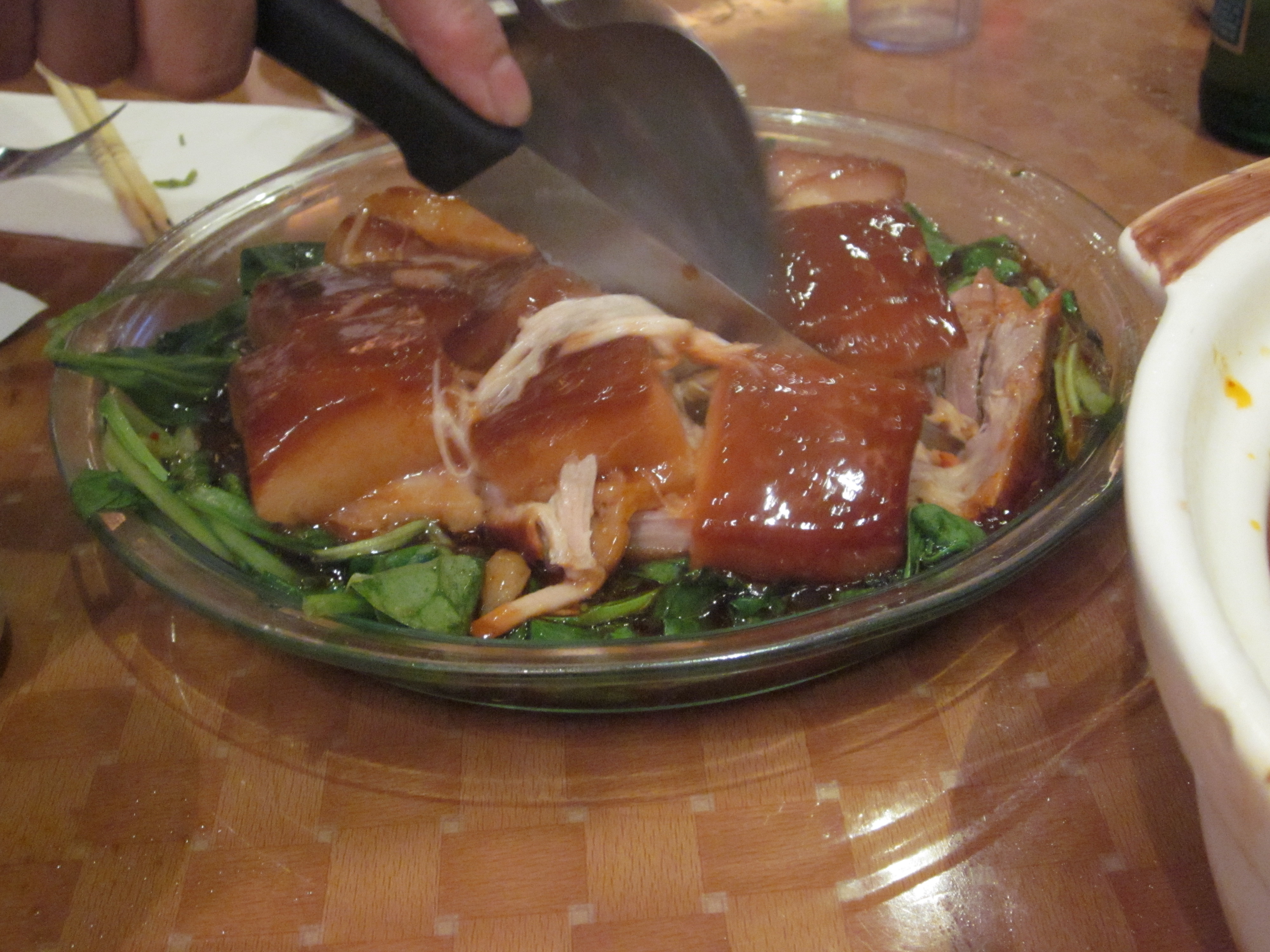
Relief from the heat came with the arrival of the pork belly and the snow cabbage and rice cake. Covered with a one inch layer of fat and glazed to a burnished reddish color, the pork belly was ultra tender; the meat kept moist by its fatty coat and marinated with light soy sauce, sugar and rice wine.

Sauteed pork belly

Last to arrive was the whole carp. Smothered in a bean paste and topped with scallions and ginger, Zio was the first to sample it. He didn’t have much to say as he picked through the many bones. Gerry tried a few bites.

“Hmmm, crap fish has a very unique taste,” he said with a straight face.

There’s crap fish under all that spicy bean paste.

While we polished off almost everything but the unfortunate carp, the dishes on the rotating tray on the table behind us kept piling up. We were done and they were just starting on a huge platter of lobster. Despite having completely stuffed our faces, we gawked enviously as we paraded out of the now fully booked restaurant.

Good thing we didn’t have to wait, I thought to myself as I made my way back to the parking lot where my car was parked. Once inside my car, I stared through the windshield at Prince Street. I noticed a line had formed outside of the Nan Xiang Dumpling House. Maybe the soup dumplings and noodles were better than the stuff we just experienced at Prince Noodle House, but I wasn’t going to wait to find out.

The line for soup dumplings at Nan Xiang

Neckbones Presents: The Bizarre Eats of Chow City

16 May

We each have our own definition of what might be bizarre when it comes to what we eat. To some, llama hoof in black bean sauce might seem bizarre, but to others, that is sustenance

Here in the city where I dwell, there is ample evidence of peculiar, even exotic, eats. In this new segment of Fried Neck Bones…and Some Home Fries, I intend to wander the city streets, mostly aimlessly, searching for the unusual, the weird and wacky.

Weird—wacky—odd; these are all subjective terms when referring to food. What I think is bizarre, or downright disgusting, others might thoroughly enjoy, and even indulge in regularly. So I promise not to judge. I pledge to do my best to respect my fellow man’s questionable taste in food stuffs. If I slip and begin to preach or moralize on the food choices of others, please don’t hesitate to call me on it. Sometimes I just need to be reminded.

The Hawaiian

In my decades of devouring pizza, I have heard tell of an unusual slice called “The Hawaiian.” I have even seen it on display at various pizzerias; the pineapple being the prominent ingredient sitting, unappealingly, on top of the crust surrounding by cheese and ham, the combination repellent to my pizza snob sensibilities.

I knew that in pursuing the bizarre foods of New York there would be challenges. I now needed to search out a slice of Hawaiian and summon the courage to actually sample it.

My first stop was 2 Bros’ Pizza, a chain of 99 cent-slice pizzerias, They advertised the “Hawaiian,” on a display menu. I perused the pre-made cold pies on display but saw none with the customary pineapple.

“Do you have the Hawaiian?” I asked the African man behind the counter.

“The what?”

“The Hawaiian,” I said again, this time pointing to the reference on the list of pies.

He went to the same display of pies I had inspected and returned shaking his head. “No, we don’t have the Hawaiian today.”

“Will you be making any?”

“Not today,” he said.

“Ever?” I inquired hopefully.

“Yes, maybe tomorrow we make it.”

I thanked him for his help and exited.

My next stop was a Chilean-run pizzeria I knew of on the Upper West Side called Freddie & Peppers. I have had their pizza in the past and knew they usually offered very unusual combinations of slices. They just might have the Hawaiian.

I checked out the pre-made pies behind their counter but again, didn’t see any with pineapple. On their menu, there was a mention of a “Hawaiian.”

I asked the South American man behind the counter if he had the Hawaiian.

He looked perplexed. “No, we don’t have that,” he said.

I could tell from his look and the way he responded, that the Hawaiian was not something they made very often or at all anymore. I didn’t press it further or suggest that maybe it would be a good idea to remove it from their menu so as not to disappoint a driven man on a ridiculous quest.

Finally, I stopped at Maria’s Pizzeria further uptown. I double-parked and peered in. On the window was a menu. I saw it there listed as The Hawaiiana.

I ran inside. There it was: a slice adorned with pieces of ham, mozzarella, and, of course, pineapple.

I quickly ordered it and took it home for a family sampling.

The Hawaiian

After reheating it, I cut the slice into pieces, one each for the 8 and 12-year old, another for my discerning wife, and a piece for myself.

The 8-year old looked at it, made a face and shook his head.

“Try it,” I said.

“I don’t want to,” he said. This is from a boy who will eat eel and now calls Part One of the Fazool Trilogy Pasta e Ceci one of his favorite pasta dishes.

“It’s just pineapple.”

He shook his head and left the kitchen.

The 12-year old didn’t hesitate, but he rarely hesitates on anything pizza-related. He ate it heartily. “What do you think?” I asked.

His mouth full, he gave me the thumb’s up.

“Would you order it?”

“No, never,” he said after swallowing.

I nodded.

He eyed his brother’s uneaten piece. “Can I have his?”

I said he could and he stuffed it down.

Now the more mature palates sampled.

“It tastes like it came from a can,” my wife said.

She was right. The pineapple had a metallic flavor to it and its sweetness overpowered the ham and cheese. Though I could find no visual evidence of tomato sauce, there was a hint of it in the slice. How it got there, I don’t know.

The Hawaiian was edible…at least to all of us but the 8-yar old. No one gagged. And we all swallowed what we chewed. Still, I wondered, what would motivate a chef to think to put slices of canned pineapple on a pizza? Did he/she think the sweet would meld with the salty? Maybe some people just need a little sugar on their pizza? And if they do, who am I to deny them that gratification.