Archive | humor RSS feed for this section

The Mount Vernon Meat Hangover

24 Apr

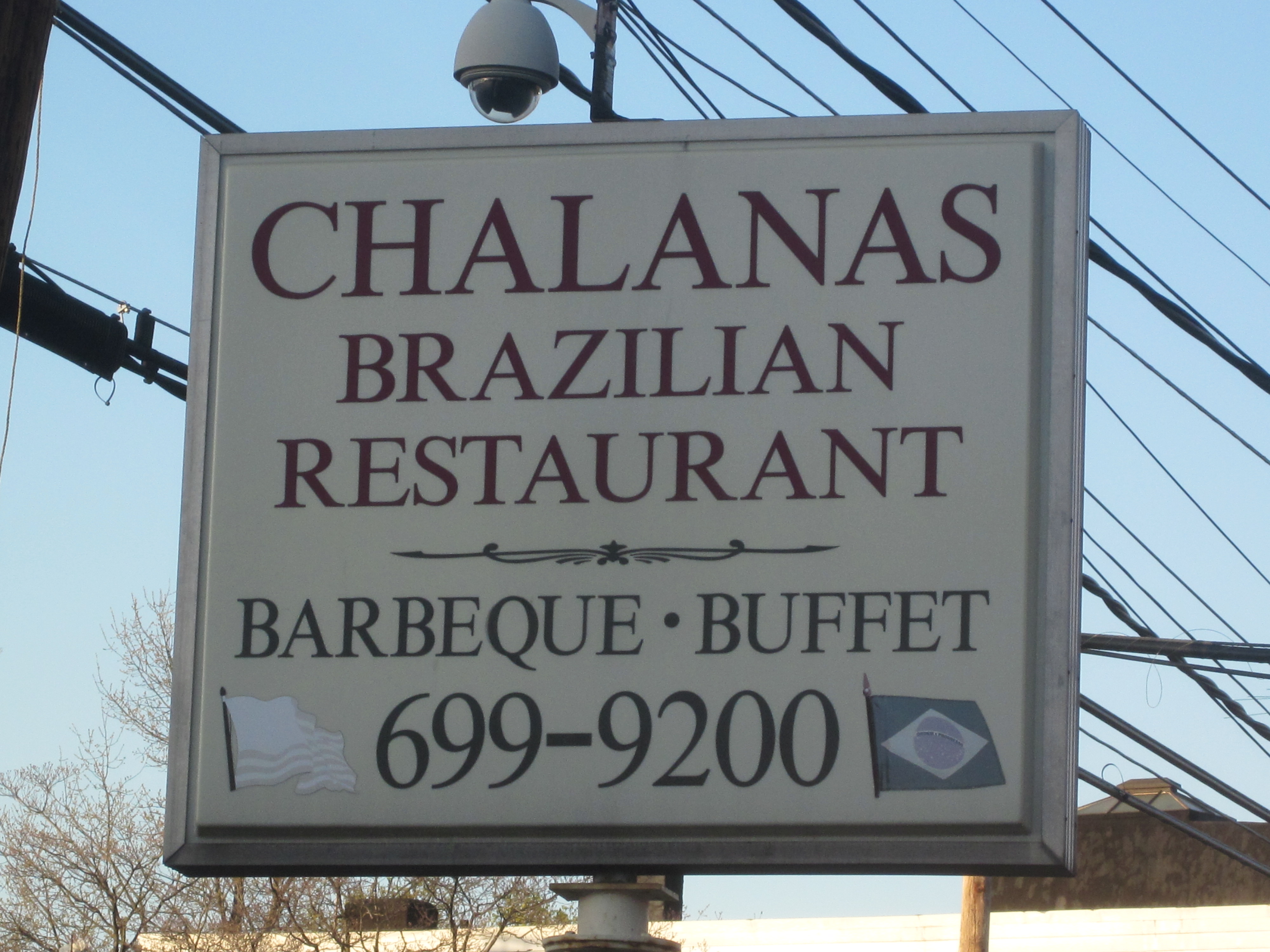
Chalanas

I woke up with a bloat in my belly. My head was fuzzy and my palms were hot. I slept but was wiped out. I didn’t want to get out of bed. What had I done that put me in this condition? I couldn’t  recall getting drunk or ingesting any narcotic that could have caused this malaise—this funk I was in. I tried to remember—to piece together the events of the previous evening that put me in the place I was now.

I drove from the city to Mount Vernon, a suburb just north of the Bronx where our group was to assemble for another eating expedition. We weren’t  far from the Lincoln Lounge where, in January of 2012 we celebrated the 10th Anniversary of Adventures in Chow City. The place that Eugene had chosen was called Chalanas. He mentioned in his email that it was Brazilian.

The restaurant had a small parking lot. Haphazardly parked cars clogged the lot and I had to park down the road from the restaurant.
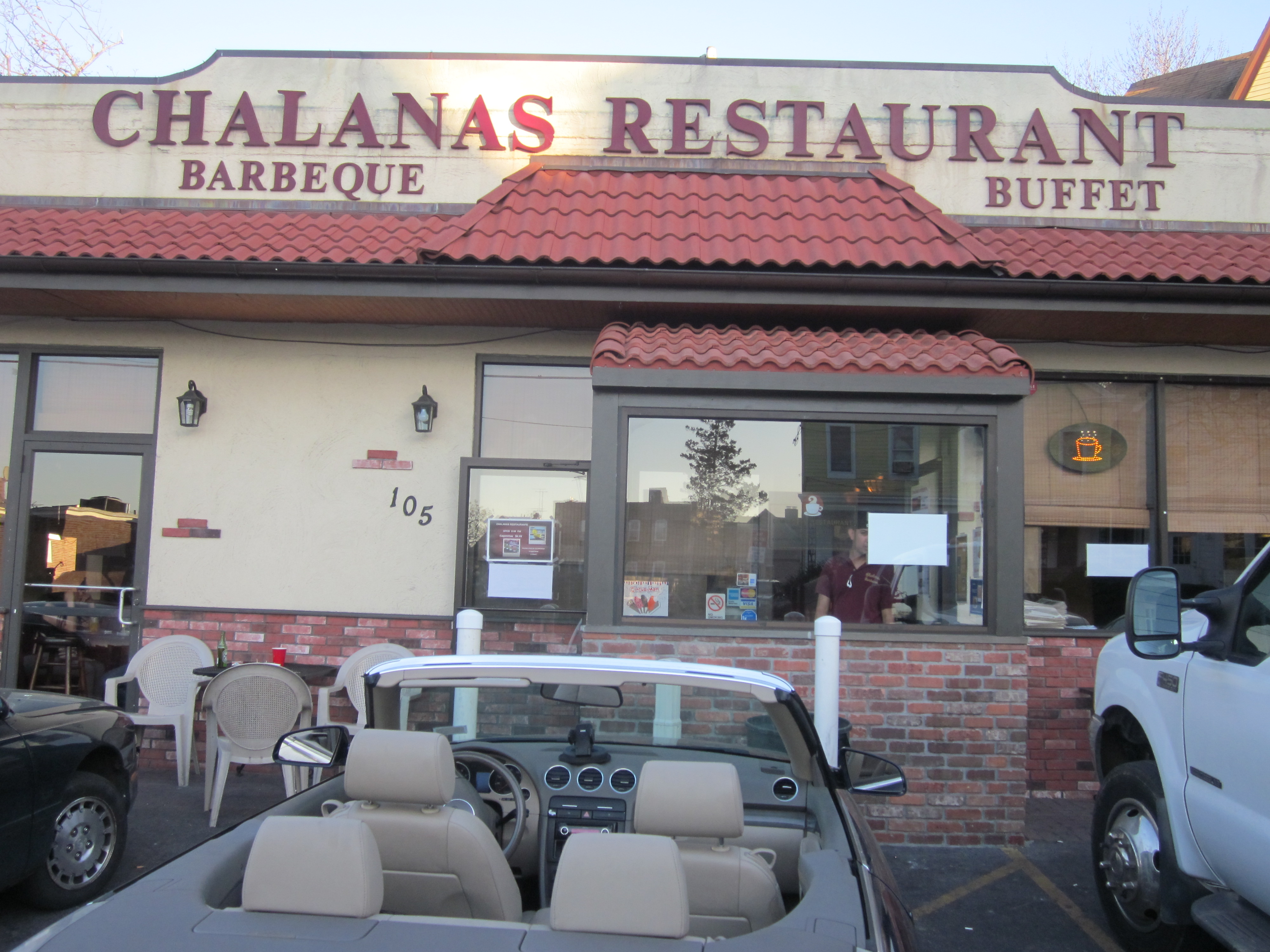
Parking and dining "al fresco" at Chalanas.

Parking and dining “al fresco” at Chalanas.

Zio, Eugene, and Gerry were all in the parking lot when I crossed the street. Mike from Yonkers arrived a few moments later. I noticed he was wearing dark shades. There was consternation on their collective faces.

“Something wrong?” I asked, turning to Eugene who was the engineer of this escapade.

“No, nothing. Why?” he responded,  but neither he or any of the others made a move to enter the restaurant.

“What are we waiting for?” I wondered out loud and began to head toward the entrance when a man whose face was beet red stumbled out stammering in Portuguese. I gave him wide clearance and then pushed the door open.
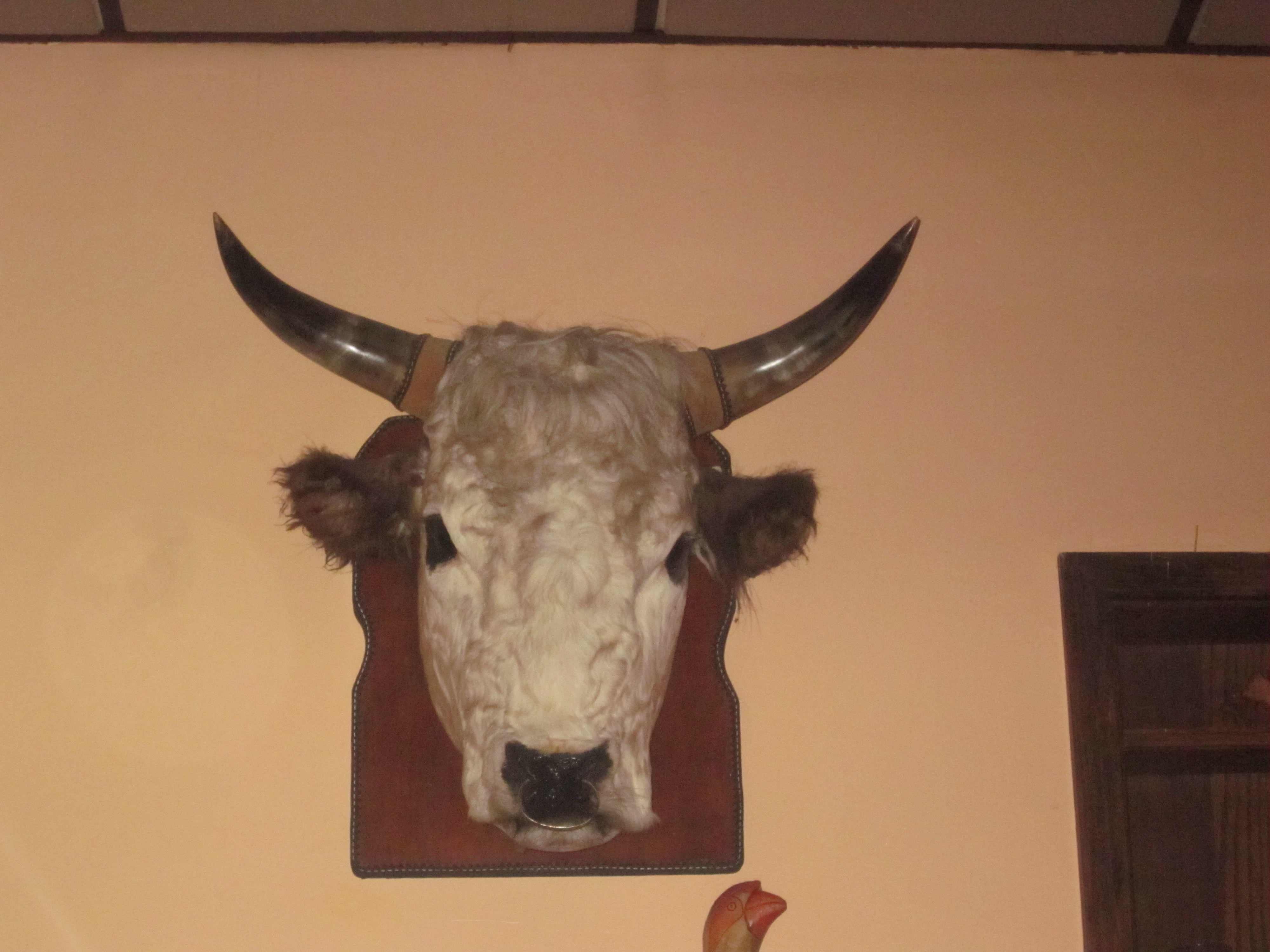
Beefy decor

Beefy decor

The restaurant was loud with Portuguese chatter. It was happy hour: $1 drafts in small, eight ounce glasses. I ordered one and so did the others with the exception, as usual, of Zio who preferred the chemical nutrition of a Diet Coke with the citrus snap of a wedge of lime. The beers were very cold and surprisingly good.

“What is the name of this beer?” I asked the host, a middle aged Brazilian man with a sly smile.

He blurted out a response to my inquiry, but I couldn’t understand him. His accent was either too heavy, the chatter in the restaurant too loud, or I was already under the influence of something I wasn’t even aware of.

“Shock?” I looked at the others for help. “Did you say Shock beer? Is that a Brazilian beer?” I pointed to the now empty glass.

“Yes,  shock of beer,” He said.

I was even more confused. I think I needed some food. Nobody was helping me here.

“Are you deaf?” Gerry yelled to me. “The man said ‘shot’ of beer.”

I pondered that for a moment. “But I asked him the name of the Brazilian beer?” I looked again at our host.

Now he looked confused. “Brazilian beer?”

“Yes, the Brazilian beer. What is it called?”

“Budweiser,” he said.

“Budweiser.” I mumbled and nodded to myself, staring in disbelief at the foamy dregs that coated my glass. I had never had Budweiser quite like what I just downed.
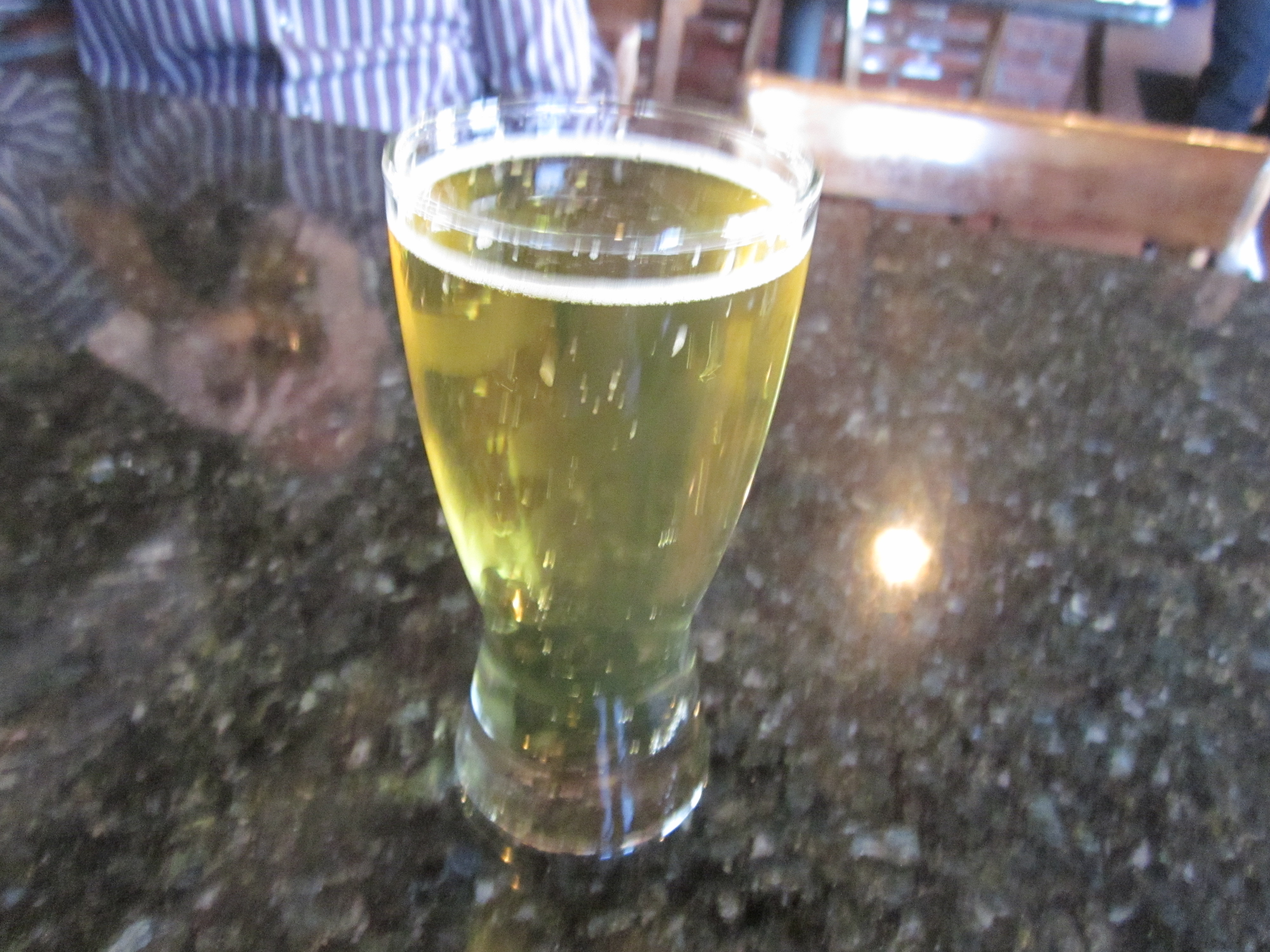
A "shock" of Budweiser

A “shock” of Budweiser

“Maybe you want to try a shot of Brazilian tequila,” he asked as he noted my empty “shock” glass of beer.

“You mean cachaca?”

He nodded. “Yes, Brazilian tequila.”  Now my head was spinning.

“I’ll have one,” Gerry quickly responded by raising an eager hand.

“Four tequilas?” The host asked.

“Not for me,” I said, shaking my head. Eugene also declined.

Mike from Yonkers took off his sunglasses and let out a weary breath. “I’ll have one,” he said.

Dinner was self service here and I was more than ready to serve myself. Before I could, our host returned with the “tequila.” Gerry and Mike from Yonkers downed the shots quickly.

“That’s the best Brazilian tequila I’ve ever had,” Gerry announced as he staggered to his feet.

The five of us moved into the adjoining room where there was a coal fired grill. Inside the grill were racks on which skewers of meat were assembled; the juices dripping slowly onto the hot coals. We were to decide what we wanted—and how much and the grill master would carve from the meat on the skewers. For some reason the process was a bit overwhelming to me at that moment. Gerry, however, was raring to go.
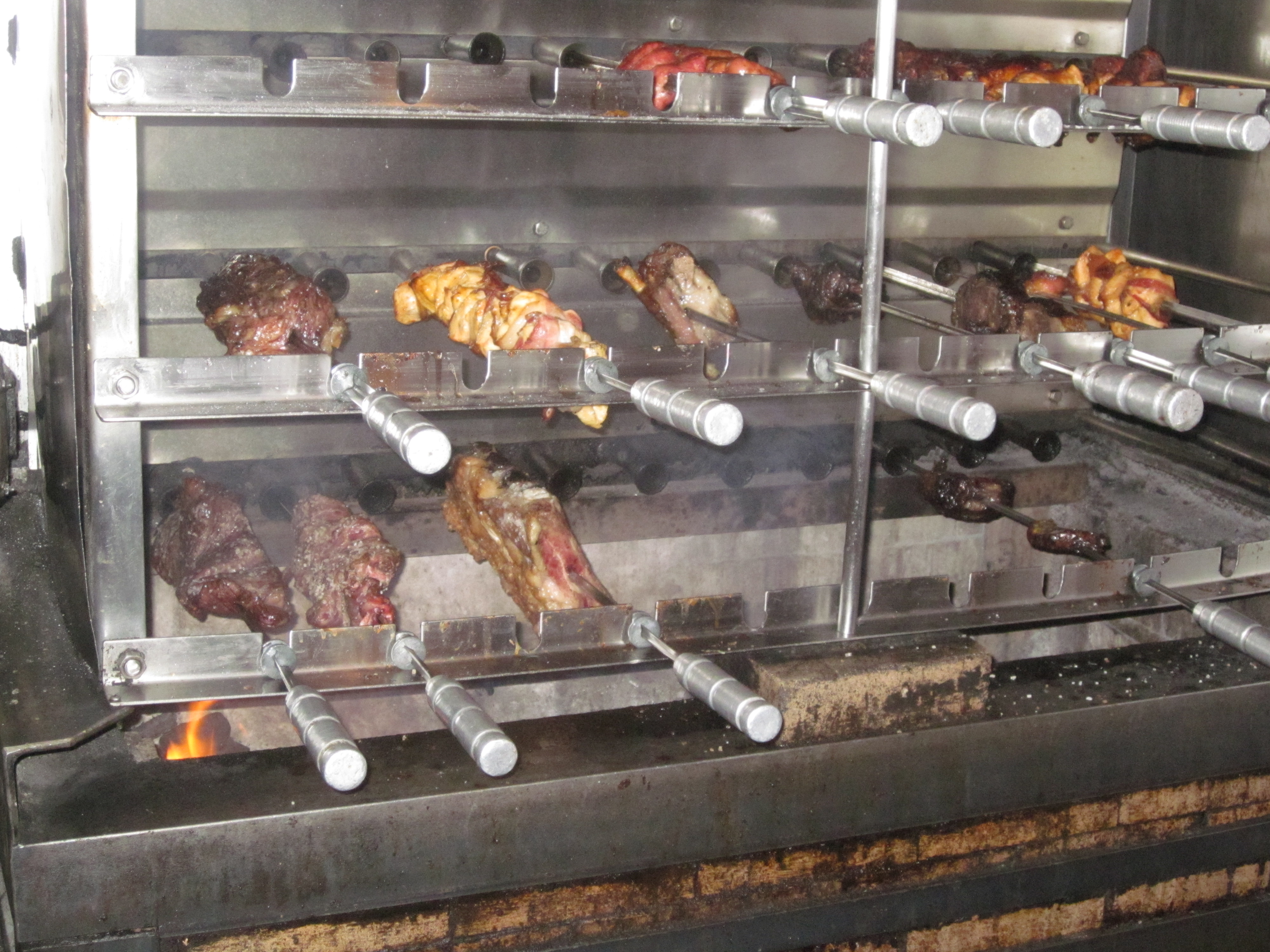
Brazilian barbecue

Brazilian barbecue

When the grill master asked what we wanted, Gerry, his judgment maybe affected by the Brazilian tequila, blurted out, “Everything.”

The grill master stared.

Mike from Yonkers, also under the influence of the tequila, nodded and handed the grill master a large empty platter. ““Fill it up,” he commanded.
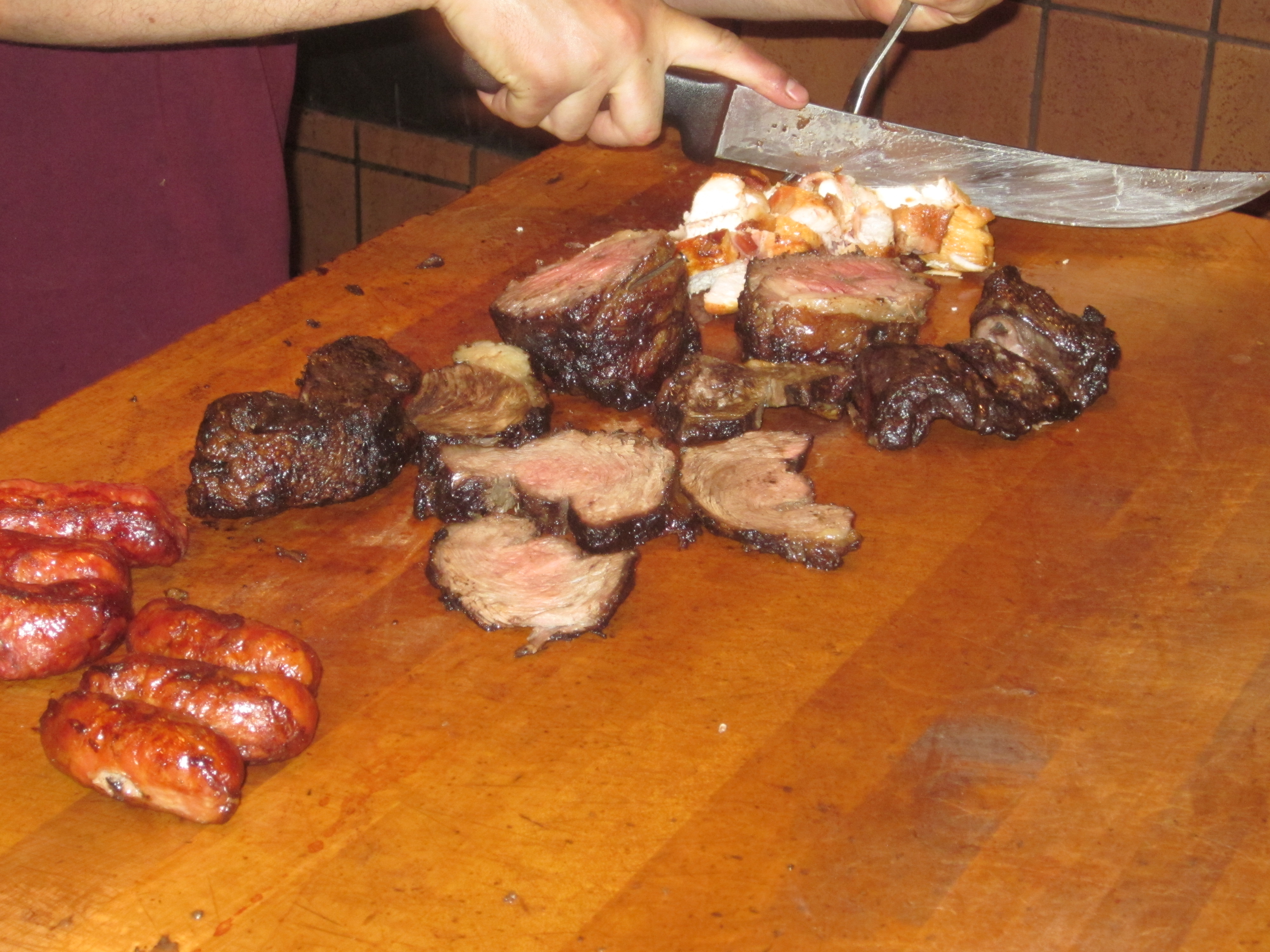
"Everything!"

“Everything!”

I could only shake my head and retreat to the salad bar where I loaded a platter with greens, rice and beans, “eggs and cheese,” and avocado salad. When I looked back, there were two enormous platters piled high with red meat and another with chicken and sausage.

Our plates were weighed and, apparently, recorded by the cashier: “You pay when you finish,” he said.
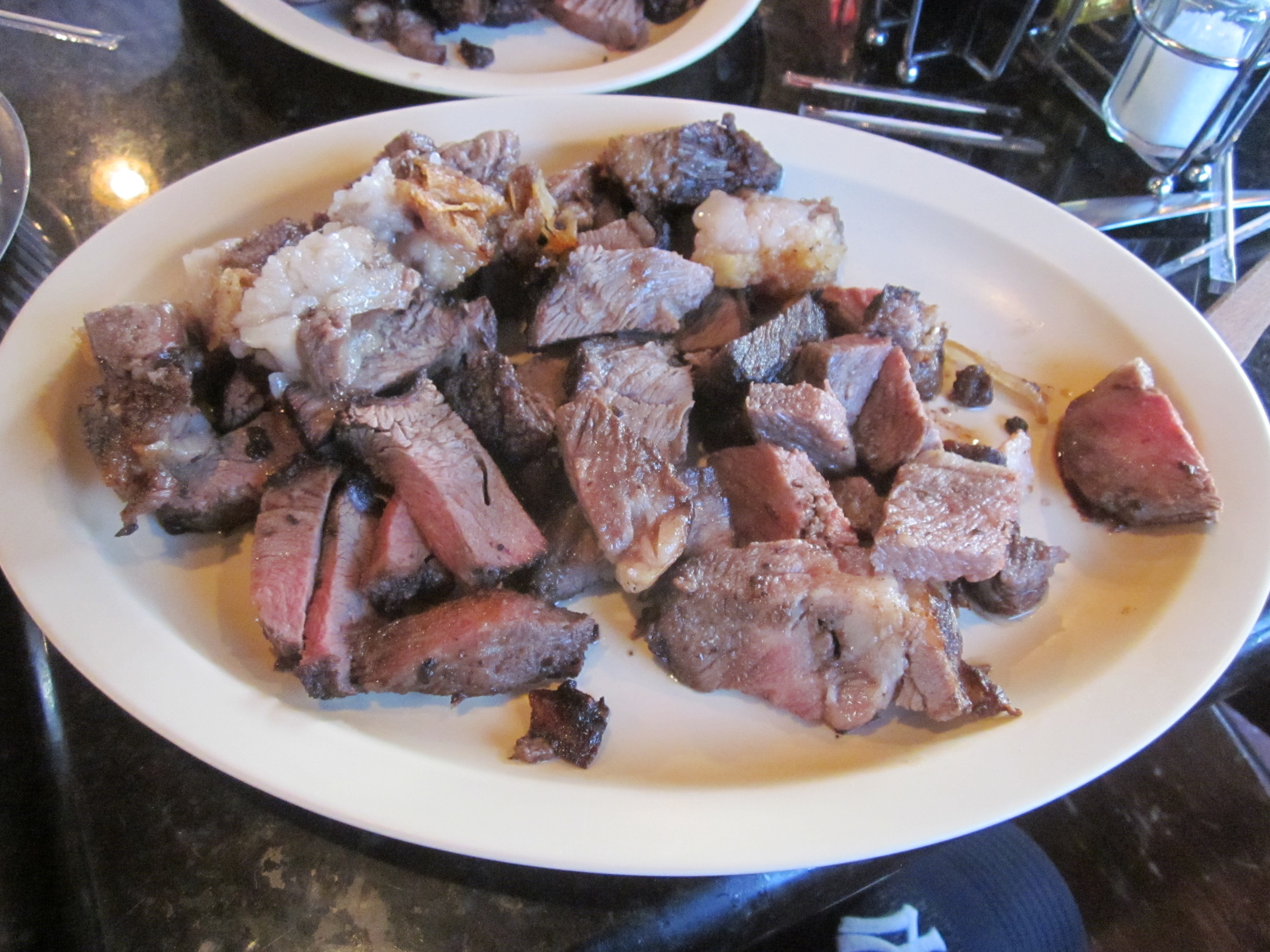
Meat

Meat

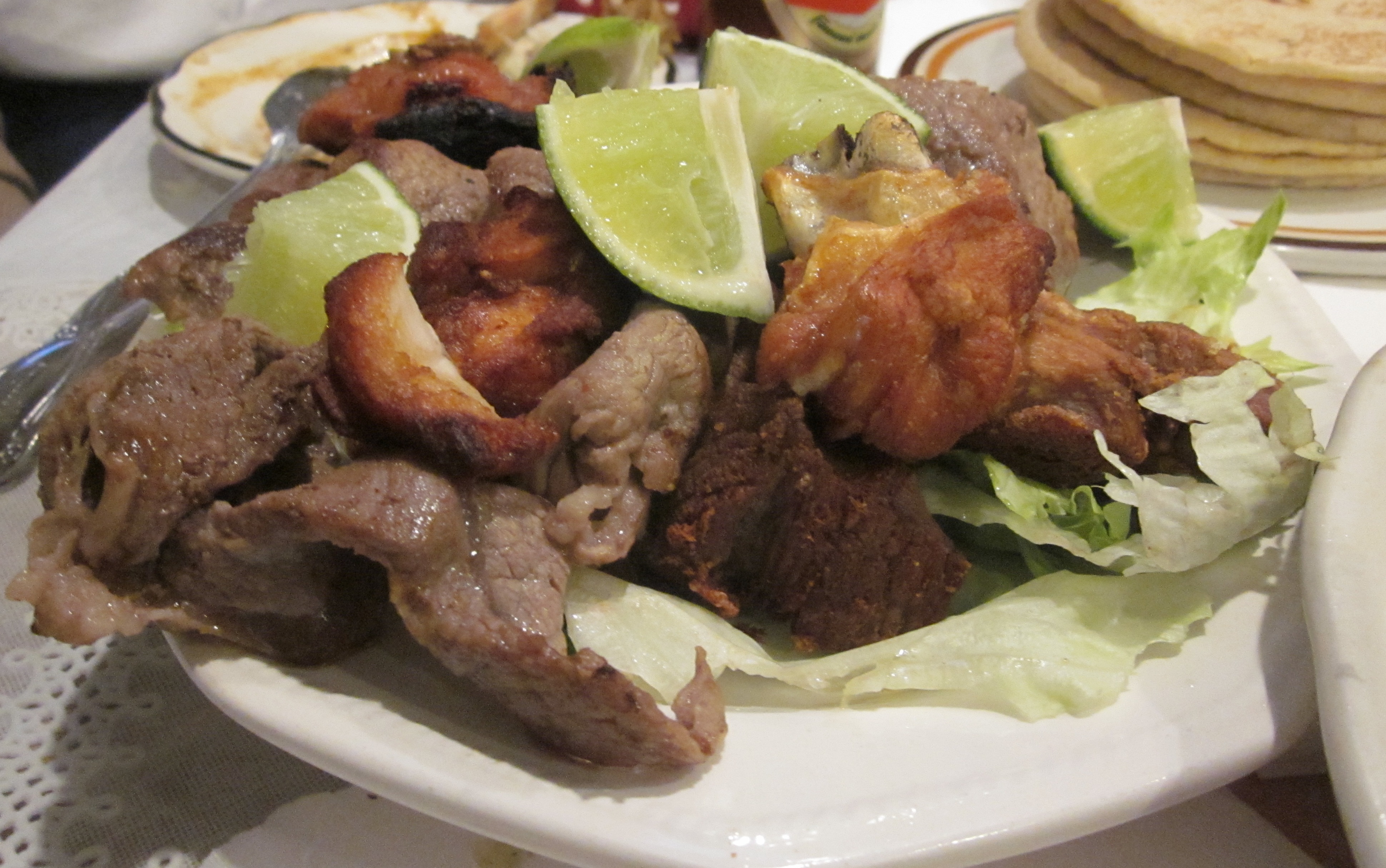
We returned to our table and almost immediately a procession of forks began to spear the various cuts of meats on the platters and from there into open mouths. I glanced at the two huge platters of red meat and tried, for just a moment, to determine each of the cuts. Was it really important to distinguish one from the other? Though a bit overly salty, it was good grilled red meat and the way it was presented; piled high in the platters, made it as accessible as munching on potato chips or pretzels. I had originally thought that getting the chicken was superfluous. I was wrong. It was outstanding, kept moist by salty and fatty strips of bacon. I couldn’t stop stuffing pieces into my mouth.
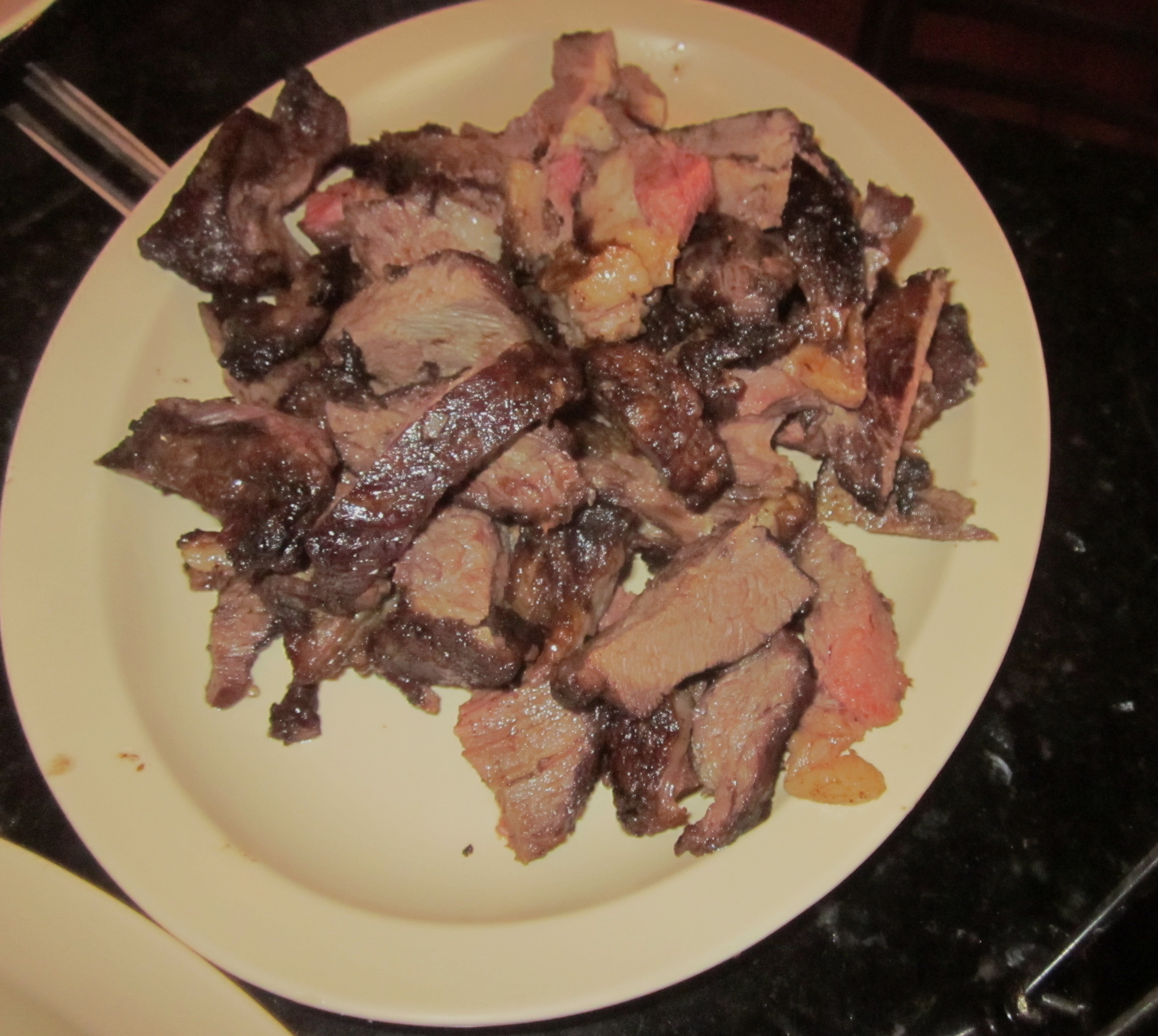
More meat.
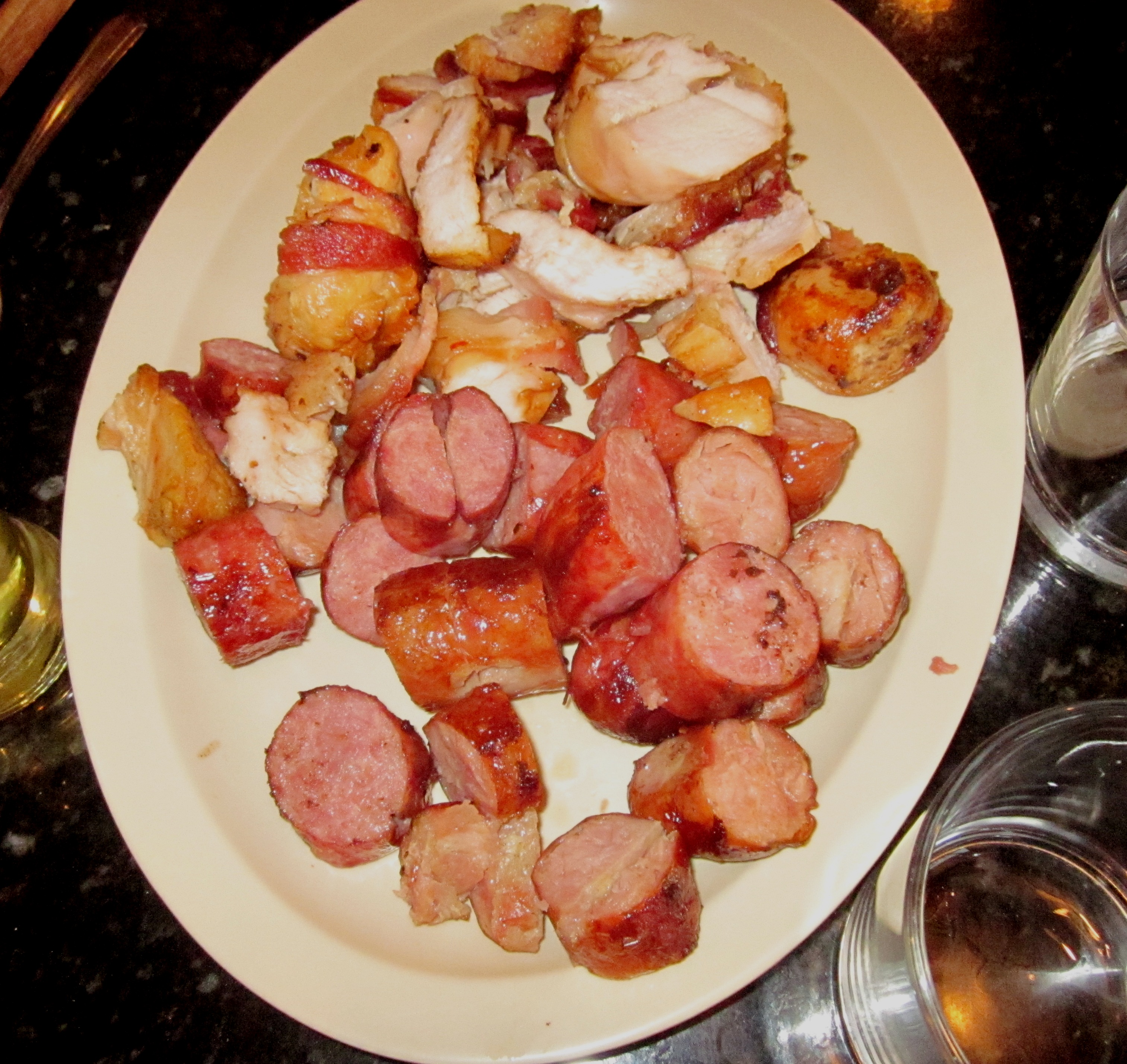
More meat.

...and even more meat.

…and even more meat.

A woman came to the table to ask if I wanted a drink. I was thirsty and nodded.

“Beer?” she asked.

“No, I’ll take a caipirinha,” I said, not able to resist the Brazilian specialty while dining in a Brazilian restaurant.

She returned quickly with the drink. The caipirinha’s I’m familiar with and wrote about in the trilogy: A Lime Cut Three Ways (see A Lime Cut Three Ways: The First Cut) usually were served in small, Old Fashioned glasses. This one came in a big plastic cup with a straw. I sucked it down as I continued to stuff my face with the red meat and the chicken, occasionally dipping into the rice, beans and greens to offset the animal protein assault.
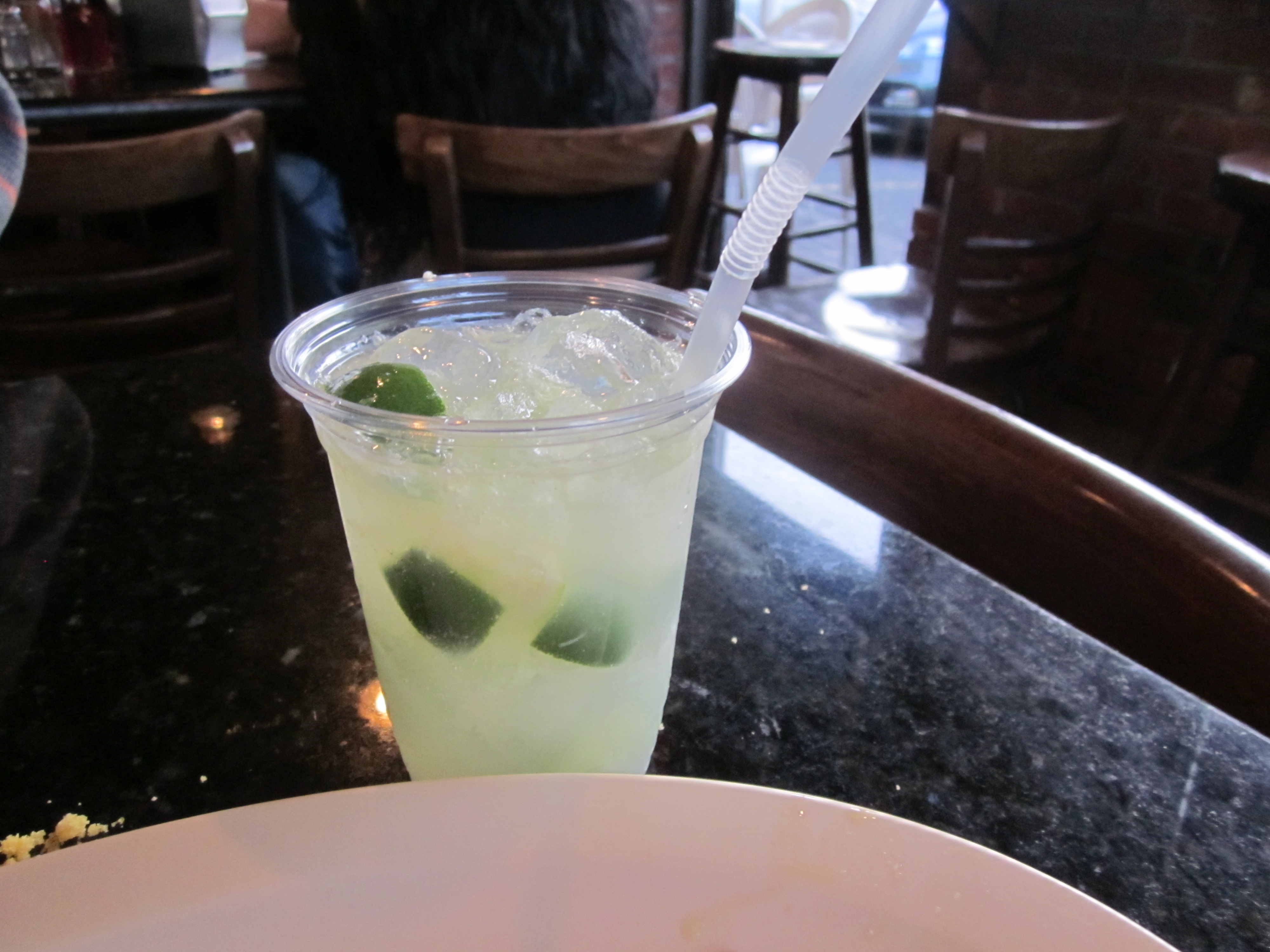
The caipirinha

The Chalanas caipirinha

I finished the caipirinha and for some unknown reason asked Zio to take a picture of me. He struggled but the flash went off.

He took another.

I looked at the results. They weren’t good. My palms were suddenly hot. I was thirsty and needed something sweet, but I didn’t want another supersized caipirinha.

Too much meat maybe?

The Brazilian tequila effect

I got to my feet and wandered to the bathroom. When I returned, Eugene told me I owed $20 for the meal.

“That’s all?” I asked.

“And that included the tip,” he added.

I handed over the money.

Gerry disappeared to rush off to another date while Mike from Yonkers, Eugene, Zio and I crossed the street and found ourselves in a Brazilian bakery called Padaminas. The lights were bright in the café and news from Sao Paulo was on the television. Brazilian coffee was probably a good idea, but Brazilian flan was a better one. I took it to a table and stuck a spoon in it. It held the spoon securely upright. I excised the spoon with little effort and then working methodically devoured the astonishing flan.
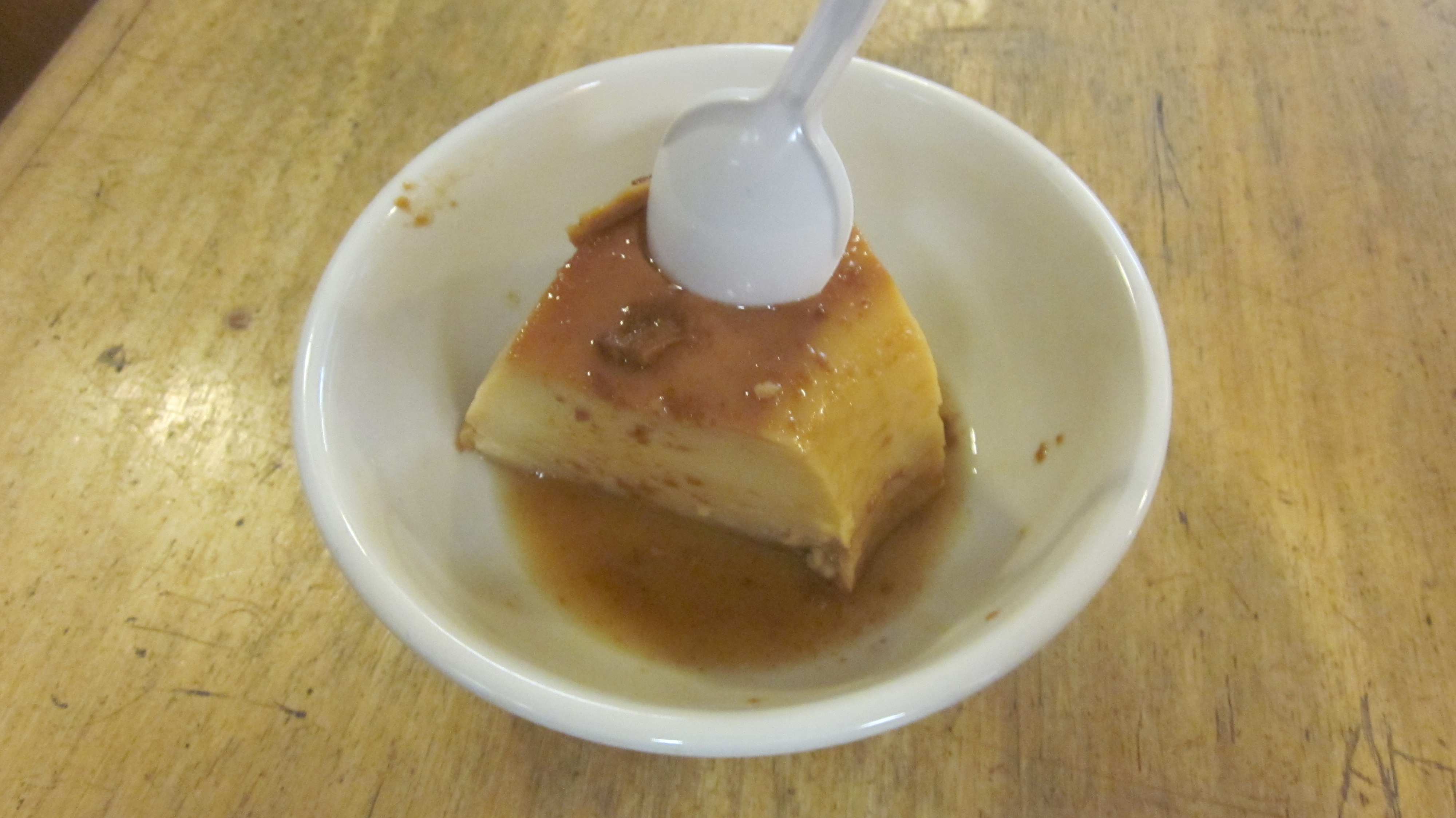
A flan that holds a spoon.

A flan that holds up a spoon.

Lying in bed the next morning my palms were still hot and my head pounded. I had one caipirinha, granted a very big one, and one small “shock” of Budweiser. They weren’t the cause of my stupor. It was something else. I looked at the pictures on the memory card in my camera including the unfortunate ones Zio took of me. I looked again and then I knew what was ailing me. I had a hangover. But not from the alcohol. The hangover was from an overdose of red meat. I got up, swallowed two aspirin and went back to bed. In a few hours I felt better. The hangover was gone and I was hungry.

Just another adventure in Chow City.

Just another adventure in Chow City.

Chalanas
105 W. Lincoln Avenue
Mount Vernon
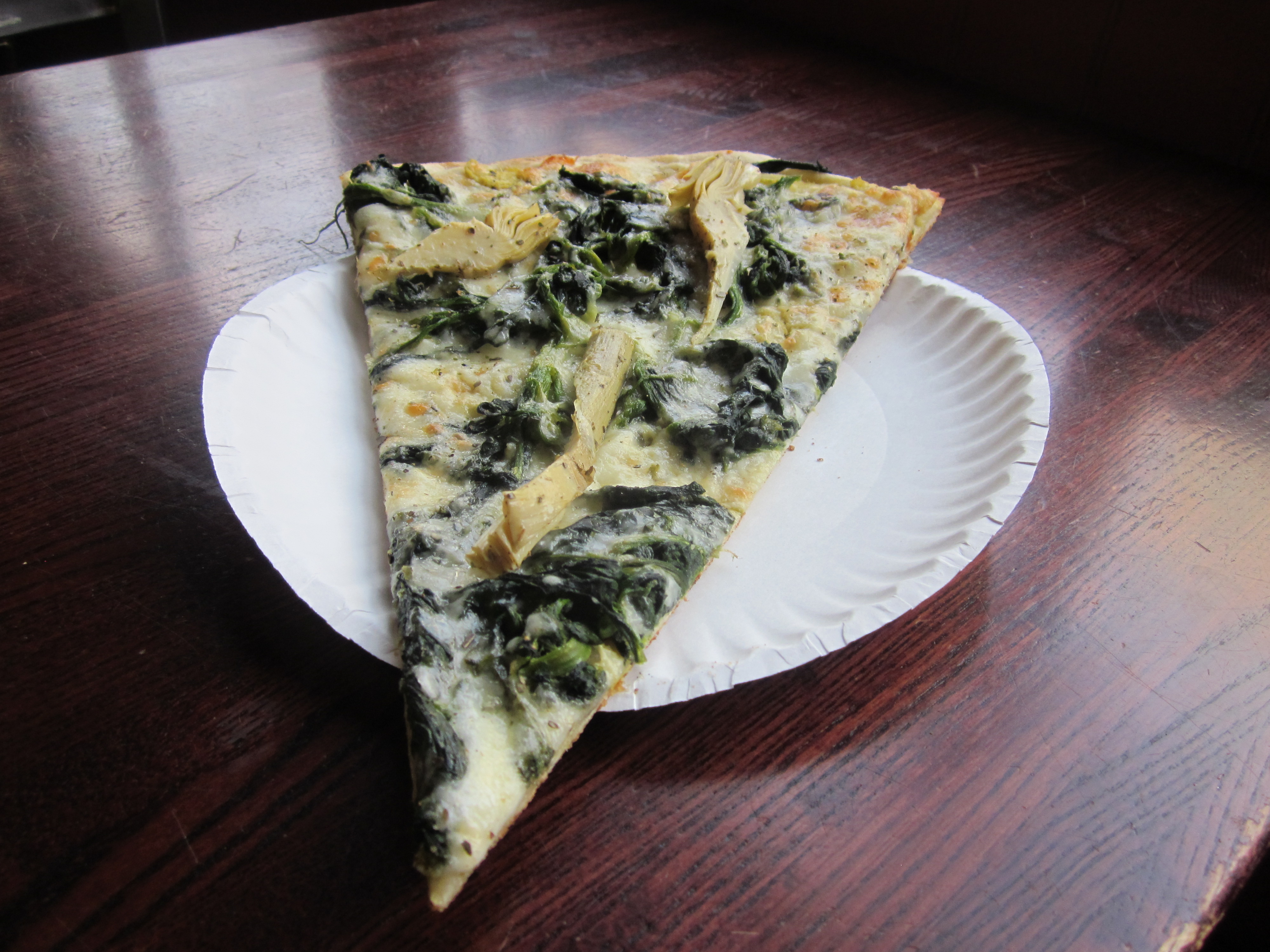
Today’s Slice: Artichoke (and Spinach) Pizza

12 Apr

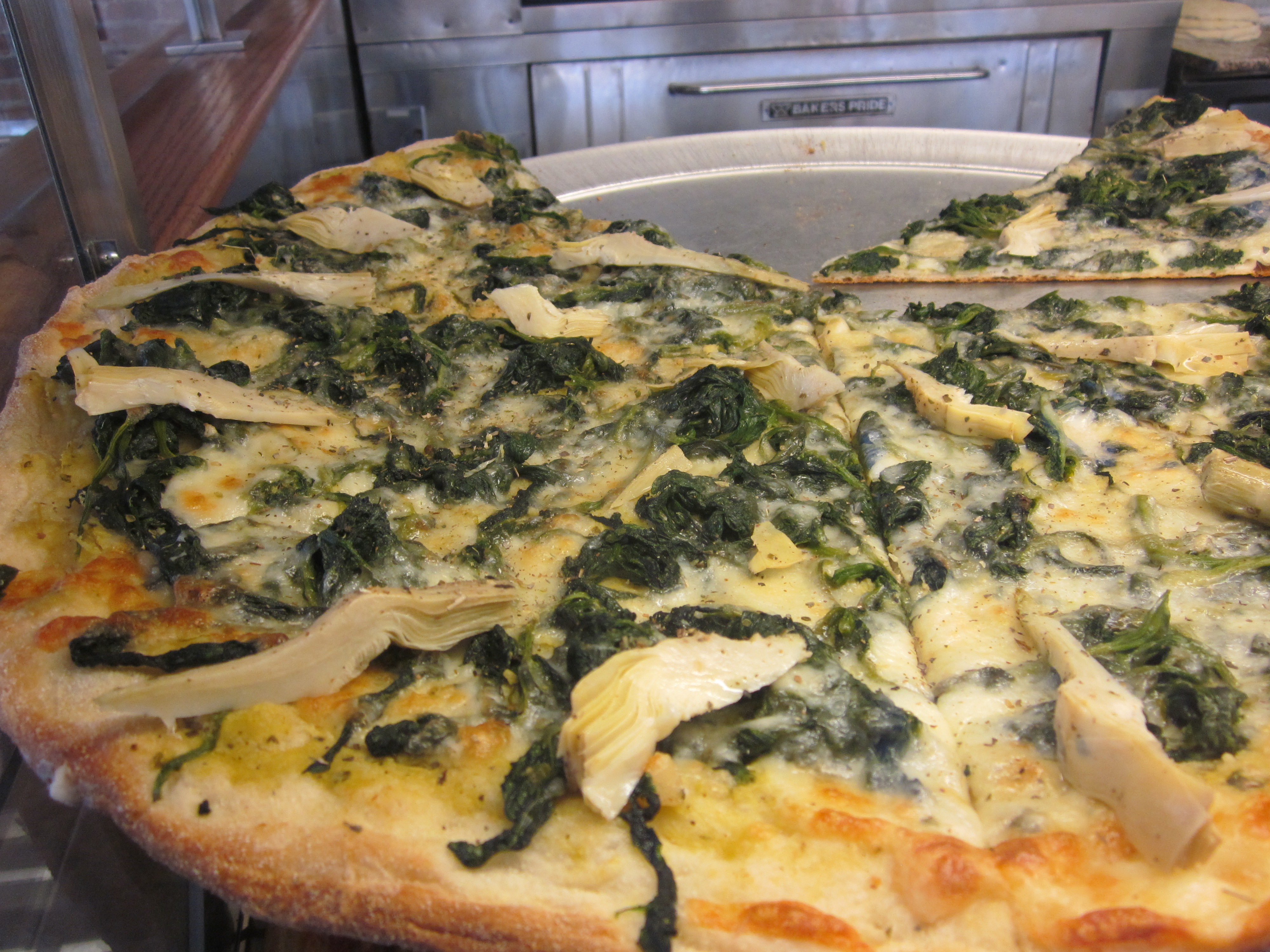
artichoke slice


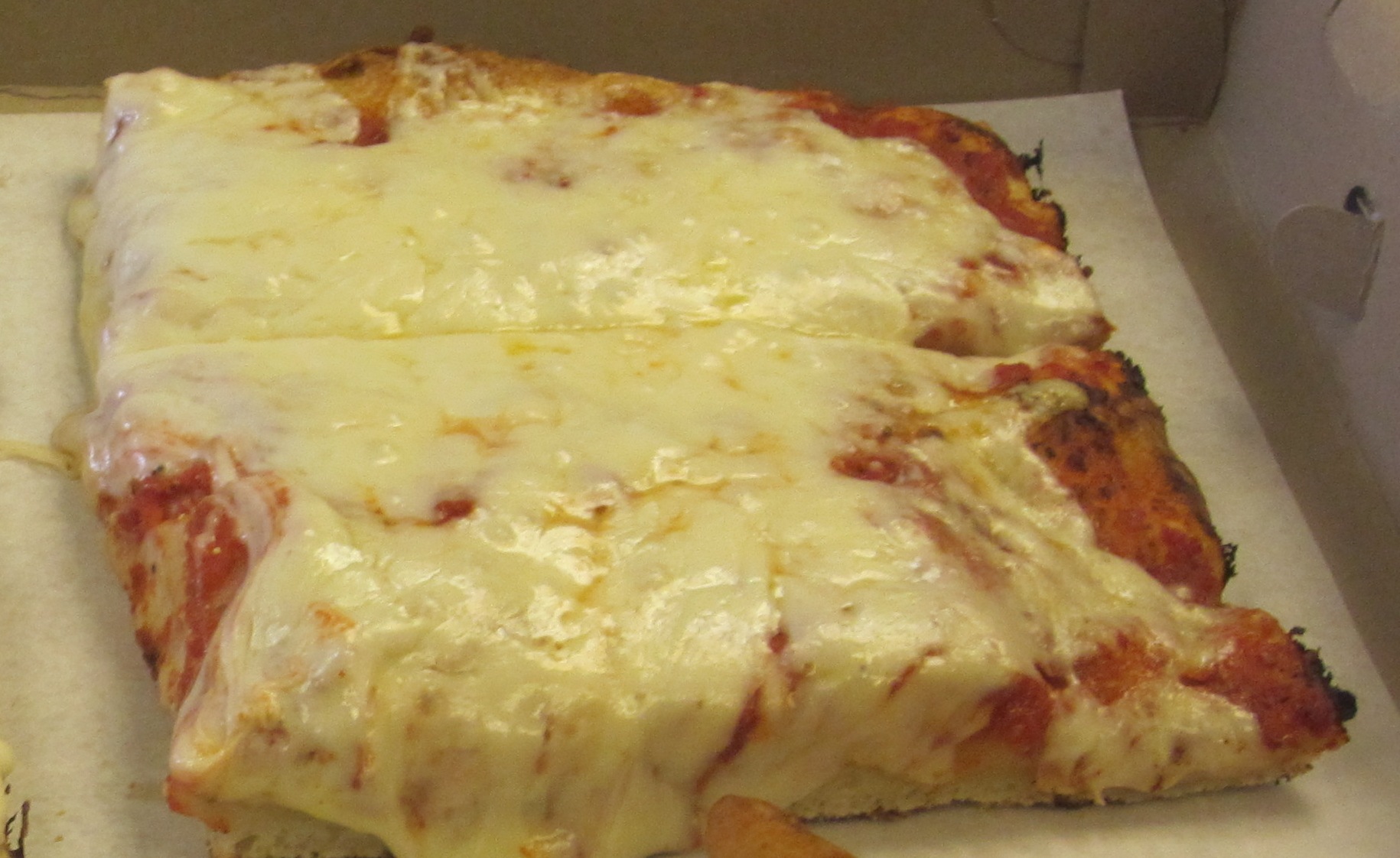
The array of pizza slices available at so many pizzerias here in New York is staggering. I usually just glance at them and wonder at the sometimes bizarre combinations. I judge a good slice on the basics; crust, sauce, and cheese. My pizza education was very specific. I was weaned on either “regular” or “Sicilian”  slices.
Sicilian slices

Sicilian slices

Despite my pizza purist upbringing, I’ve now learned to not totally disqualify a slice that is excessively decorated. I am a big fan of the “salad” pizza if done right. Louie & Ernie’s “white” slice is a Hall of Famer, as is the broccoli rabe pizza from Fratelli’s on Hunt’s Point (see A Slice of Ernie Ottuso Square and Bronx Broccoli Rabe From a Brother From Corona respectively).

I strayed again recently and again in the Bronx, this time when admiring the pies inside the Full Moon Pizza on Arthur Avenue.

I first experienced Full Moon Pizza probably the first time I experienced Arthur Avenue. But recently I’ve stayed away;  not because there was anything wrong with Full Moon Pizza, but preferring instead the mini-pies at Cafe al Mercato inside the Arthur Avenue Retail Market. The last time I was on Arthur Avenue, Cafe al Mercato was closed so I returned to the Full Moon. When I did, I noticed the artichoke and spinach pie under glass.

I wasn’t sure how long the pie had been sitting under the glass, but the slice did have to be reheated, something I am very wary of.  In this case, however, reheating did not diminish the taste. The spinach was tender, the cheese fresh, the crust baked perfectly, and the artichokes also tender and briny. But there was something else I tasted I could not identify. Something creamy, almost like another soft melted cheese addition to the mozzarella. I wanted to know what it was.

The artichoke and spinach pie minus one slice: mine.

The artichoke and spinach pie minus one slice: mine.

Behind the counter there was a man in chef whites. I can’t recall ever seeing a pizza chef wearing whites…not even the legend, Dominic DeMarco from Di Fara wears them while preparing his pies.

To the man in chef whites, who said his name was Sal (of course it had to be, see The Many Pizzas of Sal’s), I asked what went into the artichoke and spinach pie.

“We use spinach, fresh mozzarella, imported artichokes, roasted garlic, and an artichoke spread,” he told me.

So that what I was tasting that melded with the cheese: artichoke spread.

Despite my traditional pizza sensibilities, I am against any rules on what can or cannot be put on a pizza.  Some of those rigid Neapolitan pizza societies with the strict regulations on how big to make a pie; what type of sauce and cheese to use and how hot it should be cooked take it much too seriously. Not that I ever complain about the results. The addition of the artichoke spread was a welcome innovation. And I credit Chef Sal, if he was the innovator, with another revelation in my slowly expanding pizza slice world.

Full Moon Pizza

Full Moon Pizza
600 E 187th St
Bronx


The Big Kahuna in El Barrio

10 Apr

Makana

Lately Hawaii has been on my mind. And I can’t really pinpoint why.  In the past, I’ve really had no desire to visit our 50th State. Despite its obvious attractions, I have always been content to travel to the much closer, more exotic (in my mind) Caribbean than the Hawaiian Islands. Still Hawaii has been on my radar as a place I really should get to at some point in my life.

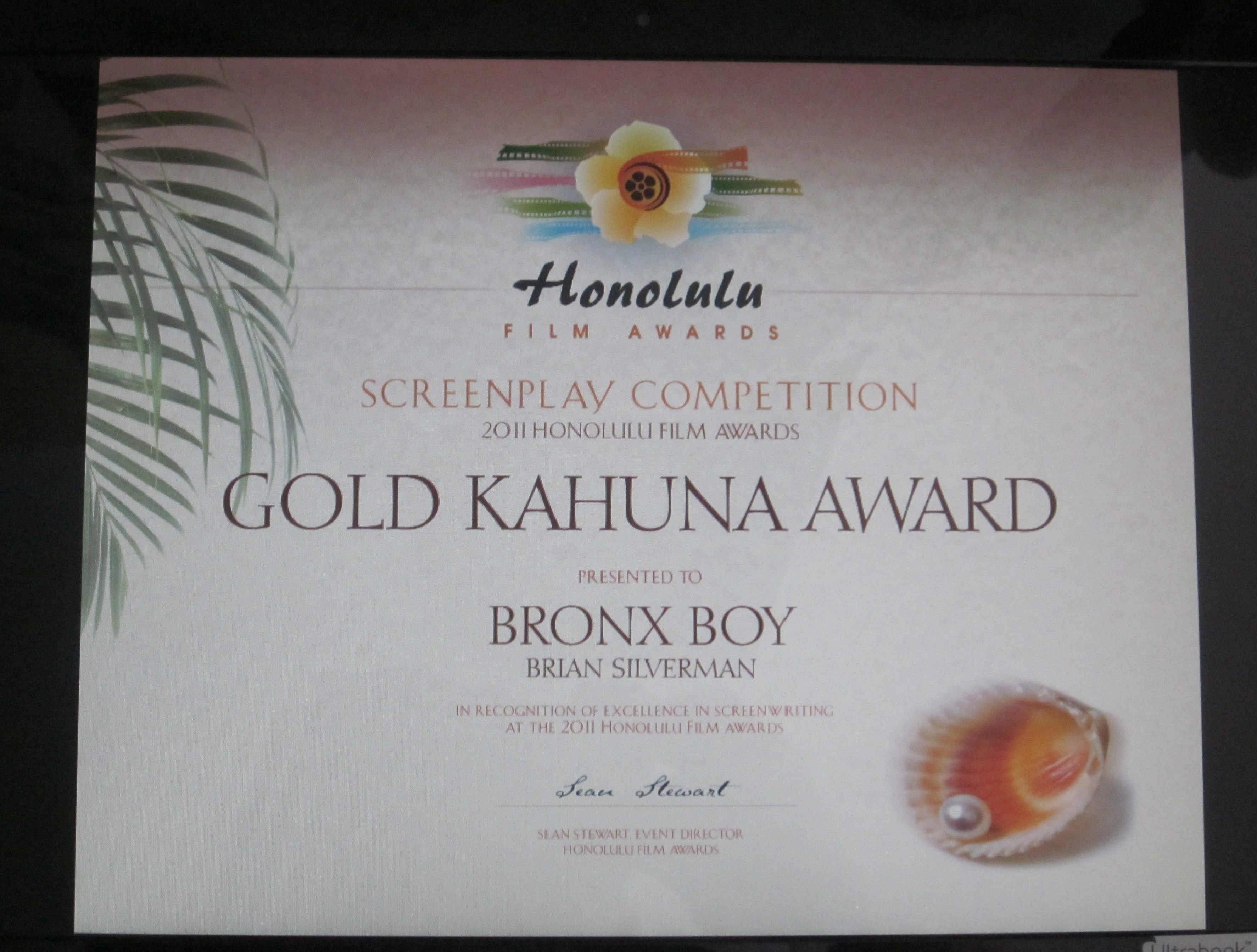
The closest I’ve come to Hawaii was a few years ago when a screenplay I wrote won a “Gold Kahuna” award at the Honolulu Film Festival. I had to admit, being considered a Kahuna in anything was quite an honor and the festival organizers said there would be a presentation. There was, however, a stipulation. I would have to travel 5,000 miles at my own expense to accept it personally. Even a Kahuna has his limitations and I decided to accept the award via email.

Gold Kahuna

Now I find myself with an itch to see the Islands. Maybe the cold winter finally caught up to me and images of green, lush, volcanic hills, waterfalls, crystal blue waters, and swaying palms has brought on the itch. Maybe that HGTV show Hawaii Life, which I’ve come to watch regularly has enticed me. Or maybe it’s because there is a cuisine particular to Hawaii that I have never tried. I’ve never been to India, Thailand, or Brazil for that matter, yet I have had their food here in New York. But Hawaiian food? Never. New York, it seems, is a Hawaiian food free zone.

Driving up First Avenue in East Harlem,( also known as Spanish Harlem, also known as El Barrio), not long ago, I noticed a sign for a restaurant called Makana that advertised Japanese and Hawaiian BBQ. Here, finally was a chance to lose my Hawaiian food virginity. I looked forward to my first time and despite my Kahuna credentials, hoped the experience would be a gentle one.

Makana

I went into the tiny, take-out mostly, restaurant not knowing what to expect and really not expecting much. The majority of the menu featured Japanese staples including a very long sushi list. I skipped past them and  paid attention to the items with asterisks next to them including Hawaiian BBQ beef, fried mahi mahi (“Hawaii’s favorite fish”), Kalua pork (“Another Hawaiian favorite,”) and “Loco Moco”, hamburger patties with a fried egg and covered with “special” brown gray(“A local Island favorite!”) It was the food with the asterisks I wanted.

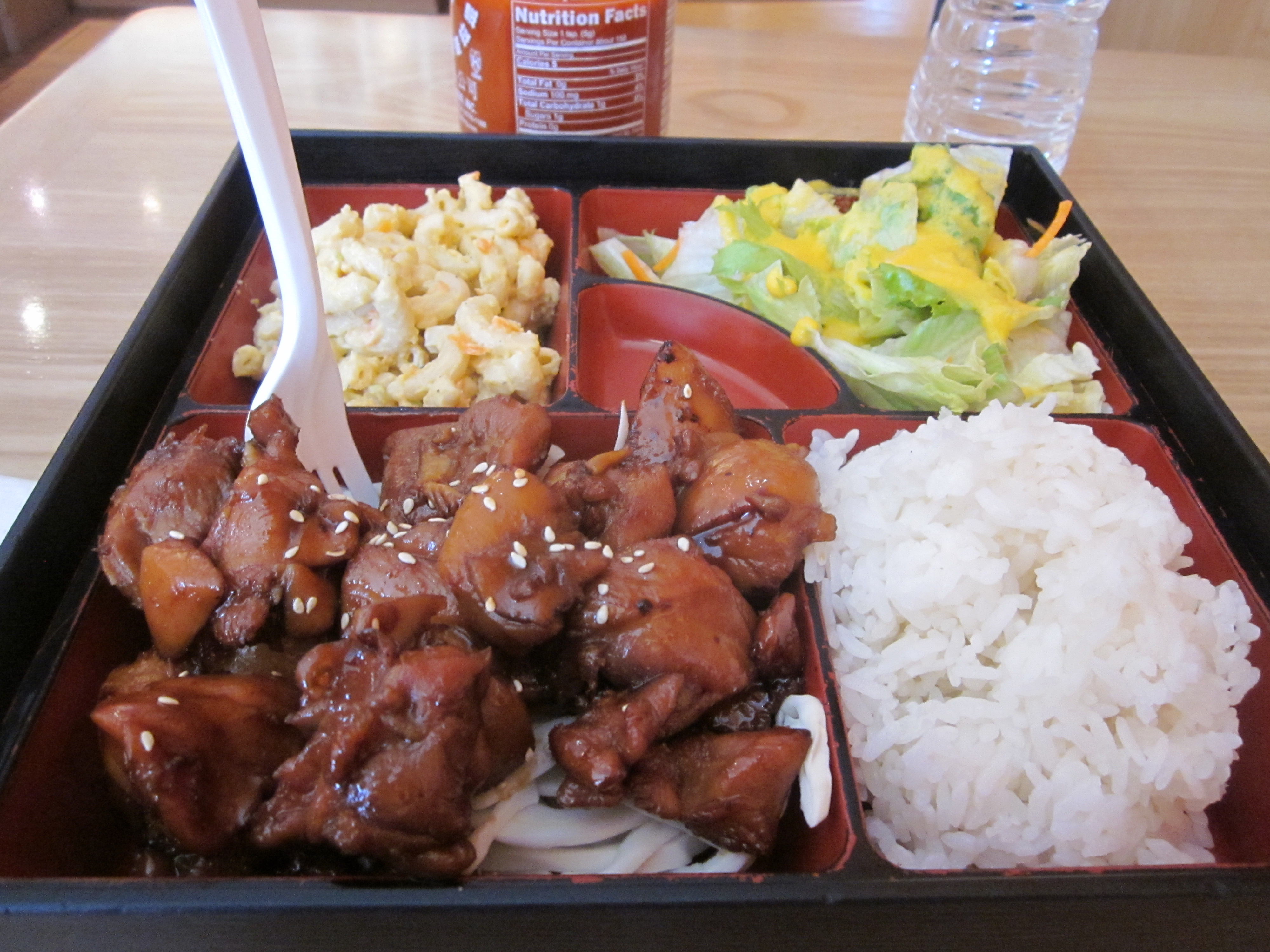
BBQ chicken

BBQ chicken

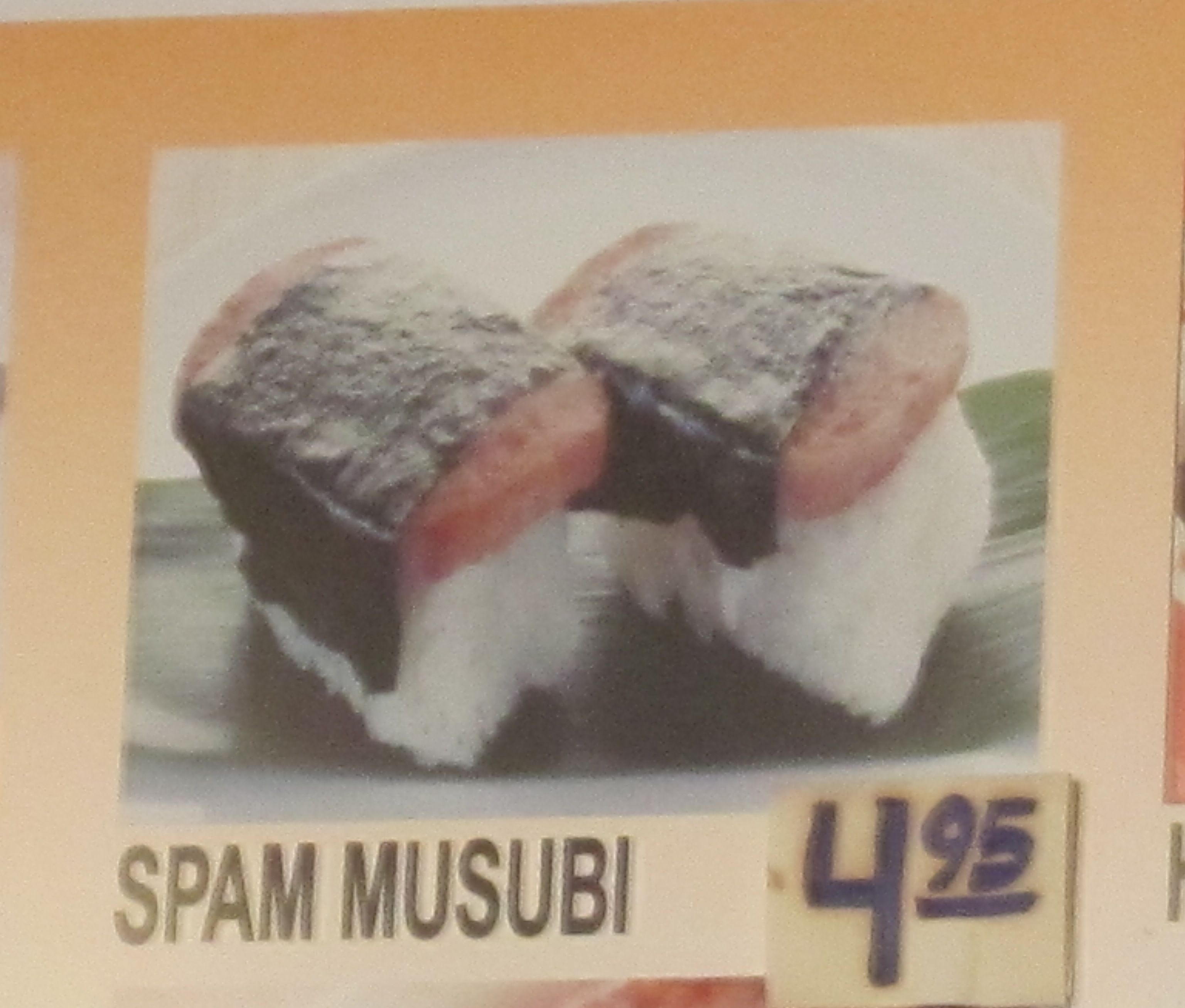
I started with the Hawaiian bbq chicken; chunks of boneless chicken thighs heavily marinated in a sweet soy sauce. The chicken came with sides of salad, cabbage, macaroni salad, and rice with a layer of the same sweet sauce under it. While I ate, I noticed that there was something called “spam musabi;” soy marinated spam wrapped in seaweed, kind of like spam sushi, listed up on the illustrated menu behind the counter. I was tempted, but thought that when and if I ever get to Hawaii, that’s when I’ll take a chance on spam musabi.

Makana

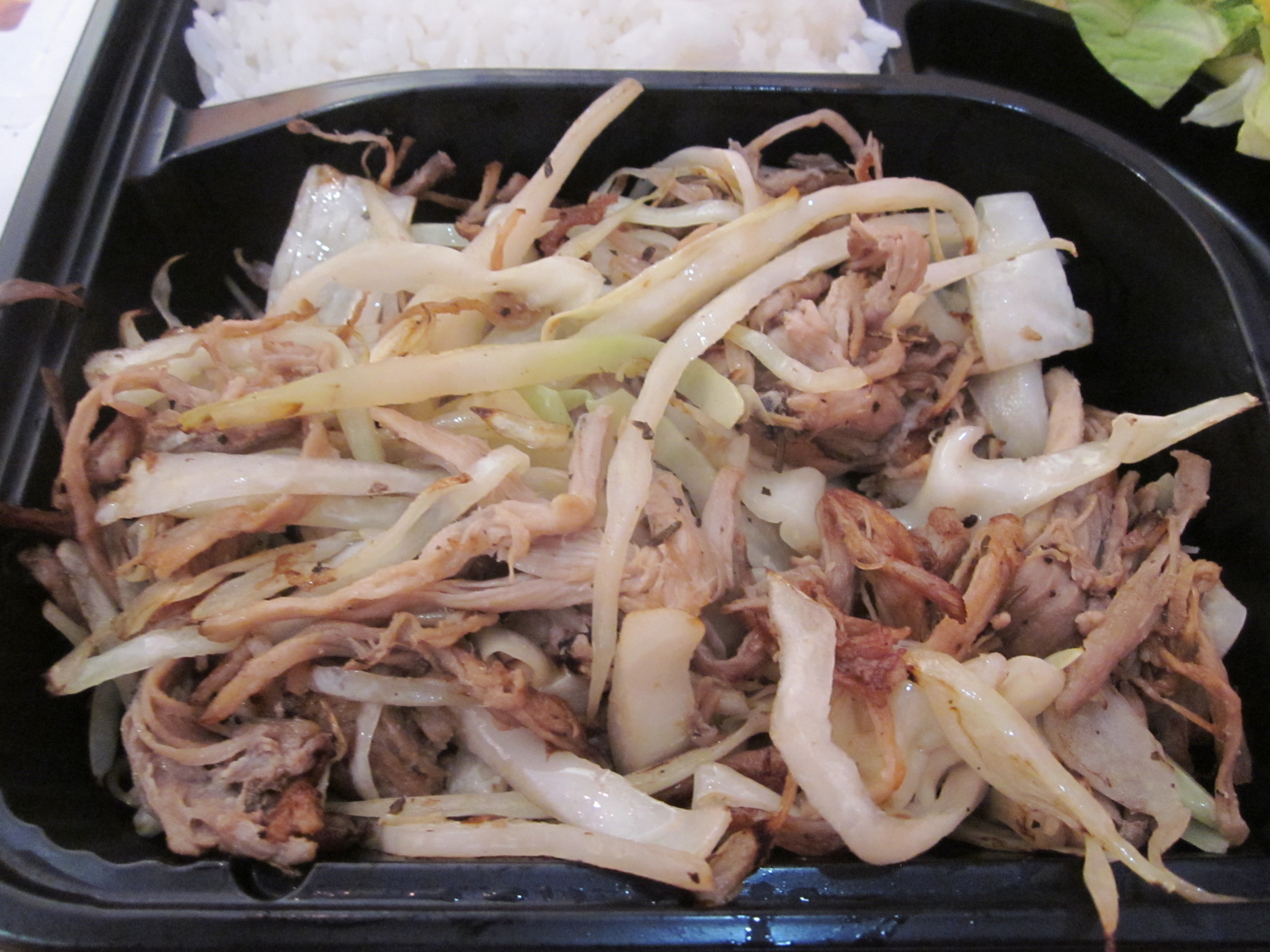
Next I sampled the Kalua pork, pieces of tender, smoky shredded pork mixed with cabbage and lightly seasoned with that sweet soy sauce. I know pork is big in Spanish Harlem and have had my share of lechon including the addictive portions served at Lechonera La Isla ( see Lechonera Encanto). But this pork was different and had me fantasizing of a big pig slow cooked underground, Luau-style.

Kalua pork

Kalua pork

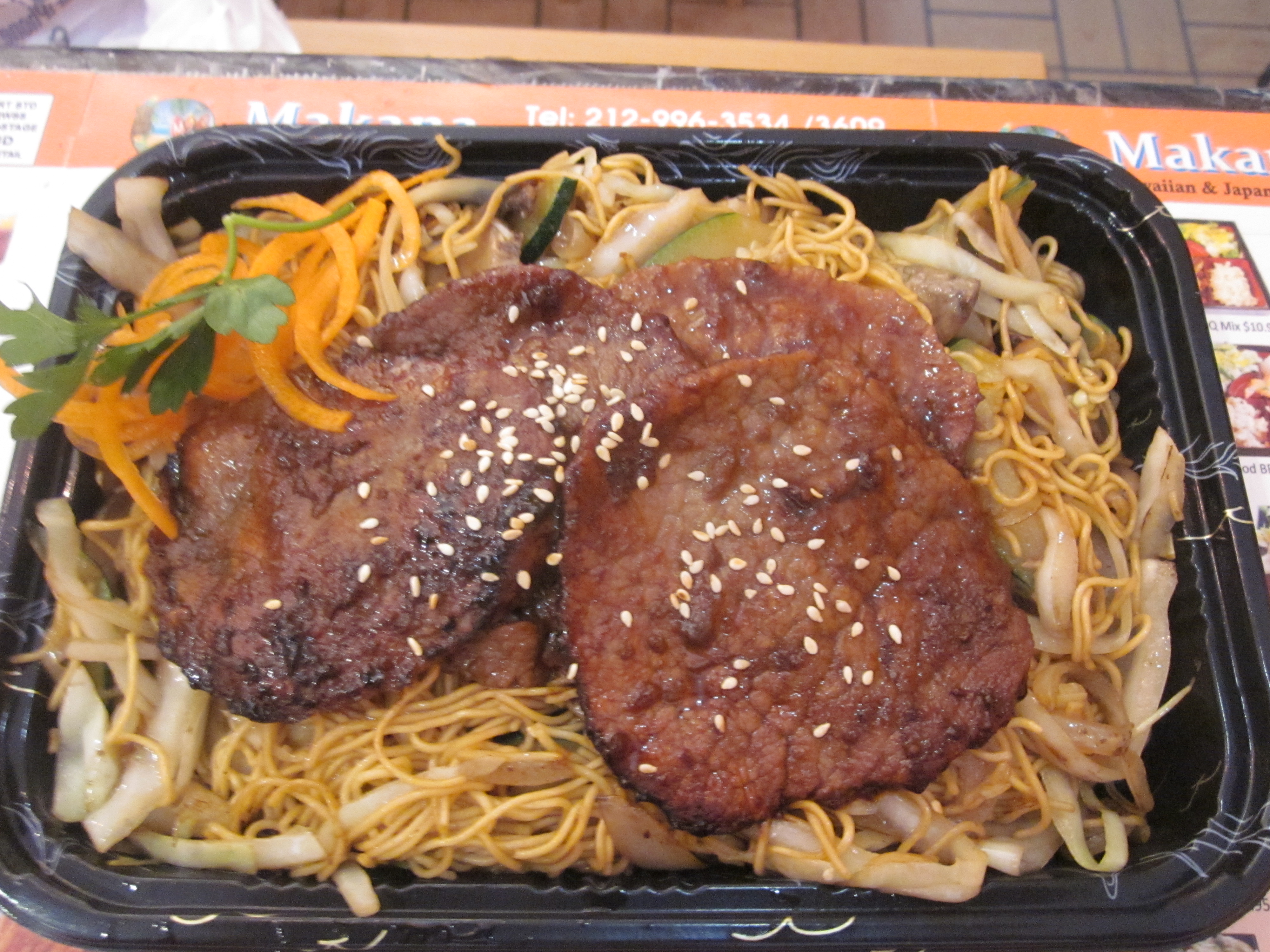
The bbq beef fried noodles, called fried saimin, were described as “Japanese-style” on the menu, but I never had anything like this at a Japanese restaurant before. The noodles, I thought, were more like thin, Chinese noodles—the sauce again of the sweet soy variety, the beef, thin round slices marinated in  the same sauce. I knew the sauce was redundant to all of the dishes I sampled, but I wasn’t complaining. It was what I was coming to identify with whatever this thing called Hawaiian food was.

Bbq beef fried saimin

Bbq beef fried saimin

In the appetizers section of the menu, I noticed ahi poke offered. I’ve never had poke, ahi or otherwise, but I thought it better, like the spam, that I wait until I’m in Honolulu, Maui, or the Big Island and the tuna is fresh out of the warm Pacific waters before I try it. But then again that might be a very long wait.

Makana
2245 1st Avenue
East Harlem

Ti’ Time

5 Apr

Ti’ (pronounced “tea”) time for me is usually just before dinner. Drinking a Ti’ helps spur my appetite, or that’s how I justify it. It’s what is called an aperitif. In the French Caribbean they don’t bother to justify spurring their appetites; Ti’ time is before just about every meal, including breakfast. The Ti’ in question is actually called Ti’ punch, with Ti’ meaning tiny or “petit” in Creole.

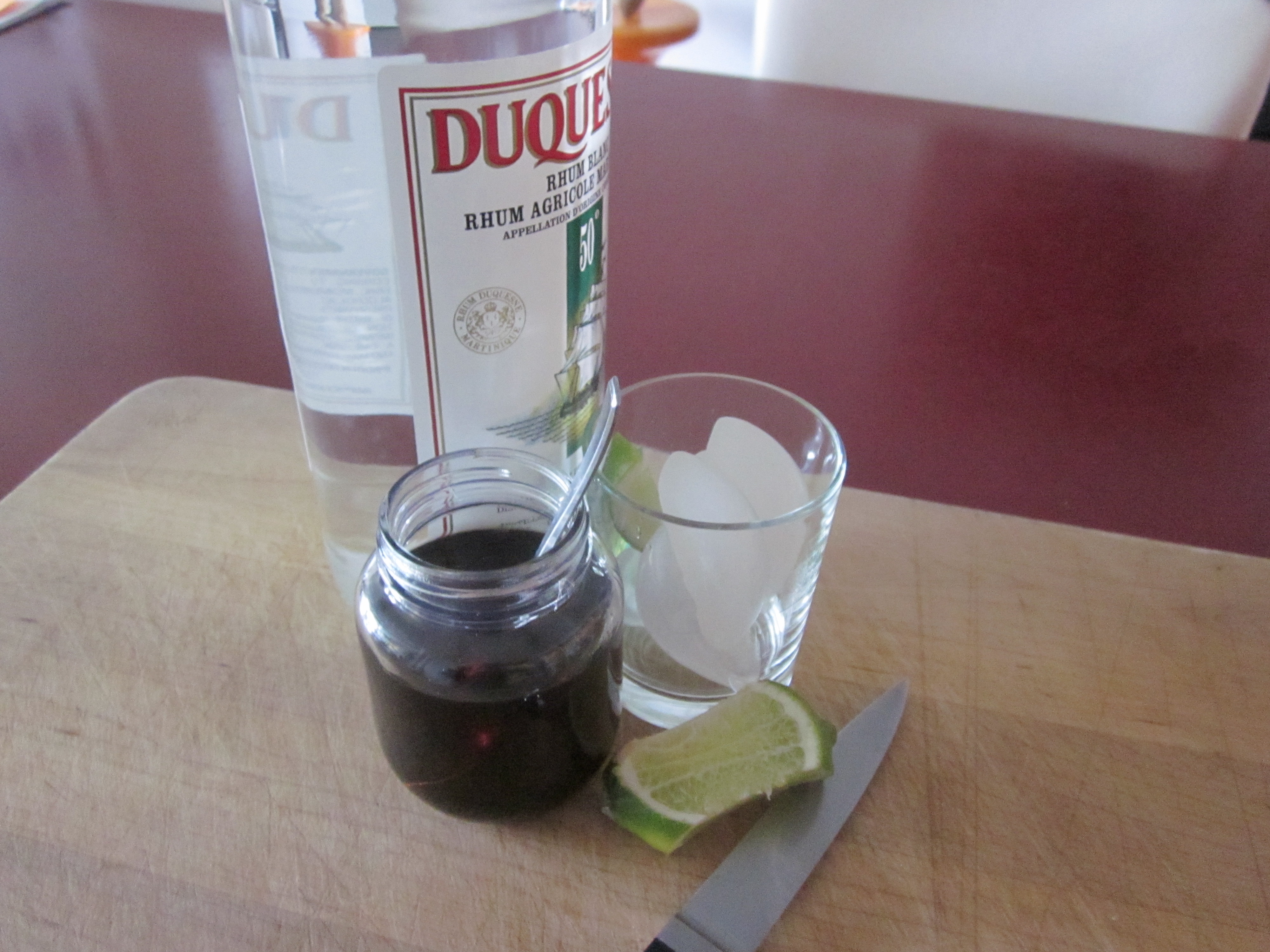
Ti' Punch ingredients

Ti’ Punch ingredients

I’ve heard it said that big gifts come in small packages. The Ti’ punch is a good example of that.  This little cocktail packs a hefty punch and might do a little more than spur your appetite if you aren’t careful.

The main ingredient for a Ti’ punch is Rhum Agricole Blanc from one of the French Caribbean Islands. Most accessible here in the States are the rums from Martinique. And I wrote about some of those in my post Neckbones Rum Diary: The J.M Incident. If you can get your hands on white rum from Guadeloupe or Haiti, I’m sure they will more than suffice in this recipe

Next you will need a small Old Fashioned or rocks glass.

To the glass you will add a few ice cubes. Not too many and if you prefer none at all, that’s fine too.

Take a thin wedge of lime, squeeze it lightly and drop it into the glass.

Fill a demitasse spoon, if you have one, with cane sugar syrup (brown only please). If you don’t have the demitasse spoon, drop in a quarter or half a teaspoon instead, depending on how sweet you like your drink.

In goes the syrup

In goes the syrup

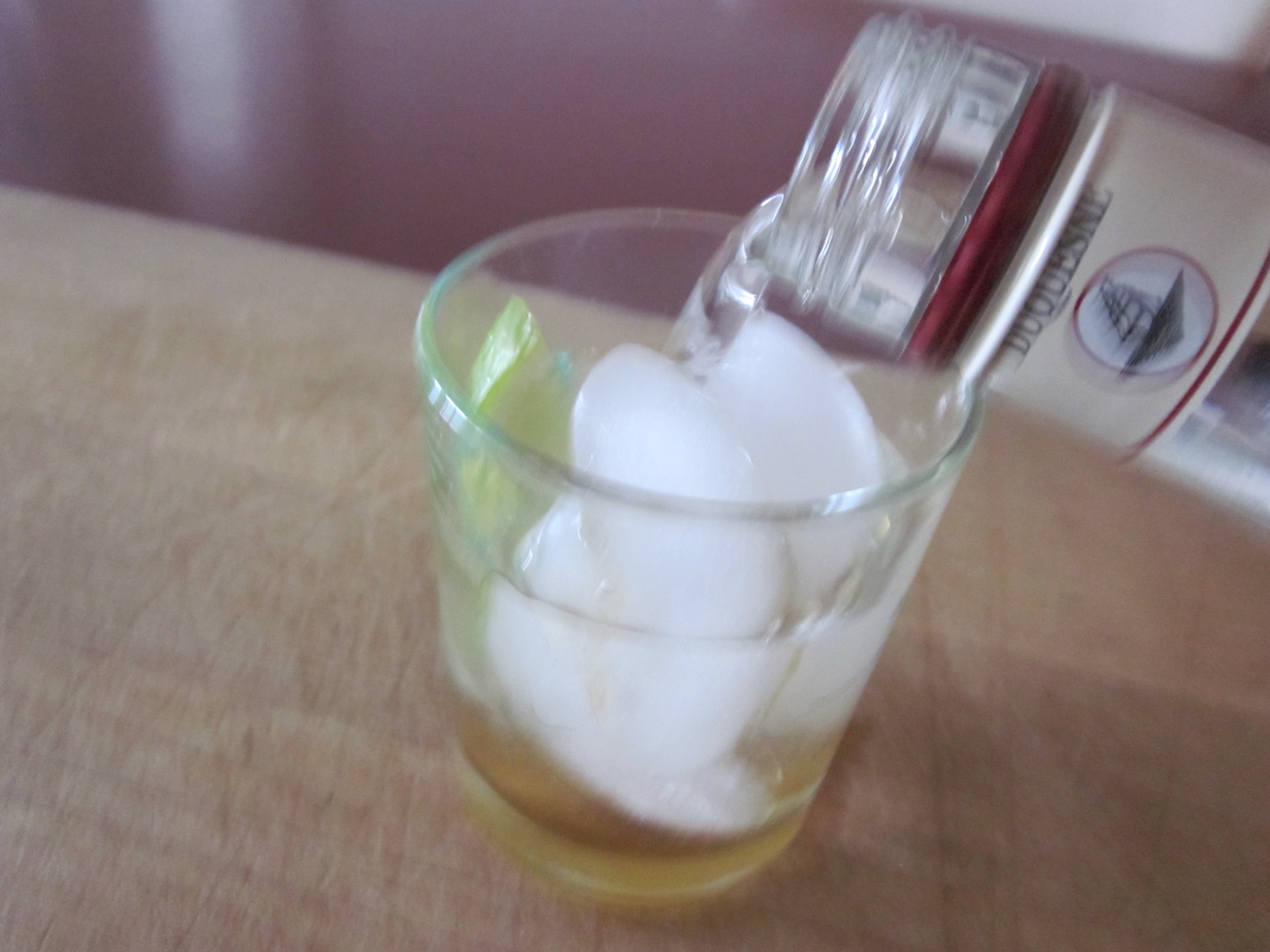
Finally, pour two to three ounces of the Rhum Agricole Blance into the glass. Give it a mix with the spoon, or better yet, a little tropical mixer.

...and finally the rum.

…and finally the rum.

How fast you would like to drink it is up to you. I don’t like to savor it too long, but neither do I like to down it like a shot. Somewhere in between is the desired rate of consumption.

Stir it and drink.

Stir it and drink.

The only bad thing about Ti’ time is that it doesn’t last very long—unless you choose to take it into overtime.

Your Gravy is My Sauce: A Concession to the Dark Side

2 Apr

Sauce

Sauce

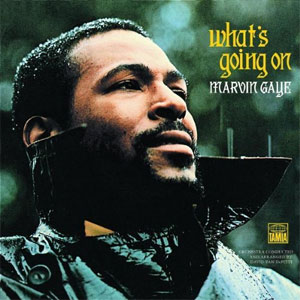
In the latter quarter of the previous century when I was in college, my dorm buddies and I had many bong and beer fueled discussions.  Subjects ranged from who was the better detective, Kojak or Baretta, what was the best bathroom reading—and why, Penthouse or Hustler, or which album, Marvin Gaye’s “What’s Going On,” Steely Dan’s “Aja,” or Earth Wind and Fire’s “That’s the Way of the World,” would make it into the top five of best albums of all time list (see the photo below for my pick).

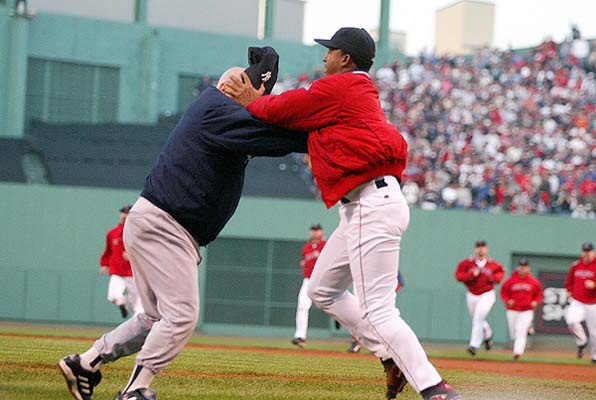
Most of the time, the discussions remained semi-civil. When the subject was the Yankee-Red Sox rivalry, it could get very heated. In the hot category, though not as hot as the Yankees-Red Sox discussions, was the debate over sauce or gravy. For some reason, for the Italian-Americans I roomed with, myself included, calling tomato sauce gravy, or vice versa ignited personal passions that boarded on the irrational.

My grandmother immigrated to the States when she was 22 and settled in New Jersey. The sauce she made each Sunday with braciole, meatballs, sausage or any other meats that were around was called sauce or, as she would say, “sugo rosso.” So  I am clearly in the tomato sauce corner and, really, until I got to college, never could have imagined that what my grandmother made each Sunday could be called anything but sauce, much less something so…um…earthy…as “gravy.”

When you call it gravy, it makes me wanna holla.

When you call it gravy, it makes me wanna holla, throw up both my hands…

In the gravy corner were my friends from Massachusetts and New Jersey. The sauce contingent seemed to be from Connecticut and New York, where I was from.  How, I asked when I heard it for the first time, can you put gravy on pasta? Gravy, I always knew as something brownish in color and layered on turkey, roast beef, or meat loaf. This was an affront to my Italian-American sensibilities. The corruption of a basic known culinary term. A gross misuse of nomenclature.

“If you’re really Italian, you call it gravy,” was the insult that was thrown back at me when I confessed my disgust at the vulgarity.

“All I know is that my Italian grandmother calls it sauce…” I insisted.

“You sure she’s Italian,” someone cracked.

At that, a bong might be tipped over. And beer was definitely spilled.

“Come to Worcester and my Nonna will make you a nice gravy,” someone from Mass joked.

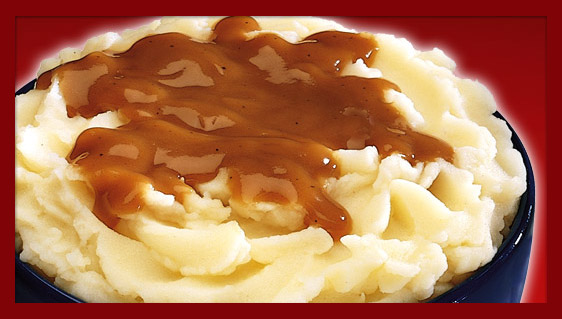
“Should I bring the mashed potatoes?” I would shoot back.

Gravy

Gravy

The arguments were endless and had no resolution.

“Oh, and one more thing,” a bleary voice from the sauce crowd would chime in. “The Red Sox most definitely suck.”

And just like that, we were onto another of our favorite topics.

Since those days, I’ve still maintained my allegiance to calling sauce what it is…sauce.  But over the years I’ve mellowed. I am no longer appalled when I hear someone mistakenly label what my grandmother referred to as sauce as gravy. I get it. It’s what the ill bred were taught. It wasn’t their fault. They were just poorly misinformed about worldly culinary matters.

A gravy/sauce altercation.

A gravy/sauce altercation.

As I said earlier, my Grandmother made Sunday sauce with an assortment of meats; pork, beef, sausage, etc. But on a very rare Sunday when none of the above were on hand, she would make the sauce with chicken. Chicken in a Sunday sauce might seem like an anathema, but if you’ve never tried it don’t knock it. The flavor from the chicken, different from the usual meats, gives the sauce heartiness equal to what you might get from red meats but with a slightly smoother taste. It works and not only as an enhancement to the sauce, but also as a way to enjoy the chicken which, after slowly cooked, remains amazingly moist, the sauce practically absorbed into the meat itself.

As part of my willingness to be more accepting to those not as cultured as I, I’ve decided to make a concession by naming what most definitely is a sauce, as gravy. I hereby extend my magnanimity to those I spent countless wasted hours trading insults with and present here, as I sit on my hands so I don’t hold my nose, my recipe for—Pasta with Chicken Gravy.

Ingredients:

3 28 ounce can of crushed tomatoes

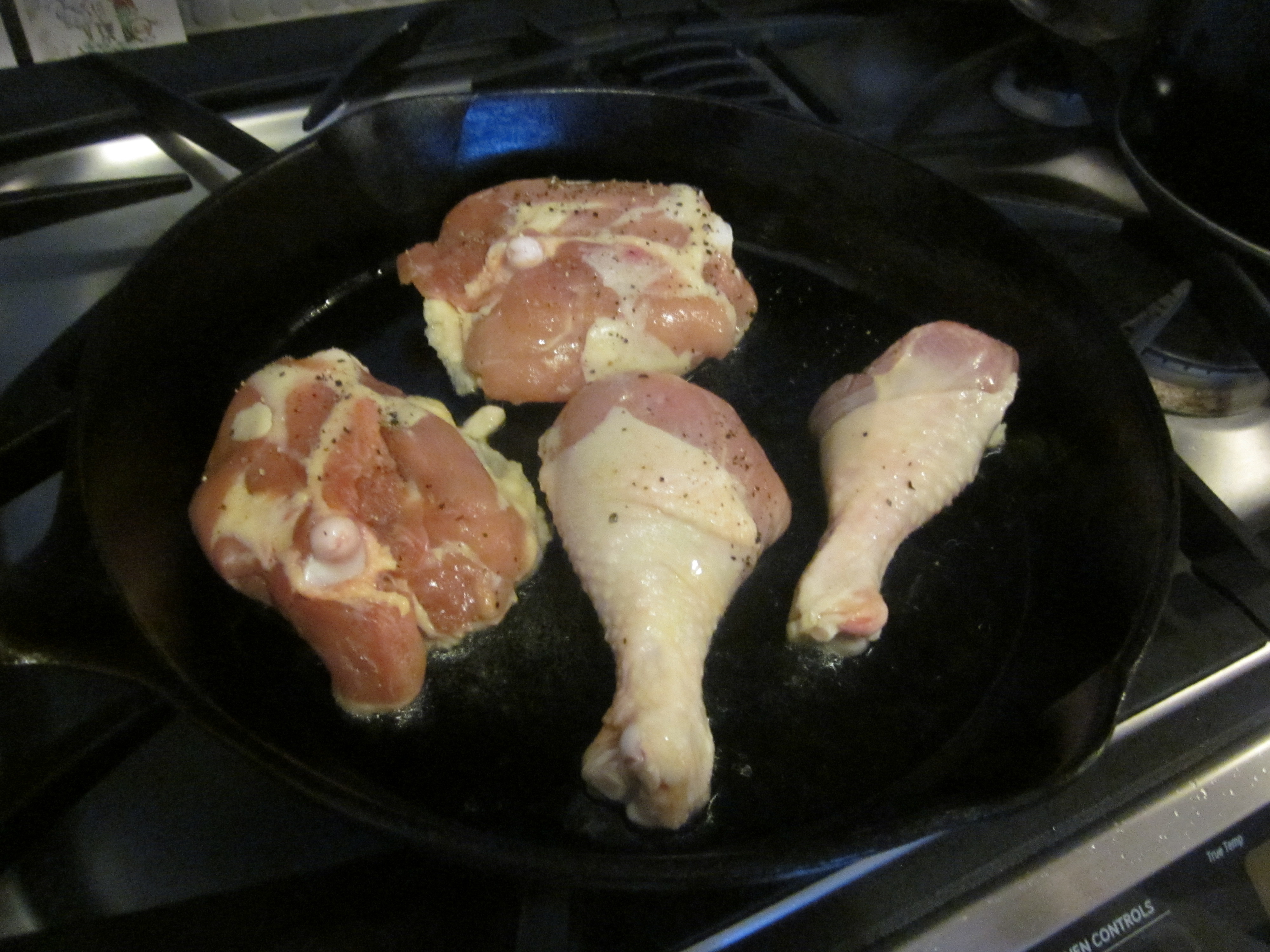
4 chicken parts (I used two chicken thighs, and two drumsticks, skin on and bone-in)

6 cloves of garlic, chopped

Two tablespoons of olive oil

Quarter cup of red wine

1lb of dried pasta (rigatoni, penne, ziti, preferable)

Salt and pepper to taste

You can make this sauce on the stove top, in fact, it’s probably the best way. If you don’t have the time to stick around the kitchen for hours, a slow cooker works and that’s how I made mine for this recipe. The result, I learned, was equal to what you would accomplish on top of the stove.

In a large frying pan, heat one tablespoon of the olive oil.

Season the chicken parts with salt and pepper. Drop into the hot pan and brown on each side. About two minutes per side. Once the chicken is browned, put it to the side.

Browning the chicken.

Browning the chicken.

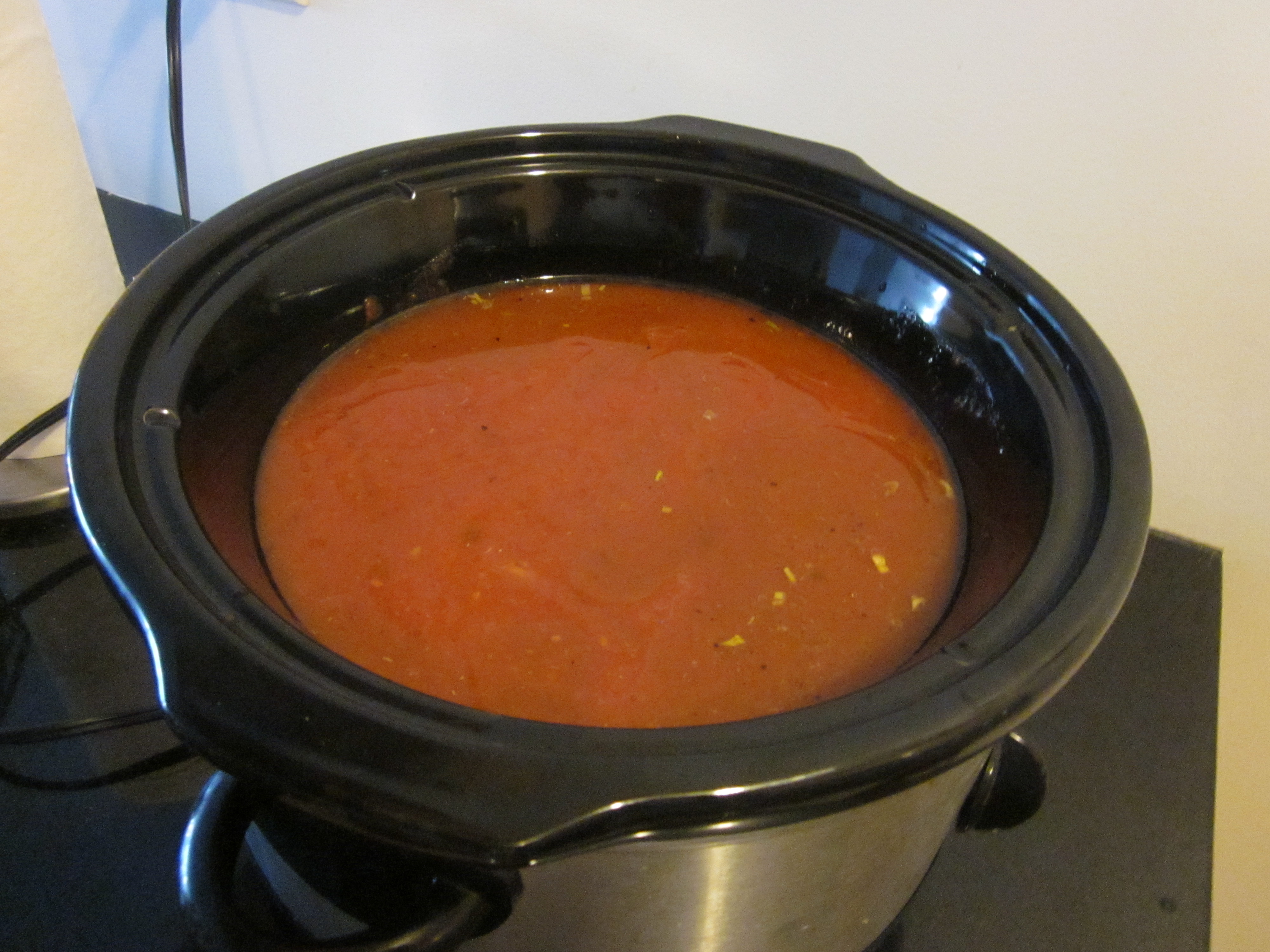
Pour the crushed tomatoes into the slow cooker

Throw the garlic into the same frying pan you used for the chicken and cook on medium heat until just lightly brown; two to three minutes. If the pan is dry, add the other tablespoon of oil.

Scrape the oil and garlic into the tomatoes in the slow cooker. Return the frying pan to the stove, turn on to medium-high heat, add about a quarter cup of red wine to deglaze the pan.  Cook for about five minutes tops or until the wine cooks down.

Pour whatever liquid and bits from the chicken and garlic remain into the tomatoes in the slow cooker.

Add the browned chicken to the slow cooker.

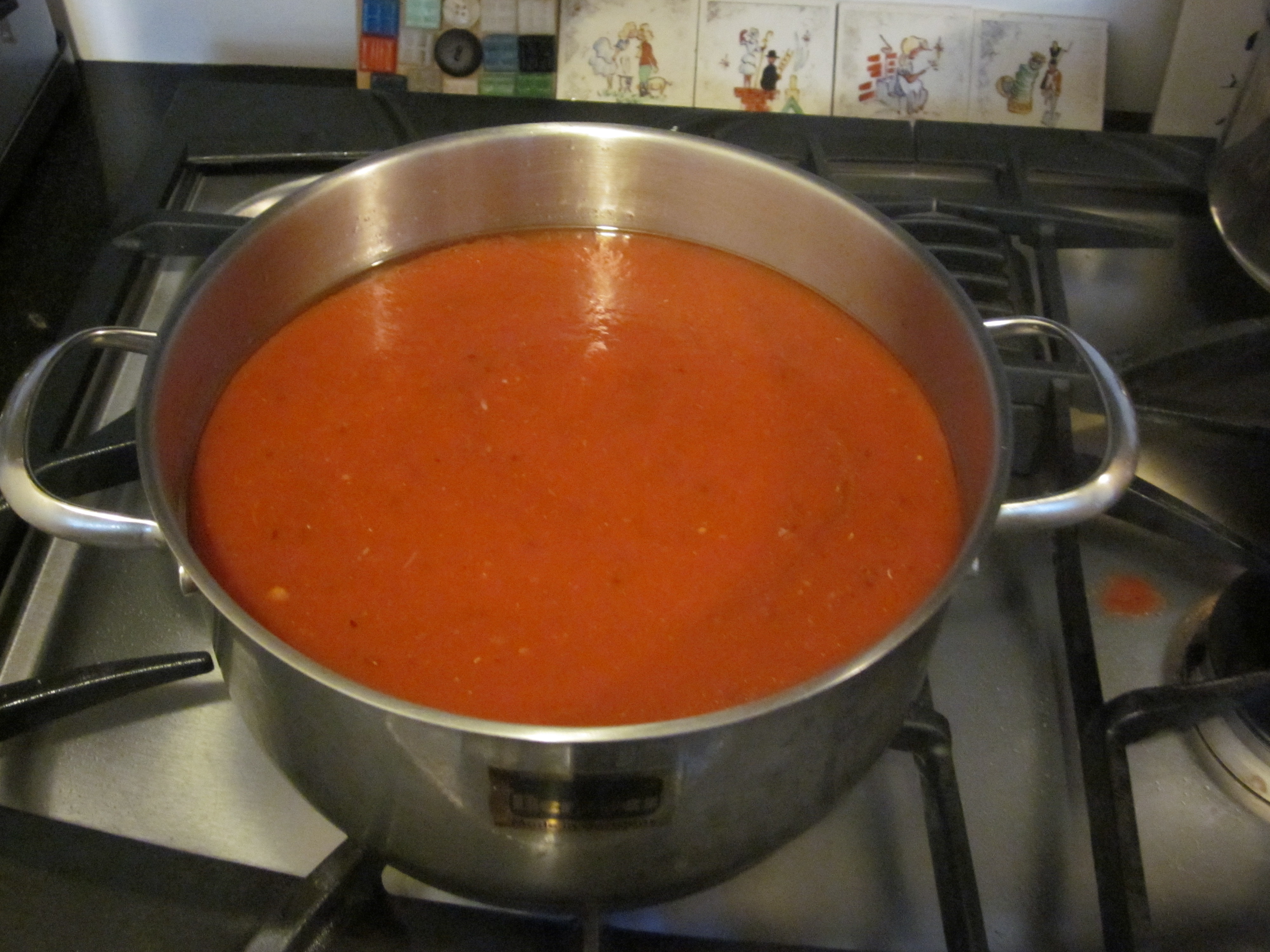
The "gravy" is now ready to be cooked very slow.

The “gravy” is now ready to be cooked very slow.

Turn on high for one hour and then set to low for about six hours.

After six hours, if the sauce is too thin for your taste, remove the top, turn to high and cook for another hour or so with the top off until the sauce forms your preferred consistency.

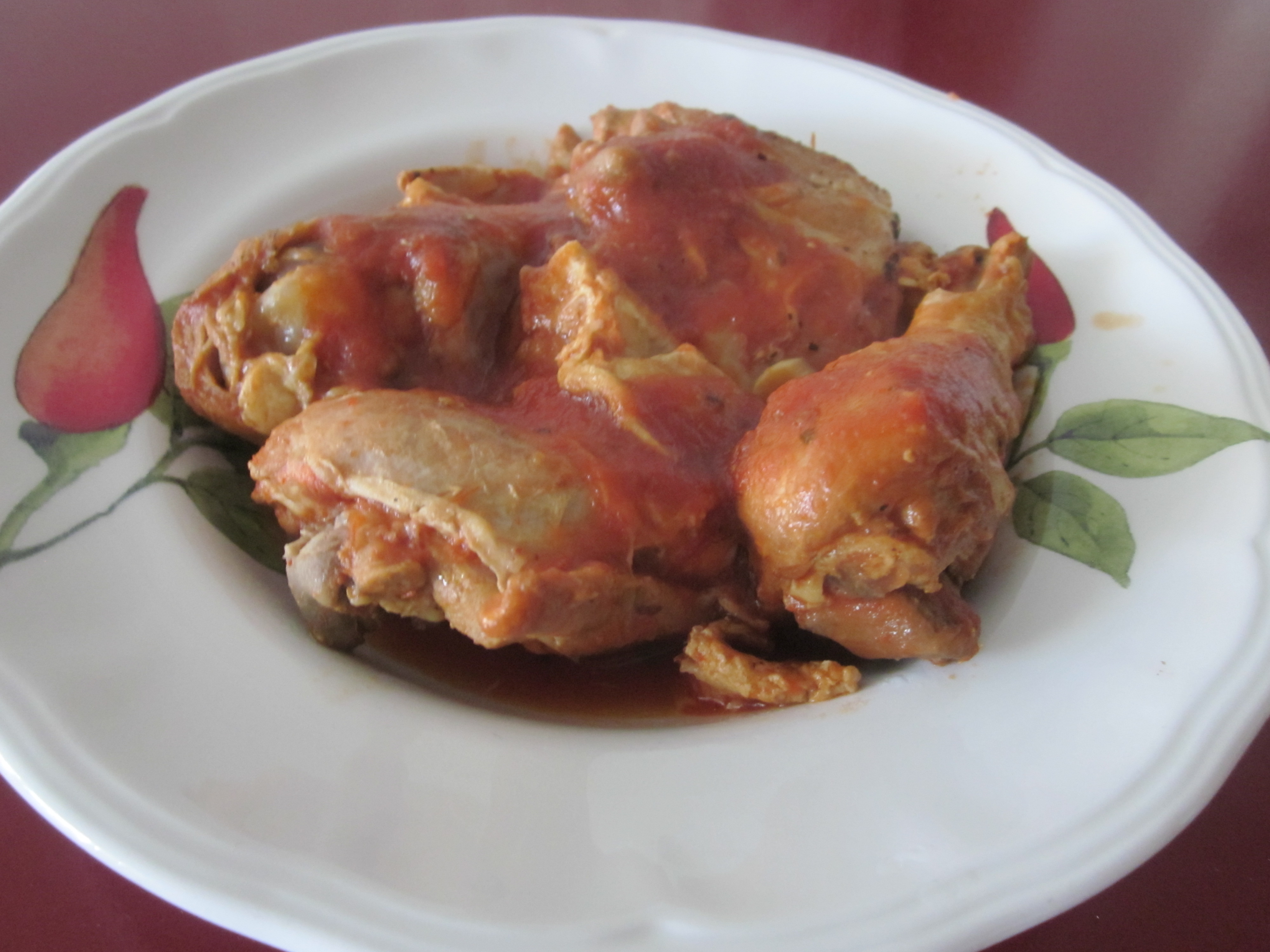
Remove the chicken pieces to a separate platter.

Chicken Gravy (3)

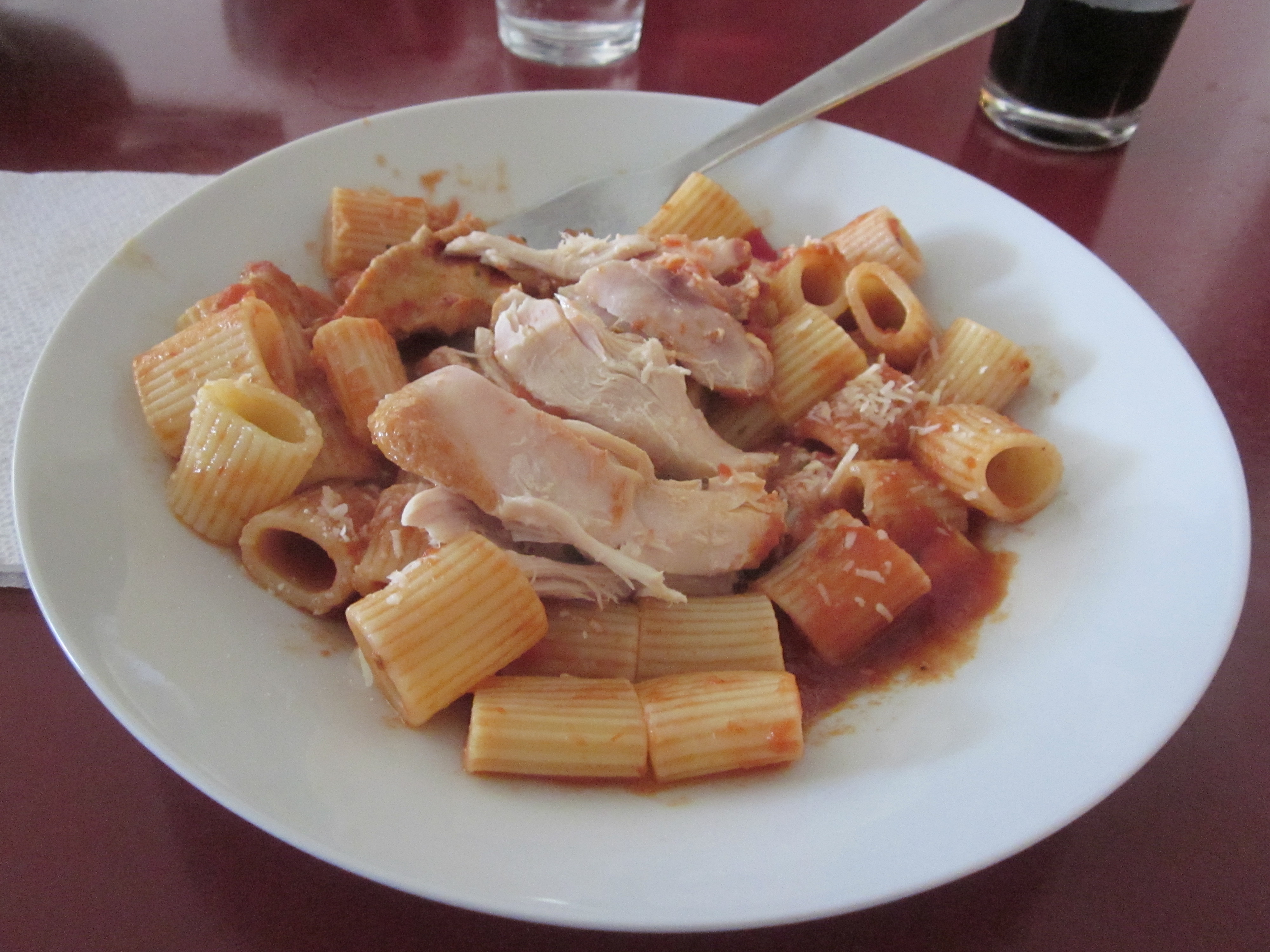
Serve the sauce…I mean gravy…over your favorite pasta.

Top with grated Parmigiano Reggiano or Pecorino Romano.

Enjoy, take a look at what’s in the bowl and keep repeating to yourself: “I am eating gravy. I am eating gravy. I am eating gravy.” Say it enough and you might even believe it.

Pasta with chicken gravy

Pasta with chicken gravy


The Caffeine Chronicles: A Cuppa Joltin’ Joe

27 Mar

joltjoe

Yankee legend Joe DiMaggio was known for his frugality. One story has it that after ordering a double-scoop ice cream cone and just before taking a lick (maybe it was after the lick) being told it was $5, DiMaggio was outraged and handed the already scooped ice cream cone back to the surprised server.

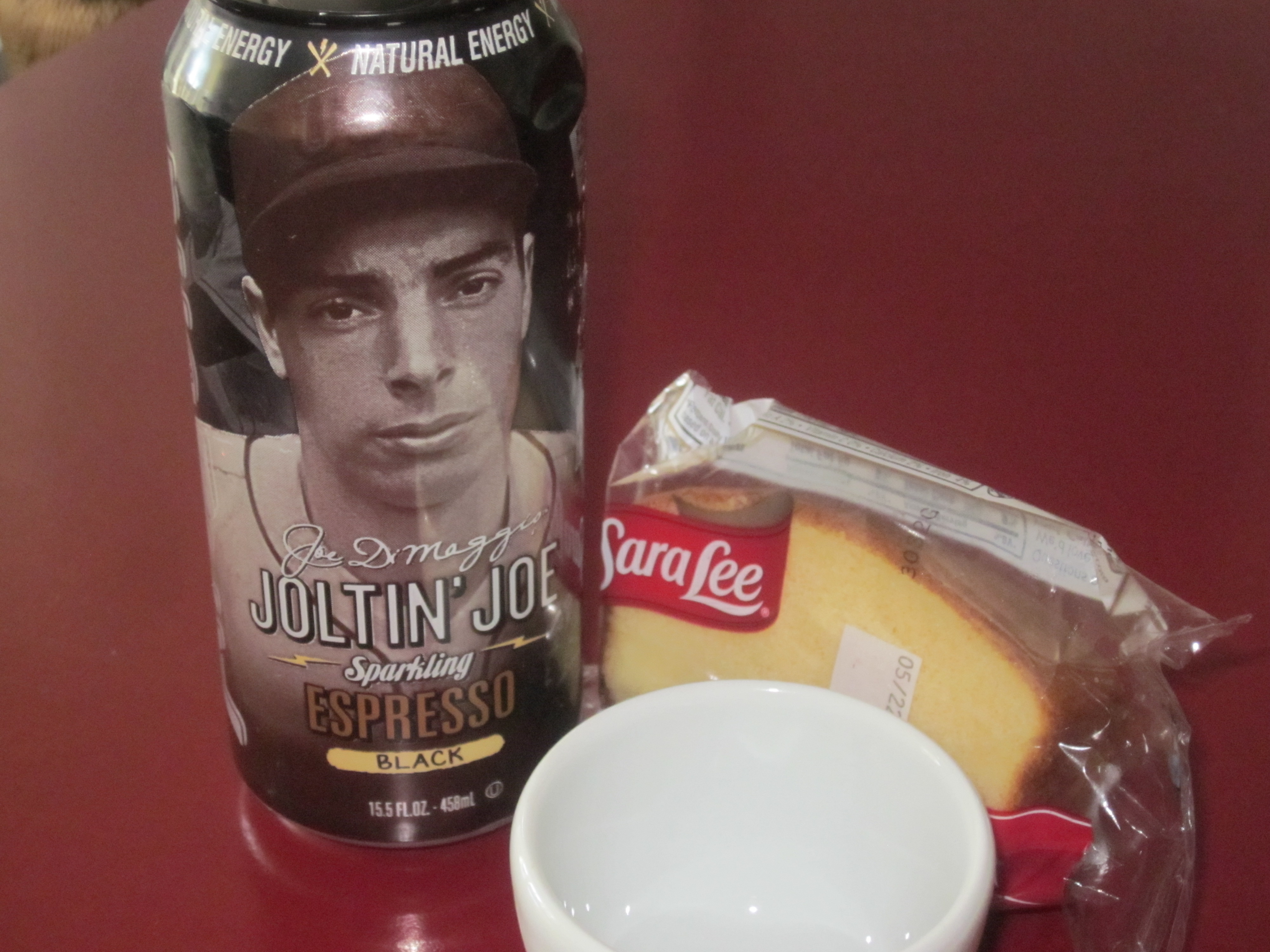
So when I noticed the posters for the  Arizona brand, Joltin’ Joe Sparkling Espresso, his picture with a USA cap on his head, not a N.Y. Yankee cap (there is no mention of the Yankees in any of the DiMaggio memorabilia on the can), outside my local bodega, I thought I should explore this new, to me, caffeinated beverage. Since Opening Day was less than a week away and seeing that the 15.5 ounce can was listed at a mere $1.99, I thought it a fitting tribute to Joltin’ Joe that I indulge.

joltin joe (5)

After shaking it a bit to combine the ingredients and then pulling the tab to open it, I hadn’t realized that the beverage was “sparkling.”

Look, there are bubbles.

Look, there are bubbles.

I thought a bodega special: a small packaged slice of Sara Lee pound cake, might offset the harsh saccharine sweetness of the caffeine infused beverage.

I was wrong.

Joltin' Joe

One sip of Joltin’ Joe was all I could stomach. I did, however, finish the Sara Lee pound cake with no difficulty.

Fruits and Vegetables for the Ignorant

22 Mar


Know nothing

Despite knowing nothing, I recognize a special when I see one.

Know Nothing


The Pupusa Novelas: The Final Chapter

20 Mar

tierras

When Gerry, freshly thawed from his ice fishing escapade, choose Tierras Centro Americanas as our group’s next destination, I was worried that I might have to eat more pupusas. Not that there is really anything wrong with pupusas, that Central American (Salvadorian in particular) street snack that we experienced twice in the last nine months, including Gerry’s last pick, El Tesoro II (The Poor Man’s Pupusas of Port Chester), and the one in Yonkers chosen by Mike from that same town (Living La Pupusa Loca); it’s just that maybe three pupusa adventures in less than a year is more than enough for me.

“Don’t worry,” Gerry said recognizing my trepidation as I arrived at the colorful diner-like restaurant. “The Guatemalan food is the specialty here.”

His words, I had to admit, were not reassuring, but I was hungry and Guatemalan food, or even another leaden pupusa would have been more than welcome in my famished condition.

We were just off Hillside Avenue and only a block from Sagar Chinese, the Desi Chinese place we experienced in January. For the first time in a long while our entire group was in attendance including Rick who was cherishing a rare few hours out and away from new Daddy duty.

Zio was the last to arrive and when he did he also had the, “oh no, more pupusas” look on his face that I did. So jaded was he with Central American cuisine, he didn’t even bother to look at the menu. “Order for me,” he said to me with a disinterested shrug.

Jacon

Jacon

There was a novela playing on the big screen television above our table and loud Latin music on the juke box making it difficult to hear Eugene’s booming voice. Taking Gerry’s advice, I stuck to the Guatemalan side of the bi-lingual menu and choose “caldo de pescado con arroz y tortillas,” translated to fish and shrimp soup with rice and tortillas. Without any ulterior motive, I picked the “jacon,” chicken in green hot sauce with choyote and green beans as Zio’s entree.

"Darling, my pupusas will make you swoon..."

“Darling, my pupusas will make you swoon…”

We let Gerry choose the “small orders,” and he went with the chile relleno along with “garnacha,” which resembled mini open-faced hard tacos with beef and the Guatemalan version of parmesan cheese sprinkled on top. We each sampled one leaving a few left. The leftovers were offered to Mike from Yonkers, but he had no interest, which was indication right there that maybe we were in trouble here. Despite their mediocrity, my hunger took over and showing no self control, I shoveled another garnacha into my mouth. The Guatemalan chile relleno, stuffed with beef, was also a disappointment; no better than a poor man’s version of the familiar Mexican specialty.

Garnacha

Garnacha

Rick did not hear Gerry’s spiel about the Guatemalan side being the better of the two-country menu and ordered “picadas,” from the “platos tipicos Salvadorenos” section. The mix of fried meats fried to dull grey oblivion, as it turned out, went mostly untouched.

Picada mista

Picada mista

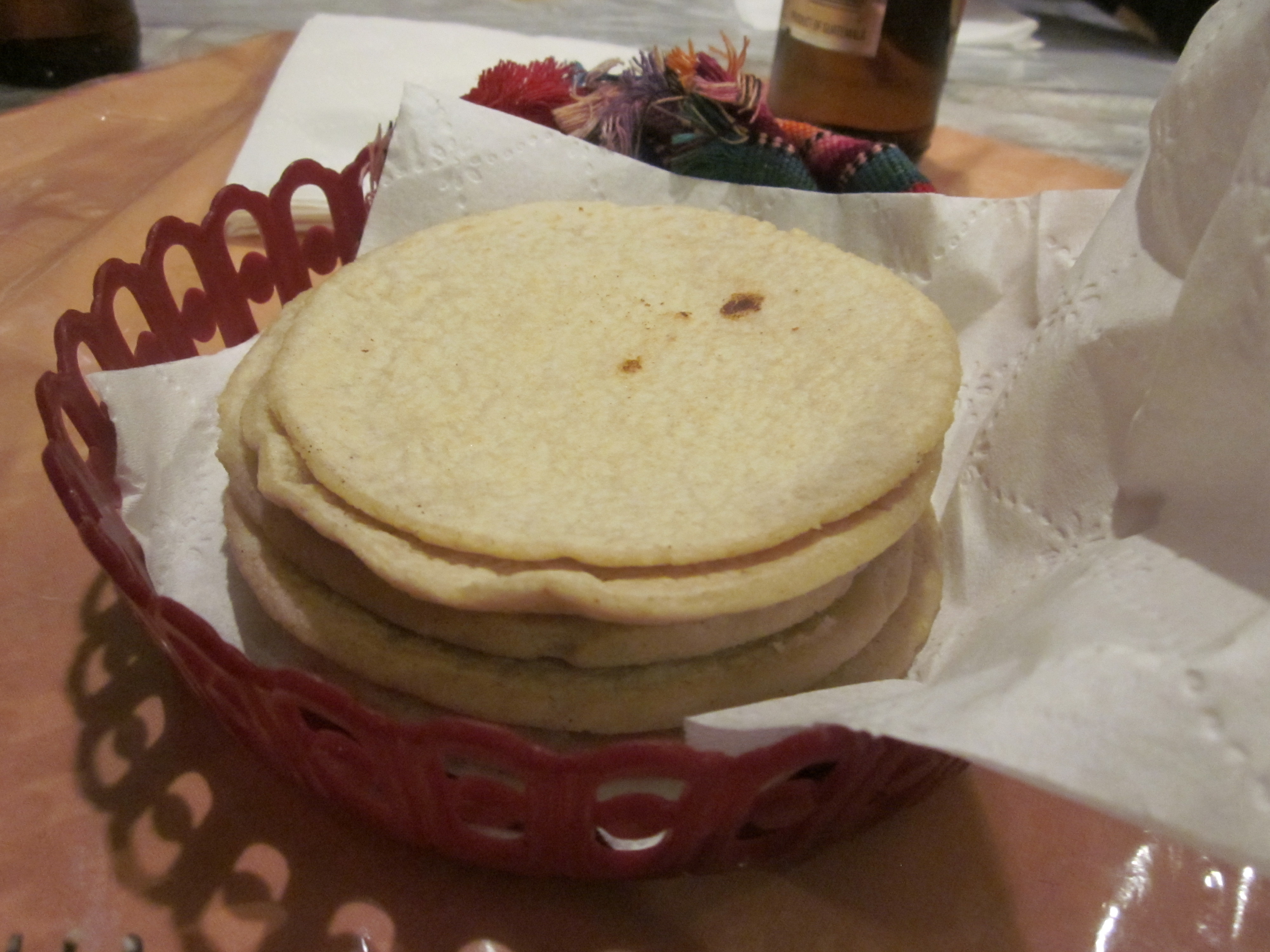
When my fish soup arrived, I was greeted by two dark eyes peering from it belonging to one of the few shrimp, heads and all, that had boiled within. The first sip was salty and briny; no doubt fresh—so fragrant it was as if the soup was made from the waters of the nearby Jamaica Bay. The lumps of fish, bones intact, were tasty but also, for lack of a better word—fishy. My hands being of the asbestos kind were able to pull the fish from the scalding water and break off a few pieces, careful to excise the many bones from the flesh. The very fresh tortillas, the highlight of the meal, helped to mellow the broth but I could only get through about half of the bowl before I was done.

Caldo de Pescado

Caldo de Pescado

Even Mike from Yonkers struggled with his choice of salpicon, a room temperature, hash-like dish of chopped meats, onions, tomatoes and lemon. Only Eugene seemed satisfied with the very pedestrian shrimp in garlic sauce while Zio’s lone comment, positive or not, about the jacon was that he liked the choyote.

The highlight of the meal.

The highlight of the meal.

On the way back to my car I got a whiff of Sagar’s sizzling chicken which was around the corner from where I parked. I remembered how the vapors irritated our respiratory tracts when we were eating there (see Vanquished by Halal Vapors on Homelawn Street). But after the dull meal just experienced I would have happily welcomed those aromatic vapors into my lungs.

Tierras Centro Americanas
87-52 168th Street
Jamaica

Today’s Special

15 Mar


Today's Special


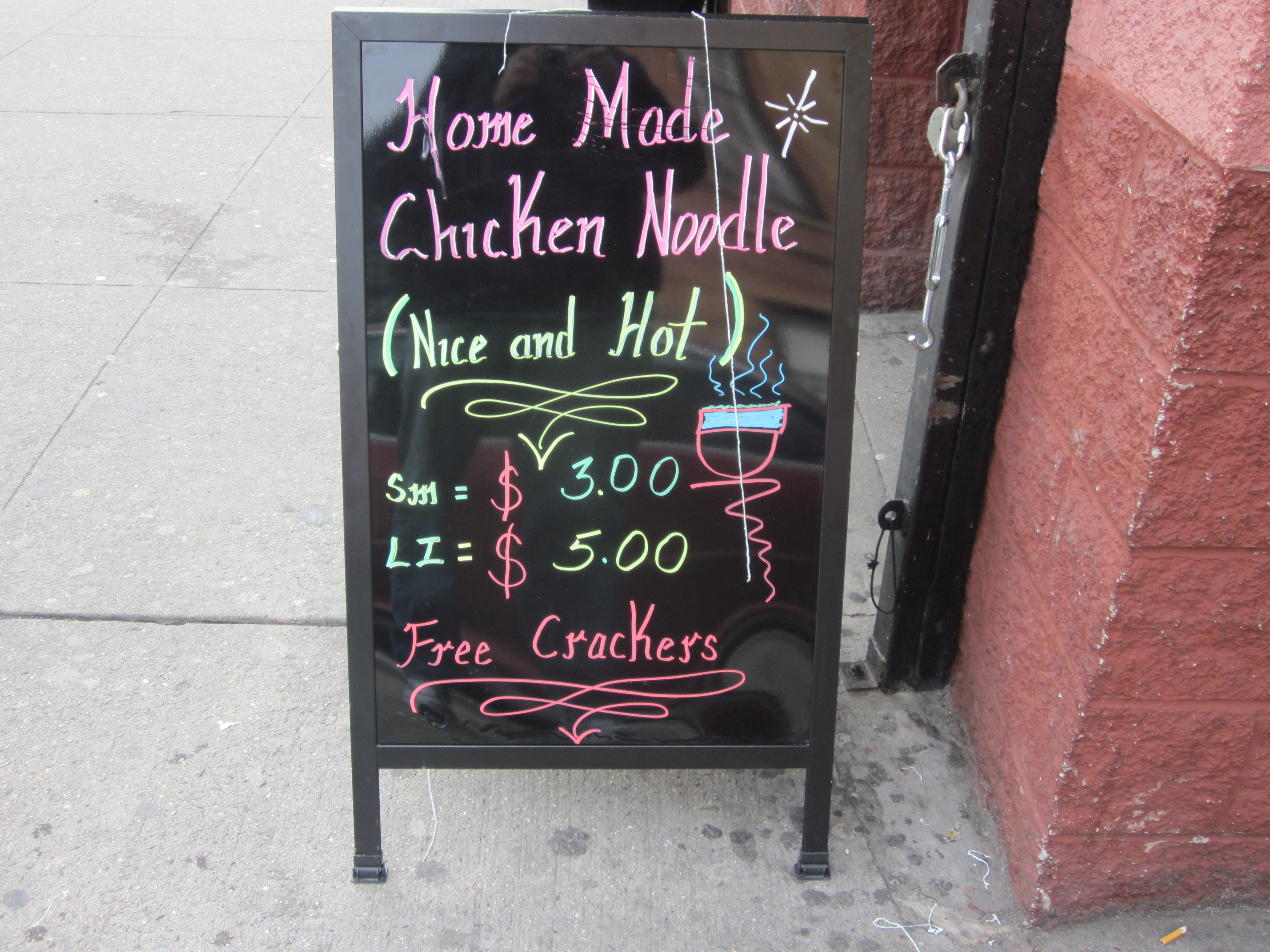
What sold me were the free crackers.

Today's special

The French Szechuan Connection

13 Mar

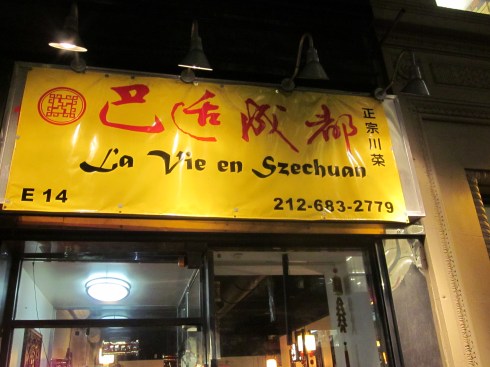
lavie (2)

I was curious about the connection between Szechuan food and France that could have spurred the curiously named restaurant La Vie en Szechuan that Zio and I visited on a slushy March evening. It was supposed to be a get together of Hawkeye, Fonzie and The Coach (see Hawkeye, Fonzie and the Coach Eat at Margie’s) but Fonzie, also known as Gerry, surprised us all by sending a text earlier on the same day we were to meet stating that instead he was going ice fishing.

At first I thought this could only be another of Gerry’s sick jokes; after all, the idea of sitting outside in frigid temperatures in the middle of nowhere waiting for something to nibble your rod through a deep hole in black ice could not possibly be more enticing than choking on hot peppers with two of his fellow gluttons. After some prodding, however, we found out he was indeed serious. We were getting close to the end of this very long winter, but Gerry wanted more. And who were we to deny him his pleasure—not matter how perverse it might be?

Gerry's preference.

Gerry’s preference.

Upon entering La Vie en Szechuan, I looked around the dining room for some connection to France in décor.  There was none.  I peered at the clientele dining in the restaurant. No Edith Piaf lookalikes anywhere.  And then I scoured the thick book that passed as the restaurant’s menu. There were frogs, but not done with butter, garlic and parsley. There was duck—not confit though. And there was steak. Not with frites, but coated with Szechuan chilies, and your choice of rice, white or brown. Was there a French Connection lurking somewhere? If so, I couldn’t find it.

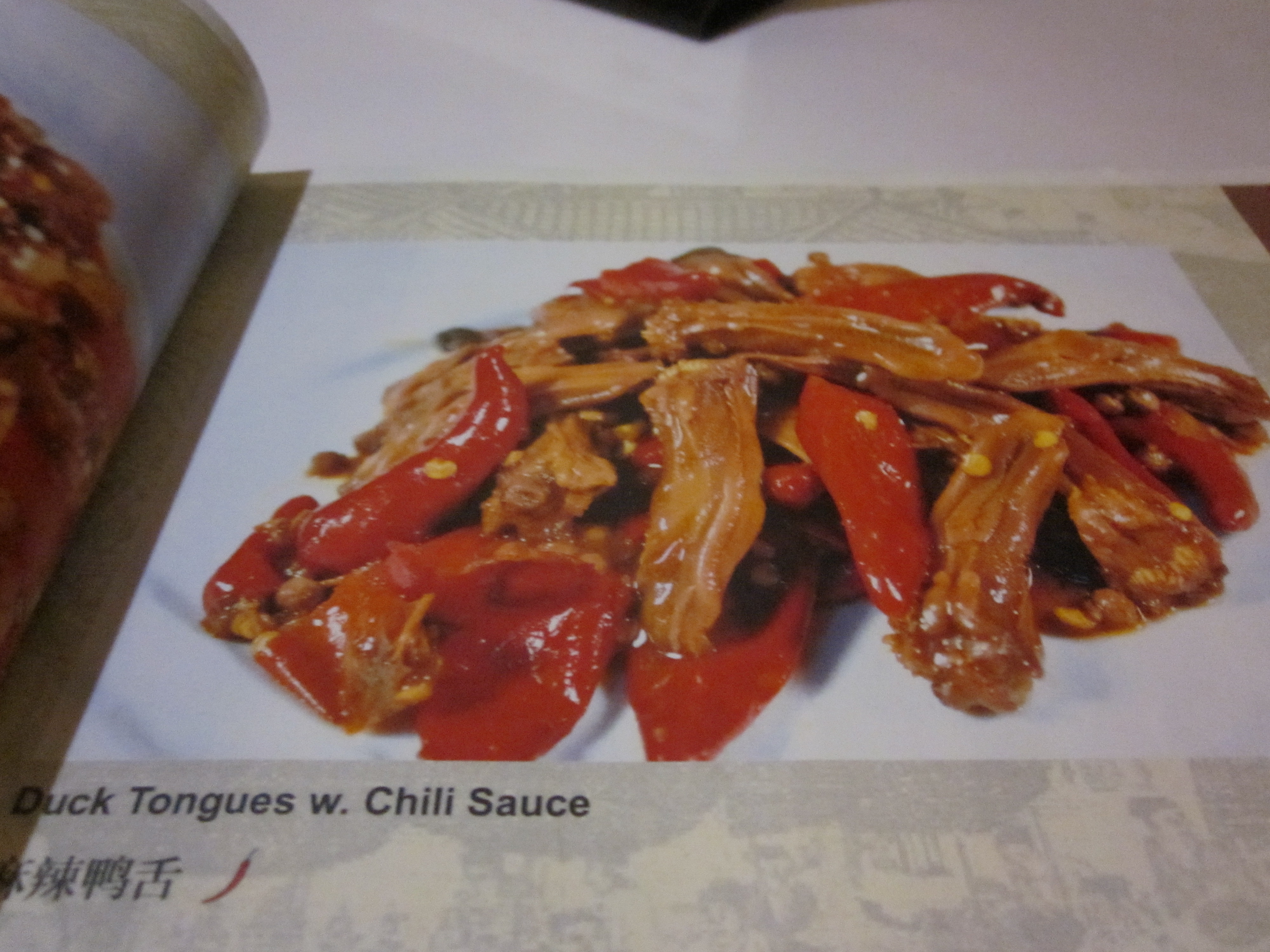
Duck tongue, not duck confit from La Vie en Szechuan's illustrated menu.

Duck tongues, not duck confit from La Vie en Szechuan’s illustrated menu.

Since Gerry had deserted us for arctic climes, Zio and I were somewhat limited on how much we could order. The possibilities were vast, but we were confined to just an appetizer and two entrees. Any more than that and our gluttony would have even raised the eyebrows of the table next to ours who, despite their large party, were holding their own in that department with enormous platter after enormous platter arriving in quick intervals to their table.

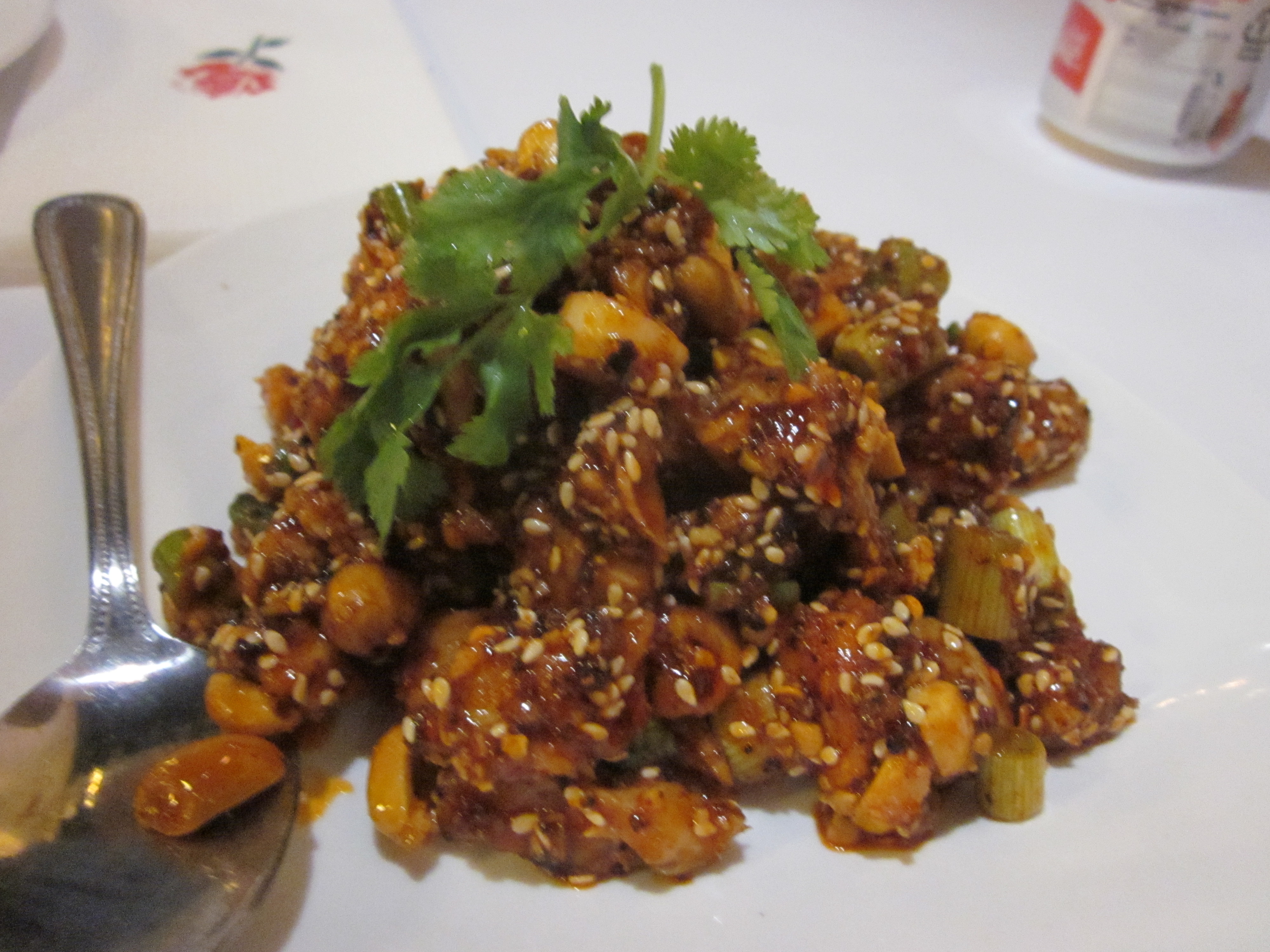
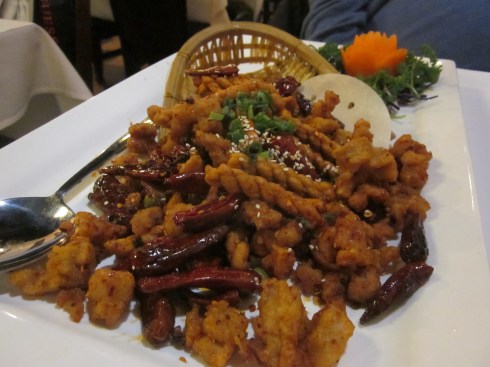
The diced rabbit with chili sauce, we agreed, would make a very good appetizer while I had my heart set on something that caught my eye in the “Signature Dish” section of the tome that was Le Vie en Szechuan’s menu. It was called “spicy chicken with fried dough twists,” and I had to have it just to find out what a fried dough twist might be. Zio’s eyes immediately gravitated to the seafood section and we settled on the braised fish in black bean chili paste.

I stuck with water, but Zio requested his traditional diet Coke with lime only to be very disappointed to be told that they had no limes at Le Vie en Szechuan.

I’m not sure if the addition of lime to his diet Coke would have done anything to alleviate the sinus clearing heat we were experiencing from the room temperature diced rabbit. I know my ice water was useless to combat it as my nose began to run and the table napkins soon were all soggy.

Diced rabbit with chili sauce.

Diced rabbit with chili sauce.

It took awhile, but we eventually got the hang of how best to handle the tiny bones of the diced rabbit. Chewing the tender meat and separating it from the bone with our teeth while keeping it in our mouth and then spitting out the bone.

“Maybe we should just eat the whole thing and not worry about the bones,” Zio suggested.

It wasn’t a bad idea and a few times I did just that, but the habit was just too unnatural for my westernized palate and instead, piled the bones neatly on my small plate.

The chicken with fried dough twists arrived next.

Spicy chicken with fried dough twists

Spicy chicken with fried dough twists

“What are those Chinese cheese doodles?” Zio wondered as he looked at the red pepper tinged fried dough.

They  did look like a cheese doodles, but tasted nothing like them. Instead they tasted just like what was advertised; a piece of very deep fried dough. The chicken pieces that surrounded the fried dough were also fried to crackling dryness; the dish in need of a slathering of something wet, but hot sauce was definitely not an option.

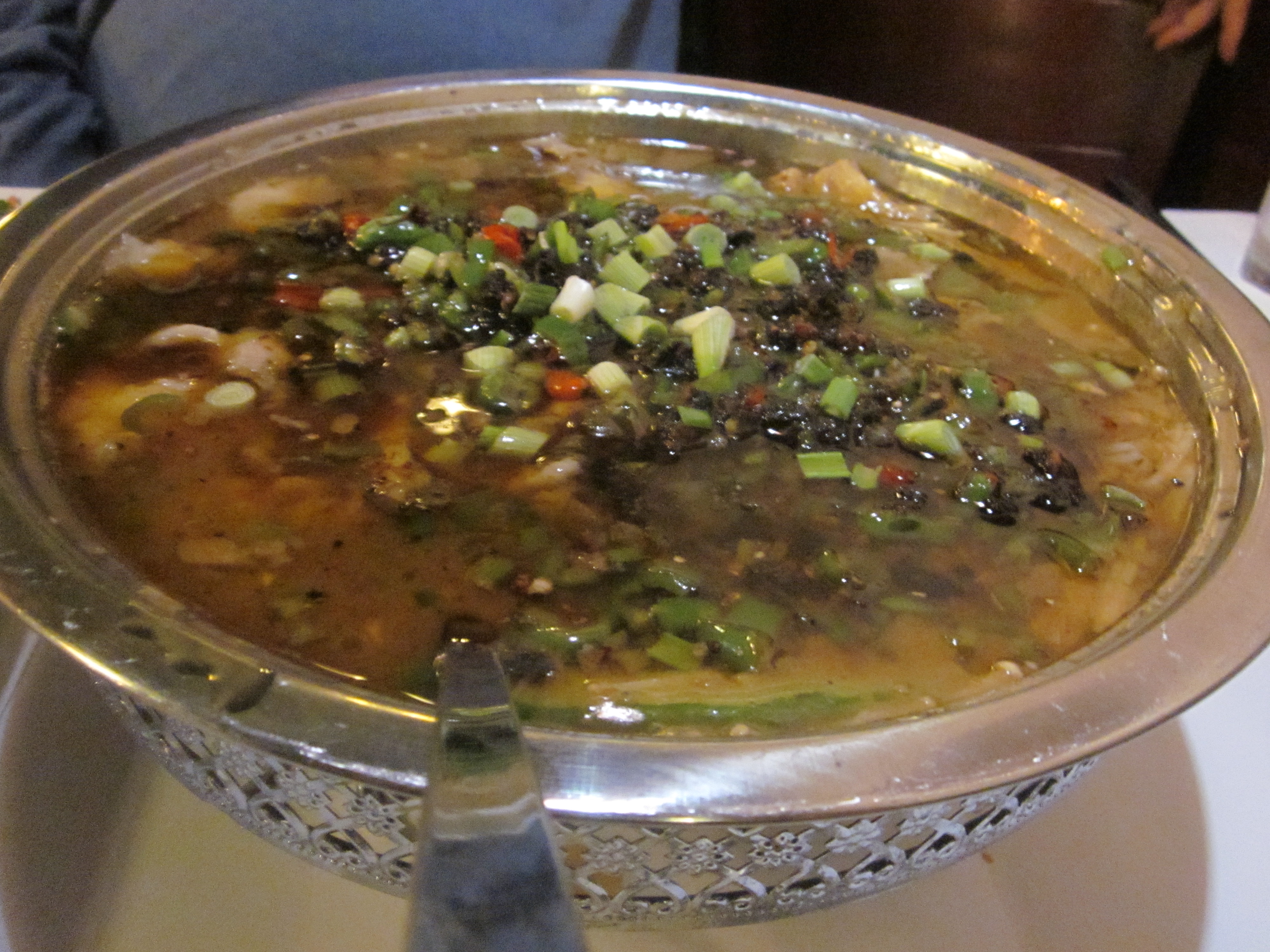
Braised fish with black bean chili paste.

Braised fish with black bean chili paste.

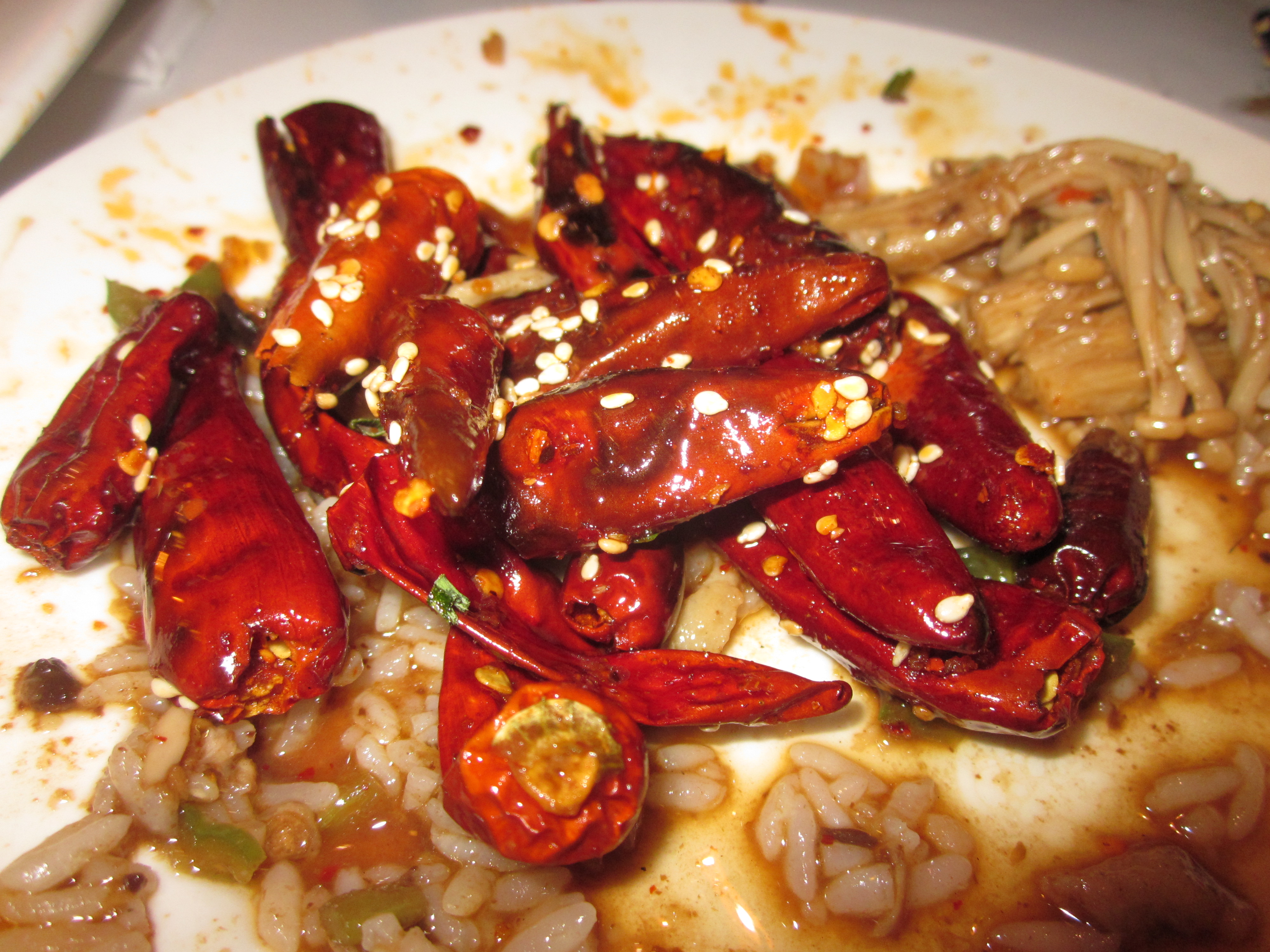
The huge bowl of fish came last; the tender fish surrounded by glaciers of dried chili peppers that were floating in the very wet, soup like sauce. The two entrees were a good contrast between wet and dry and much more than enough for the two of us. With each piece of fish snared, we also dragged out multiple pieces of hot peppers, never daring to actually eat them. We methodically worked through the bowl but eventually it did us in. All that remained on our plates were piles of uneaten peppers.

When our waiter came to clear, he congratulated us on a job well done. “But we couldn’t eat those,” I said, pointing to the peppers.

“Oh, that’s the best part,” he replied, taking a pepper from my plate in his fingers and taking a big bite, seeds flying out of his mouth and all over me. “Mmmm, very good,” he mumbled, still chewing the pepper while clearing our plates.

"The best part."

“The best part.”

There was enough of the fish to take home and I offered it to Zio. “Bring it to the Colonel,” I said.

“Are you kidding,” He scoffed. “One look at those peppers and she might go into convulsions.”

We left the remains on the table and walked back out into the slush that was March. As I was walking to the subway, I heard the ping of a text from my cell phone. I took a look. “Fried fresh perch with hot sauce. Not Szechuan, but pretty good” it read. Gerry was sending me a text from the hinterlands.  “And there are beaver dams, fox dens and beautiful bird life,” he added, thinking that rustic image might justify the ice fishing lunacy.

I thought for a moment as I slogged through the dirty gray slush. Just before heading down into the equally dirty, damp subway I texted him back. “Beaver dams are overrated,” I wrote, clicked send and then made my way to the train with that song (see below) playing in my head.

La Vie en Szechuan
14 E. 33rd Street