Archive | Uncategorized RSS feed for this section

Eat Your Luck

31 Dec

Every New Year’s there’s another food I’m supposed to eat that will bring me good luck. I think I’ve tried them all.

New Year 1

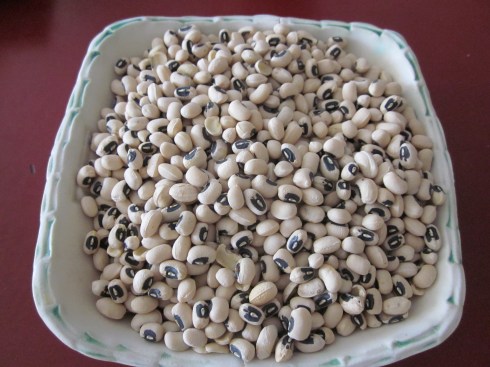
I’ve done the Southern thing with the black eyed peas.

Southern luck thing.

Southern luck thing.

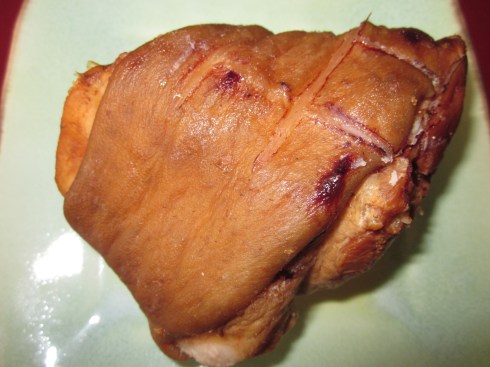
I’ve even tossed in a ham hock to make sure the Hoppin’ John concoction would be more effective.

The ham hock luck guarantee

Ham hock luck assurance

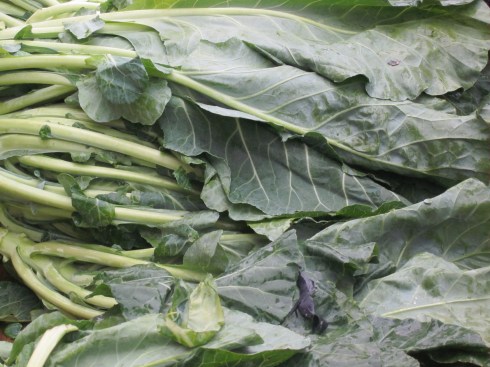
Based on something I read,  I once tried collard greens on New Year’s.

Collard greens

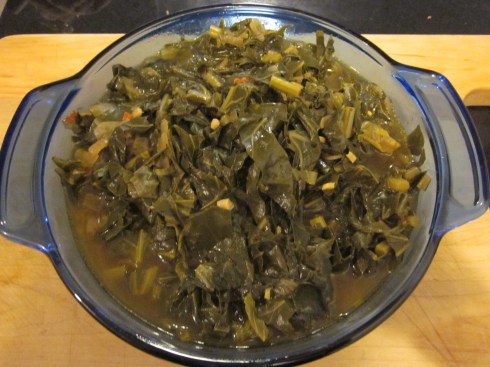
I can’t say that eating greens brought me any luck. And I know if I ever hit the numbers, I would have remembered. Whatever, the greens were delicious…and healthy too.

Collard greens

As long as you have your health….

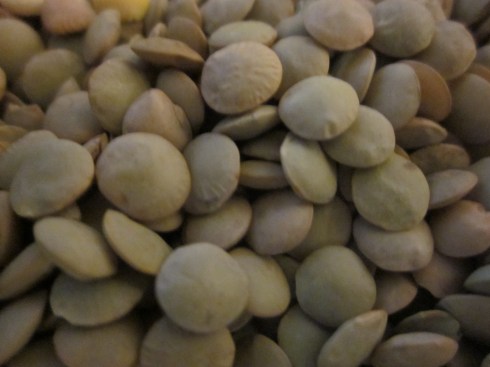
The Italians have their superstitions too, that’s for sure. I bought into the lentils and sausage scam a few times thinking that maybe by eating them on New Year’s,  the following year would be truly remarkable.

A lucky legume?

A lucky legume?

If the year after the lentils and sausage was particularly amazing, I can’t remember.  Not that it mattered. They were so good I would eat them again even if they meant a mess of bad luck.

Eating fish on New Year’s is another superstition. I tried that one too.

Eat a fish head, get good luck.

And you would think that eating a fish’s head would give me some serious good luck mojo.  Sadly, though the fish head was memorable, any luck derived from eating it was not.

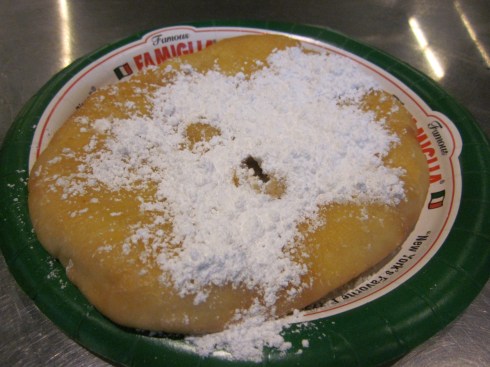
Since I’ve tried them all, this year I’m going with something not even on the New Year’s luck radar.

fried dough1

And I promise, if I have a particularly bad year, I’m not pinning it on fried dough.

frieddough1

When it comes to luck,  in reality that old sports cliche, “you make your own luck” is probably most  true. Just make sure that whatever luck you make tastes good.

Happy New Year!

Living La Pupusa Loca

18 Dec

pupusa loca 050

Sometimes the third time is the charm. At least that was the case for Mike from Yonkers who had to go to plan C for our latest outing.

Plan A was a “hot tip” on a place in Bloomfield, New Jersey. He kept the tip to himself, but we nixed schlepping to Bloomfield during the “gridlock alert days” we were currently experiencing.

“I’ll save that one for next time,” he slyly added, still keeping us under wraps on what we might encounter in Bloomfield.

Plan B illustrated that Mike from Yonkers was experiencing much holiday duress. Under pressure to select a destination, he mistakenly consulted New York Magazine and choose the wildly popular Brooklyn Thai  restaurant, Pok Pok. That he didn’t realize that a place given multiple stars (whatever they mean) by New York Magazine wouldn’t be mobbed by voracious foodies can only be excused by a combination of work and holiday stress. To make it clear to him, we sent him links with actual photos of some of the long and legendary lines waiting to dine at Pok Pok.

One thing Mike from Yonkers did know, at least we hoped he did after almost eight years as a member of our group, was that we never wait on line to dine. The options are too many for that. So one look at the links and he knew he had to go to Plan C.

Now, under immediate pressure, he went to his own backyard.  His pick: a Salvadorian place just over the Bronx border in Yonkers called La Pupusa Loca.

Welcome to Yonkers

And despite it not being in the five boroughs, La Pupusa Loca fit right into our criteria. A brightly-lit cafeteria where English was very foreign and Spanish novelas blared from multiple televisions, La Pupusa Loca featured large tables offering our group of five—Rick being absent after the very recent birth of his first child—plenty of room for food and flesh overflow.

Serious happenings on the tube.

Serious happenings on the tube.

Mike from Yonkers and I were the first to arrive, followed soon after by Zio and at that time, the lone waitress was ready to take our order. I started with a Pilsener, a Salvadorian beer, but waited on ordering food until the others arrived. By the time Gerry and Eugene arrived, however, the waitress was occupied with others and the wait seemed interminable.

“Is this the longest we’ve had to wait,” Eugene asked.

“I’m hungry,” Gerry bellowed. “I haven’t eaten since lunch.”

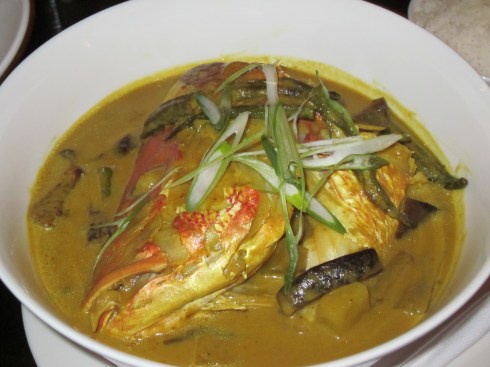
Finally, visibly harried, the waitress came to our table and took our orders. I needed to discover what the restaurant’s namesake, the pupusa, tasted like and ordered a bean and cheese.  Foolishly thinking it would be too much for me, I passed on what I saw someone else in the restaurant getting: the “mariscada especial;” an enormous bowl of fish soup where, lobster, shrimp with the heads on, and crab claws overflowed from. Instead I went with a seafood combination of shrimp and fried fish, casamiento, a mash of beans, rice, garlic and other herbs, and chimol, a Salvadorian salsa.

Gerry and Eugene both also ordered fish; Eugene the whole red snapper with onions and Gerry the fried porgy.

“Where does porgy come from?” I asked.

“Long Island Sound,” Zio answered.

“Yeah and that’s why I ordered it. To support our local fishermen,” Gerry cracked.

An enormous platter of pork chops passed our table and Zio’s weary eyes were immediately drawn to them. “I’ll have what they’re having,” he said repeating the oft-used line.

After studiously perusing the menu, Mike from Yonkers went with the steak combination which included an egg, scrambled according to the waitress.

“Can I have it fried,” Mike from Yonkers pleaded, giving her a look she could not refuse.

The pupusas arrived first, which came with a tomato sauce on the side and a big container of homemade pickled cabbage. Our waitress said the cabbage was eaten as an accompaniment to the pupusa.

“Its Salvadorian sauerkraut,” Zio announced after trying the cabbage. And so it was, but not really needed, in my opinion to enhance the already deliciously crazy pupusa.
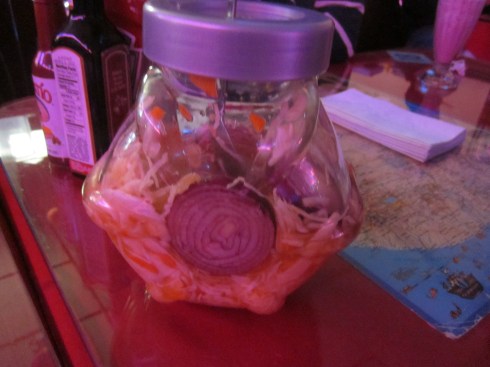
Salvadorian sauerkraut

Salvadorian sauerkraut

The platters began to arrive. First were Gerry’s and Eugene’s whole, fried fish, both smothered in onions. Next were the super-sized pork chops. After inspecting their enormity, Zio groaned realizing what he was in for.

Only Mike from Yonkers’ family-sized combination platter exceeded Zio’s. On the platter was a selection of beef cuts, two long “maduros,” sweet bananas, a wedge of salty hard white cheese, and a mound of rice and beans; all of it topped with the requested fried egg.
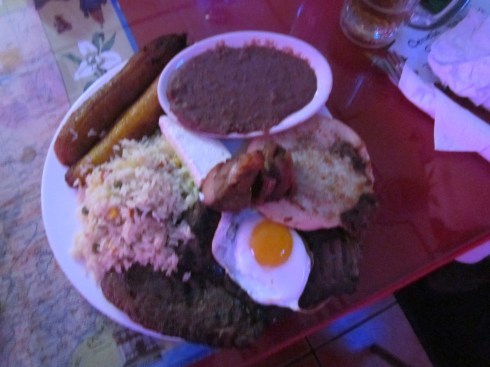
Meat combo with fried egg.

Meat combo with fried egg.

When my comparably miniscule plate arrived, the discrepancy was noticed by all. On it was just a small wedge of fish filet and a few “medium” shrimp, along with the casamiento and chimol. It was as if I ordered from the kids’ menu, if there was such a thing at La Pupusa Loca.

“Don’t worry, you can have some of mine,” Mike from Yonkers generously offered.

But I had my pride. I figured I would finish what was on my plate first before I began scavenging for more. It didn’t take long; only the dense casamiento slowed me down.
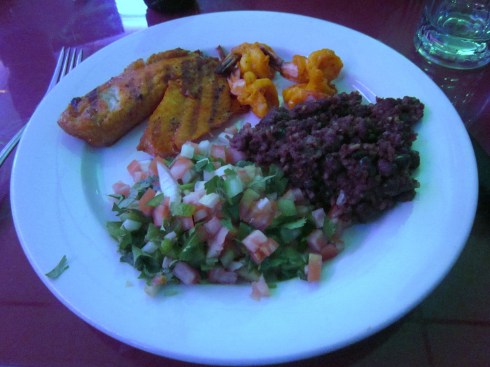
The kids' platter; fish and shrimp.

The kids’ platter; fish and shrimp.

Mike from Yonkers had hardly made a dent in his platter by the time I finished. In fact,  Zio polished off the monstrous pork chops before Mike from Yonkers even touched the cheese.

Finally, I conceded. “I guess I’ll take you up on your offer,” I said to him. It wasn’t really that I was still very hungry, it was more as a prod to get him to work with a little more purpose on his platter.

He cut me a sizable wedge of “bistec,”  thinly pounded grilled steak, but by the time I got to it, the meat was cold and tough as a hockey puck.

I wasn’t the only one to notice how long it was taking him to finish the gargantuan platter “Geez, we’ll be here all night,” Gerry barked.

Sensing pressure from the group, Mike from Yonkers pushed the platter away from him. “Okay, that’s it. I’m done,” he announced.
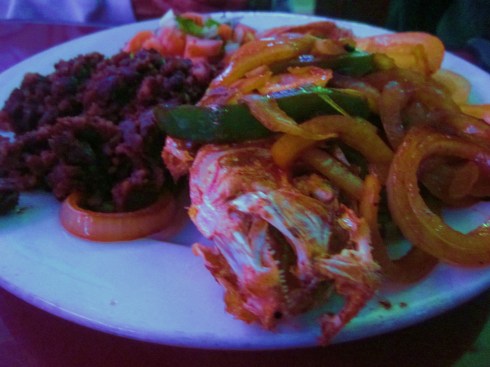
A snapper drowning in onions.

A snapper drowning in onions.

While we waited for the check, I walked around the restaurant and noticed that the placemats under the glass tabletops all had maps of Honduras. This was a Salvadorian place, wasn’t it? Was there a difference between a pupusa from Honduras and one from Salvador? Frankly, I didn’t care.

La Pupusa Loca

297 S. Broadway

Yonkers

The Happiest of All Hours: Winnie’s Bar & Restaurant

12 Dec

winnie's 018

I’m not one to partake in karaoke. In fact, I don’t recall ever being present during karaoke hours at a bar or club, though maybe I have been. I’ve probably actually gone out of my way to avoid karaoke and if a local pub I had been frequenting began to institute karaoke sessions, that pub would most likely be crossed off my list. Thankfully, it’s a long list.

My feeling is that I would rather put my dime (a figure of speech) in the juke box and hear the real deal than listen to amateurs obliterate the same tune.

I know it’s a cranky attitude to have. Why should I care if people have fun making fools of themselves? I don’t really. I truly believe there is place in this world for karaoke. There’s also a place for restaurants where you need to make a reservation a month in advance. It’s just that neither are my kind of place.

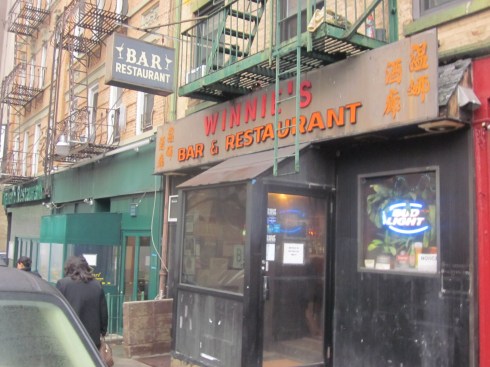
But though at times I’m intractable, I can make exceptions and recently I found myself sitting at the bar at Winnie’s, a Chinatown institution best known for its wild karaoke nights. Of course, I was at Winnie’s during the Happiest Hour, which, for me, is much earlier than the 8pm starting time for karaoke.

They are sensible about the dancing. But no cussing?

They are sensible about the dancing. But no cussing?

Instead of listening to inebriated folks doing their best to cover already bad pop hits, the place was practically empty and the only sound was from the “People’s Court” on television.

winnie's

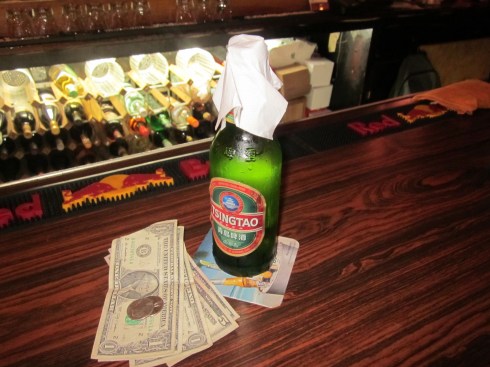
While I sipped my very cold $6.50 Tsingtao, two hapless couples were haggling over an altercation that occurred because of a faulty refrigerator bought on Craig’s List. Though the beer tasted good, I began to think that maybe even an amateur with a microphone might be a better listening alternative than to the drek coming from Winnie’s only TV.

I finished the beer but didn’t order another. The dispute had not yet been resolved on the People’s Court, but I wasn’t sticking around for the verdict. Outside there was a drizzle and across the street people were huddled under cover within the atrium of Columbus Park. Winnie’s was surrounded by court houses and the next time I’m summoned for jury duty, I’ll know where to go to relieve the agony of fulfilling my civic responsibility.

Nothing wrong with a place that has a pay phone, karaoke notwithstanding.

Nothing wrong with a place that has a pay phone, karaoke notwithstanding.

For now, though my stay inside Winnie’s was brief, I figured I could extend the happiest of hours. In a way, I might actually discover “double happiness.” After all, I was in Chinatown. The possibilities were endless.

Double Happiness at Winnie's.

Double Happiness at Winnie’s.

Winnie’s Bar & Restaurant

104 Bayard St

Chinatown

The Ring of Fire on Roosevelt Avenue

4 Dec

Little Pepper Hot Pot

Little Pepper Hot Pot
133-43 Roosevelt Avenue
Flushing, Queens

“I don’t think I like hot pots,” Gerry wrote in an email after I told him Zio and I were going to spend a Chow City interlude at the Little Pepper Hot Pot in Flushing.

Despite his hasty judgment based on one hot pot experience (Minni’s Shabu Shabu), Gerry agreed to meet the two of us there.

After reading blurbs about the restaurant, I learned that I could park in the garage of the nearby Sky View Center for free for up to three hours. I didn’t think it would take us longer than that to make quick work of Little Pepper’s hot pot so I pulled into the multi-level parking garage and walked through the gleaming, glass enclosed, Taipei City-like mall, passing such culinary stalwarts as Applebee’s and Chucky Cheese on my out to Roosevelt Avenue.

Where am I?

Where am I?

I found Little Pepper Hot Pot across the street from a 1960’s housing development and then recognized it as the location of the great and original Little Pepper (A Cold Sweat in Flushing), which has since relocated to  College Point Avenue.

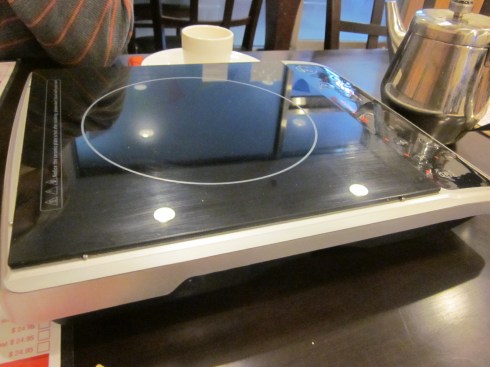
The tables of the narrow restaurant were all adorned with an electric stove top heater. The menu was attached to a clipboard. What turned Gerry, and most of us off about the other hot pot experience was the chaos for first timers. We had no clue what to do and the servers at Shabu Shabu were just too busy to deal with our hot pot virginity.
The hot pot heating device.

The hot pot heating device.

At Little Pepper Hot Pot our waiter spoke perfect English and was patient with our ignorance of things hot pot related. Still, the three of us, sadly, are not quick studies and at first it was a struggle, especially for the menu-challenged Zio.

“I just have no clue,” Zio said, shaking his head and tossing the clipboard.

I took the menu and studied it. It reminded me a little of the SAT tests where you need to blacken little circles next to the correct answers. Where was Mike from Yonkers, the SAT specialist, when we needed him?

Finally, I think I figured it out and explained to Gerry and Zio that for the table we needed to order one hot pot for $25, which would serve as our cooking device. From there we could choose other meat and vegetable items from the menu to toss into the boiling cauldron.

There were three hot pot options: Szechuan (all spicy), half Szechuan and half “Original” (mild), or all Original. We like to think that we are very brave when it comes to spice. No one can tell us something is too hot for us. And there have been instances when condescending waiters, assuming because of our vanilla visages (speaking about my own only) that we cannot tolerate the same heat as those born with the spice resistance gene.

This was, however, an offspring of the original Little Pepper where they definitely did not pull any punches when it came to spice. So in this instance we decided to take the safe route and go with the option number two: the combination pot.

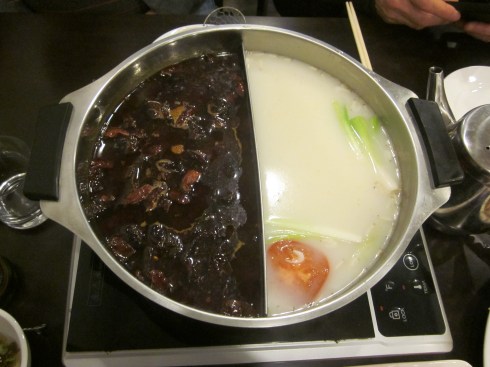
The pot was brought to the table, placed on the portable stove top and turned on. On one side was the chili pepper red Szechuan while on the other was the clear, milky Original—the two separated by a divider. It wasn’t long before both broths were bubbling furiously.

The yin and the yang of hot pots.

The yin and the yang of hot pots.

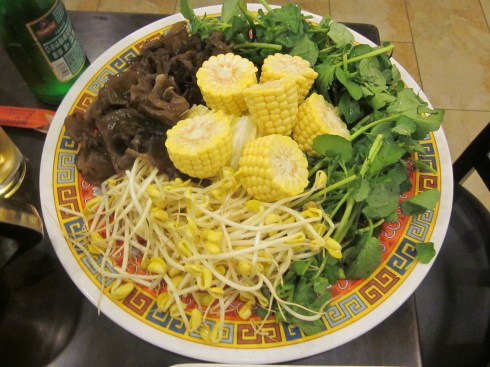
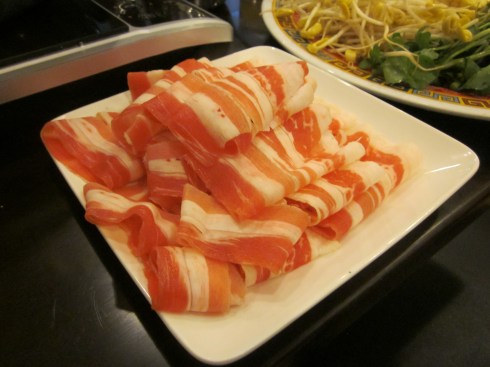
A gigantic tray of vegetables came with the pot: watercress, wood ear mushrooms, corn, bean sprouts, cabbage and a plate of “fatty beef.”

The veggies ready for the pot.

The veggies ready for the pot.

Fatty beef

Fatty beef

Using chopsticks, I started to drop the meat and vegetables into the hot pot.

“Use your hands,” Gerry barked. “You’re taking too long.”

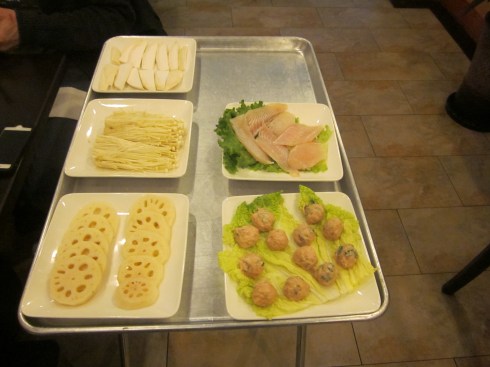
I did as commanded and then the waiter appeared with the other items we ordered: fish, parsley meatballs, king oyster mushrooms, lotus root, cabbage, and enoki mushrooms.

More to go into the pot

More to go into the pot

“Now what the hell are we supposed to do with these?” Zio wondered, holding up one of the slotted, net-like spoons that came with the hot pot.

“Fish out the fish,” Gerry said.

I tried to fish out the fish from the Szechuan side of the pot and came up with something—maybe the wood ear mushrooms and some of that fatty beef. I shoved whatever it was into my mouth and almost immediately my eyes watered and nose ran and I quickly spat it all out. I examined what had flown out of my mouth and was now on my plate. In my insatiable haste, I almost ingested countless pieces of dried hot chilies.

“Next time maybe you’ll be more careful,” Gerry scolded.

And the next time I was able to fish out the fish and the other ingredients that were now all cooked through and deliciously infused with the accumulation of flavors the multiple ingredients gave the broth.

A bubbling cauldron

A bubbling cauldron

The piles of napkins on our table were dwindling at the same rate as the honking noise from our collective noses was increasing. Scooping the meats and vegetables from the “Original” side of the hot pot did little to ease the self inflicted pain from the heat of the Szechuan side. But no one was complaining. It was what we wanted. What we came here for.

Soon, with the exception of the dried chilies and a few enoki mushrooms, there was nothing much left in either side of the pot.

“I’ll be back,” Gerry, who was originally skeptical, said inferring that another trip to Little Pepper Hot Pot was needed.

“Yeah, me too, but not with the Colonel,” Zio said. The Colonel, who was Zio’s partner, had, as Zio made it known many times, a zero tolerance policy when it came to spice. “One sip of this stuff and her tongue would be fried. She wouldn’t be able to talk for a week. Though that’s not a bad idea.”

As I made my way through the enormous mall to try to locate the car somewhere in the bowels of the indoor parking garage, I could feel a burn in my gullet. It made me think of the song “Ring of Fire,” by Johnny Cash. I hummed it in the car driving back home.

The next morning the tune was still in my head, but it was no longer the Johnny Cash version I was humming. The burn had lingered overnight and the effects I was feeling the next morning were closer to how Ray Charles handled it: slow and deliberate and with a raw blast of the blues (see below). The burn and the accompanying pain, I knew, would fade but it wouldn’t be long before I, like Gerry and Zio, would eagerly go back for more of the same.

On Pizza, Pomodoros, Putin, and Putinka

27 Nov

I’m a purist in many ways. With few exceptions, I don’t like fusion—unless I’m creating the fusion. When given the choice, as I always am, tap water works for me at a restaurant. I scoff at all the sauces presented to compliment a broiled or grilled piece of prime meat that should need no compliment.  I don’t buy flavored seltzers. If I want lemon or lime, I can easily add my own to plain seltzer.

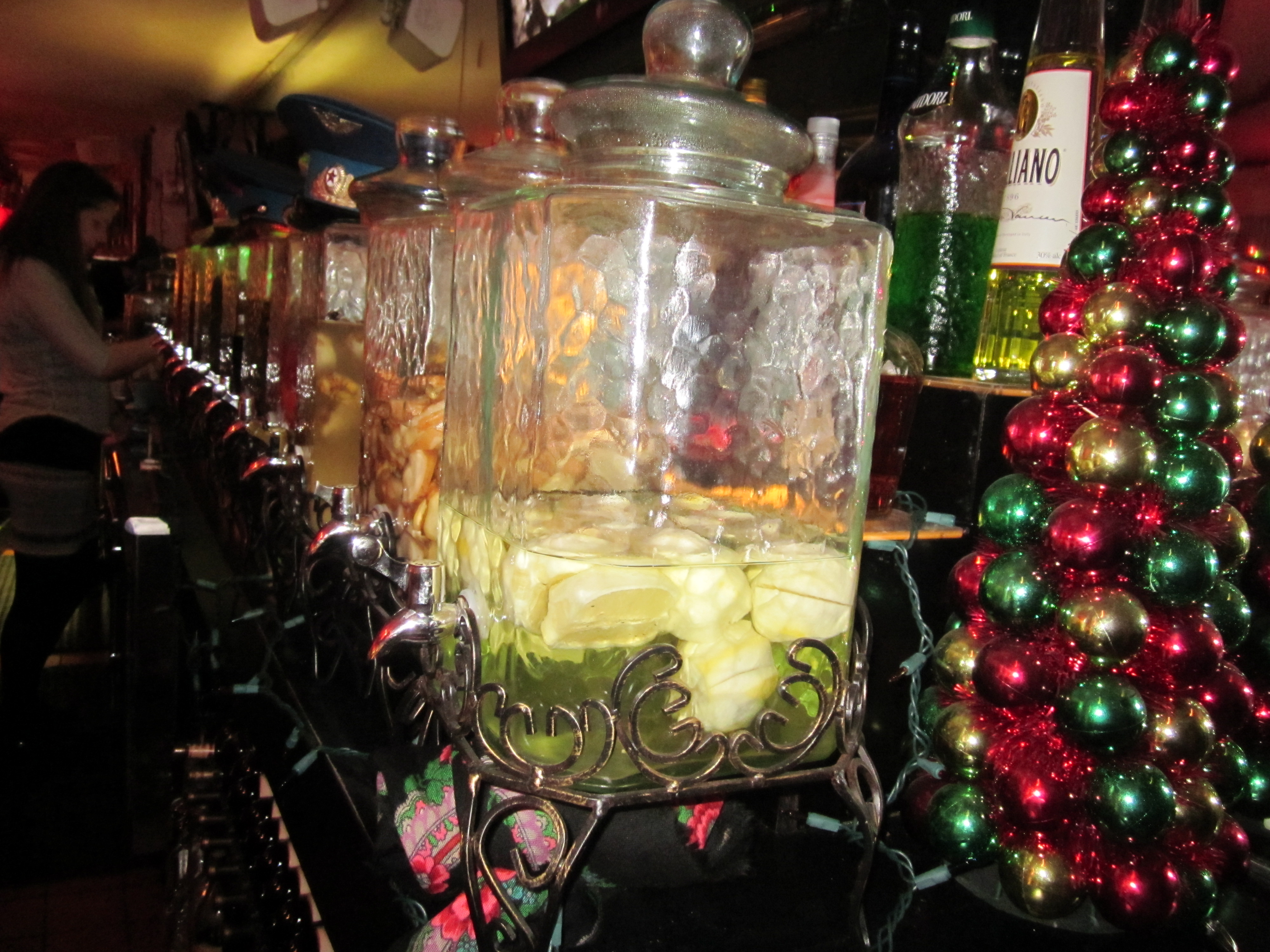
And the same can be said for vodka. Who needs cranberry flavored seltzer when a splash of cranberry juice will suffice? That is, unless I’m in the outstanding Russian Samovar, sitting at the bar and trying to decide which of their house made infused vodkas I should order. Maybe start with a shot of ginger followed by the coriander? See, there are exceptions. I’m not totally unmovable on this.

The Russian Samovar Collection

The state of today’s pizza, I’m afraid, has been a serious blow to my purist sensibilities. You enter a pizzeria now and the cold, congealed varieties presented under Plexiglas counters are staggering. The pies are covered with everything from broccoli to kale, from barbecued shrimp to Buffalo chicken strips.

I like my pizza with tomato sauce and mozzarella; preferably more of the former and lighter on the latter. I have been known to throw on some anchovies to improve a mediocre pie. Beyond that, I have no interest in sausage, pepperoni, meatball, mushrooms or any of the usual toppings.

Adding to the ever-growing assortment of pizzas is pizza with “vodka” sauce—the spin on penne a la vodka. I know pizza with vodka sauce is not a new phenomenon. I guess I just put it out of my mind,  desperately trying to deny its existence despite it’s increasing popularity.

I’ve made penne a la vodka myself. It’s not something I’m particularly proud of. I use cheap, local canned tomatoes. Who cares about the quality of the tomatoes if I’m adding cream to it—and vodka? And when I go into my vodka stash just to have it fuse with the sorry canned tomatoes and cream I cringe. It’s one thing to waste a few splashes of red wine in a sauce, it’s quite another to use some of the precious Russian clear stuff.

Well, not always Russian. Sometimes it might be Swedish, Danish, or even from some place in Texas.

Penne a la vodka is an amiable and infrequent diversion. It’s like the undercard of a heavyweight bout; the opening act for standouts like Neck Bones Tomato Sauce  or  Neck Bones Anchovy Sauce, pesto, or the perennial champ: marinara sauce.

So why would I ever be interested in the undercard of a topping for pizza? I wouldn’t. Or I thought I wouldn’t until recently. The lure was drawing me in. Was I missing something here? And how could I comment on something I’d never experienced?

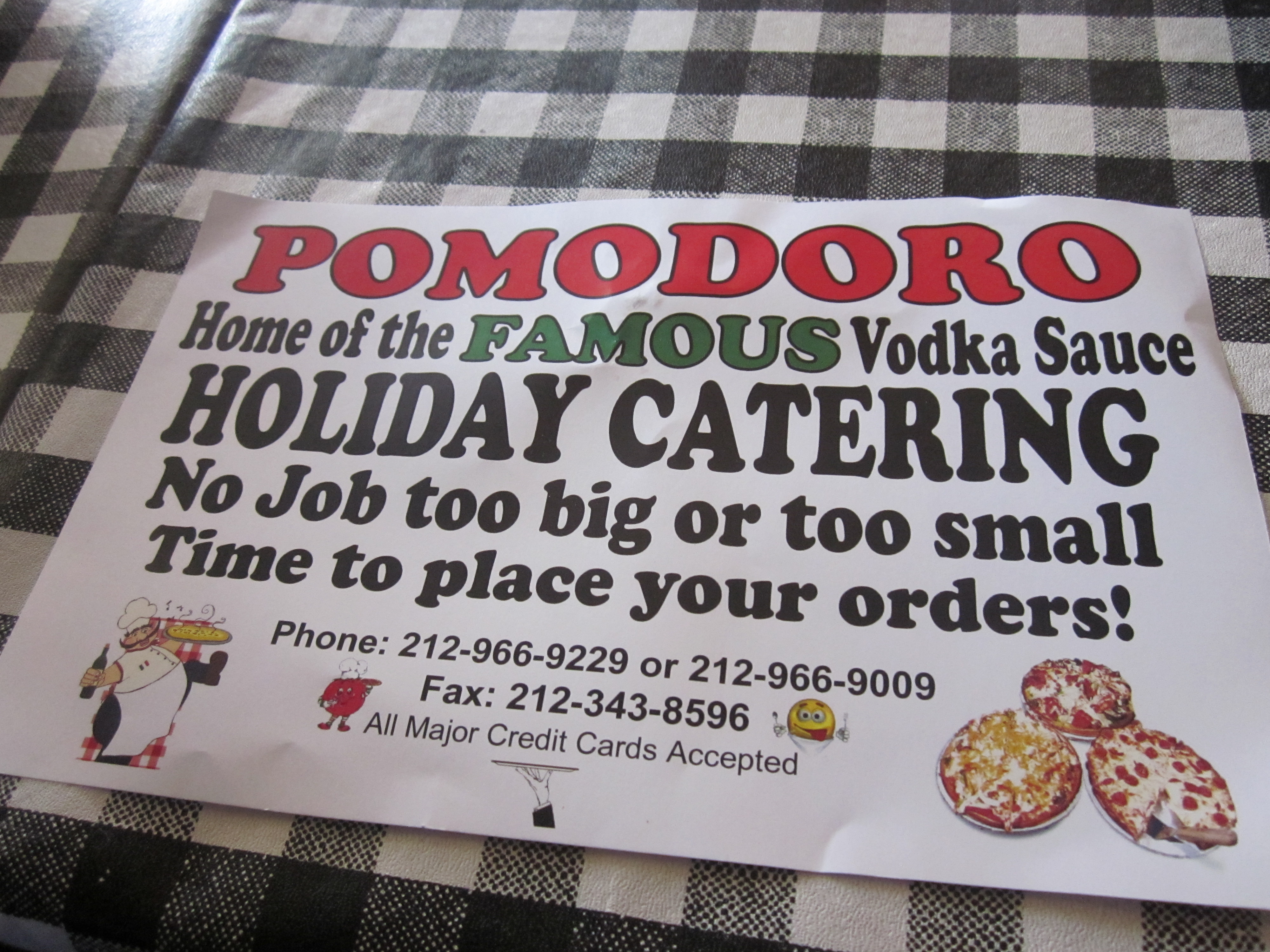
The sign said it all: “Home of the famous vodka sauce.” There was even a banner flapping in the wind above Spring Street advertising “vodka pizza.” The place was called Pomodoro and apparently vodka sauce was their trademark. If I were ever going to experience a slice of pizza with vodka sauce, I would guess this would be the place.

I surveyed the countless array of already made pies under the Plexiglas counter for the vodka pie, but my eyes, inexperienced at least regarding vodka pizza, could not identify one.

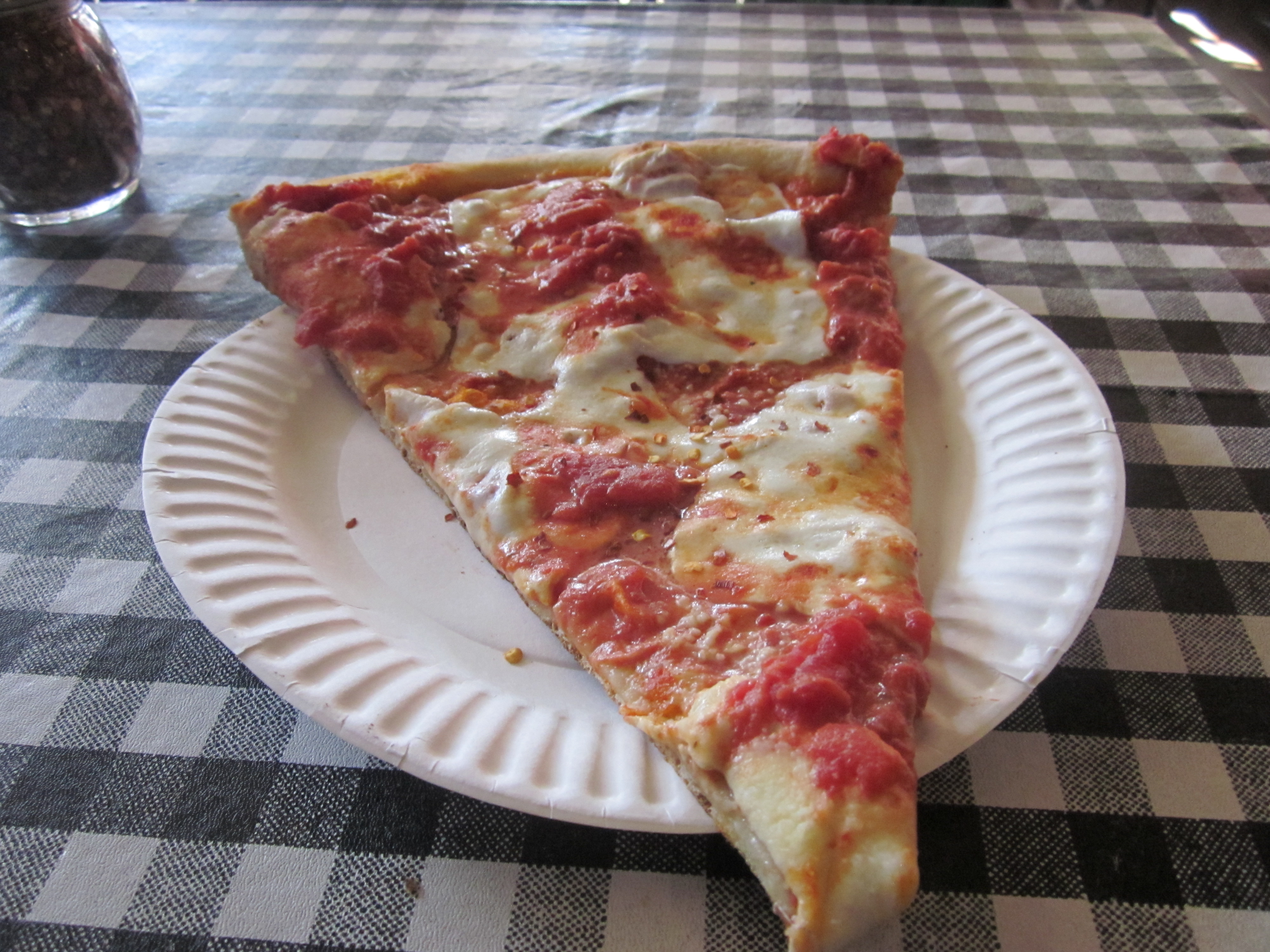
I asked the man behind the counter for a slice of vodka. He took out a pie that looked like any other “regular” pie and cut out a slice which he threw into the oven to heat. A few moments later it was presented to me.

Vodka slice from Pomodoro

My normal reflex whenever eating a slice of pizza is to grab for the red pepper flakes and sprinkle generously over the slice. I did the same here not knowing that the vodka pizza was already spicy.

The slice was coated with chunks of very good, albeit spicy, tomatoes and fresh mozzarella while the only negative was that the crust was a little on the thick side for my taste. It was a more than commendable slice. Still, I was puzzled. I admit to being a vodka pizza virgin, but was this what a slice of vodka pizza tasted like? It didn’t taste anything like my penne a la vodka. Where was the vodka in the vodka slice?

So they called it something other than what it really was. It didn’t matter. I liked the pizza and brought a few slices home to give it another shot. This time I thought maybe, instead of beer, my usual accompaniment to pizza, I would accompany the vodka slice with vodka.

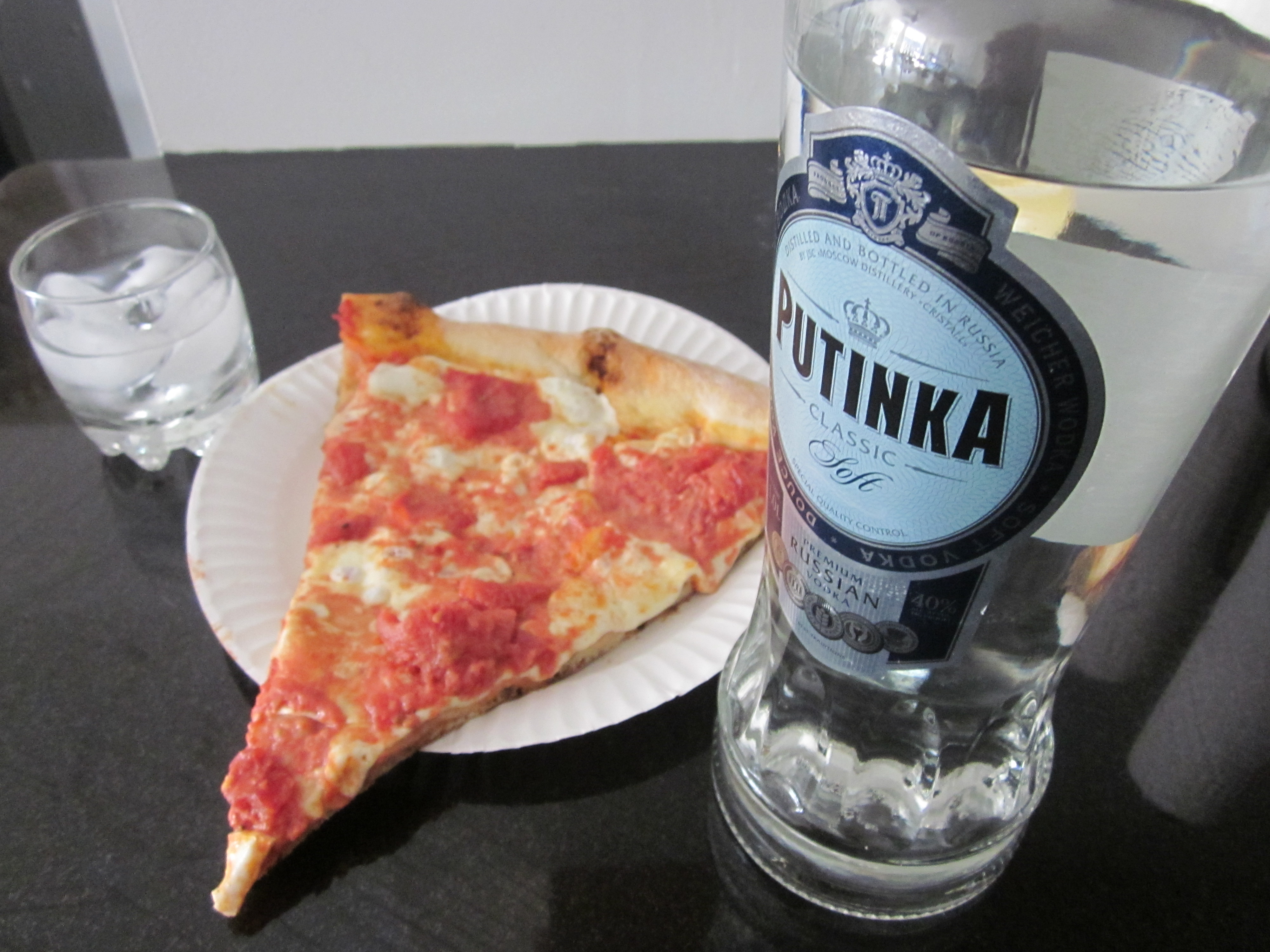
For the occasion I had a Russian named Putinka in my refrigerator. An apparent tribute to Russian president, Vladimir Putin, the Putinka also billed itself as “soft,” vodka, whatever that meant. Was soft vodka the equivalent to light beer? I hoped not. And really, would the former Lieutenant Colonel of the KGB want a vodka named after him that was billed as “soft?”

Soft vodka

Either way, I reheated the vodka slice and poured a shot of Putinka over ice. I sipped and then took a bite. The vodka, soft or not, gave me the familiar and comforting burn that, I discovered, paired brilliantly with the so-called vodka pizza.

I finished the vodka and the pizza a bit too quickly and then realized something that should have been obvious to me—something that conformed to my purist sensibilities. There was no need to search out a pre-made vodka sauce pizza where, most likely, the vodka sauce wouldn’t be up to your own standards. Just like adding your own flavor to your pure vodka, you could do the same with this pizza. All you needed was a warm slice of pizza and a cold Russian in the refrigerator.

Pomodoro
51 Spring Street
NYC

A Pair of Pepper Sauces

12 Nov

I heard tell there was a big wind coming our way. A super storm they were calling it. The terrace had to be cleared of potentially dangerous projectiles. The few herbs that remained were not a threat, but the never ending procession of hot peppers that were still going strong in late October had to be “terminated with extreme prejudice.”

In May I planted two types of hot peppers I bought in the Arthur Avenue Retail market in the Bronx including one I’ve grown before called “Portugal Hots,” a long thin pepper similar to the cayenne. The other was labeled an “Italian chili pepper.” I wasn’t sure what an “Italian chili pepper” was but hoped that it was similar to what was sold in the same retail market in the fall; bunches of slender, one-inch long red, fiery chilies still attached to their stalks. I was assured by the salesperson that it was.

Portugal Hots

In the abnormally warm spring and hot summer, the plants grew fast and when the first fruits began to appear, I was surprised by what I saw on the so-called Italian chili pepper plant. The peppers were growing upright and looked something like jalapeno peppers. Once they were green and fully formed, they were definitely not the Italian red chili peppers I had hoped for.

I scoured the internet to find a match to what I was growing. What I discovered was that the peppers were called “Fresno” and, according to my research, similar to a jalapeno. I was disappointed. I didn’t want a jalapeno or anything “similar.” The plants were healthy and the numbers of peppers on them countless. When the first pepper turned red, I tried it. It had very little heat adding to my disappointment.

A few weeks later, as more turned red, I cut up another. This time I was blasted by heat. And as the summer wore on and the peppers matured further, their fire became explosive—much hotter than a jalapeno, Serrano, and spicier than the Portugal hots that were growing next to them. I had some serious hotties on my hand. If the Scoville scale that is my tongue was any indication, these Fresnos were just a notch behind the habanero in heat quotient.

Fresno peppers

As both the Portugal hots and the Fresnos prospered throughout the summer and into early fall, I bagged bunches and put them in the freezer where they would last a year. Frozen, I use them in stews, sauces and anything else that required a blast of spice. I had more than enough already to last a year so I gave bags away to others who, like me, get masochistic enjoyment when the inside of their mouths are blistered.

Still, many peppers kept coming as summer faded and though some were still green, a super storm was on its way and I had no alternative but to harvest what remained.

As any self respecting citizen should, I have several bottles of hot pepper sauce in my refrigerator ranging from mild to hiccup-inducing hot.  Is there such a thing as having too much hot sauce? I didn’t think so. So inspired by a fellow bloggers at website caled Putney Farm who had a similar dilemma and turned that profusion of peppers into a homemade pepper sauce, I thought I would try it as well. But because I had two different types of peppers, I decided to make two different pepper sauces.

As I do with many recipes, I cull the internet and usually mix and match from a variety I like and try to come up with something my own.  The first, using the Portugal hots, was to be a “fermented” pepper sauce or one I would have steep in a brine for several days before actually pureeing into a sauce.

Since I just used what I had of peppers, the quantities of the ingredients I pretty much played by ear. For the fermented hot pepper sauce, I had enough of the Portugal hots, (green stems removed) to fill up a pint jar.

To the jar I added three peeled whole garlic cloves and two teaspoons of sea salt.

I then filled the jar with water and made sure the peppers and the garlic were submerged before tightening the lid of the jar.

Once the jar was sealed, I placed it in the back of a dark cabinet and let it ferment for about 10 days. You can ferment, from what I gathered, for as little as a few days up to two weeks. I was in no rush.

After ten days, I opened the jar and drained off the water (now a brine), saving it to add back into the sauce. I put the garlic and the peppers into a blender and added back half of the brine along with an equal amount of white vinegar.  Depending on how you like your hot sauce; chunky or smooth, is how long you puree. I wanted mine closer to smooth than chunky so I pureed long enough to get that consistency.

After pureeing, I poured the hot sauce back into the pint jar, sealed it, and put it in the refrigerator. The sauce will last a year—or until you are ready to make another batch next year.

Portugal Hot pepper sauce pureed smooth.

The recipe for the Fresno hot sauce was pretty much identical to what my friends at Putney Farms laid out in their blog post Homemade Hot Sauce. In theirs, they used Serrano peppers. The Fresnos I grew, as I said, were hotter than Serranos, but I didn’t think that would necessitate a change in the recipe.

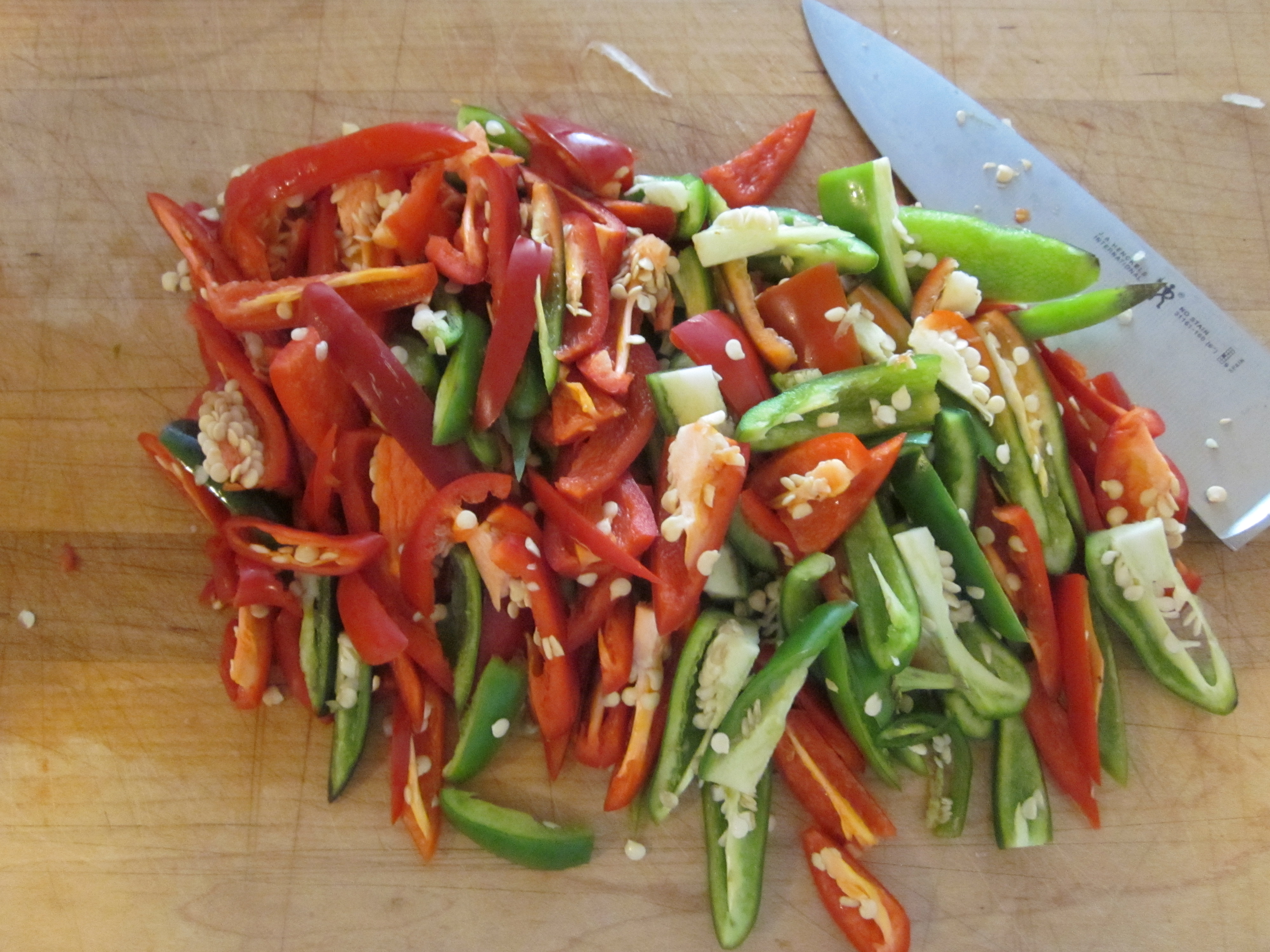
Their recipe called for 8 ounces of peppers. I had more and adjusted accordingly. Not using rubber gloves, I sliced all the Fresno peppers, but made sure I kept my hands away from my eyes, nose, and private parts until I could sufficiently wash them.

Along with the peppers I sliced one large white onion and minced two garlic cloves.

To a medium saucepan, I put a tablespoon of olive oil. And then, on medium heat, added the peppers, onions and garlic. The recipe at Putney Farms warns of the fiery vapors that will be unleashed from the sautéing of the peppers. It was in the forties outside, yet I opened the windows, turned on the ceiling fan, and commenced the sautéing. For extra protection I wore a surgical mask. After a few minutes, however, I removed it. The vapors were helping to clear congestion in my chest. Just another one of the magical benefits of the revered and cherished capsicum.

After sautéing for about five minutes, I added two cups of water and two tablespoons of brown Demerara sugar.  I cooked all for about twenty minutes or until most of the water was evaporated.

Once the mix of peppers, onions and garlic cooled to room temperature, I added a cup of cider vinegar and pureed in a blender.

I poured the puree through a fine mesh sieve until only the thick skins and seeds still remained and what passed through was a smooth, creamy, pinkish mixture.

Now I had two hot sauces. I tried them both.

The Portugal hot fermented sauce had a mild pepper kick. The Portugal hots, I’ve found, can be inconsistent in terms of heat. Some are very hot while there might be a few that have barely a trace of fire. Knowing that, I still like them for their intensely sweet pepper flavor that when combined with the heat makes a unique taste. The sauce, however, though with a slight, vinegary tang, was overpowered by garlic. I would definitely limit the garlic if I decided to make the sauce again. Still, I looked forward to sprinkling a generous amount over roast chicken with yellow rice and beans.

Portual hots hot sauce

The Fresno pepper sauce on the other hand was everything I wanted. Just a few drops would suffice on any dish, it was that hot. There was also a sweetness from the inclusion of brown sugar and cider vinegar that added to the flavor. If anything, I would cut down on the sugar a bit next time.

Fresno hot sauce


Baklava in the Bleachers

16 Oct

As I said in these pages about a month ago (New Year’s Penicillin), I’ve been spending a lot of time just off the 230th Street exit of the Major Deegan, sitting on crooked aluminum bleacher seats watching baseball on a small field. The field borders the Deegan and the hum of traffic is a constant.

The bleacher seats: no admission charge.

In between games or while waiting for the games to begin, I’ve become very familiar with the Kingsbridge neighborhood that surrounds the field.  A café con leche at Malecon Restaurant has become a weekly treat and as I reported here, I “discovered” a 50 year old Kosher deli named Loeser’s where the penicillin includes chicken broth, noodles, or maybe a matzoh ball.

More recently, as I waited for the games to begin, I happened on another place. Just a few paces from the 50th police precinct and across the street from the Nice Guys Car Wash, I found a small, shed of a diner called Christos Gyro & Souvlaki.

The souvlaki of Christos.

Christos, I learned, has been at its tiny location on Kingsbridge Road the past eight years—at least that was what the owner, Christopher, a.k.a Christos, said to me as he also proudly handed me a laminated Daily News article about his restaurant where that newspaper rated his gyro the best in the city.

The weather was changing. An Indian summer day was quickly turning into a brisk autumn one. I’d have to take the Daily News’ word on the gyro. I wanted something else. I didn’t need New Year’s penicillin, but the close Greek equivalent would do very well.

“You want the avgolemono?” Christos asked.

“Yes I do,” was my definitive response.

“Anything else?”

“Moussaka,” I said, not caring that I might miss the beginning of the game.

“Very good choice.”

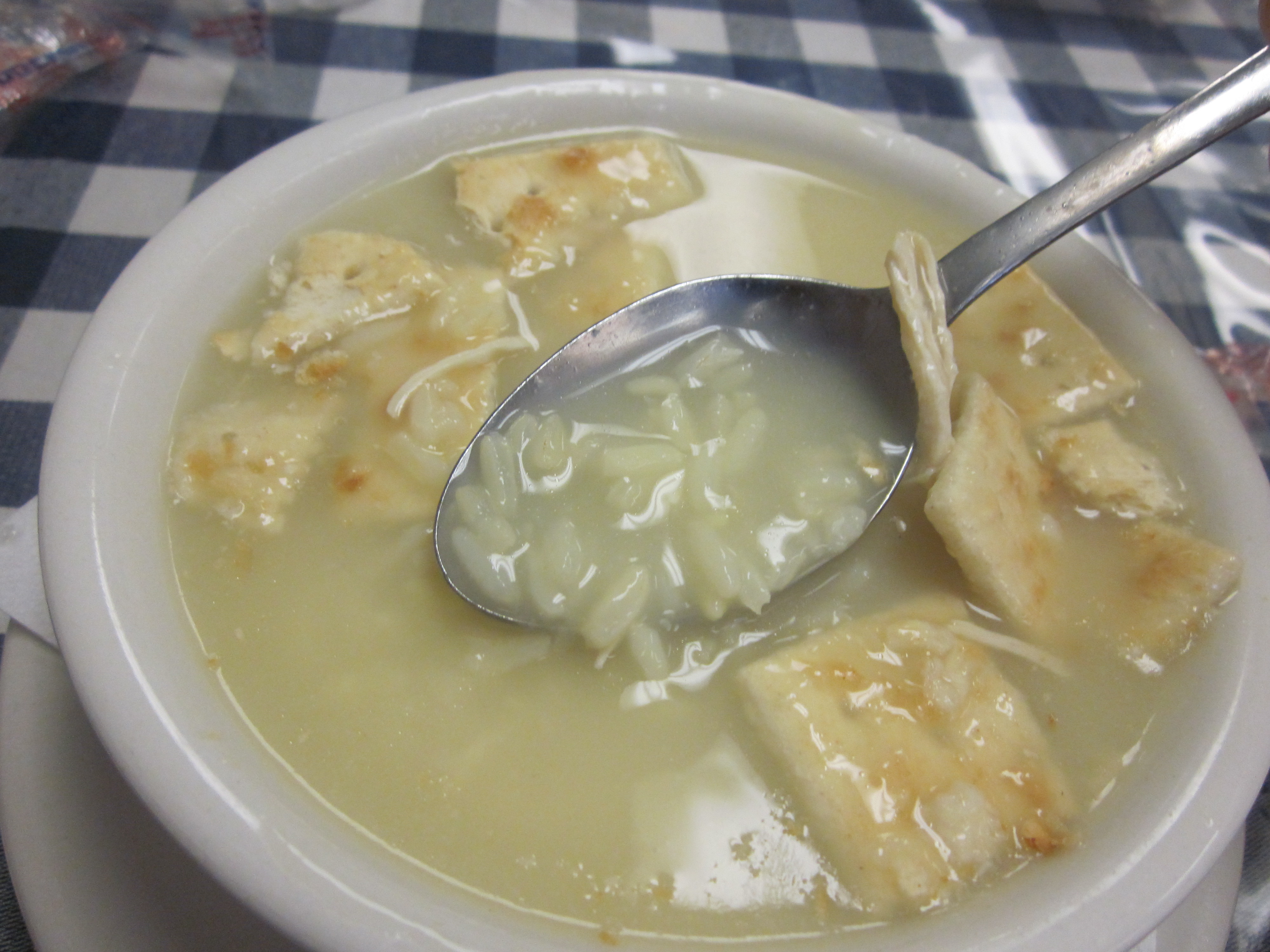
The bowl of the yellow-tinged, lemon chicken soup was steaming. Spherical dots of orzo floated within along with slivers of chicken. The distinct citrus snap of lemon meshed magically with the hearty, comforting chicken broth.

I crumbled a few saltines into the bowl and slurped. It wasn’t long before the bowl was empty.

Christos’ avgolemono

Moussaka awaited, paired with a simple Greek salad, pita bread and a generous bowl of tzatziki. I dipped the pita into the creamy, garlicky yogurt…and then I double dipped.

The half inch of béchamel sauce on top of the ground beef and eggplant was airy, the filling scented with cinnamon. I alternated between bites of the moussaka and dips of the tzatziki until all was gone.

Moussaka, Greek salad, tzatziki

Christos came to clear my table. “You did good,” he said.

“I know,” I answered, happy to have made him proud.

As I waited to pay, I noticed a tray of baklava and remembered reading in the Daily News piece that Christos’ wife made them fresh daily. I pointed to it. Christos’ son was working the cashier—Christo’s was most certainly a family affair. “To go?”  he asked.

I nodded and took the bagged baklava back to the ball field. I devoured it watching baseball on the bleacher seats while like a continuous loop, the music of the Major Deegan played on and on.

Music to eat baklava by.

Today’s Special: Back to School Edition

4 Sep

I’ve got a doctorate from this school.

My diploma.

Sadly the best schools close for the season.

How to Eat a Mango

10 Jul

I’ve often wondered,

how to eat this fruit.

It has an odd shape,

kind of like an egg with a loop.

It’s sweet and the flesh is juicy,

and  good for you too.

But how do you eat it

without getting quite messy?

If the fruit is soft and pliant to grope,

like what you might find in a ripe cantaloupe.

That means it is ripe and ready to eat.

The problem is, how to do it neat?

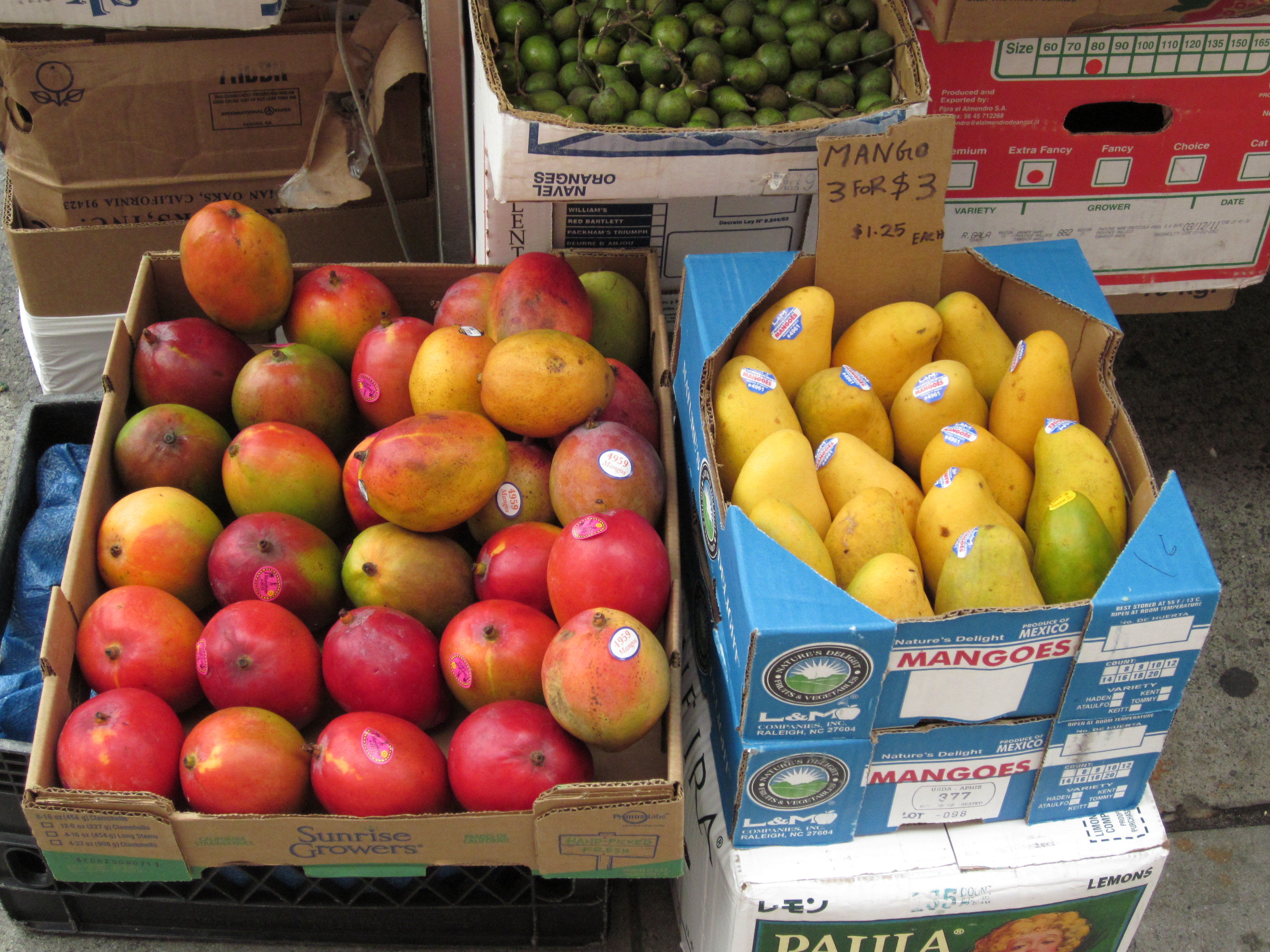
I hear there are over 1,000 varieties of mangoes around.

But where I live only a few types are to be found.

What I see in stores and on street carts,

come from places like Mexico, Salvador, Peru and Brazil.

Warm, tropical lands,

where there is no chill.

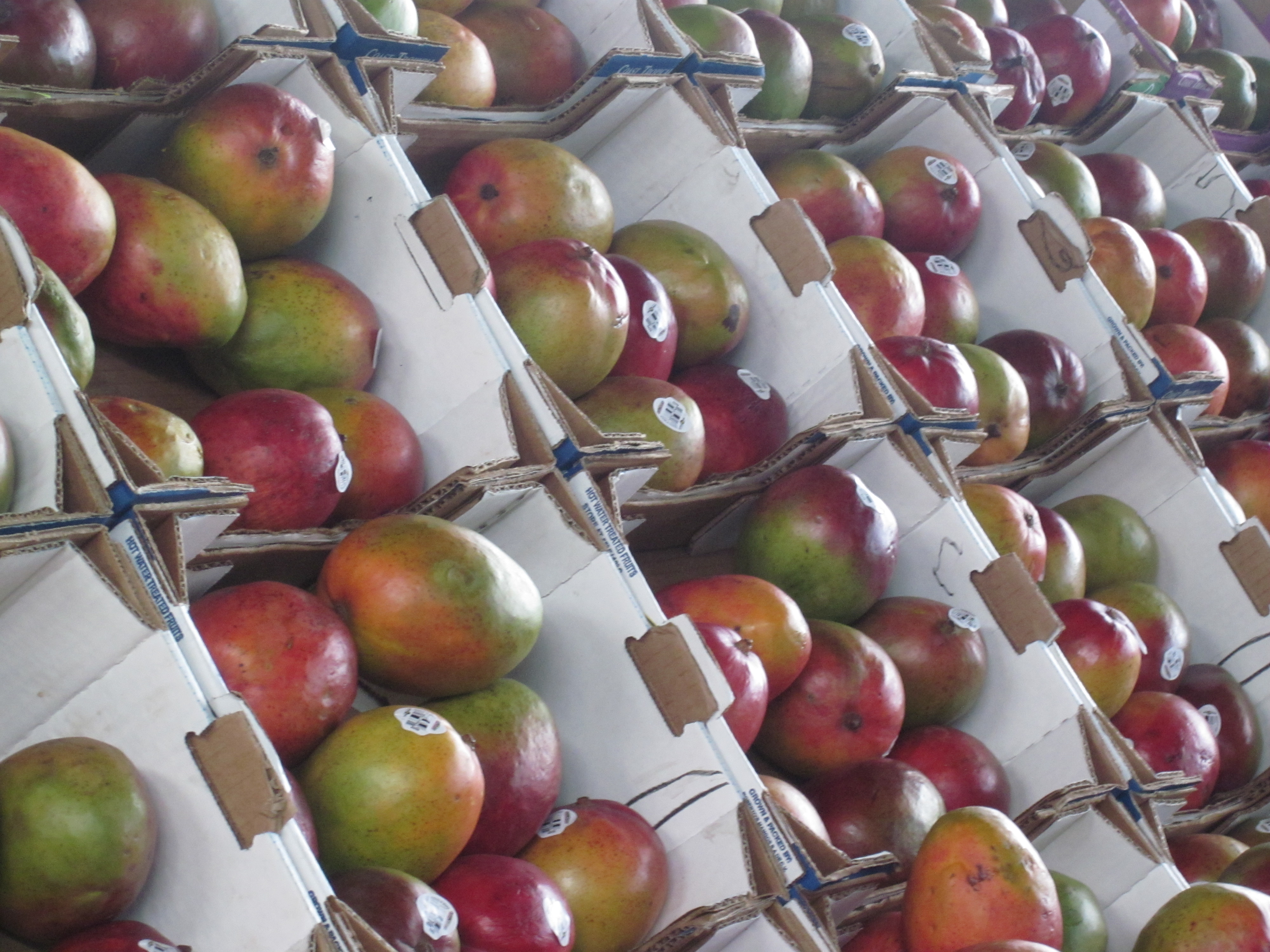
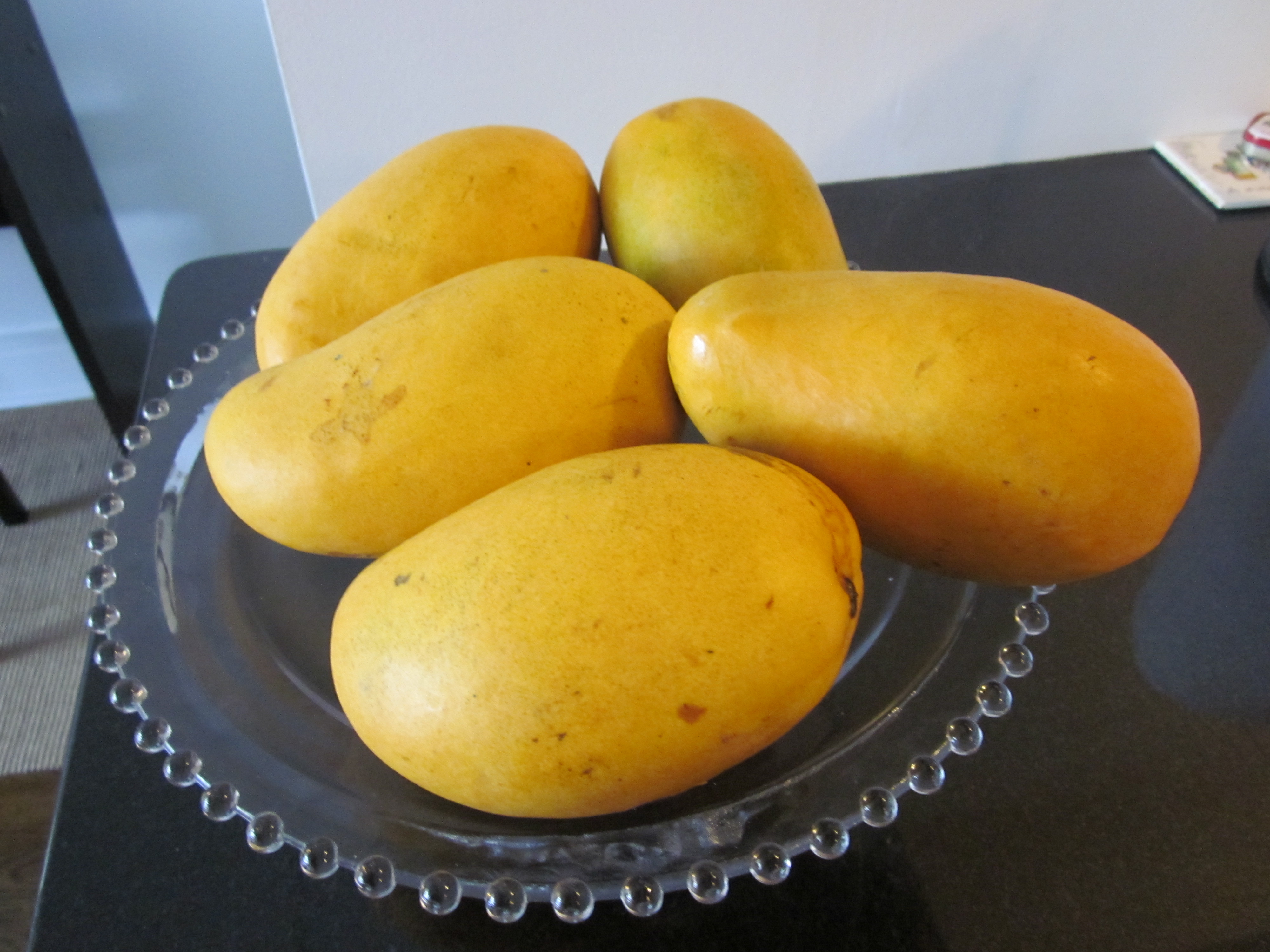
They  have names like “champagne,”

“Ataulfo,” “Tommy Atkins,” “Kent,” and more.

I’m sure there is a difference,

though this mango novice can’t tell for sure.

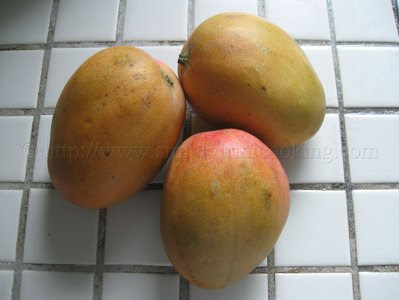
Ataulfo mangoes

On an island far away,

I once ate a Julie,

mango that is.

It was sweet and luscious.

I still can’t believe,

something so delicious,

could come from a tree.

Once peeled, the nectar quickly

flowed from within.

That Julie made such a mess,

a beach towel was needed,

to clean up my chin.

Three Julies

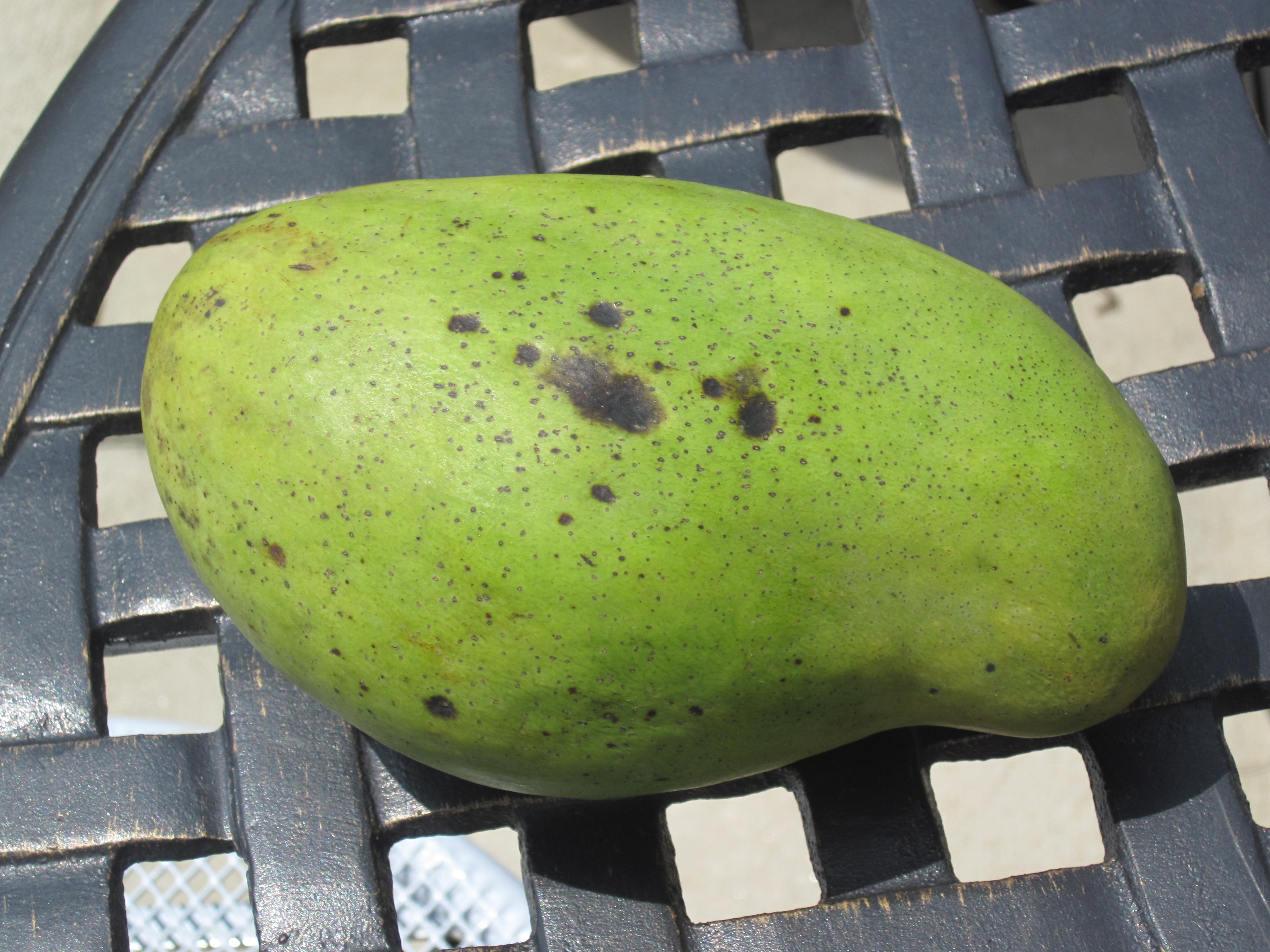
The mangoes from Haiti

are long and light green.

This fruit’s flavor is special,

the taste, a mango fan’s dream.

But there are drawbacks, I’m afraid.

It costs a little more,

and eating it most certainly can be a chore.

The Haitian

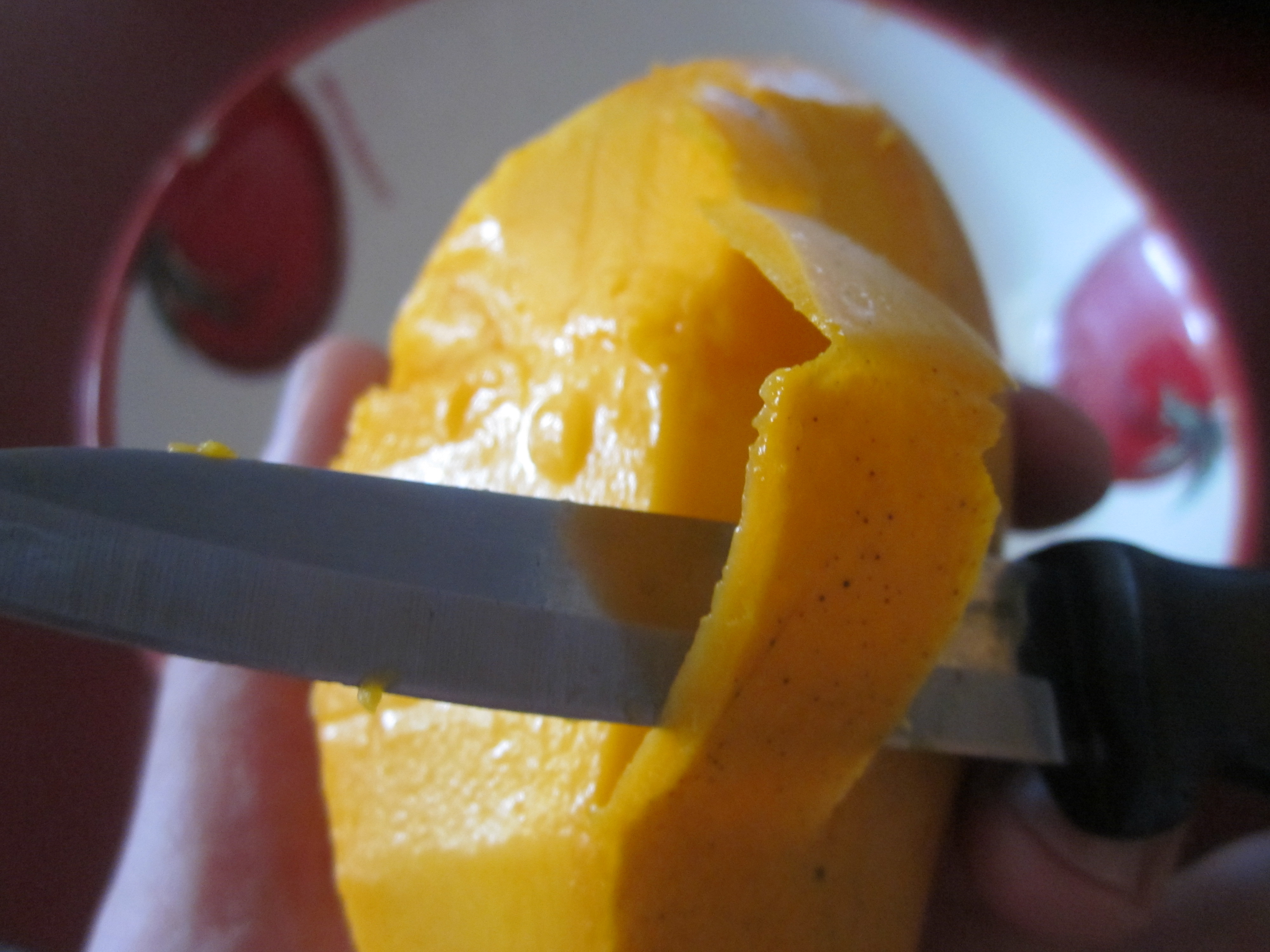
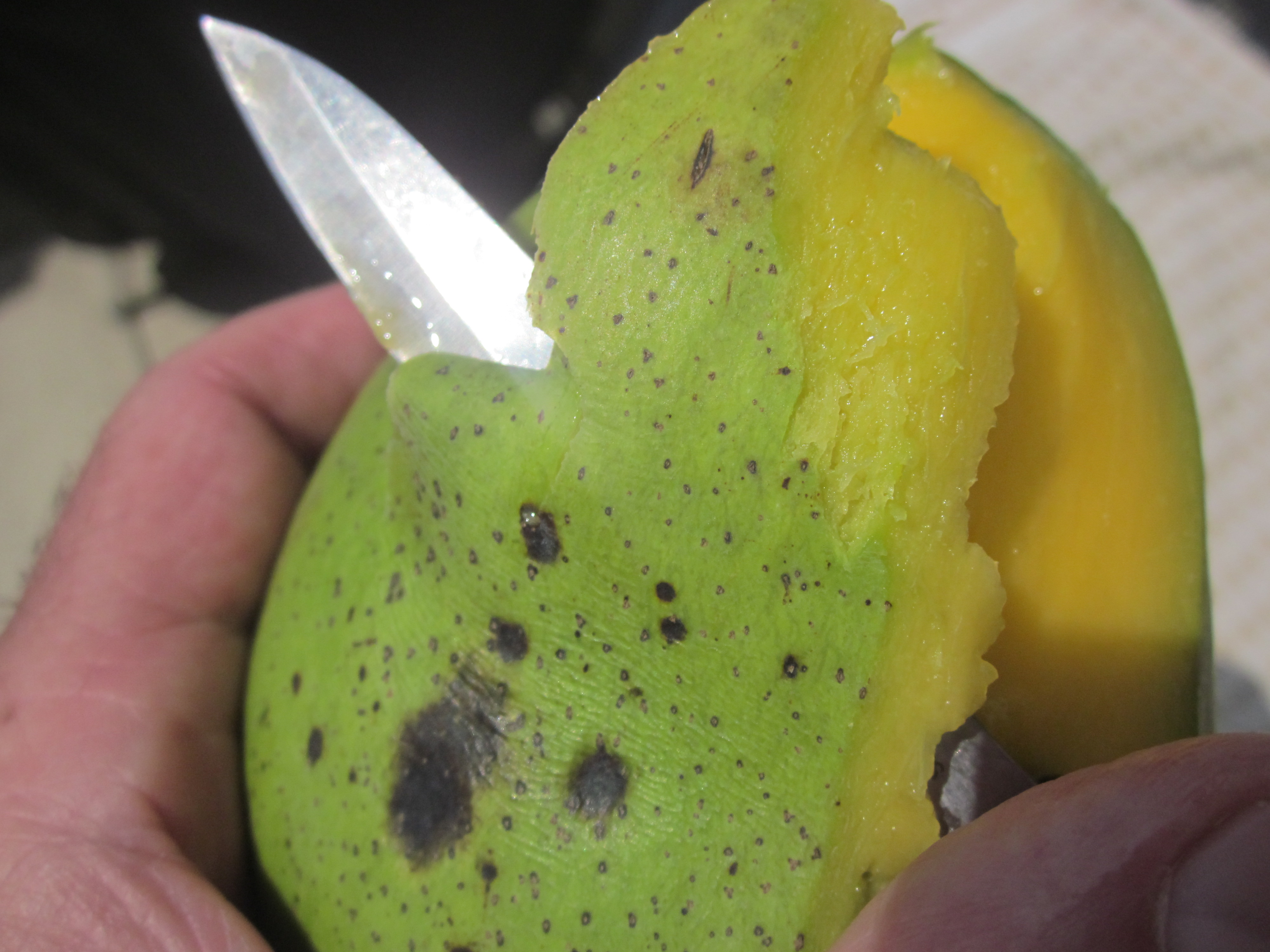
You can peel the tough skin with a knife.

Pull it down and try to slice.

Be careful before you start chewing,

The juices might spurt.

Don’t be slow.

Stay alert.

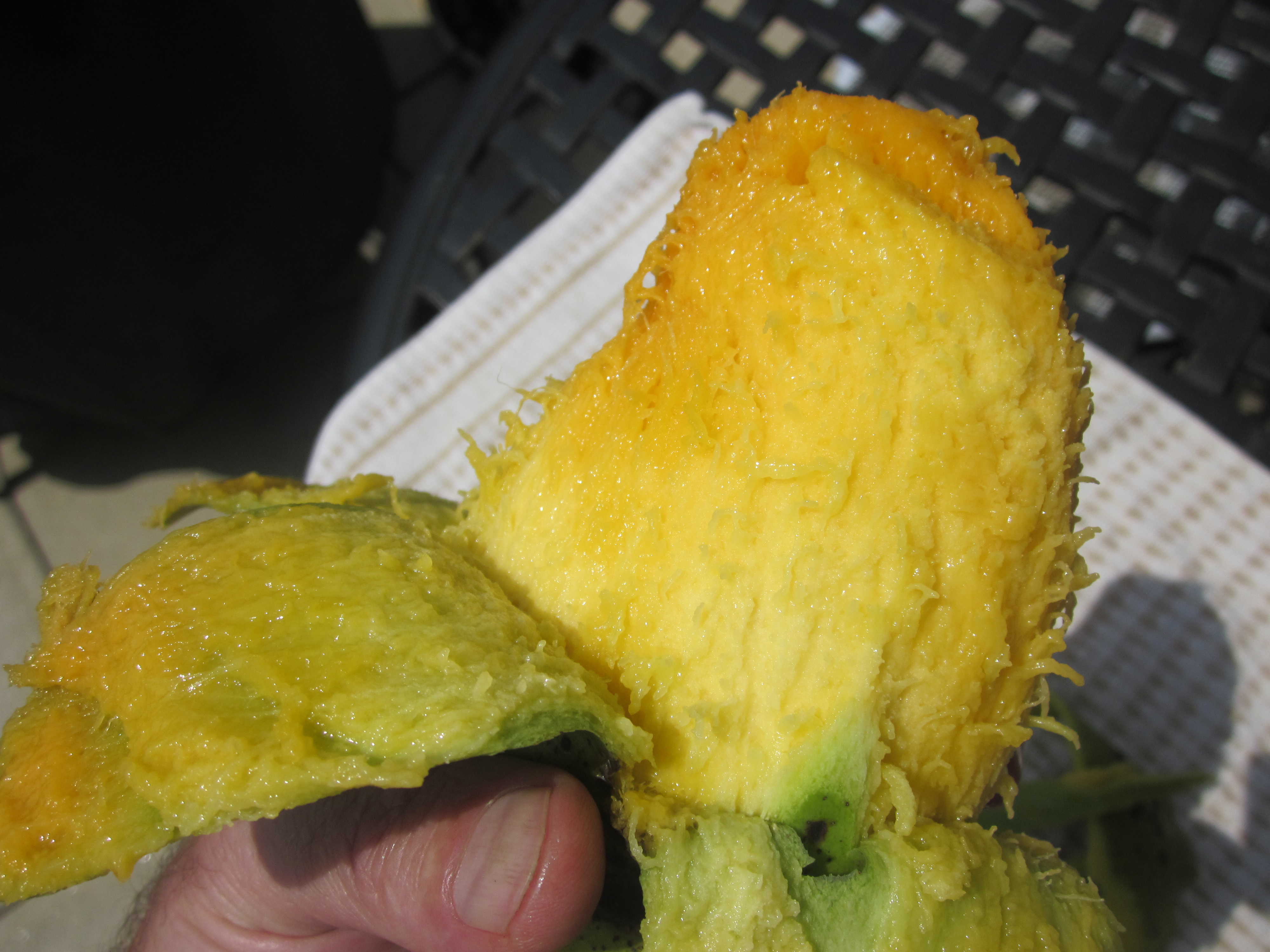
Oh my, how the bright orange flesh stains so.

No doubt, your nice white shirt, will soon be aglow.

Put away the knife,

and give up on the slice.

Just suck through the flesh,

right to the big stone.

This chore is one, you need to handle alone.

The temptations are many.

You might want to bite.

You’ll soon learn, that won’t be right.

Like a thatch of thorns that have you entangled,

your teeth will be riddled with tough fibers at every angle.

To dislodge requires little cost.

All you’ll need is plenty of time,

and two packs of dental floss.

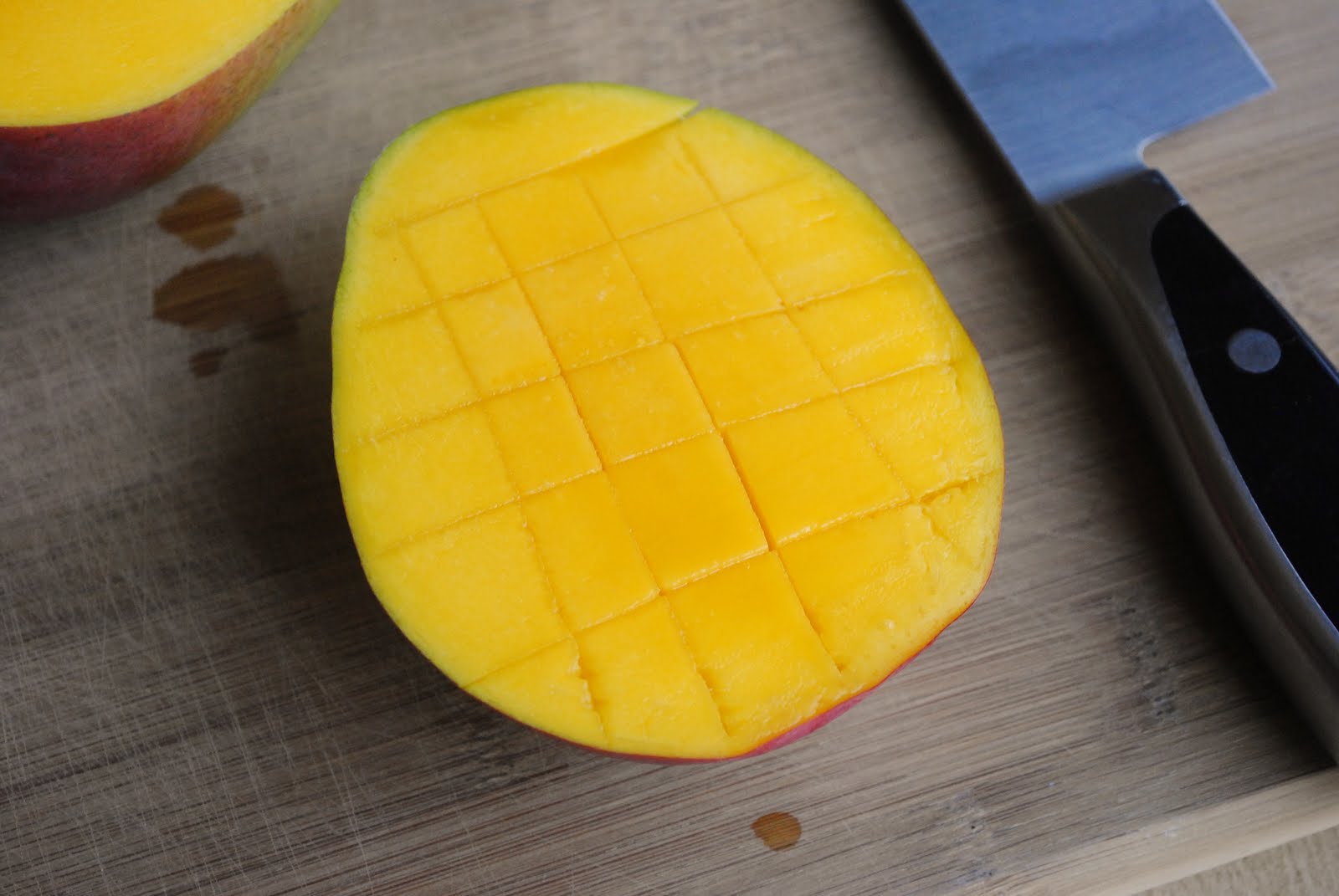
Some say the best way to eat a mango

is one where you cut into the flesh;

a criss cross pattern.

that looks like a mesh.

Turn the skin upside down,

with gentle firmness, you’ll press.

The pieces will fall into a bowl or dish.

Eat with a toothpick, fork or chopstick.

No fuss.

No mess.

The criss cross method.

Like the many varieties of mango,

the choices of how to eat one are plenty.

And while I waste my time,

with these ridiculous rhymes,

I’m sure the list will grow.

Suck, nibble, bite or chew?

Who am I to tell you what to do?

How to eat a mango.

really, is up to you.

The Weekend Special

10 Jun

Sunday is the big parade. You know the one I mean: the National Puerto Rican Day Parade. And to show respect to all my friends who claim roots from Las Isla Del Encanto, Fried Neck Bones hereby proclaims this Cuchifrito Weekend. So go out there and eat all the deep fried pig parts you can find, particularly the delectable ears. Don’t be shy about devouring chicharron (fried pork skin),  papas rellenas (fried potato balls stuffed with meats), bacalaitos (fried stuffed codfish balls), morcilla (blood sausage), and pasteles (pork-filled deep fried pastry)  to your, by now, overworked heart’s content.

Cuchifritos and frituras

To add to the spirit of the weekend, here’s a treat from that honorary coqui, the late, great vibraphonist, Cal Tjader who had the very good sense to compose a piece about the goodies above he titled Cuchy Frito Man. Click below to listen.

1 – Cuchy Frito Man