
Tag Archives: cooking

On Pizza, Pomodoros, Putin, and Putinka

27 Nov

I’m a purist in many ways. With few exceptions, I don’t like fusion—unless I’m creating the fusion. When given the choice, as I always am, tap water works for me at a restaurant. I scoff at all the sauces presented to compliment a broiled or grilled piece of prime meat that should need no compliment.  I don’t buy flavored seltzers. If I want lemon or lime, I can easily add my own to plain seltzer.

And the same can be said for vodka. Who needs cranberry flavored seltzer when a splash of cranberry juice will suffice? That is, unless I’m in the outstanding Russian Samovar, sitting at the bar and trying to decide which of their house made infused vodkas I should order. Maybe start with a shot of ginger followed by the coriander? See, there are exceptions. I’m not totally unmovable on this.
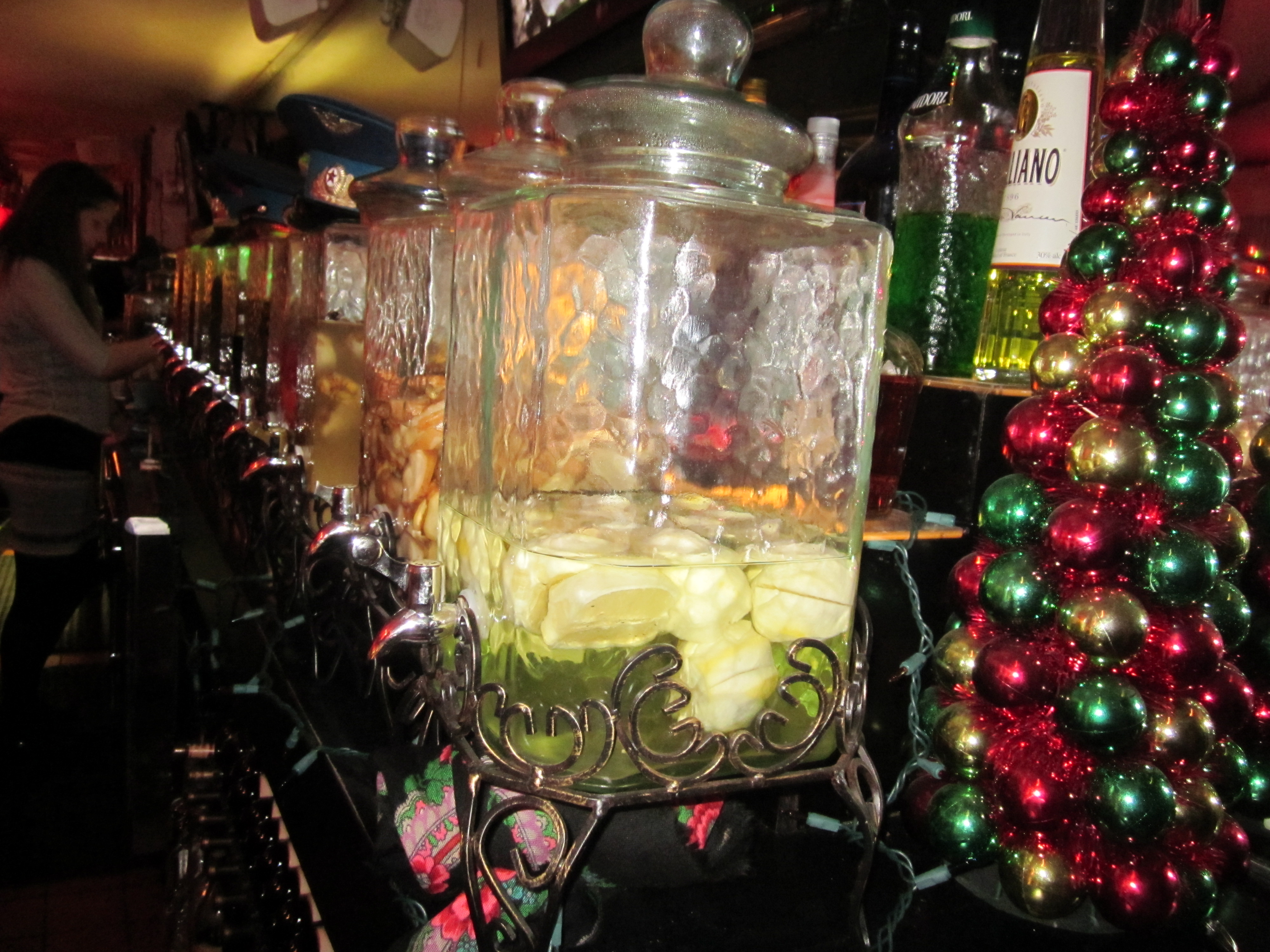
The Russian Samovar Collection

The state of today’s pizza, I’m afraid, has been a serious blow to my purist sensibilities. You enter a pizzeria now and the cold, congealed varieties presented under Plexiglas counters are staggering. The pies are covered with everything from broccoli to kale, from barbecued shrimp to Buffalo chicken strips.

I like my pizza with tomato sauce and mozzarella; preferably more of the former and lighter on the latter. I have been known to throw on some anchovies to improve a mediocre pie. Beyond that, I have no interest in sausage, pepperoni, meatball, mushrooms or any of the usual toppings.

Adding to the ever-growing assortment of pizzas is pizza with “vodka” sauce—the spin on penne a la vodka. I know pizza with vodka sauce is not a new phenomenon. I guess I just put it out of my mind,  desperately trying to deny its existence despite it’s increasing popularity.

I’ve made penne a la vodka myself. It’s not something I’m particularly proud of. I use cheap, local canned tomatoes. Who cares about the quality of the tomatoes if I’m adding cream to it—and vodka? And when I go into my vodka stash just to have it fuse with the sorry canned tomatoes and cream I cringe. It’s one thing to waste a few splashes of red wine in a sauce, it’s quite another to use some of the precious Russian clear stuff.

Well, not always Russian. Sometimes it might be Swedish, Danish, or even from some place in Texas.

Penne a la vodka is an amiable and infrequent diversion. It’s like the undercard of a heavyweight bout; the opening act for standouts like Neck Bones Tomato Sauce  or  Neck Bones Anchovy Sauce, pesto, or the perennial champ: marinara sauce.

So why would I ever be interested in the undercard of a topping for pizza? I wouldn’t. Or I thought I wouldn’t until recently. The lure was drawing me in. Was I missing something here? And how could I comment on something I’d never experienced?

The sign said it all: “Home of the famous vodka sauce.” There was even a banner flapping in the wind above Spring Street advertising “vodka pizza.” The place was called Pomodoro and apparently vodka sauce was their trademark. If I were ever going to experience a slice of pizza with vodka sauce, I would guess this would be the place.

I surveyed the countless array of already made pies under the Plexiglas counter for the vodka pie, but my eyes, inexperienced at least regarding vodka pizza, could not identify one.

I asked the man behind the counter for a slice of vodka. He took out a pie that looked like any other “regular” pie and cut out a slice which he threw into the oven to heat. A few moments later it was presented to me.

Vodka slice from Pomodoro

My normal reflex whenever eating a slice of pizza is to grab for the red pepper flakes and sprinkle generously over the slice. I did the same here not knowing that the vodka pizza was already spicy.

The slice was coated with chunks of very good, albeit spicy, tomatoes and fresh mozzarella while the only negative was that the crust was a little on the thick side for my taste. It was a more than commendable slice. Still, I was puzzled. I admit to being a vodka pizza virgin, but was this what a slice of vodka pizza tasted like? It didn’t taste anything like my penne a la vodka. Where was the vodka in the vodka slice?

So they called it something other than what it really was. It didn’t matter. I liked the pizza and brought a few slices home to give it another shot. This time I thought maybe, instead of beer, my usual accompaniment to pizza, I would accompany the vodka slice with vodka.

For the occasion I had a Russian named Putinka in my refrigerator. An apparent tribute to Russian president, Vladimir Putin, the Putinka also billed itself as “soft,” vodka, whatever that meant. Was soft vodka the equivalent to light beer? I hoped not. And really, would the former Lieutenant Colonel of the KGB want a vodka named after him that was billed as “soft?”

Soft vodka

Either way, I reheated the vodka slice and poured a shot of Putinka over ice. I sipped and then took a bite. The vodka, soft or not, gave me the familiar and comforting burn that, I discovered, paired brilliantly with the so-called vodka pizza.

I finished the vodka and the pizza a bit too quickly and then realized something that should have been obvious to me—something that conformed to my purist sensibilities. There was no need to search out a pre-made vodka sauce pizza where, most likely, the vodka sauce wouldn’t be up to your own standards. Just like adding your own flavor to your pure vodka, you could do the same with this pizza. All you needed was a warm slice of pizza and a cold Russian in the refrigerator.

Pomodoro
51 Spring Street
NYC

A Pair of Pepper Sauces

12 Nov

I heard tell there was a big wind coming our way. A super storm they were calling it. The terrace had to be cleared of potentially dangerous projectiles. The few herbs that remained were not a threat, but the never ending procession of hot peppers that were still going strong in late October had to be “terminated with extreme prejudice.”

In May I planted two types of hot peppers I bought in the Arthur Avenue Retail market in the Bronx including one I’ve grown before called “Portugal Hots,” a long thin pepper similar to the cayenne. The other was labeled an “Italian chili pepper.” I wasn’t sure what an “Italian chili pepper” was but hoped that it was similar to what was sold in the same retail market in the fall; bunches of slender, one-inch long red, fiery chilies still attached to their stalks. I was assured by the salesperson that it was.

Portugal Hots

In the abnormally warm spring and hot summer, the plants grew fast and when the first fruits began to appear, I was surprised by what I saw on the so-called Italian chili pepper plant. The peppers were growing upright and looked something like jalapeno peppers. Once they were green and fully formed, they were definitely not the Italian red chili peppers I had hoped for.

I scoured the internet to find a match to what I was growing. What I discovered was that the peppers were called “Fresno” and, according to my research, similar to a jalapeno. I was disappointed. I didn’t want a jalapeno or anything “similar.” The plants were healthy and the numbers of peppers on them countless. When the first pepper turned red, I tried it. It had very little heat adding to my disappointment.

A few weeks later, as more turned red, I cut up another. This time I was blasted by heat. And as the summer wore on and the peppers matured further, their fire became explosive—much hotter than a jalapeno, Serrano, and spicier than the Portugal hots that were growing next to them. I had some serious hotties on my hand. If the Scoville scale that is my tongue was any indication, these Fresnos were just a notch behind the habanero in heat quotient.

Fresno peppers

As both the Portugal hots and the Fresnos prospered throughout the summer and into early fall, I bagged bunches and put them in the freezer where they would last a year. Frozen, I use them in stews, sauces and anything else that required a blast of spice. I had more than enough already to last a year so I gave bags away to others who, like me, get masochistic enjoyment when the inside of their mouths are blistered.

Still, many peppers kept coming as summer faded and though some were still green, a super storm was on its way and I had no alternative but to harvest what remained.

As any self respecting citizen should, I have several bottles of hot pepper sauce in my refrigerator ranging from mild to hiccup-inducing hot.  Is there such a thing as having too much hot sauce? I didn’t think so. So inspired by a fellow bloggers at website caled Putney Farm who had a similar dilemma and turned that profusion of peppers into a homemade pepper sauce, I thought I would try it as well. But because I had two different types of peppers, I decided to make two different pepper sauces.

As I do with many recipes, I cull the internet and usually mix and match from a variety I like and try to come up with something my own.  The first, using the Portugal hots, was to be a “fermented” pepper sauce or one I would have steep in a brine for several days before actually pureeing into a sauce.

Since I just used what I had of peppers, the quantities of the ingredients I pretty much played by ear. For the fermented hot pepper sauce, I had enough of the Portugal hots, (green stems removed) to fill up a pint jar.

To the jar I added three peeled whole garlic cloves and two teaspoons of sea salt.

I then filled the jar with water and made sure the peppers and the garlic were submerged before tightening the lid of the jar.

Once the jar was sealed, I placed it in the back of a dark cabinet and let it ferment for about 10 days. You can ferment, from what I gathered, for as little as a few days up to two weeks. I was in no rush.

After ten days, I opened the jar and drained off the water (now a brine), saving it to add back into the sauce. I put the garlic and the peppers into a blender and added back half of the brine along with an equal amount of white vinegar.  Depending on how you like your hot sauce; chunky or smooth, is how long you puree. I wanted mine closer to smooth than chunky so I pureed long enough to get that consistency.

After pureeing, I poured the hot sauce back into the pint jar, sealed it, and put it in the refrigerator. The sauce will last a year—or until you are ready to make another batch next year.

Portugal Hot pepper sauce pureed smooth.

The recipe for the Fresno hot sauce was pretty much identical to what my friends at Putney Farms laid out in their blog post Homemade Hot Sauce. In theirs, they used Serrano peppers. The Fresnos I grew, as I said, were hotter than Serranos, but I didn’t think that would necessitate a change in the recipe.

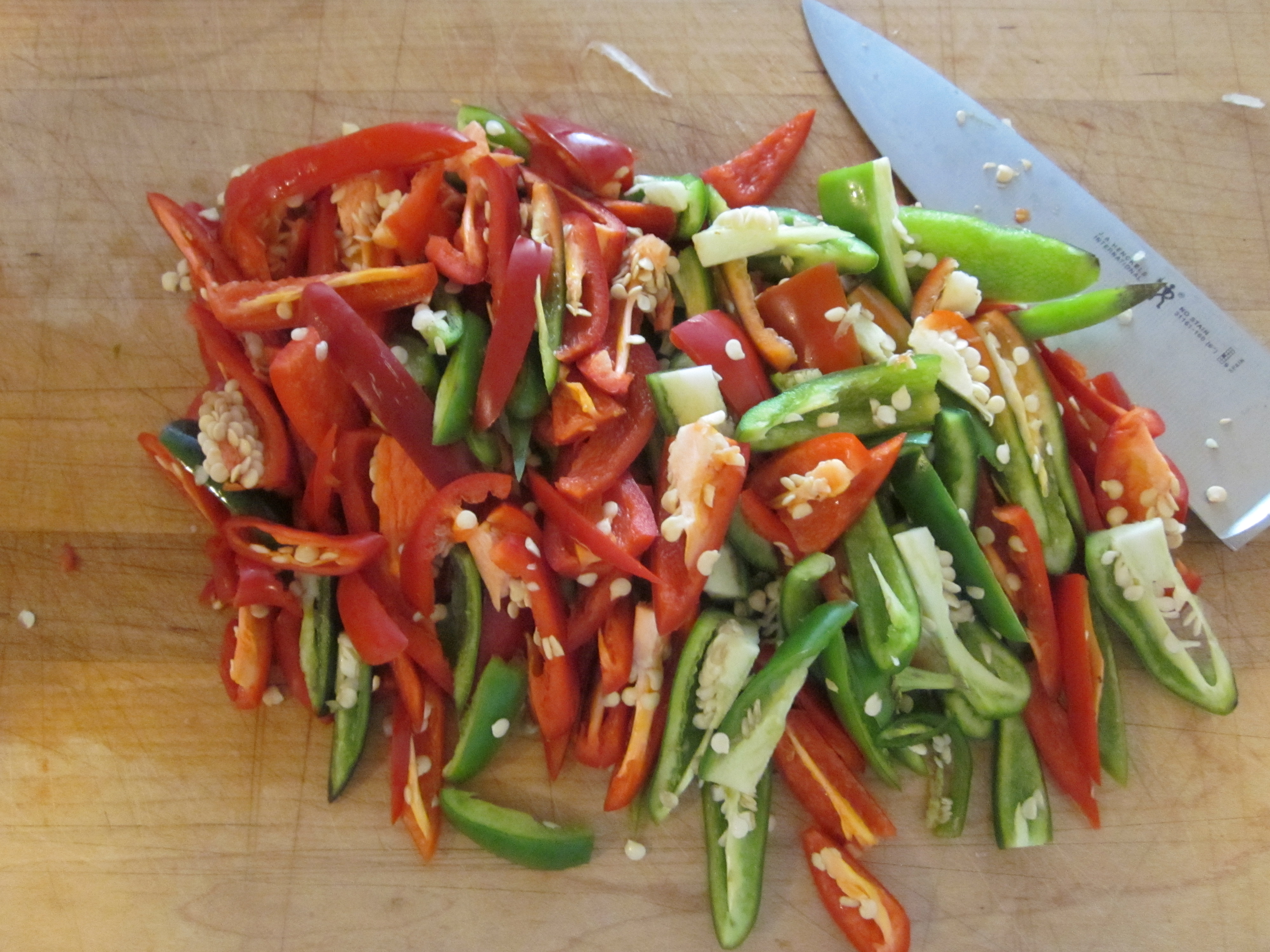
Their recipe called for 8 ounces of peppers. I had more and adjusted accordingly. Not using rubber gloves, I sliced all the Fresno peppers, but made sure I kept my hands away from my eyes, nose, and private parts until I could sufficiently wash them.

Along with the peppers I sliced one large white onion and minced two garlic cloves.

To a medium saucepan, I put a tablespoon of olive oil. And then, on medium heat, added the peppers, onions and garlic. The recipe at Putney Farms warns of the fiery vapors that will be unleashed from the sautéing of the peppers. It was in the forties outside, yet I opened the windows, turned on the ceiling fan, and commenced the sautéing. For extra protection I wore a surgical mask. After a few minutes, however, I removed it. The vapors were helping to clear congestion in my chest. Just another one of the magical benefits of the revered and cherished capsicum.

After sautéing for about five minutes, I added two cups of water and two tablespoons of brown Demerara sugar.  I cooked all for about twenty minutes or until most of the water was evaporated.

Once the mix of peppers, onions and garlic cooled to room temperature, I added a cup of cider vinegar and pureed in a blender.

I poured the puree through a fine mesh sieve until only the thick skins and seeds still remained and what passed through was a smooth, creamy, pinkish mixture.

Now I had two hot sauces. I tried them both.

The Portugal hot fermented sauce had a mild pepper kick. The Portugal hots, I’ve found, can be inconsistent in terms of heat. Some are very hot while there might be a few that have barely a trace of fire. Knowing that, I still like them for their intensely sweet pepper flavor that when combined with the heat makes a unique taste. The sauce, however, though with a slight, vinegary tang, was overpowered by garlic. I would definitely limit the garlic if I decided to make the sauce again. Still, I looked forward to sprinkling a generous amount over roast chicken with yellow rice and beans.

Portual hots hot sauce

The Fresno pepper sauce on the other hand was everything I wanted. Just a few drops would suffice on any dish, it was that hot. There was also a sweetness from the inclusion of brown sugar and cider vinegar that added to the flavor. If anything, I would cut down on the sugar a bit next time.

Fresno hot sauce


Some Good News About Sandy

31 Oct

It’s been downgraded to a lechonera.

Time to remove the plywood and roast some pork.

I hope all my friends and followers are safe and moving forward post-hurricane.

Baklava in the Bleachers

16 Oct

As I said in these pages about a month ago (New Year’s Penicillin), I’ve been spending a lot of time just off the 230th Street exit of the Major Deegan, sitting on crooked aluminum bleacher seats watching baseball on a small field. The field borders the Deegan and the hum of traffic is a constant.

The bleacher seats: no admission charge.

In between games or while waiting for the games to begin, I’ve become very familiar with the Kingsbridge neighborhood that surrounds the field.  A café con leche at Malecon Restaurant has become a weekly treat and as I reported here, I “discovered” a 50 year old Kosher deli named Loeser’s where the penicillin includes chicken broth, noodles, or maybe a matzoh ball.

More recently, as I waited for the games to begin, I happened on another place. Just a few paces from the 50th police precinct and across the street from the Nice Guys Car Wash, I found a small, shed of a diner called Christos Gyro & Souvlaki.

The souvlaki of Christos.

Christos, I learned, has been at its tiny location on Kingsbridge Road the past eight years—at least that was what the owner, Christopher, a.k.a Christos, said to me as he also proudly handed me a laminated Daily News article about his restaurant where that newspaper rated his gyro the best in the city.

The weather was changing. An Indian summer day was quickly turning into a brisk autumn one. I’d have to take the Daily News’ word on the gyro. I wanted something else. I didn’t need New Year’s penicillin, but the close Greek equivalent would do very well.

“You want the avgolemono?” Christos asked.

“Yes I do,” was my definitive response.

“Anything else?”

“Moussaka,” I said, not caring that I might miss the beginning of the game.

“Very good choice.”

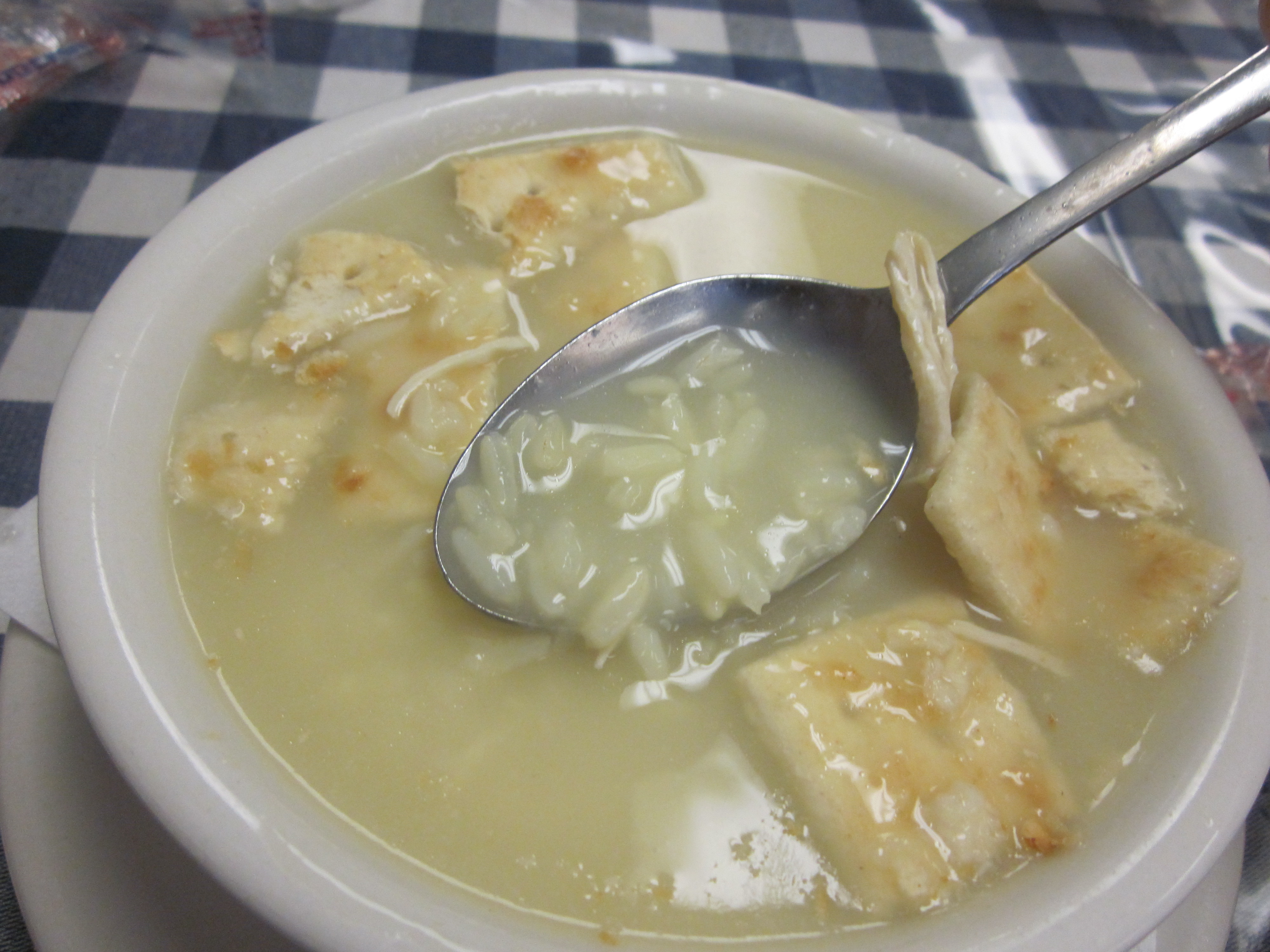
The bowl of the yellow-tinged, lemon chicken soup was steaming. Spherical dots of orzo floated within along with slivers of chicken. The distinct citrus snap of lemon meshed magically with the hearty, comforting chicken broth.

I crumbled a few saltines into the bowl and slurped. It wasn’t long before the bowl was empty.

Christos’ avgolemono

Moussaka awaited, paired with a simple Greek salad, pita bread and a generous bowl of tzatziki. I dipped the pita into the creamy, garlicky yogurt…and then I double dipped.

The half inch of béchamel sauce on top of the ground beef and eggplant was airy, the filling scented with cinnamon. I alternated between bites of the moussaka and dips of the tzatziki until all was gone.

Moussaka, Greek salad, tzatziki

Christos came to clear my table. “You did good,” he said.

“I know,” I answered, happy to have made him proud.

As I waited to pay, I noticed a tray of baklava and remembered reading in the Daily News piece that Christos’ wife made them fresh daily. I pointed to it. Christos’ son was working the cashier—Christo’s was most certainly a family affair. “To go?”  he asked.

I nodded and took the bagged baklava back to the ball field. I devoured it watching baseball on the bleacher seats while like a continuous loop, the music of the Major Deegan played on and on.

Music to eat baklava by.

Neck Bones Anniversary Anchovy Sauce

3 Oct

Last year, around this time, on the first anniversary of the launch of Fried Neck Bones…and Some Home Fries, I celebrated with a batch of Neck Bones Tomato Sauce, the recipe I shared on these pages (Neck Bones Anniversary Tomato Sauce). I don’t really consider myself a man of tradition, but when it comes to food, and eating, maybe I am. So to follow tradition, on this, the second anniversary of Fried Neck Bones…and Some Home Fries, I have celebrated with another pasta sauce. This one is meatless, but to compensate any lack of flavor, doused heavily with that favorite little fish; the anchovy.

Speaking of traditions, the origin of my romance with the anchovy began with a Christmas Eve tradition. One of the seven fishes (Seven Fishes for Seven Dishes), prepared for that Italian feast in our family was the anchovy. My grandmother was the chef and when I was young, the featured pasta was spaghetti with anchovies.

But anchovy love doesn’t come easily or immediately. The sight, smell and taste of the little brown oily and spiny fillets could cause a child to retch. I wanted no part of it and I wasn’t alone. My brothers felt the same way and instead, on Christmas Eve, we had our spaghetti with just butter and Parmesan cheese.

Soon after experiencing puberty, our taste buds became more open minded and, though anchovies were still a tough sell, we graduated to the milder, white clam sauce. There was now a seafood alternative to coat the spaghetti with.

I can’t pinpoint the actual date when I converted, but it was sometime in early adulthood. Soon I was actually adding a few of those fillets into my white clam sauce. There was definitely something about that stinky fishy fish that was working magic in my mouth. Friends looked at me in horror when I began to, voluntarily, decorate my slices of pizza with the fillets. It wasn’t long before, given the choice on Christmas Eve, I would take the anchovy sauce before the white clam.

The romance was on and grows stronger with each year. There is no chance I eat spaghetti with anchovies just on Christmas Eve. It’s now a treat I prepare every couple of months—and a simple, inexpensive one at that.

I’m sure many of you might have a prejudice against the anchovy stemming from early encounters when, like me, your sense of taste just wasn’t ready for such an assault of flavor. Try to move past that prejudice and give the little fish another chance. And here, to lead you on to the path of anchovy righteousness is my recipe for Spaghetti with Anchovies.

Some of the ingredients for spaghetti with anchovies.

Ingredients

1 small bottle of anchovies in olive oil.*

½ cup of olive oil

4-5 good-sized cloves of garlic, chopped into large pieces**

½ tsp of dried red pepper flakes or a few slices of fresh chili pepper (for this one I used a fresh chili from the garden)

2 tbs of chopped fresh Italian parsley

¼ cup of dry white wine or water

1lb of spaghetti

*Anchovies come in several forms. There are the tins or bottles in olive oil, or they can be bought packed in salt. The anchovies packed in salt are the most desired, but also the most expensive and most work. The salt packed anchovies need to be rinsed under cold water and then cleaned of the tail and whatever guts might still be attached. Sounds disgusting, but worth the effort in the long run. For this recipe, however, I used imported Italian anchovies from a jar and they’ll do just fine. The anchovies found in the tins work too, but are not quite up to the quality you will find in the jar or salt packed.

What I used.

**The finer you chop or mince garlic, the stronger the taste. For this dish, which already is overflowing with flavor from the anchovies and red pepper, I like a milder taste from the garlic so I keep the pieces coarsely chopped, rather than fine.

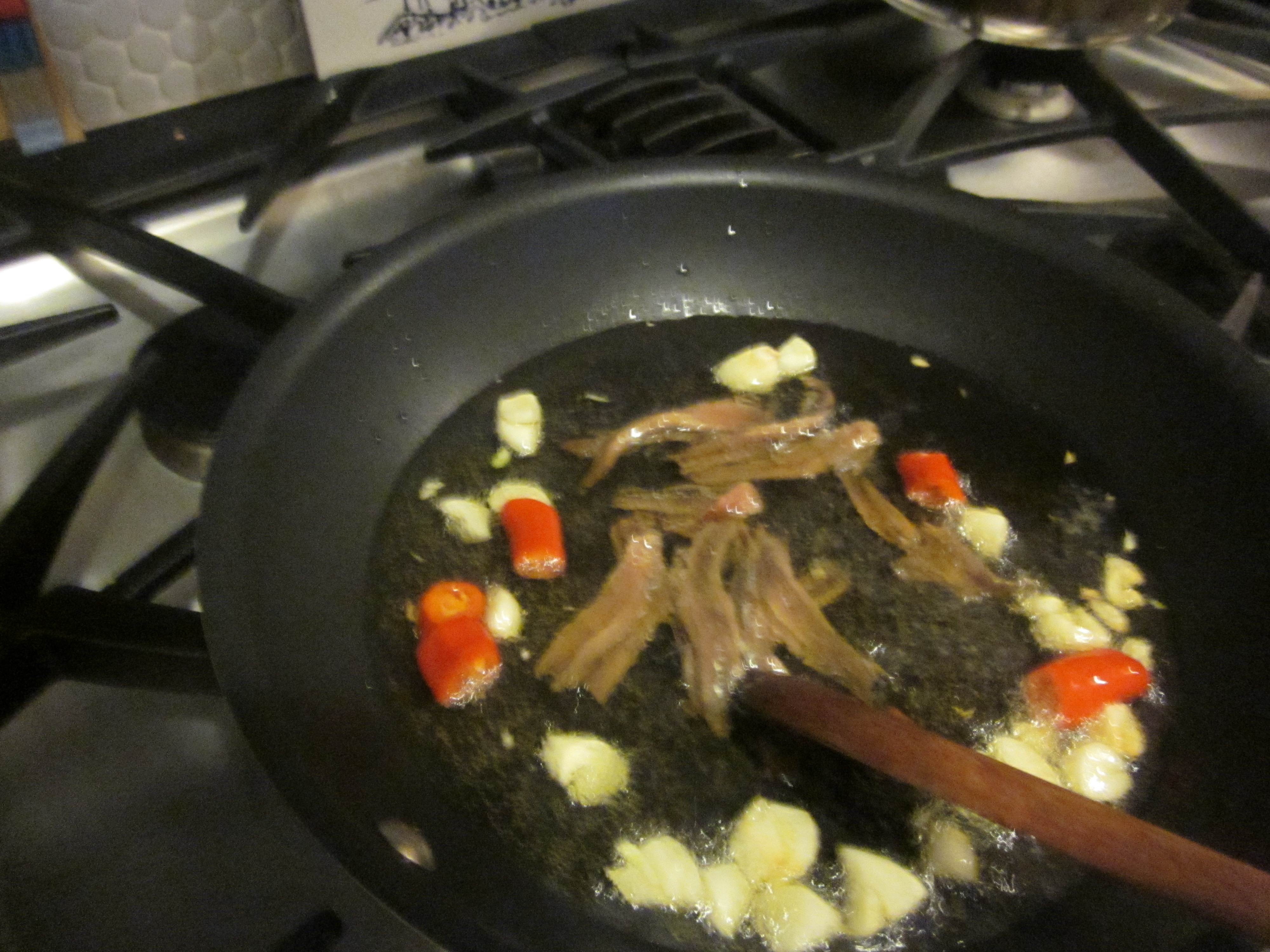
Breaking up the anchovies.

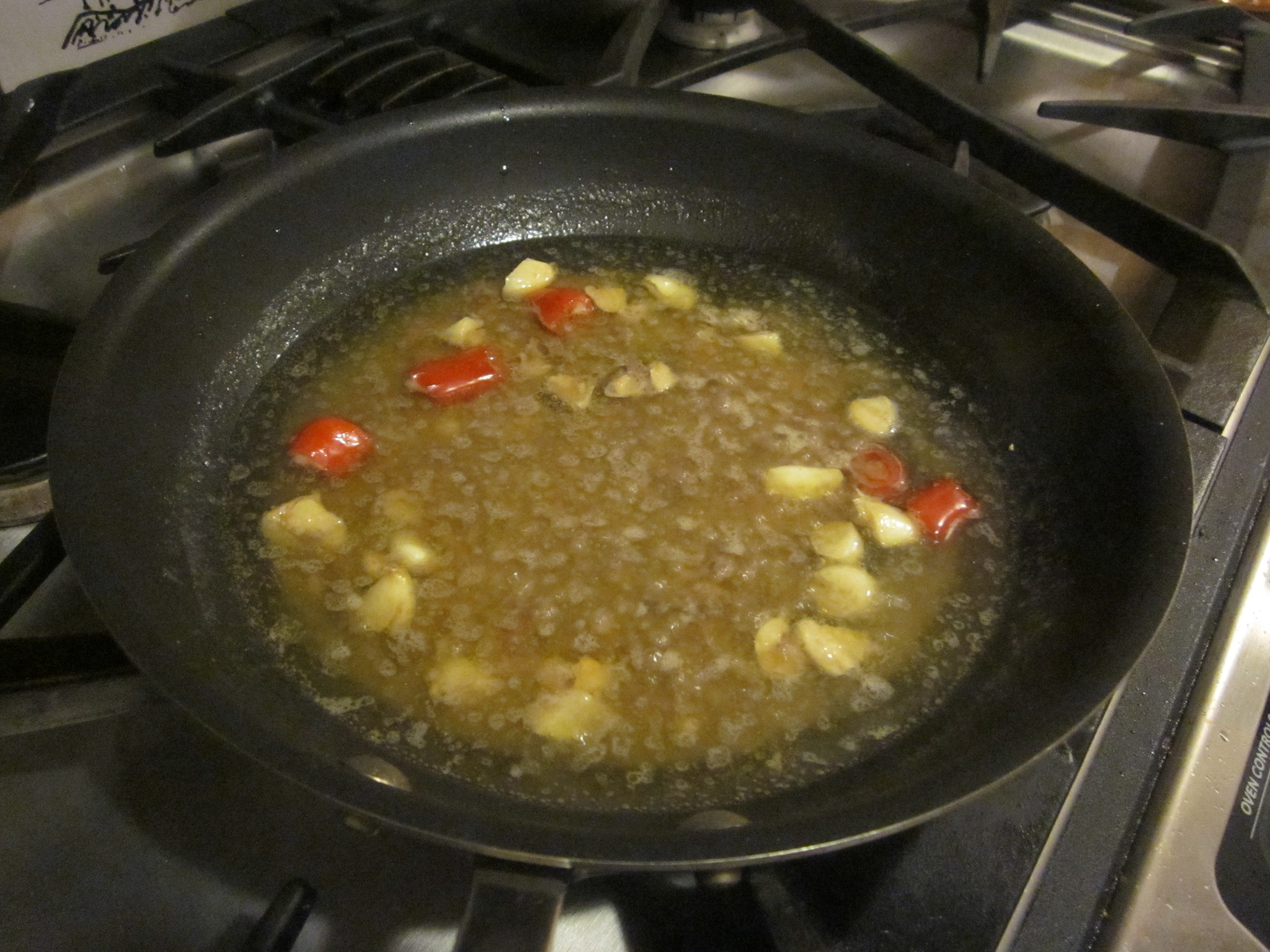
In a skillet, heat the oil on a medium flame. Add the garlic, but do not brown. Toss in the red pepper, cook for a minute and then add the anchovies. There will be sizzling. Stir the anchovies around the oil, breaking them up with a wooden spoon. Add the white wine or water and lower the heat. Once the sauce simmers, stir again until the anchovies have melted into the liquid forming a brown, almost gravy-like sauce. It should look a little like the Piedmontese specialty bagna cauda. Taste and if it is too strong, add more water or wine.

The sauce is now ready for serving.

Cook the spaghetti al dente, drain, and then add the sauce, topping with the fresh parsley. If you are an anchovy fanatic, like my father, you might want to also add a few extra uncooked fillets on top of your bowl.

Though the pasta police prohibit grated parmigiano  Reggiano or Romano cheese on seafood sauces, if you choose to indulge, you have my word that I won’t report you.

Spaghetti with anchovy sauce

Coppertoned Eggplant

14 Aug

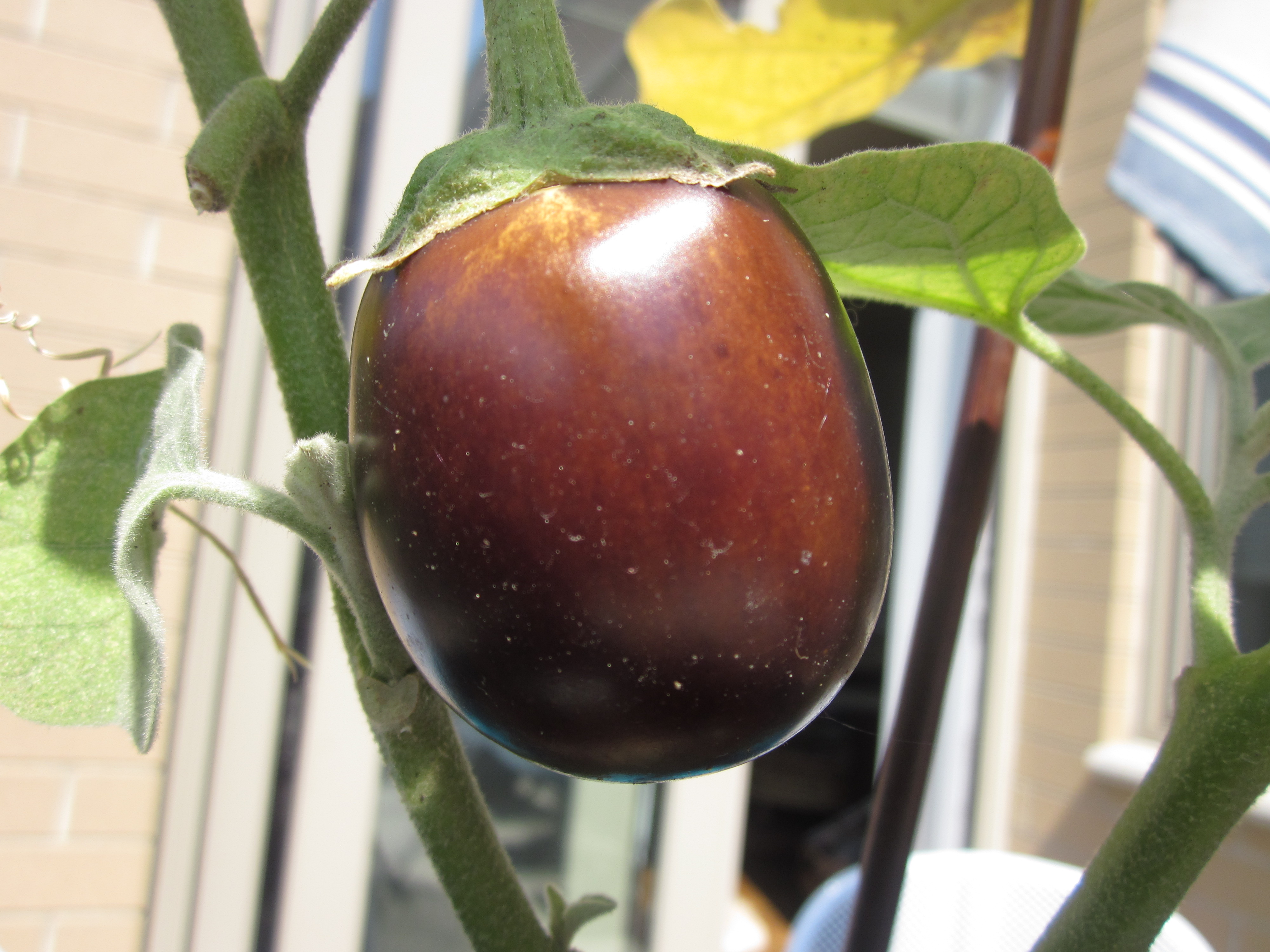
I don’t know what is more abundant, the summer eggplant crop or the recipes on what to do with all of them. And here I am joining the fray with one of my own.

This one is not unfamiliar. It’s the summer version of eggplant parmigiana. The difference between the summer and non-summer is that the eggplant is  grilled as opposed to the traditional egg-dipped, breaded and then fried (though my non-summer version is baked, never fried, but that’s another story).

 Ingredients

2 medium to large eggplants-sliced into ½  inch rounds*.

3 tbs of olive oil

1 ½ cups shredded mozzarella

½ cup of grated parmigiana or pecorino cheese

4-6 cups of marinara sauce (recipe below**)

6 fresh basil leaves

Salt and crushed red pepper to taste.

*You could peel the eggplant if the tough skin bothers you. I peel them when I am making eggplant parmigiana in the oven. But I think charring the skins adds to the summery flavor of this dish.

After slicing the eggplants, sprinkle with salt (Kosher or sea salt preferred) and coat with olive oil.

If using a gas grill, turn it on and warm it up. Using a charcoal grill is a bit trickier, but the results will be more satisfying. The eggplant will gain a smoky flavor that can’t be replicated with the gas grill. The problem is trying to keep the eggplants from falling through the cooking grate as a sacrifice to the charcoal gods. You’ll need one of those vegetable and/or fish baskets to go over the original grate. I have yet to find one I really like so I tend to cook vegetables on the gas grill. And even when grilling on a gas grill, I usually lose a few through the grates no matter how careful I am.

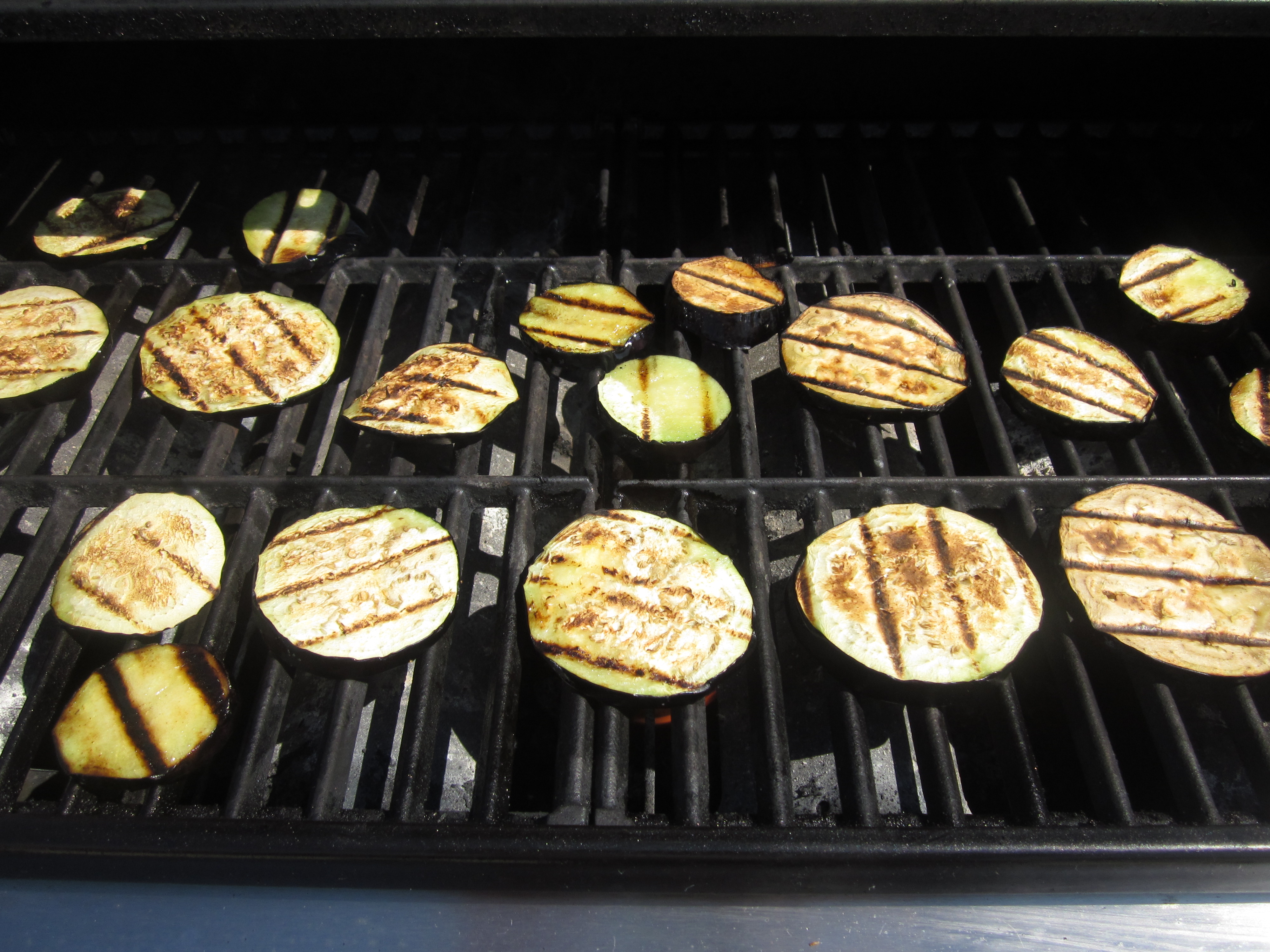
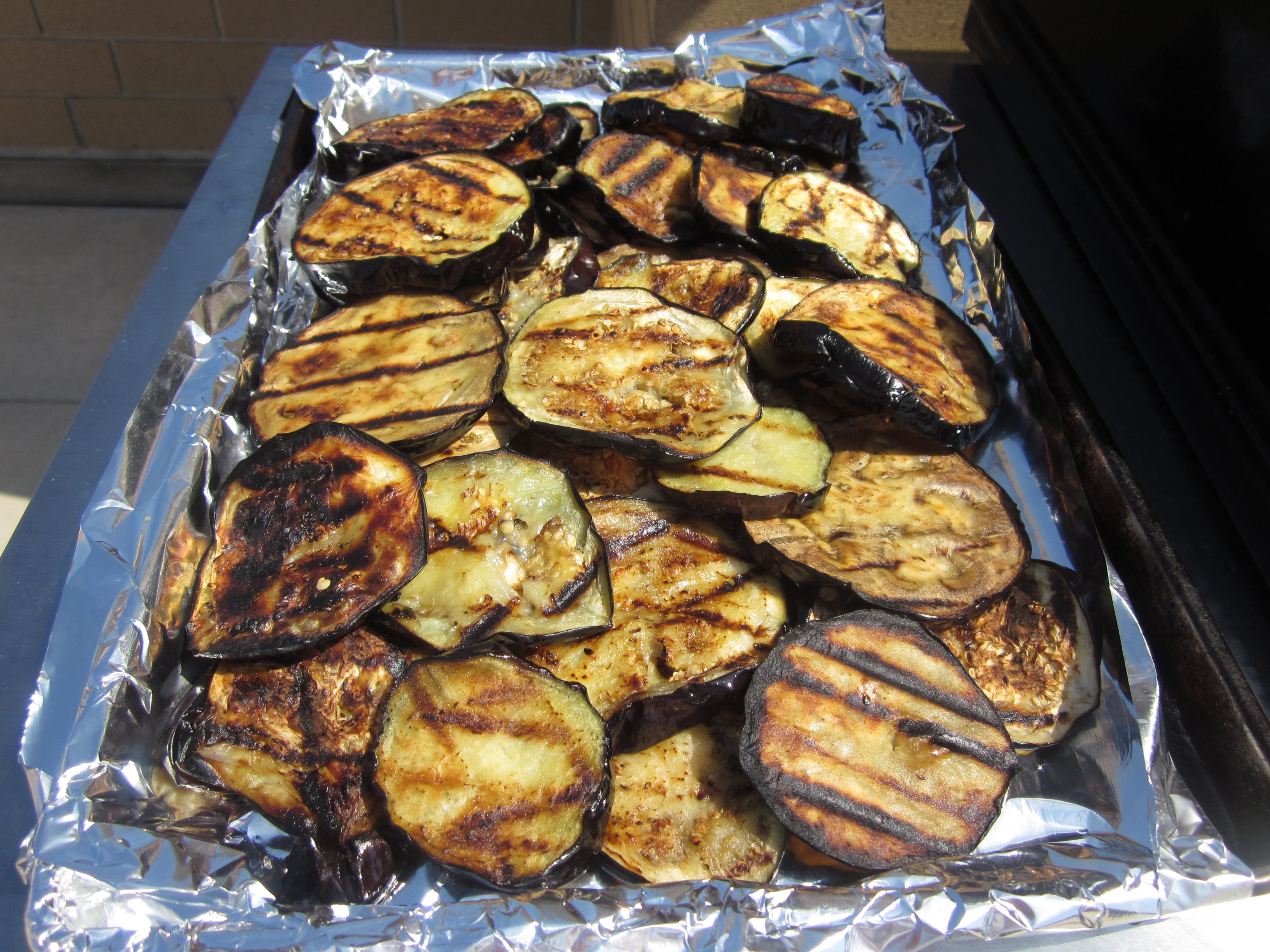
Grill the eggplant until it has that nice, even Coppertone tan. Tan lines, in this case, are more than acceptable. The char lines from the grill grate add to the beauty of the eggplant’s appearance.

Tan lines accepted.

Remove the eggplant from the grill and let them cool while you put the parmigiana together.

Copptertoned eggplant

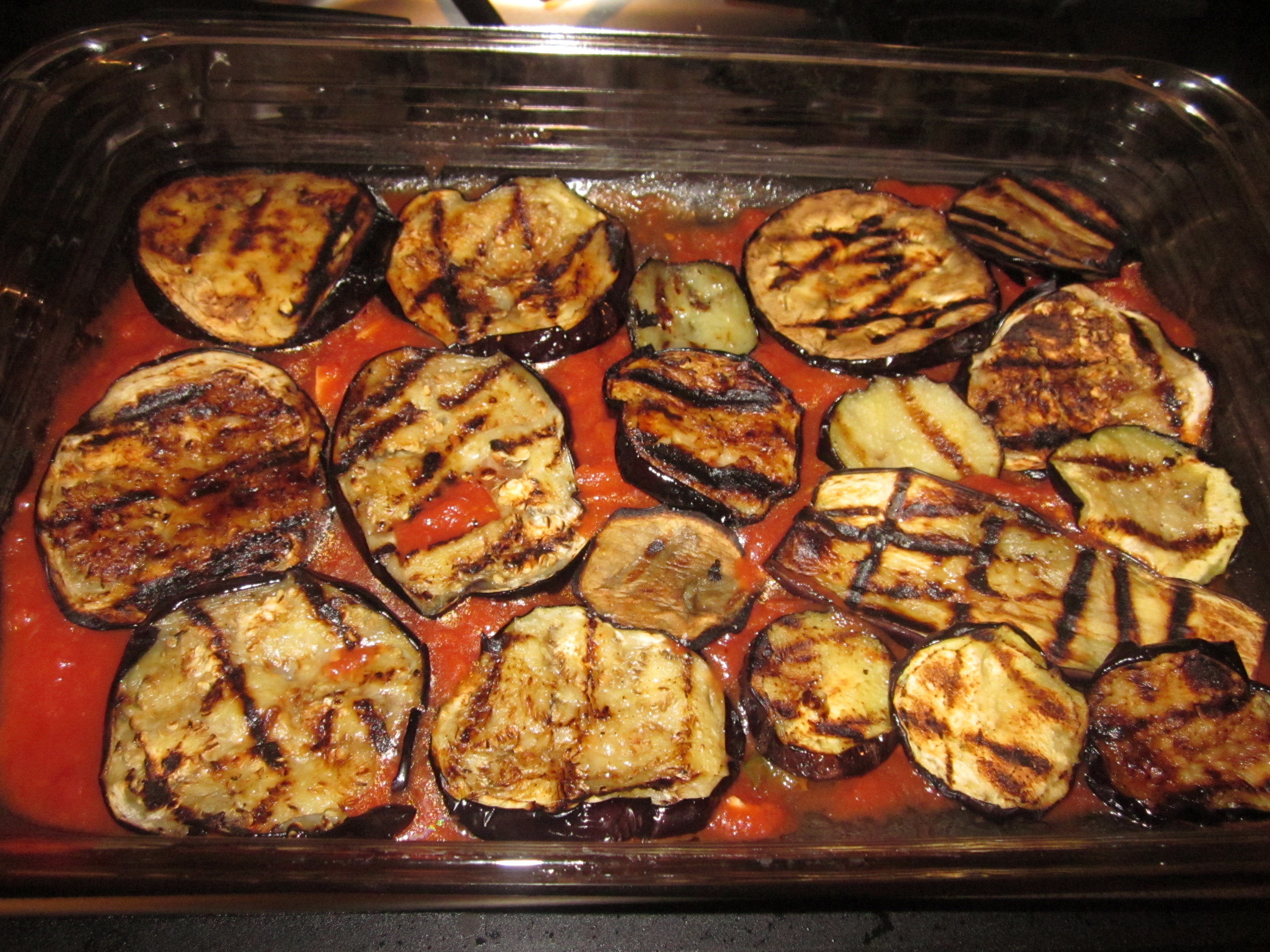
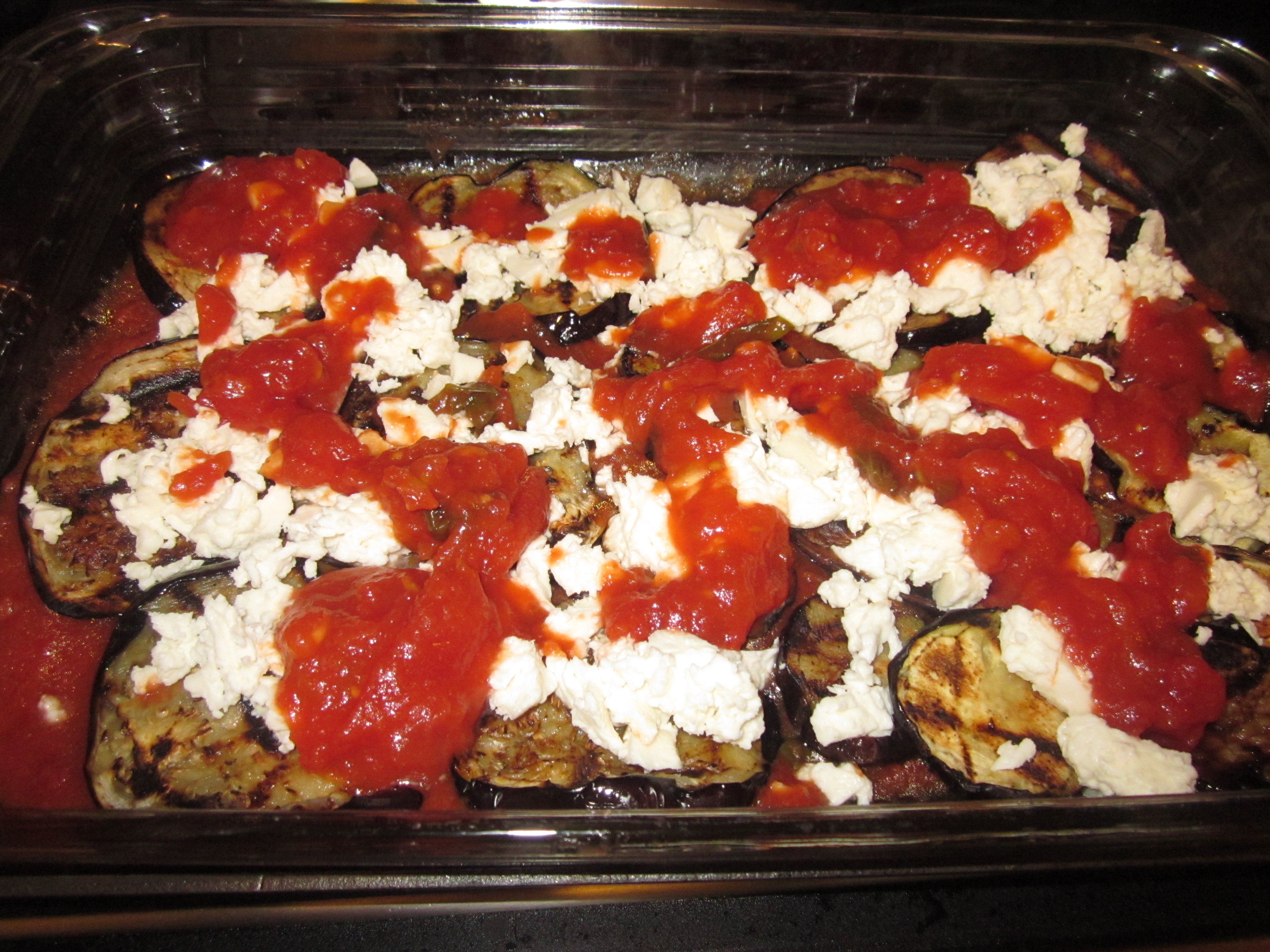
Pre-heat the oven to 375 degrees. Using a 9 inch, by 13 inch baking dish, (or something similar) spread about a cup and a half of the tomato sauce on the bottom of the dish. Arrange the eggplant slices on top of the sauce, add another half cup of sauce over the eggplant and sprinkle half of mozzarella over all.

Building the parmigiana

Add another layer of eggplant slices and repeat with the sauce and mozzarella. Continue until you have used all the eggplant. Make sure you’ve saved some sauce and mozzarella to coat the top of the last layer.

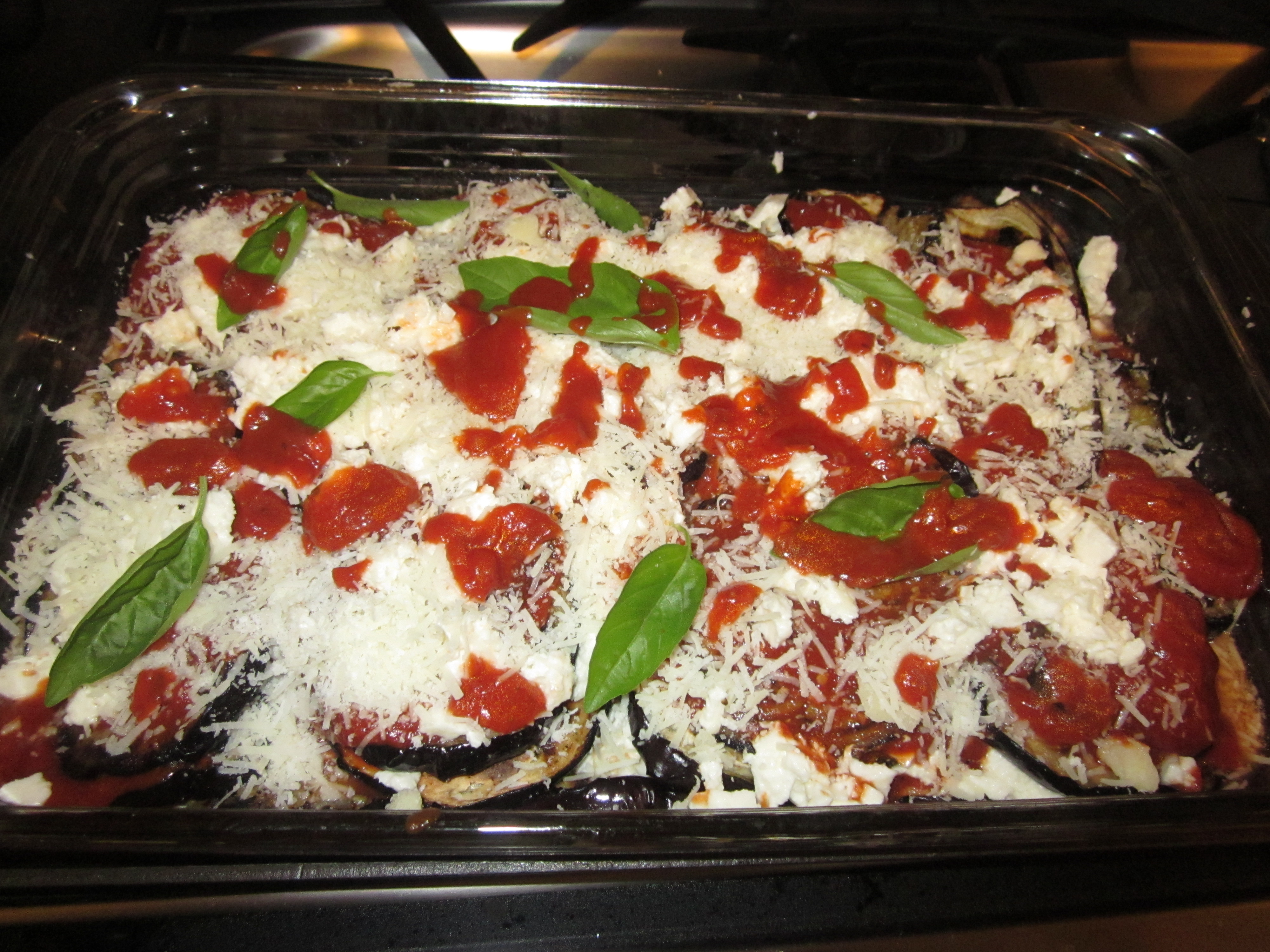
Scatter the fresh basil leaves evenly over the sauce and mozzarella and then sprinkle the parmigiana cheese over all.

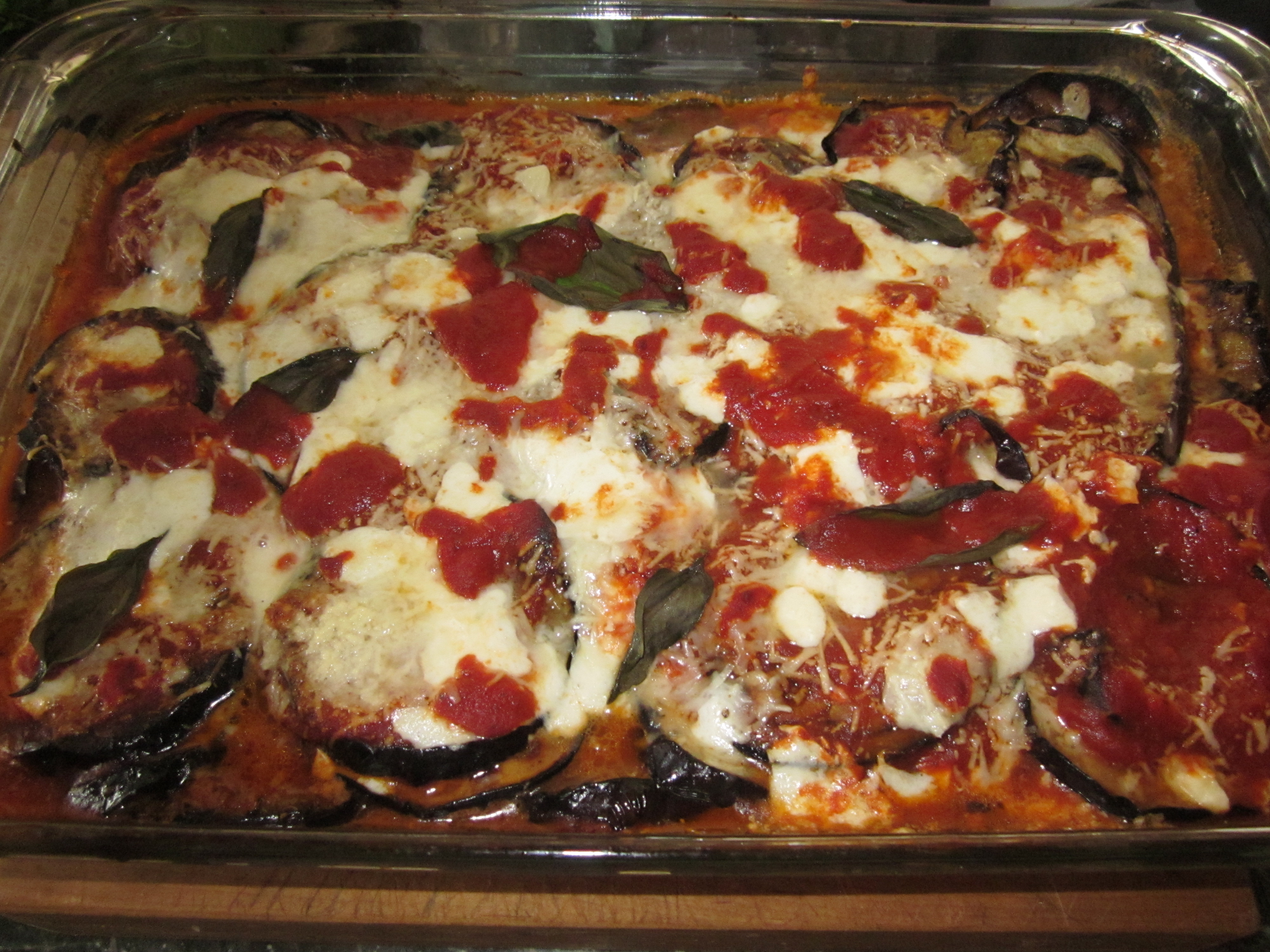
Put the dish in the oven and cook for about 15 or 20 minutes or until the sauce bubbles and the cheese has melted. Remove from the oven and serve warm.


Coppertoned eggplant parmigiana


**Simple marinara Sauce recipe

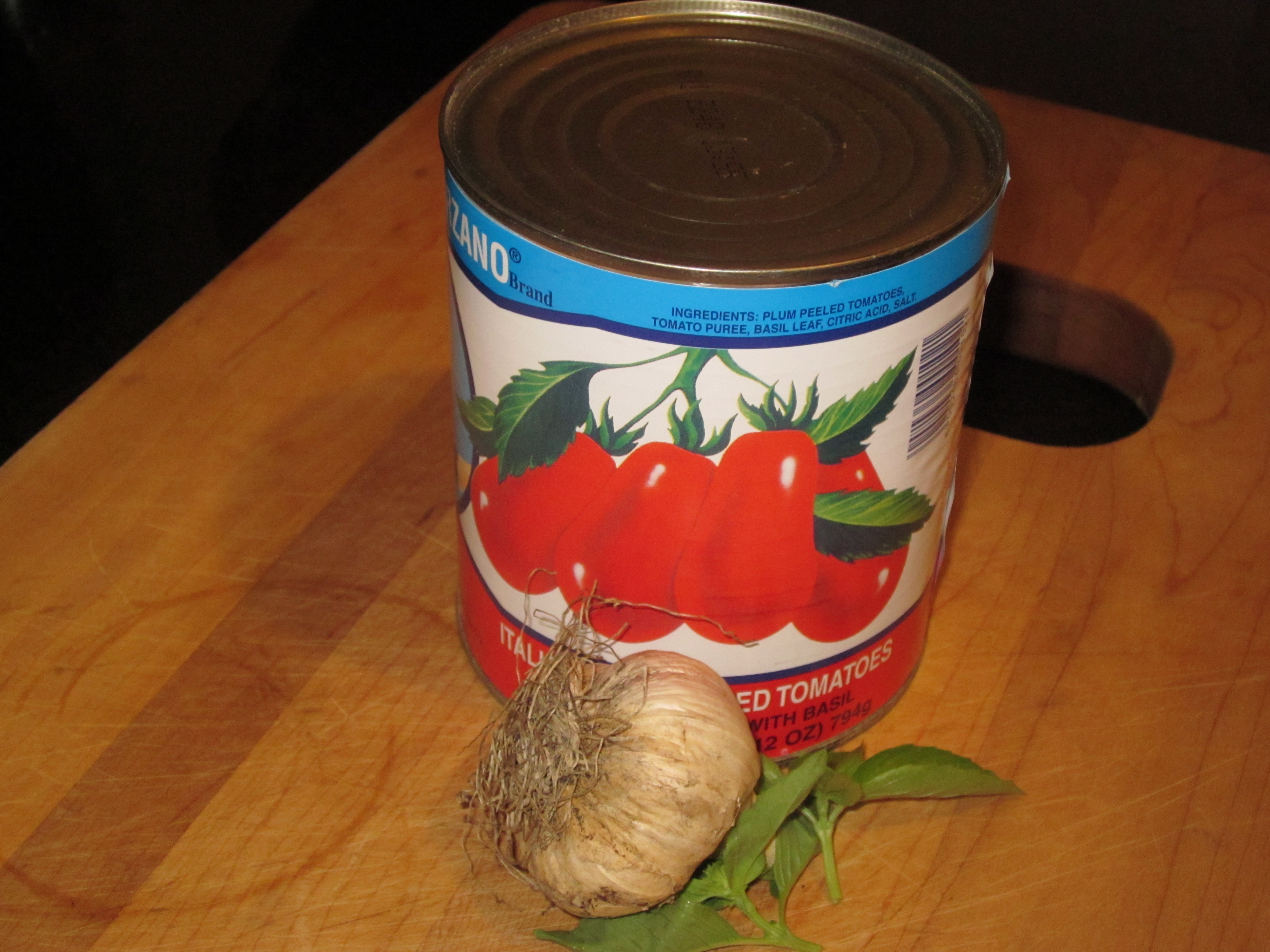
1 28 ounce can of good Italian whole peeled tomatoes

3 tbs olive oil

2 cloves of garlic, sliced or chopped. (The finer the slice or chop, the more garlicky the flavor).

¼ tsp of crushed red pepper

4-6 fresh basil leaves

Salt to taste


Empty the tomatoes in a bowl and crush with your hands.

Pour the olive oil into a skillet and heat to medium-high.

Add the garlic and cook until very slightly browned.

Toss in the tomatoes.

Add the crushed red pepper and basil and a moderate sprinkling of salt. Bring to a simmer and cook for 20 minutes.

Marinara sauce can be made well ahead of time and kept in the refrigerator for up to a week or frozen and then thawed when needed.

Pig Prejudice Redux

3 Aug

It’s tough to be a pig in Harlem as evidenced by A Little Love for the Pig (Please) and Pig Prejudice Revisited, 

Despite the chill, the mighty swine abides.

How to Eat a Mango

10 Jul

I’ve often wondered,

how to eat this fruit.

It has an odd shape,

kind of like an egg with a loop.

It’s sweet and the flesh is juicy,

and  good for you too.

But how do you eat it

without getting quite messy?

If the fruit is soft and pliant to grope,

like what you might find in a ripe cantaloupe.

That means it is ripe and ready to eat.

The problem is, how to do it neat?

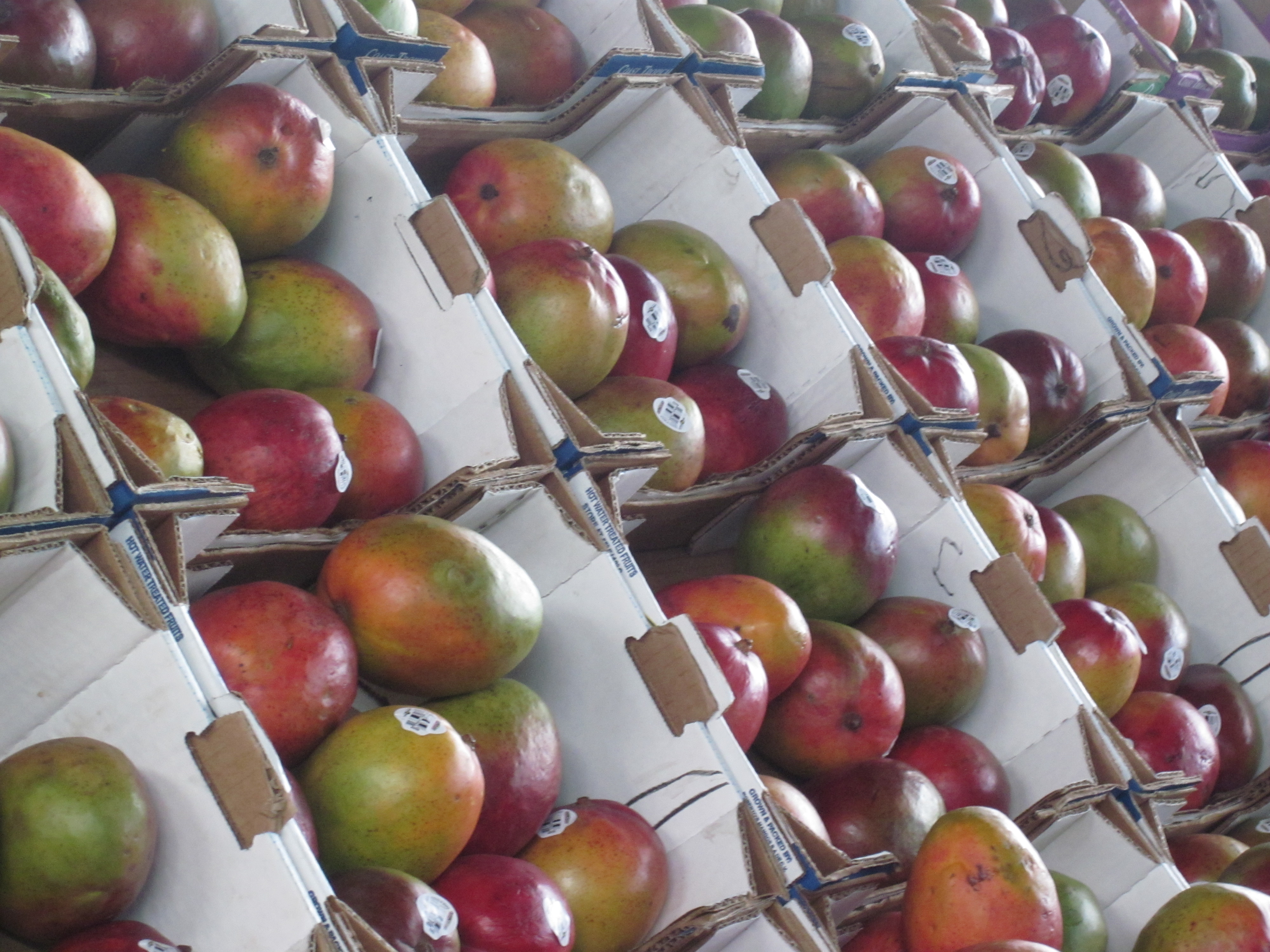
I hear there are over 1,000 varieties of mangoes around.

But where I live only a few types are to be found.

What I see in stores and on street carts,

come from places like Mexico, Salvador, Peru and Brazil.

Warm, tropical lands,

where there is no chill.

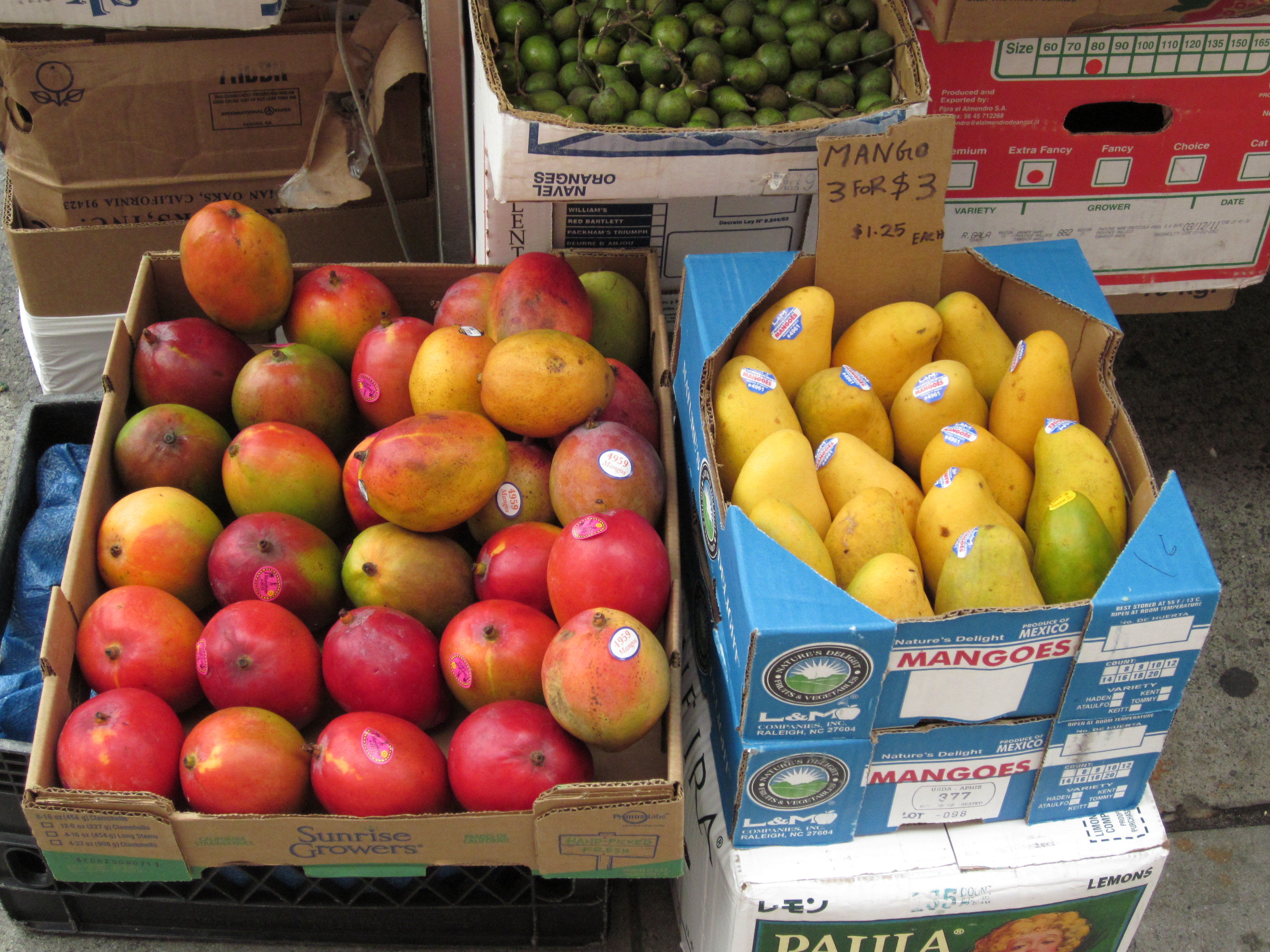
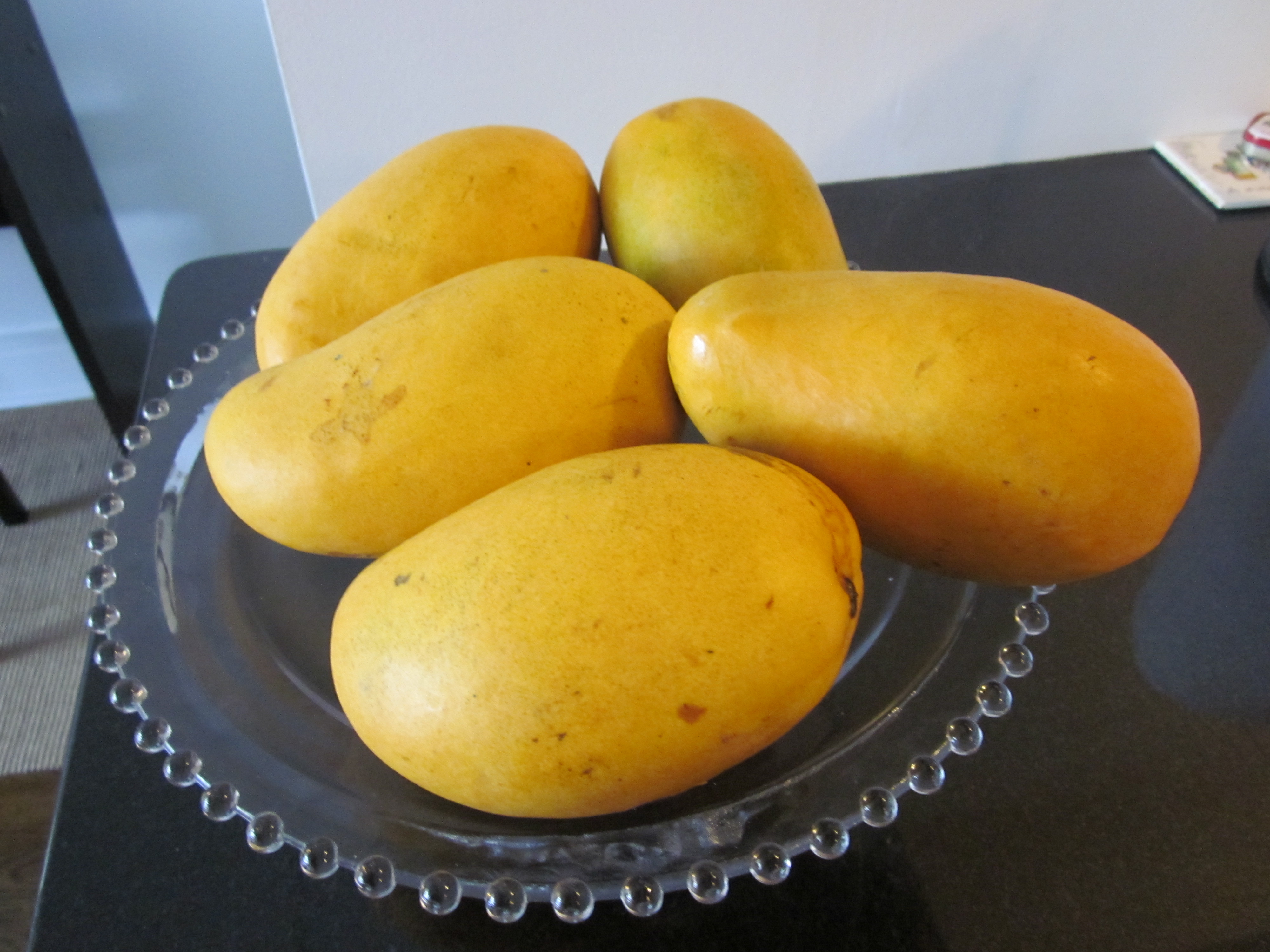
They  have names like “champagne,”

“Ataulfo,” “Tommy Atkins,” “Kent,” and more.

I’m sure there is a difference,

though this mango novice can’t tell for sure.

Ataulfo mangoes

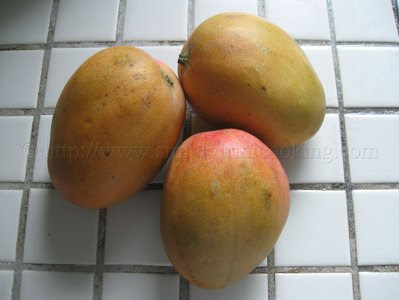
On an island far away,

I once ate a Julie,

mango that is.

It was sweet and luscious.

I still can’t believe,

something so delicious,

could come from a tree.

Once peeled, the nectar quickly

flowed from within.

That Julie made such a mess,

a beach towel was needed,

to clean up my chin.

Three Julies

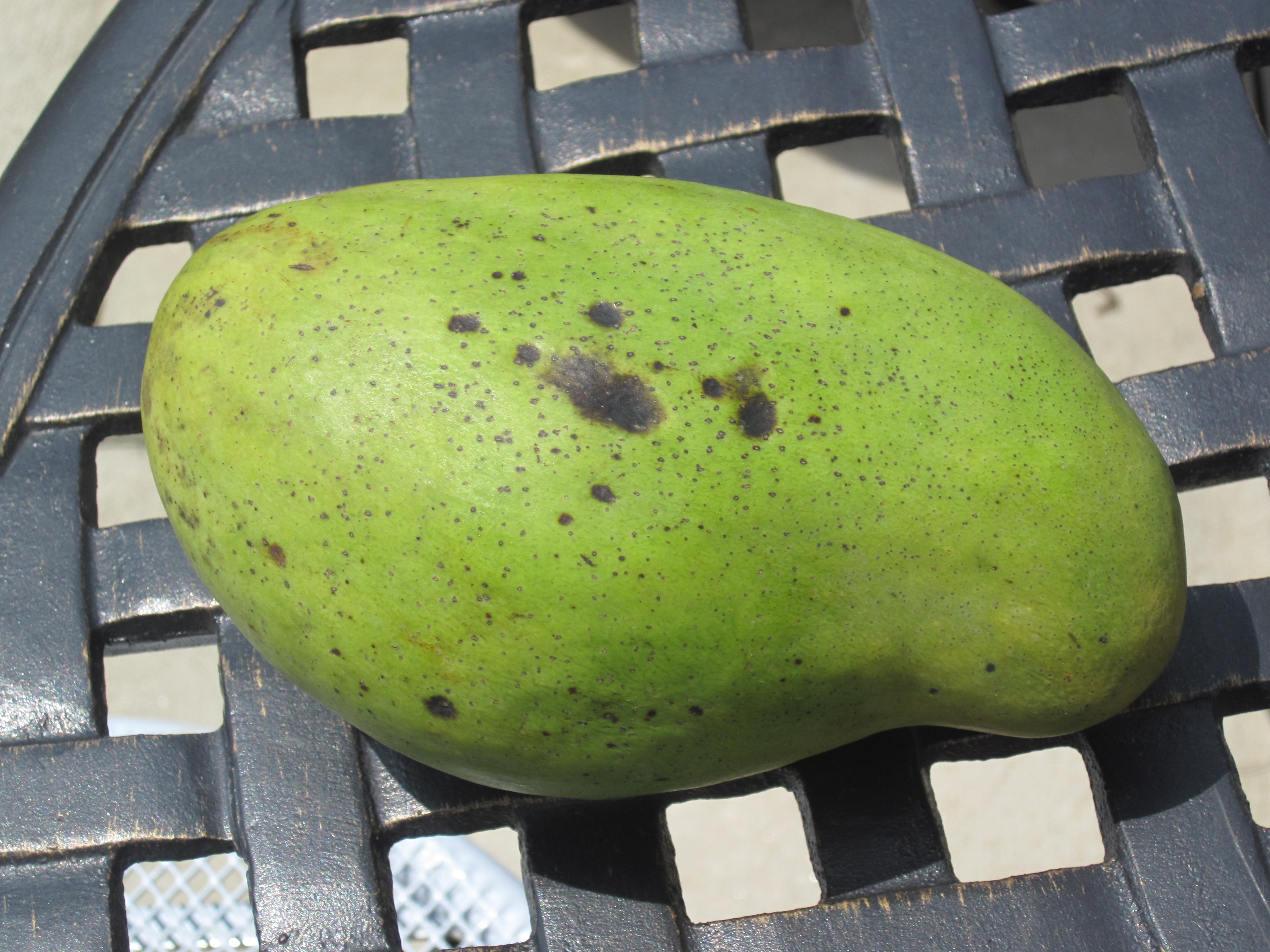
The mangoes from Haiti

are long and light green.

This fruit’s flavor is special,

the taste, a mango fan’s dream.

But there are drawbacks, I’m afraid.

It costs a little more,

and eating it most certainly can be a chore.

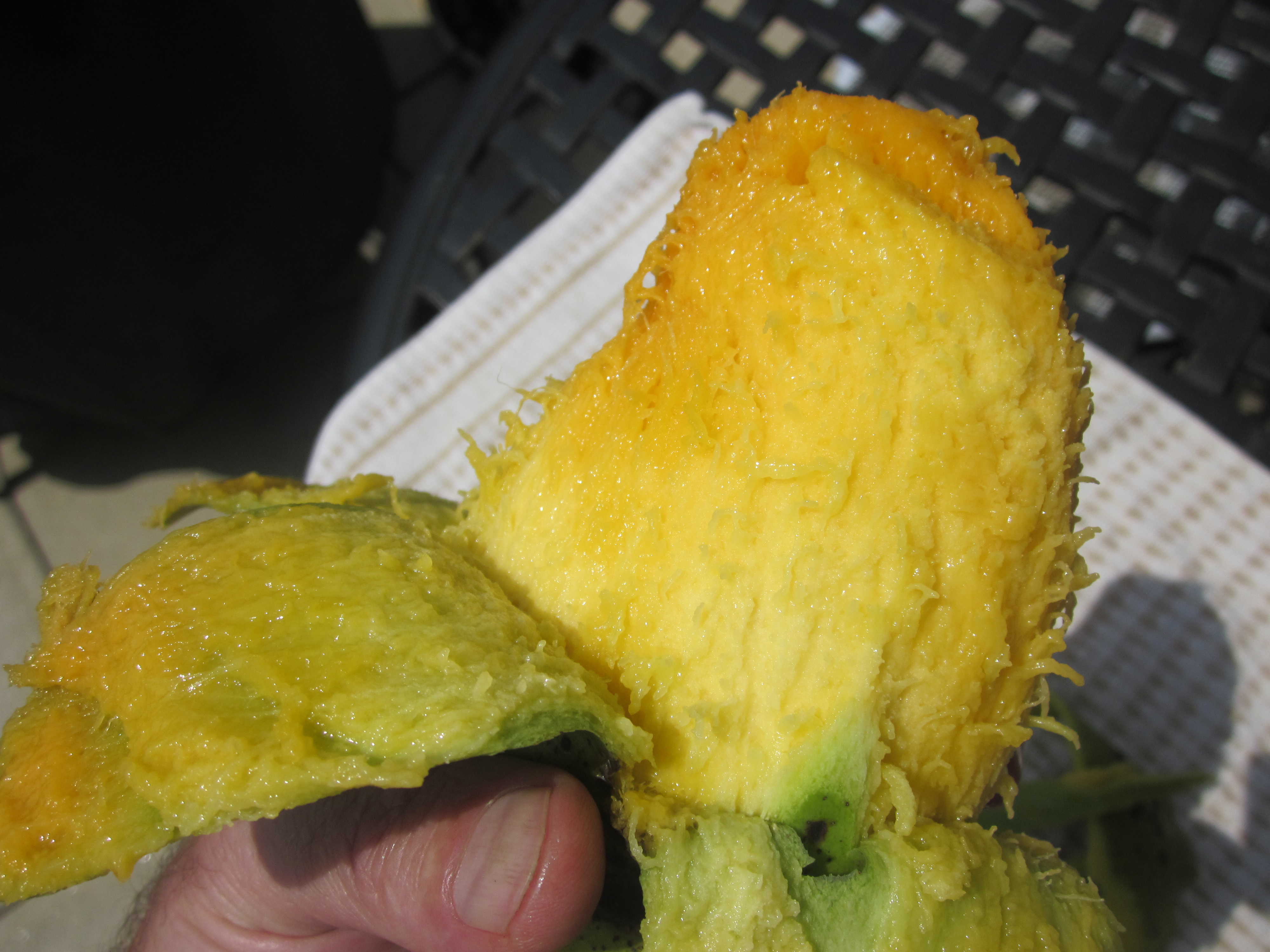
The Haitian

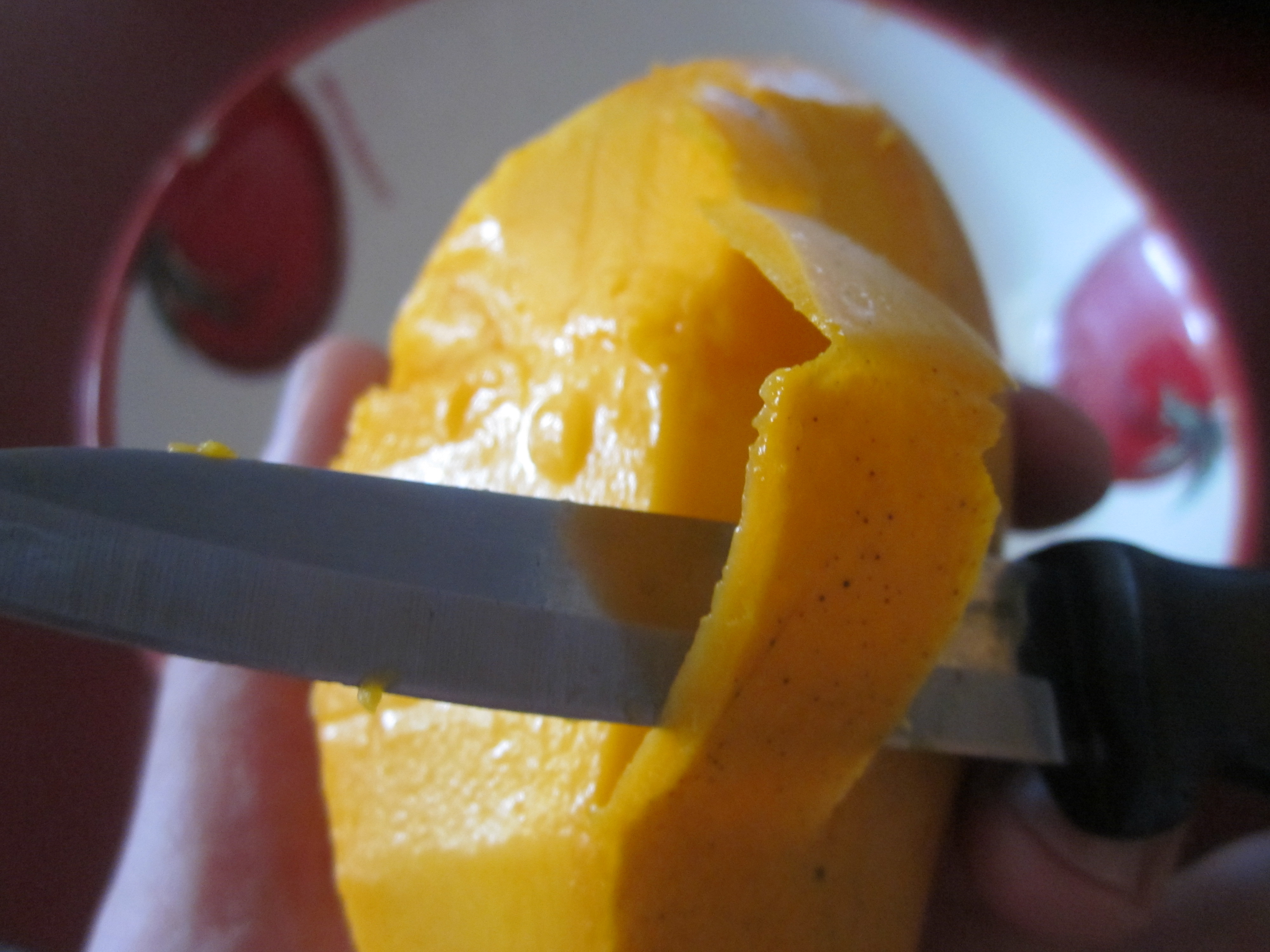
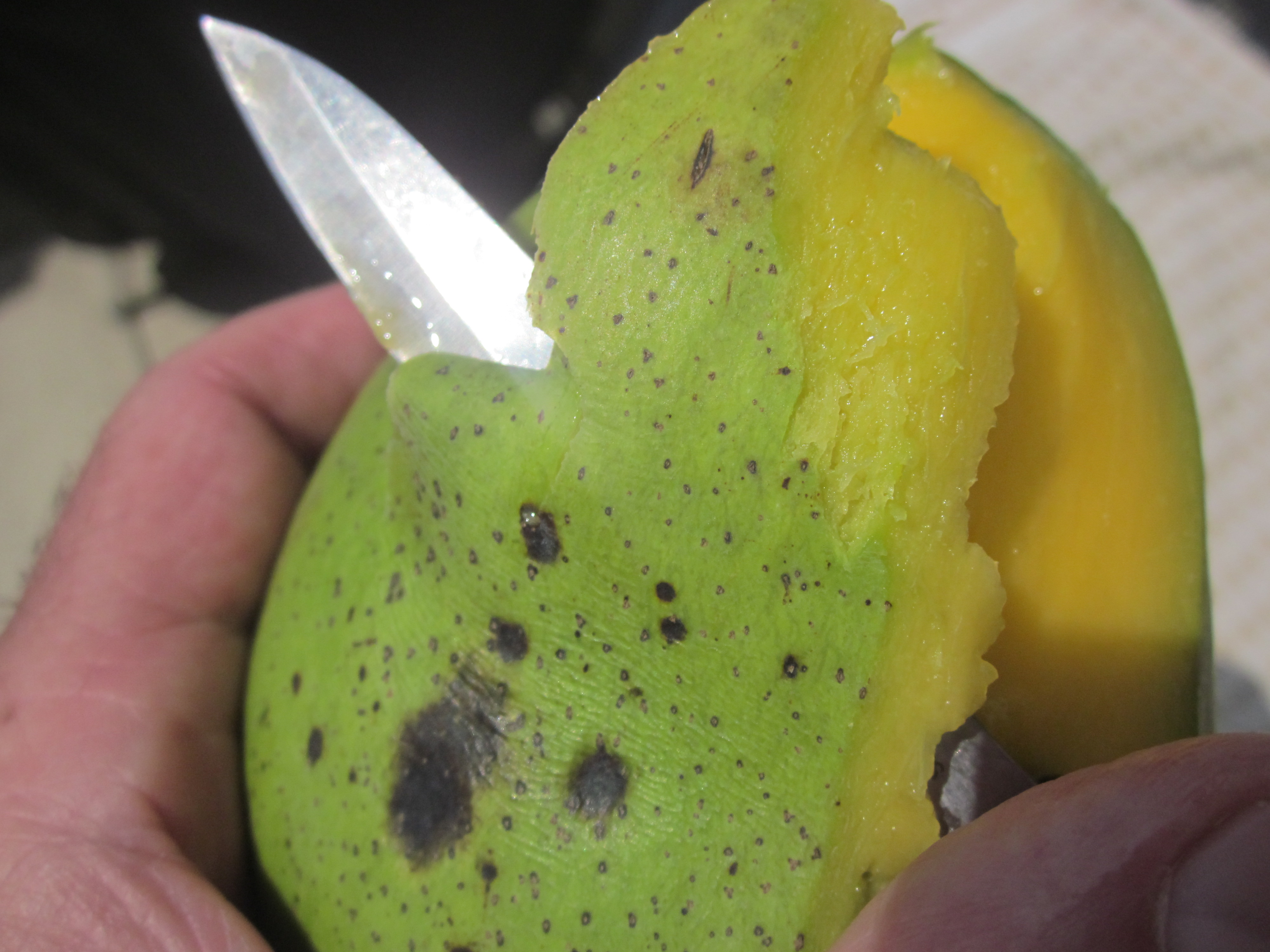
You can peel the tough skin with a knife.

Pull it down and try to slice.

Be careful before you start chewing,

The juices might spurt.

Don’t be slow.

Stay alert.

Oh my, how the bright orange flesh stains so.

No doubt, your nice white shirt, will soon be aglow.

Put away the knife,

and give up on the slice.

Just suck through the flesh,

right to the big stone.

This chore is one, you need to handle alone.

The temptations are many.

You might want to bite.

You’ll soon learn, that won’t be right.

Like a thatch of thorns that have you entangled,

your teeth will be riddled with tough fibers at every angle.

To dislodge requires little cost.

All you’ll need is plenty of time,

and two packs of dental floss.

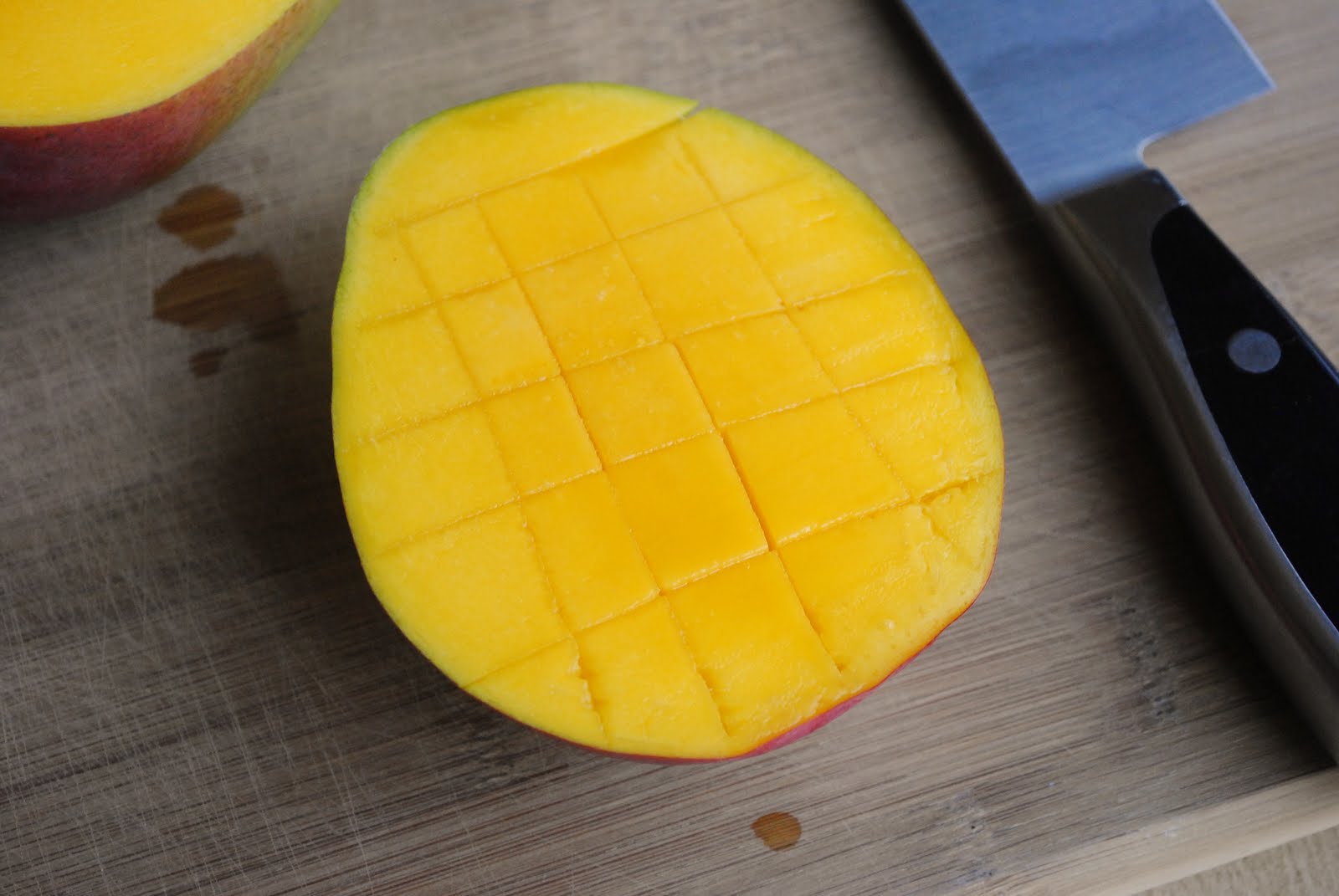
Some say the best way to eat a mango

is one where you cut into the flesh;

a criss cross pattern.

that looks like a mesh.

Turn the skin upside down,

with gentle firmness, you’ll press.

The pieces will fall into a bowl or dish.

Eat with a toothpick, fork or chopstick.

No fuss.

No mess.

The criss cross method.

Like the many varieties of mango,

the choices of how to eat one are plenty.

And while I waste my time,

with these ridiculous rhymes,

I’m sure the list will grow.

Suck, nibble, bite or chew?

Who am I to tell you what to do?

How to eat a mango.

really, is up to you.

A Recipe for the 4th of July: 2012

3 Jul

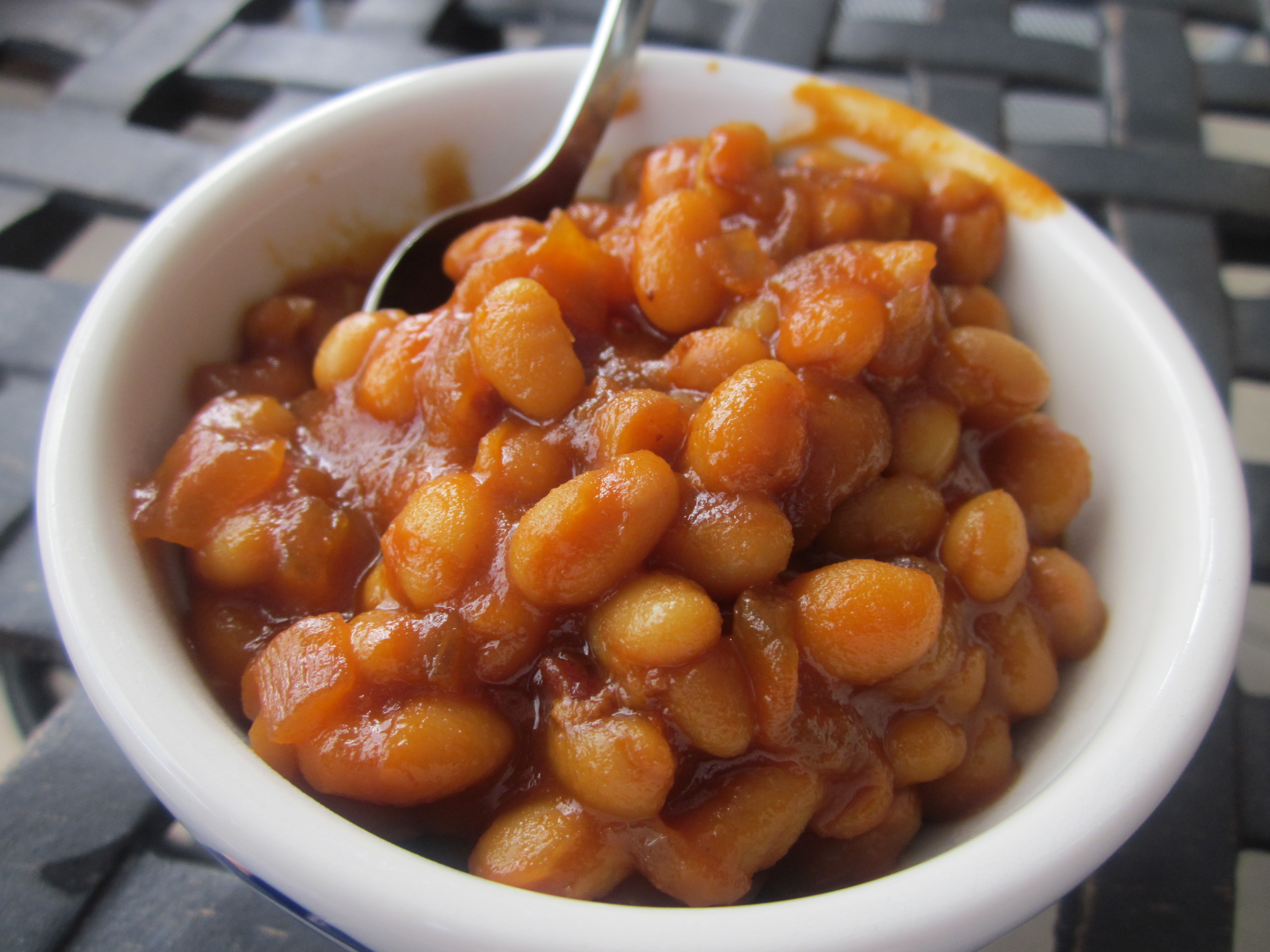
Last year at this time I posted a recipe for the 4th of July. It was for the simple grilled hot dog on a bun: A Recipe for the 4th of July.  This year I am adding a side dish that complements the tube steak like no other: Barbecued baked (that aren’t baked) beans.

Like I do in so much of my limited cooking, I choose the easy path to the hard. I like to cut corners. I admit to being lazy at times. But I try to do it without sacrificing too much flavor or quality.

As I’ve discussed in the previous posts I’ve called  The Fazool Trilogy, The quality of most beans from a can as compared to dried, is, in my estimation, minimal.  And that miniscule difference just does not justify the extra time and effort in soaking and then cooking the beans. So I cut that process out. Just make sure you drain and rinse the canned beans in cold water before using them.

I’m lazy, but not this lazy.

Some might say if you are going to be lazy, go all the way. Just buy a can of pre-made baked beans. And to be honest, there are one or two that aren’t too far off in taste. Nothing a little doctoring won’t shore up. But by doing it the way I’ve chosen, you can control the flavor; the sweetness, salt content, and even add a few tricks of your own into it.

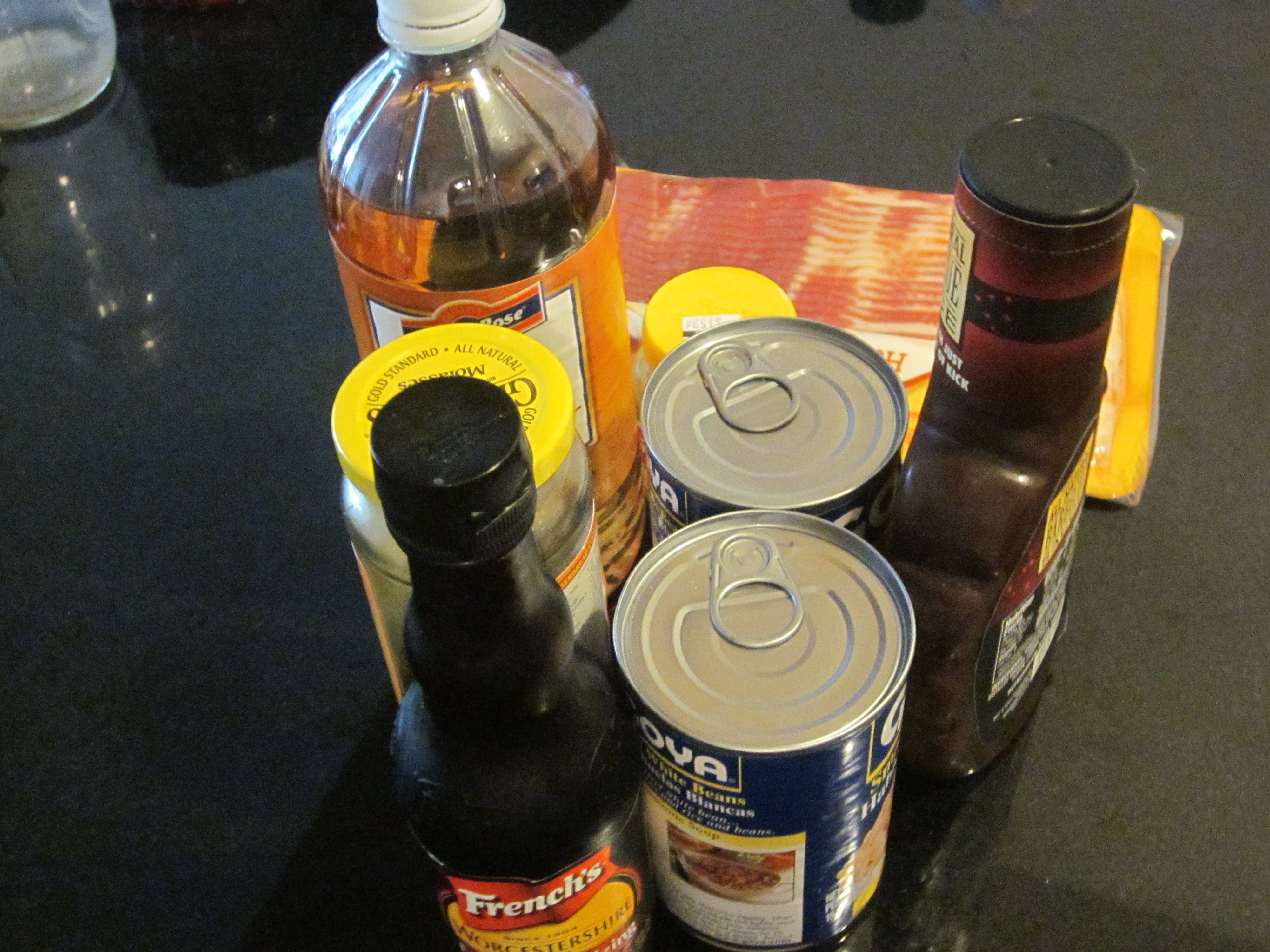
For my version of barbecued baked beans you will need the following:

2 15 or 16 ounce cans of small white beans*

2 strips of bacon, diced

1 medium onion, chopped.

2 tbs molasses

2 tbs brown sugar

1 cup of ketchup

1 tbs of yellow mustard (the cheap, glow in the dark kind).

1 tsp of Worcestershire sauce

1 tsp of apple cider vinegar

2 cups of water

Dash or two of hot sauce.

Salt and pepper to taste

*The traditional bean of choice for baked beans is the Navy bean. Some recipes call for the “Great Northern” bean while others prefer the pinto bean. Any of the above, as long as they are about pebble size, will suffice and absorb the flavors of the barbecue sauce.

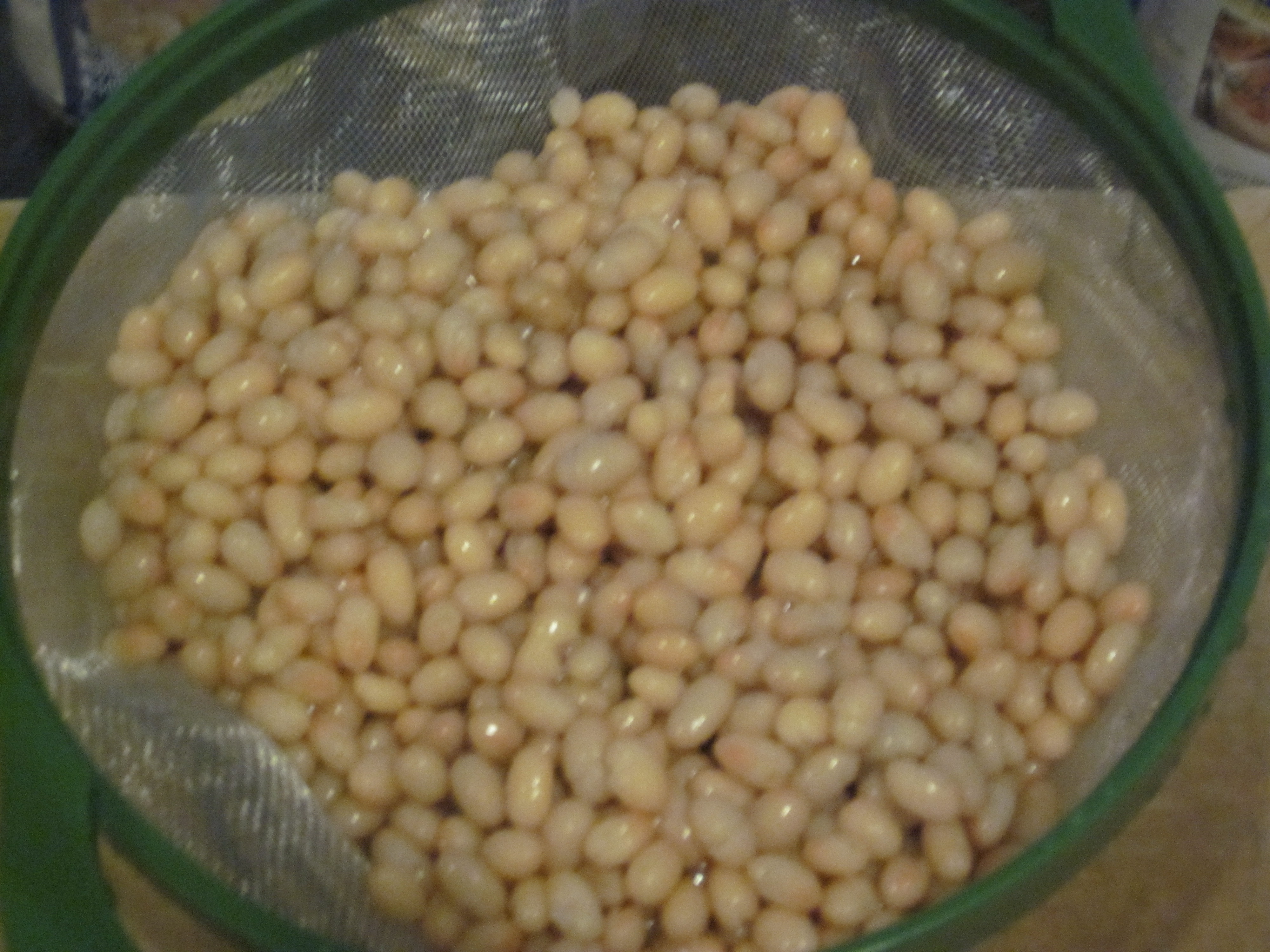
Rinse the beans in cold water and strain.

Rinsing the beans.

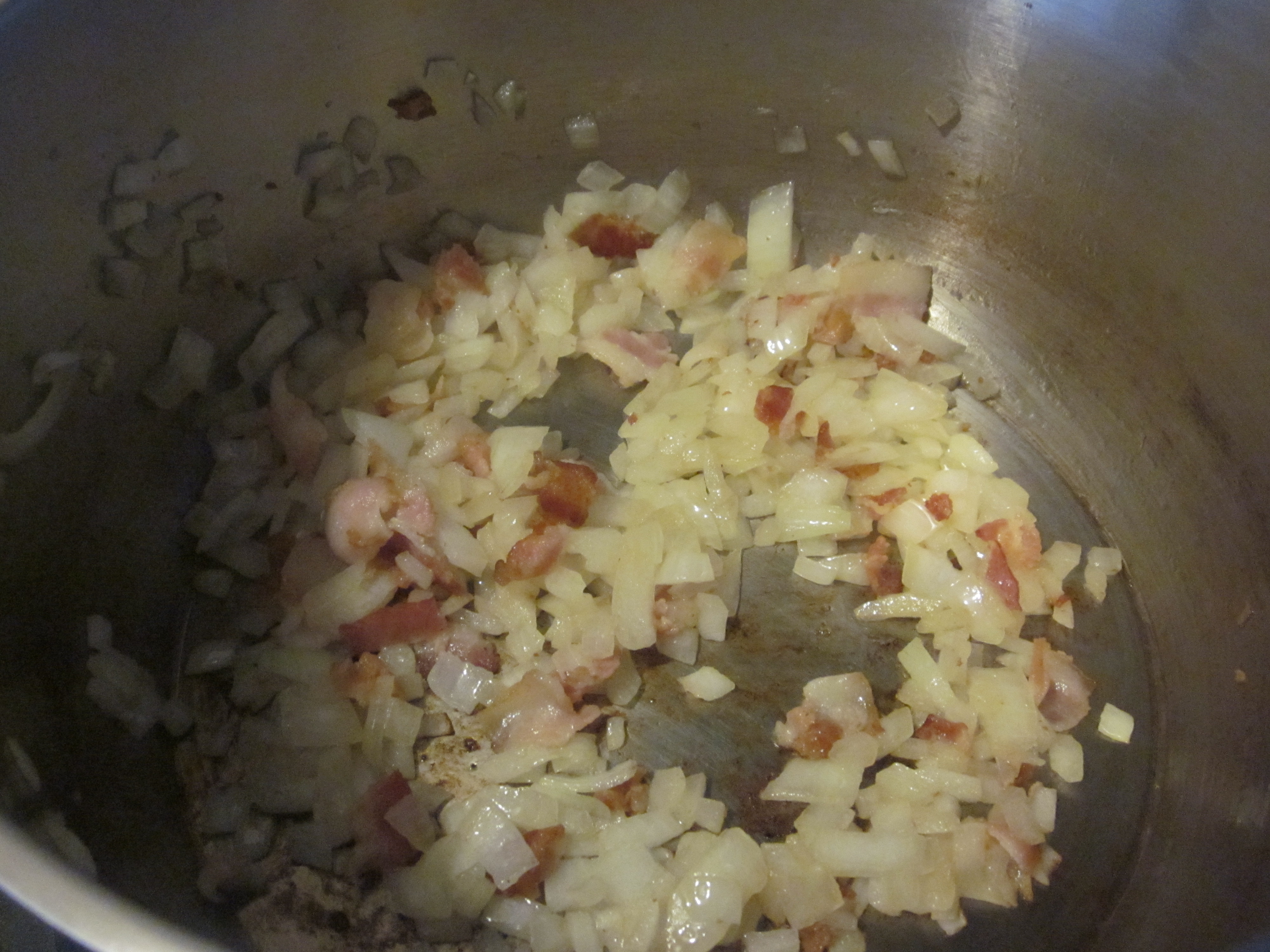
In a large saucepan, cook the bacon until the fat renders.

Add the onion and fry in the bacon fat for about five minutes or until softened.

Softening the onions in the bacon fat.

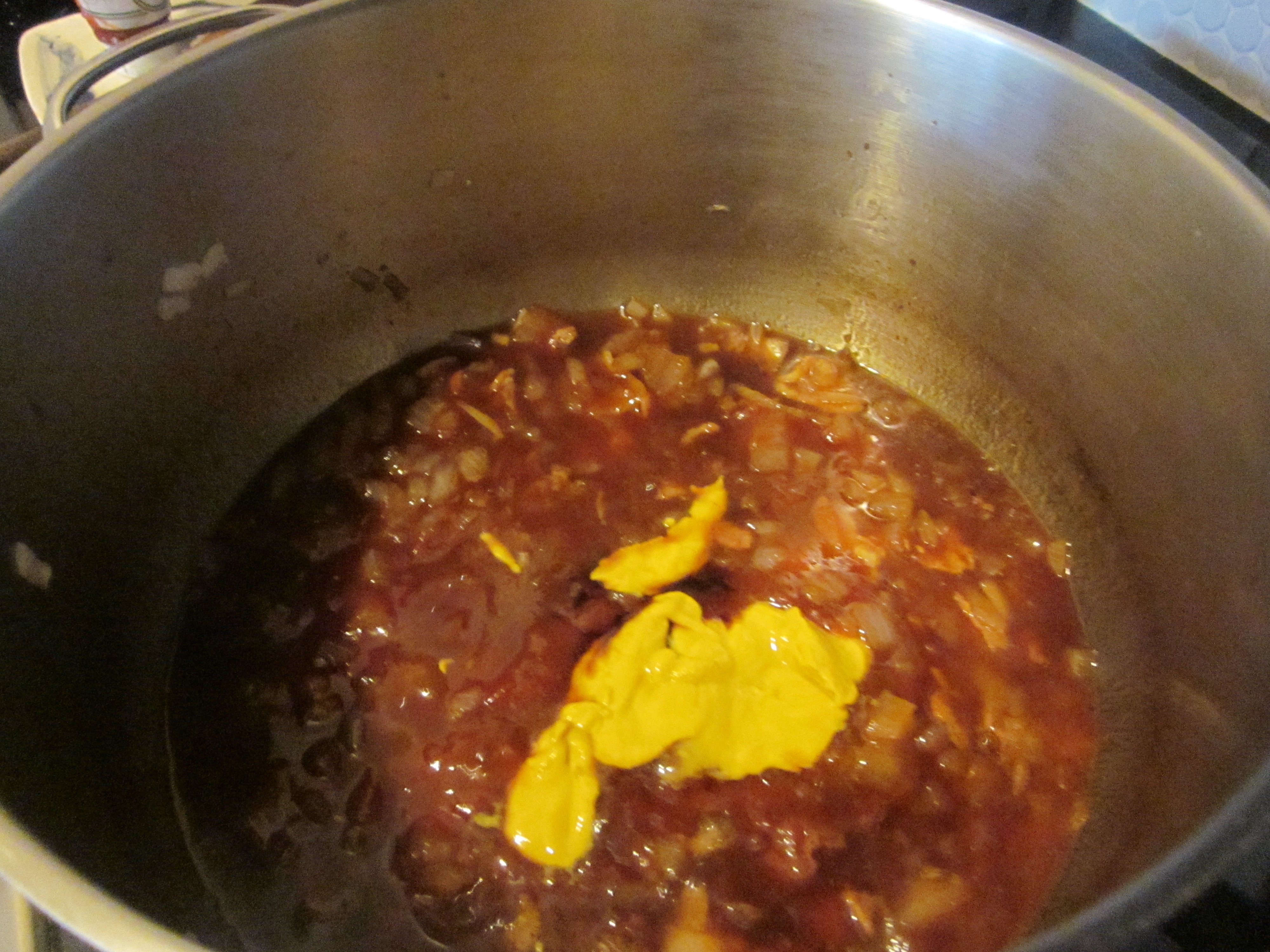
Pour in the water and deglaze the bottom of the pan.

Add the ketchup, molasses, brown sugar, mustard, Worcestershire sauce, and vinegar.

The liquid ingredients getting ready for the arrival of the beans.

Stir and bring to a boil and then simmer for about ten minutes.

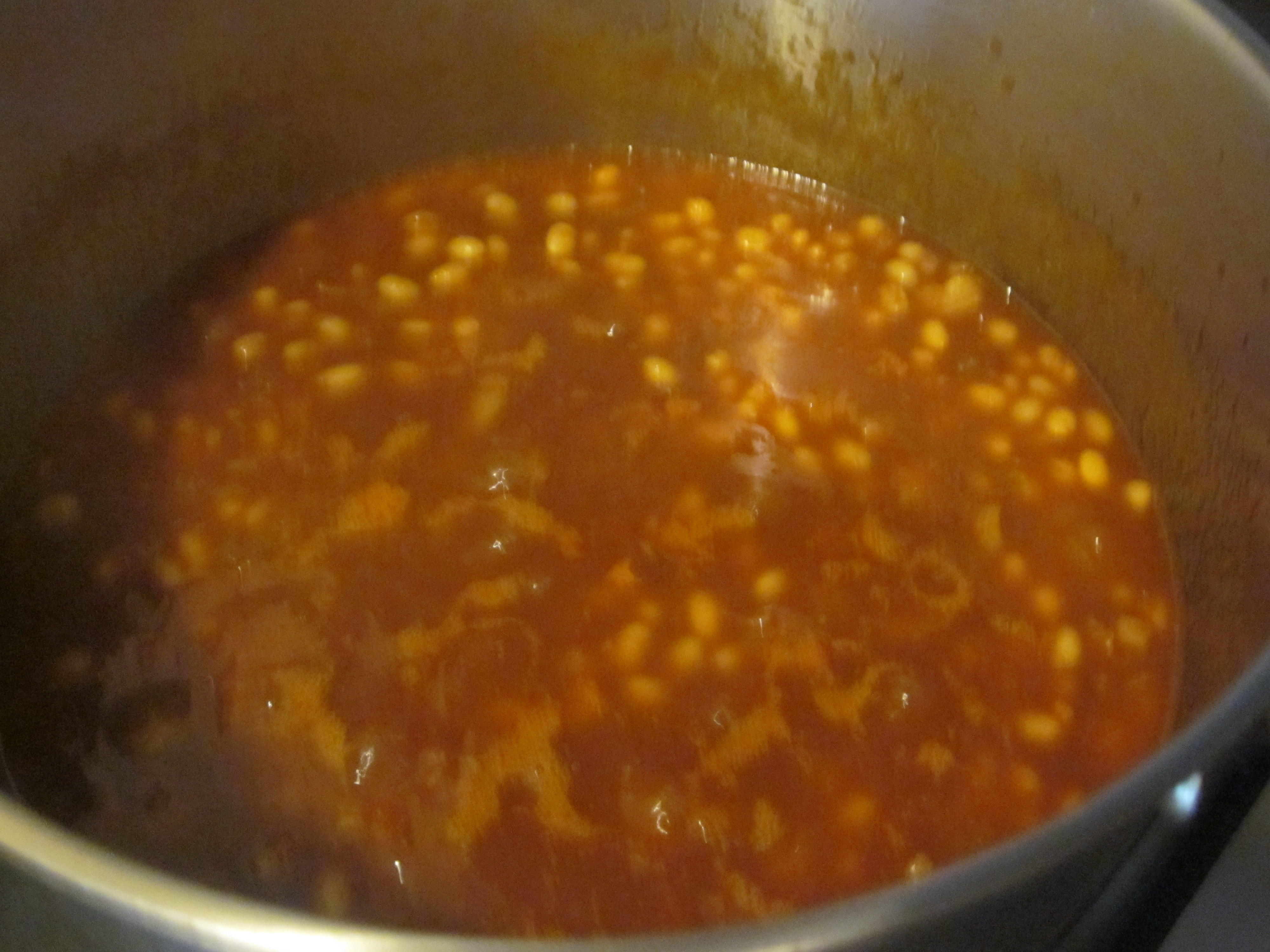
Add the beans.

Cooking down the beans.

Lower the heat to a simmer and cook for about a half hour or 45 minutes, stirring occasionally, until most of the liquid is cooked off and thickened to what resembles a barbecue sauce.

Drop in a few dashes of hot sauce.

Stir again and serve.

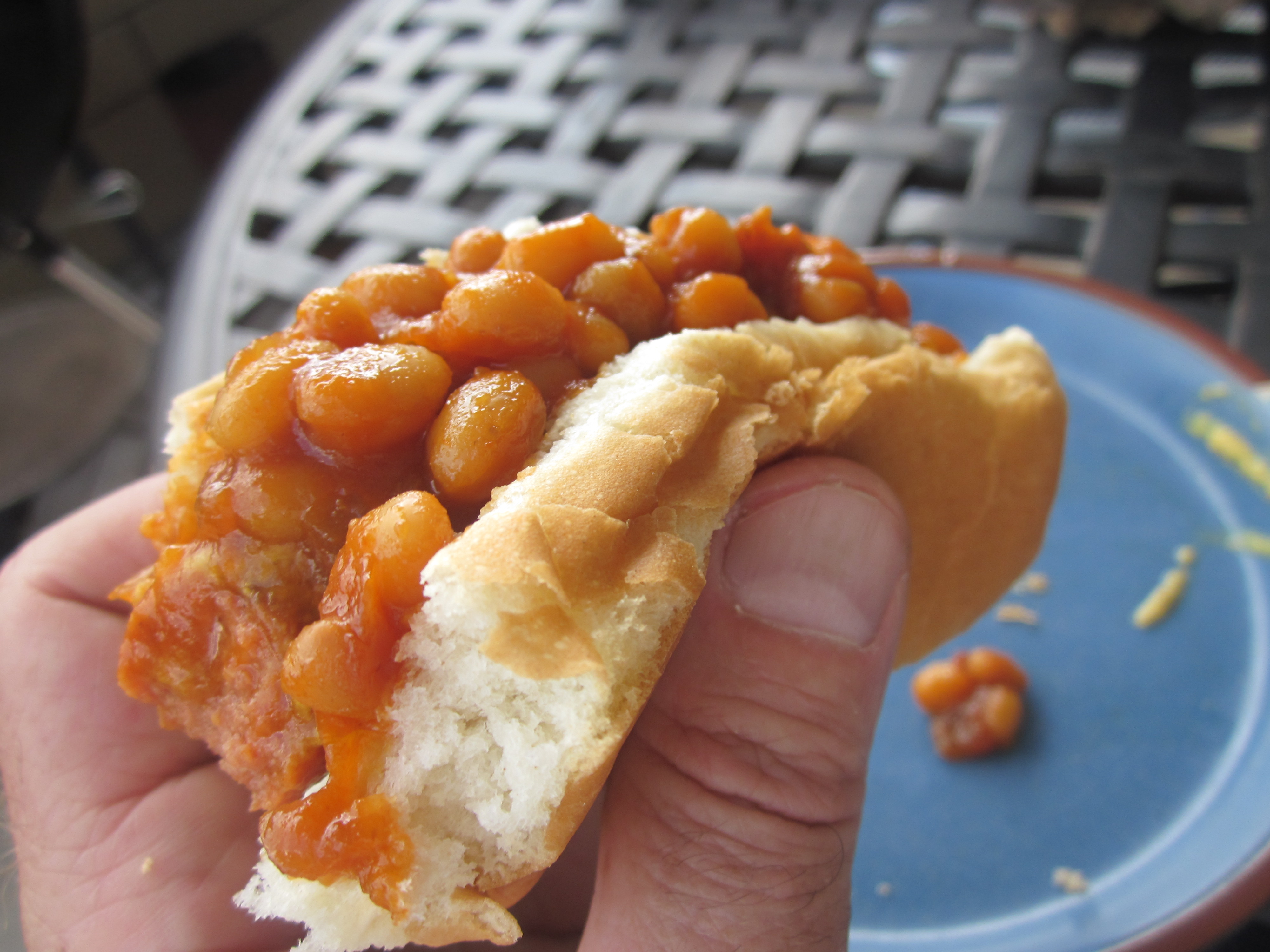
The baked beans not only are one of my favorite side dishes for a barbecue, they also make a delicious topping to a Fourth of  July hot dog.

Today’s Special(s)

22 Jun

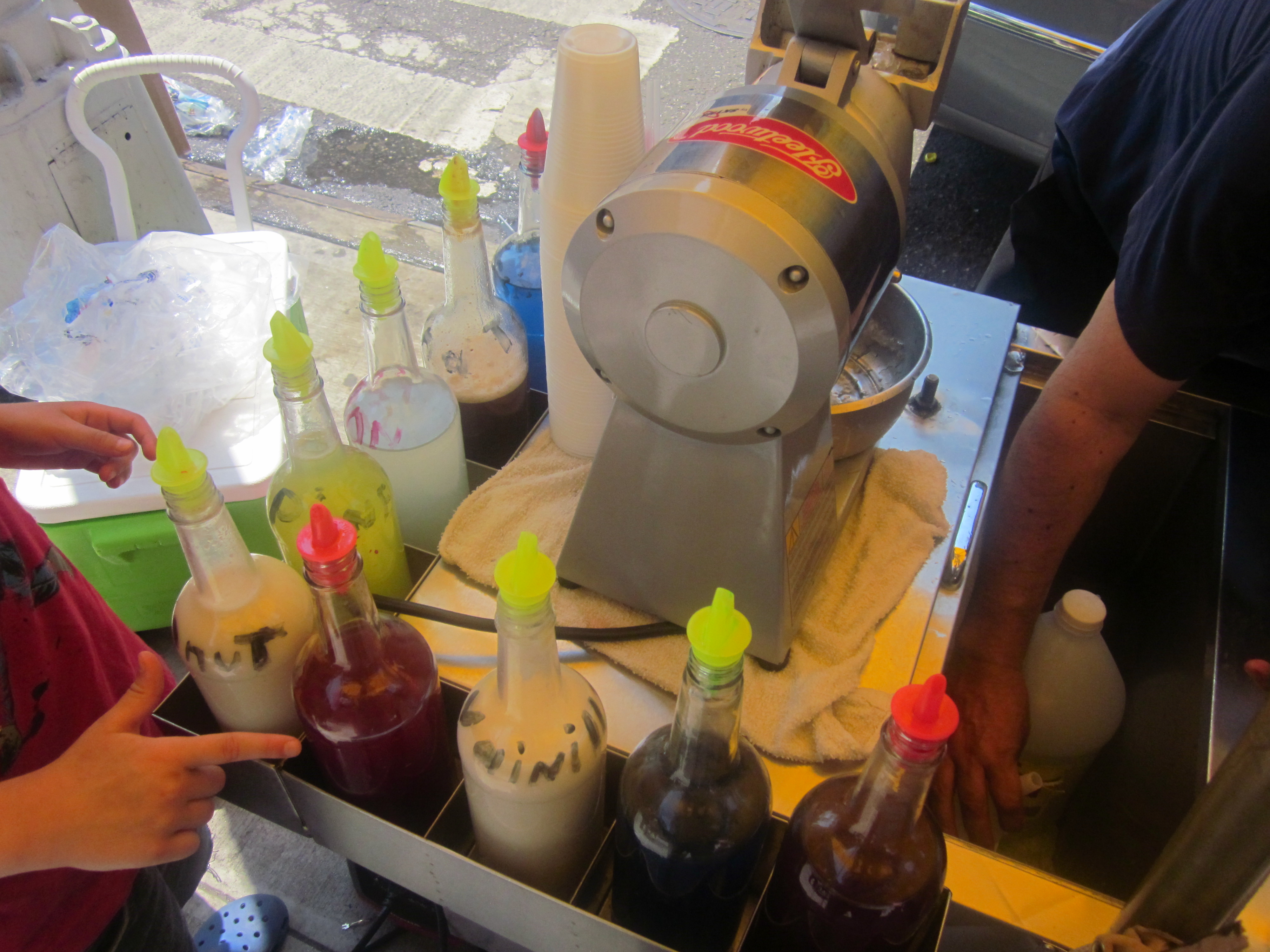
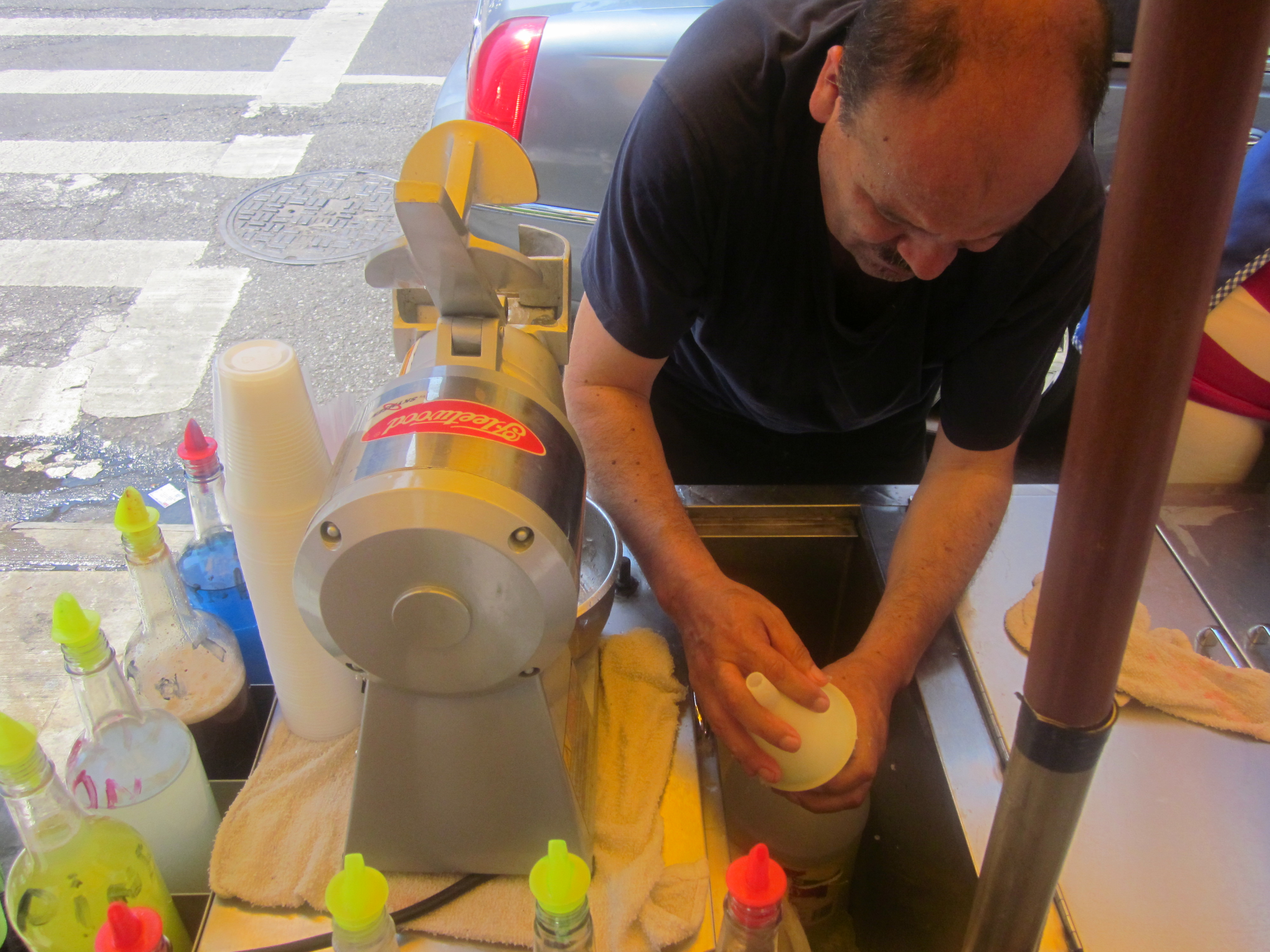
A cold shower.

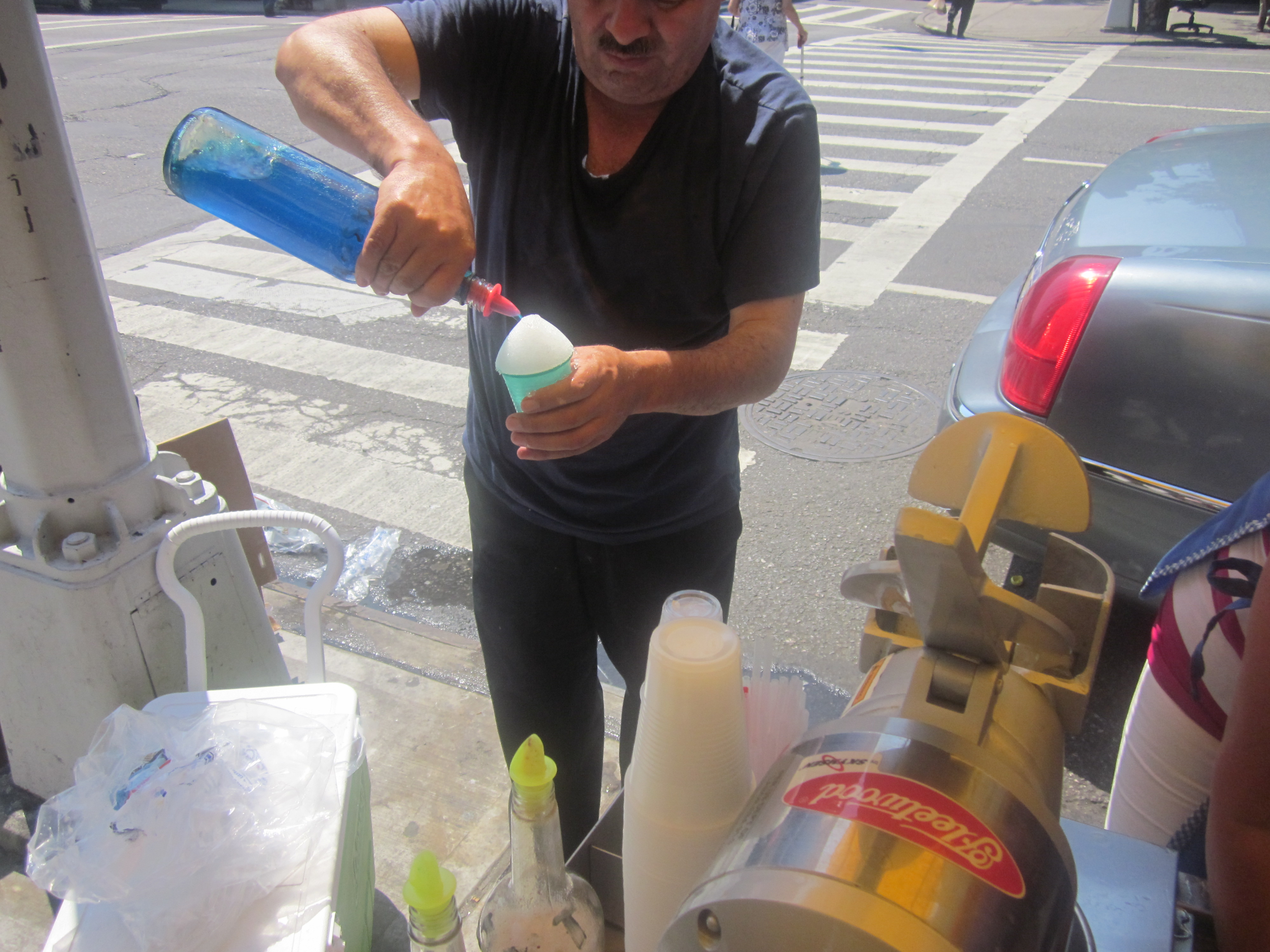
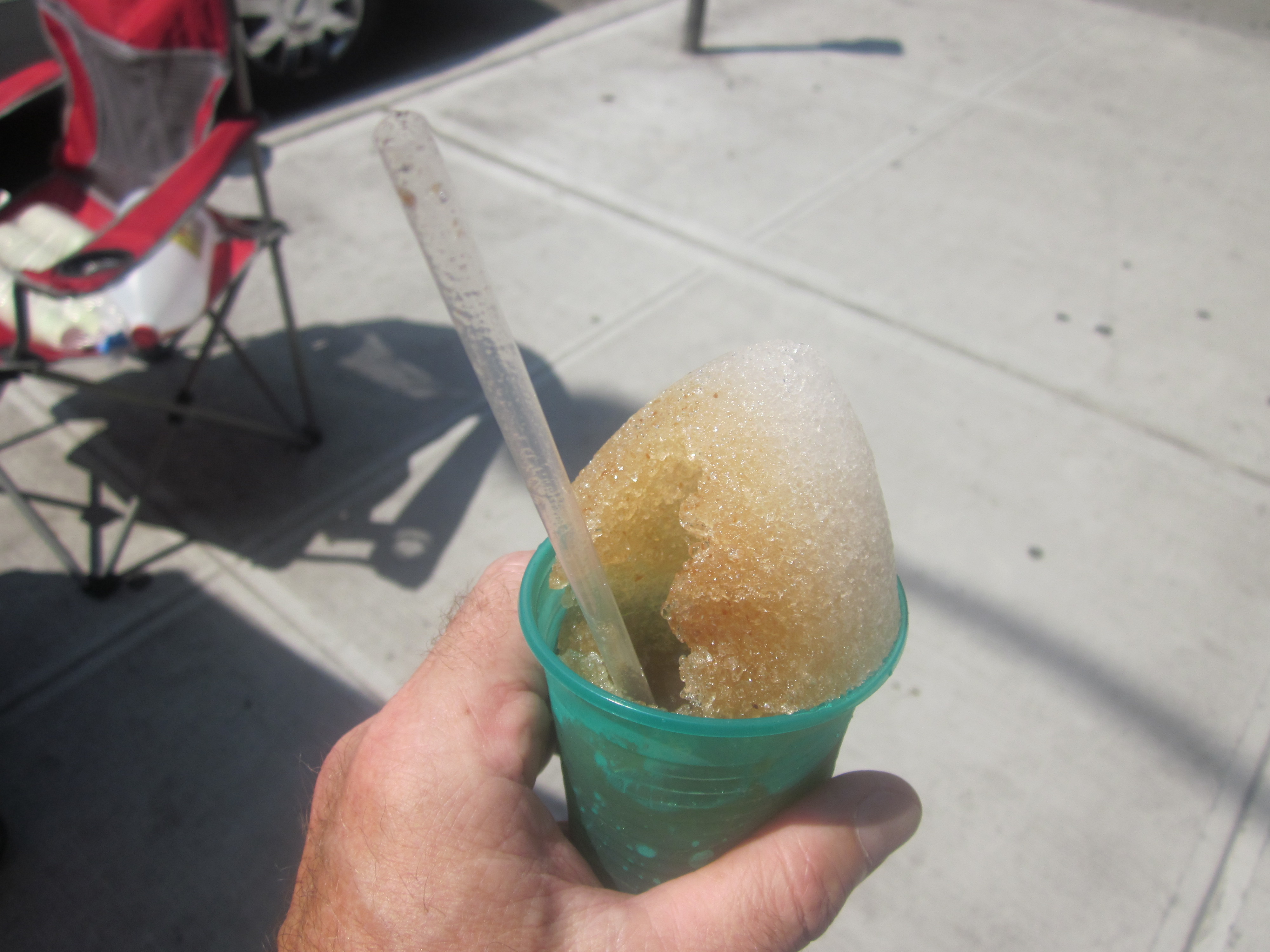
And an even colder refreshment.

The Iceman neareth

Tamarindo please.

Sweet relief!