Tag Archives: culture

Rooftop Fried Eggs

22 Jul

They say it’s so hot out you can fry an egg on a city sidewalk. I tried, but not on a sidewalk. My egg frying experiment was on my roof. I used two methods; both fuel efficient. Method one was placing a frying pan on the roof and letting the100 degree temperature heat it up.

Method One: Note the slightly cooked egg whites on the edge

I also tried cooking an egg the old fashioned way; directly on the roof’s surface.

Eggs the old fashioned way: fried directly on the rooftop surface.

Though it was 100 degrees plus on this day, these eggs had no choice but to be slow-cooked.

Method one: 20 minutes later.

The sun was definitely cooking the egg, but unless you like your eggs very rare, it was not quite done yet.

Old fashioned eggs 20 minutes later

And after another 15 minutes.

Cooked, but…

I forgot to grease the “sidewalk.”

After scraping both out of pan and off the roof, respectively, this is what I got.

Unless you have too much time on your hands or are working on your summer in the city survival skills, I do not recommend frying an egg on a sidewalk or on a rooftop. However, method one could work if the pan is properly greased and allowed at least an hour in 100 plus degree sun before cracking the egg into it.

A Malaysian Type of Place

13 Jul

Skyway Malaysian
11 Allen St
Chinatown

After what seemed like much too long, all were in attendance for our appointment at Skyway Malaysian. Tucked in the shadow of the Manhattan Bridge in Chinatown, my reservation garnered us a seat perched above the other diners under a pagoda canopy. Whether it was a choice seat or one where the wait staff could conveniently ignore our pleas for beverages and food was open to debate. We had plenty of room and our sometimes booming near-hysterical rants would not impose on the other diners. But from our table we also could not view the obligatory television tuned to Asian dramas with Chinese subtitles. Instead, while perusing the dense, six page menu, we could catch up with Eugene and his new-found love affair with Vegas, especially the bargains at the dining tables. Or listen to Zio bemoan the sudden rise in crime in Astoria where a murder had recently occurred just a few steps from his love nest.

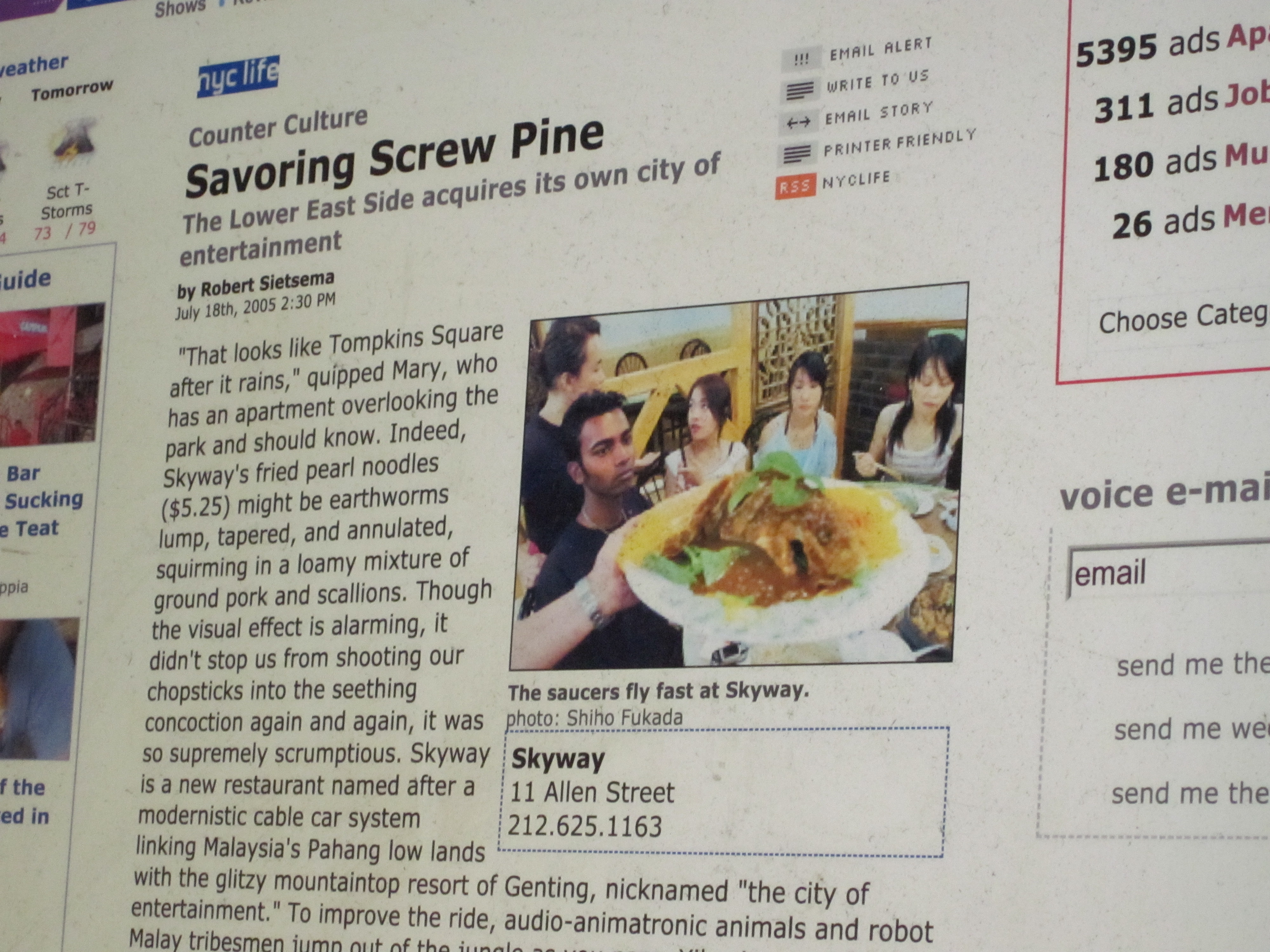
While I tuned out both Eugene and Zio, I couldn’t help but read Village Voice food critic, Robert Sietsema’s review of Skyway that was blown up and hanging on the wall near our table, as well as many other very prominent locations throughout the restaurant. In retrospect, I should have paid more attention to Eugene’s typically dour playoff predictions for his beloved Boston Red Sox* instead of reading Sietsema.

Sietsema received maximum coverage at Skyway.

Robert Sietsema is a true explorer, unearthing obscure restaurants in all boroughs and a primary source for our own adventures. But instead of going with my own instincts on the menu, I let Sietsema sway me. Not that his 2005 review recommendations were off course or bad, but this was 2007 and the menu offered other wonders that might have led to our own personal discoveries. Thankfully, I welcomed menu feedback from Rick, Gerry and our persuasive waitress instead of completely following Sietsema’s lead. But when I was originally enticed by the prospect of java mee, egg noodles in sweet and spicy squid gravy (could it be anything like squid ink used in paella?) and shrimp pancake, Sietsema’s rave of banmee hakka noodle led me astray. The noodles, it turned out, were so bland that even the handful of dried anchovies tossed into the soup couldn’t save them. But Sietsema’s suggestion of the house special pork with dried vegetables, a thick, tender slab of pork belly on top of a dense, salty bed of now soggy greens was indisputable.

Before we even began to put together our own menu for the night, we made several attempts to hail a waitress for our “beer” order. Gerry rose to the occasion to summon one of the wait staff hovering below us and we ordered a round of Macau Chinese beer. Instead, we were brought Blue Moon, Belgium-style beer which we drank without complaint.

Since Skyway was my pick, it was my job to attempt to recite our order, badly mangling the Malaysian pronunciations of them, to our waitress. Thankfully she pointed out that there were numbers attached to each item sparing me further humiliation and especially helpful when I had to pronounce the appetizer, Skyway poh piah, a spring roll steamed and stuffed with jicama and served with a hard boiled egg, in this instance the egg just happened to be purple. Mike from Yonkers snared the purple egg and shrugging, pronounced nonchalantly that it tasted like an ordinary egg.

Gerry recognized beef rendang on the menu; a familiar item from our experience at the Indonesian, Upi Jaya; Skyway’s version was a bit less fiery, but no less palatable. To expand on our menu, the waitress suggested the hot and spicy crabs, but not the ordinary crabs—she insisted that we would like the “big crabs” much better. We knew that “big crabs” meantmore expensive crabs but she was so sincere, we couldn’t resist. It would be worth the extra money not to have to use micro-surgery to remove the meat from the smaller crabs. Along with the big crabs, she pushed a fish to round out our meal; our choice from the restaurant’s tanks was tilapia or striped bass. We went with the former and had it prepared steamed in a hot bean sauce. To make sure we had our daily consumption of green vegetables, we ordered a plate of kang kung belacan, watercress-like greens sautéed with a sauce made from shrimp paste.

The Skyway in Malaysia

By the time the monstrous plate of crabs and the whole tilapia crowded our table, we were ready for another round of beer, this time we did get the Macau, though after a few sips I was immediately nostalgic for the Blue Moon. Eugene was suddenly silent and Zio oblivious to any conversation as both worked diligently, picking through the spicy crab, while we made quick work of the tilapia, and is our custom, saving the tender cheeks for Rick. As if we hadn’t eaten in months, the feast was greedily devoured and though the dessert options, ginkgo nuts with barley and buboh chacha, sweet potato and yam with coconut, were intriguing, we were done. After sucking out the last bit of crab from shell, Eugene proclaimed that Skyway was “our type of place.” But only Eugene could really explain what that meant.

The Skyway near Skyway Malaysian in Manhattan

*Despite Eugene’s pessimistic prognostication, his Red Sox won the World Series a month after our dinner at Skyway.

Keeping Up With The Koreans

6 Jul

Han Bat
53 W. 35th St
New York

Rick, believing that soon those who enter Manhattan below 86th Street in a car will face Mayor Bloomberg’s traffic control toll, wanted to grant the commuters among us, Gerry, Mike from Yonkers, and Eugene, one last toll-free foray into midtown. But trying to find a midtown destination that fulfills our stringent criteria is a serious challenge. After much deliberation, he finally narrowed his choice between two Korean restaurants in Koreatown, the area between 5th and 6th Avenues between 30th and 36th St, with 32nd Street being the most densely Korean block in the city; the enticingly-named Kom Tang Soot Bull House or Han Bat. Though dining at a place called the Soot Bull House would be memorable for the name alone, Rick, for no particular reason, choose Han Bat.

When I was executing and reviewing contracts for a publishing company many years ago, there was a Chinese restaurant I frequented for their lunch special at the same location where Han Bat is now. It was Chinese a restaurant run by Koreans but with a Chinese menu, though kim chee, spicy Korean cabbage, was always available. At this most recent incarnation, if the owners are the same, any nods to Chinese food have been eliminated. At Han Bat it’s just straight ahead Korean minus the sometimes suffocating smoke from table grills.

OB Beer

There were five of us; Mike from Yonkers on a Southern road trip was absent. Once we all arrived we were hustled to our reserved table. Reservations are usually never needed on our unique expeditions, but it was a good thing Rick secured one; Han Bat, on this particular Tuesday evening, was mobbed. Menus adorned with color photographs of a variety of the dishes offered were distributed and before we had a chance to even glance at them, a waiter appeared and asked if we were ready to order. We were ready to order beer, but nothing else and before the bottles of OB Korean beer were delivered to the table, another waiter appeared again asking if we were ready to order. It was clear that there would be no chance of consultation of the menu with the wait staff at Han Bat.

If you are familiar with Korean food, Han Bat offered the standards, but Korean standards can be exotic. On Han Bat’s menu were items like “ox-knee” meat, “jello extracted from ox-leg,” broiled meat, tongue and spleen, beef intestines, and something called yook hoe, shredded raw beef marinated in seasoned sesame oil. After the impenetrable cow foot at Florence’s in Harlem at our last dinner, the yook hoe was as exotic as we were going to get at Han Bat. Since this was Rick’s choice, we let him pick out the dishes for us and he did not disappoint.

First out were the numerous small plates of side dishes like the aforementioned kim chee, salty fish, pickled bean sprouts, hot peppers, raw garlic and others which our group made quick work of. Without much hesitation the bibimbab followed.  A do it yourself concoction of rice, marinated meat, egg, and vegetables in a sizzling hot stone bowl with Zio, in this case, doing it himself, pouring in the barbecue sauce, mixing up the rice with the egg and meat turning it into a sloppy mess. The mesh of flavors of the dish, however, belied its appearance and even made Eugene forget for a moment his disappointment with the Soprano’s finale. “How you going to end it like that?” he complained. “They didn’t explain anything! It was a like a ball game without a final score.”

What, no bibimbab?

The French, of course, celebrate uncooked hamburger with their famous tartare. Much more modest are the Koreans and their underrated yook hoe, featuring raw sliced beef marinated in sesame oil and hot peppers and served in a green salad. There were no complaints at our table that the meat was raw; in fact, the rich blood red appearance of the meat seemed to awaken Zio’s usually dormant primal cravings as he devoured his portion.

Yook hoe: Korean tartare

Though the yook hoe was in no way reminiscent to the French beef tartare, I detected cultural similarities in the ojinguh bokum, squid in a spicy sauce that came with a few strands of spaghetti making it somewhat like Italian linguini calamari while the jaeyuk bokum, pork shredded and tender in a tangy, tomato-based “special” sauce, reminded me of Southern pulled pork. Our final entrée was pajun, a choice based on one of the pictures on the menu and described as a “shell fish pan cake.” What we got was an accurate reproduction of the photograph with the shellfish in this case, being shrimp.

Pajun

Our group is notorious for the speed in which we can shove food into our mouths, but at Han Bat our eating pace was, compared to others in the restaurant, sluggish. We were still leisurely picking tiny pieces of raw beef from the lettuce on the yook hoe plate and scraping bits of crusty rice off the bottom of the now cool stone dish that held the bibimbab long after the check and orange slices were deposited on our table while most of the crowd of predominately Koreans, both men and women, who arrived at the restaurant when we did or after had long since sucked down their meals. The eating gusto displayed at Han Bat was on a level our group could only dream of attaining.

Han Bat remains on 35th Street; the menu virtually unchanged from when visited. And Mayor Bloomberg was not able to shove through his traffic control law.

A Recipe for the 4th of July

1 Jul

Frankfurters on the Grill

Utensils

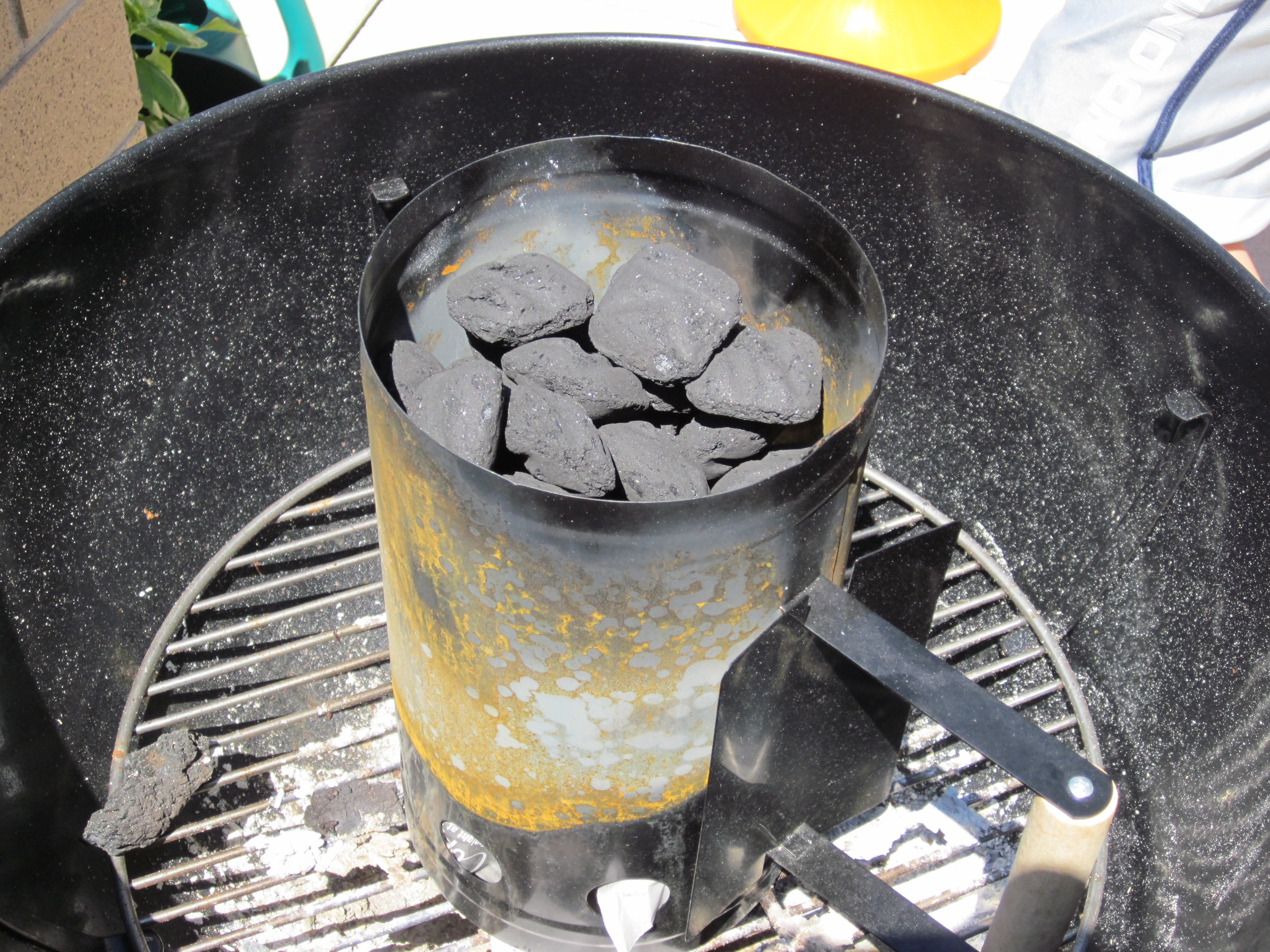
Charcoal grill

Chimney starter

Charcoal briquettes

Paper

Matches

Tongs

Ingredients

Frankfurters (Look for all beef with natural casing)

Hot dog buns (American style, top loaders preferred. I will not hold it against anyone if they favor the New England Style even though they were constructed more for lobster meat than a frankfurter)

Mustard (My personal favorite is a spicy, deli-style mustard, but if the bright yellow stuff works for you, who am I to say no?)

Relish (Sweet, emerald green or India)

Ketchup (only if there will be persons under 12 at your Fourth of July barbecue. Proof of age required.)

Butter

Chopped white onions, sauerkraut, chili, or anything else you want on your frankfurter is optional.


Fire Preparation

Charcoal in chimney starter

Fill chimney starter with charcoal briquettes

Put one piece of newspaper below, light with match and let charcoal burn unto white and glowing.

Charcoal smoking

Pour hot briquettes into the grill, cover with grate.

Frankfurter  Preparation

Slice frankfurters lengthwise with a sharp knife.

Slicing frankfurters

Bun Preparation

Open buns and spread butter on each side.

American Style Buns

Condiment Preparation

Assemble mustard, relish, ketchup and any other condiments you might want.

The Frankfurter Trinity

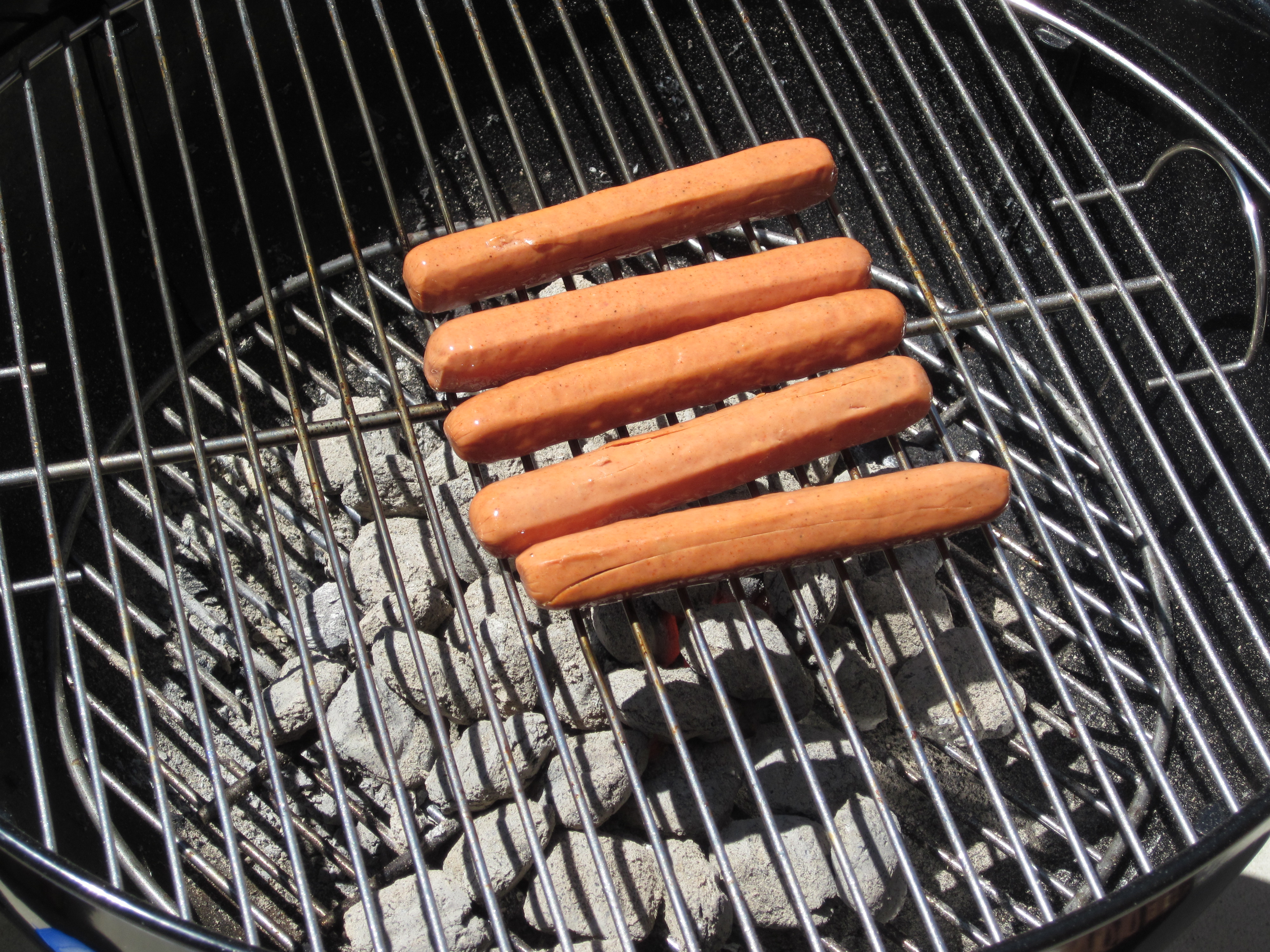
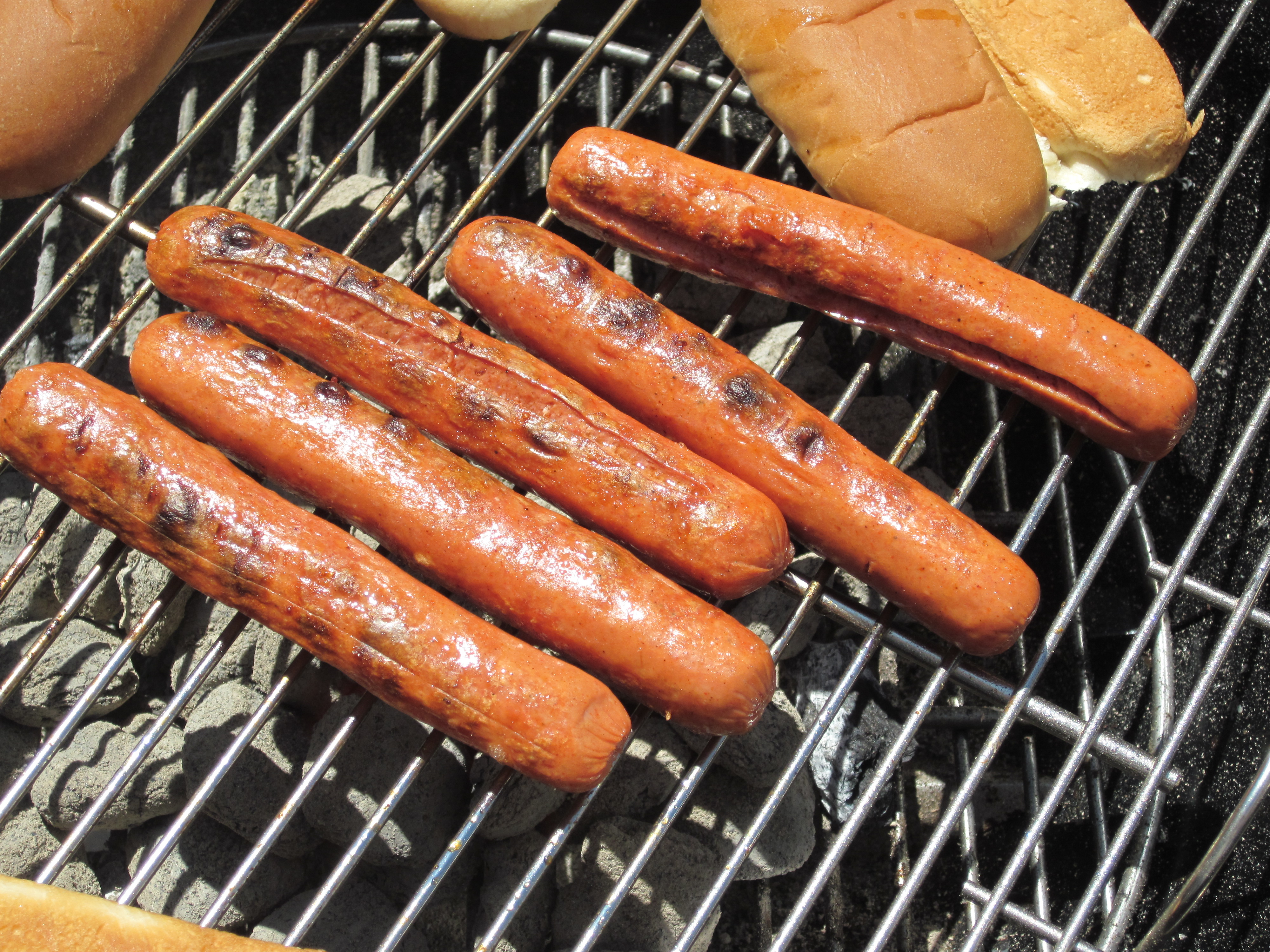
Place frankfurters on the hot grill, turning frequently with the tongs until the skin splits, bubbles and the sausage’s juices are revealed. They are now done, but if you prefer a dark char on the meat, cook as long as you like.

In the meantime, flatten the buns on the fringe of the grill, away from the direct heat. Watch carefully to make sure they do not burn. Take them off when they are toasted lightly brown.

Frankfurters lightly charred, buns toasting on the fire’s fringe.

Perfectly toasted buns

The dressed frankfurter

Place frankfurter in the roll, apply the condiments of choice, and enjoy.

A youngster enjoying his frank (with ketchup).

The Last Days of Fufu on Eighth Avenue

28 Jun

It was early 2007, around the peak of the real estate boom that had overtaken New York City, when we traveled to Harlem to dine at Florence’s Restaurant.  The restaurant was located on Frederick Douglass Boulevard just a few blocks north of 110th Street. I don’t recall that the trendy moniker SoHa, meaning South Harlem, had yet been awarded to that quickly gentrifying neighborhood, but, as I wrote below, all the signs were there that soon this would be a place that would be awarded a trendy moniker.

Florence’s Restaurant
(R.I.P)

After lengthy and near hysterical deliberations, our disparate group finally agreed to a date. Our choice was a Friday, certainly not ideal for anyone, but the only day all could make it. Rick was saddled with the pick and had to take weekend traffic and restaurant crowds into consideration when choosing the destination. Those considerations eliminated Brooklyn and Staten Island. The Bronx was a possibility, but the Yankees were at home that night. There was always Queens, but Rick wanted a break from that food bounteous borough.  Downtown Manhattan could be risky, so that left Harlem. Rick’s research unveiled a conveniently (convenient to me at least) located African restaurant named Florence’s specializing in home cooking and, as Rick added: “that is if your home is Ghana.”  We expected our full group of six until Friday afternoon when Rick had to suddenly drop out due to a family emergency. Though it was his pick, it was too late to find another destination. We would meet at Florence’s.

What recession?

Walking up Central Park West and past 110th Street when it becomes Frederick Douglass Boulevard, or as it is also known, 8th Avenue, and passing the distinct signs of gentrification; where on every block new apartment buildings are rising and brownstones gutted and ready for renovation; where real estate is now into the multi-millions, there was Florence’s, a tiny and untidy symbol of resistance to change.

When I arrived a few African men were sitting at the Formica-topped tables adorned with cheap plastic table mats decorated with ducklings in bonnets. They were dining on large bowls of stews, using mashed fufu, a yellowish plantain meal formed into a smooth ball, as a utensil and scooping up the stew with it. A television was on to the news and a little boy was laughing and playing with books on the floor of the restaurant near where I was sitting. To capture my attention, the boy began to raise the level of his giggling. The owner, probably the boy’s father, scolded him. The boy went quickly silent.

Fufu

I was alone but given a table for five until a large group of young tourists staying at a nearby hostel entered. I gave up my table and switched to another, smaller table. I sipped a fiery, homemade ginger beer and tried calling Gerry and Zio wondering when they would arrive, but couldn’t get through to either. I was worried that with the group of tourists that Florence’s might run out of food as small, family-run restaurants like these are apt to do. I didn’t know then, but my worries were unfounded.

Zio waddled in soon after, fedora on head, followed by Gerry who announced that Eugene was out due to a work commitment. Mike from Yonkers completed the group and wasting no time, we perused the very informative menu. When we gave the waiter our usual spiel—that we like to sample the traditional favorites, he genially pointed out a number of Ghanian and Ivorian (Ivory Coast) specialties starting with the aforementioned fufu and groundnut (peanut butter stew). With it we had a choice of beef, chicken, fish, goat, or cow foot. Before I could say “goat,” Zio blurted out “cow foot,” his insistent craving for the gelatinous hooves that would accompany our peanut butter stew went without explanation.

Kelewele: peculiarly mouth-watering.

Our waiter also recommended the fried fish served with banku, fermented cassava dough and rolled into balls, the baked fish, an item called kelewele, sliced plantains seasoned with ginger, chilies, and cloves and fried giving it, according to the menu, “a peculiar mouth-watering flavor.” Lastly, we were steered toward a supposedly popular dish of black-eyed peas called “red red.”

The groundnut stew with cowfoot arrived first along with the mound of fufu. I picked up one of the hooves, found it impenetrable and quickly gave up on it, but Zio determinedly found a way to gnaw the clear gristle surrounding bone. Unlike the Africans, I tried to eat the fufu with fork and knife—a big mistake; it was like cutting through rubber. The banku that accompanied the excellent fried fish was a better option, soft and starchy, a nice compliment to the tangy sauce of the fish. The menu said the baked fish was bluefish, but devoid of that fish’s oily, distinctively strong flavor, it was more likely tilapia. Whatever the species, the fish was moist and full of meat and flavor.

“red red”

The last two dishes to arrive were the “red red,” a bowl of black-eyed peas drenched in an oily crimson-colored sauce that was, despite it’s appearance, rather bland, and the kelewele, plantains fried to a crisp, deep brown color and speckled with chilies and ginger, again not as spicy as it appeared. The four of us finished everything and were shocked at the miniscule bill for all the food we consumed. Had the owners of Florence’s not seen the construction that I saw? Did they look at the overpriced menu of the new, upscale Ethiopian restaurant with the fancy wine list across the street? Were they not aware that the immediate world around them was about to drastically change? I could only hope that they did not.

Brunch and dining “al fresco” where Florence’s once stood.

 But of course it did, though not without a serious bump. Construction in Harlem and elsewhere halted temporarily during the financial crises of 2008 and 2009, but the growth resumed in 2010. I ‘m not sure when Florence’s closed, but it couldn’t have been more than a year after our visit. Where Florence’s once was there is now a wildly popular beer garden called Bier International with “al fresco” seating featuring “brunch.”

Read Before Entering

24 Jun

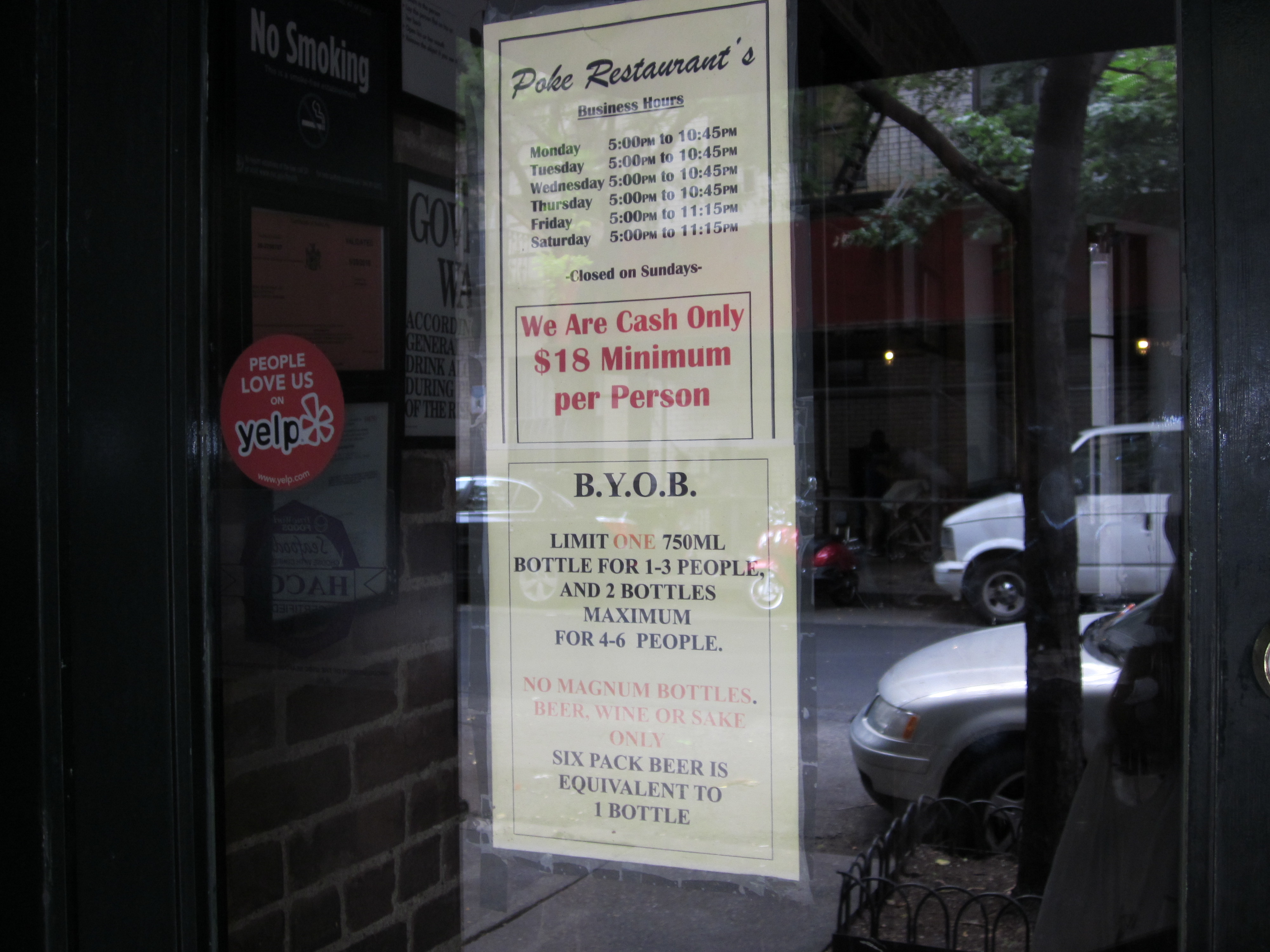
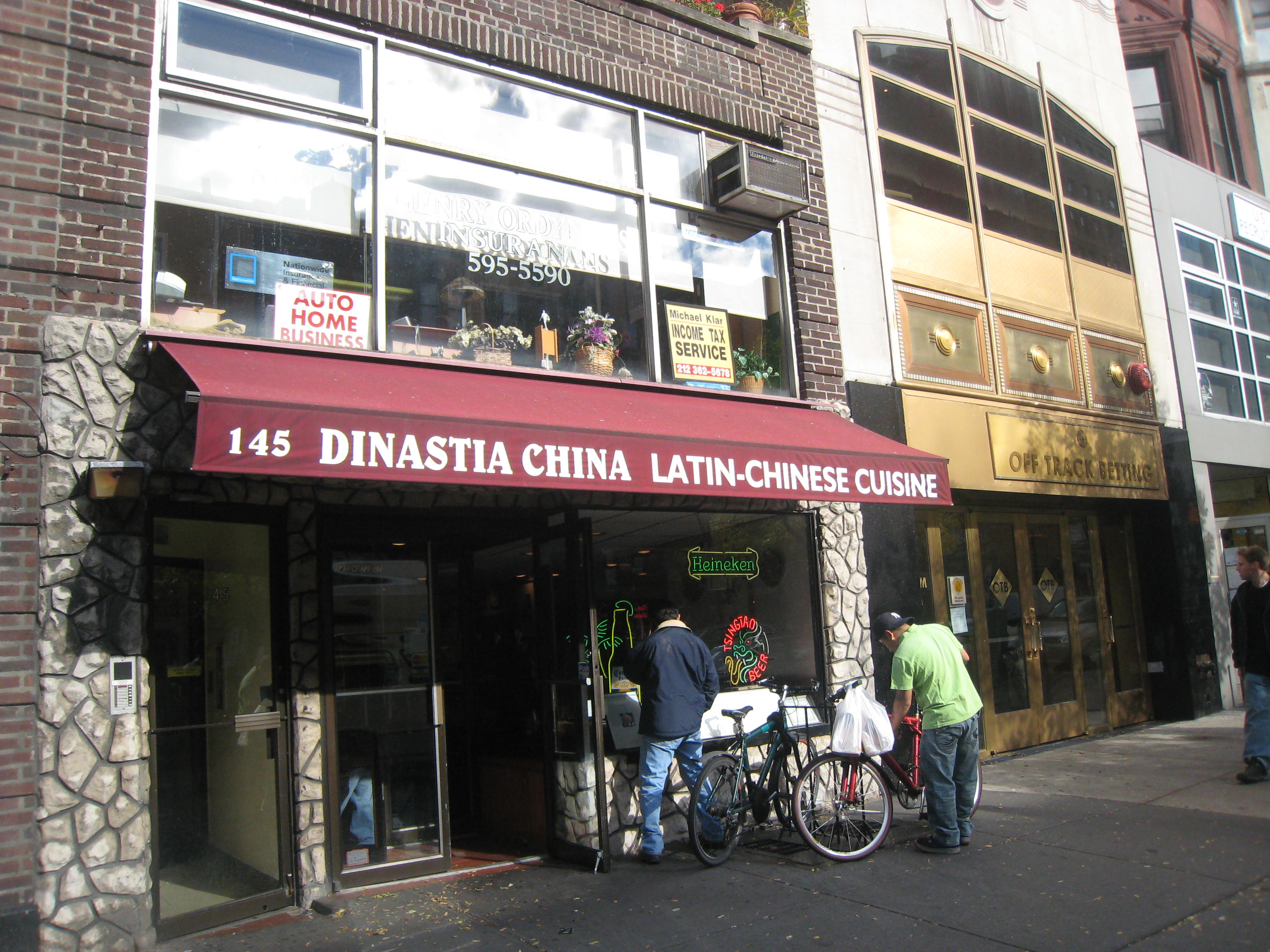
I had $21 cash money in my pocket, but already spent $8 on a small (under 750 ml) bottle of sake. Do you think they will be so kind as to count the $8 I spent on the sake toward the $18 minimum? I would really like an eel and cucumber roll to complement my sake.
 

Stay tuned for another Adventure in Chow City on Tuesday.

A Tibetan Chef in a Japanese Kitchen in Sunnyside, Queens

21 Jun

The night after the Di Fara experience, our group dined at Yamakaze, on Queens Boulevard in Sunnyside, Queens. Apparently, Yamakaze is no more, but here is a brief testament to its short life.

Yamakaze
R.I.P

 The trip out to Sunnyside, Queens on the 7 train was an easy one especially compared to the previous night’s trek to Midwood. Eugene’s puzzling choice was a Japanese restaurant called Yamakaze. We were all more than familiar with the obligatory Japanese restaurant menu—the sushi, the tempura and teriyaki dishes, the udon and soba noodles, What would make Yamakaze a unique experience; one worthy of our efforts? I would withhold judgment. We all had confidence in Eugene’s peculiar, but effective approach to his choices. There was a method to his madness.  We hoped.

The carbohydrate-induced bloat in my stomach after Di Fara’s pizza the night before had subsided throughout the day, but to make sure I ate a light, fiber-rich lunch in preparation for the additional starch to come. The 7 train got me to the restaurant early where I saw Zio waiting outside, perusing the menu skeptically.

  “Whatta we gonna eat here?” he asked, gesturing dramatically with his hands.

  I shrugged and mumbled that maybe the noodles would be good. Again, I was resolved to withhold judgment.

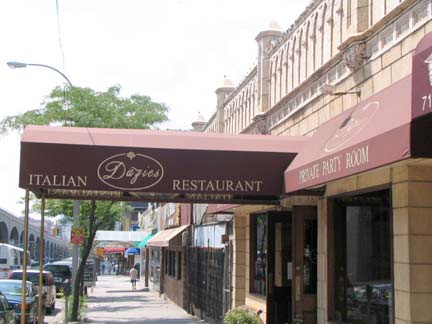
Dazie’s : Live entertainment with your linguini, Thursday through Saturday.

 To kill some time, we walked a block for a drink at Dazie’s Italian restaurant. The bartender, who introduced himself as Dominick, informed us that they were “auditioning” piano players. Before we could withdraw our drink orders, Zio and I had the misfortune of sitting through an abbreviated set of “My Way” and “New York State of Mind.” Thinking we might actually consider returning to Dazies, Dominick gave us each a card and carefully wrote on the back that on Thursday, the entertainment at the piano bar would be “Danny” while on Friday and Saturday, “Jimmy” would be the featured act. We graciously accepted the cards and then got out of there as soon as we could suck down our drinks.

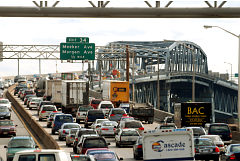
 Yamakaze was empty, but the waitress led Zio and I to our “reserved” table for six. Eugene showed up on time, but Gerry and Mike from Yonkers took a wrong turn off the BQE and ended up in Brooklyn while Rick was stuck in traffic near the Kosciusko Bridge. I’d often heard about the dreaded Kosciusko Bridge and the traffic jams attributed to it, but this was the first time somebody I knew was actually stuck in it.

Fun time on the Kosciusko Bridge

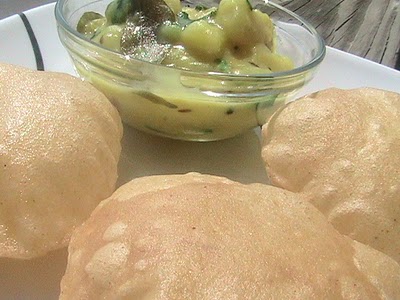
 Taking a look at the menu again, I did notice a few unusual, non-traditional Japanese items. Among them were “Buffalo wings,”  “chicken pocket,” and a Caesar salad.” But along with the above-mentioned non-appetizing appetizers was something called “choi-la,” spicy grilled beef and cucumber stick, and “alu tarkari” spicy potato on deep fried bread. On the entrée portion of the menu, there were others that looked promising like the “Himalyan rasha,” braised goat meat in Thai red curry sauce, and the “sha-ngopa”, sautéed beef or pork with jalapeno, garlic pepper and served with bread. These were definitely not Japanese in language or food. The waitress said that the chef was Tibetan and the menu included a few Tibetan dishes. Did Eugene know this was a Tibetan-Japanese restaurant? Was he, the man who brought us to Himalayan Yak, still fixated on the cuisine of Tibet? Or was it just coincidence? Eugene claimed the latter.

Once Gerry and Mike from Yonkers arrived, we ordered two of those Tibetan hot starters, the choi-la and the alu tarkari along with Japanese gyoza. Rick arrived just as we were cleaning up the very tasty alu tarkari with the deep fried bread and ordered another for him. Tibetan seemed the way to go here—not much excited us on the Japanese menu, but Zio and Eugene ordered noodles, ramen for Zio and thick noodles for Eugene. I mistakenly, maybe intrigued by the name, ordered something called momo which turned out to be the Tibetan version of gyoza. Gerry, who can never get enough of goat, couldn’t resist the Himalyan rasha. This Tibetan goat, however, didn’t meet the high standards set by the Punjabi or African versions of goat we enjoyed at previous outings.

Alu Tarkari: Fried bread and spicy potatoes

There was nothing really wrong with Yamakaze. Sure the muzak of Celine Dion and Barbra Streisand we had to endure while dining didn’t enhance the experience. But we met our $20 limit, even with a few rounds of hot sake. Everything was perfectly fine. That being said, I doubt any of us will ever return.

And no one did.

The Fusion Files: Old School Edition

17 Jun


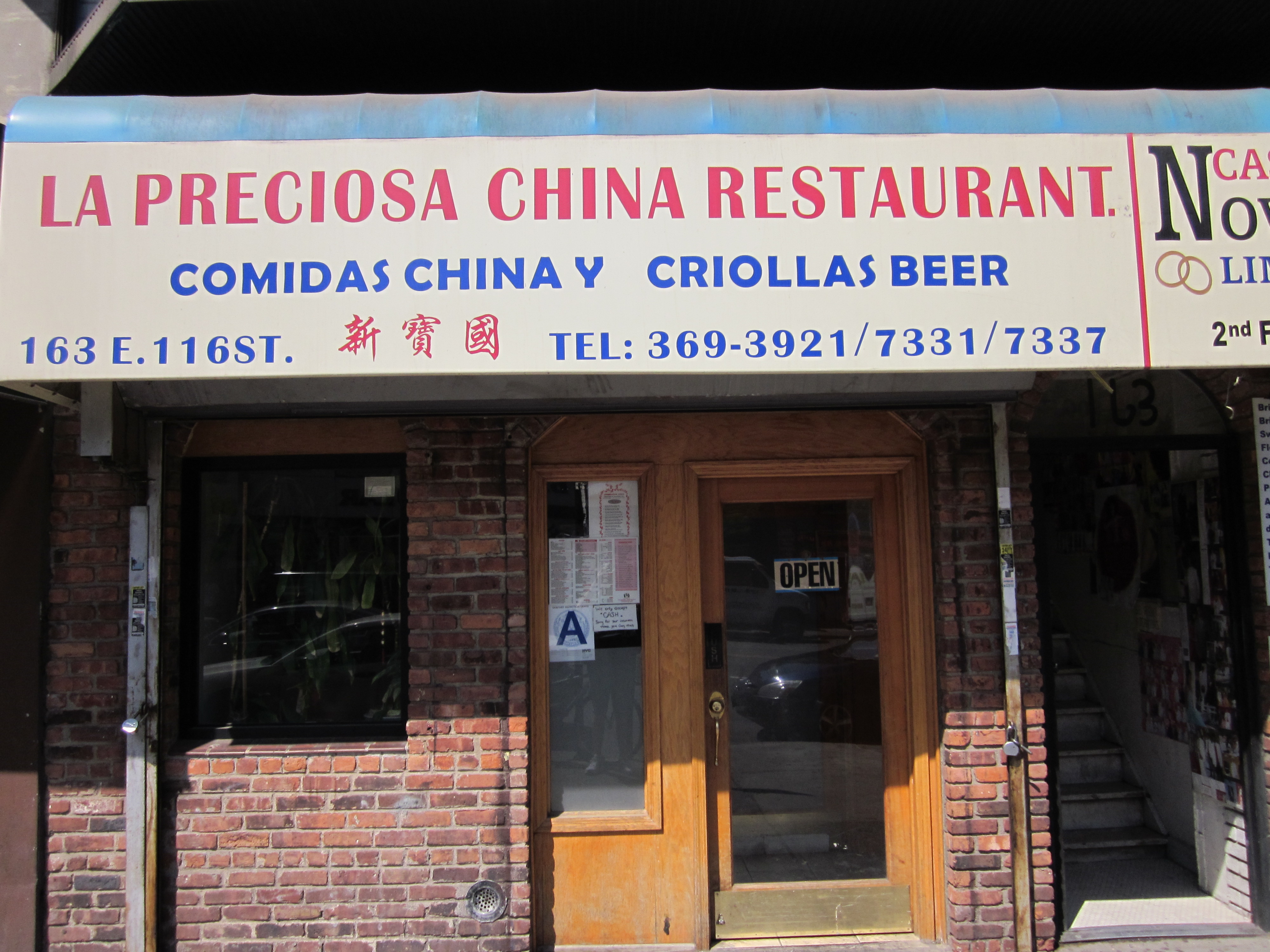
Why is it that I’m a sucker for anything old school? All right, don’t answer that. My feelings on fusion, when it comes to food are well chronicled.  But I make an exception with comidas china y criollas.  A large wonton soup and a heaping plate of yellow rice and black beans is my kind of comfort food, fusion be damned.

Enjoy the weekend. Another installment of Adventures in Chow City will return on Tuesday.

The Weekend Special

10 Jun

Sunday is the big parade. You know the one I mean: the National Puerto Rican Day Parade. And to show respect to all my friends who claim roots from Las Isla Del Encanto, Fried Neck Bones hereby proclaims this Cuchifrito Weekend. So go out there and eat all the deep fried pig parts you can find, particularly the delectable ears. Don’t be shy about devouring chicharron (fried pork skin),  papas rellenas (fried potato balls stuffed with meats), bacalaitos (fried stuffed codfish balls), morcilla (blood sausage), and pasteles (pork-filled deep fried pastry)  to your, by now, overworked heart’s content.

Cuchifritos and frituras

To add to the spirit of the weekend, here’s a treat from that honorary coqui, the late, great vibraphonist, Cal Tjader who had the very good sense to compose a piece about the goodies above he titled Cuchy Frito Man. Click below to listen.

1 – Cuchy Frito Man

And the Answer Is

6 Jun

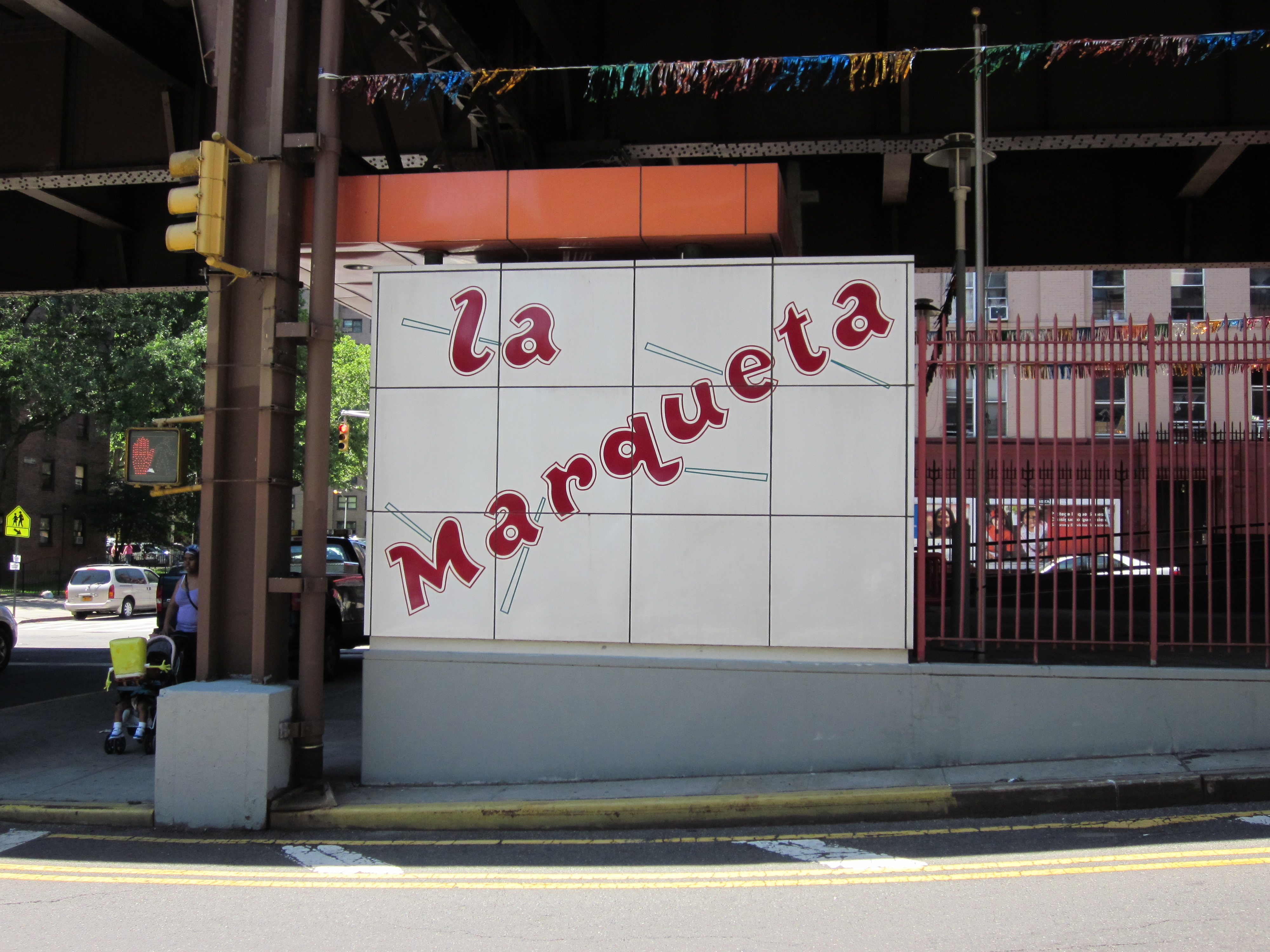
No one was able to identify where I was below:

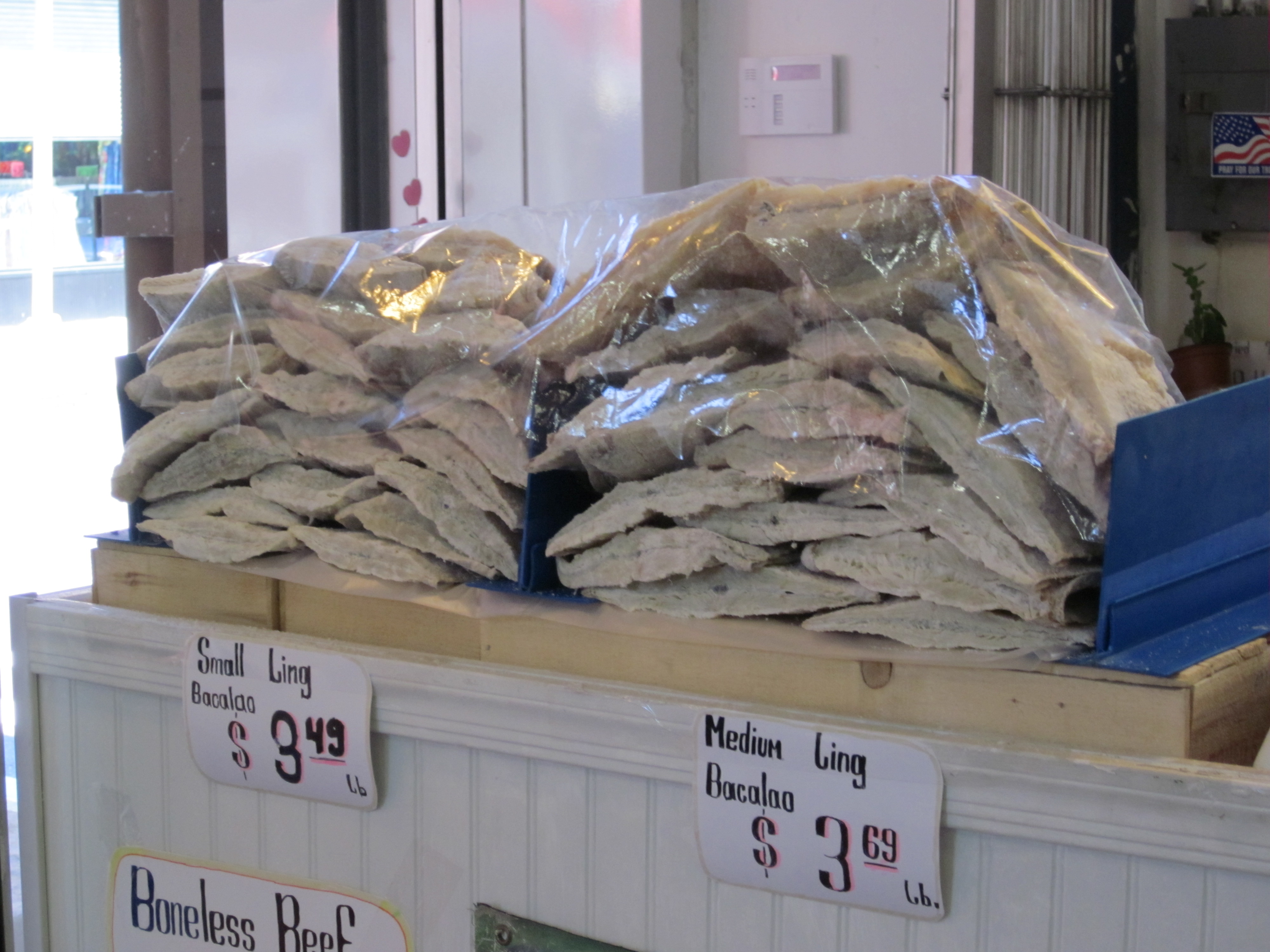
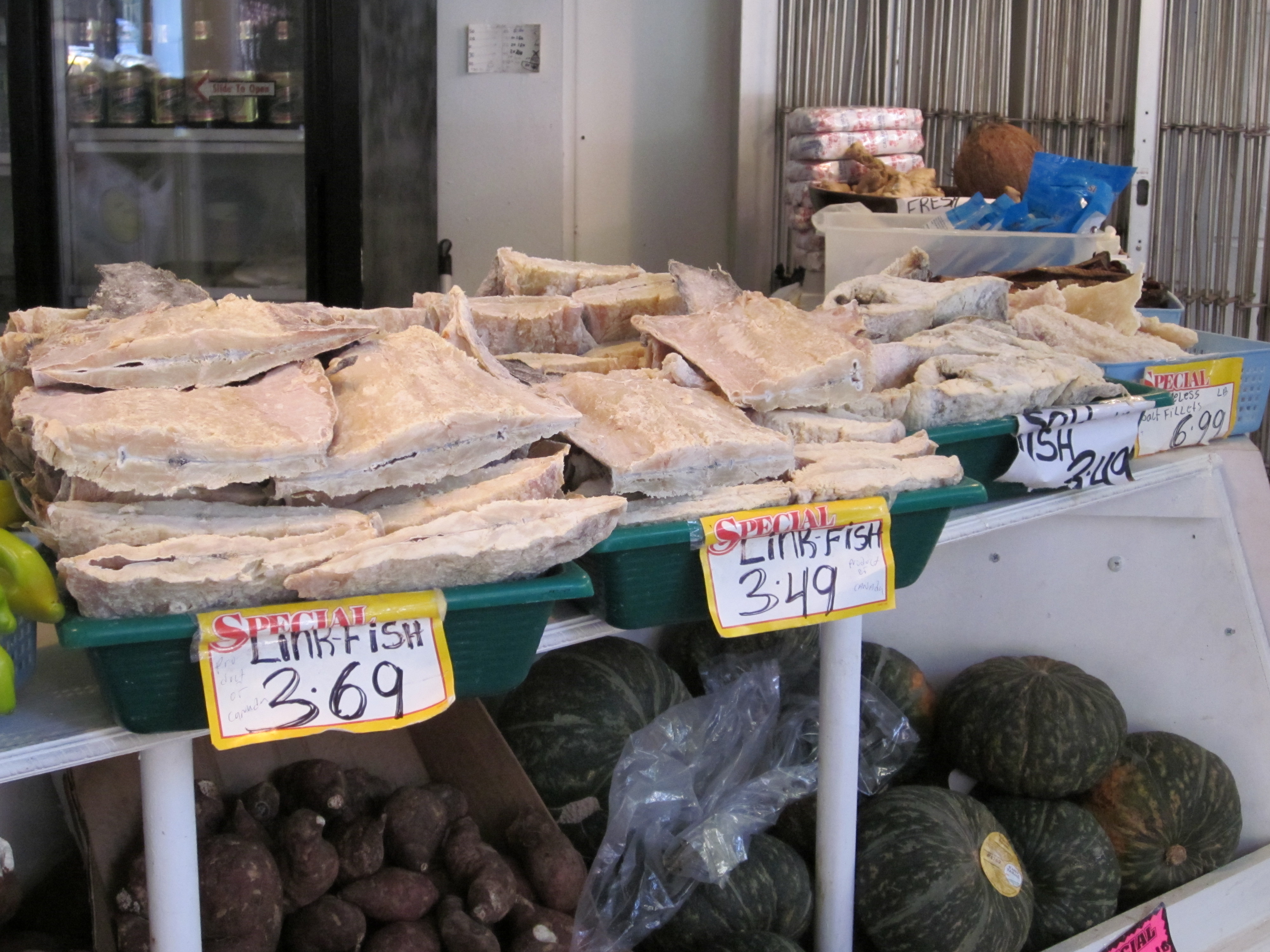
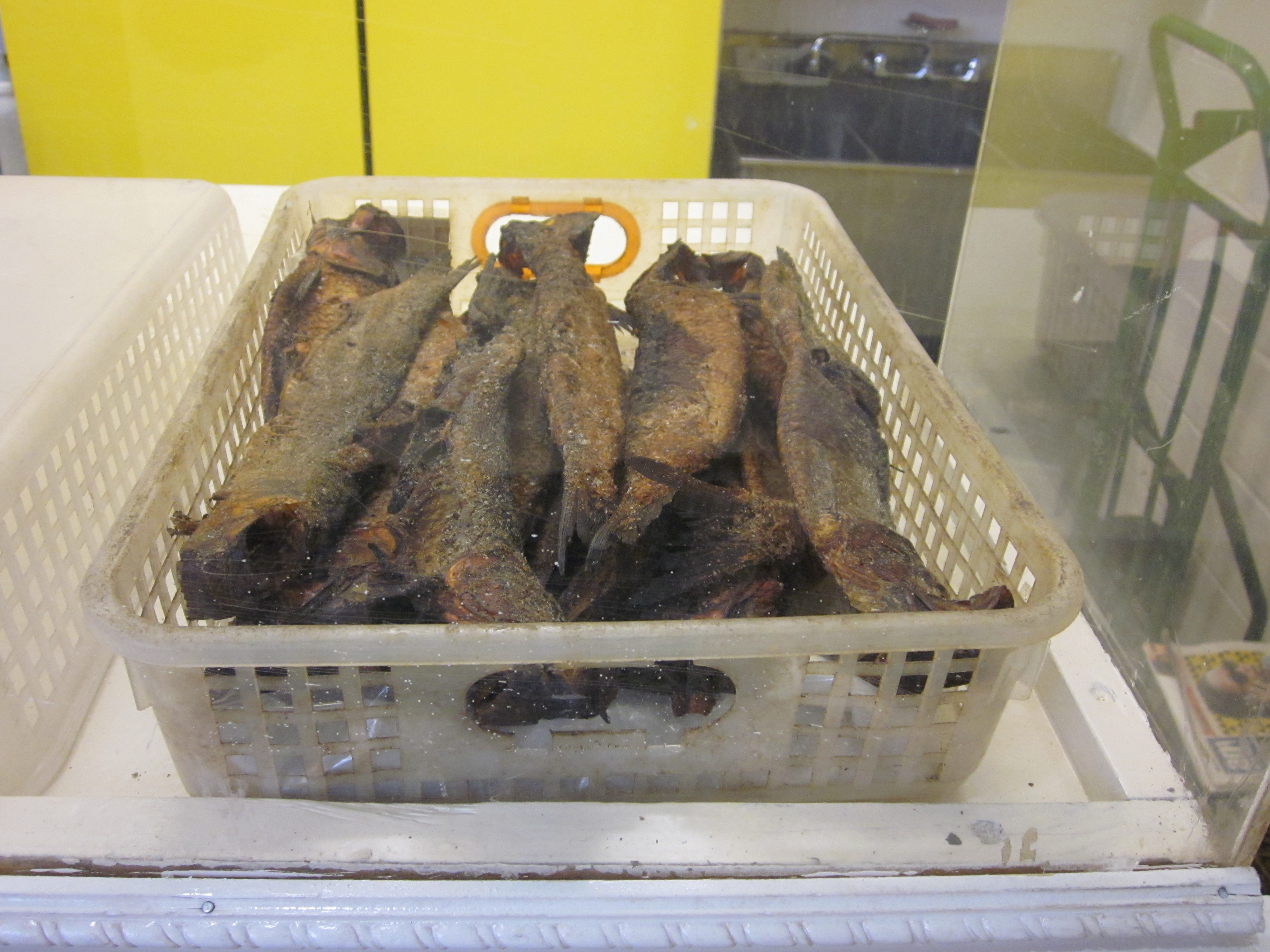
In my subtle hinting, I mentioned that the competition was fierce for the salt fish, baccala, bacalao, and link fish business within the confines of where I was.

Here's one


And another


And more

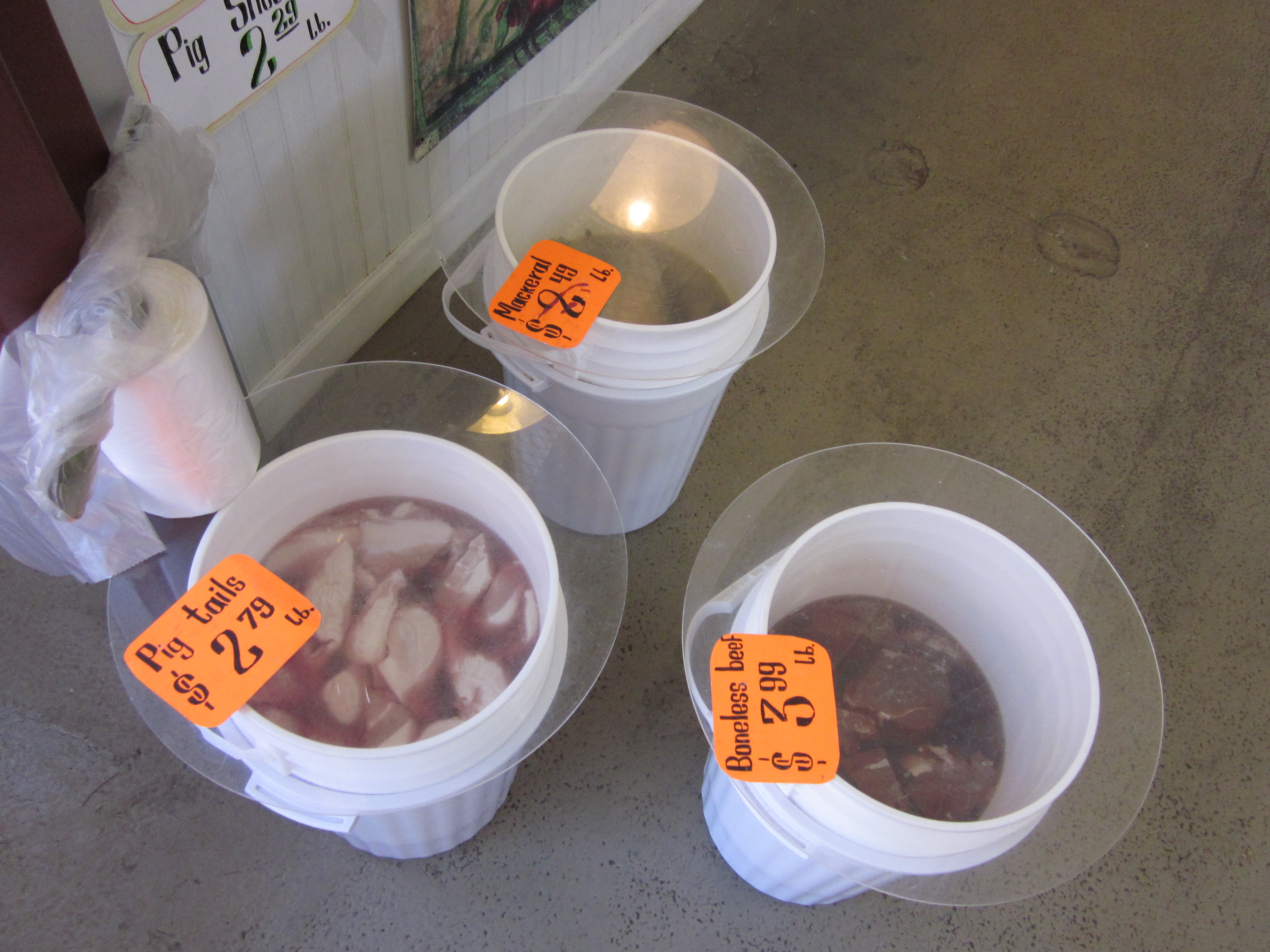
Pigs tails, pig snout and other goodies are also available in abundance at this place.

So what is the name of this foodie wonderlad; the poor man’s Eataly? Here, while you shop, the rumbling of trains above will serenade you. That’s because you are on 115th Street and Park Avenue in East Harlem at…

Until the next installment of Name That Place, eat well and don’t forget to change the water a few times when you soak your salt fish.