Tag Archives: Food

The Hero of Mott Street

17 Jul

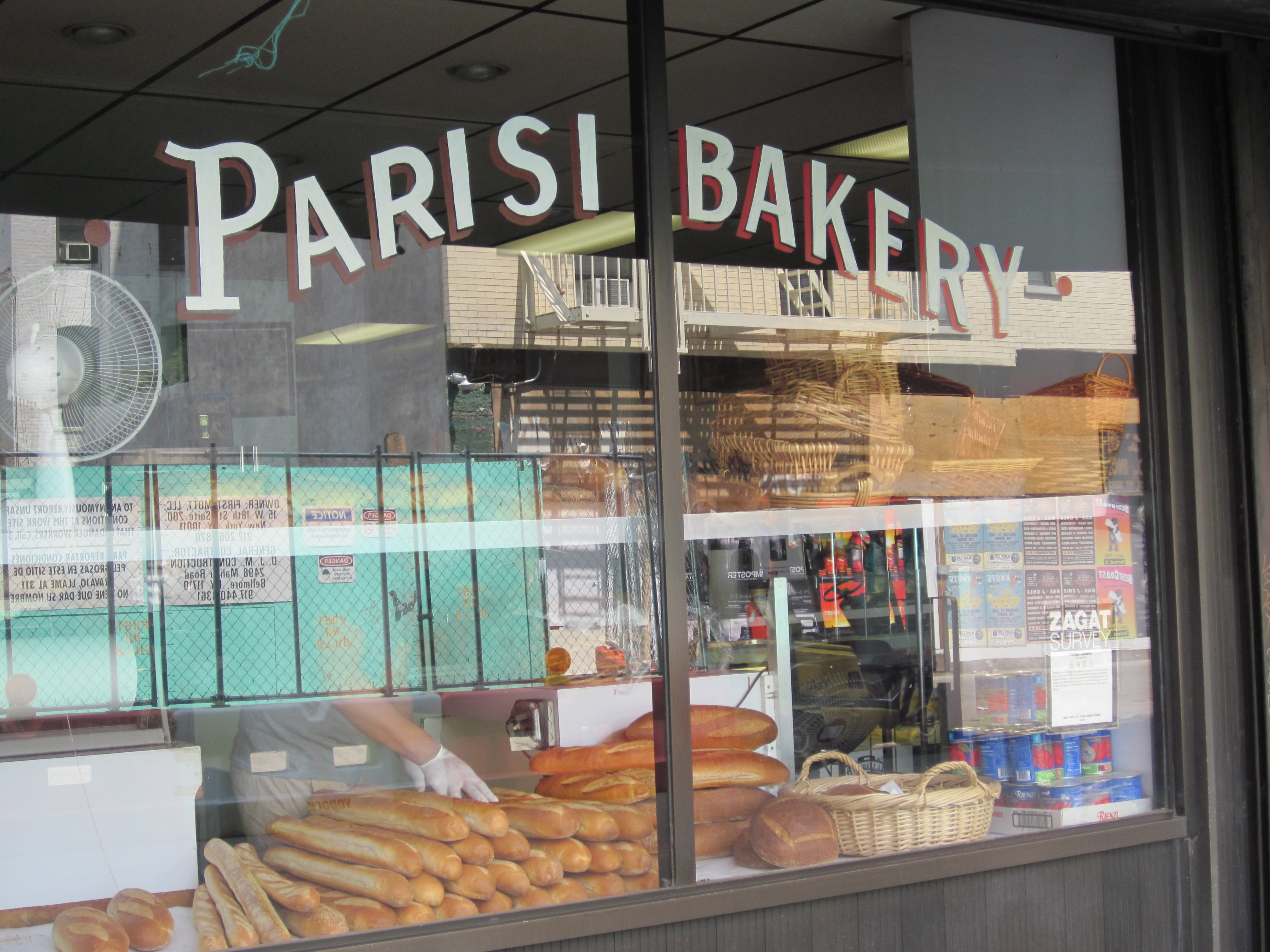
Parisi Bakery
198 Mott Street
Little Italy (also known as NoLita)

They call it a bakery, but in reality the bakery is a few blocks away on Elizabeth Street. This Parisi’s outpost specializes in magnificently-crafted heroes.

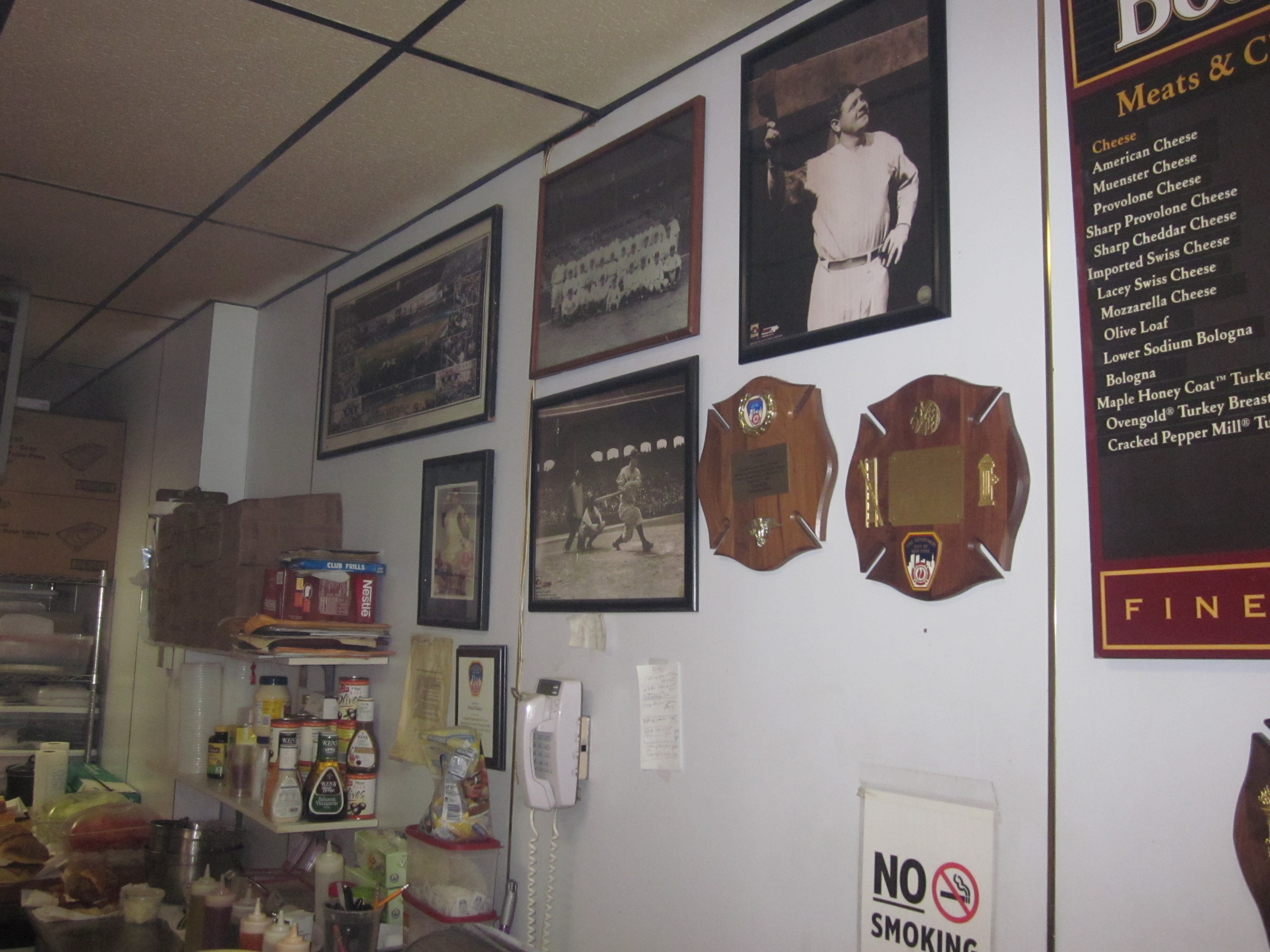
Heroes on the walls.

Maybe the pictures of Babe Ruth and other New York Yankees provide heroic inspiration.

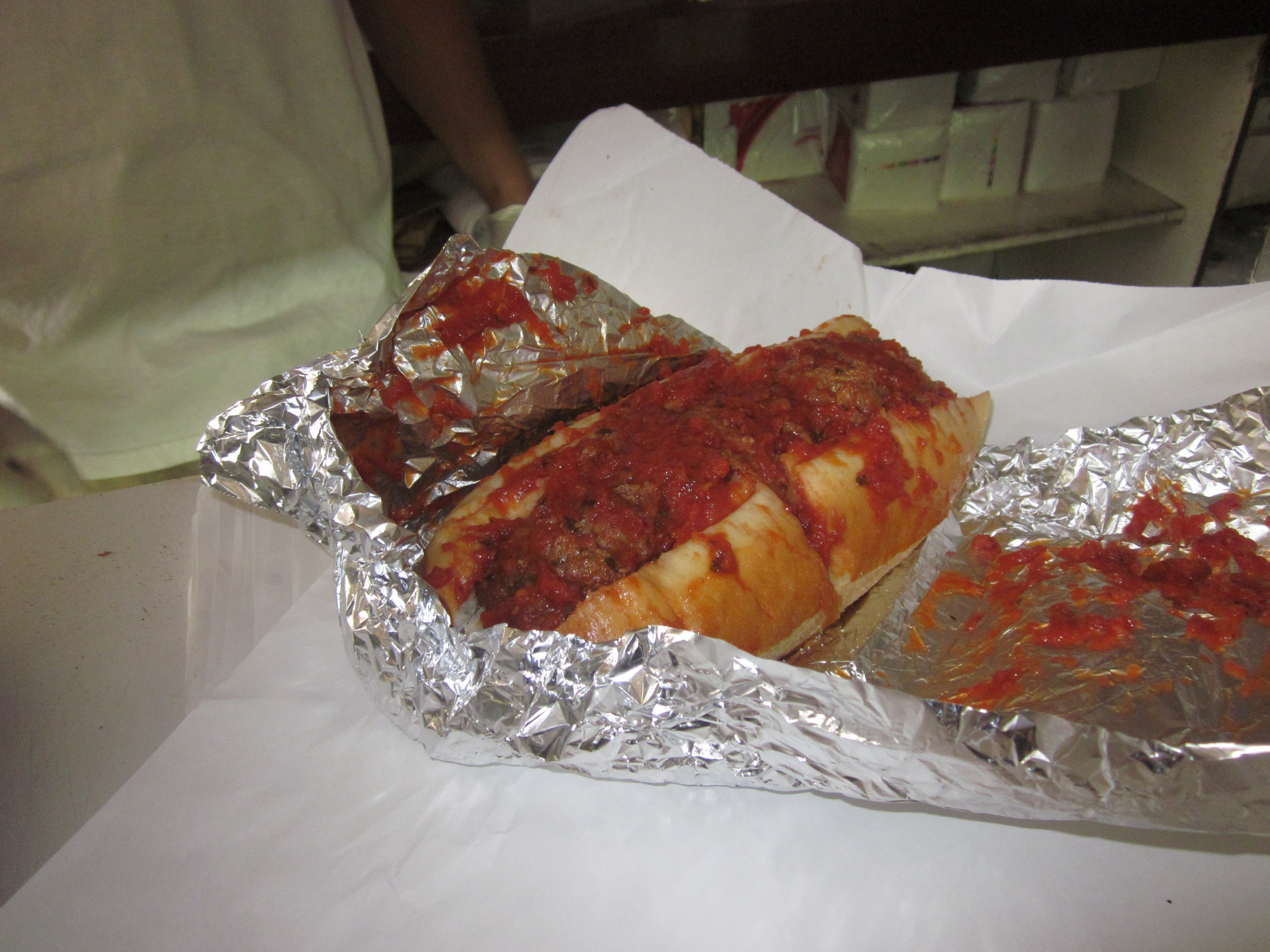
Parisi’s meatball hero.

But finding hero nirvana is never easy and at  Parisi’s there is the little problem of the line. The line begins to form just before noon and soon snakes out the door and onto Mott Street. I’ve many times preached my feelings about waiting on line for food. Unless times are very hard, don’t ever do it!

Even for this.

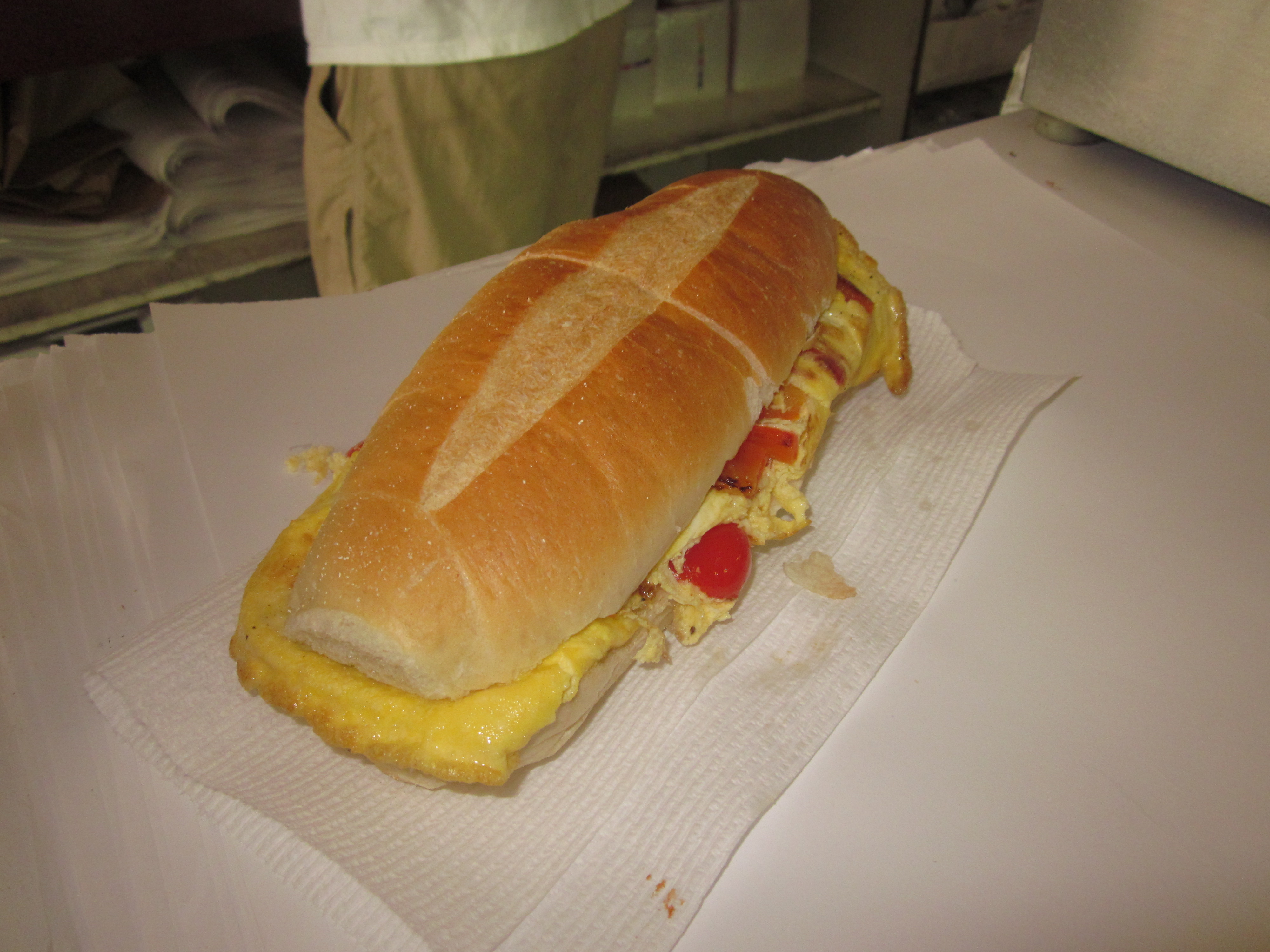
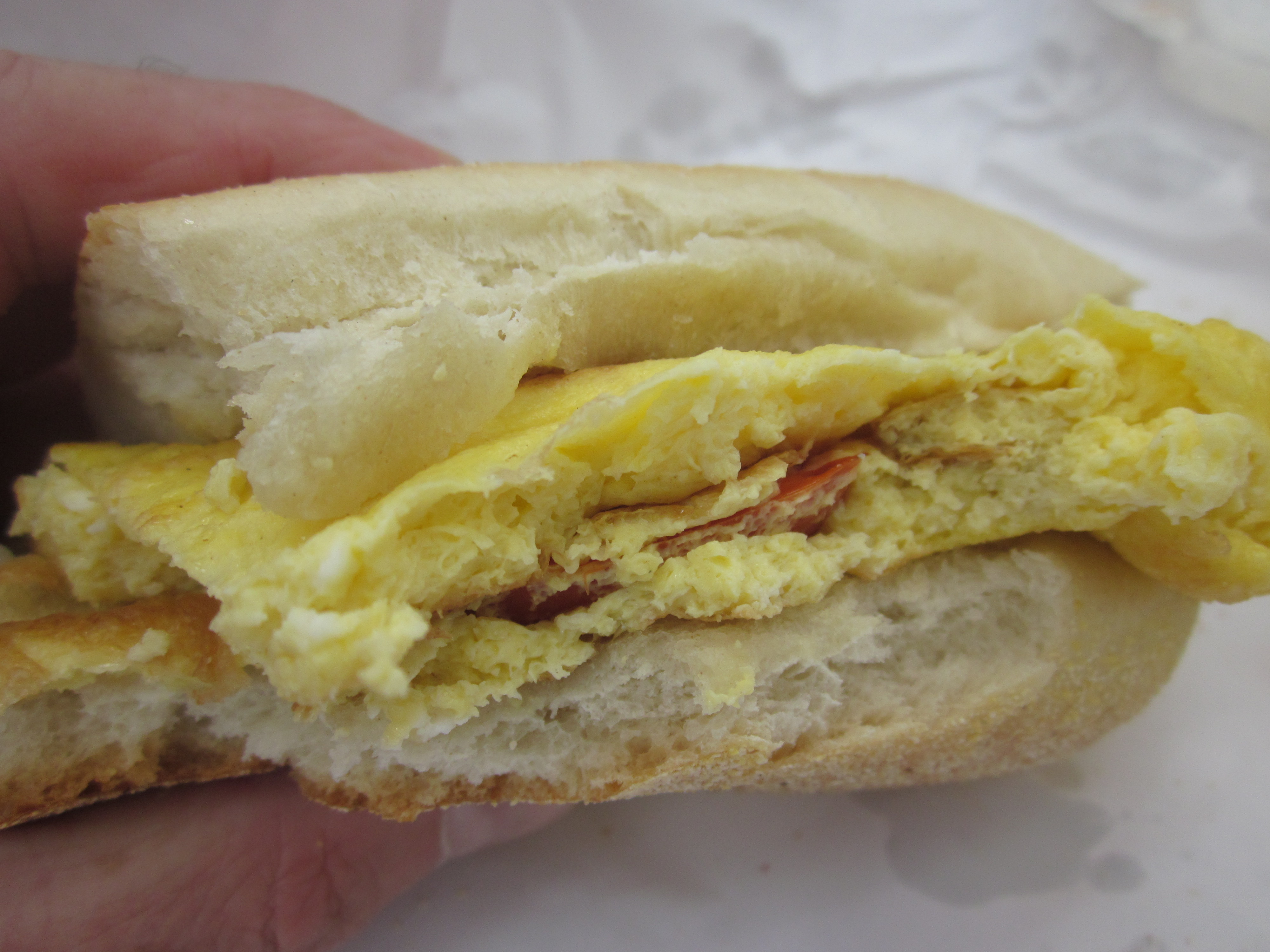
Parisi’s pepper and egg hero

There are ways to avoid the line quandary. It just takes a little planning. You’ll need to set your schedule around your visit to Parisi’s. Make that your priority for the day. Take a late breakfast or an early or very late lunch and you should be fine.

Tell me that’s not worth a schedule adjustment?

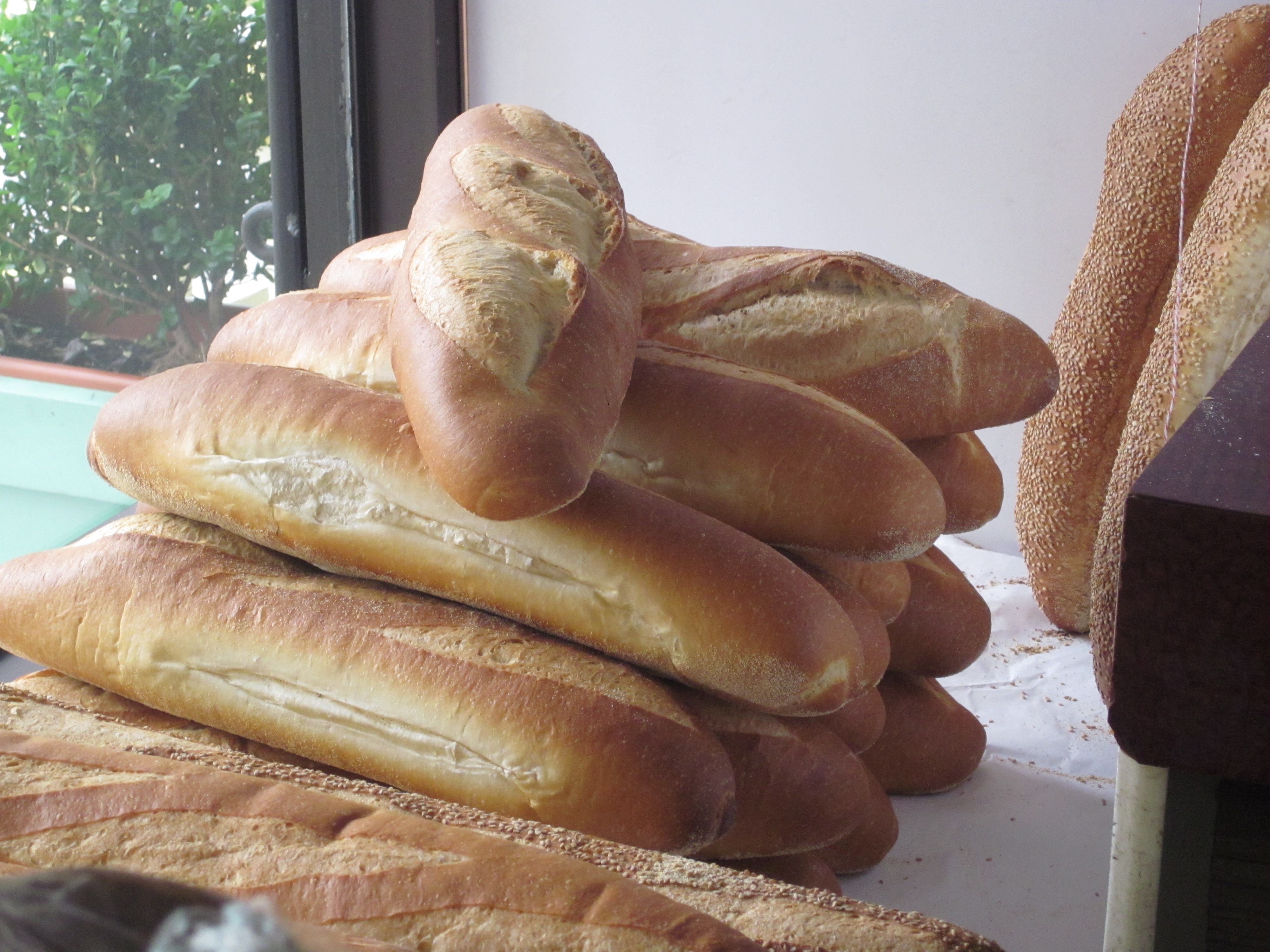
There is no seating at Parisi’s but who cares? You’ve got your hero.  Don’t ask for more.  Or maybe just a few loaves to take home.

The Chinatown Congee Wars: Part One

13 Jul

Congee vs. Big Wong

Some call it porridge. A more medieval term for it is gruel. In Chinatown it is known as congee; white rice boiled with water, lots of water, until it becomes a thick, hot cereal or soup, depending on what you do with it.

For many who live in Chinatown here in New York it is a breakfast staple. In the last few years, Congee’s popularity has burgeoned beyond Chinatown and now people like me travel to the congested, cramped, sometimes ripe streets of lower Manhattan to get their congee fix.

Congee lovers are often blindly loyal to their favorite places. Me, I keep an open mind. I have, however, narrowed down the crowded Chinatown field to four serious contenders to the congee crown and here, in two parts, using my vast background and experience in the art of overcooked rice, I will ultimately reveal the best congee in Chinatown.

This will not be like the murky college football system known as the BCS where the true champion is settled more by sports writers than by the deserving teams battling it out on the field. The results of the Chinatown Congee Wars will be unequivocal. There will be no talk radio controversy. No happy hour debates. That is unless you happen to disagree with my choice. In which case, you are entitled to your opinion, no matter how misguided it might be. And please, don’t hesitate to express yourself here. I welcome it.

For this first round, I was accompanied by one of my offspring;  the 12-year-old, Luigi. Though he is a mere novice when it comes to the glories of congee, despite his youth, Luigi is a very accomplished eater. What he lacks in experience, he more than makes up for in exuberance. I had complete confidence that he would remain unbiased and not be swayed by perks such as complimentary hot tea or a plastic-wrapped fortune cookie. I was sure he would take his task seriously.

Congee

98 Bowery
Chinatown

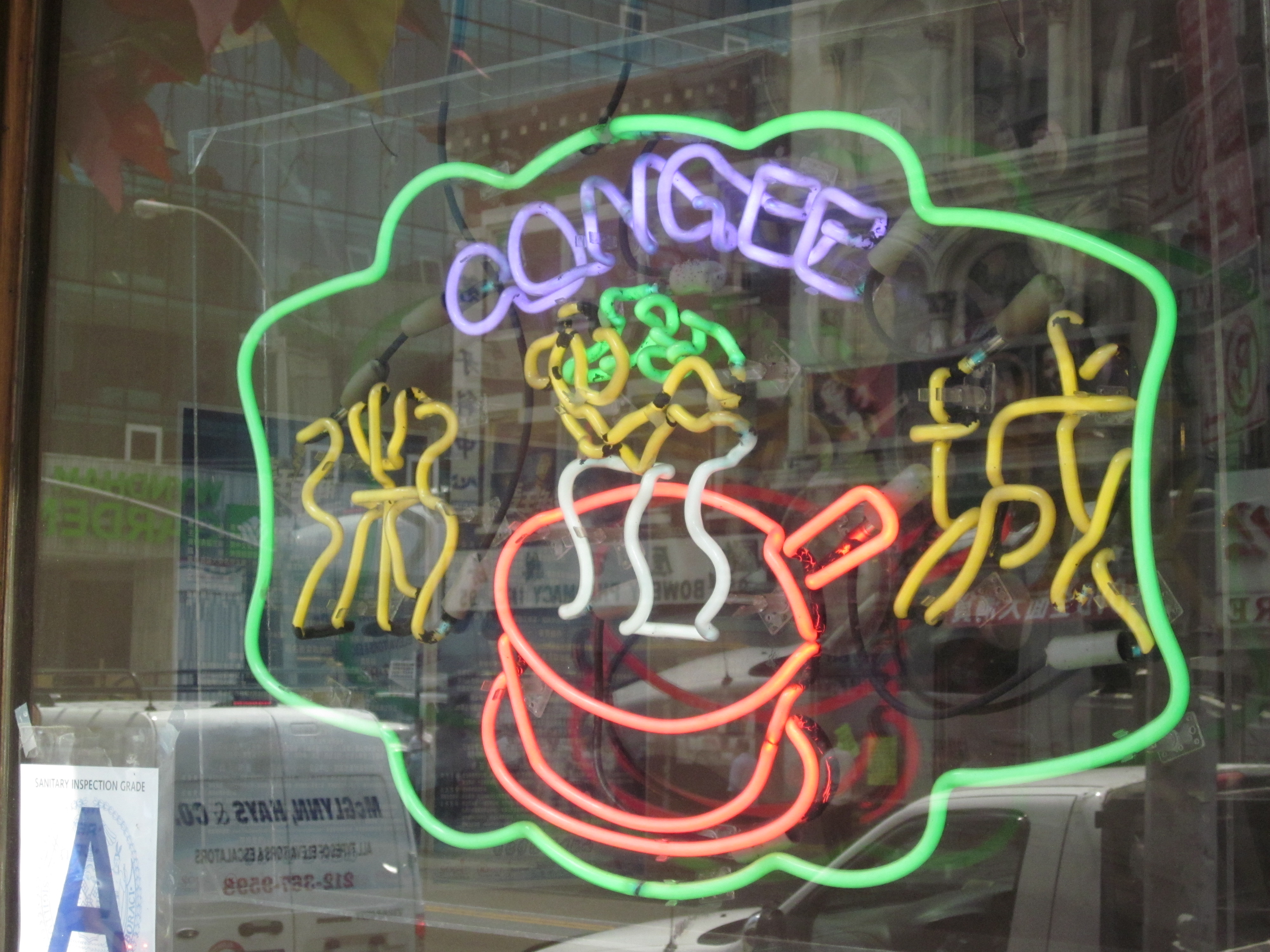
Our first destination was the appropriately-named Congee.

Located on the Bowery, Congee, I knew was worthy of its name. When we arrived, just before the lunch time bustle, there was only a Chinese family with very young children at one of the other tables. The baby was making a racket in the otherwise quiet restaurant and I noticed, doing its best to decorate its pink, fat cheeks with spoonfuls of gruel.

I told Luigi we had to have the congee. If he wanted something else to offset it, he could, but to be careful and pace himself; we had another congee place to judge.

There were a number of interesting congee offerings including snail and pig’s liver, abalone and frog, and dried scallop and gingko nut, but I wanted to keep it relatively simple. I needed to judge the congee on its own merits without too many exotic ingredients, so I went with the sliced pork and preserved egg variation.

Luigi scoffed at my suggestion of the “healthy vegetarian” congee, instead choosing the beef. Along with it, we had an order of “fried dough,” the usual, bland but deep fried, accompaniment to the porridge.

The congee came out steaming in pots with wooden handles. We stirred, trying to cool it down not wanting to scald our tongues and the roofs of our mouths thus immediately nullifying either of us as legitimate judges.

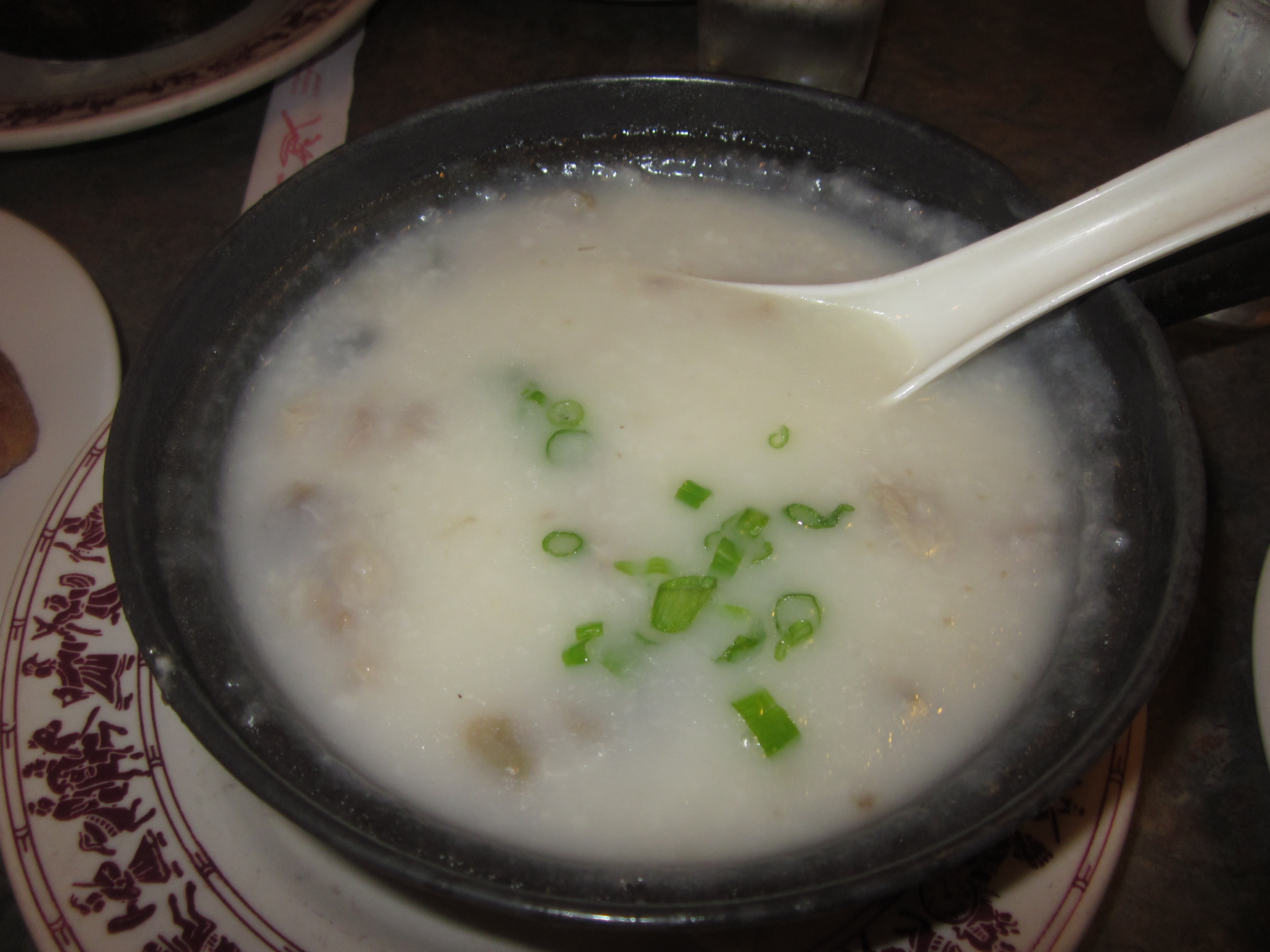
The inside of my mouth, however, after years of impatiently ingesting hot pizza, soup, and other blistering foods, has developed a tough, asbestos-like coating. That hard shell made it easier for me to begin the congee tasting sooner than Luigi. What I tasted I liked. The congee was not overly heavy; the balance of liquid to rice tipping slightly to the liquid. But the pork with preserved egg added a nice hearty supplement.

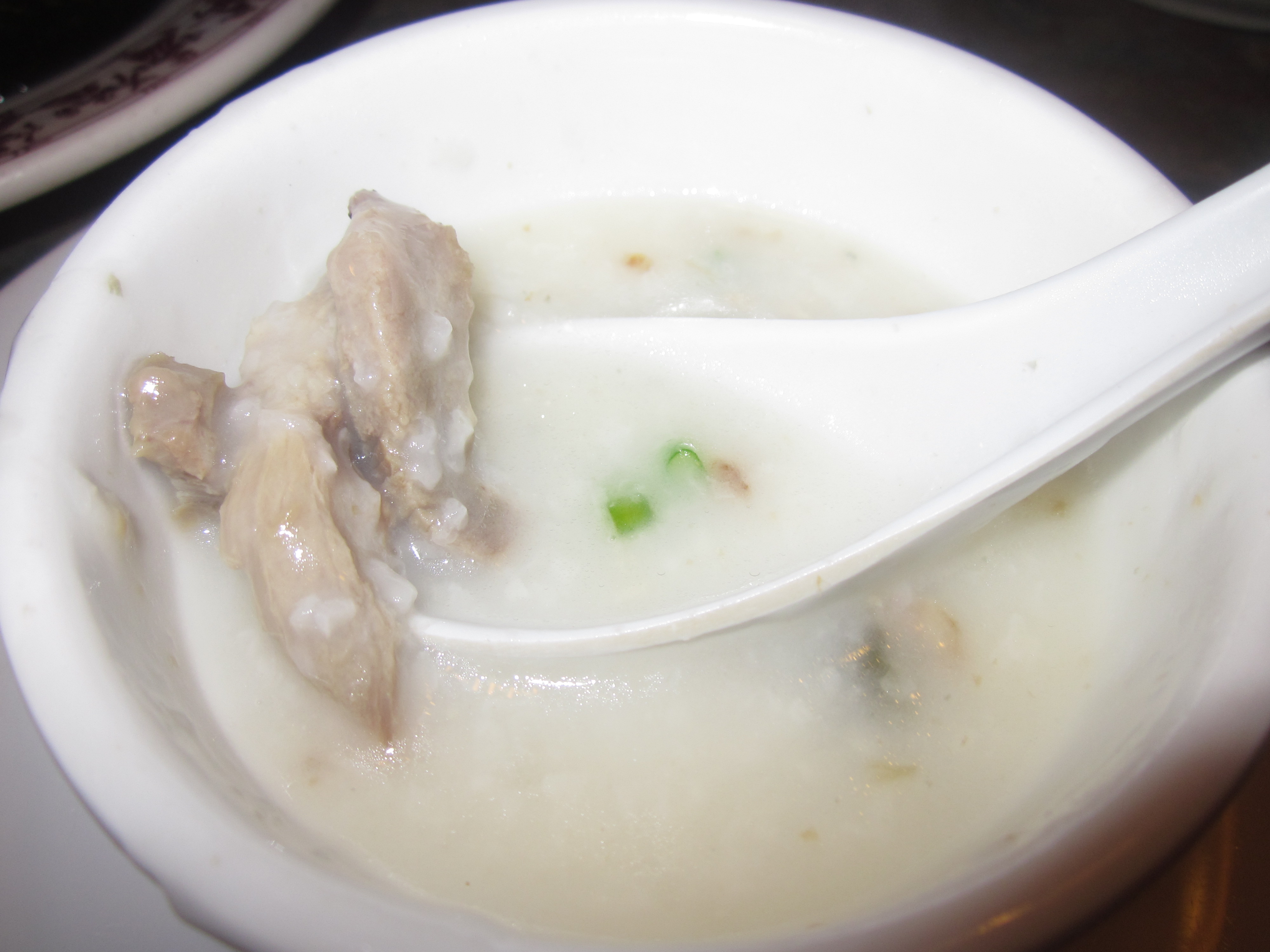
Sliced pork and preserved egg congee.

Luigi struggled at first with the big pieces of beef; trying to cut through them with spoon and chopstick but to no avail. Using his sharpened incisors, he was able to gnaw the beef apart and enjoy, so he said, the rest of his congee, dipping the somewhat stale pieces of fried dough into the porridge and scooping it into his mouth.

The beef congee at Congee.

I wouldn’t have had any difficulty finishing off the bowl of congee, but we had another place to visit. Using about all the self control I could muster, I signaled for the waiter to bag up our leftovers, and we made our way to our next destination.

Big Wong King

67 Mott Street
Chinatown


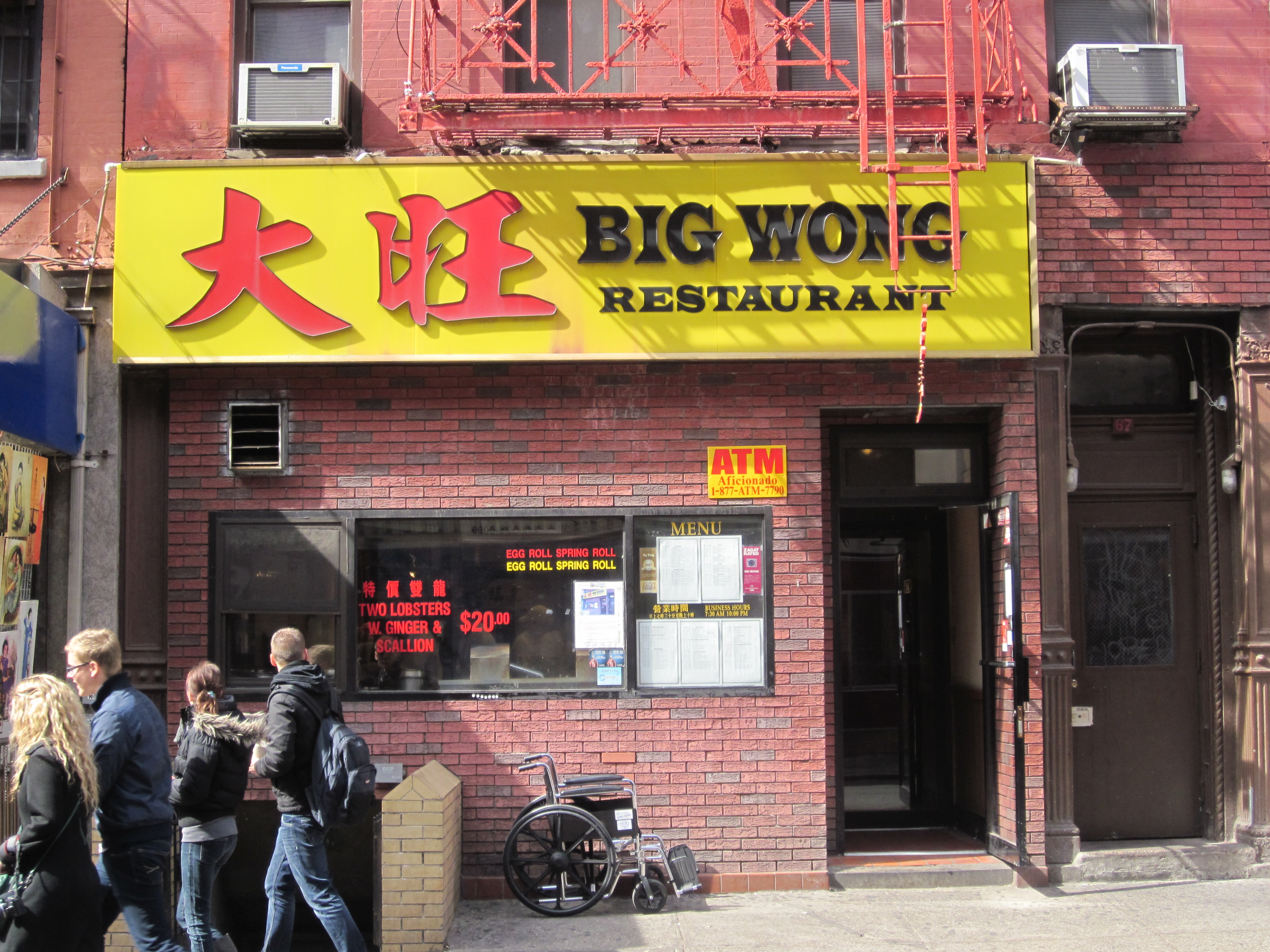
I admit to being partial to Big Wong. It’s been one of my “go to” spots in Chinatown for a very long time. And whenever I go, it’s hard to resist the congee.

I noticed immediately that Big Wong, located in the heart of the tourist mecca of Chinatown on Mott Street, had higher prices for their congee. At Congee, the standard bowls we ordered were $3.95. At Big Wong, most were a dollar, maybe two higher. I knew I couldn’t let price influence my evaluation. The congee had to stand alone regardless of what it cost.

I ordered the roast pork while Luigi went with the chopped beef. Like at Congee, we also ordered the “fried dough.”

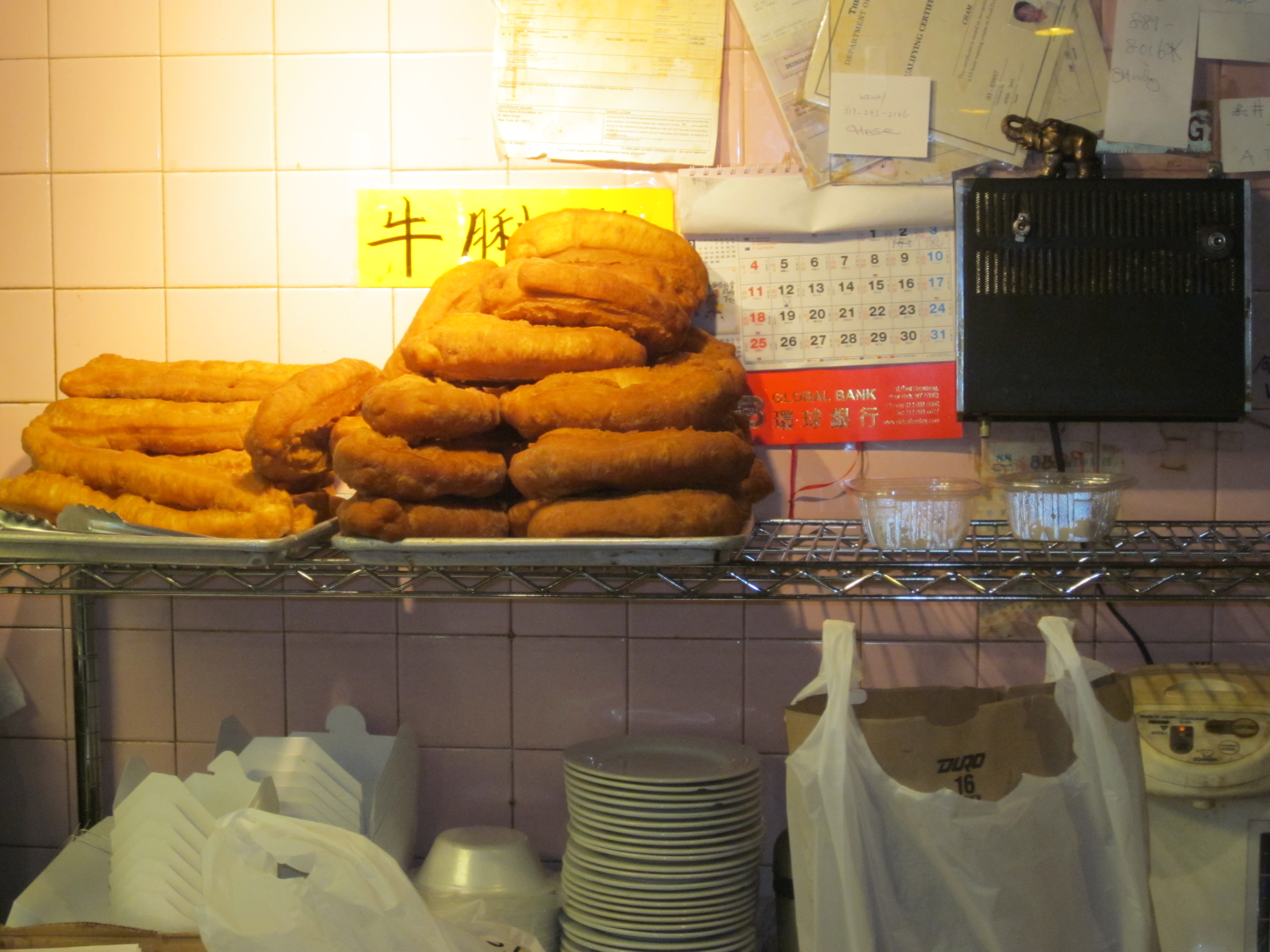
Big Wong’s fried dough or “crullers” ready to be dipped into congee.

“I’m worried that Chinatown will change soon,” Luigi professed to me.

“Why is that?” I asked him.

“There are a lot of old people here,” he said.

I nodded. There were. In fact, we were sharing a round table with three seniors.

“But there are young people too,” I said, gesturing to many who were also dining at Big Wong.

“I hope it doesn’t die,” he said. “I like Chinatown.”

Our bowls arrived. The steam was flowing from them. These were even hotter than what we got at Congee. My asbestos mouth would be no match for the boiling cauldron in front of me.

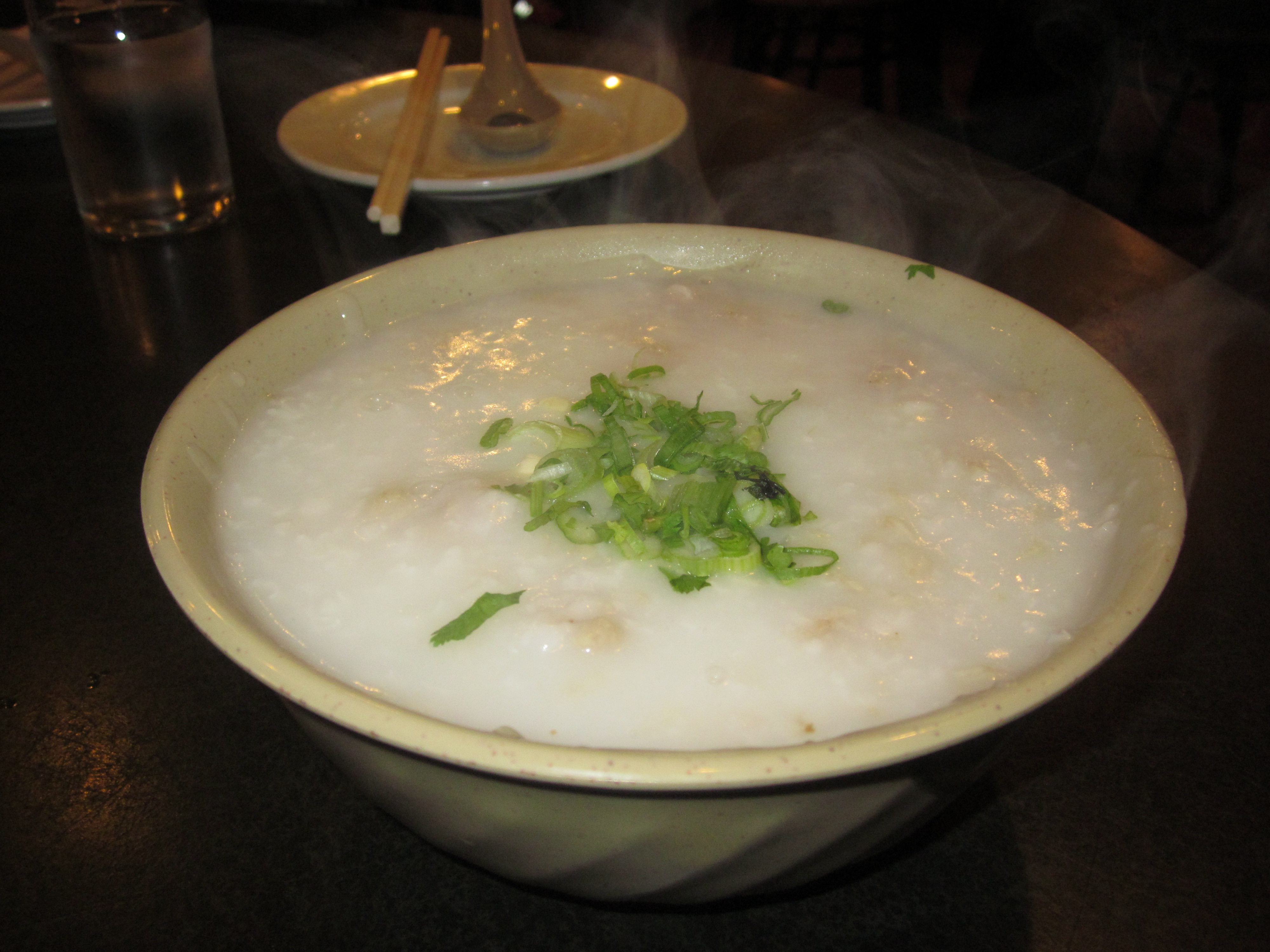
Hot congee at Big Wong.

The fried dough, a long, fresh cruller, kept us busy until the congee cooled down somewhat. When I could brave it, I took a spoonful. Mine was rich with roast, barbecued pork, the barbecue tinting the white of the soup turning it  a bronze-like color. Luigi’s had crumbled ground beef. Both were sprinkled with cilantro adding a pleasant garnish to them.

I liked the congee at Big Wong better than what I experienced at Congee. It was heartier; more rice to water and stuffed with meat. Luigi disagreed. “Congee is better,” he said definitively.

“I don’t know, I like Big Wong’s even though it is a few more dollars.”

We were at a standstill. He favored one, while I the other. How would we resolve this?

“Well, the fried dough is better here, isn’t it?” I said.

He agreed, but we weren’t on this mission to judge fried dough.

Congees and a cruller

They say a tie is like kissing your sister? I never had a sister, so I wouldn’t know. Maybe Part Two of the Chinatown Congee Wars will help clear up the muddled picture I’ve created.

Until then, feel free to chime in with your own opinions though I will not be swayed in mine.

How to Eat a Mango

10 Jul

I’ve often wondered,

how to eat this fruit.

It has an odd shape,

kind of like an egg with a loop.

It’s sweet and the flesh is juicy,

and  good for you too.

But how do you eat it

without getting quite messy?

If the fruit is soft and pliant to grope,

like what you might find in a ripe cantaloupe.

That means it is ripe and ready to eat.

The problem is, how to do it neat?

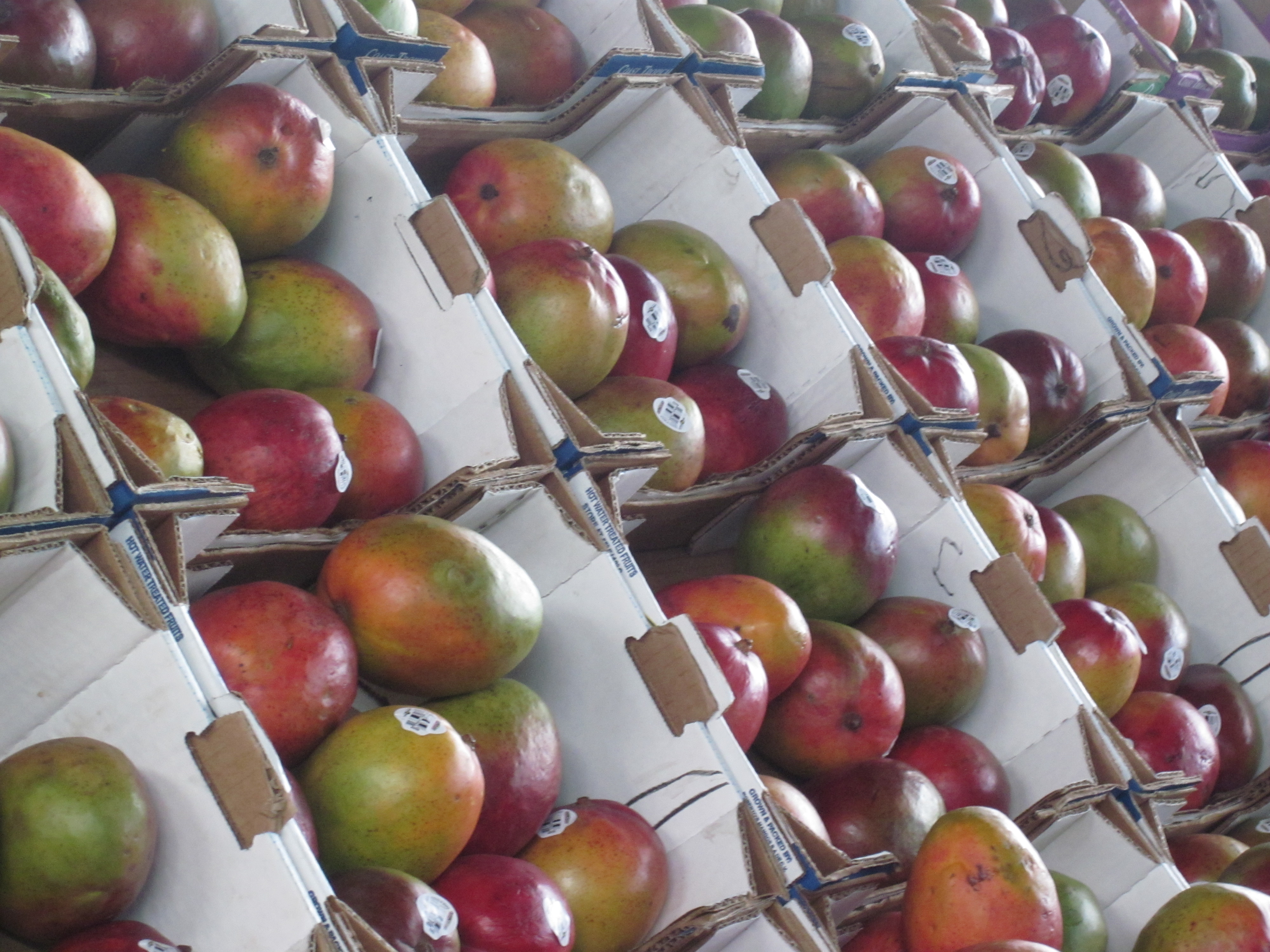
I hear there are over 1,000 varieties of mangoes around.

But where I live only a few types are to be found.

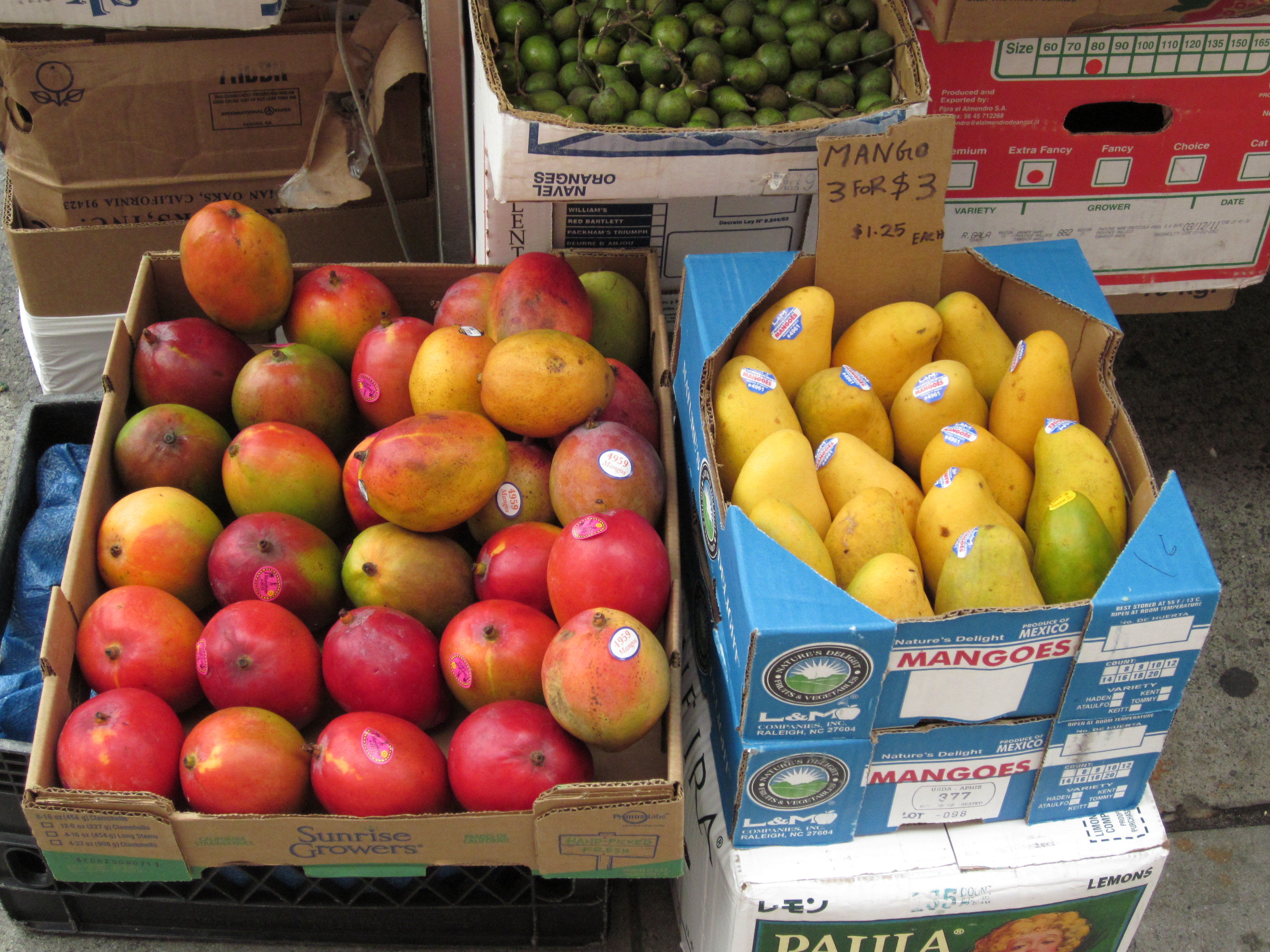
What I see in stores and on street carts,

come from places like Mexico, Salvador, Peru and Brazil.

Warm, tropical lands,

where there is no chill.

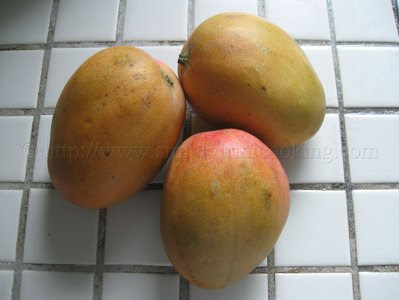
They  have names like “champagne,”

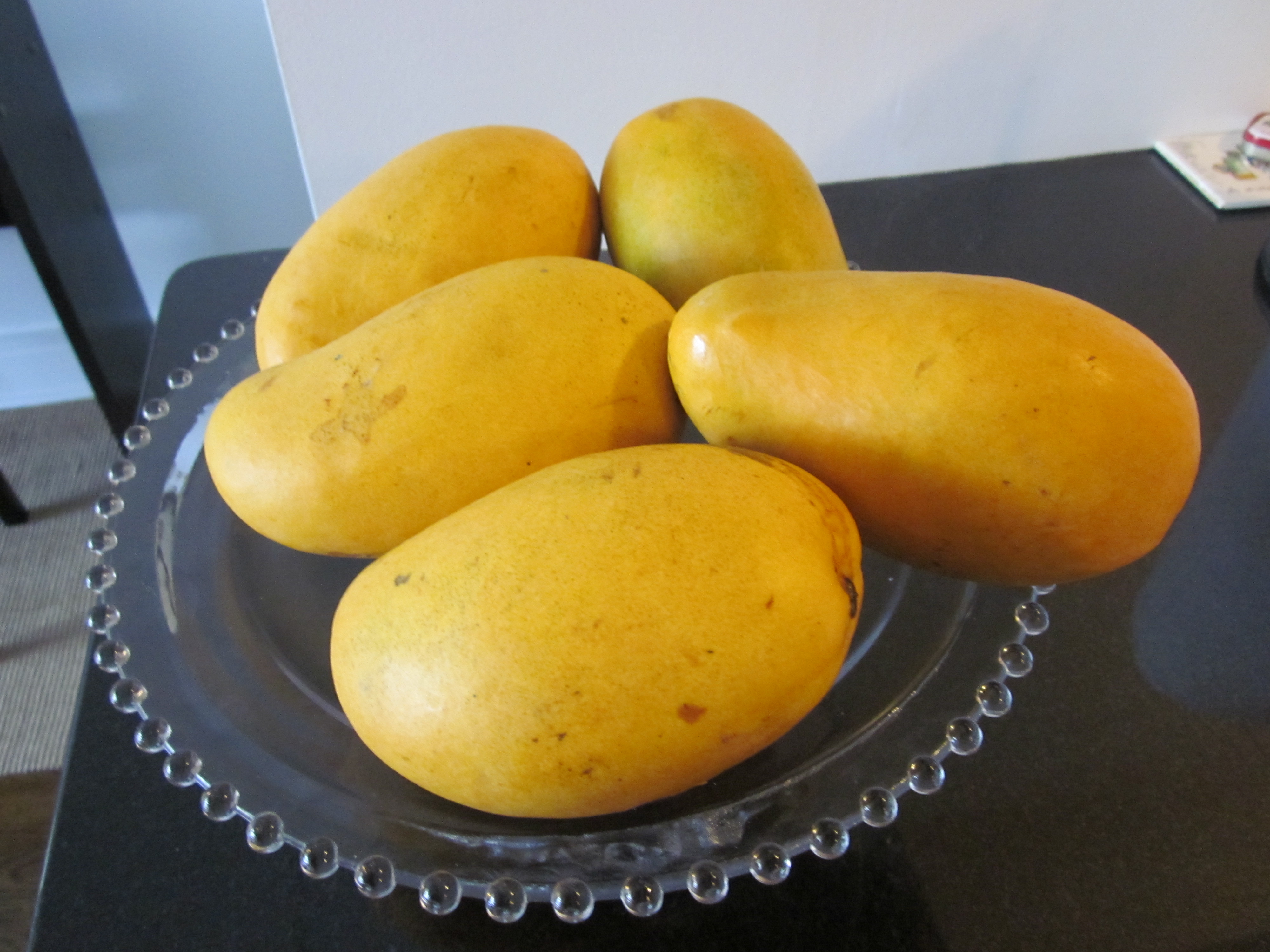
“Ataulfo,” “Tommy Atkins,” “Kent,” and more.

I’m sure there is a difference,

though this mango novice can’t tell for sure.

Ataulfo mangoes

On an island far away,

I once ate a Julie,

mango that is.

It was sweet and luscious.

I still can’t believe,

something so delicious,

could come from a tree.

Once peeled, the nectar quickly

flowed from within.

That Julie made such a mess,

a beach towel was needed,

to clean up my chin.

Three Julies

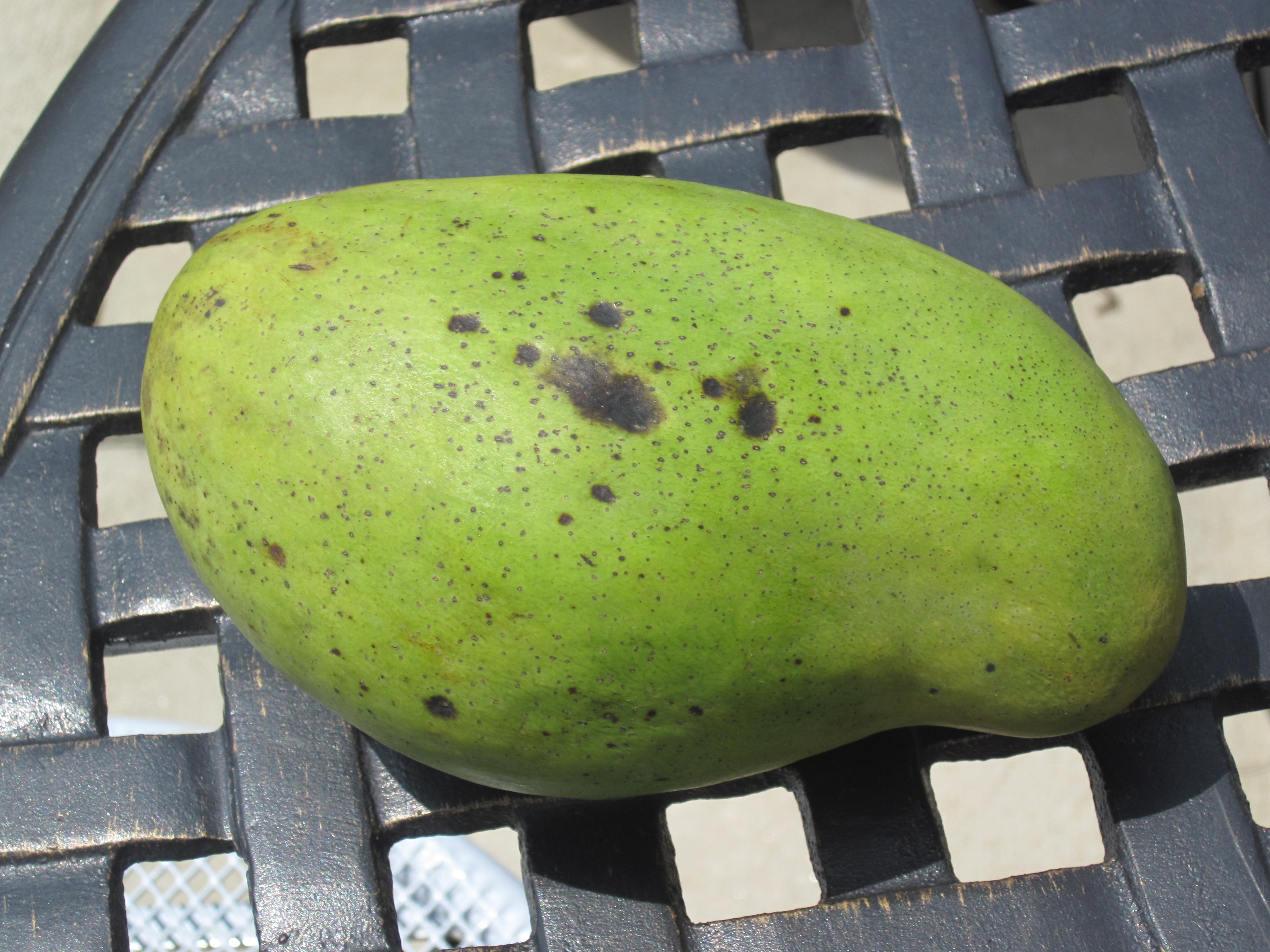
The mangoes from Haiti

are long and light green.

This fruit’s flavor is special,

the taste, a mango fan’s dream.

But there are drawbacks, I’m afraid.

It costs a little more,

and eating it most certainly can be a chore.

The Haitian

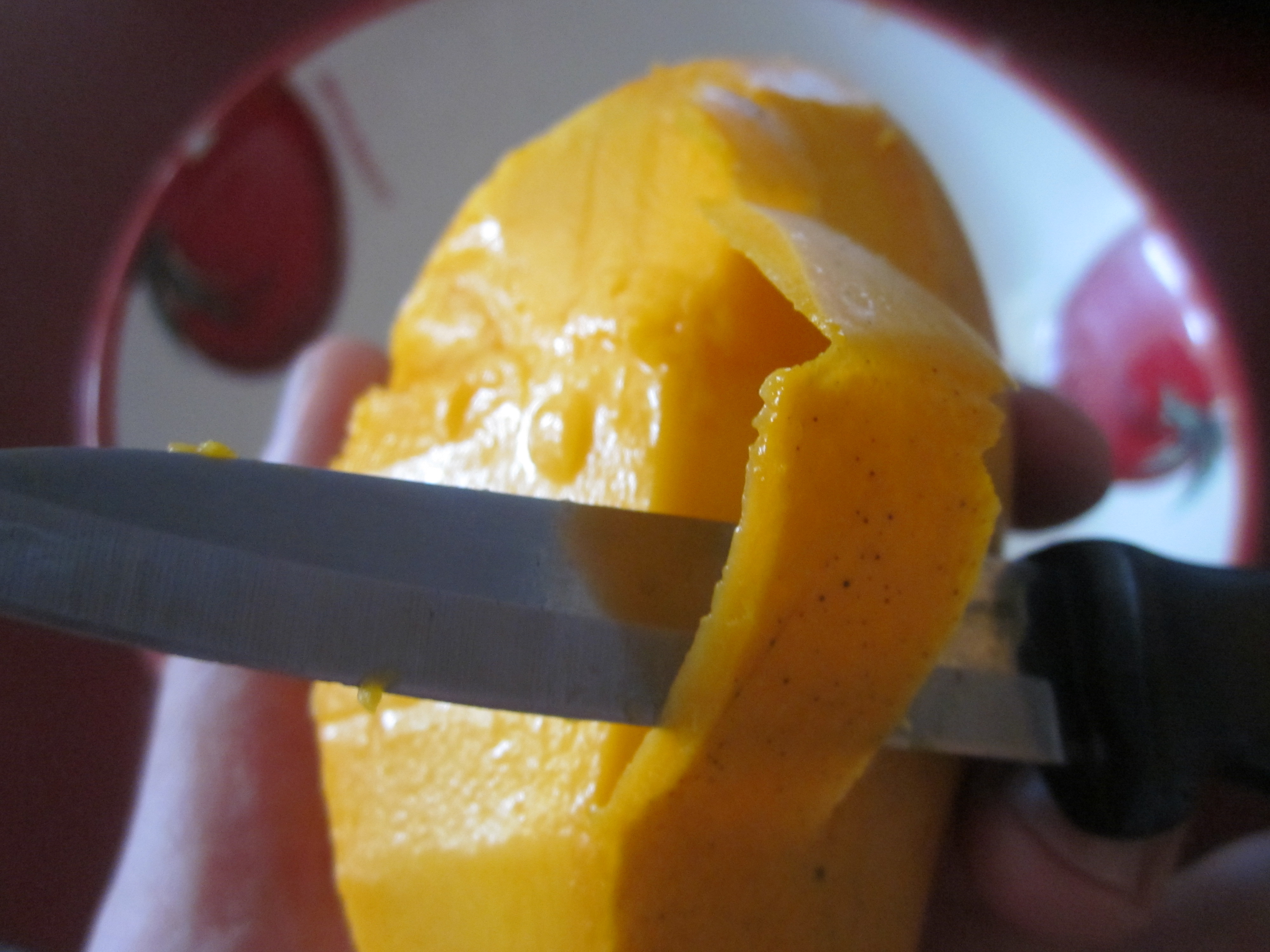
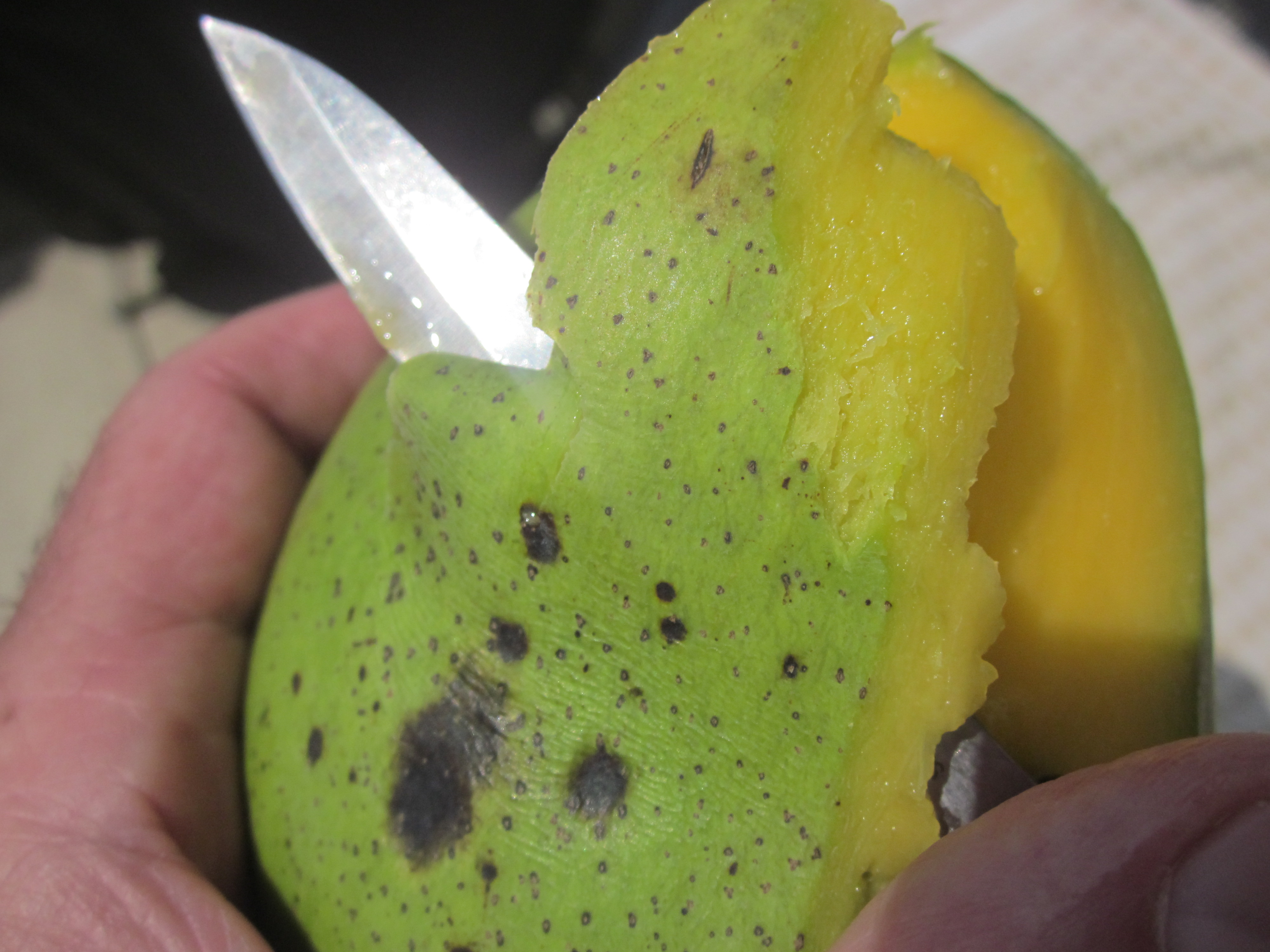
You can peel the tough skin with a knife.

Pull it down and try to slice.

Be careful before you start chewing,

The juices might spurt.

Don’t be slow.

Stay alert.

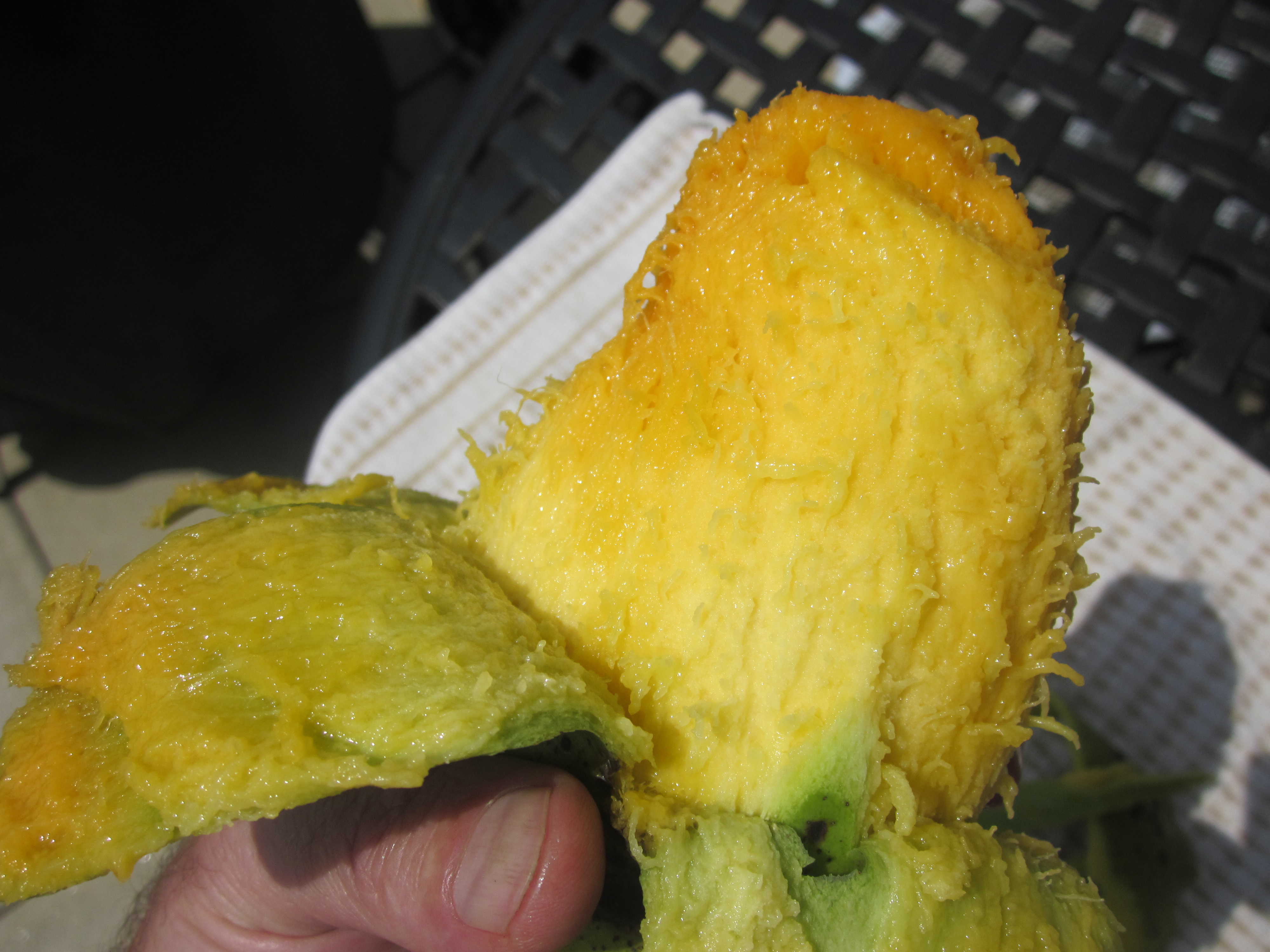
Oh my, how the bright orange flesh stains so.

No doubt, your nice white shirt, will soon be aglow.

Put away the knife,

and give up on the slice.

Just suck through the flesh,

right to the big stone.

This chore is one, you need to handle alone.

The temptations are many.

You might want to bite.

You’ll soon learn, that won’t be right.

Like a thatch of thorns that have you entangled,

your teeth will be riddled with tough fibers at every angle.

To dislodge requires little cost.

All you’ll need is plenty of time,

and two packs of dental floss.

Some say the best way to eat a mango

is one where you cut into the flesh;

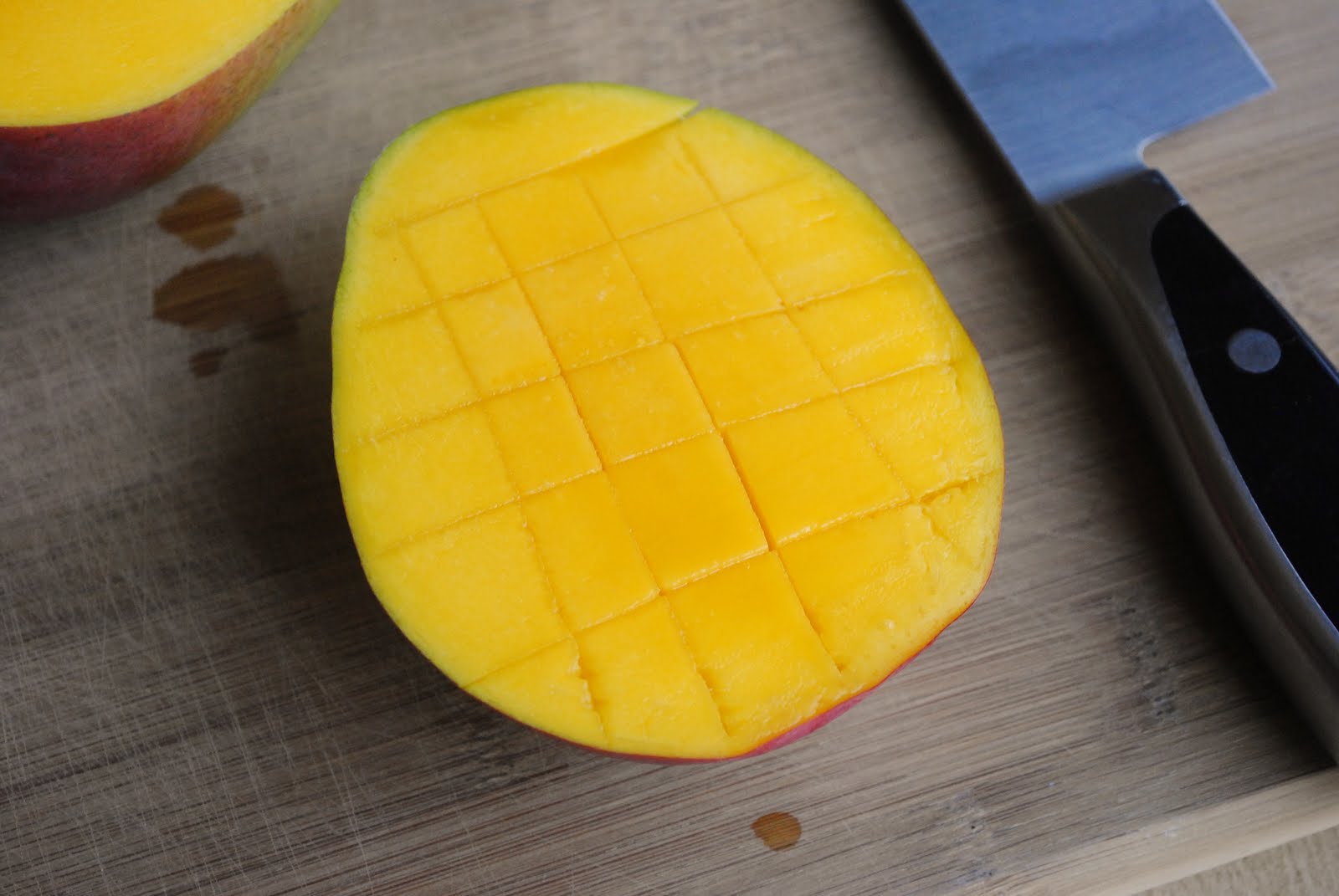
a criss cross pattern.

that looks like a mesh.

Turn the skin upside down,

with gentle firmness, you’ll press.

The pieces will fall into a bowl or dish.

Eat with a toothpick, fork or chopstick.

No fuss.

No mess.

The criss cross method.

Like the many varieties of mango,

the choices of how to eat one are plenty.

And while I waste my time,

with these ridiculous rhymes,

I’m sure the list will grow.

Suck, nibble, bite or chew?

Who am I to tell you what to do?

How to eat a mango.

really, is up to you.

A Recipe for the 4th of July: 2012

3 Jul

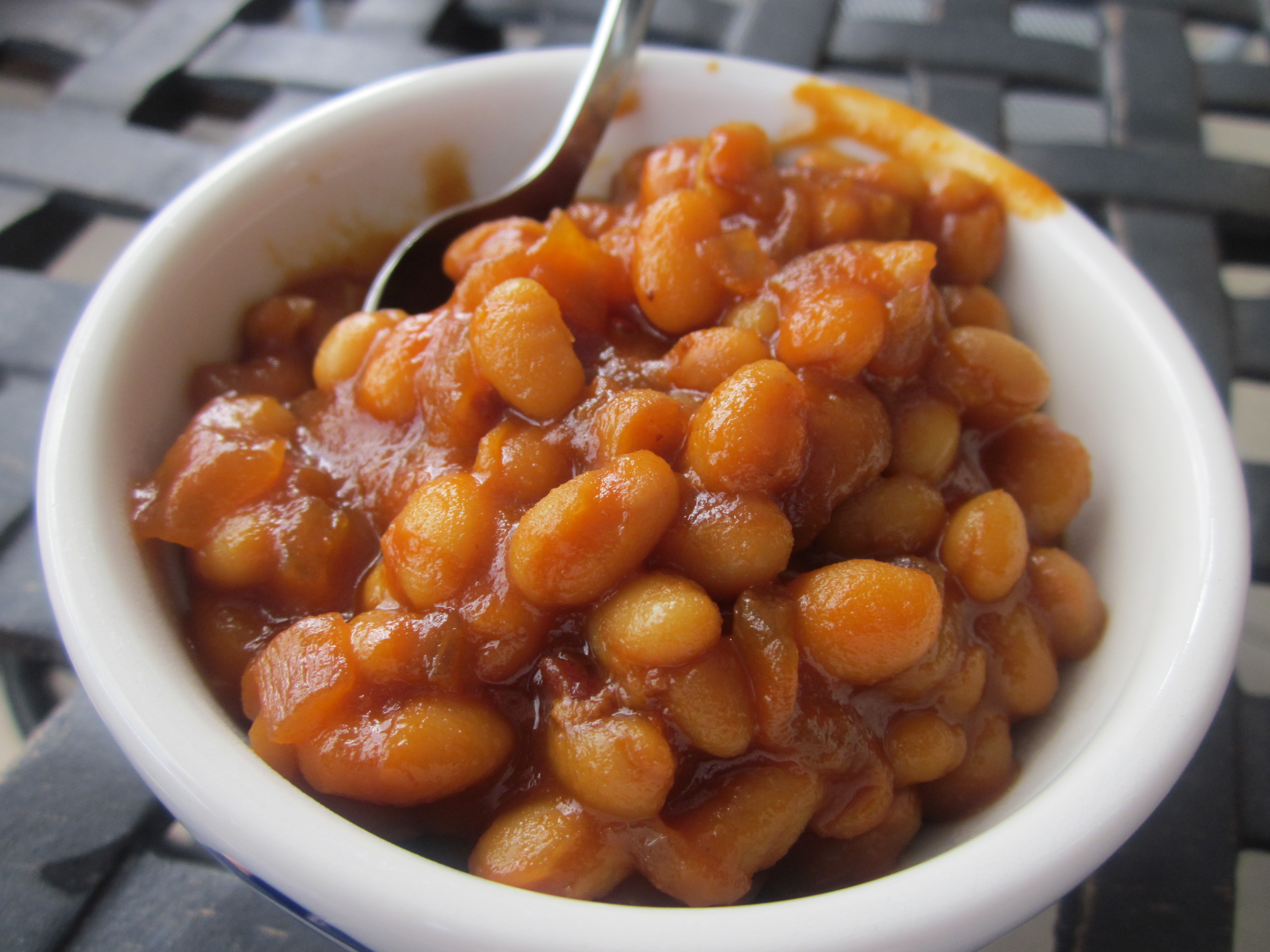
Last year at this time I posted a recipe for the 4th of July. It was for the simple grilled hot dog on a bun: A Recipe for the 4th of July.  This year I am adding a side dish that complements the tube steak like no other: Barbecued baked (that aren’t baked) beans.

Like I do in so much of my limited cooking, I choose the easy path to the hard. I like to cut corners. I admit to being lazy at times. But I try to do it without sacrificing too much flavor or quality.

As I’ve discussed in the previous posts I’ve called  The Fazool Trilogy, The quality of most beans from a can as compared to dried, is, in my estimation, minimal.  And that miniscule difference just does not justify the extra time and effort in soaking and then cooking the beans. So I cut that process out. Just make sure you drain and rinse the canned beans in cold water before using them.

I’m lazy, but not this lazy.

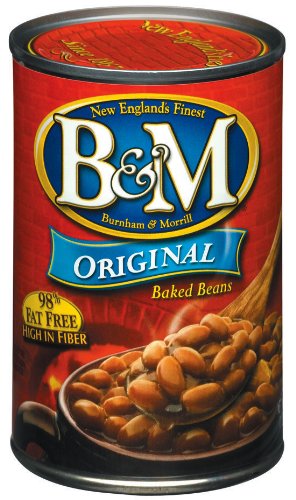
Some might say if you are going to be lazy, go all the way. Just buy a can of pre-made baked beans. And to be honest, there are one or two that aren’t too far off in taste. Nothing a little doctoring won’t shore up. But by doing it the way I’ve chosen, you can control the flavor; the sweetness, salt content, and even add a few tricks of your own into it.

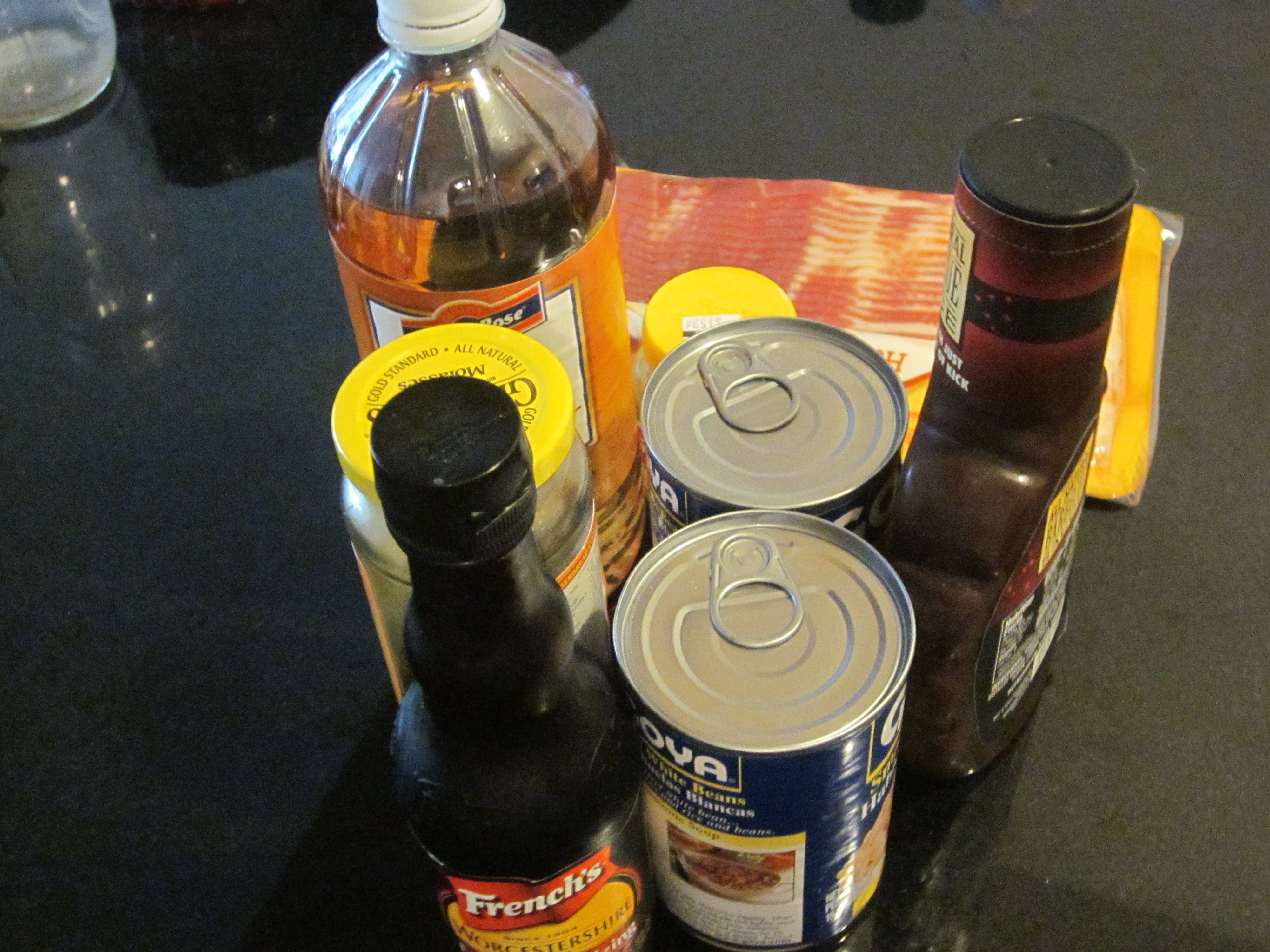
For my version of barbecued baked beans you will need the following:

2 15 or 16 ounce cans of small white beans*

2 strips of bacon, diced

1 medium onion, chopped.

2 tbs molasses

2 tbs brown sugar

1 cup of ketchup

1 tbs of yellow mustard (the cheap, glow in the dark kind).

1 tsp of Worcestershire sauce

1 tsp of apple cider vinegar

2 cups of water

Dash or two of hot sauce.

Salt and pepper to taste

*The traditional bean of choice for baked beans is the Navy bean. Some recipes call for the “Great Northern” bean while others prefer the pinto bean. Any of the above, as long as they are about pebble size, will suffice and absorb the flavors of the barbecue sauce.

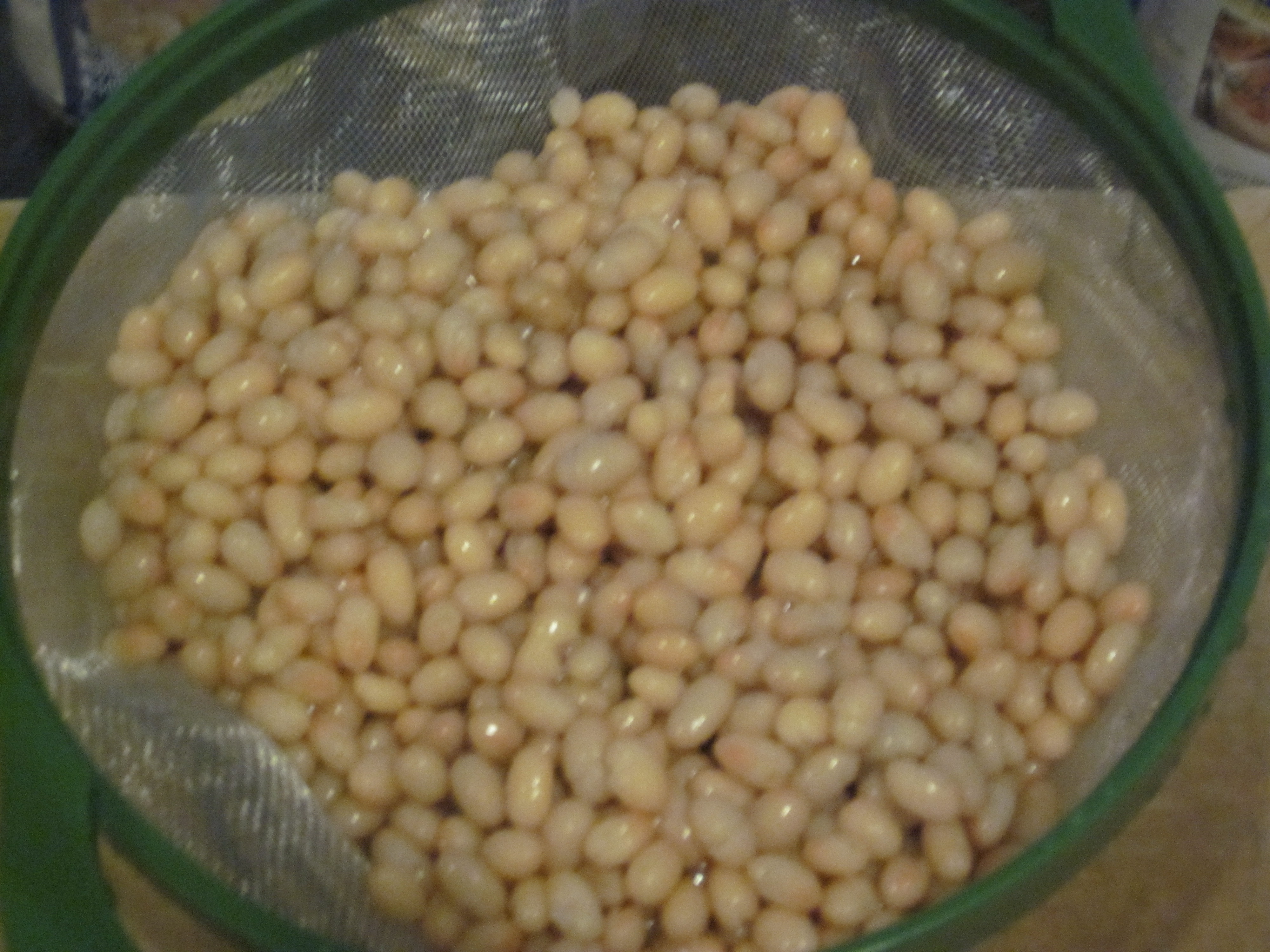
Rinse the beans in cold water and strain.

Rinsing the beans.

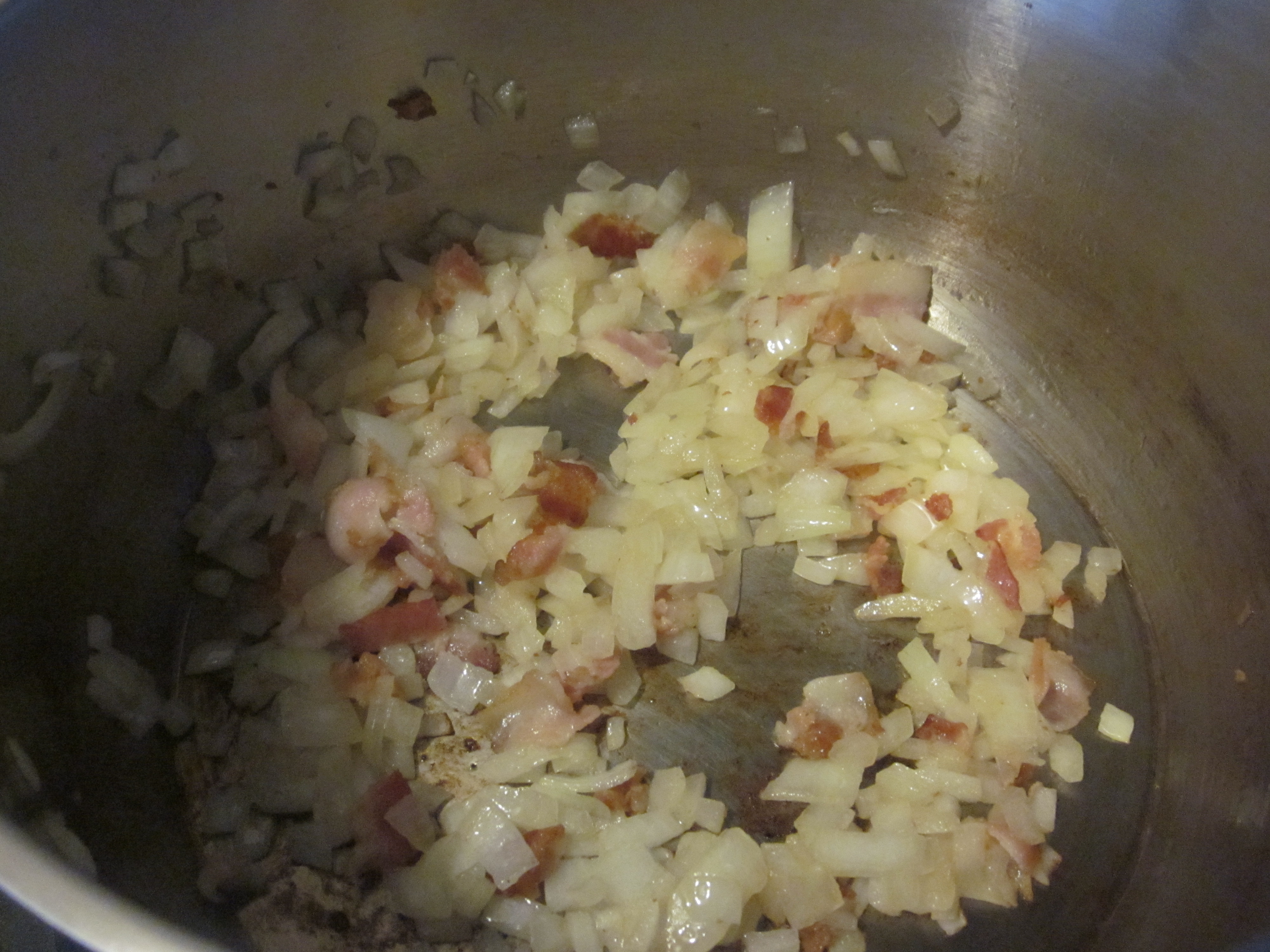
In a large saucepan, cook the bacon until the fat renders.

Add the onion and fry in the bacon fat for about five minutes or until softened.

Softening the onions in the bacon fat.

Pour in the water and deglaze the bottom of the pan.

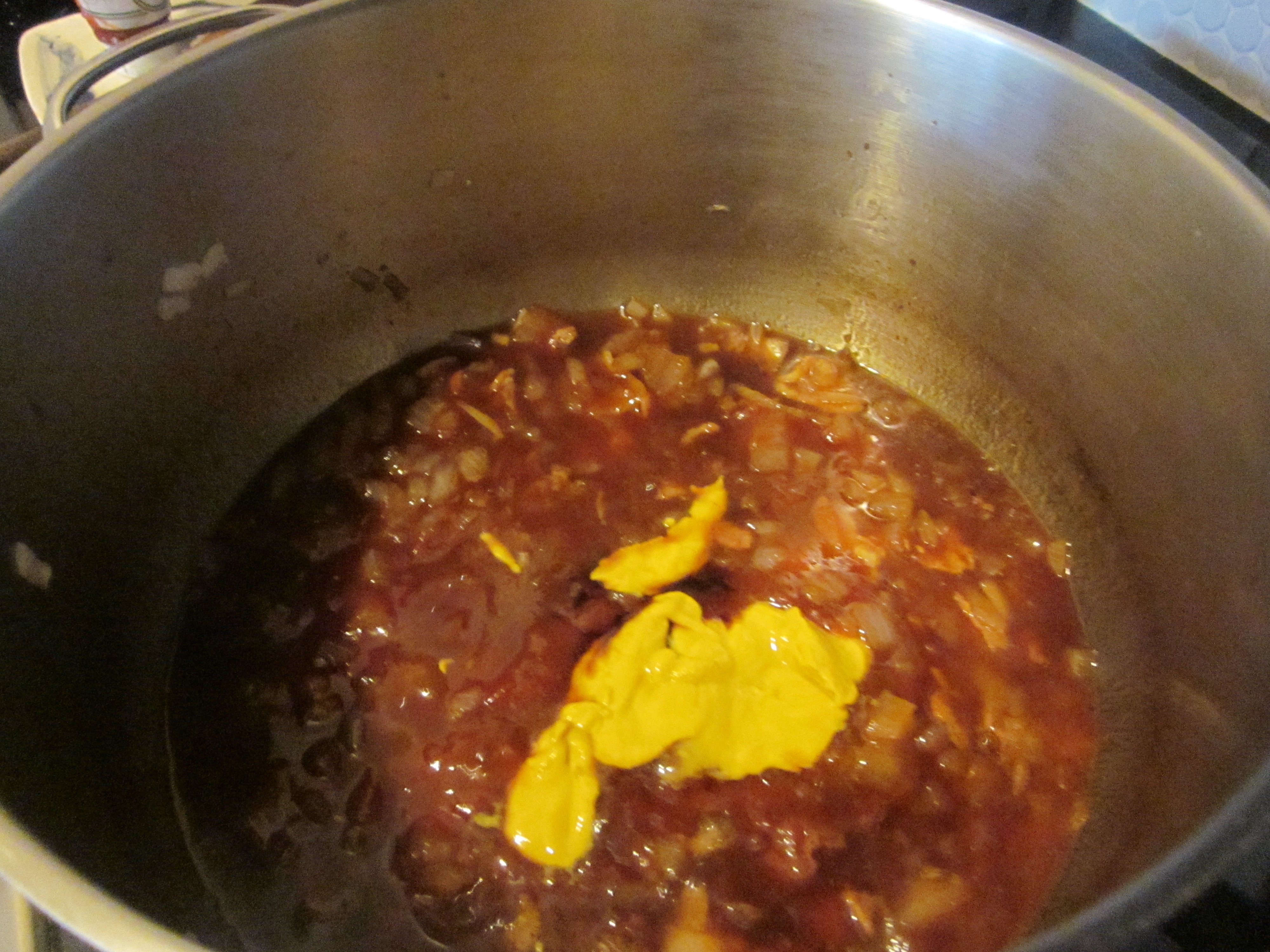
Add the ketchup, molasses, brown sugar, mustard, Worcestershire sauce, and vinegar.

The liquid ingredients getting ready for the arrival of the beans.

Stir and bring to a boil and then simmer for about ten minutes.

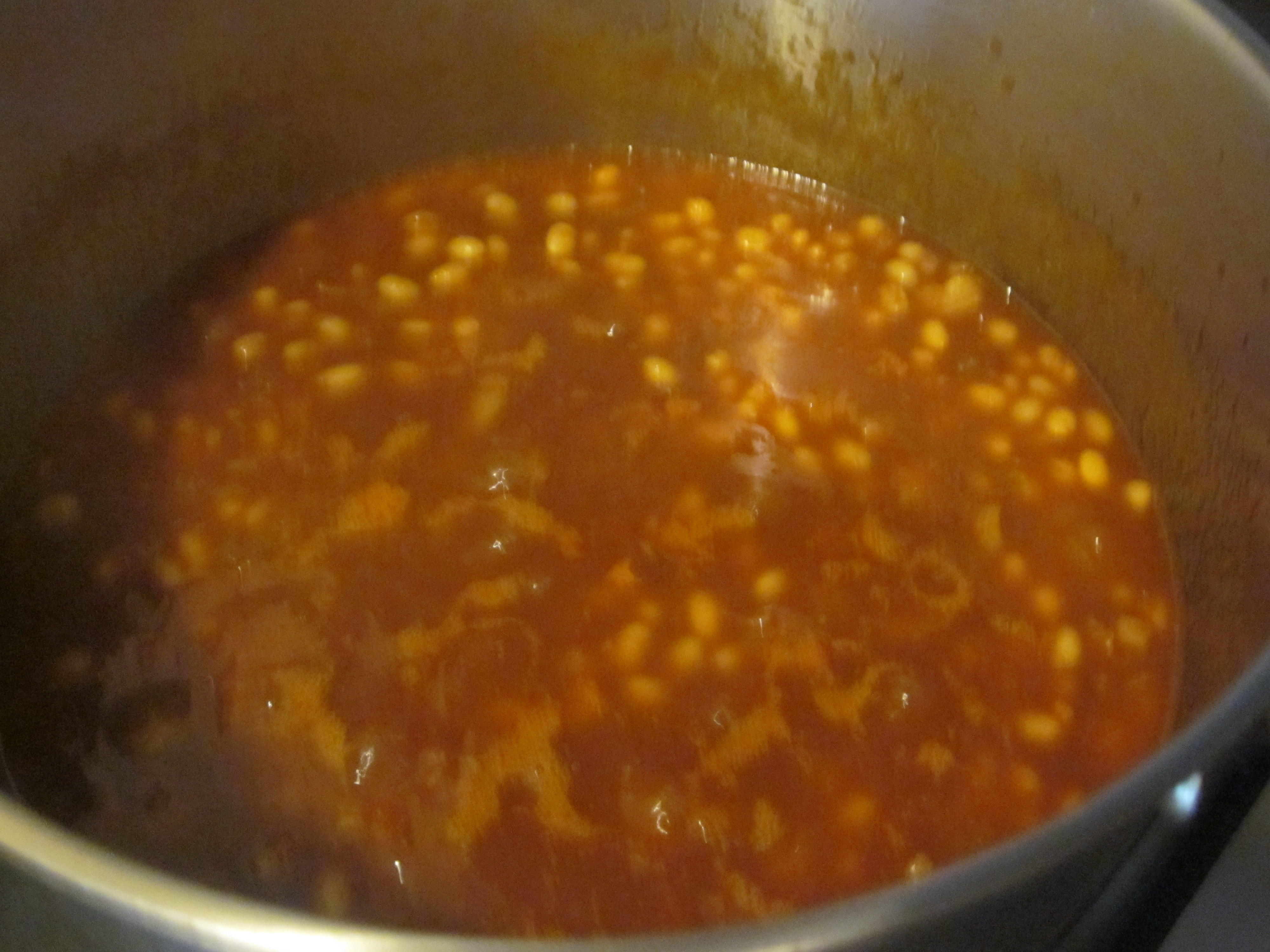
Add the beans.

Cooking down the beans.

Lower the heat to a simmer and cook for about a half hour or 45 minutes, stirring occasionally, until most of the liquid is cooked off and thickened to what resembles a barbecue sauce.

Drop in a few dashes of hot sauce.

Stir again and serve.

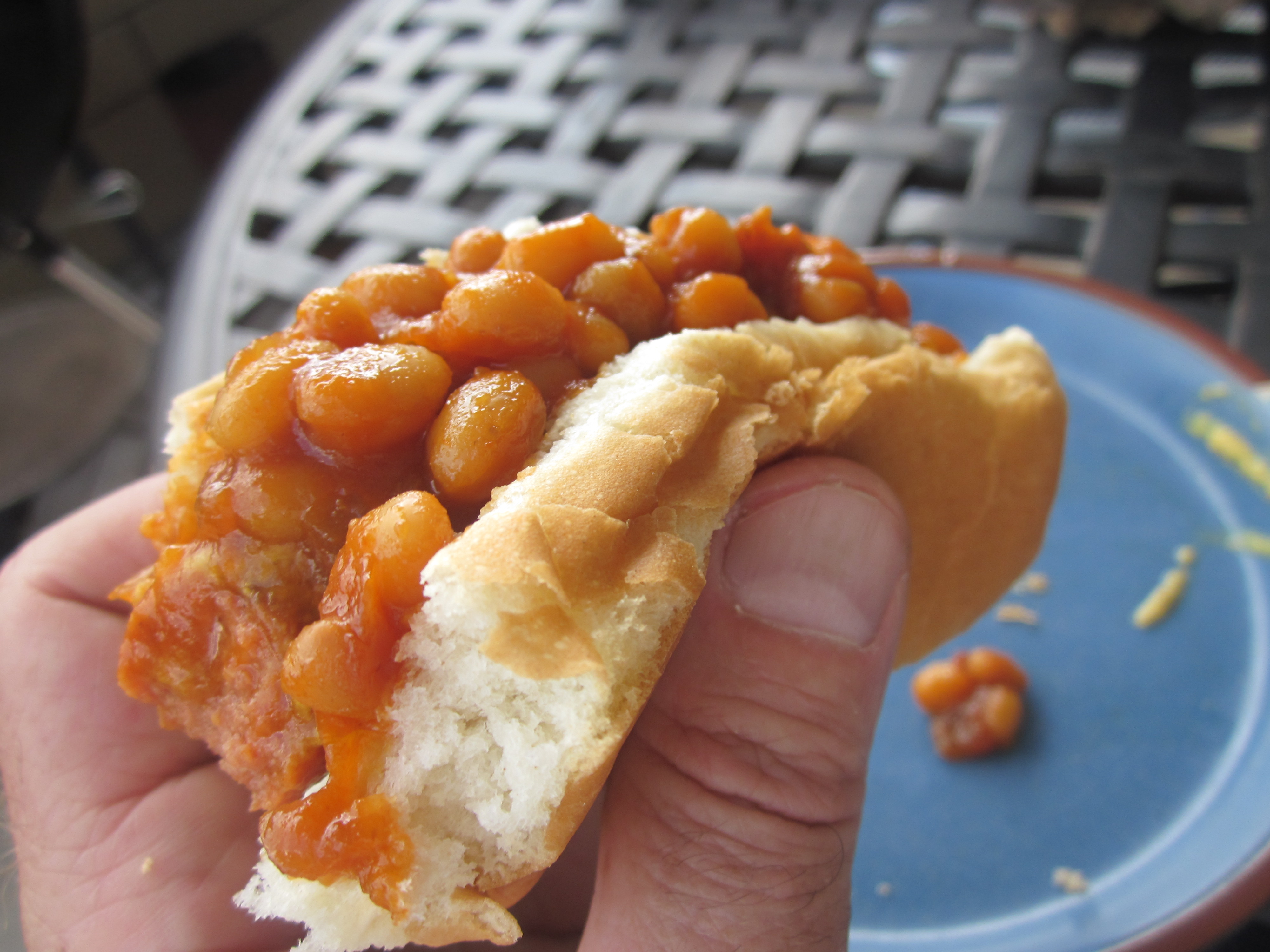
The baked beans not only are one of my favorite side dishes for a barbecue, they also make a delicious topping to a Fourth of  July hot dog.

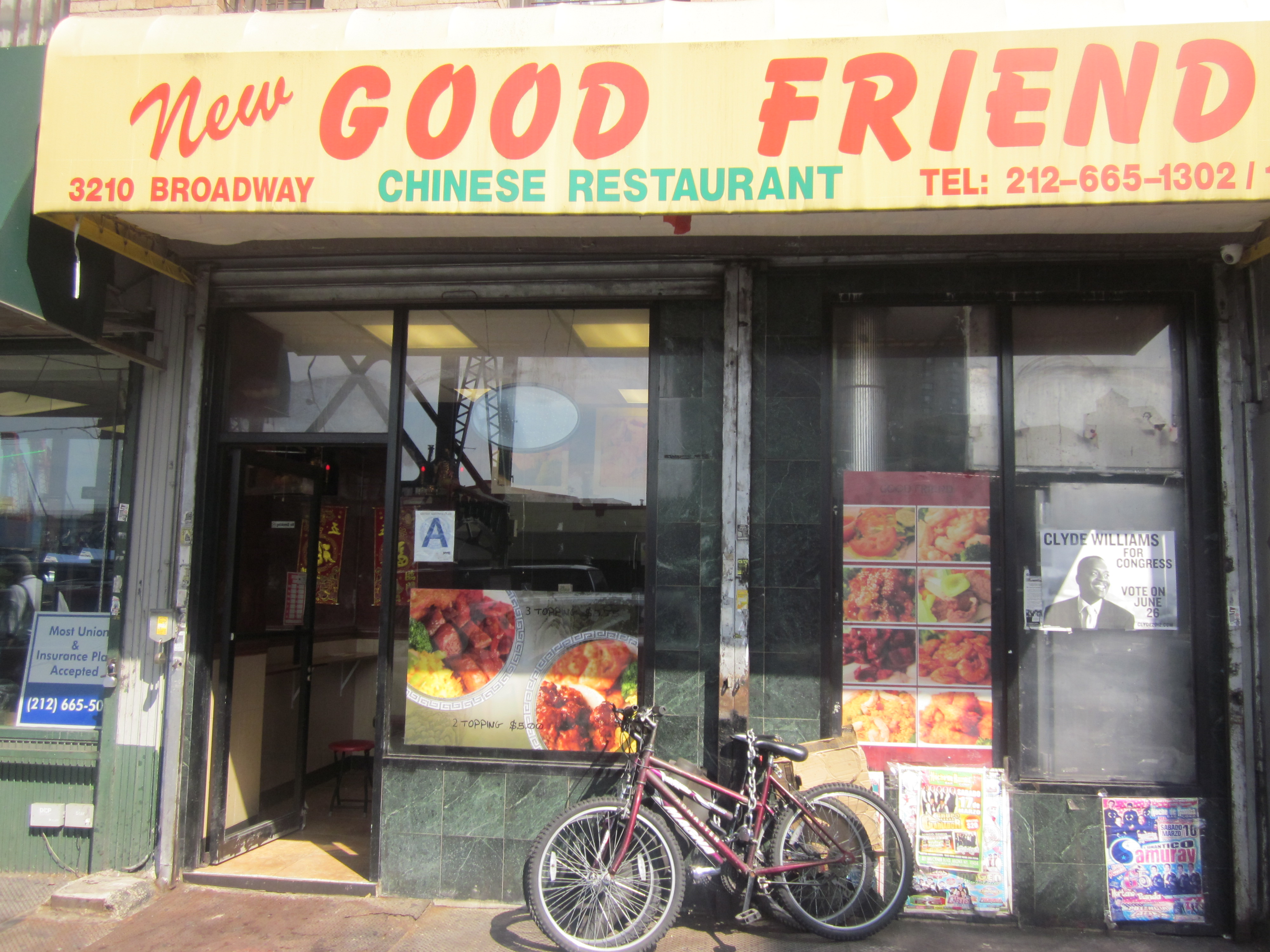
A Good Friend is Hard to Find

29 Jun

A New Good Friend is even harder.

I’m very happy I’ve found one.


The Sweetbread Tango

26 Jun

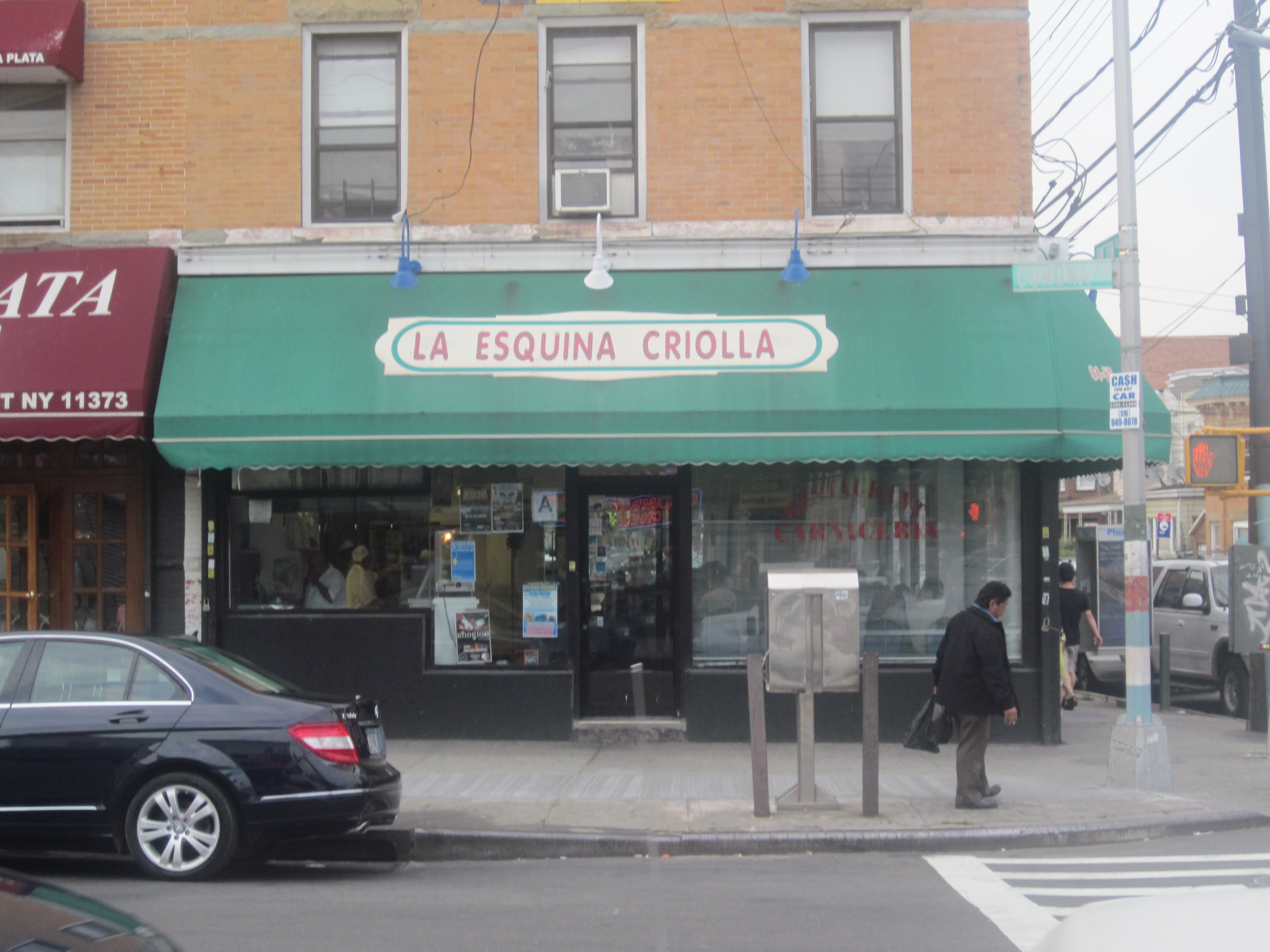
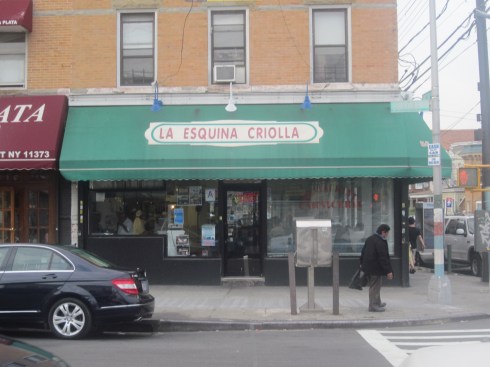
La Esquina Criolla

94-67 Corona Ave,
Elmhurst
 

“How do you want your steak cooked,” the waitress asked in her heavy Spanish accent.

We were in Elmhurst at the corner of Corona Avenue and Junction Boulevard in what was advertised as an Argentinean/Uruguayan restaurant called La Esquina Criolla.

“That’s a first for our group,” Rick said after hearing the question from our waitress.  And he was right. It was the first time in the ten plus years we had been convening that we were asked how we wanted anything cooked, much less a steak.

Did that mean our standards were changing? That now we were graduating to a different, higher quality of restaurant? I certainly hoped not and believed that the question before us was just a blip; an aberration in our continual journey to unearth diverse, ethnic eats within our frugal, even grubby, standards.

When I chose La Esquina Criolla, I knew I was treading on dangerous ground. That we would we probably be going over our $20 per person budget as well as dining at an established foodie destination where, what was confirmed later, wine was served in stemmed wine glasses. But that did not stop me. I went ahead with the choice anyway. Red meat was something our group rarely, if at all, dined on and I thought that for once we should have that experience despite the potential monetary risks. I believed this place, La Esquina Criolla would be our best bet to at least keep it close.
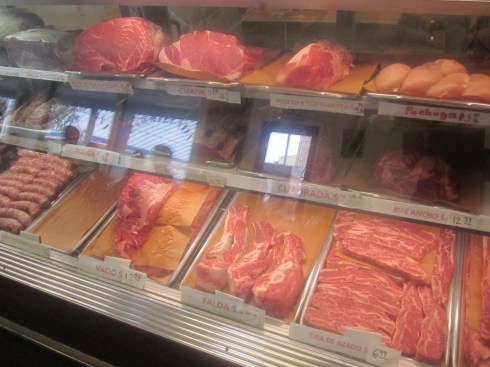
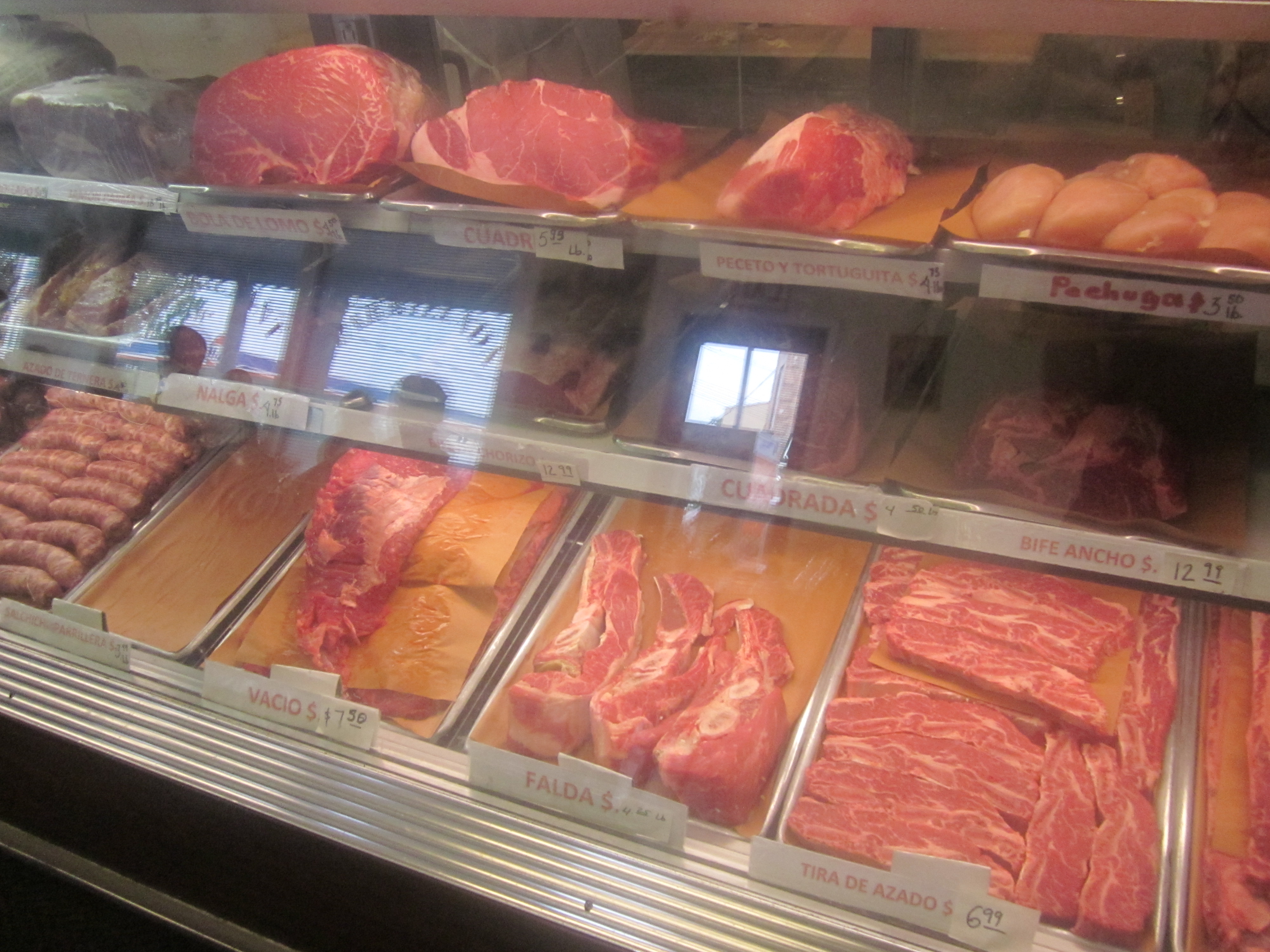
Red meat for sale.

“You’re in trouble with this one,” Gerry teased, glancing at the menu and the prices next to many of the “carnes a la parilla,” which ranged from $16 to $24.

“I have an allowance,” I said, trying to rationalize the stark reality spelled out in front of us. “Most of my other choices were so under our budget, that I’m entitled to go over here and still, really, come out no worse than even. It’s called a carryover balance.”

Eugene’s reading glasses were balanced on the tip of his nose. “Uh huh,” he nodded dubiously.

The raw meats we were soon to order were displayed behind the counter; La Esquina Criolla doubled as a butcher shop. There was flank steak, skirt steak, shell steak, blood sausage, known as morcilla, chorizo, kidney, sweetbreads, lamb, and short ribs.

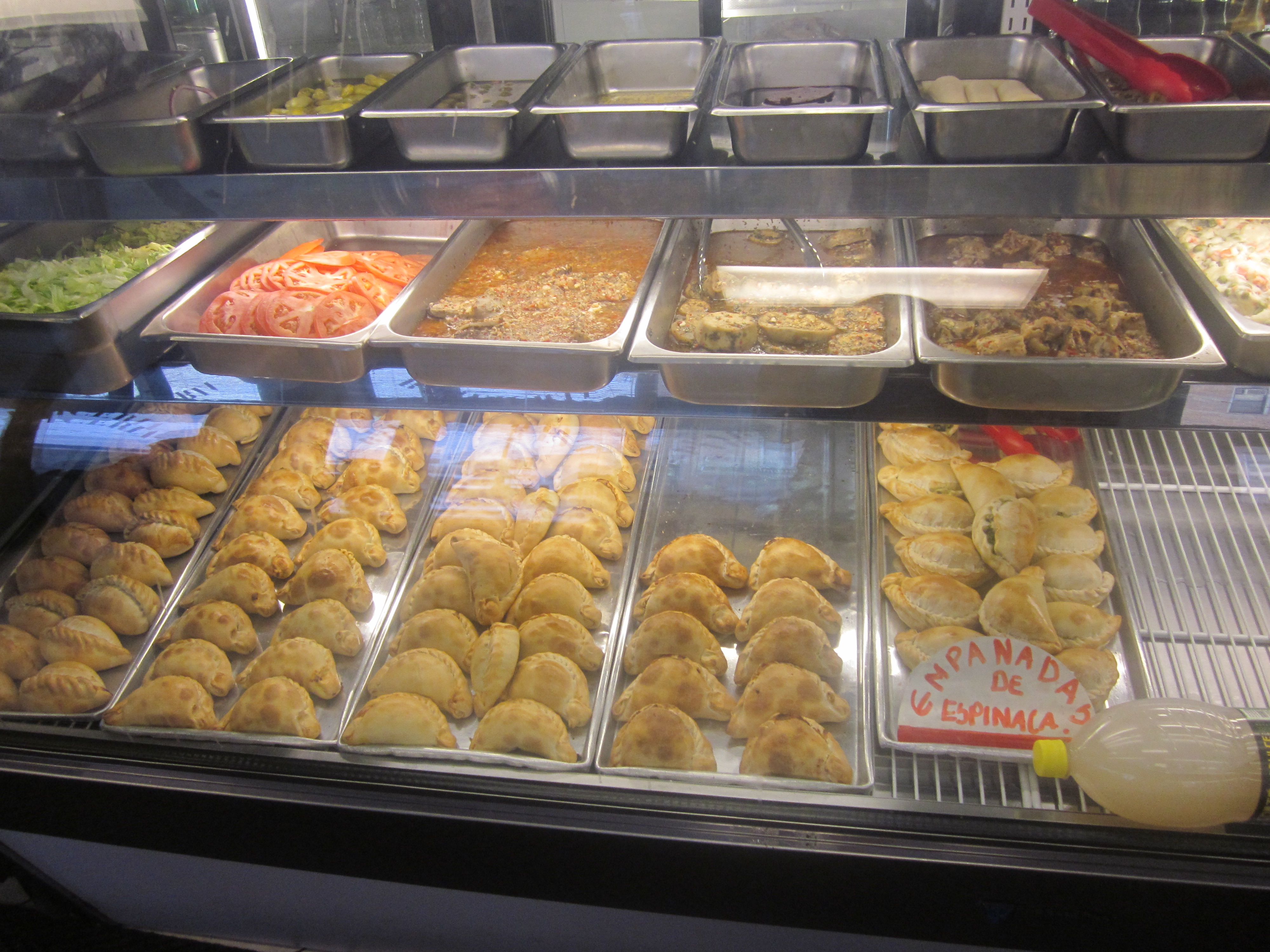
Displayed behind the counter adjacent to the meats were a selection of empanadas; meat, chicken and spinach along with a few other appetizers; marinated eggplant, beef tongue, and hearts of palm to name a few.
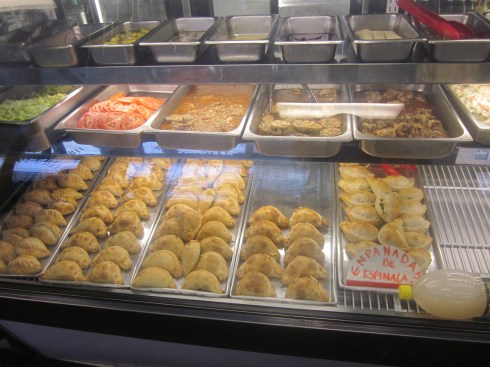
Empanadas…and more empanadas.

While we decided what to order, we were brought toasted bread and slices of grilled sausage. We knew we had to be careful how we ordered, but the temptations were many. The empanadas, of course were a must. A “parrillada completa,” or combination of a variety of meats made sense, despite the $38 price (for two). With it we would get to sample skirt steak, short rib, sweetbread, tripe, kidney, black and Argentinean sausage. To that we added another skirt steak for two, a flank steak, and an appetizer of grilled provolone in oregano sauce.

The entrees all came with side orders; a dry potato salad, potato, beet and hard boiled egg, a bland mixed salad, and plantains.

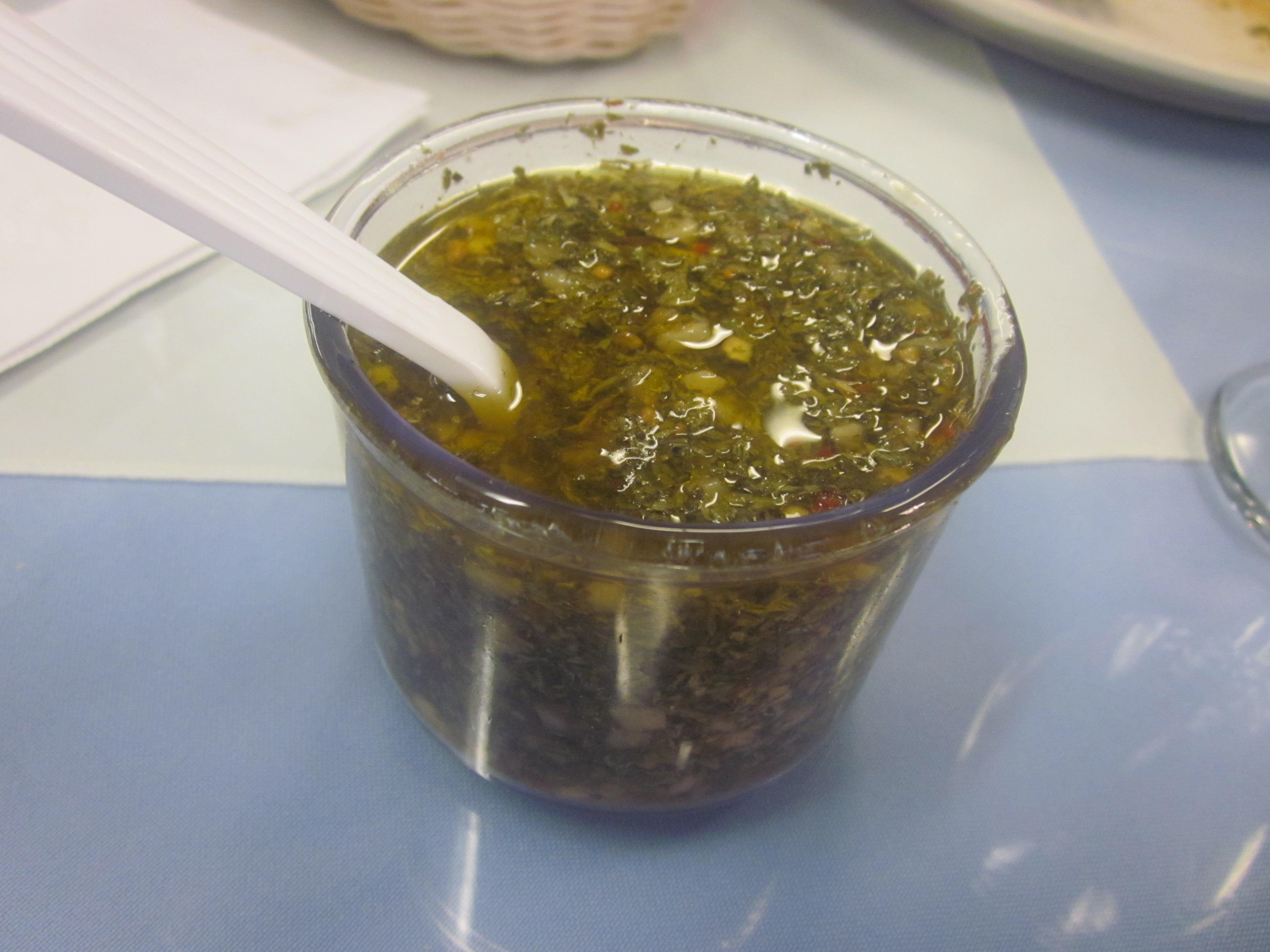
While we ate the buttery-crusted empanadas served with the tableside tangy homemade chimichurri sauce, a procession of ancient tango ballads played.
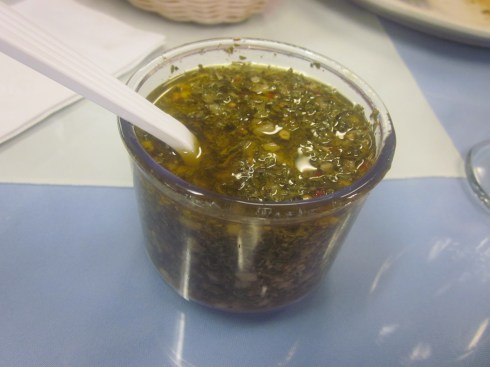
An Argentinean condiment supreme.

“Why does this music make me think of monocle-wearing Nazis,” Zio pondered.

“You’re confused,” Gerry said to him. “Those were the Boys of Brazil you’re thinking of. Wrong country.”

“Didn’t they escape to Argentina also?”

“Sure, there are plenty of retired Nazis in Argentina,” Rick confirmed. “And they love that old school tango.”

“Yes, herr commandant, I have heard about the tango classes at the Russian front.”

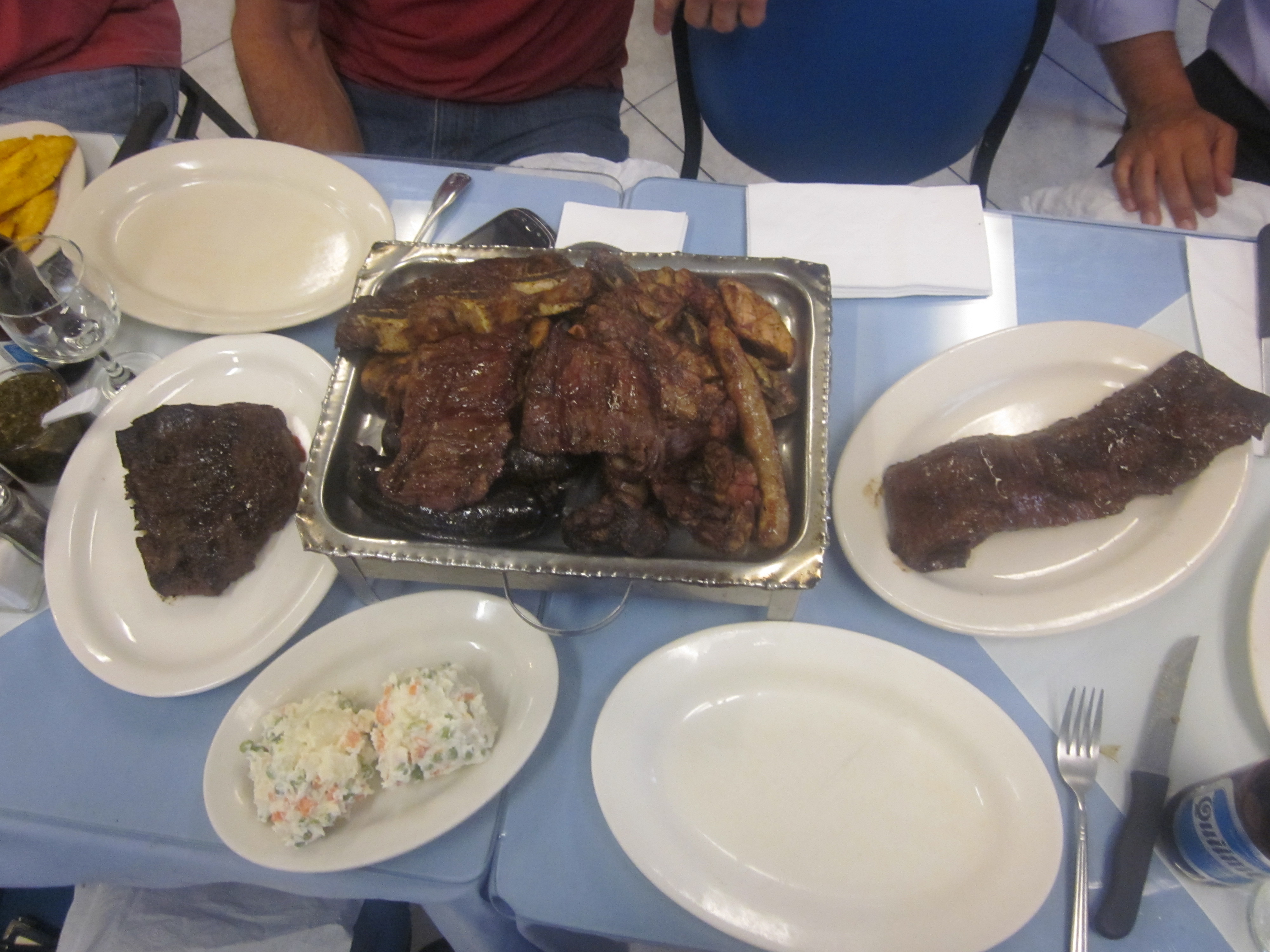
Halting the conversation was the arrival of a sizable silver serving tray adorned with a selection of charred meats. This was the “parrillada completa” for two, but judging from the size of it, was more than enough for three or four, even if the three or four included the gluttons in our group.
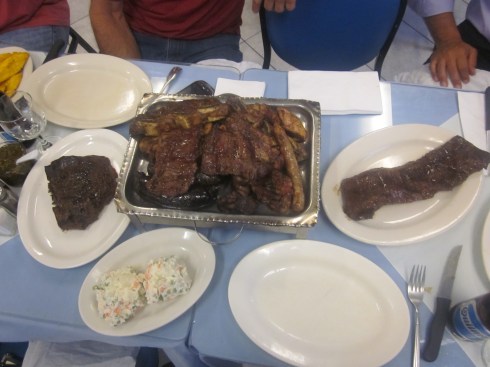
The Parillada Completa for two, flanked by flank steak on the left and skirt steak on the right.

On separate smaller plates were the other meats; the flank steak and the skirt steak for two. Including what we got in the “parrillada completa,” if you did the math we had enough skirt steak for three, but who was counting?

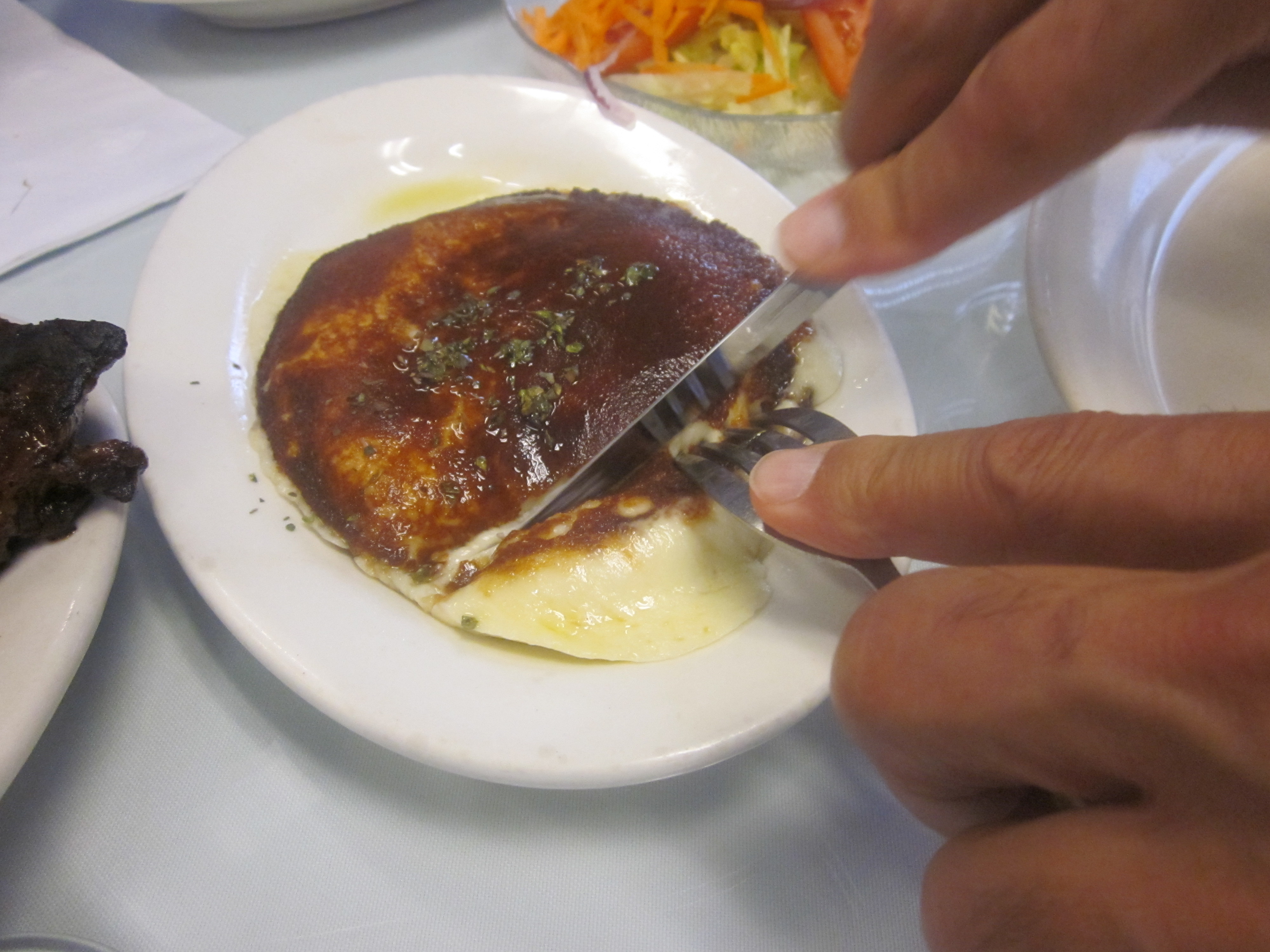
The grilled provolone came as advertised, toasted on the outside, the cheese oozing from it when sliced and doused with oregano flavored olive oil. We sawed through the steaks, cooked as we ordered, medium rare; the juices flowing from them onto the platters.
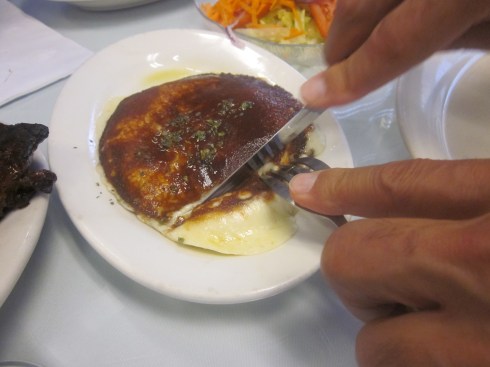
Grilled Provolone

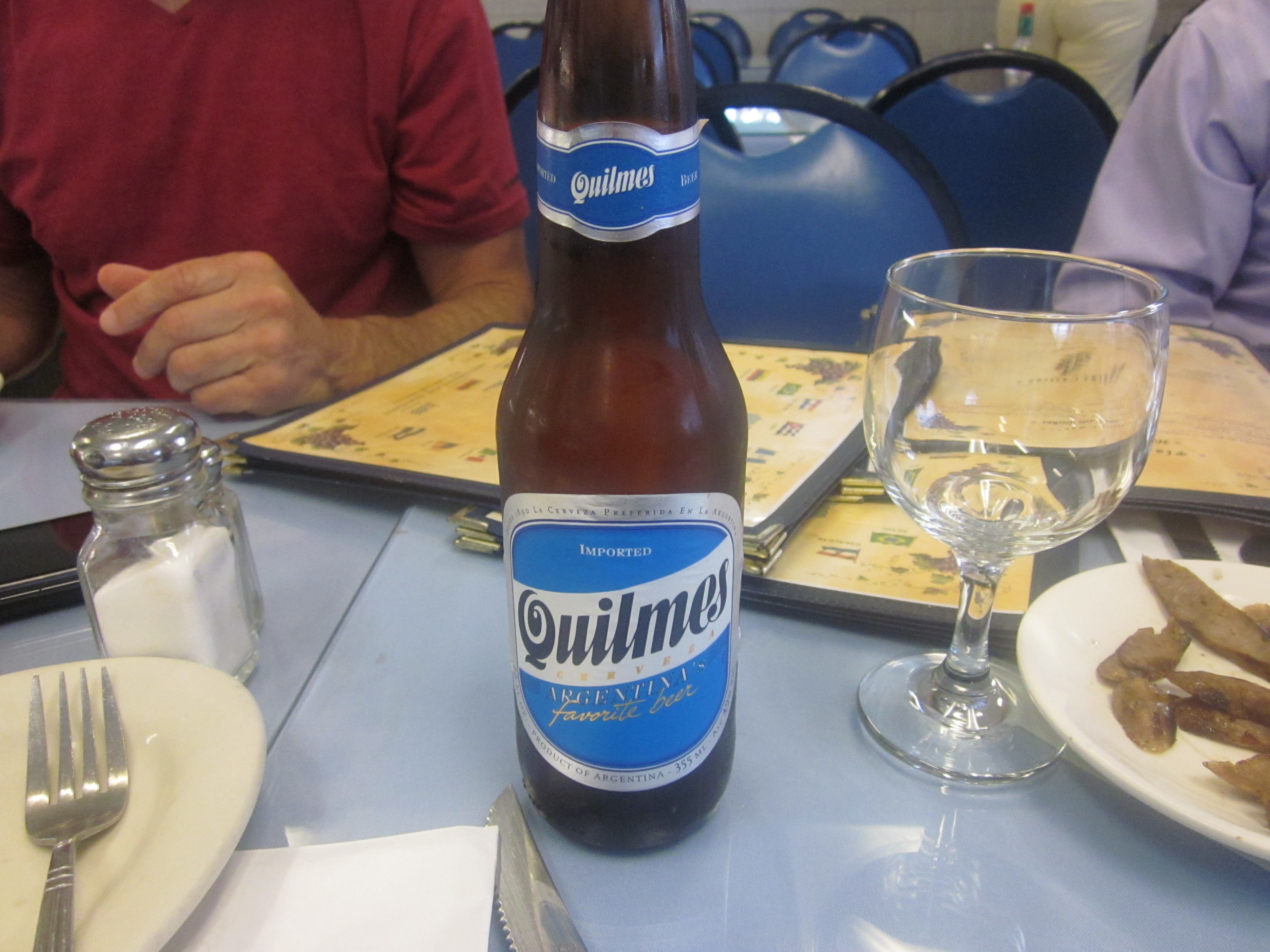
While we chewed, moving from one cut of meat to the other, some of us paused to cleanse our palates with gulps of the Argentinean beer, Quilmes; Zio instead choosing the toxic sludge that is diet Coke to accompany his meal.
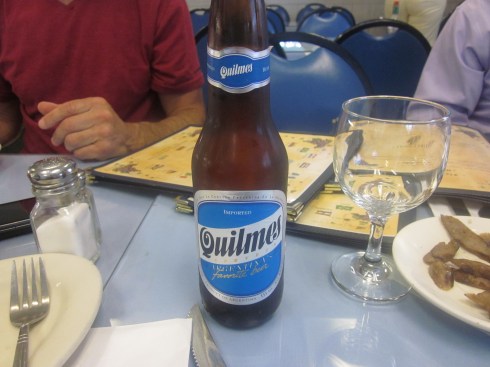
A beer and a glass…with a stem.

It was about then when, to my astonishment I noticed Rick sipping red wine from the aforementioned stemmed glass. He shrugged when he saw that I had noticed. He didn’t have to qualify his choice in any way. It was the glass that was more of note than what was in it.

We were making very good progress; the meats on the platters were slowly vanishing.

“You want a beet?” Rick offered Zio from the platter of cold potato and beets.

Zio thought about it for a moment and then nodded. “Yeah, what the hell. Give me a beet.”

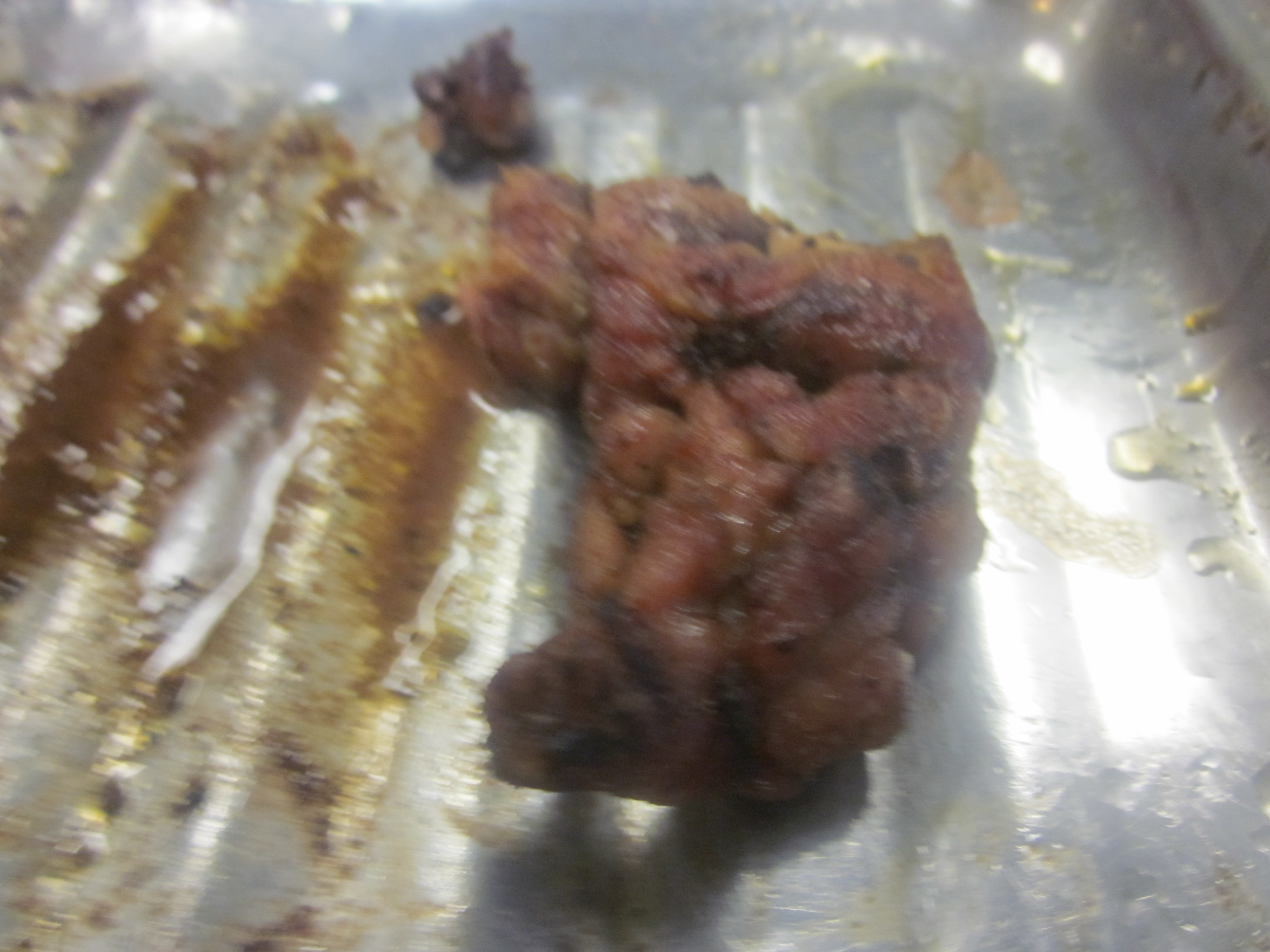
Soon all was gone with the exception of a shriveled piece of tripe and a “burnt end” of sweetbread that even Gerry would not touch.
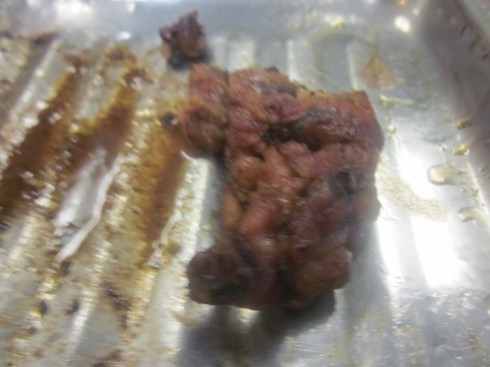
A sweetbread burnt end.

Seeing that there really was nothing left in front of us, the waitress recited what was on the menu for dessert. Zio, who seemed to go silent after that last beet, perked up when he heard there was quince paste.

“I love quince paste,” he announced. “I had it the other day.”

“Bring us the check,” Eugene said, making the executive decision that there would be no dessert, as if we needed it after all that. No one, not even Zio and his penchant for quince paste, dared to stand up to Eugene’s resolve.

The check came. We waited silently as Eugene perused it. We knew we had done some major damage. I chewed on my knuckles in anticipation. My own self-imposed standards were on the line here.

“$30 each,” he said. I let out a sigh of moderate relief. We were over budget, but we had beer, some of us more than one, and even red wine—in a stemmed wine glass. That would account for at least $5. And of course our waitress deserved a generous tip for having to put up with us. It wasn’t as bad as it could have been.
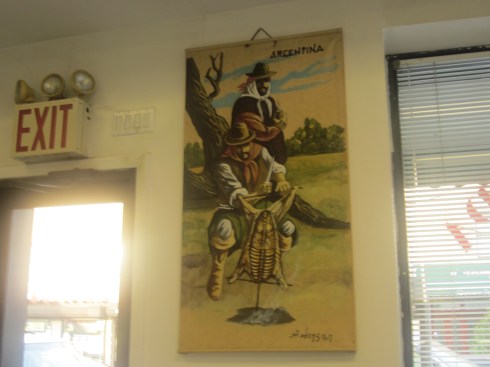
The rough life on the pampas of Elmhurst.

We stumbled out of the restaurant. The tango music was still playing. I had a piece of parsley from the chimichurri sauce stuck between my teeth. There wasn’t much I could do;  I would have to wait until I got home before I could attend to it.

Today’s Special(s)

22 Jun

A cold shower.

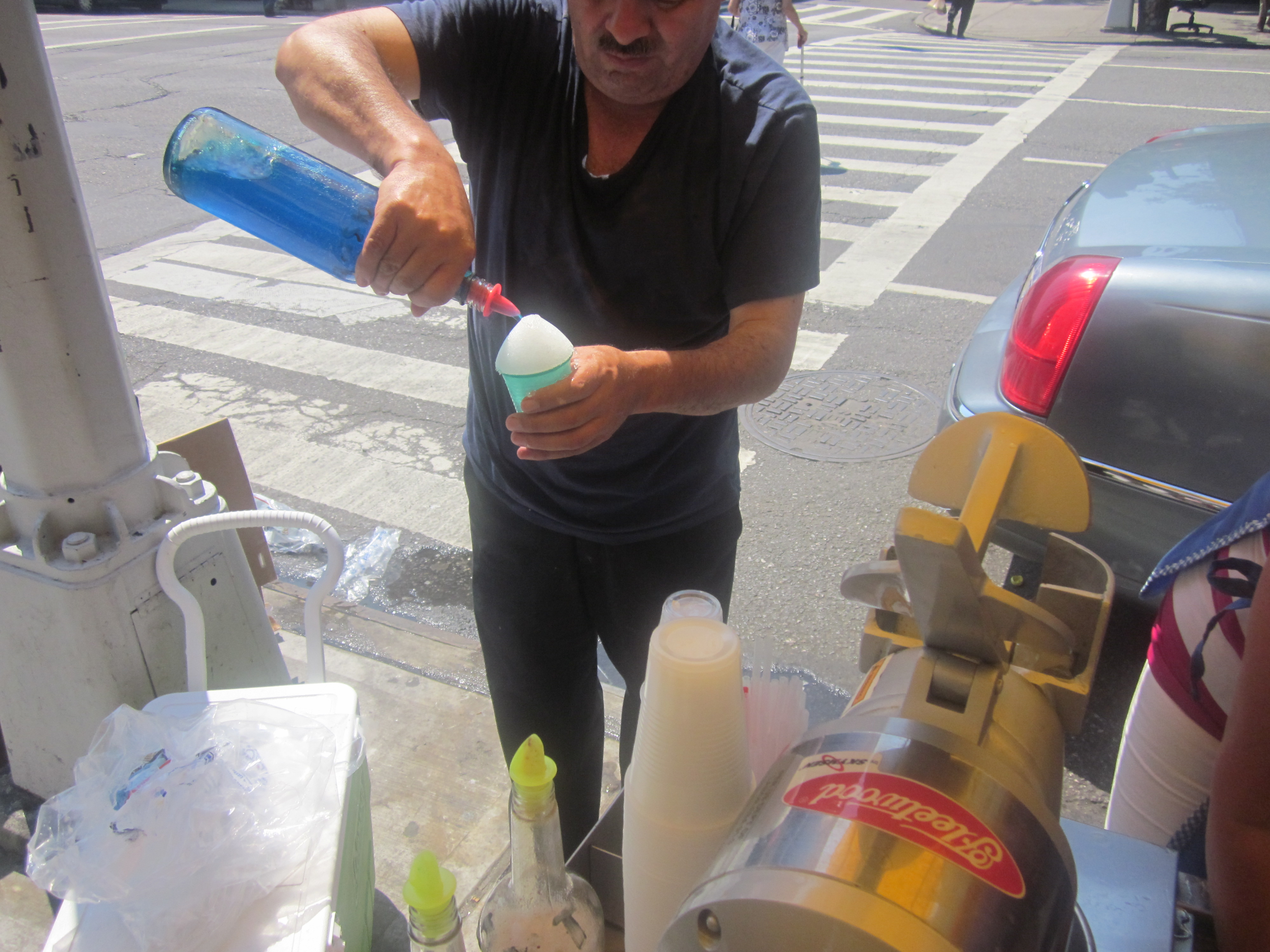
And an even colder refreshment.

The Iceman neareth

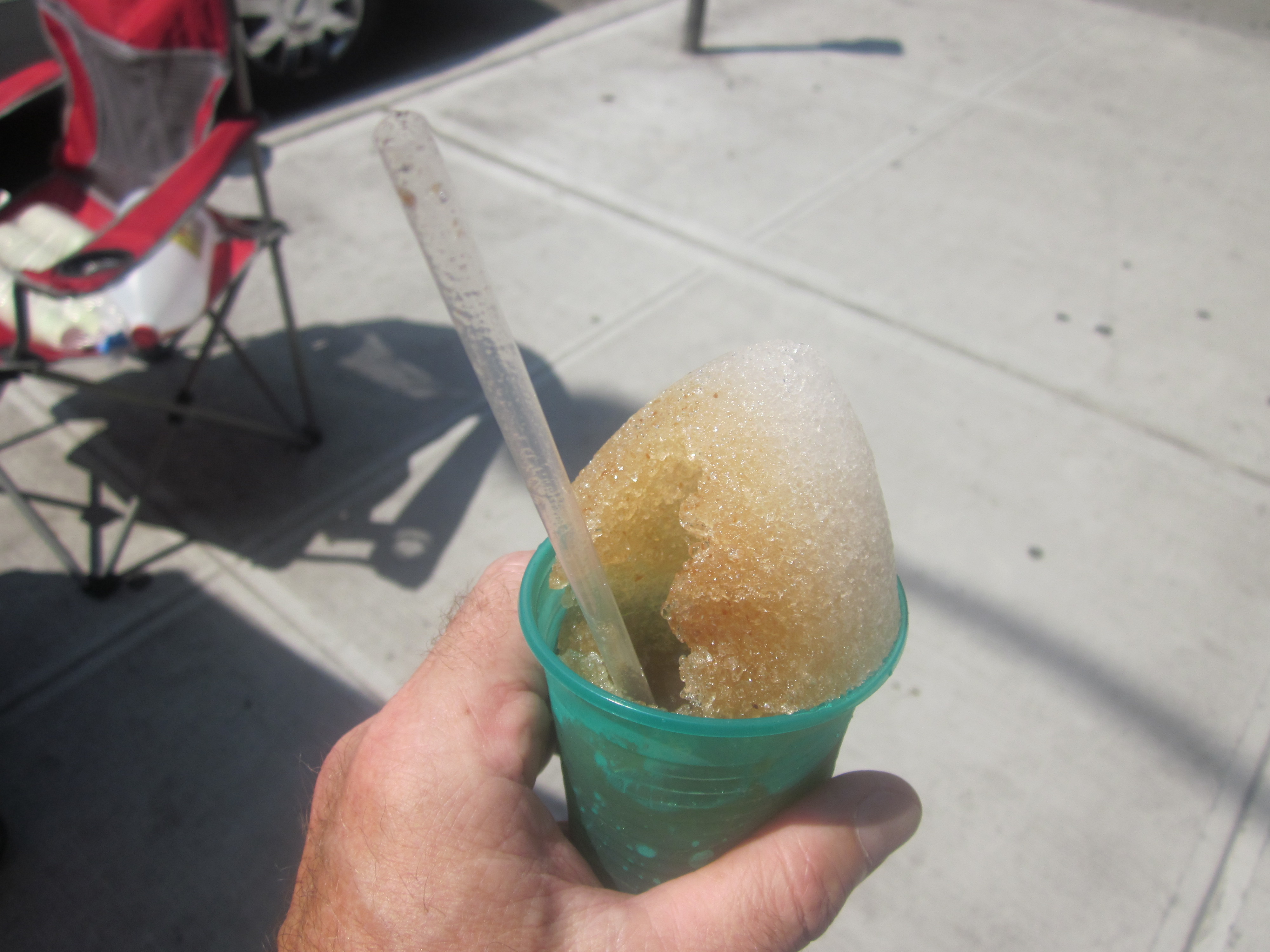
Tamarindo please.

Sweet relief!

A Lime Cut Three Ways: The Second Cut

20 Jun

The Mojito

I always thought of the mojito as an amateur’s drink. Part of my thinking was because of the rum used. I’m partial to the rums of either the West Indies; Jamaica, Barbados, Trinidad, etc., which are molasses-based, and robust, or the exquisite French island “agricole” rums of Martinique and Guadeloupe, made from distilled sugar cane juice. The rum traditionally used for the mojito is of the smoother, Spanish variety; Puerto Rican, Cuban, Dominican, etc. So smooth, in fact, that to me, the rum is indistinguishable; practically devoid of any flavor.

Further damaging the mojito appeal in my narrow mind was that the rum usually poured into the drink was the one with the enormous marketing budget making it, in my estimation, the Coca Cola of rums. And speaking of Coca Cola, the rum in question is usually best enjoyed in that abomination: rum and coke. But there I go again, displaying my rum snobbery by thrashing a drink enjoyed over the years by millions of people. It’s an unseemly trait of mine that, as I grow older, hope I am losing. Who am I, some sort of food and beverage critic or something? It’s not my place to belittle one’s rum preference?

Cuba Libre??

A big part of my conversion to the mojito was the forest of mint that, since we moved to our new apartment, has accumulated on our terrace. Mint, along with lime, are the dominating flavors of the mojito and excellent bedfellows they make.

A forest of mint.

You can take your mint tea, mint ice cream, mint and lamb and whatever else you might use fresh mint for. I use it exclusively for the mojito. And yes, I do use smooth—err—bland, Puerto Rican rum in the drink (though not the Coca Cola of rums whose name will not be mentioned here). I wouldn’t dare attempt a mojito with a rum from Martinique or Trinidad. The result would be a completely different drink. The neutral rum from Puerto Rico seems to meld the other two dominant flavors of lime and mint perfectly in the cocktail.

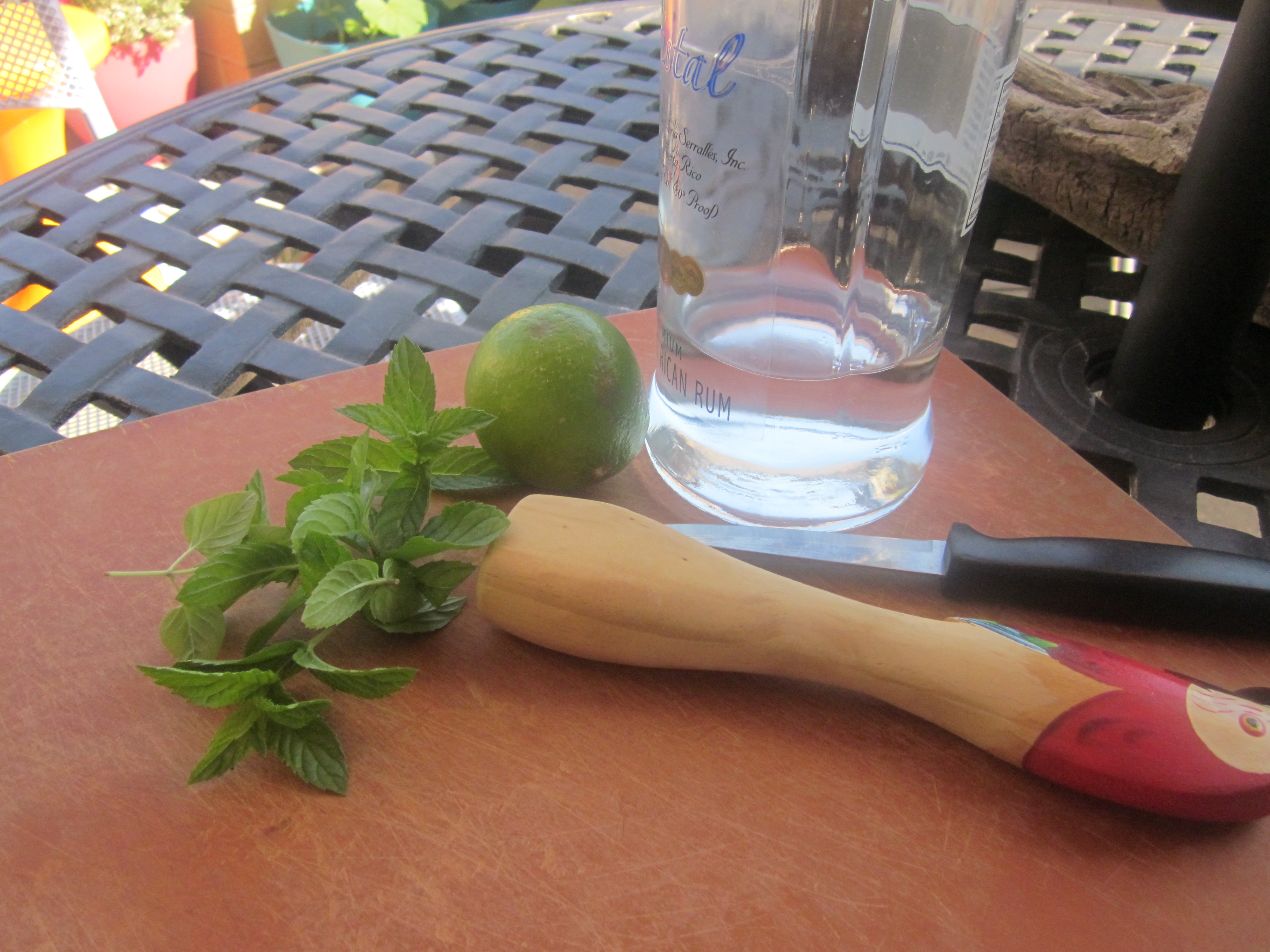
Mojito mix

What follows is my version of the  mojito.

Ingredients:

1 lime cut into tenths.

10 or more fresh mint leaves including sprigs.

4 teaspoons simple sugar syrup*

2 ounces of white Spanish rum (Puerto Rican or Domincan, if you can get Cuban, I’m sure that would work well too).

A splash or two of seltzer

*You can use superfine sugar, granulated sugar, or even confectioner’s sugar instead of simple syrup, but I prefer homemade syrup which eliminates having to dissolve the sugar into the drink. The recipe for simple sugar syrup can be found on my post, A Lime Cut Three Ways: The First Cut.

Add most of the lime and mint leaves, saving a few of each, to a highball glass. Mash and muddle the mint and lime together with a pestle or whatever type of apparatus you might have on hand.

Add the sugar syrup, the rum, and ice and stir.

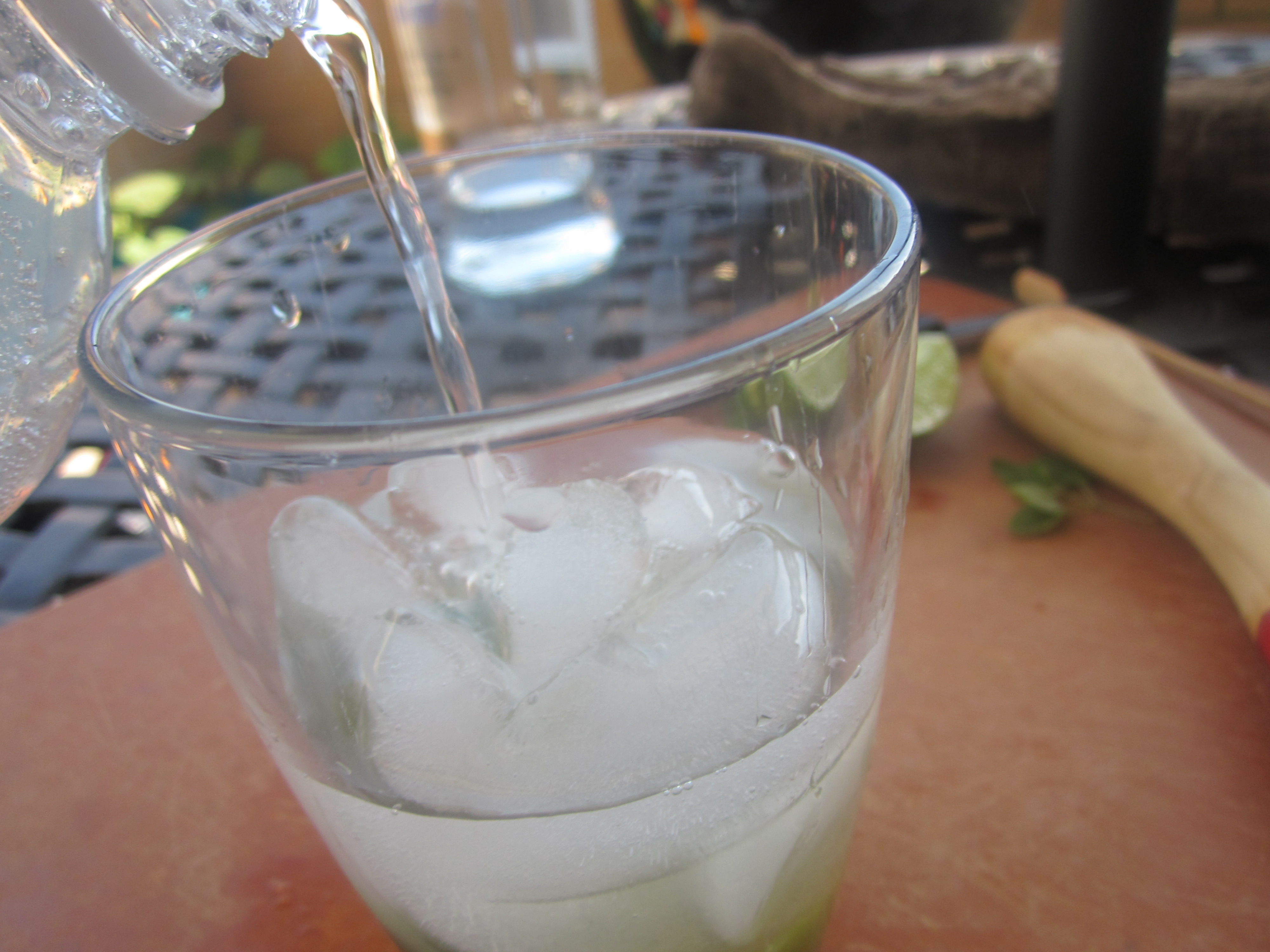
Pour in a splash or two of seltzer to top off the cocktail and stir again.

A splash of seltzer.

Garnish with a couple of lime pieces and a sprig or two of mint.

Sit back, put your feet up, and enjoy.

The mojito

I no longer demean the mojito and want to admit here that I was very wrong about its many merits. It is a summer cocktail supreme and I now count it as one of my go to drinks. Could it be that this public admission is testament that I am finally maturing? One can only hope.

And the Answer is…

18 Jun

On Friday I presented you with the following photos:

Note the tiny yellow speck of rice I thought was a giveaway.

And where else would you find such a combination of condiments.

With those hints I challenged you to Name That Place.

I thought the hints were more than obvious, yet I only received a few correct responses identifying the place that has this unusual kitchen apparatus.

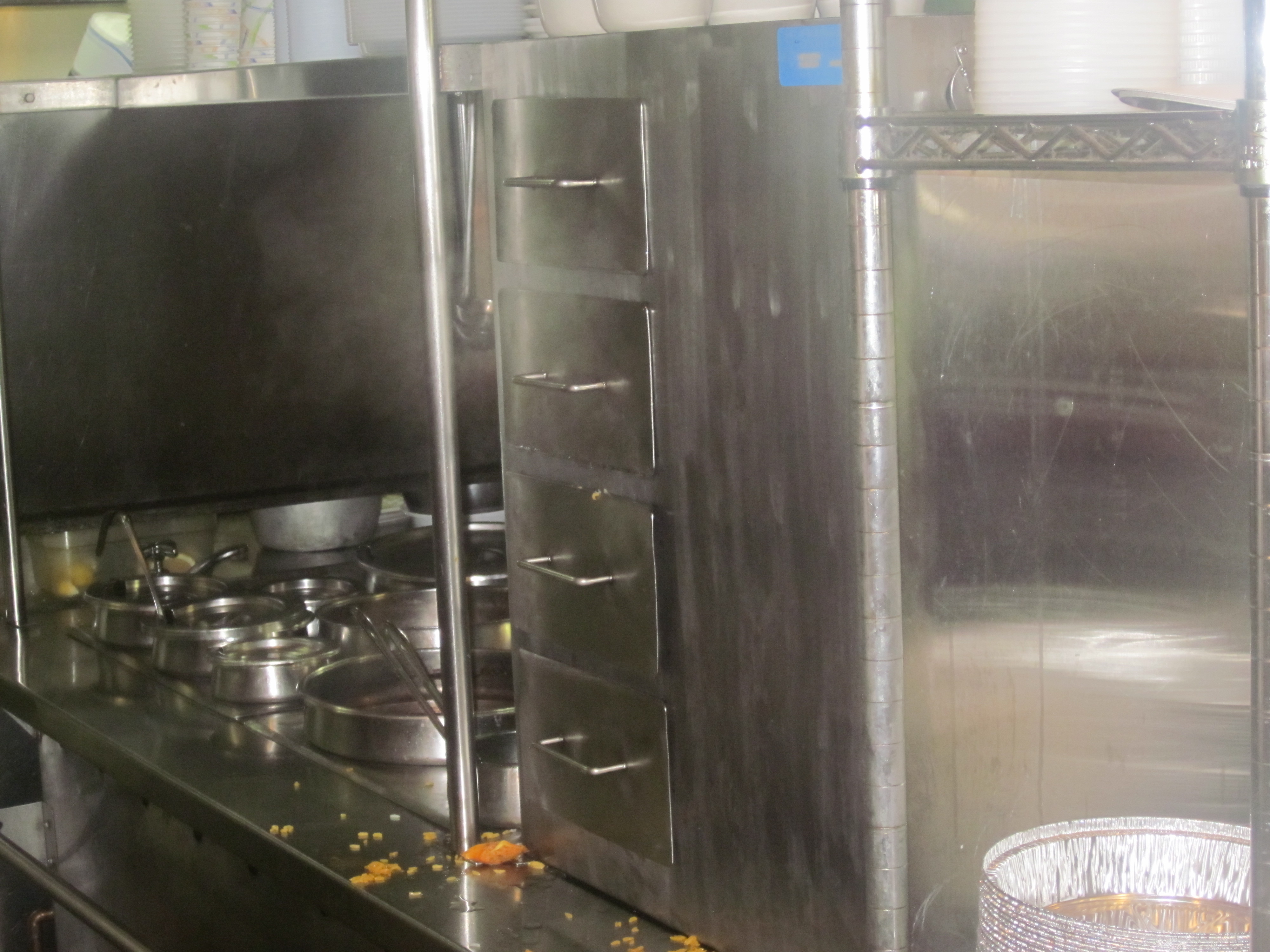
Where if you open one of those drawers, you will find this…

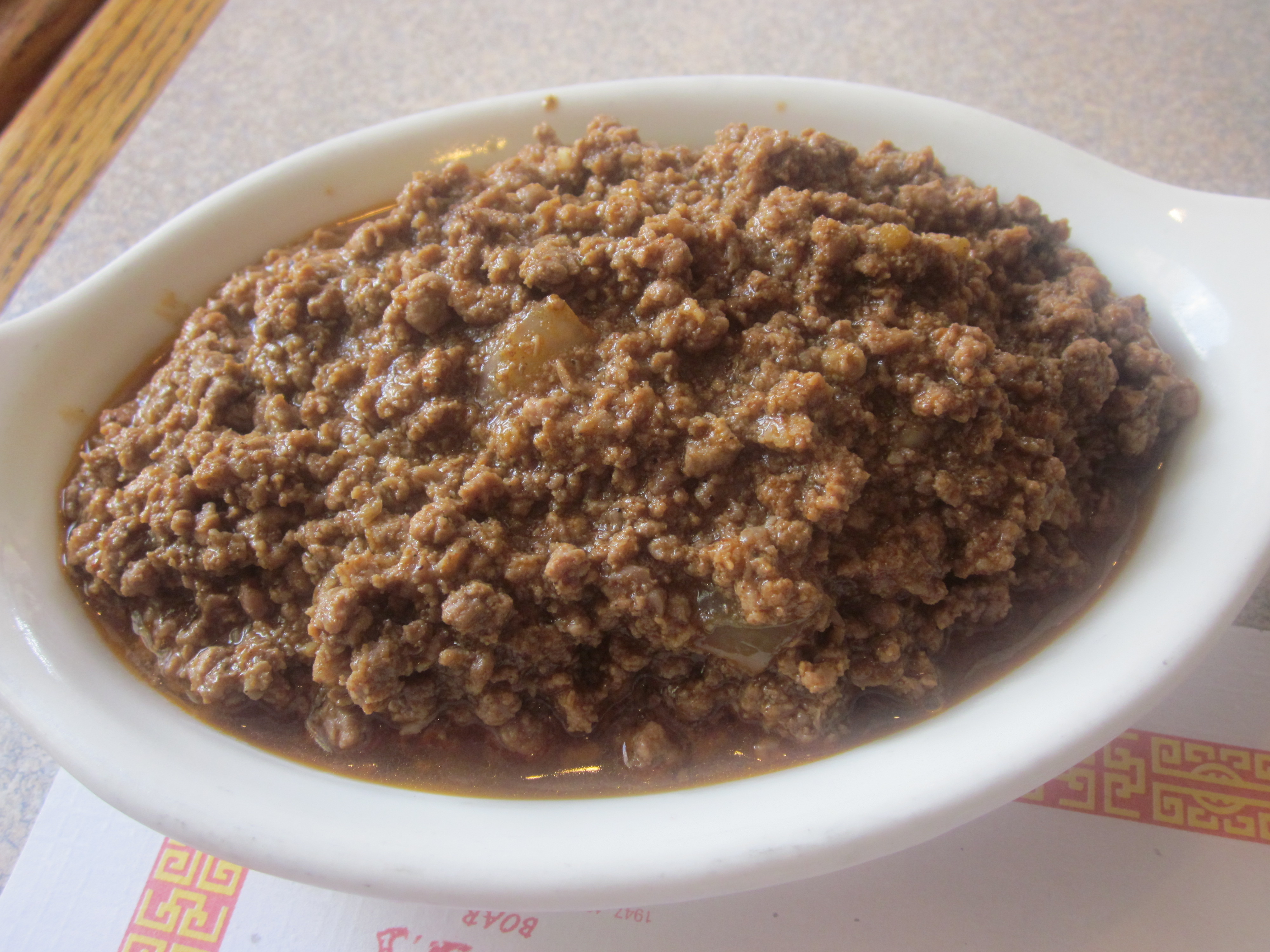
Yellow rice. Which is a staple of this place and used when eating this:

Rice and beans

As an accompaniment to this:

Picadillo

But that Chinese Zodiac paper place mat could confuse, as could the soy sauce above. Surely this is a Latin place with an Asian twist.

For forty plus years on the corner of 78th and Broadway, though remodeled several times, you can find this comidas china y criolla standby:

Le Caridad 78


Name That Place

15 Jun

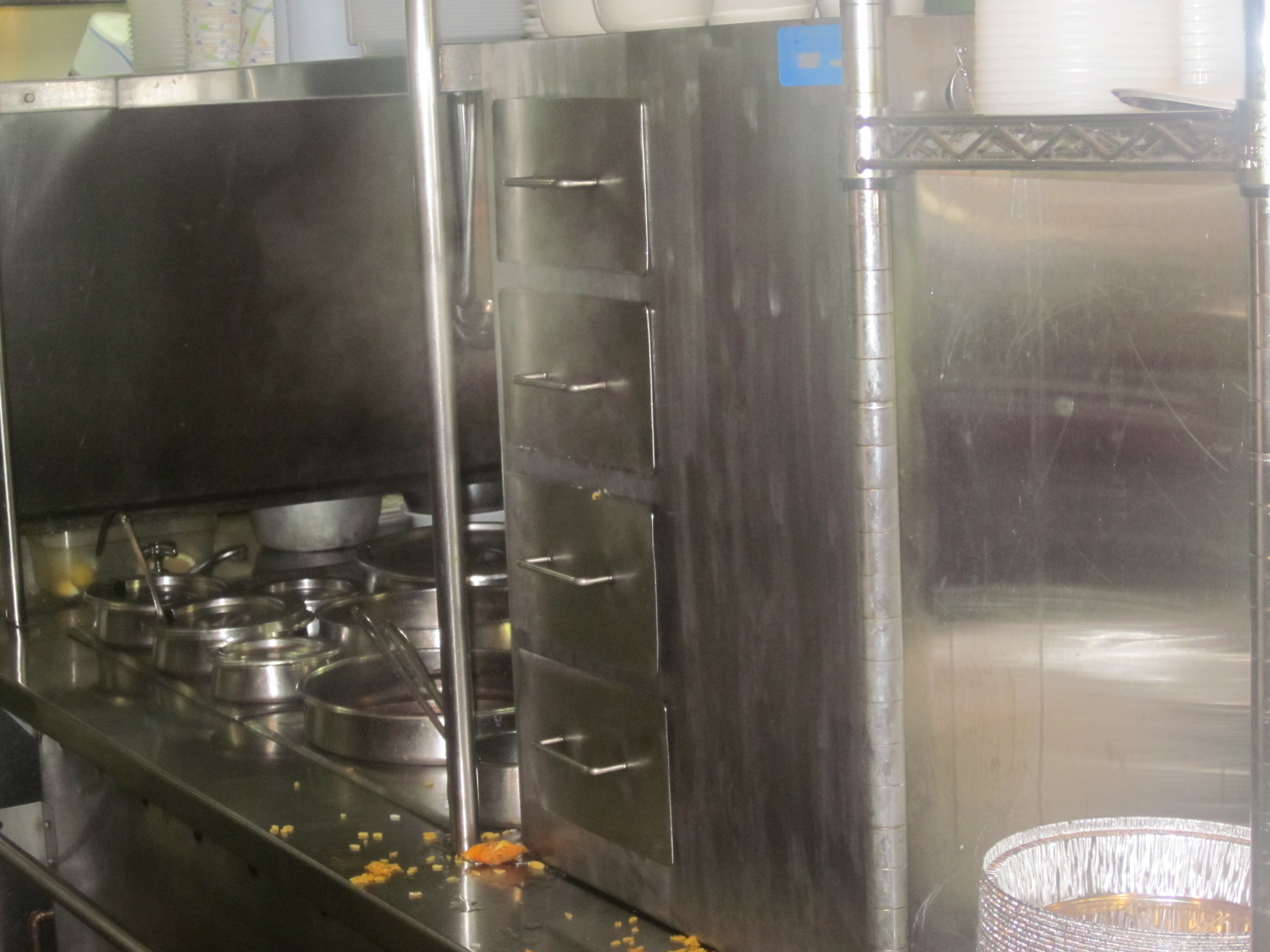
There were many times I would sit at the counter at the former incarnation of the place in question and stare at what you see in the following photo.

I’m sure there are other restaurant kitchens that have the same thing, whatever it’s called,  but I had only seen it in use at this place and one of the reasons the restaurant was unique to me.

Perhaps one of you shared my curiosity and also wondered about the four-drawer compartment at this place. If so, you know the place and can reveal it without the following bonus photos.

Sure, hot sauce,  ketchup, sugar, oil, vinegar, salt, pepper and soy sauce can be found in a million restaurants in New York.  Or can they?
There is a subtle, or maybe not so subtle, hint on that Chinese zodiac place mat. And those are all the hints I can offer today without giving away the place’s identity.
I eagerly await your answers. As usual, leave them in the comment section below.  The place with the mysterious stainless steel four-drawer compartment in the kitchen will be revealed on Monday.